Thinking about Tourism in Kampala

Last week I attended an international conference on Sustainable Tourism in Kampala, Uganda. It was hosted by Makerere University, which is one of Africa’s oldest and most prestigious universities. Although it was established by the British and probably maintains excellent tuition, the campus itself seems weary from lack of funding, and parts of it look more like a deserted army base with crumpled buildings surrounded in rusty barbed wire fence. Around the skies above the hill the university is perched on circle dozens of Malibu storks, with massive wing spans and vulture looking stances. They sit on the tops of trees and create an eerie atmosphere, though they’re truly beautiful. Locals consider them the pigeon of Kampala, annoying garbage scavengers with stinky poop.

a malibu stork at dusk on campus

There were mostly Ugandans and Americans at the conference, in total about 100 people, and some interesting characters made the 3 days of constant presentations barable. There was a Masai from Kenya jingling around in his colourful garb, one very enthusiastic Chinese professor who was extremely difficult to understand, and an American professor who had a squinty, perma-“huh?” face twisted up so weirdly that you always wanted to ask him “are you alright?”

the welcoming committee at the ATLAS Africa Tourism conference

The conference was a first for me, and I was happy to present my research on ecotourism but it seemed like no one was really there to hear you talk, but to see if you were useful to them. People capitalized on the coffee and lunch breaks to network with all the most strategic people and once in a while, swap business cards with those people they found interesting. When presentations sparked a discussion, there was barely time to facilitate a dialogue since there were 6 consecutive sessions running at any given moment, for only 30 minutes each.

my Masai friend James

In the end, I kind of noticed that everyone had something smart to say about sustainable tourism in theory, but only bad things to say about actual cases of attempted sustainable tourism. Local Ugandans complained about it as a form of neo-colonialism and almost everyone recognized tourism as an activity exclusive to the rich. In the end, even the things we had to say about theory just ended up having a lot of academics and practitioners talking in circles, so not much came out of the conference except new friends and potential industry connections. For me, I lucked out with some great connections in the places Im headed next, and some well-knowledged people who actually know a thing or two about tourism in East Africa since the backpacker trail seems hard to track.

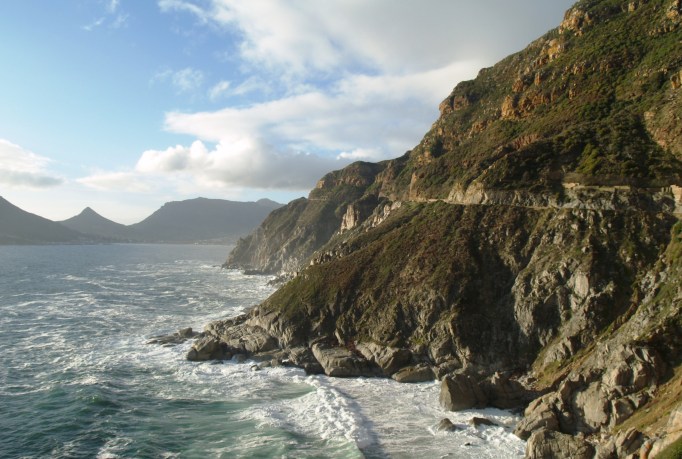
Photo Highlight: Jinja, source of the Nile

its a debatable, so-called "Start" of the nile, but its certainly one big arm of it flowing out of Lake Victoria. However, not up for debate is the magnetic attraction kayakers have to this place, seeking out the white-water rapids - some even class 6 level.

South Africa

Until now, Ive only ever been to southern Africa and Egypt, and while people miscorrectly refer to Africa or African as an entity, each corner of it is worlds apart from the next. Southern and northern Africa are completely different from western, central and Eastern, and even those broad generalisations of regions of Africa refer to 5 or 10 totally different countries. Then within each country, you’ve often got 10 to 50 local languages, a complicated history of colonisation and independence, and dramatically different landscapes and climates.

OLYMPUS DIGITAL CAMERA

Chapmans Peak Drive around Cape Point

When someone asks me “what’s Africa like?” I have a feeling of what they’re picturing: something between poverty, danger, disease, black faces, hot climates, dense jungle, and poor infrastructure, and its certainly not a question I can answer having only been to a few places in Africa. So far, Ive learned there is civil unrest, political instability, impenetrable wilderness, poor and sick people and a very hot sun, but only in a fraction of the continent. There’s also a lot of the opposite, and places the size of Iceland with not a singe person living or traveling through them.

Cape Point, in all its glory

There’s unbelievable wealth in South Africa, especially in Cape Town, and neighbourhoods that make me believe Im in Brisbane or Sydney, Australia. Cape Town is also cold; its only been hovering around 11 degrees celsius since I got here, with periods of torrential rainfall worse than Vancouver and windstorms that compete with the fierceness of Iceland’s climate.

Today was the first day of sun since I arrived, and I felt like a blossoming flower gravitating towards its rays for warmth, and very catlike as I curled up in the sunlight on the only edge of my bed being lit.. It also felt like a rarity since the days are only 10 hours here, from 7:30am til 5:30 pm, a big change from the 22 hr sunlight in Reykjavik I left. All the bad weather was great for my writing, since I wrote my first complete childrens story and also started brainstorming for my first book.

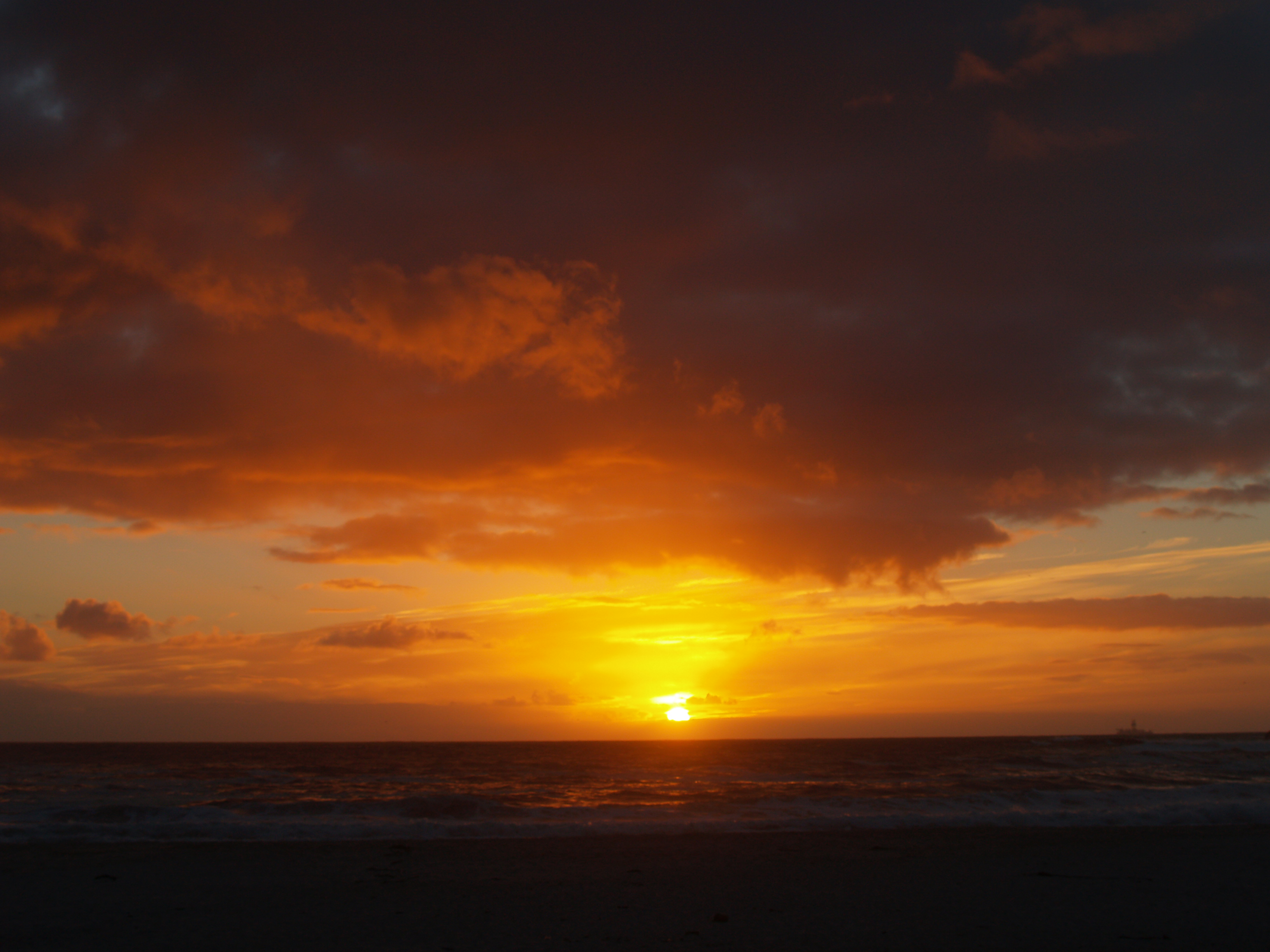
a 5:30 sunset from Camps Bay

I managed to have quite a few bubble baths, since Capetonians are not used to the cold and built their houses with zero insulation. You may as well wake up outside, when you crawl out of bed to a 10 degree apartment, so a hot bath is one way of warming me up, and another way to reconcile my longing for an Icelandic hotpot.

I love that Cape Town is on the sea, and on 2 seas at that – both the Atlantic and Indian Oceans battle  violently at the bottom of Cape Point, and suicidal kite surfers take advantage of the huge winds to ride waves like the adventure-seeking extremists that they are. Surfers tempt fate as they enjoy the consequential great waves, in some of the most infested Great White Shark waters in the world.

I took a tour to Seal Island, a colony of thousands of seals that hopefully keep those sharks satisfied enough not to take my leg when I surf. The thick 5mm wetsuit I wear while surfing kind of makes me feel like a flailing seal, so thats worrying. But so far, so good.

Enjoying the waves from the sandy beach shore is much more assuring, and I did that in the most amazing way possible. I went with a local guy on two, HUGE, retired racehorses to Noordhoek beach, and we virtually had the entire thing alone for us to race fullspeed and frolick in the wake of the shallow waves. My legs are certainly suffering now, but it was well worth it.

OLYMPUS DIGITAL CAMERA

kite surfers at Scarborough Beach

The thing I love about travel is Im always experiencing new places, new faces, and making new memories, and trying to absorb, digest, and make sense of them all is exhausting. So it doesnt help when you get trashed around by morning waves on a surfboard and your ass kicked by a monstrous horse, since mind and body recuperation simultaneously seems to happen slower.  Although, as confused as I may get, I cant even remember the names of the 11 official languages in South Africa, let alone speak any of them except english, so Im constantly refreshed by the people I meet here to keep pushing for more unfamiliarity, more novelty, and just take things in stride.

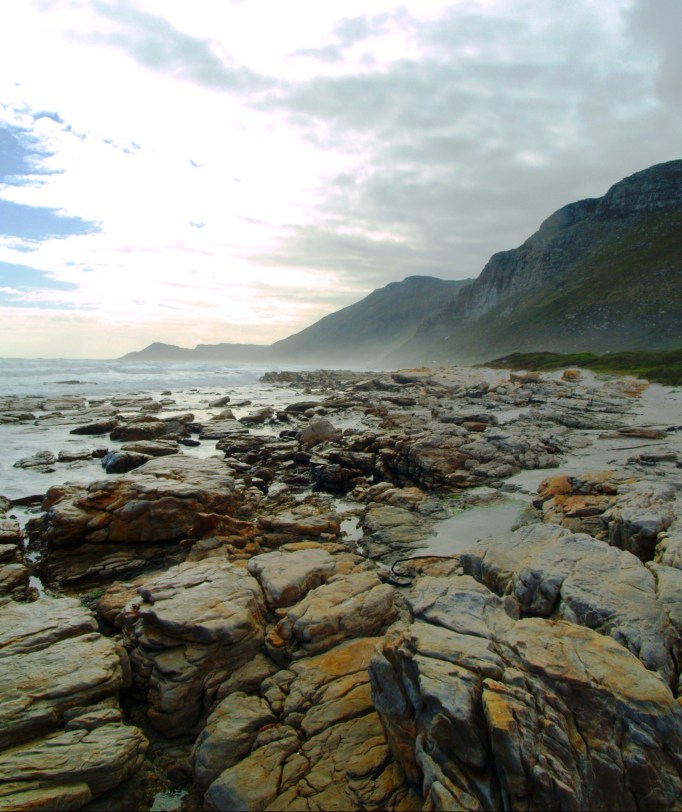
Photo Highlight: Scarborough Conservation Village

There is a tiny town nestled on the Atlantic side of Cape Point, right beside Table Mountain National Park, and its home to one of the most beautiful, dramatic beach scapes I’ve ever seen.

OLYMPUS DIGITAL CAMERA

Scarborough Beach on the Cape Peninsula

Lost in Translation

When I was a child growing up in Iceland, I spoke Icelandic, perfectly and fluently. Then at age 8, after moving to Canada, I almost failed grade 2 because I couldn’t understand why noone would respond to my Icelandic. I eventually spoke english well enough to be comfortable speaking only English, but then forgot all my Icelandic. Then I learned french, a lot of French – one of the perks of emigrating to a bilingual country. I studied abroad, in France and Australia, majored in English, and came out a pretty good bilingual Canadian.

My first, biggest, (quasi) solo travel experience was participating in a 100-day circumnavigation of the world, peetering around the equator on the MV Explorer with 600 other students. The program is called Semester at Sea, and for anyone who has done it or is considering doing it, just know that it will either make you an OCD travel addict or, leave you feeling like you never need to travel again. The former happened to me, so the following summer I embarked on my first, true backpacking trip through South America and the Caribbean for 2 months. The two summers after that I also spent backpacking in South America, so then I learned Spanish. First, it was just travel-survival Spanish, but eventually, I started thinking in Spanish and forgetting my French, even English at times.

Then to make matters even worse, I decided to move back to Iceland in 2008, which was when I realized I’d have to relearn Icelandic. Three years later, Ive only spent a total of 11 months actually in Iceland, in chunks of a few weeks or months here and there, so its coming together, but falls apart every time I go to  a French or Spanish speaking country and my second-language confidence switches between the three. Worst of all, the longer I spend trying to sort out my secondary languages, my english deteriorates, and my handle on the language fluctuates from good to satisfactory, then back to okay. Good friends of mine know this as “Katrin-speak,” and even speak it fluently, since I regularily mix up my syntax, make up words, and switch between languages in a way that they’re used to.

Now, Ive had my first full year away from University, and if it wasn’t for reading and writing in English, Im not sure what would happen to my ‘first’ or ‘strongest’ language. My family in Canada tells me I speak English with an Icelandic accent, Icelanders tell me I speak good Icelandic for a foreigner, and everywhere else people wonder where Im from, and when I answer Iceland, compliment my English for being so strong. This used to go unnoticed, but before I considered it a compliment, realized that the flattery is only intended by those who believe I am an ESL speaker.

So, I clearly have a language identity issue. Now, to make things more interesting, I have a cultural identity issue on top of all this, maybe stemming from the first problem, or perhaps reconfirming it. I’m an Icelandic born, Canadian raised, (soon-to-be) triple-passport holding daughter of a Guyanese mother, and Ive spent more time traveling than staying in any one place for the last three years. In North America, people think I look native American, so when I tell people I’m from Iceland, they picture some northern/Greenlandic indigenous group that I’m most likely descendant from. I only correct them half the time, since when questioned by an Icelander, “Where are you from?” I say Canada, and they probably picture very similar looking native North American ancestors.

Elsewhere, people think I look latin or middle eastern, but in Latin America they call me gringa and in Egypt, a “white” person, which Ive come to learn is a generic term meaning “rich westerner.” When people notice I look darker than most “white” people, I accredit my tanned skin to my mother, who’s from Guyana. “Ghana?” some ask, “No, GUYana” I respond. Then a short pause is followed by “Oh, Guinea!” and again I say, “No, GUY-ANA.” Then to save face, they dismiss their total confusion by asking “what part of Africa is that?” at which point I have to explain its actually in South America, that its not French Guiana, and then ask whether or not they really thought I look African. If so, then I’ve got a real identity problem; one can’t really look ‘African’ since the term only correctly refers to someone who lives in Africa, and the continent encompasses such a diverse and complex mix (of millions) of people, including those infamous ‘whites.’