Salzburg at 3 am

My train left Vienna at 23:50 on a Friday night, and I knew I’d arrive in Zurich at 11:20 the next morning, but that it only took 8 hours by train. Since I had to change trains in Salzburg, I assumed I’d have the 3 hour layover there. I didn’t realize that this stopover was from 3 – 6 am. I also didn’t know that Salzburg hauptbahnhof is under rennovation and has no real station to wait inside.

It was maybe 6 degrees, pitch black, and drizzling, but I figured I couldn’t waste the opportunity to see Salzburg – and anyhow, sitting and waiting alone outside on the platform seemed like a silly thing to do. I needed coins for the left baggage lockers and the only place open was a dingy, smoky sports casino that probably gets asked for change at 3 am every time the Vienna-Zurich train takes this scheduled route. I locked my bag in a locker as one other traveler pulled out his sleeping bag and cacooned himself inside. For a second I considered doing the same, but only out of laziness, and decided not to since it’d be weird if I just copied him and then we’d both be lying on the ground in awkward silence.

I walked from the train station towards the city center, which I had no clue where or how far it was, but there was only one road leading away, so I followed it. The streets were eerily deserted, so it was hard to tell which roads were main road. I passed an open Shell station, and went inside for a brief gust of warm air, and to reassure myself that other life was also stirring at this hour.

I made a turn there that I retraced back, since I noticed a hotel that seemed somewhat lit up. I went inside the Best Western and asked for a map, which the receptionist gave to me without any strange looks or questions. The map revealed I was nearly downtown, I only had to cross a bridge a few hundred metres away.
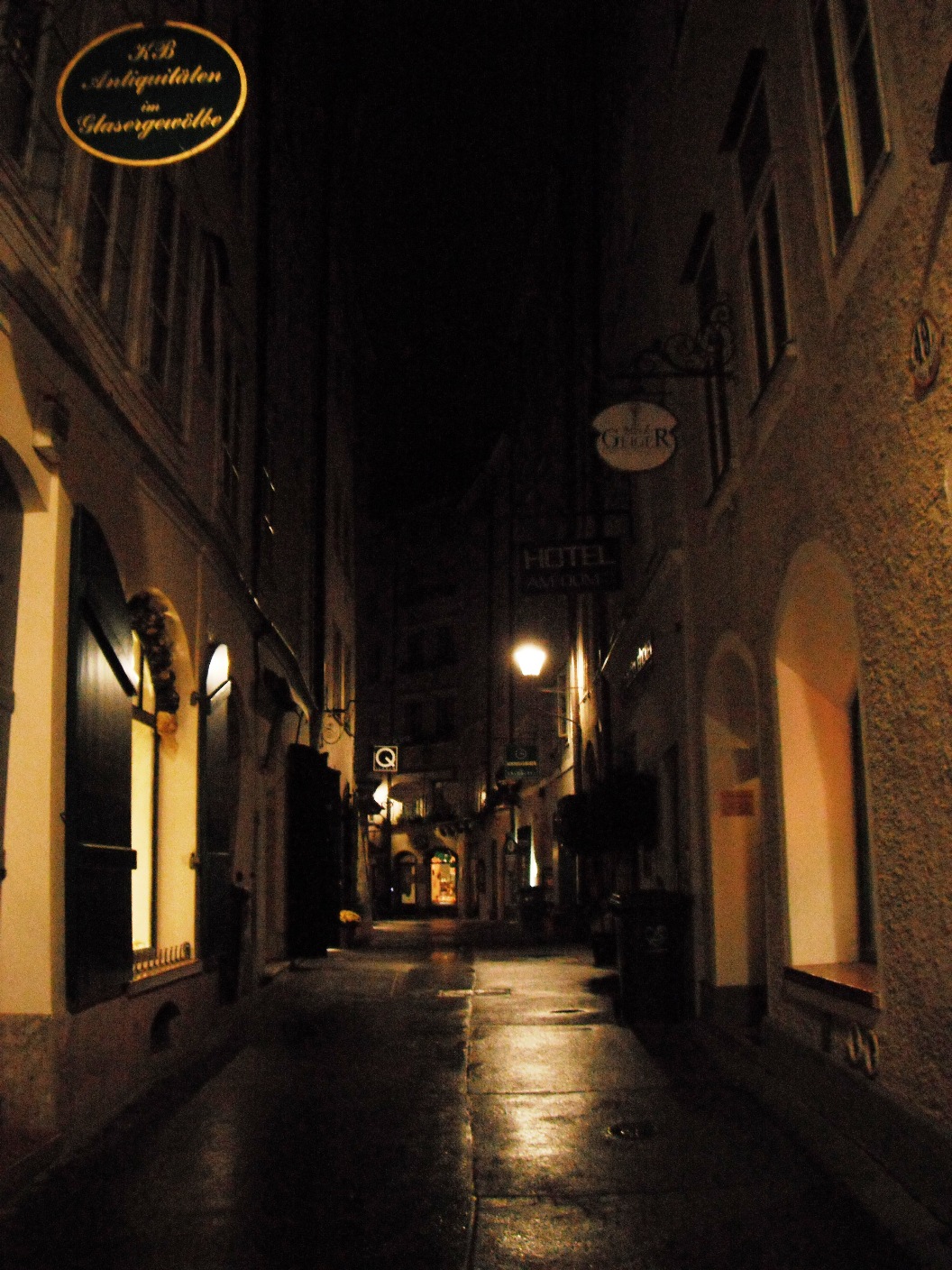
 

the quiet streets of Salzburg

I strolled around the deserted city center, still brightly lit and all the store fronts still offering excellent window shopping. I winded through narrow streets and crooked alleyways, and encountered only one other woman walking. I could barely see it, but I noticed above the street lights that the city ends at a cliff, with a row of houses literally built into the mountain.

I stumbled into the nightlife corner around 4:30 am, and fifty drunken teenagers helped me feel less lonely but a lot more sober. I lined up with some of them them for late night pizza and coke, wonderfully amused by the people watching opportunity.

Then I was alone again, with a private Salzburg to myself, only accompanied by a cooing dove and the sound of church bells every 15 minutes. I turned into a church square at 5 am where a fruit market was just starting to be set up. 3 or 4 people slowly carried crates of ripe fruits from the truck to their stand, and didn’t even notice me watching, taking pictures.

preparing the fruit stand

By 6 am, morning birds started singing, even though it was still dark as night. I passed a few more post-party couples swaying on their way home. I saw a baker arrive at his shop to start preparing the days goods. I saw a police car and a tow truck carrying away a Casino company car that had crashed into the corner of the Crowne Plaza hotel. I saw the street cleaners finish their rounds as the first city buses started their routes. I passed a DHL delivery boy on a bike starting work. Lastly, I saw a woman just standing in the rain waiting, Im not sure for what, but just waiting, near no doors or bus stops.

I went back to the train station, got my bag, poked the sleeping bag cacoon awake, and got on my Zurich train. I fell asleep immediately and woke up in Switzerland, trying to remember if I had really been to Salzburg or if I had just dreamt it.
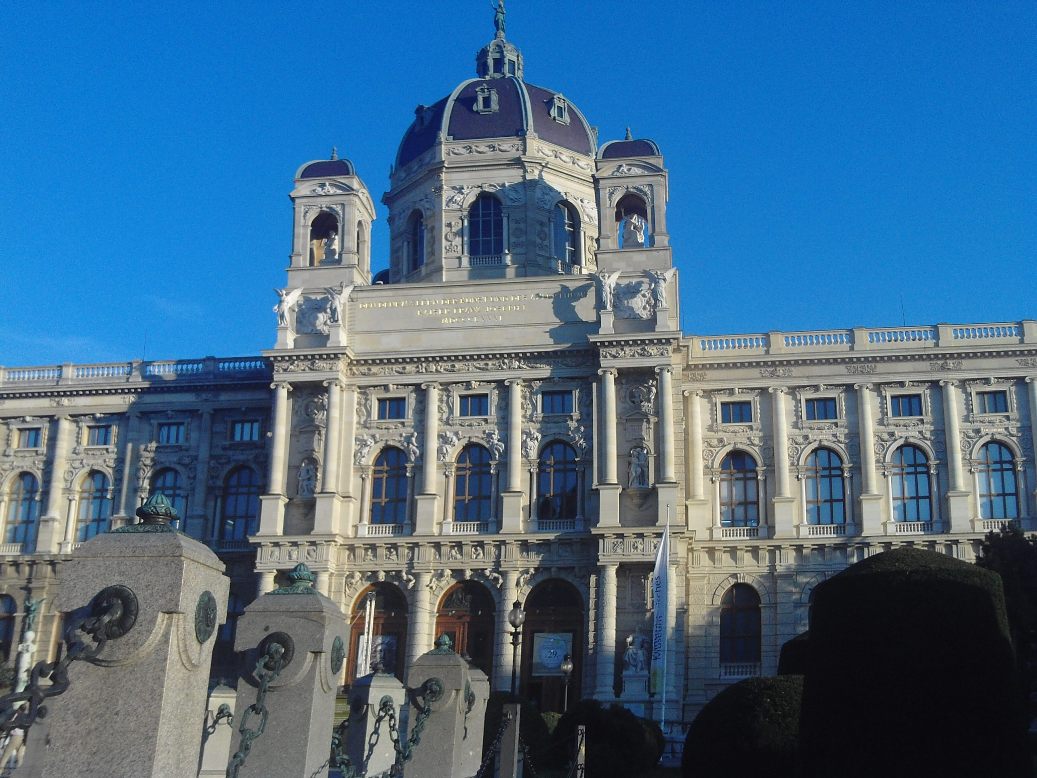
Culture Tourism in Vienna

I always had a hard time remembering if Vienna was in Germany, Italy, or Switzerland (it’s the capital of Austria). Its fascinating how close all these countries are to each other, that Bratislava airport in Slovakia handles a lot of Viennese air traffic, and road signs in the city center direct you towards “Praha” or “Budapest”.

Kunsthalle in Museumsquartier


I read a lot of about Vienna as a child studying music theory and history, picturing Schubert living in a magical city where everyone played classical music and symphonies flooded your ears 24/7. I expected Vienna to be a town frozen in time, stuck in the 1700’s, full of horse-drawn carriages and Baroque fashion. Or maybe it could have been as late as the 1850’s, and I could have seen Haydn conduct his own symphony, but Vienna 2011 didn’t quite fit my hopeless expectations. Its quite similar to every other European city, a clash of incredible history and impressive architecture mixed in with globalized commercialism and little kebab shacks at every tram stop. In German, Vienna is spelled “Wien”, and I have some sort of dyslexic complex misspelling it as Wein or Wine, both referring to fermented grape juice and not one of the most important cities in classical music history.


a famous golden statue of J.S. Strauss

The classical music thing is like beer in Germany, or casinos in Vegas – it’s presumably emthe/em tourist attraction you came for. You can’t go to Vienna without being offered tickets to a Mozart concert, and every night of the week you have the choice of something like 3 classical music concert houses, 2 opera houses, 3 churches, a couple palaces and uncountable theatres to see a show. Then there’s the waltz season, where everyone goes to balls in gala halls waltzing to J.S. Strauss being played life. People dressed up in period fashion sell tickets on major street corners and on the doorsteps of the most popular tourist attraction, and even some of the concerts are played on period instruments in various halls, all shimmering in gold, chandeliers and original art.


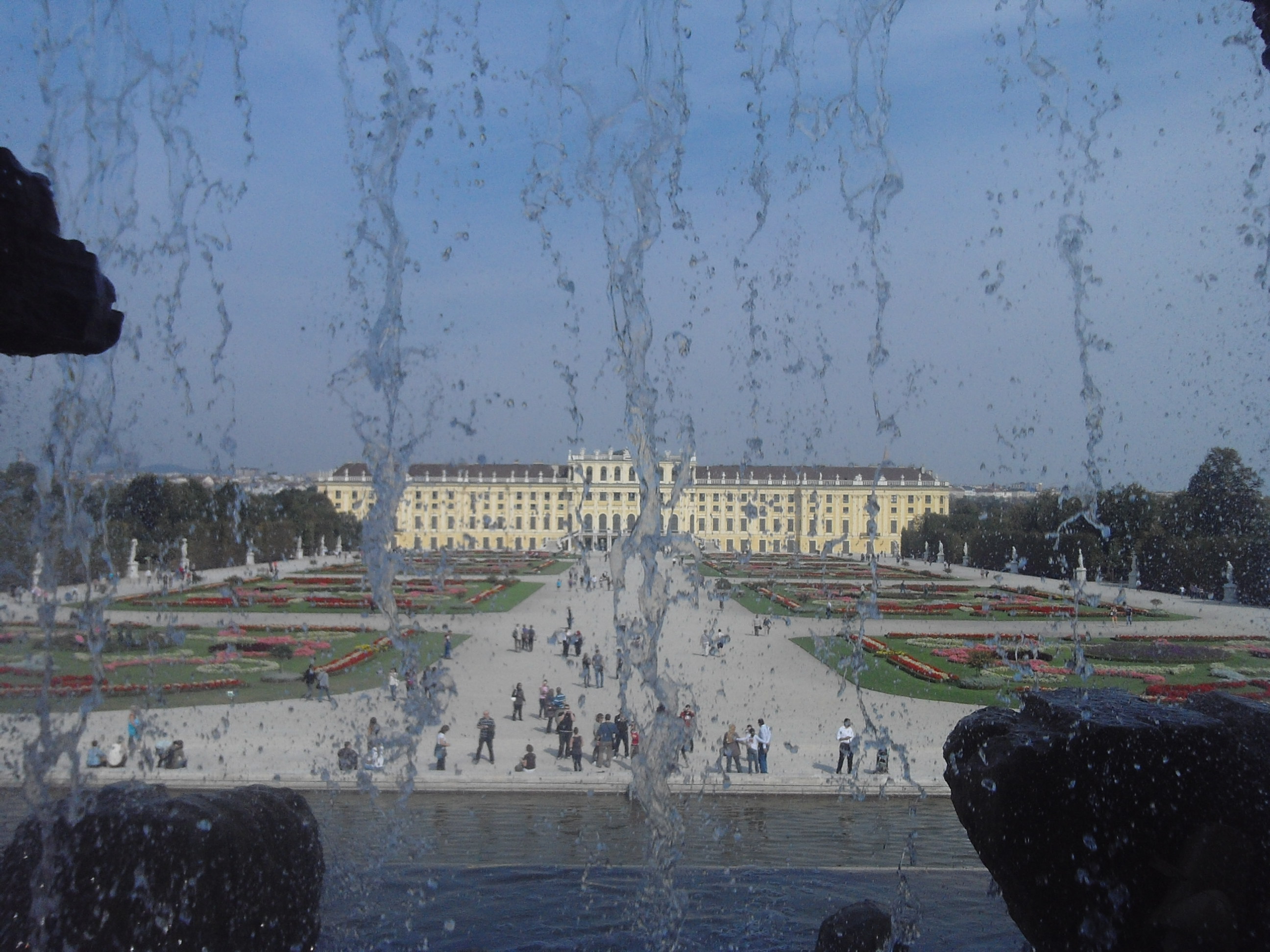
Walking around Vienna, I got the feeling that every building was a palace; even the common-place apartments had arch entries and stone angels on the roof corners. The universities, churches, government buildings, and museums were even jaw dropping – all built in slightly different styles from different eras, but all so grandiose, surrounded by regal gardens and flashing cameras. I snooped around inside the gothic city hall, sat to meditate in every church with unlocked doors, and strolled through the Schönbrunn Palace gardens pretending to be a princess.


Schönbrunn Palace, former home of Emporer Franz Josef I

As much as I wanted to see the inside of every museum, I knew it would be a failed mission since it could take days, weeks even, to really see and learn everything they have to offer. Bu I did make it inside som music halls, always second-guessing if I had picked the right venue and show since there were at least 2 options every night I was there that I would have loved to see. My first night in Vienna, I saw Singing in the Rain, a musical/tap-dance theatre piece, which I probably could have understood better if my German wasn’t so bad.

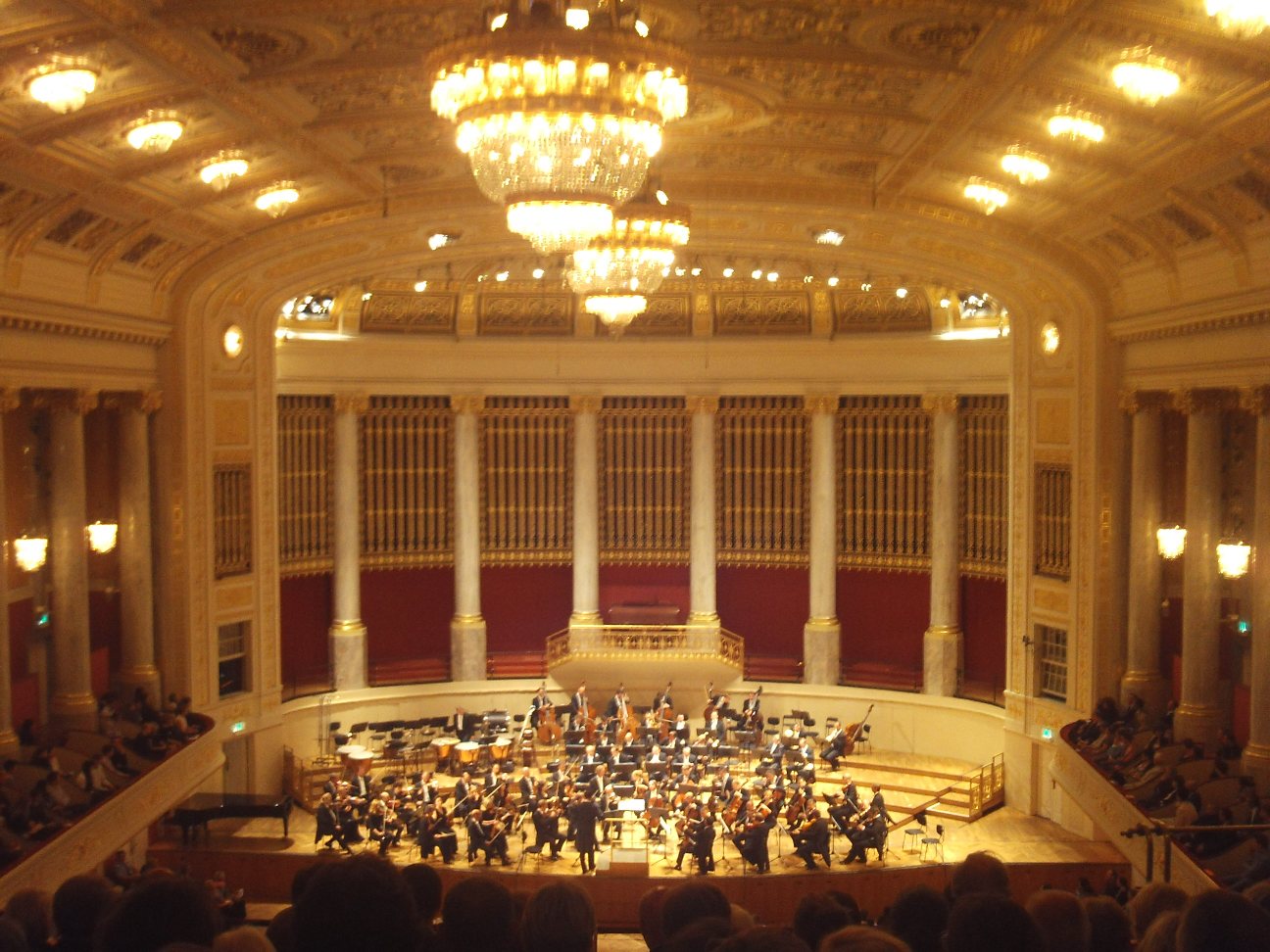
the Vienna Symphony Orchestra

one ballroom in Staatsopera house


I had no difficulty understanding the Vienna symphony on night 2, who played a symphony by Carl Maria von Weber that I had never heard before, but loved, and a piano concerto by Haydn – I loved that too. Piano concerts give me shivers down my spine. They’re also amusing, since it cracks me up how everyone in the audience always has to cough between movements, even if no one is sick. My last night we went to Staatsopera house, by far the most beautiful building, inside and out, that I saw in Vienna. They played Madame Butterfly, a tragic opera set in Japan, sung in Italian, but thankfully subtitled in English that made understanding it no problem, even the depressing unhappy ending – which I wouldn’t have minded misunderstanding.

Bavarian Heaven

Bavaria is the kind of place Disneyland should dedicate a theme park to. It would be located somewhere between Frontierland and Toontown, since it has this rugged countryfeel mixed with a colourful fantasy world. People would drink beer out of mugs and the carnival rides would be the same as at Oktoberfest. It would look like a typical Bavarian village, full of big wooden cottages with baskets of flowers hanging from every window, and all the staff in the park would wear dirndls and ledehosen. And maybe they could even speak with cute German accents.

Sandra and her Icelandic horses, with a Bavarian cottage behind her

I arrived in Berlin before taking a train to Munich, and Berlin could never be a part of Bavaria. It has a big-city, modern feel to it, with skyscrapers overshadowing its cobblestoned streets. Its huge, sprawled out with 3 and a half million people and there are 2 or 3 city centers, main train stations and airports (although one is now a huge green space). Munich, the capital of Bavaria, is only 1.3 million, with a pedestrian friendly city centre, full of old, closely-built buildings and churches. In Berlin, my idea of cosy was taking a touristy boat through the canals, and to live like a local meant I ate kebabs and smoked shisha in the Neukölln district. In Munich, I picnicked in Englischer garten, a beautiful park in the centre of town, and stayed in two different Bavarian villages with friends who gave me horses to ride, home made dumpling soup to eat, and swam in lakes with a view of the Alps.

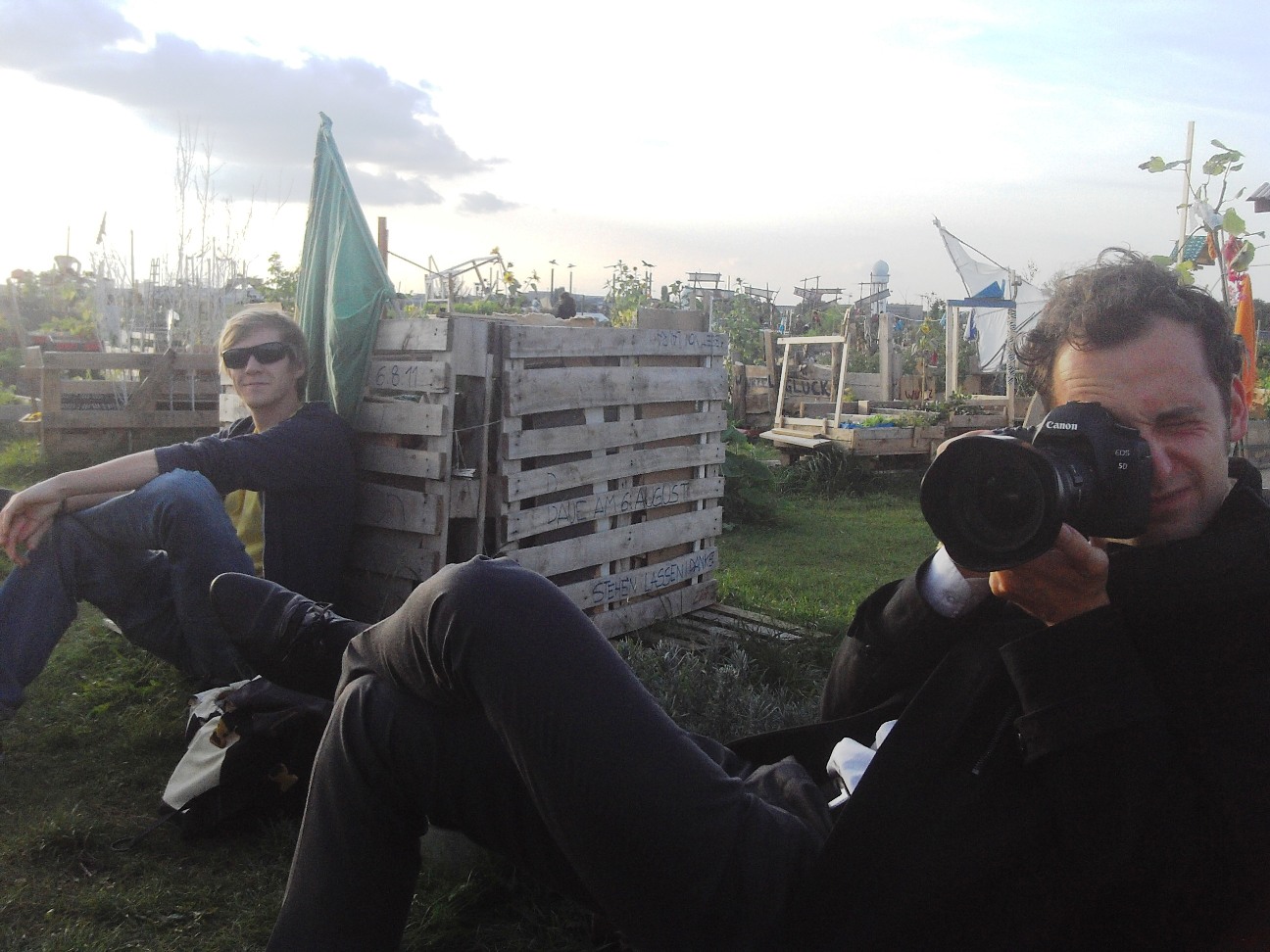
the journalist and the photographer at Tempelhof

But don’t get me wrong, I loved Berlin. Nowhere else in Western Europe is it as cheap to eat and live, and the slogan “poor but sexy” rings so true. I was there for 3 days for an atypical interview. A friend of mine there is a journalist and he was covering my story, but that only took an hour or two, plus a short photo shoot in the abandoned Tempelhof airport, and the rest of the time we watched the Berlin Philharmonic orchestra, patio-furniture shopped, and drank beer and wine on his balcony with the fruits of our shopping trip.


these rolling green hills in Olympia park are made of WWII rubble

I took a train to Munich, and the idea of German efficiency was proven time and time again by every long distance train or local U-bahn arriving on schedule down to the exact second. I would watch the minute hand click the same moment the train came to a hault, and I decided to synchronize all my clocks to theirs. I couchsurfed with Phil, a friend of the journalists, in Munich city, who took me on a tour of Olympia park – another huge green space in the city.

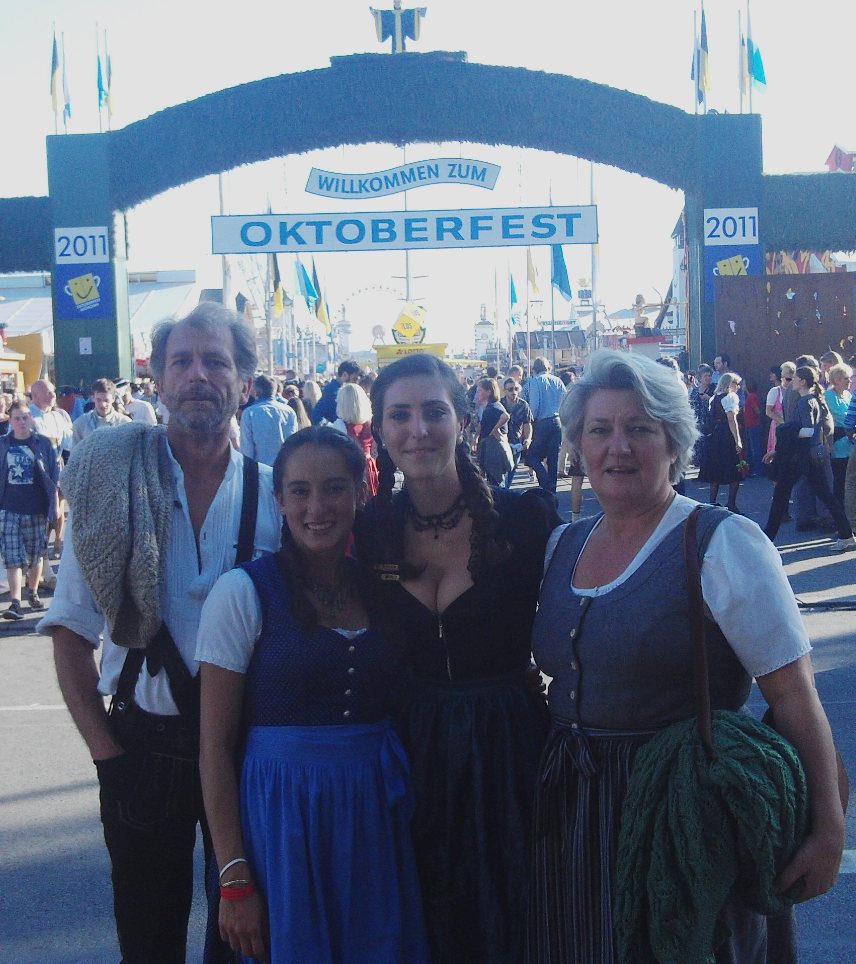
my Bavarian family at Oktoberfest

I went to Oktoberfest with Phil and his friends a couple nights and dressed as a boy in an extra pair of his lederhosen. The other nights I was at Oktoberfest with another couchsurfing friend named Kerstin and her entire family, and I stayed in her family’s Bavarian paradise home in Feldafing, close to Sternberger See. On our only day off from Oktoberfest, we went to Andechs, an ancient hill-top monastery that brews amazing beer.

Andechs monastery

I spent my last days in Bavaria with a friend I met in Iceland on one of the horse trips, Sandra, who took me riding on her Icelandic horses near Augsburg. Though it was Oktober, we rode in 25 degree sunshine, to a beer garden only reachable by horse or foot. We had even more beer there for lunch, and now that I’ve escaped to Austria, I’ve started my beer detox since I’ve never imagined that one could drink so much beer in one week.


The ABC's of Oktoberfest

Activities, Action and Alcohol:


a ride more entertaining to watch than try

Oktoberfest is a party designed for millions of people to come and drink beer, but its also a family-friendly festival full of things to do and see. There are carousels and pony rides for the youngens, and some extreme thrill-fulfilling rides for the more mature or drunk. There are shooting games and bells to hammer to win cheesy prizes like colourful plastic roses. There’s the ‘old’ part of Oktoberfest, a small section of the festival where they’ve tried to recreate Oktoberfest as it was in the good old days – smaller roller coasters, cheaper rides, and calmer beer gardens with bigger bands and a place to dance. There are competitions, one of the most famous being the Miss Bavaria contest: Miss Bavaria is a woman who can roll the best dumplings, clean a carpet with an old style wacker, and hold a liter of beer and head of cabbage up in the air for longest. There’s always live music, where only songs that the crowd can sing along with are played, and once a night 6 men arrive with whips they snap in beat with the band. At the end of the night, a male strip tease happens at the Braurosl tent, Im not sure about the others. All the sexy action between Oktoberfest lovers happens behind the festival on this one stretch of green hill where others also take time to nap, pee, or vomit.


a full tent with the band playing

Beer, Beer, Beer: Oktoberfest centers around 14 beer tents, which are more like warehouses each full of 10,000 people drinking mugs of beer. The mugs

Hacker beer

are made of glass or stone and only come in 1L size, and all cost 10 euros after tip. Tipping gets expensive after a while since the beers only cost about 8.75 and the beers are never full, but that’s part of the deal. Most of the tents are

run by a different brewery, so each tent only serves one type of beer. And you cant buy wine or schnapps, its just all about the beer. Bavarian beer, of course. But it is kosher to mix your beer with carbonated lemonade, and if you blend it half half its called a radler. And Boobs are also important, but Ill get to that at “D.”

Cookies, Chickens and Cuisine:


peanuts, pretzels and a cookie

Heart-shaped cookies with messages like “Greetings from Oktoberfest” or “I Love you” come in a variety of sizes, and are worn as necklaces to enhance the Bavarian costumes everyone wears. In the tents, you can order food from a small menu, and almost everyone at Oktoberfest ends up eating rotisserie chickenwhich is half a greasy chicken served on a plate. Pretzels and sausages are everywhere, in all different shapes and sizes. It isn’t exactly fine dining cuisine, but its everything you need after 3L of beer! Oh, and clothes pins. Everyone needs their name etched on a clothes pin. And then there’s the clothes…


die dirndls... Kerstin had a better pushup

Die Dirndl und die Lederhosen: The men wear leather shorts, held up with leather suspenders. They wear a white or checkered shirt underneath, knee-high white socks, and suede shoes. Some enhance with a hat, or a felt overcoat, and sometimes the leather suspenders has a badge on their chest with fancy embroidery, spelling out their family name or home town. The women wear a dirndl, a traditional dress with an apron tied on top and a fluffy-shoulder white blouse and 1 – 3 bras underneath.The push up bra is a very important part of the outfit, and you almost always need more than one to get the appropriate amount of cleavage sticking out of your dirndl, which also needs to be uncomfortable tight around your chest to help the cause. Some women wear crazy heels, but its better to wear flats that you can last in all day and keep your balance while dancing on the benches and tables everyone ends up standing on by the end of the night.