Welcome to Iran

Here’s a letter I wish someone from the Iranian tourism authority had sent me before flying one-way into Iran alone. 

One of the many beautiful gardens, this one in Fin, Kashan

One of the many beautiful gardens, this one in Fin, Kashan

Dear Tourist,

Welcome to Iran. We are a land famous for beautiful mosaics, Persian carpets, and ancient empires, and a people known the world over for our hospitality and endless supply of tea. However, please be aware of the following things before traveling in Iran.

We have a rich cultural history surrounding our bath houses and hammams, but presently social bathing is illegal and all our historic bathhouses have been turned into museums. There are banks on every corner, but none will accept your debit card and withdrawing money from abroad anywhere in this country is impossible. Bring a lot of cash because visa and mastercard (or any other international credit cards) are not accepted, and get used to a lot of zeros because even small things, like a taxi fare, are counted in the hundreds of thousands. Our money is printed as and called rials, but people refer to tomans, which is ten times less, so don’t get ripped off by paying ten times too much or insult someone by trying to pay ten times too little. However, for anything touristic, such as entrance to a museum, you will have to pay for an entrance ticket three to ten times more than a local. Also a taxi ride or a hotel room will be (legally) charged at a higher rate, since the government enforces different costs for foreigners. The same cup of coffee will not cost the same for you and a local, even if you order together.

You are not allowed to wear shorts, skirts or sleeveless shirts or anything else that would show your knees or shoulders. Please learn how to read Arabic numbers, since house numbers, streets, costs and bus numbers will usually only be written with them. Drivers are a little crazy and crossing the road inside or outside of a car are equally dangerous. Make sure you ride the metro or public bus in the right compartment – men in the front, women in the back!

If you are a woman, please also note: You must wear a hijab or wrap your head in some sort of scarf in all public places and inside cars. You cannot wear a skirt, but you must have a long enough jacket or shirt or skirt over your pants to cover your hips, so make sure you layer your pants under more clothing, preferably black. You cannot sing or dance in public or infront of men. You are not allowed to drive a motorcycle, or get on a motorcycle behind a man driving, since touching another man who is not your spouse or family member is a crime. Walking down the street with someone of the opposite gender who’s not related to you is also not allowed. Depending on the city you’re in, it’s also illegal to ride a bicycle, smoke cigarettes, or play pool. You must sit in the women’s only section of public transport, and of course mosques have a smaller women-only section which you can enter after wrapping yourself (and every part of your hair) in a chador (a big sheet, usually supplied to you).

Facebook, Twitter, and wordpress are some of the websites blocked in Iran, so make sure you get a virtual hotspot app if you want to access any of these sites. Airbnb and Coucshurfing are technically illegal too, and some couchsurfers are simply using the site to find an outside connection for help out of here, either with a visa, a foreign wife, or better-paying job offer. If you are a single woman, some men may consider trying to marry you, so pretend you’re married and wear a fake wedding ring. Or better yet, travel Iran with a man; it will save you a lot of hassle from taxi drivers wanting your phone number, men in bazaars following you, or random creepy men that assume western women are all super horny and none of them are virgins.

Since you are a tourist, many of these rules slide, but if an ethics police officer harasses you more than 3 times for any of the above, the punishment is prison or lashes, and adultery or rape will get you executed.

Welcome to Iran. We hope you enjoy your stay!
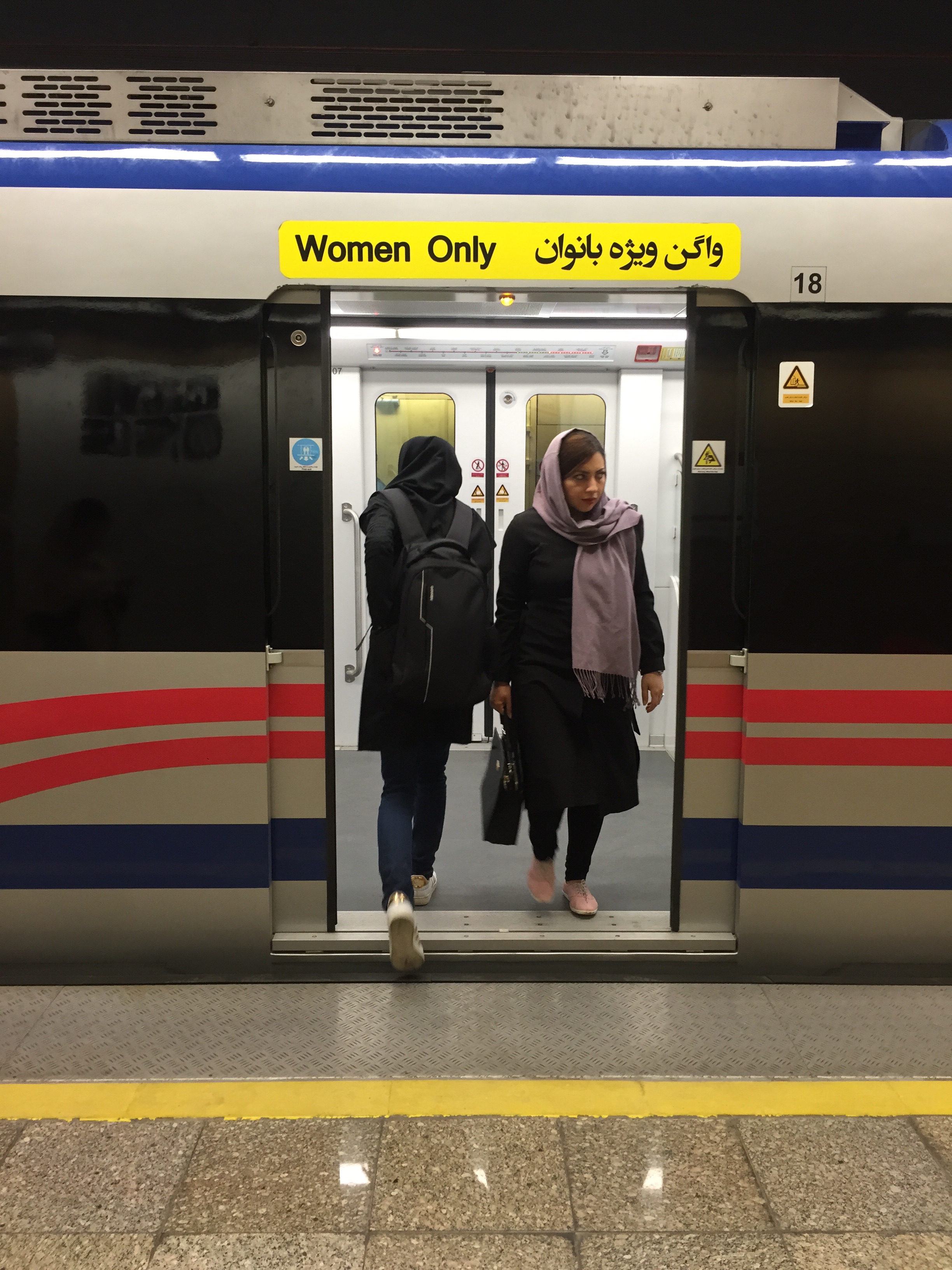
Women only

Women only

Weird things about Russia

Like any other big, powerful nation, everybody has an opinion or some stereotypes about Russia. Many haven’t even been there, but from the media, movies, or Russian friends abroad, people still manage to imagine the place in a certain way. I expected a lot of things, but was also surprised by many.

1.) People don’t smile, barely ever, but when they did, it was you the warmest smile anyone could ever give. And if they laughed, you always laughed with them 🙂

2.) The average person doesn’t speak English, especially not in the transport sector, so you had to be lucky to have a hotel receptionist that could answer all of your questions or go to a fancy restaurant to get maybe one waitress who could take your order (or get onto google maps or google translate and work it out yourself which was an easy plan B with all the open wifi networks). However, when they did speak English, sometimes they wouldn’t stop talking, and you’d be checking in or putting in your food order for 45 minutes while he or she chatted your ear off.

I'm going deeper undergound

I’m going deeper undergound

3.) The metro stations and subway systems in Moscow and St. Petersburg where built to resemble theaters or palace halls more than public transport. There were crystal chandeliers and marble walls, paintings and statues, and all sorts of golden highlights. The metro is also super deep underground, which had something to do with Stalin wanting them to double as bomb shelters after WWII.

4.) The number of Churches, churches, and more churches… Orthodox and Christian, and the attached monasteries, was unbelievable. I swear we drove thru towns that had more churches than houses, and taller churches than any tree or building around. And some of them built in the middle ages, still standing, and preserved. Who has the time and money for all of them? But the artwork, inside and out, and all the golden domes, never got tiring, so thank God for them, whoever they are. But one weird thing that came up a few times was fluorescent or neon name signs added to the facade of some red-brick ancient church… which kind of looked like someone’s attempt to turn the churches into the red-light district.

5.) The European-ness of it all. Russia always seemed like an other-worldly place, an exotic country that is just as far away and strange as China or India, just in different ways. But Russia is surprisingly European, at least the places I visited, to the point that basically no cultural barriers were felt. They could maybe tell who wasn’t Russian by the way we dressed, but otherwise we had everything else in common.

6.) Russia loves Italy and Italian everything – especially art, fashion, wine, and food – cheeses especially. The best restaurants had Italian chefs or Italian inspired cuisine, and many of the palaces from former great rulers had the footprint of Italy’s earliest beginnings of the Renaissance.

7.) From the tiny countryside villages to the downtown core of Moscow, traveling around Russia was super safe. I had a small fear of the gangster or mafioso type, a hard-faced Russian undergrounder or some super-rich armed men in black, but we only saw a lot of nice black cars with drivers for some very pretty business people. People were also incredibly honest, and I wasn’t cheated once for a bus ride or cornershop purchase, even if I handed over 10x too much money accidentally.

8.) You can rent a horse outside the downtown bars in Moscow. I met a woman riding around at midnight by almost walking into her on the sidewalk outside Pinch restaurant, and she wanted to let me pay to ride her horse around downtown that night in between the nightlife taxi traffic and sidewalks full of party people. It didn’t seem like the best idea at the time, but now I regret not doing it.

the countryside homes

the countryside homes

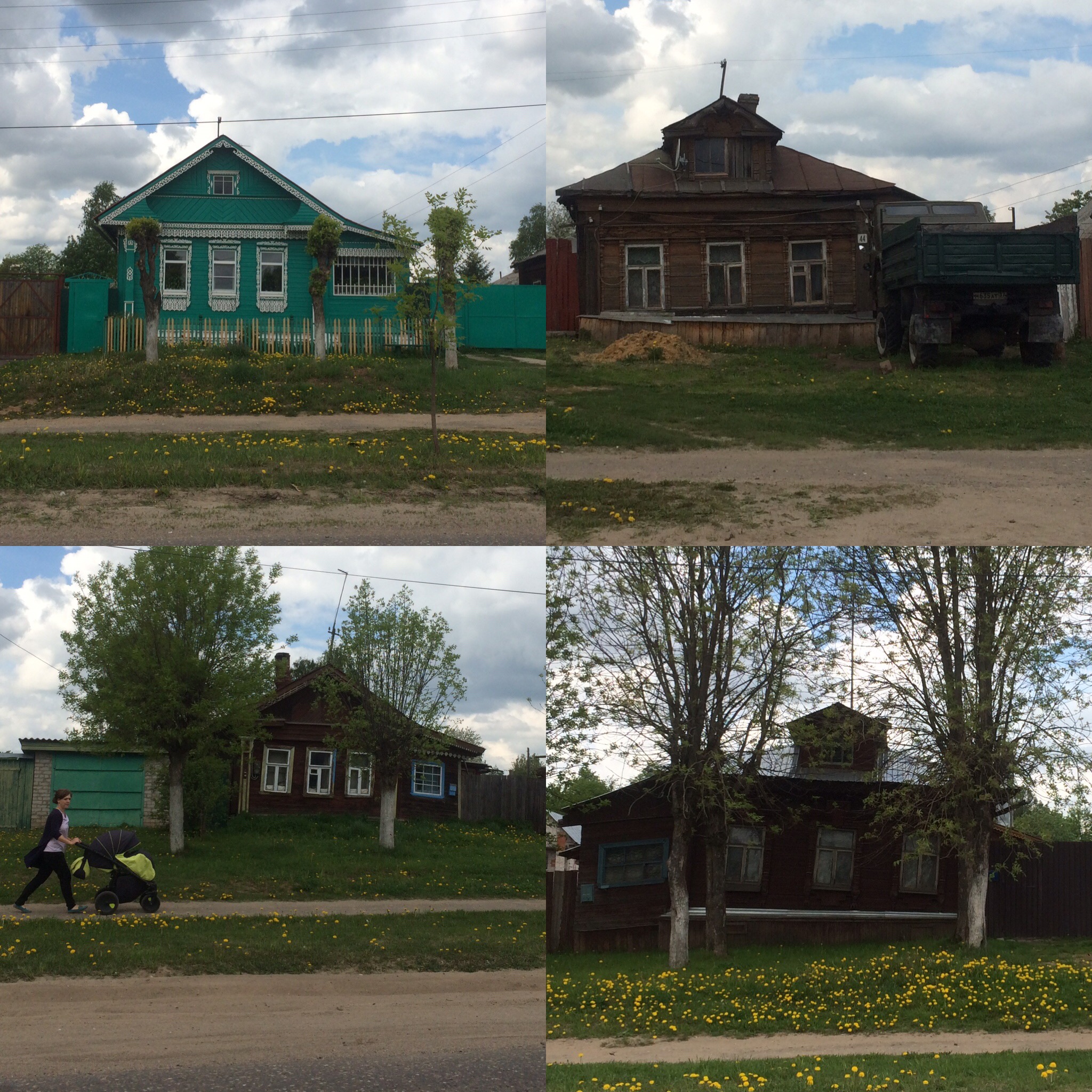
9.) There are villages in the Golden ring whose economy seems to rely solely on teddy bears. From tiny to life-sized stuffed bears, you can buy them from each and every house on the side of the road from at least 2 different villages that I saw. And some of those village houses were barely standing, tilting on such an angle that you thought the ground must be on a hill you didn’t feel.

10.) Russia and rabbits… I don’t know what it is, but they like rabbits, a lot.


Themes of the Middle East

I´ve gotten used to a few things after traveling some months in the Middle East. Starting in Lebanon and moving south to the bottom of the Arabian Peninsula in Oman, I now find myself in Arabic Africa, and a lot of familiarities have remained the same.

  1. Islam and the calls to prayer: Without fail, there is always a mosque within sight, a towering minaret hovering over a little village, or a humble little minaret peering between highrises. If you don’t see a mosque, then you most certainly will hear one, during one of their 5 calls to prayer every day, starting before dawn and ending after sunset. The mosques never seem to be in sync either, so during each prayer time the calls echo from street to street or in each neighbourhood a few minutes apart.
  2. Lack of alcohol and pork: Depending on the conservatism of each country, alcohol is either completely illegal, only available with a personal purchasing license, or only sold through western hotels. Pork was just as rare, since its very haraam (forbidden) for Muslims. In Kuwait and Somaliland, you can get hefty fines or even jail time for having a drink. Only in Lebanon, Jordan and Bahrain was alcohol and pork available to anyone (or sometimes only non-Muslims), but still not easy to find.
  3. Cheap gas: the price of gas was a fraction of what it is in Europe, and even more than half the price of North America’s cheap prices. You could fill a sports car with premium gas for $15, or pay only 32 euro cents for a liter of regular gas.
  4. Car friendly, pedestrian hating mobility: Side walks are nearly non-existent, and walking anywhere is weird, since the cities have been built for car traffic or those moving without cars are assumed to be of lower class or less money. Even buses were rare, since public transport would also mean the same, and everyone who’s anyone should be able to afford a car and the cheap gas. This causes a lot of traffic, round-abouts, impassable highways and crazy drivers. And it doesn’t help that they like to drive oversized American SUV’s and Japanese Land Cruisers as if they were in an Aston Martin (this comment applies mainly to Saudi drivers).
  5. Security, Security: The middle east is just as paranoid of terrorism as any European or North American place (if not more), and random searches, road blocks and checkpoints are a regularity. Passing through airport security as a woman was a little less hassling, since we don’t have to strip down to our socks and undershirts, but a handheld metal detector may still scans us before entering a mosque or supermarket. In Somaliland, you need to hire an armed military guard to accompany you on any trips outside of the city capital, Hargeisa.
  6. Endless Construction: Oil money has poured into the Gulf countries, very recently, quickly, and heavily, and its like they don’t know what to do with it other than build and develop. In Kuwait they regularly build something just to rebuild or redesign it, and some can’t build without destroying something first so these places are in a constant dusty state of being torn down and built up. And I mean up, up, up into the sky, sky scrapers that compete to be the tallest in the world. And the places they tear down sometimes have to be cleared to prepare the lot, so rubble is driven out of the city and in Qatar, they’re literally building a mountain out of it.
  7. Over-Perfuming: People literally cover themselves in perfume, and its not just eau de toilette, but ‘oud’, a kind of oil de toilette, so it lingers longer and stronger. It can be suffocating, for the entire time theyre near to you, and even if they’re walking past, a scent will linger, floating behind them for a few metres.
  8. Socializing alone or at home: If it wasn’t for the shisha bars and Starbucks, people would probably just stay at home sending whatsapp messages, both texts and voice recordings, all day long. For those who don’t smoke or have had enough coffee for the day, alot of socialising happens in the privacy of peoples homes. You can order in food, stay comfortably dressed, and hang out with the gays or women that dont seem to show face in the public sphere alone. Since alcohol is a no go, board games are a sort of social elixir, the in thing to do with a bunch of nerds who prefer it to watching any more television (we watch a lot of flat screens and big screens around here).
  9. Fashion: The men wear perfectly pressed, angelic white robes (dishdasha or thawb), with matching head scarves (gutra) crowned with a black rope thingy (ogal). The names change from place to place, as well as the colours (the robes can be shades of beige or grey and the scarves red or black checkered), but its always impressive to see how they flip and fold the ends of their traingular head scarf as if it were an extension of themself, like a head of hair to a woman. Then the women, wear a similar robe but more like a cloak, and usually black, called an abaya. Then they wrap their heads in a hijab, some cover their face below the eyes (a burka), some wear a sort of Zorro mask around their eyes (a nikab), and then there’s those who just drape their whole face with a sheer black sheet so they look like black ghosts floating around from far away. Things started to get a little bit more colourful for the women in the Emirates, and especially Oman, but nothing beats the African Muslim wear of a trillion bright colours adoring their dark, henna-tattooed skin.


Themes of the Balkans

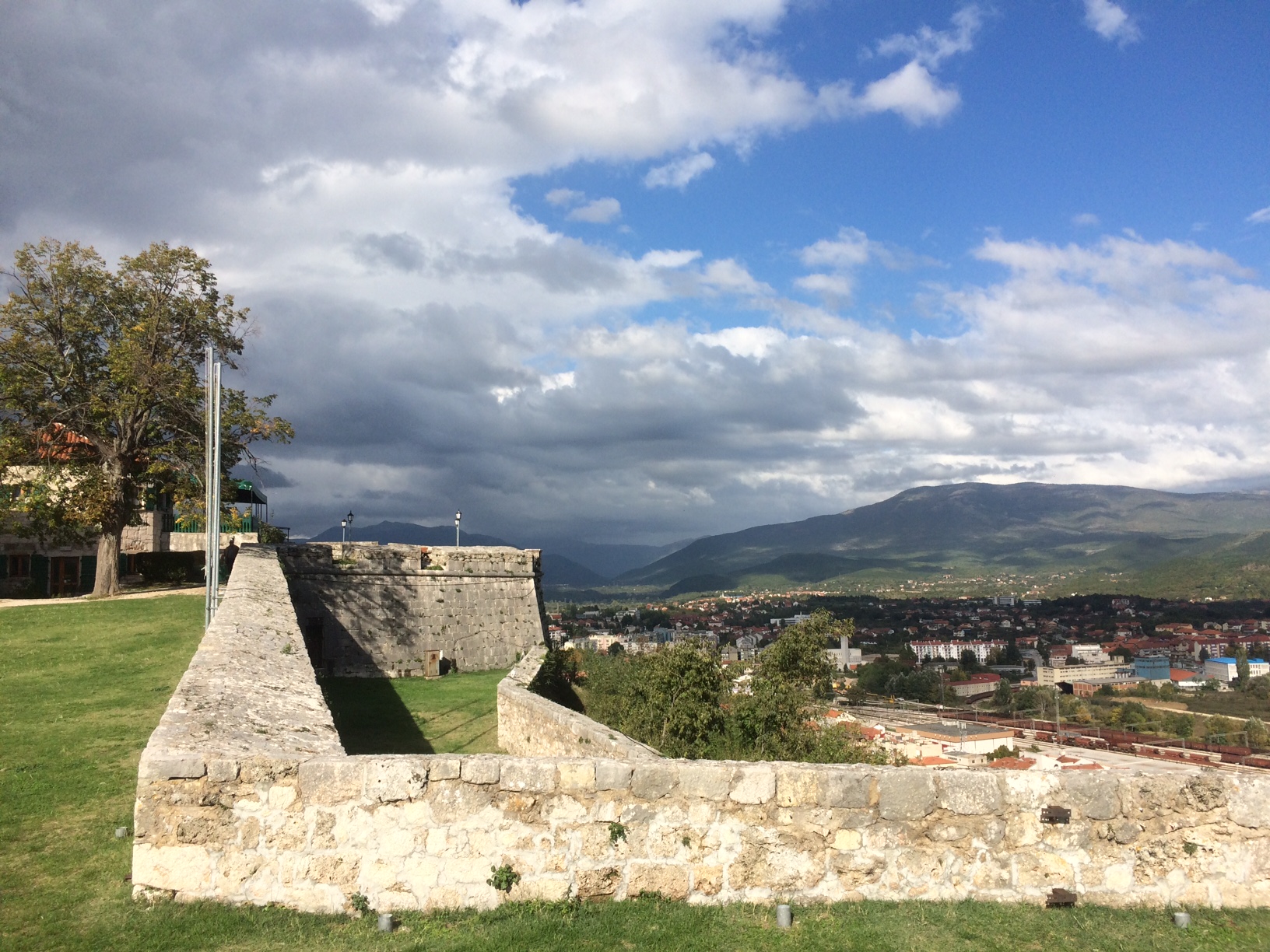
summery scene below Knin fortress

summery scene below Knin fortress

Even though every country and each city had its own charm, there are a few reoccurring themes in the Balkans.

  • Stray dogs and cats: They are everywhere, some happy, some miserable, some fed, some not, and even some that have been neutered and then re-released. Some people who have pets and don’t feel like keeping it, or move away, sometimes leave them behind, and other animals are born in the streets, leaving the cutest puppies and kittens to pull on your heart strings and make you wish you could take them all home.
  • Food and mealtime: Breakfast is pretty straight forward, usually a combination of some bread and a yogurt drink, but lunch is the meal you eat after work at 5pm and some just skip dinner altogether. Everyone has a variation of burek/banitza and cevapi, aka kebab as a fast food staple, and cheese and these huge white beans can be added to nearly any hot meal.
  • Turkish influence: all the Balkan countries were once under Ottoman rule, and they’ve still left their mark hundreds of years later. Doner is everywhere, Turkish coffee is as common as espressos, and tea served in small cups with a slice of lemon is called Turkish tea. The markets are often called Bazaars, and a lot of words in their vocabulary are Turkish.
  • Fresh produce and homemade goodies: every market sells goods that follow the seasons, with tomatoes in summer to pomegranate in the fall, chestnut roasters closer to Christmas, and once in a while some Japanese apples. Every village and even each home in the right climate will grow their own grapes, make their own wine and rakia, and others have beehives and make the most delicious honey.
  • Exchange rates: I could only use the euro in, strangely enough, Kosovo, and Montenegro, and everywhere else had their own type of denar/dinar or lei/lev/lek. But none of the rates are that similar, so sometimes you pay in the fives and tens, and sometimes in the tens of thousands.

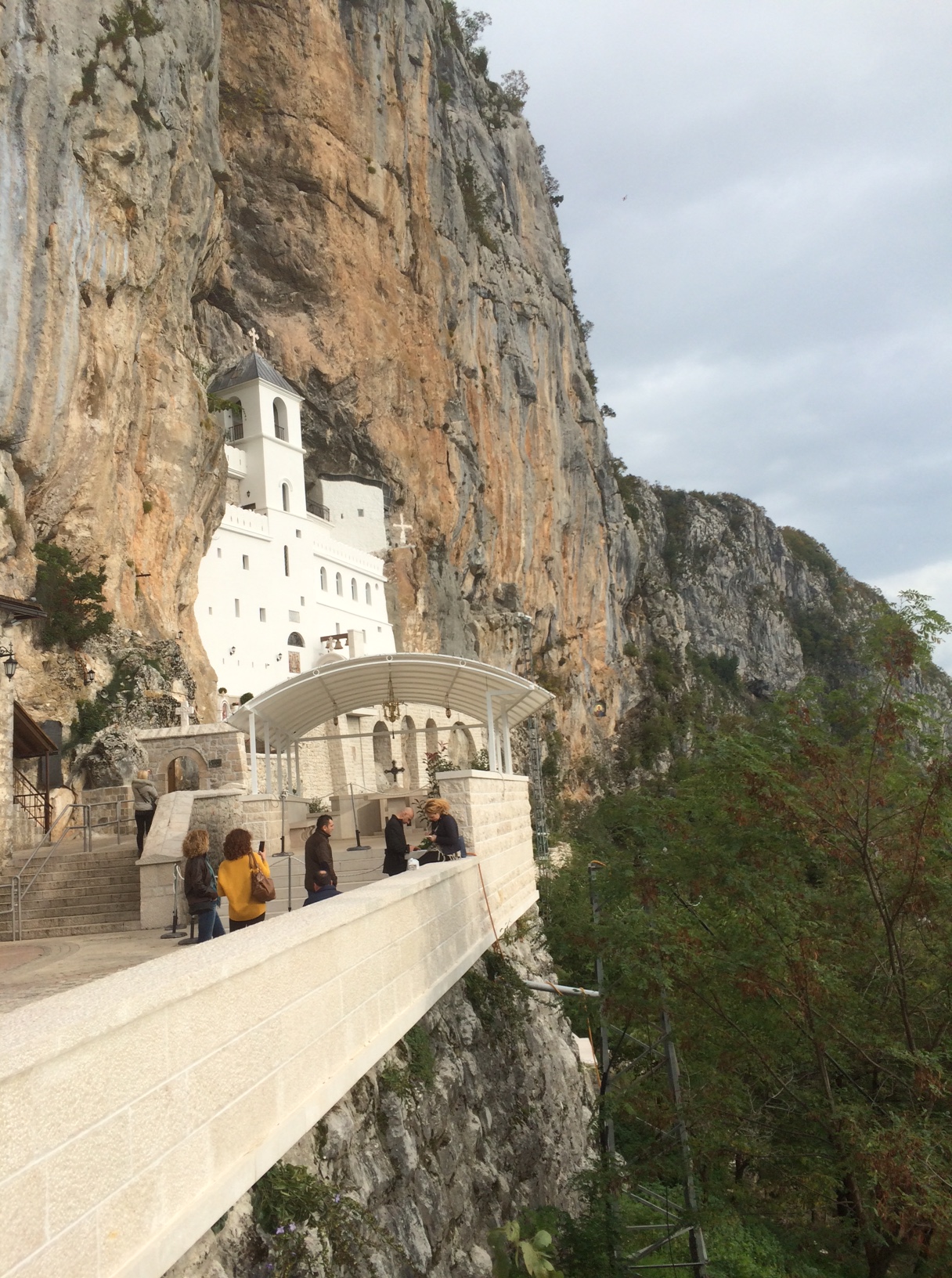
    Ostrog Monastery in the rock

    Ostrog Monastery in the rock

  • Tourist sights: My days have consisted of walking around pedestrian city centers, monasteries in or on top of rocks, and beautifully painted Orthodox churches. The frescoes never get old to stare at, and the places they put some monasteries, hundreds of years ago, makes me wonder how the heck they built them there. There are usually some mosques and fortresses as well, not a bad bonus.
  • Pollution: the cities in the Balkans are some of the most polluted cities in Europe, including Skopje, Sarajevo, Varna and Bucharest. I only really noticed it in the first two, but I definitely noticed my first breath of fresh air I took every time I reached the mountains again.

And there were a lot of mountains to pass to travel overland in the Balkans, and they were always a delight, and I still can’t decide if it was better to see them still in full bloom in October, gold and red when autumn arrived, or snow covered pines in my last week. I guess a mix of all three was the best, so I don’t regret traveling the Balkans now, even though everyone has persuaded me to come back in the spring.

The World is a Circus

I see many strange things when traveling, things I’ve never seen before or never imagined. I had one day on the road that felt like all the people around me were part of a circus set that I had accidentally gotten lost amidst. There was a guy walking around with a (live) bird in a cup, for no apparent reason. There was a huge and hairy transvestite wearing a belly dance costume dancing to hindi music, but not for money (there was no hat), just for fun. Beside him/her were amputees begging, each with a few euro cents in their hat, behind me was a midget making gigantic bubbles with two sticks, some string and a soapy bucket, and a fully covered Muslim woman walked passed without noticing any of this. When I thought I’d seen it all, a 9 year old gypsy kid carrying a drum lit up a cigarette. Before I could remember where I was, I turned to the next ATM to maybe withdraw some money, but a bird had chosen to nest there for the day. Since then, I saw an Oklahoma license plate in Kosovo, and learned that the garbage trucks in Prizren sing songs… just like the ice cream trucks in Canada.

In England a couple weeks ago, I heard people speaking English that I couldn’t understand a single word of. I couchsurfed in Liverpool in an old brick factory warehouse where 10 or 15 people live semi-illegally. I tasted dozens of sour beers at a beer-festival In Manchester, since apparently sour beers are ‘in,’ but it tastes like rotten cider without any sugar and I’m not sure why everyone’s making it. The alternatives weren’t all that better, since the English like warm, flat ales and really dark and heavy stouts, but thankfully there was an actual cider brewer where I could taste something yummy and familiar.

The ferry from Liverpool to the Isle of Man takes 2 hrs and 45 mins because it can’t sail in a straight line; if it wasn’t for all the windmill farms in the Irish sea, the ferry could avoid its zig-zag course and get there in less than 2 hours. Sailing past gigantic, white posts with rotating blades standing in the middle of an open sea made me feel like I was on another planet.

And beyond all the strange sights is the strange world of money. The cost of things here and there and the exchange rates of currencies from different countries seems like a game of monopoly, or a gambling game that has no explanation. For example, from Reykjavik it’s faster and cheaper to fly to Manchester 1000 miles away than drive to Akureryi 235 miles away. A return ticket on the Liverpool subway is £1.80 but a one way is £1.75. Carlsberg is cheaper than a local beer in England, and Tuborg is cheaper than a local beer in Montenegro, when Carlsberg and Tuborg both come from one of the most expensive countries in the world, Denmark.

In Serbia and around, bottles of wine are more commonly in 1L bottles, and get capped with a beer tap instead of a cork. You can eat a whole meal for €1 but a coca cola might cost you €1.60. In the Balkans, a carton of cigarettes might cost 15 euros on the street, but cost 35 euros taxless in the airport duty-free… ? The taxi ride to a bus station or airport might cost you more than the bus ticket or even the flight, with Ryanair, Easy Jet and Wizzair all serving the Balkans with flights starting at £15.

But, without all these idiosyncrasies, traveling wouldn’t be traveling, since it’s the weird and crazy, nonsensical things that make it fun, challenging, and different than sitting at home. So bring on the circus, I’m sure they have space for another clown.

The Chinese and the Pacific

I didn’t expect to meet so many Chinese people on a trip through the Pacific islands, but they were on every island, in a very important way. The Chinese run most of the little corner shops, convenience stores and super markets, and sometimes all of the restaurants too. In the midst of a Mormon revolution and conservative bible belt, they are the ones who will work on Sundays and stay open late, sometimes even 24 hours, selling beer and the largest assortment of canned tuna. They import goods from China by the boat loads, and sometimes these goods are the only goods available to buy on an island. Food, drinks, clothes, car parts, furniture, and kids toys are all Made in China, and they sell like hot cakes every time there’s a new shipment in. Every island I’ve been to had a Chinese restaurant, sometimes it was the only restaurant, and sometimes there was a dozen, all with names like Fortune Star or Lucky Dragon. They served the cheapest and most generous portions of rice or noddle dishes, but the pork never quite tasted like pork and the chicken rarely had more meat than skin on it.

I always thought I’d chose Russian or Arabic as the next, most-useful language I should learn, but now I’m convinced its Mandarin. The Chinese who live and work these islands always learn the local language, in whatever dialect they speak, and that’s it, so no white-girl English. It’s funny to speak pigeon to a soft-spoken, pale, little shopkeeper, but if you don’t know Mandarin or Samoan or Tongan, then you just had to rely on body language and face gestures.

By the time I reached Micronesia, the Chinese population had grown, since tourists and business men started to grow exponentially. Palau is to mainland China what Mexico is to the rest of North America, a cheap and tropical little play land for the hard working to go and chillax. I happened to be in Palau for Chinese New Year, so there were literally thousands of them, filling every hotel and tour the island had to offer. Right after I went to Saipan, which and has successfully marketed car rentals (mostly Hummers and Mustang convertibles) as a tourist trap for teeny little Chinese and Japanese drivers that have rarely driven anything bigger than a Yaris.

boatloads of Chinese tourists empty out at the Milky Way in Palau's Rock Islands

boatloads of Chinese tourists empty out at the Milky Way in Palau’s Rock Islands

After coming to mainland China on my way back home, I decided I like Chinese locals much more than Chinese tourists. The worst experience I had with them was trying to snorkel around the Rock Islands and the famous Jelly fish lake – imagine a hundred black-haired people in leotard unisuits and life jackets flailing around in a sea they don’t know how to swim in, but meanwhile trying to look at all the pretty fishies through their awkwardly fitting snorkel masks, and every once in a while trying to adjust their snorkels while standing up on some super fragile coral or trying their best to pull out some clam shells or pick up some stingerless jellyfish to take home. There’s something about personal space they don’t respect above ground either (I’ve often been walked through by groups of Chinese tourists), but underwater (especially when I don’t have a life jacket) is a bit more dangerous, and I definitely choked on a few mouthfuls of seawater as floating Chinese kids thrashed into me or over me.

The best experience I’ve had with the Chinese was thanks to China Southern Airline. First of all, I was able to book a last-minute one-way ticket from Taipei to London for less than 500 euros, which is 2 flights connecting in Guangzhou, China. Upon checking in, I was informed I had a Premium Economy ticket, which would rival most other airlines first class cabins. I had a big comfy reclining seat with a foot rest and extra leg and arm room, a meal with wine, and free entertainment, just on the short 2 hour hop between Taipei and Gangzhou. I was expecting a shitty 16 hour overnight layover in the airport (which made sense since the ticket was so cheap), but then China Southern offers a complimentary hotel stay for connections over 8 hours. I’m not talking about a flight delay, but simply a layover entitles me to a 45 min shuttle to a beautiful hotel, where I was given a 3 bedroom suite, free breakfast, and a transfer back to the hotel, all for free. I literally couldn’t believe it, and thought it was some sort of scam and I’d have to pay later, but after drinking some Chinese tea while soaking in a bubble bath, I jumped for joy onto my queen sized bed, but realized a little too late that the bed was rock hard.

Its hard to imagine the pacific without the Chinese, but I did try. Maybe it would mean less industrialized islands with more self-sufficiency, not depending on shipments or trade… or maybe their seas wouldn’t be as exploited by the harvest of nearly everything edible (including coral). Or maybe the islands would have long gone under, tired of living with such limited resources and simple diets. Or maybe the Australians, Kiwis and Americans would have just filled the gaps instead… who knows. All I can say for sure is the Pacific economy would be totally different without the Chinese, and I wouldn’t have eaten nearly as well without them during my trip.

Themes of the South Pacific

It’s interesting to travel here, since your day is governed by the sunrise and the sunset, waking with the rest of the village according to the suns wishes, and your diet is limited to the market’s availability. For a while it’s an overabundance of fresh papaya and watermelon, then its pineapples and eggplants. Trying to find avocados when its cucumber and tomato season is tough, but I’ve been lucky twice. Your activities are controlled by the weather, since the rain makes you stop wherever you are and worry only about finding shelter, and the shining sun makes you hide under shade until the temperature drops below 38 degrees and you can once again bare to start walking. An umbrella is a very versatile item, since it works as protection against the rain and the sun, so it’s not weird to always have an open umbrella above your head. The tides govern when you can get in or out of the water safely, or when it’s good to snorkel, or when there’s actually sand on the beach to lay on, or waves past the break to surf on.

Weird things I’ve learned is to always keep my bag shut in my room at night. If not, you’ll find a couple cockroaches who’ve moved in and you won’t find them til a few days later, a little groggy from lack of oxygen and food, but still alive and creepily crawling further into your backpack when you try to chuck them out. Buses don’t often have windows on them, so it’s also important to keep your mouth shut whiles it’s driving… the bugs and bees do not taste good flying in at 50km per hour. Another important lesson is that you can never have too much bug spray, and you certainly can never be wearing too much bug spray, because those damned mosquitos will still get you, even if you think you’re in a mozzy-proof net. They’re like cockroaches, they just never die… or they multiply faster than you can kill them, I’m not sure. And they come with horrible threats of diseases I hadn’t even heard of – like chikungunya – or the regular malaria, dengue and yellow fevers you’re equally weary of. But, I do know that if mosquitos were to die a horrible painful death in the burning depths of hell forever, I would not feel bad, or sad, or any remorse, since their total extinction wouldn’t make me mourn one bit.

There are a few common themes in the South Pacific that stay even when you change islands or countries. Fire dancing and other types of traditional dance are always present, in their own local flare. Some are done in grass skirts, some in sarongs (whose names can change from pareos to lava-lavas), some are scary (like the Maori haka – google it if you’ve never seen an All Blacks rugby game), most are beautiful, some are danced to percussion and body slapping, and others to the sound of ukuleles and beautiful Polynesian songs. All the South Pacific countries have memorable graves, each burial practice done slightly differently, but they’re usually very present, in the front yards of peoples homes, along the side of the road, or in mass graveyards decorated with colourful plastic flowers. They range from mounds of sand with a simple tombstone, to full-on housed shelters where the relatives of the deceased like to play or rest.

Tattoos are important, and visible mostly on men, but women will also often have them on their upper leg or a band around an arm or ankle. Maori’s have them on their face, and Samoans get a solid tattoo from their knees up to their midwaist which takes 6 hours a day for 2 weeks to complete the traditional way. Apparently everything is tattooed except the genitals… that’s got to be painful.

The food has, for the most part, been consistently bad. They don’t use much spice or flavor except for fried oil, and the staple is canned tuna, corned beef, instant noodles and different forms of potatoey-starches. Ive never seen so many different types and flavours of instant noodles – everything from Korean Kimchi to Maggi noddles and Indonesian packages I couldn’t read. The food was refreshingly amazing in Fiji, and some fully-catered hotels in Samoa had yummy curries and rice, which was a welcomed change to noodles or starch.

Women, men and children all wear flowers in their hair, live ones, plastic ones, white ones, pink ones, and most a variation of a frangipani or hibiscus flower. It’s funny to see it on the men, since it doesn’t take anything away from their masculinity, even if its paired with a pink sarong or flowery skirt, since that’s just become a normal, manly sight for me in the pacific. Every island has a different name for cross-dressing men (my favourite is the very feminine word fa’afafine in Tahitian), the flamboyant gay guys who are not gay guys but women who take female roles and like men. They’re a source of pride for any family who never has a daughter, since they fulfill the daughterly void, and even though homosexuality is illegal in many countries and the church would never approve, they bypass this sin since they’re simply fully-functional women (stuck in men’s bodies… but that’s not their fault).

Kava, which is a cloudy-brownish narcotic drink made from a root plant, has also been a reoccurring theme. Every island has its own kava – a special recipe, different names or pronunciation, a special time or place to drink it, and various ways the kava ceremony should proceed. When I had it in Fiji, it was from a small wooden bowl that we all shared by passing around and drinking until the cup was empty. It would be refilled and repassed til we’d all had enough, or our tongues became to tickly to hold up to the bowl, and I didn’t feel drunk or drugged but a lot of people acted like they did.

After five months in the South Pacific, it’s all starting to feel very familiar, and most things are comfortable except the heat and mosquitos. I actually met someone in Samoa whose name (in Samoan) was South Pacific Ocean, and first I laughed, but then I thought about it and realized that the meaning behind it is a beautiful thing to be named after. If it didn’t have such a terrible ring to it in English, I’d probably consider naming a child after the South Pacific too.

Goodbye Reykjavik, til 2014

I think this is the first year I’ve really appreciated Icelandic autumn, and I’m not sure if it’s because it was an exceptionally warm and beautiful one, or if it’s because I knew I was leaving before winter started. Whether or not if was because fall was good or I didn’t have to worry about dreading winter, I have been looking forward to leaving on a jet plane to West Africa ever since I booked it in midsummer. The sunny beaches and lush forests are starting to call my name.

I am going to travel with my cousin Villi, who is a strong, tall Viking man but looks a little bit more like a Colombian drug dealer with his shaved head, tattoo and dark skin (he is also half Guyanese). So I’m banking on him to protect me and pretend to be my husband when the appropriate situation calls for me to be married. The Gambia is 90% Muslim but supposedly very safe and tourist friendly, so he may be more handy in Mali or Guniea-Bissau.

This trip will be one of the first I take with company for so long, and also the first without a computer so I’ll be blogging from my iPhone. Not sure how that will work out but whateves. I would much prefer to go old school and carry around some pen and paper to handwrite about my journey, but then I wouldn’t be able to share it online and assure my mother I’m still alive. But that got me thinking, why does no one write anymore? Will the next generation just grow up learning how to type on screens? Even so, people write and type less, I feel like. Maybe writing is more stressful because people don’t want their thoughts to be permanent or reread or personal to themselves. And then half the things we think we don’t even feel comfortable sharing in the first place, so writing it down makes us scared of everyone judging us all the time for the crazy things we think. I say screw them and think whatever you think, you’re the one deciding to read this. Now I should probably say something brilliant I’ve been thinking, but instead I’m going to go back to what I was talking about before my rant.

I’m leaving for The Gambia, we need to get to Senegal, but first I fly through Paris and Barcelona. I only have 6 hours in Barcelona, where I plan to walk down the Las Ramblas, drink Sangria, and find Villi at the airport. I have 2 nights in Paris to meet a handful of amazing people, both new and old friends, and drink a lot of good wine. I’m not sure I’ll miss Iceland too much while that is all going on, but maybe the heat, Mosquitos and water in West Africa will stir a few homesick strings in me.

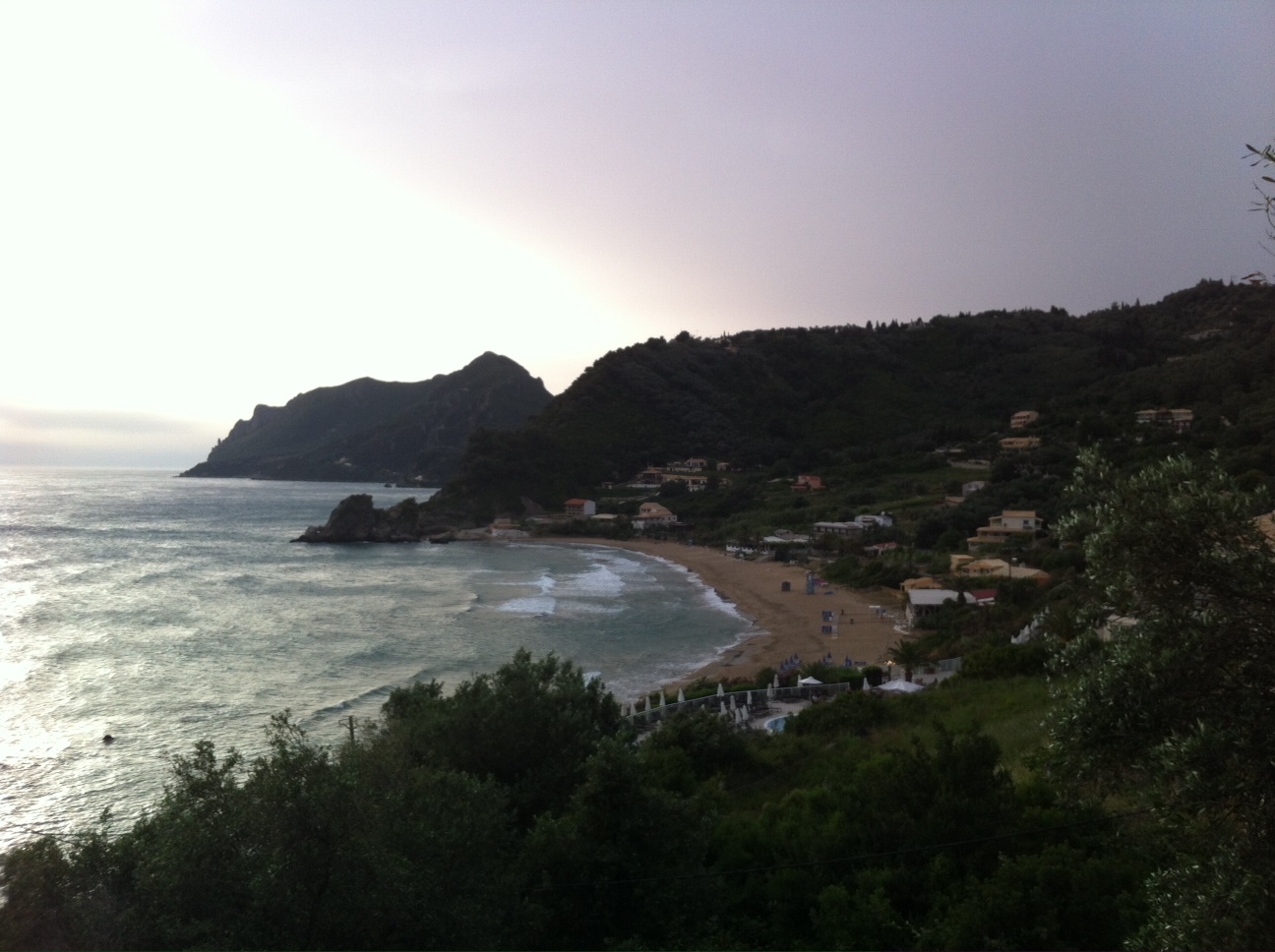
Final stop in Greece: Corfu

my tour guides

I had gotten delayed by at least one day in almost every place I visited in Greece, so by the time I made it to Corfu where my flight home was from, I only had 3 days to wet my appetite for everything Corfiot. My flight then got cancelled and I had to fly a day home early, so I was basically down to 1 and a half days. Luckily, my couchsurf hosts’ mother owned a 5 star hotel in Dasia, a beautiful mountain top suburb, and his best friends family owned the best restaurant in Corfu town, the Italian ‘La Famiglia.’ Between them and their friends, I basically saw all the islands best highlights in 36 hours, including a private beachside hostel where the owner home grew her own olives and vineyards and homemade her own cheese and raki.

home made cheese and raki

All the food in Greece had been a pleasant surprise: with a similar climate to Italy, they had exquisite olives, grapes, wines and limoncello. It’s a fact that Greece sells all its best extra virgin olive oil to Italy where its blended with Italian EVOO and sold as Italian. The fresh feta cheese, tomatoes, cucumbers, olives, olive oil and balsamic vinegar shaken together for a traditional Greek salad never tasted the same from home to home, but always tasted incredibly fresh and delicious. Greek mousaka and gyros were also made with a personal touch by everyone, but equally amazing every time.

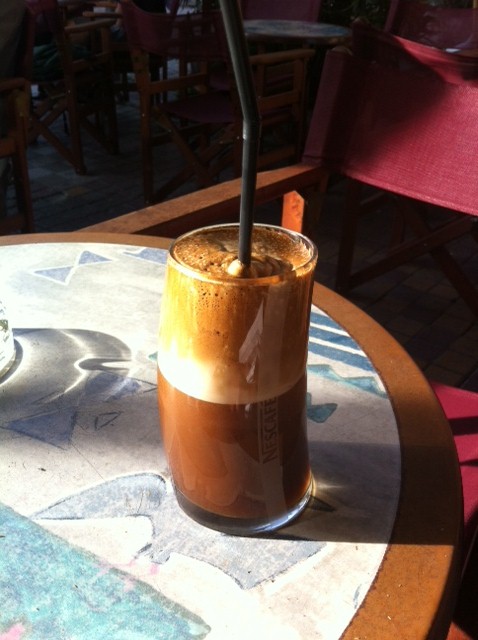
Greek frappe

There were many things in Greece that I either didn´t expect or became so regular that I couldnt imagine Greece without them. The first and best of all, was Greek hospitality; every Greek host or friend I made, I also met their closest friends and extended families. If I was ever alone and Greekless, a Greek guy would pick me up off the street or invite me into his shop for coffee. Even when I walked into coffee shops to order a cup of Greek coffee, the smiley waiter or owner would come out with coffee and a bottle of water and tell me ‘don’t worry about it, drink.’  On the way to Corfu, I stopped in Patras, and sat in a cafe alone to sip on a frappé (the Greek version of Instant coffee on ice with sugar). The guy beside, Xristos, me waited until I left to chase me down the street and ask me where I was from and what I was doing here alone, and then invited me out with him and his friends to the top of Patras for a vantage point out onto the sea. There I realized another Greek stereotype: philosophy. It means ‘friend of knowledge’ in Greek, and he wasn’t the first or last person in Greece I met who wanted to dig deep into my foreign mind and discuss existential philosophy.  Xristos’ friend started heavy, by asking me ‘do you have religion?’ and following up with my surprised answer with an even heavier answer, ‘What is God to you?’. Then he asked me if I believed all of the worlds problems couldn’t be solved with love, and if not, how or who can solve world peace. I met many more deep thinkers in Corfu, who drilled my beliefs for meaning and reason. When I told them about my ‘Quarter Life Crisis’ book idea, they told me it was brilliant, but that I had to be prepared to have the answers for the sequel, the ‘Rest of Your Life Crisis.’

Corfu town

Another weird re-occurrence was a fascination with Sweden. My couchsurf host in Santorini wanted to move to Stockholm, my couchsurf host Johnny Bravo in Corfu learned how to speak Swedish, and the Italian restaurant guy had lived in Sweden. All the friends in Corfu I met were also musicians or musically inclined, and of the 10 couchsurf host possibilities in Corfu, 3 more were musicians or singers. It reminded me a bit of Iceland, where every musician is involved with 2 or 3 different solo or band acts, and look to music as a way to get out of their home island.

the sunset view from Sunrock hostel

Every Greek home I stepped into, I was offered Greek coffee, homemade cheese, Hellenic beer or freshly picked olives. The Greek hospitality ideals must have been taken from the Persian past, and their current economic recession didn’t give them any excuse to spare an expense. Everyone complained about the current state of affairs, unemployment and wages at unacceptable rates, but in reality, the Greek people are not suffering nearly as much as their Scandinavian counterparts (ie. Icelanders) since they still have home and family ideologies that reign true. I don’t know if it was chance or luck that I was blinded, but I didn’t see the real consequences of the recession: if you have family, friends, and happiness, I don’t see what more love money can buy anyway, so ‘Ya-mas’ to the Greek philosophy of living.

Why It's Okay to Travel Alone

Elizabeth Gilbert’s 2006 memoir “Eat, Pray, Love” has sold over 9 million copies worldwide, according to Forbes, and this love letter to the soul has changed many people’s perspective on the virtues of traveling alone. What was once considered dangerous and not worth the risk is now being considered a rite of passage to getting to know yourself. I´m constantly setting out on my own mini voyages of discovery, because every backpacking experience I´ve had so far has helped shape me into who I am today.

For many people, the thought of saving, planning and embarking on an adventure alone is terrifying, an option that’s completely out of the question. But why let fear keep you from experiencing something incredible? You

End the Excuses

You don’t have the money? Start saving, putting aside a little money each week. You don’t have time to plan a trip? Read a novel that’s set in your dream destination and try to take notes about everything you want to see when you go. Are you worried about leaving your dog or or partner while you’re away? Find a pet sitter, and invite him/her next time or tell them to go on their own solo trip too. Are you afraid you’ll get lonely? Matador Network travel contributor, Katka Lapelosa, said it best in a recent article about solo travel, “You can feel just as insecure in your own backyard — if you’re going to feel sorry for yourself, do it somewhere cool.”

Most reasons not to go are simply excuses. If you want to have a life full of adventure you can’t let excuses cramp your style. There are some valuable life lessons to learn on the road to self-discovery.

Learn to Rely on Yourself

Solo travel can help you become more decisive and confident in your decisions. You learn to deal with the positive or negative consequences of every decision and have no choice but to accept full responsibility.

Sharpen Problem-Solving Skills

Nothing develops problem-solving skills like getting lost in a foreign country, especially when you barely speak the language. Whether you’re attempting to navigate the Paris Metro system or climb glaciers in Patagonia, you’ll keenly develop your problem-solving abilities out of necessity.

Turn Up the Volume of Your Inner Voice

Often that little voice inside you has trouble being heard over the din of daily life. Between rushing to work, attending meeting after meeting and tending to friends, family and your kids, it can be tough to hear yourself think. But when you eliminate all of the obligations and focus on doing things for your own enjoyment, suddenly that inner voice finds its volume.

Don’t Worry About Anyone Else’s Feelings

Have you ever taken a trip with a companion who did little but complain? Do you feel guilty indulging in your own interests instead of catering to the group? When traveling alone, you don’t have to do anything you don’t want to do. Enjoy not making apologies for sleeping in to cure jet lag. Eat whenever you want to eat, whatever you want to eat, and wherever you want to eat. You can finally feel warranted in being incredibly selfish and let your own wants and needs guide the way when you travel alone.