
Sunset in Paradise
Sunset in Paradise
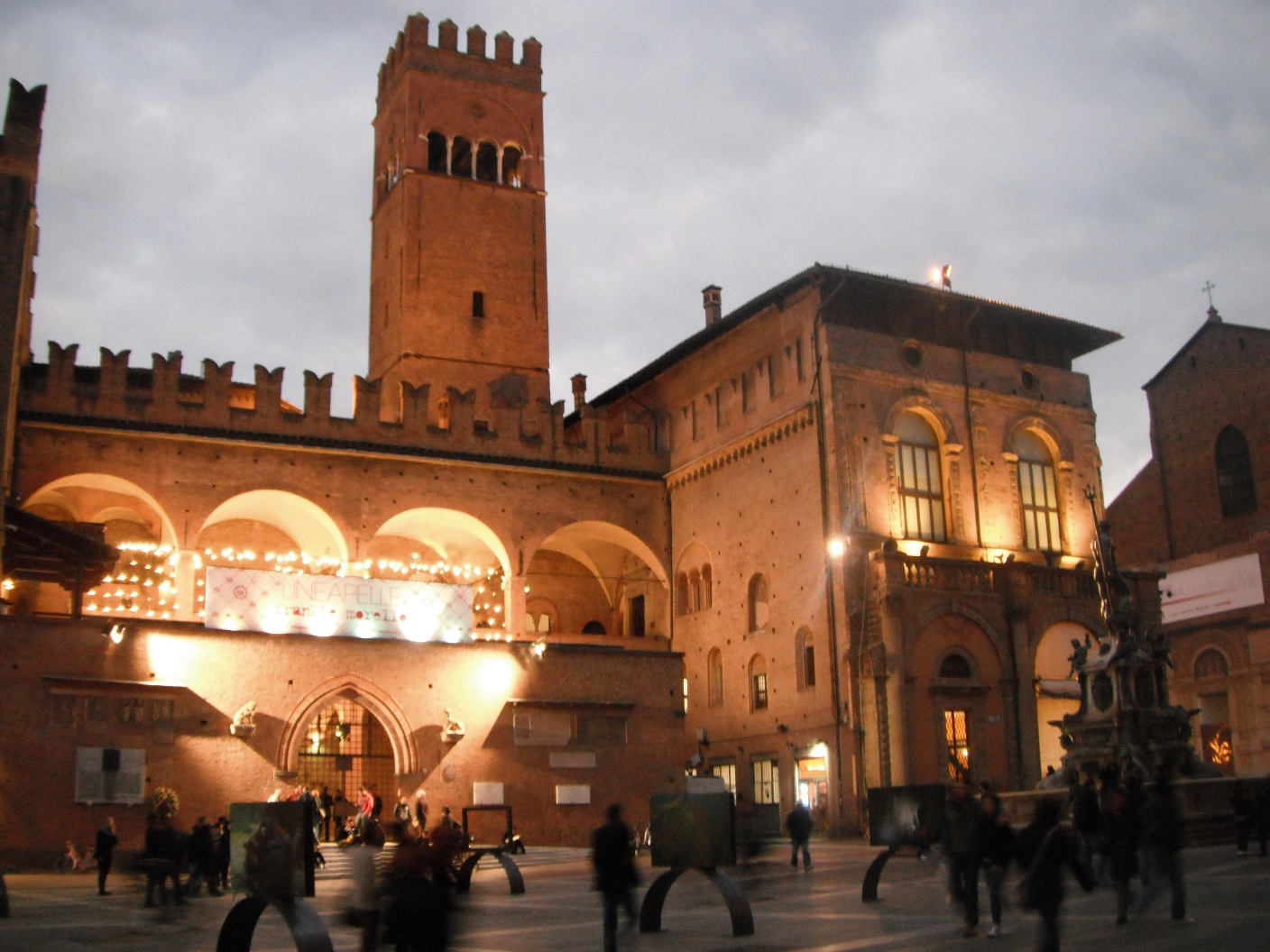
Piazza Maggiore
Bologne had really good bolognese, but also a very pretty central square castle church museum thingy building thats also very old and historical, like most things in Italy.

Bologne's Main Plaza
Everyone has heard of the leaning tower of Pisa, and seen a picture of it, and that’s about as much as I knew. To be brutally honest, I remember thinking as a child it was some sort of Roman ruin, and I couldn’t wait to go to Rome to see it, because that’s where Roman things are. At some point in my teenage hood, I changed my mind and realized I had to go to Greece to see Roman stuff, so Im not really sure when I realized the leaning tower of Pisa was in Tuscany.

The leaning tower of Pisa
Pisa is the name of a small town in Tuscany, and its not much different to any other town except for the fact its tower is leaning. Most Italian towns have a duomo, accompanied by a baptismal room, and a tower, surrounded by a plaza in the city center, and Pisa would probably be off the mass-tourism radar if it wasn’t for its crooked tower.
If you walk around the tower, the degree to which it looks like its going to fall changes. There’s one angle you can look at it and it just looks really tall and looming, but actually its leaning right over you. From the angle where its most tipsy, hordes of tourist line up and put their hands up, to create the optical illusion that they’re holding the tower up. Im still not sure if I think this is totally ridiculous, childishly-funny, or a brilliant idea. Either way, I didn’t take such a photo of myself, so if it ever falls, I cant prove to my gullable grandkids I tried to stop it from tipping. But I can teach them where it is, and that its built in a Roman style, but not in Rome… or Greece.
A lot of Italian towns were once walled, but few remain totally enclosed. Lucca is completely blockaded within a red-stone fortress, and you have to enter it through one of a few secret passages – narrow, hidden paths that go through or over the wall, invisible to the eye but marked with touristy direction signs.
Once you get inside, the dense, stone jungle has no straight roads, and only few wide enough for cars to drive. I never figured out how the cars got in there, but anyway. I walked around the passageways, getting lost every third turn I made, but every time I got out into an open piazza, could orient myself by one of the tall church towers scattered around the city.

One of many beautiful buildings in Lucca
It was a quiet place, without busloads of flash-happy tour groups, and the shops weren’t tailored to sell all the same souvenirs. Instead, I passed Italian couples dining at Italian run restaurants, young locals jogging, little old ladies walking their dogs, teenage girls shopping, and old men discussing who-knows-what on the plaza benches.
In travel books, its recommended as a day trip for tourists to take to get away from the hustle bustle of Florence, and that’s certainly what it is. Although it won’t be if everyone starts going there, a typical dilemma that charming tourist destinations like Lucca face.
Siena is another fortress city, perched on a couple hill tops, but slightly more accessible than Lucca. Its also marketed as a day trip destination, since its quite small and not much more to do after seeing it for an afternoon.
Its strange how these “daytrip” destinations develop to host “day” tourists – a lot of shops, selling the exact same things, over-priced vendors to supply bottled water and slices of pizza, but there are very few hotels. People cycle in and out daily, taking all the food and gelato icecream they need to make it through the day of photo taking, and then complete quietude returns after 6 pm when everyones left and the whole city reverts back to being a quiet Italian town.
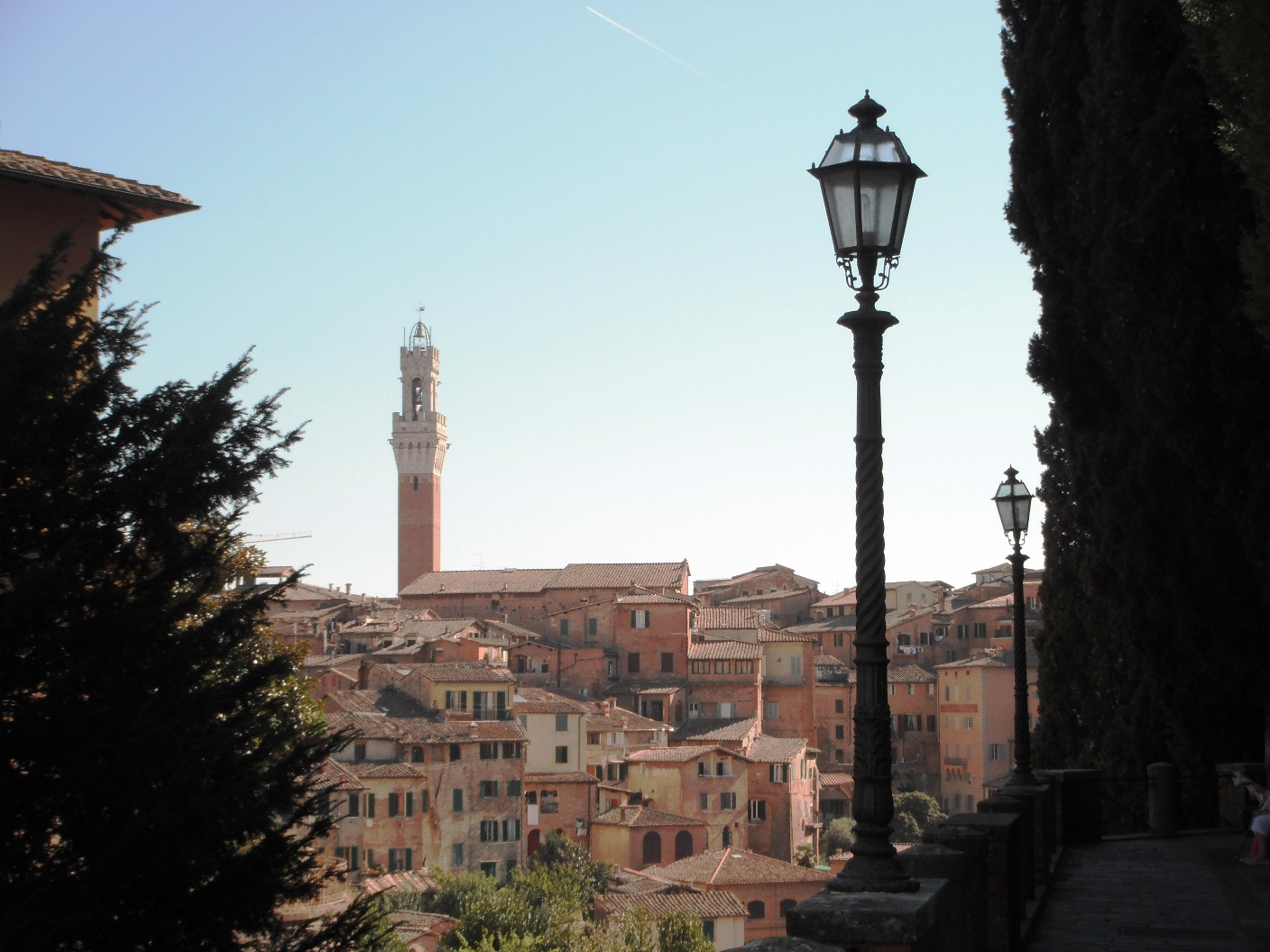
Siena
The activities are similar in all the towns: walk to the duomo, usually also the central plaza, check out more churches and museums housed in old buildings, sit at other piazzas, maybe have a cigarette, eat some pasta and wine or have a cappuccino on a terrace, and then you’ve been to Siena. Its strange to see how I just get into it, like its my daily life rhythm. Sometimes I even notice I’m just following the person in front of me, since I assume they have a tourist map showing them how to walk through the city to see what you have to see. But, once in a while I snap out of it and try to wander somewhere else, stop hiding behind my camera, and stick around until after the shops close, til I feel like Im the only outsider left in the city walls.

The main castle tower in San Marino, towering over surrounding Italy
On the northwest coast of Italy, only a 3 hr train ride from Florence, is the most amazing hike I’ve ever taken.
It’s a 12 km trail, connecting 5 sea-side villages perched on dramatic cliffs along the Ligurian coast. As you walk between them, tiered vineyards and olive groves cling to the steep mountains, and every few kilometers you reach a crowded, colourful village.

The view around our apartment
We arrived at the eastern-most town in Cinque Terre first, where the steep cobblestone street leads you from the train station either up into town or down to the sea where tiny boats bob around in a sheltered harbour, waiting to be used.
The first town is Riomaggiore, with less than 2000 inhabitants but hundreds of tourists renting sea-view apartments and tiny bedrooms with open-air terraces. Many of them have dozens of steep steps to maneuver, but the climb is always worth it as you stare out on the crystal-clear sea and hundreds of other little windows facing the sea.
I rented an apartment there, with 3 Americans from North-Eastern, one Brasilian and an ecclectic Russian that called me the ‘red-cheeks girl.’ We hiked all day, swimming between towns, and munching on a picnic of cheese, salami, bread, chocolate and wine.
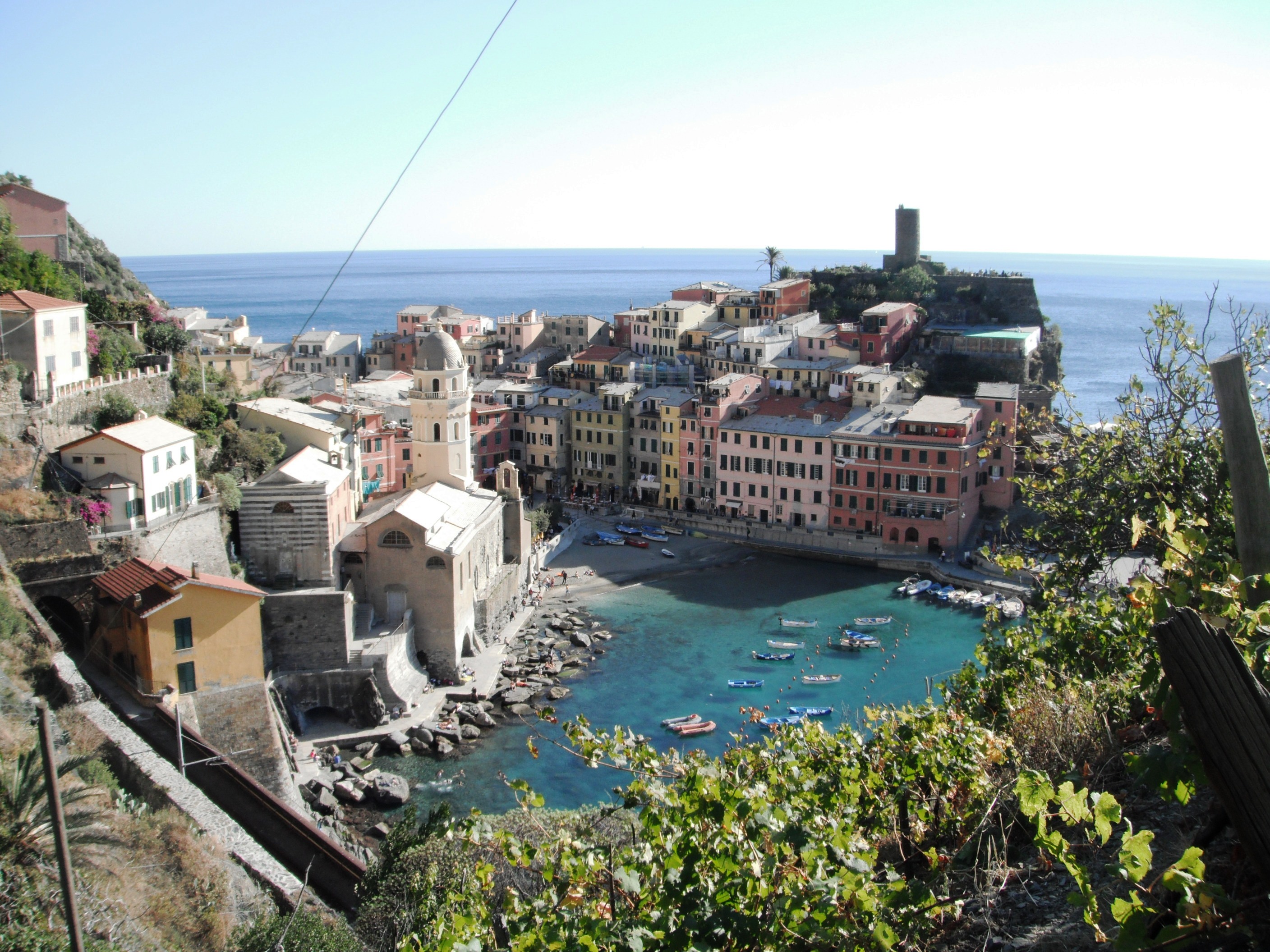
Vernazza
The day was perfect, sunny but breezy, and less crowded with tourists than usual. I couldn’t get enough of the scenery, and the feeling of being lost in some remote forest every time you left a town. When you reached the next town, it looked like a cramped collection of concrete, clamped together like leggos, clinging to the cliffs to avoid falling into the sea. Houses seemed to be built ontop of eachother, buildings only as wide as one room, with clotheslines and balcones giving the facades a third dimension.
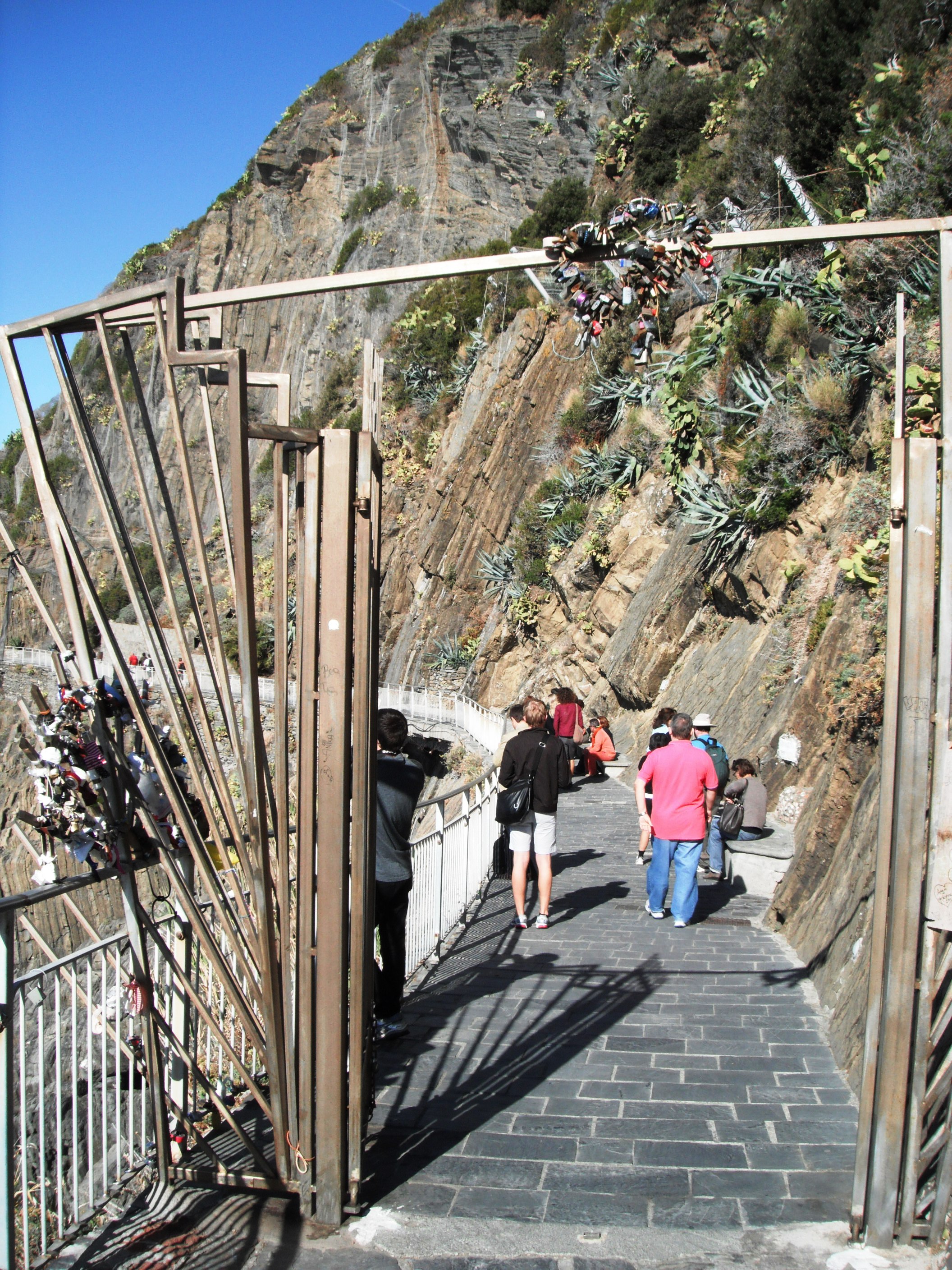
Lover's lane
We hiked from Riomaggiore to Manarola, through a famous stretch of path called Lovers’ lane. Here, hundreds of tourists ‘lock up their love,’ leaving a lock chained to another as they throw away the key. We arrived in Manarola next, and then had to take a train to Corniglia because of a landslide. We carried on to Vernazza, where we sunbathed on big boulders on the beach.
Between Vernazza and the last town, we looked back at the distance we had hiked and noticed the greenery above Riomaggiore was on fire. From 10kms away we could see orange flames, and grey smoke clouds drifted over the sea past us. Im not sure why, but noone really noticed or became alarmed, and we laughed about how all our passports were in the apartment that hopefully hadnt burnt down yet.

The tiered vineyards in the background
The last town is Monterosso, slightly smaller than Riomaggiore, but less hilly since it clings to a long stretch of sandy beach. We sat there for sunset, then took the train back to Riomaggiore, where we found out our apartment hadnt burnt down. We also found out noone was harmed, just a small section of farm land and one abandoned house.

Peeking out from the trail to the next town
All 5 towns are collectively referred to as ‘Cinque Terre,’ or ‘Five Lands,’ and is protected as a national park that requires a 5euro entry fee. In 1997, it was declared a UNESCO World Heritage site. Before then, few had even heard of the place, as it remained hidden from mass tourism and unknown to popular guidebooks. I can only imagine what a peaceful, magical place it used to be then, serene, sleepy, Italian coastal villages. But, I suppose I can’t be upset it was discovered and subsequently over-commercialized, since I otherwise might never have discovered it myself.
German-speaking Europe is a confusing place. There are so many dialects of German that some German speaking people don’t even understand eachother. Some German words have only one vowel per six consonants, twisting your tongue in werid ways as you try to pronounce it (ie. Dirndls, schloss) The German word for “Austria” looks more like “ostrich” than Austria. English and Icelandic help me understand a lot, but I’ve been wishing I could speak more German– high German, low German, Bavarian Dialect – I don’t care which version.

The slopes in Flims
Switzerland doesn’t use euros, and their Swiss Franc is illogically abbreviated as CHF. Well, the “F” makes sense, but CH stands for “confederazione Hervatica” (which I now know is recognized as the mother of Switzerland). I like the way Swiss German sounds, it’s somehow softer and sweeter to the ear. I stayed with a friend, Ursina, in Flims, a picturesque ski town in the middle of the Alps, and in this region of Switzerland they have another official language called Romanish. It’s the closest language relative to Latin, and it sounds like old Italian poetry being recited.
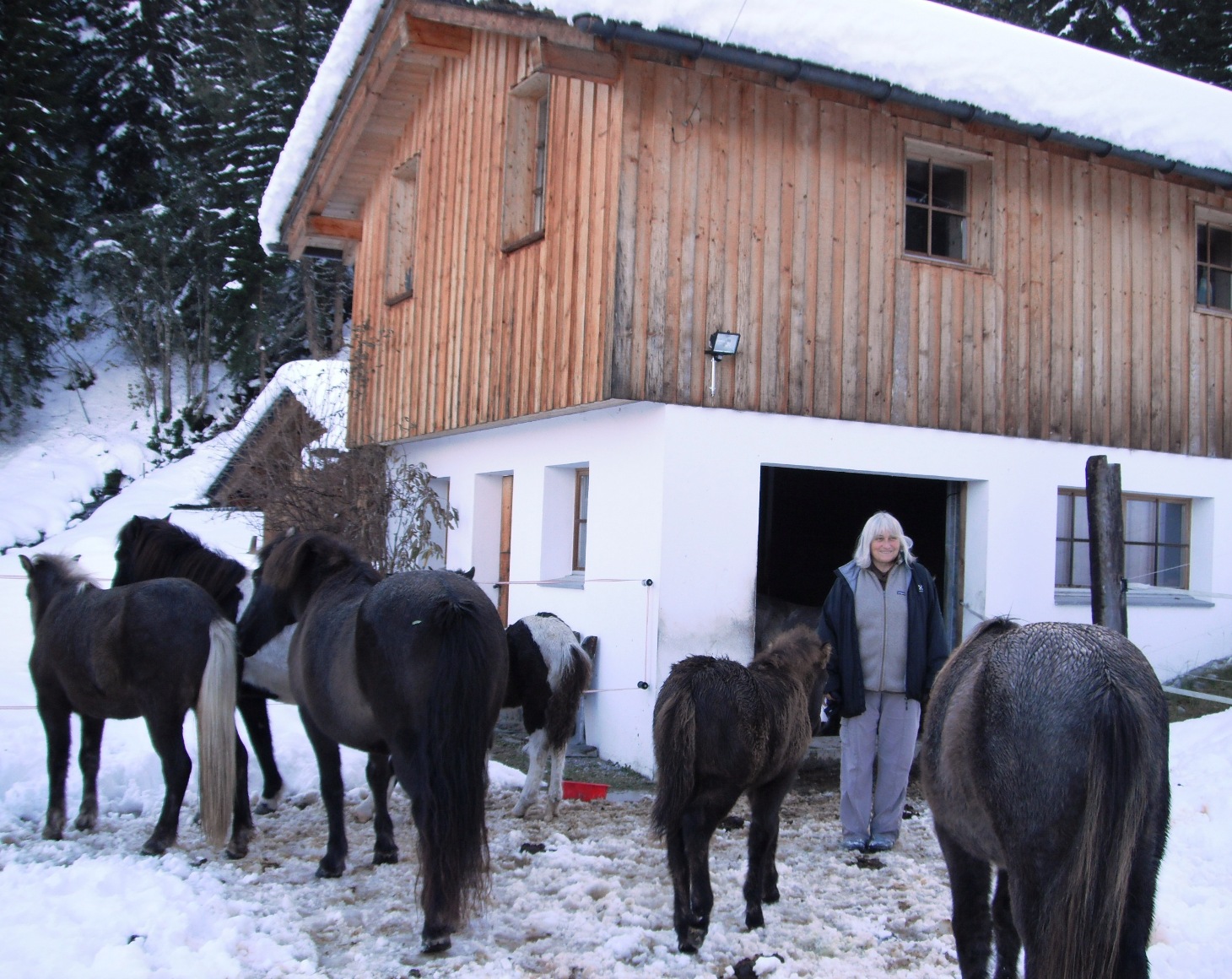
Ursina's mom with their Icelandic horses
Her family, the Isenbugels, is well known in Iceland because of their contribution and involvement with Icelandic horses. I visited her parents in their mountain hut near Laax, which we had to hike half an hour past ski lifts and through 2 feet of snow to get to. They had Icelandic horses there, mostly young yearlings and new foals with their mothers, and an Icelandic dog. Her father, who has eyebrows growing out like bangs, spoke English and some Icelandic. Her mother speaks Romanish, and also German with an accent I found easiest to understand.
I went with Ursina to her sisters Icelandic horse stable near Zurich, where we rode horses into the night. Gallopping through a forest without seeing anything was an adrenaline rush I hadn’t before

Zurich
experienced. I would love do it again, but Iceland lacks forests, and it doesn’t really get dark in June or July when Im riding most.
my horse, almost invisible in the black background
Everything in Switzerland costs more, even though you can drive quickly and easily past the German, Austrian or Italian border to buy the same thing for less. The doner kebab trumps McDonalds and Burger King combined as the king of fast food, and I’ve been using it as a base price economy marker. In Berlin, you can get one for €1.50. In Munich, €3.50. Vienna, around €4, and in Zurich, it costs as much as €8 for the exact same thing.
But I guess prices are all relative, to the people’s standard of living and places’ economy. What really puzzles me is how wine can be cheaper than water, and beer, almost always cheaper than coke. If only Iceland could pick up on that trend.
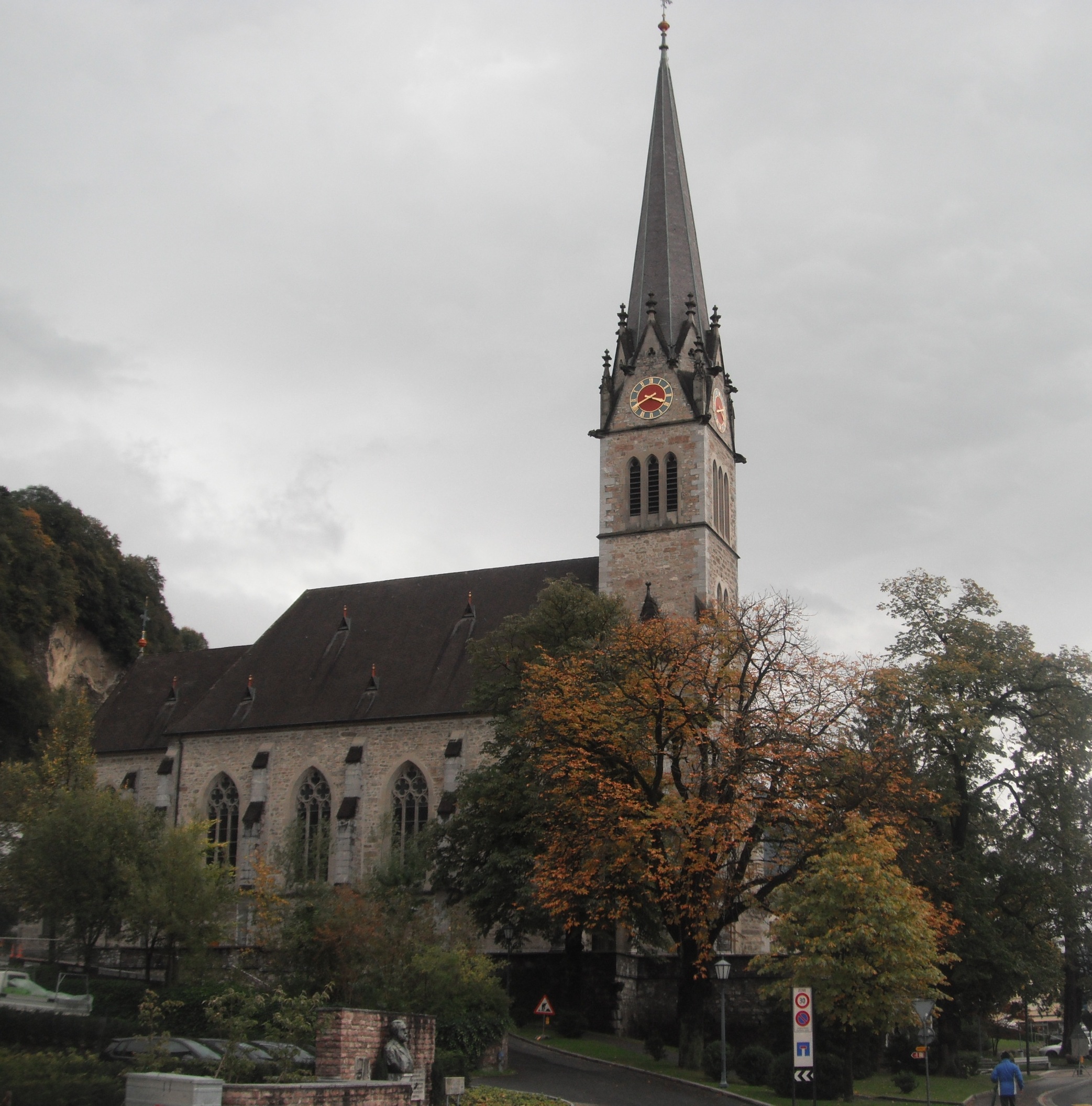
the church

a not-so-old-looking fancy shmancy building in the "old" part of Vaduz
I accidentally found Liechtenstein on google maps when I was looking at my possible journey routes from Vienna to Switzerland. I’d definitely heard of it before, and Im not sure if I ever registered that it was (legally) considered its own country. I think I bought a bottle of wine from Liechtenstein once, and thought it was a city in Germany, but, due to my ignorance, I could have been convinced it was just a region of Austria or Switzerland.
But, country #74 for me, Liechtenstein is no such place. The border between Switzerland and Liechtenstein is formed by highway 13, which is technically in Switzerland, since its on the west side of the Rheine. It is a tiny place, nestled in the alps, with no train station or airport. To get there by public transport, one must take a regional train to a nearby Swiss town called Sargans, and then take a bus 14kms to Vaduz, the capital city.
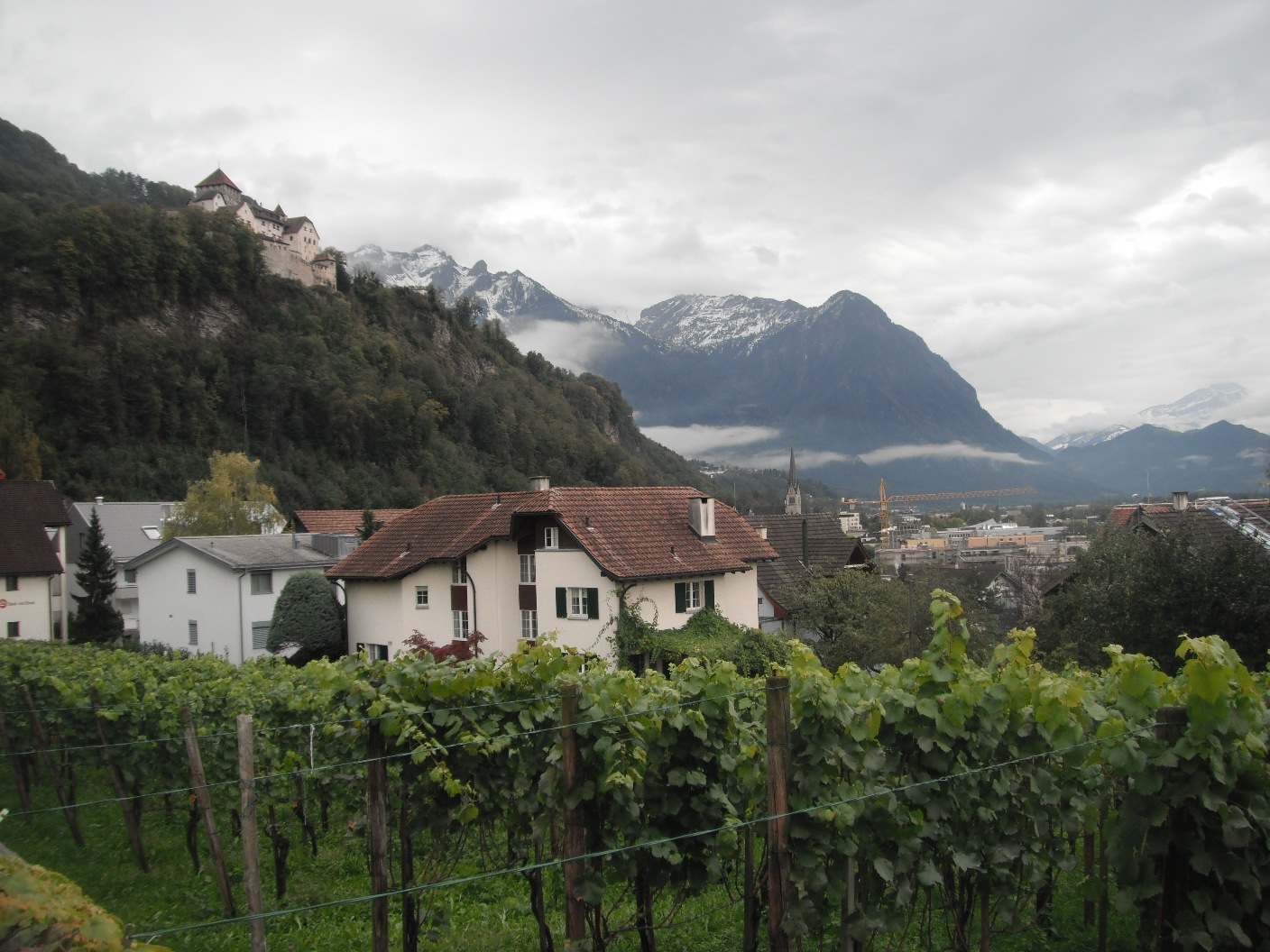
downtown Vaduz: vineyard, castle and alps.
Me and my friend Ursina drove there, only 45 minutes from her home in Flims, but she too had never been there before. She taught me all I knew about Liechtenstein before going; that it was very Catholic, rich, and people spoke a mixture of German-German and Swiss German… or was it Austrian-German, I forget.

an offering of fruit. God must be hungry.
The first thing we did was visit a Catholic church. Only one other woman was inside, and it had an alter made of fall fruits – pumpkins, squash, tomatoes… On the podium stood a book with a list of names of holy people that had died on that day (October 10th) in history. A few blocks away, cows grazed in green pastures next to the soccer stadium and city banks.
Liechtenstein was very rich-feeling, although we saw very few people to talk to about life there. But we saw their fancy cars and fairy-tale homes, standing pristinely in the spotless streets. Downtown Vaduz is small, we walked through it in 15 minutes, which ended at Hofkellerei vineyard. We wine tasted some Riesling, and walked back across town to get her car since we were too lazy to hike up to a pretty castle hanging from the cliffs above us.
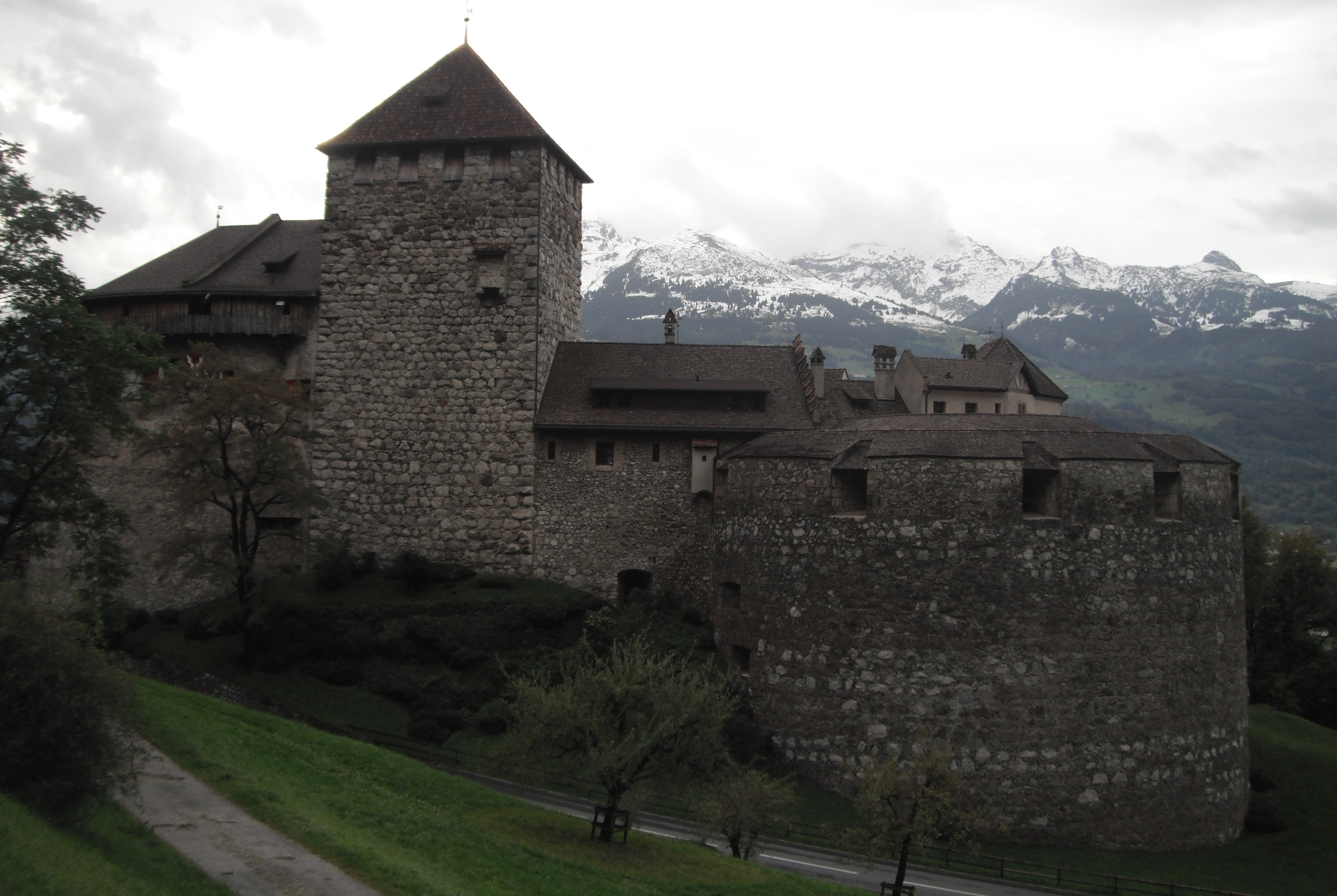
home of Prince Liechtenstein and co.
We got lost in a maze of mansions and switch-back roads, but eventually found the steep, narrow, cobble-stoned road to the “Schloss.” We were confused why signs were always marked “no visit” and “privat”, but then the castle guard explained it simply. “This is a private residence for the Prince and his whole family.” So then I learned that Liechtenstein has a monarchy, and a very big royal family, since the castle must have had 100 rooms and for one prince to fill that, he must have a lot of kids.
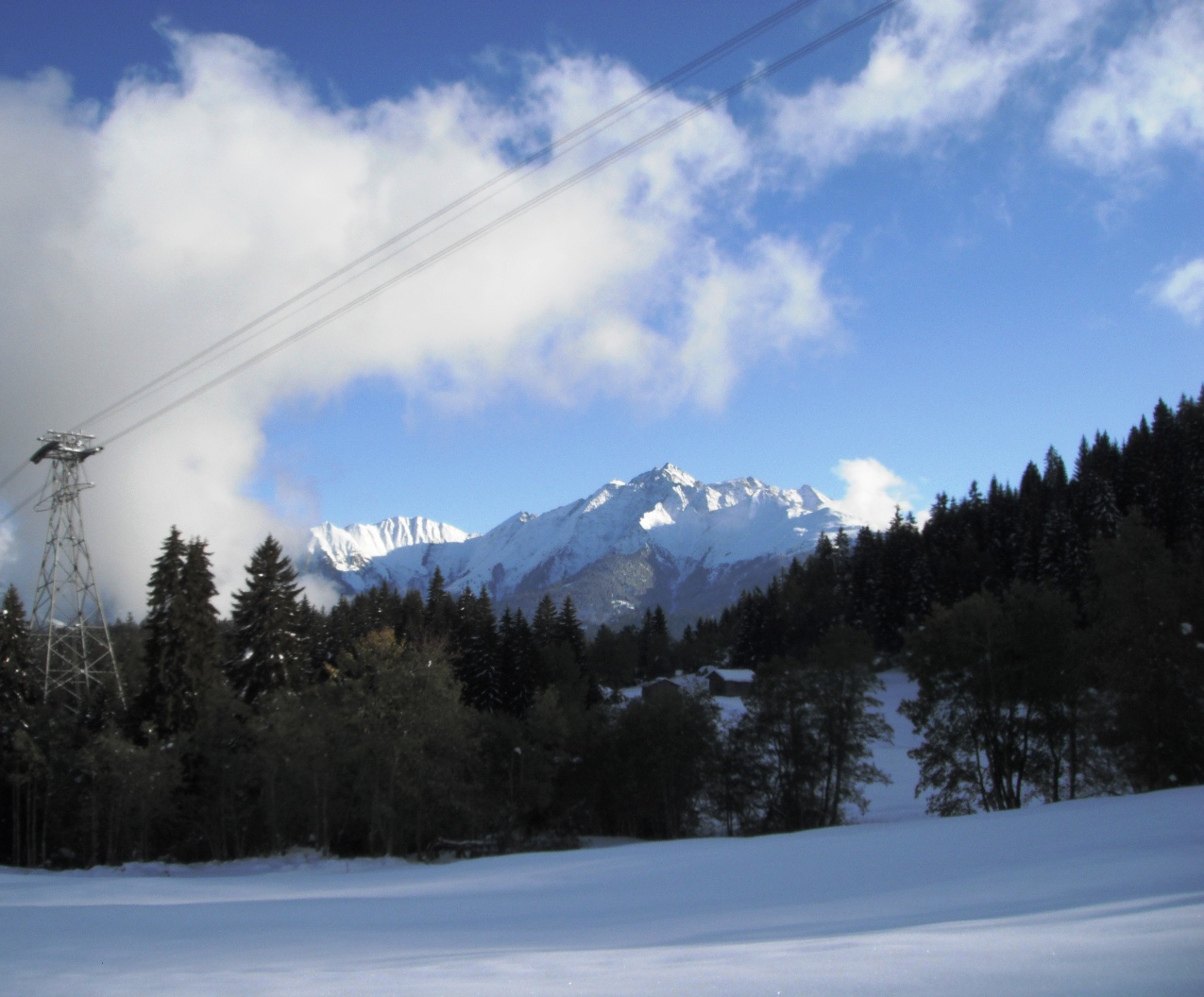
I WANT TO GO SNOWBOARDING!!!
My train left Vienna at 23:50 on a Friday night, and I knew I’d arrive in Zurich at 11:20 the next morning, but that it only took 8 hours by train. Since I had to change trains in Salzburg, I assumed I’d have the 3 hour layover there. I didn’t realize that this stopover was from 3 – 6 am. I also didn’t know that Salzburg hauptbahnhof is under rennovation and has no real station to wait inside.
It was maybe 6 degrees, pitch black, and drizzling, but I figured I couldn’t waste the opportunity to see Salzburg – and anyhow, sitting and waiting alone outside on the platform seemed like a silly thing to do. I needed coins for the left baggage lockers and the only place open was a dingy, smoky sports casino that probably gets asked for change at 3 am every time the Vienna-Zurich train takes this scheduled route. I locked my bag in a locker as one other traveler pulled out his sleeping bag and cacooned himself inside. For a second I considered doing the same, but only out of laziness, and decided not to since it’d be weird if I just copied him and then we’d both be lying on the ground in awkward silence.
I walked from the train station towards the city center, which I had no clue where or how far it was, but there was only one road leading away, so I followed it. The streets were eerily deserted, so it was hard to tell which roads were main road. I passed an open Shell station, and went inside for a brief gust of warm air, and to reassure myself that other life was also stirring at this hour.
I made a turn there that I retraced back, since I noticed a hotel that seemed somewhat lit up. I went inside the Best Western and asked for a map, which the receptionist gave to me without any strange looks or questions. The map revealed I was nearly downtown, I only had to cross a bridge a few hundred metres away.
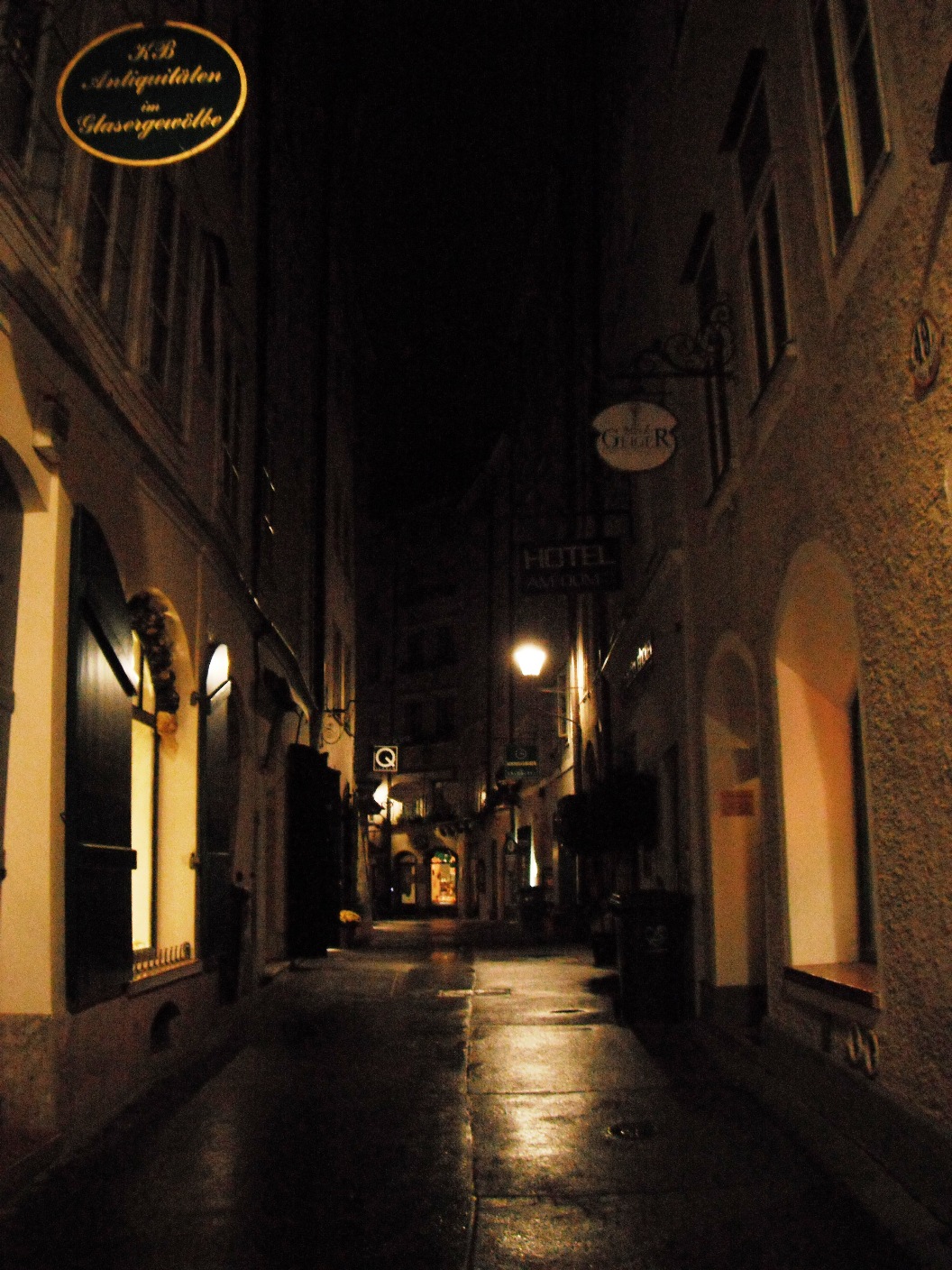
the quiet streets of Salzburg
I strolled around the deserted city center, still brightly lit and all the store fronts still offering excellent window shopping. I winded through narrow streets and crooked alleyways, and encountered only one other woman walking. I could barely see it, but I noticed above the street lights that the city ends at a cliff, with a row of houses literally built into the mountain.
I stumbled into the nightlife corner around 4:30 am, and fifty drunken teenagers helped me feel less lonely but a lot more sober. I lined up with some of them them for late night pizza and coke, wonderfully amused by the people watching opportunity.
Then I was alone again, with a private Salzburg to myself, only accompanied by a cooing dove and the sound of church bells every 15 minutes. I turned into a church square at 5 am where a fruit market was just starting to be set up. 3 or 4 people slowly carried crates of ripe fruits from the truck to their stand, and didn’t even notice me watching, taking pictures.

preparing the fruit stand
By 6 am, morning birds started singing, even though it was still dark as night. I passed a few more post-party couples swaying on their way home. I saw a baker arrive at his shop to start preparing the days goods. I saw a police car and a tow truck carrying away a Casino company car that had crashed into the corner of the Crowne Plaza hotel. I saw the street cleaners finish their rounds as the first city buses started their routes. I passed a DHL delivery boy on a bike starting work. Lastly, I saw a woman just standing in the rain waiting, Im not sure for what, but just waiting, near no doors or bus stops.
I went back to the train station, got my bag, poked the sleeping bag cacoon awake, and got on my Zurich train. I fell asleep immediately and woke up in Switzerland, trying to remember if I had really been to Salzburg or if I had just dreamt it.
I always had a hard time remembering if Vienna was in Germany, Italy, or Switzerland (it’s the capital of Austria). Its fascinating how close all these countries are to each other, that Bratislava airport in Slovakia handles a lot of Viennese air traffic, and road signs in the city center direct you towards “Praha” or “Budapest”.
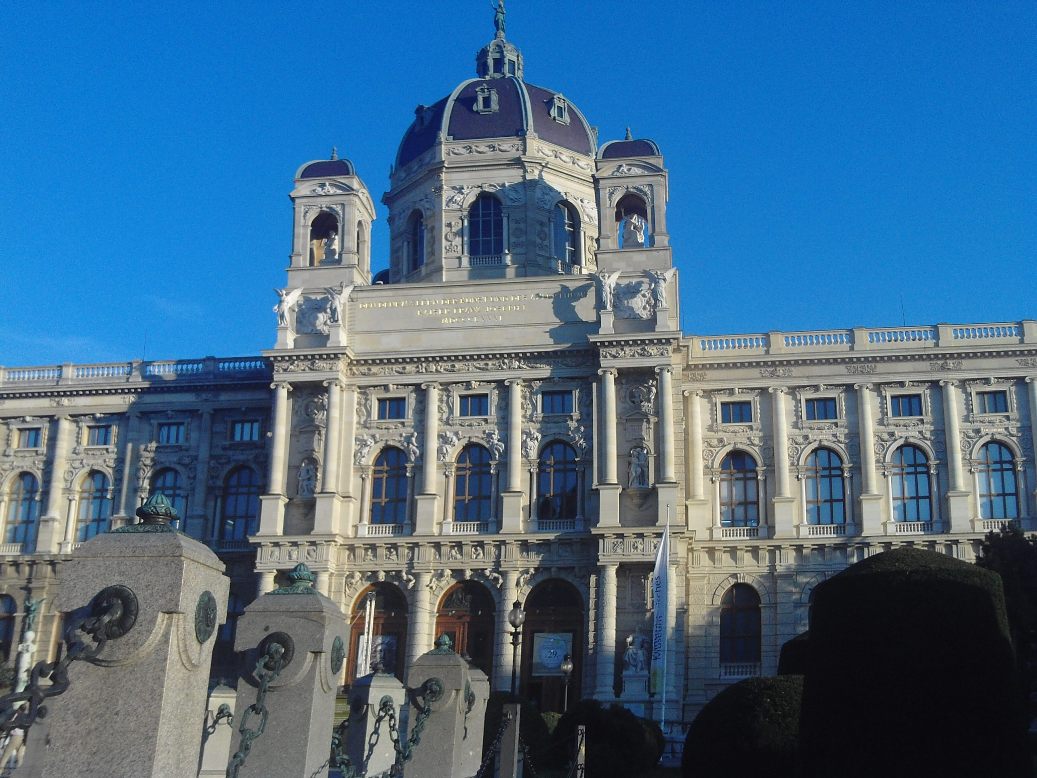
Kunsthalle in Museumsquartier
I read a lot of about Vienna as a child studying music theory and history, picturing Schubert living in a magical city where everyone played classical music and symphonies flooded your ears 24/7. I expected Vienna to be a town frozen in time, stuck in the 1700’s, full of horse-drawn carriages and Baroque fashion. Or maybe it could have been as late as the 1850’s, and I could have seen Haydn conduct his own symphony, but Vienna 2011 didn’t quite fit my hopeless expectations. Its quite similar to every other European city, a clash of incredible history and impressive architecture mixed in with globalized commercialism and little kebab shacks at every tram stop. In German, Vienna is spelled “Wien”, and I have some sort of dyslexic complex misspelling it as Wein or Wine, both referring to fermented grape juice and not one of the most important cities in classical music history.

a famous golden statue of J.S. Strauss
The classical music thing is like beer in Germany, or casinos in Vegas – it’s presumably emthe/em tourist attraction you came for. You can’t go to Vienna without being offered tickets to a Mozart concert, and every night of the week you have the choice of something like 3 classical music concert houses, 2 opera houses, 3 churches, a couple palaces and uncountable theatres to see a show. Then there’s the waltz season, where everyone goes to balls in gala halls waltzing to J.S. Strauss being played life. People dressed up in period fashion sell tickets on major street corners and on the doorsteps of the most popular tourist attraction, and even some of the concerts are played on period instruments in various halls, all shimmering in gold, chandeliers and original art.
Walking around Vienna, I got the feeling that every building was a palace; even the common-place apartments had arch entries and stone angels on the roof corners. The universities, churches, government buildings, and museums were even jaw dropping – all built in slightly different styles from different eras, but all so grandiose, surrounded by regal gardens and flashing cameras. I snooped around inside the gothic city hall, sat to meditate in every church with unlocked doors, and strolled through the Schönbrunn Palace gardens pretending to be a princess.
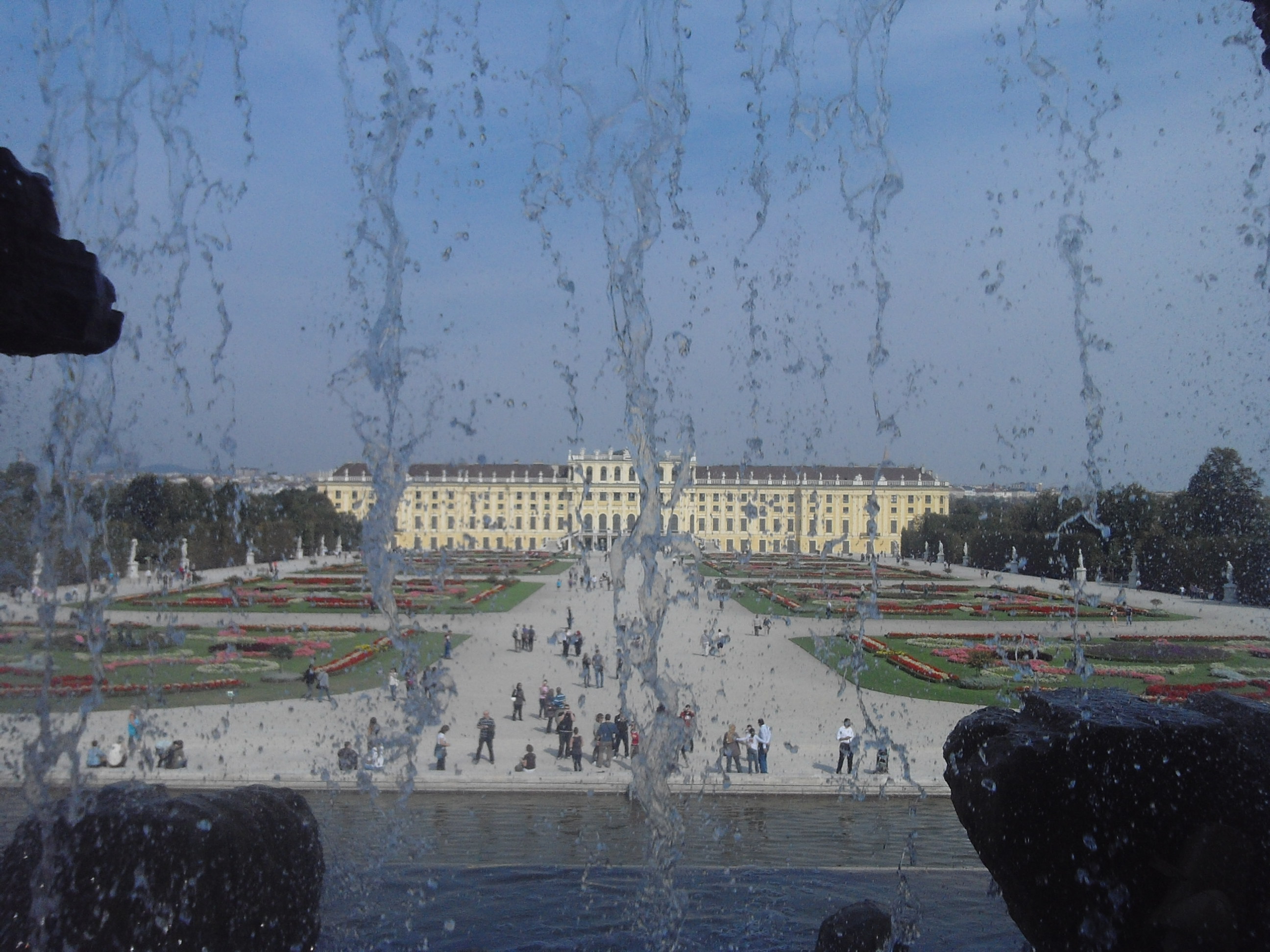
Schönbrunn Palace, former home of Emporer Franz Josef I
As much as I wanted to see the inside of every museum, I knew it would be a failed mission since it could take days, weeks even, to really see and learn everything they have to offer. Bu I did make it inside som music halls, always second-guessing if I had picked the right venue and show since there were at least 2 options every night I was there that I would have loved to see. My first night in Vienna, I saw Singing in the Rain, a musical/tap-dance theatre piece, which I probably could have understood better if my German wasn’t so bad.
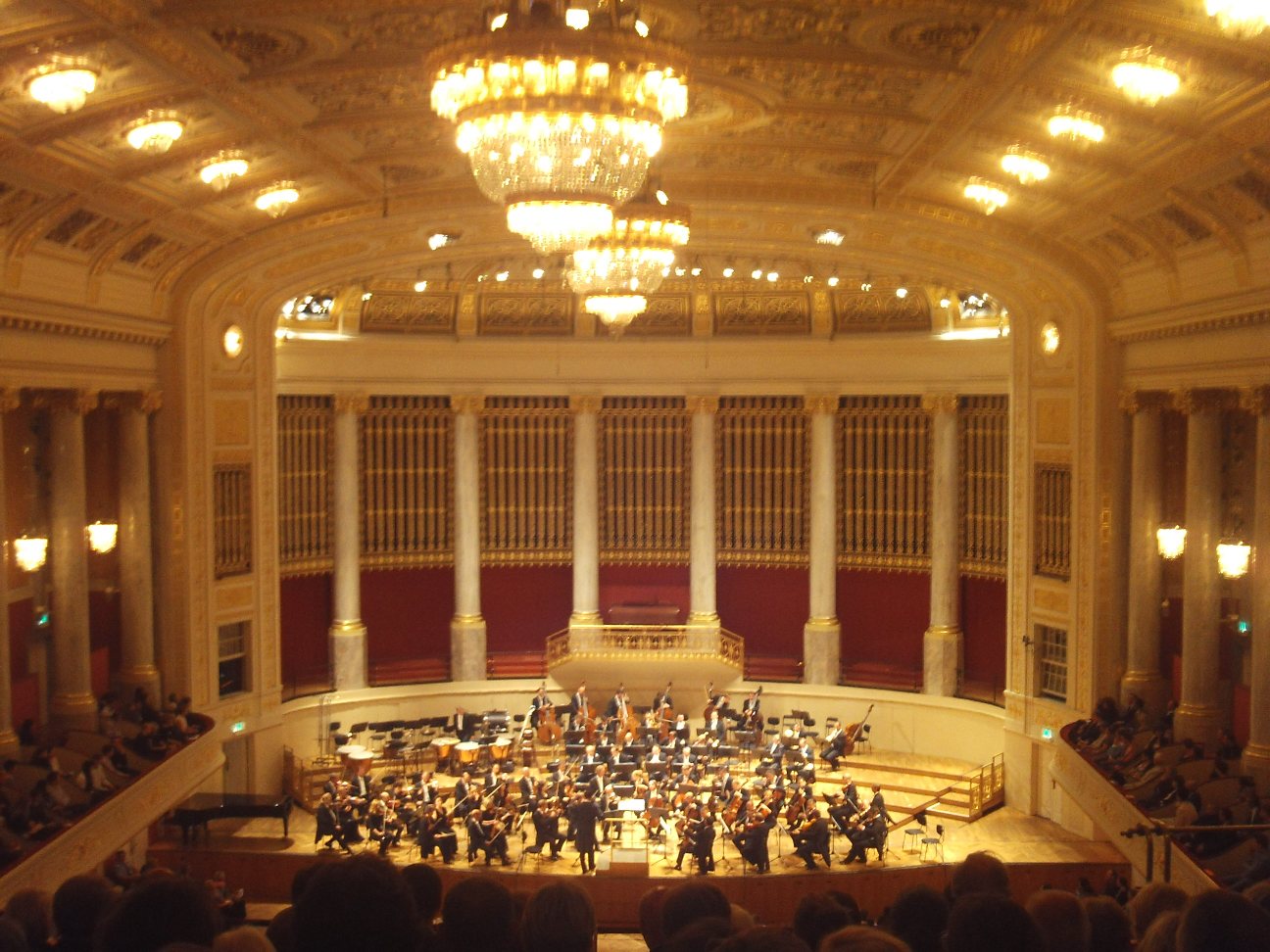
the Vienna Symphony Orchestra

one ballroom in Staatsopera house
I had no difficulty understanding the Vienna symphony on night 2, who played a symphony by Carl Maria von Weber that I had never heard before, but loved, and a piano concerto by Haydn – I loved that too. Piano concerts give me shivers down my spine. They’re also amusing, since it cracks me up how everyone in the audience always has to cough between movements, even if no one is sick. My last night we went to Staatsopera house, by far the most beautiful building, inside and out, that I saw in Vienna. They played Madame Butterfly, a tragic opera set in Japan, sung in Italian, but thankfully subtitled in English that made understanding it no problem, even the depressing unhappy ending – which I wouldn’t have minded misunderstanding.
 nomadic cosmopolitan