Murchison Falls: Worth it?

I had heard about Murchison Falls in epic travelogues from authors like Ryszard Kapuscinski, that it was beautiful and difficult to get to. I didn’t realize until after going that it’s recently been extremely dangerous, but becoming more secure. It was supposed to be quite easy, according to local advice and the travel company we booked with, but turned out to be quite the adventure. My travel companion for the trip shares the story from his point of view, for my first ever guest blog post. Enjoy!

Murchison Falls in Northern Uganda

Katrin negotiated a van and a driver “who knows the park” to take us on the “two a half hour drive” to the Falls, from the hotel where we overnighted in Lira. Adding chill time at the Falls, and the short drive on to Masindi we thought we were looking at about five to six hours, easily enough time for us to catch a bus on to Kampala. After a rough few weeks backpacking alone and some trust issues arising, it was a good day for Katrin to defiantly declare “nothing is going to stress me today!”

An entire air-conditioned van to ourselves was luxury beyond imagining after being matatu bound for several days. Put twenty people in a minibus designed for fifteen, add luggage (occasionally living), a preacher, a whole lot of dust, and continuous stops; and you have a classic matatu experience. Two hours later we arrived at the park to discover some fees that we had been assured did not exist. Not a big surprise, just an expected inconvenience. But TIA (“this is Africa”), so we laughed it off, since it was only a few dollars, and the Falls were only a trivial half hour away. When we arrived at a park hotel soon after, things looked a little different.
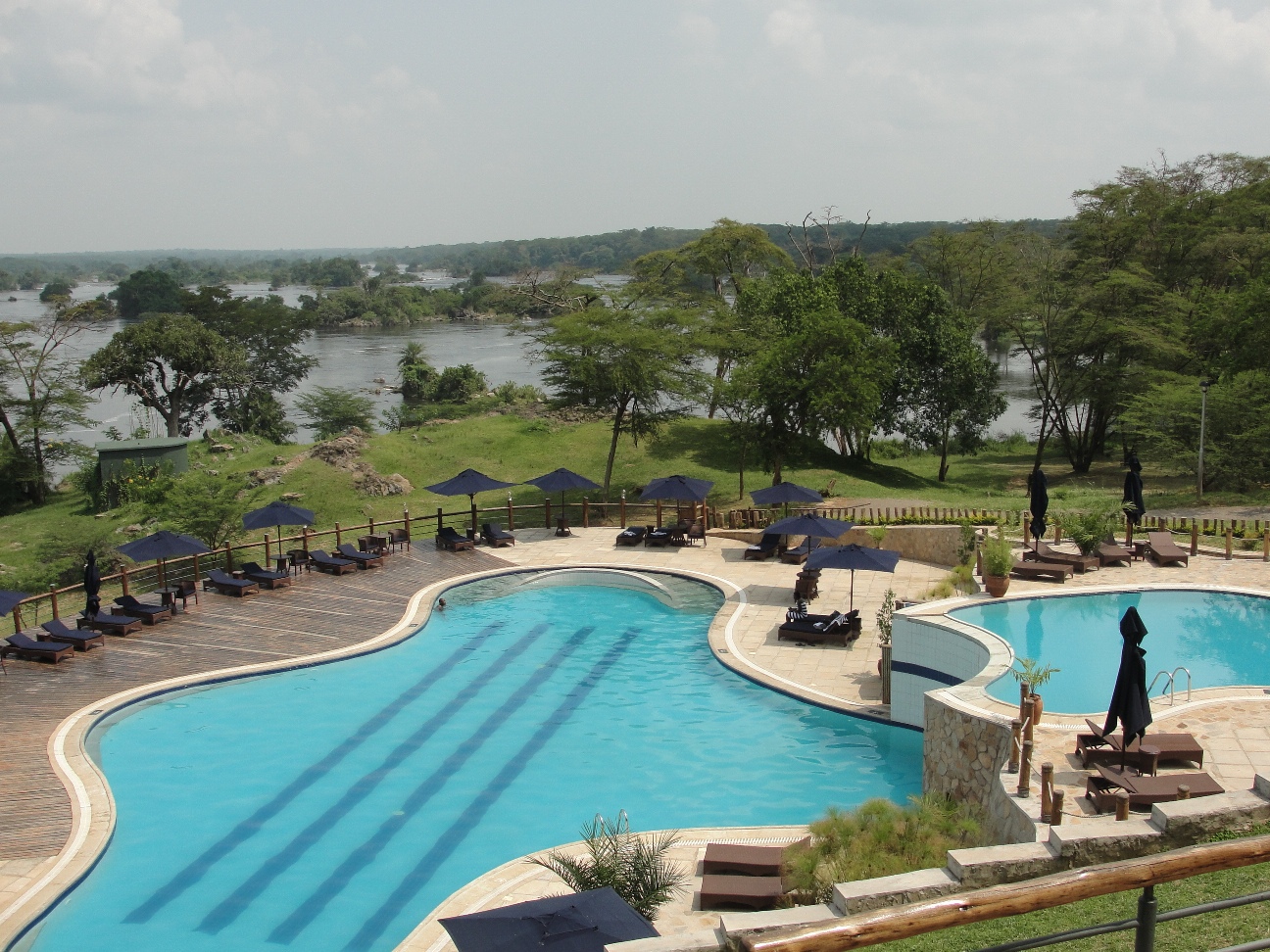
not quite the falls, but a pretty comfortable resort in the middle of a jungle

Consultation with the hotel map revealed that we were nowhere near the elusive Falls. We were at the far end of the park and faced three hours driving to get there. It was too late to pull out. We had paid for the day’s car hire and all of that money was back at the hotel so we had no means of recovering it. We decided to push on, the driver wilting a little at our annoyance.

The driver bribed a military officer who approached us as we slowed over a bridge, preferring expedience to argument and grinning a “This is Uganda” over his shoulder. Shortly afterwards he started driving suspiciously slow along a clear section of road. Given his proclivity for speeding this was rather strange, and I asked him what he was doing. “There are people around here who sell cheap fuel”, he said enigmatically over his shoulder. Translation: there are people around here who have no fuel, i.e. us. It didn’t take long before the engine cut out. He then proceeded to try and start it. Repeatedly. Katrin thought he might be signalling the “cheap fuel people”. I was slightly more cynical.

Suddenly the driver hopped out of the van and flagged down a boda-boda (motorcycle taxi). Momentarily distracted in conversation, it took a while for us to notice that he was attempting to siphon petrol out of it. “What does he think he’s going to do with that?” wondered Katrin, disparagingly. Obviously the fact that our vehicle ran on diesel did eventually occur to the man because suddenly the boda-boda was upright again, with him on it. “I go fetch fuel”, he said, driving off. Naturally confidence in our experienced driver was waning at this point. Refuelled, it didn’t take long for him to strengthen his case with a juddering fishtail across a dirt road.

Katrin was tight as a spring, accumulated travel travails eroding her tolerance, the recurring problem of worthless information delivered with confidence taking its toll. Barely recovered from typhoid, there was little that could faze me, but as the hours went by even I started to feel like we were on a road that would never end. It was a shock when the road opened into a parking lot with a large wooden sign proclaiming “Murchison Falls.”

Murchison Falls is more a fissure than a waterfall, the whole of the Nile forced down a narrow crack. Its as if the earth decided to close its fist on the river. The water, so serene and steady before, lashes in fury like an enraged reptile. Our arrival was celebrated with bottlecap shots of Kenyan cane; a spirit probably better suited to fuelling 4x4s than drinking pleasure. Katrin takes her cane about as well as a four-year-old takes root canal without anaesthetic. To her credit, that doesn’t stop her instigating its consumption.

changing the spare tire

While we wandered around the Falls, the driver discovered and changed a flat tire. He also realised that we were not going to manage the 50km to Masindi with the fuel light already on. We decided to chase diesel further into the park, following a cryptic Shell sign. Fortunately we met another car and were informed that the Shell was 18km away on the far side of a river ferry. They were able to point us to a resort that fixed the tyre and sold us some fuel. Subsequent to the service, the driver informed me he had no money to pay for the repairs.

About 10km down the road, the driver looked out of the window at the newly repaired tyre. “Flat”, he muttered. He then began to accelerate, despite the horrendous noise of the tyre being snakebitten by the rims, as its “too dangerous” to stop in the park with dark falling. In the face of increasing dissent, he finally pulled over, straight into a muddy ditch. When I told him he was going to get stuck he denied it, but belied his certainty by gunning the engine, tyres spinning, mud flying. Eventually he responded to our collective shout of “stop”.

I got out to have a look and was barely clear before the man threw the van into reverse. Clods of clay flew past my face as I absentmindedly ducked, my mouth probably lucky to avoid snaring a missile the way it was hanging open. Mud from the rear tyres hammered into the inside of the car as Katrin desperately grabbed at the sliding door in the violently rocking vehicle. The van careened back, carving a muddy path of devastation. I honestly thought he was going to roll it – scenes of trying to extricate the two from a rolled van flitted across my vision. Eventually the vehicle shuddered back onto the main track, the right front tyre now ripped so badly that one side of the rim was actually resting on the ground.

The driver was quickly out and down next to the tyre that looked like it had

mud splattered all over the open door

been through a cement mixer. He didn’t say a word. I walked toward Katrin, struggling to hold it in, and failing. I exploded into crying, choking laughter. Eight ridiculous hours into what should have been an easy trip with “an experienced guide”, it was just too much. When my sanity returned, and Katrin’s had been slightly contaminated by infectious hysteria, we inspected the mud-spattered interior together, grinning. Meanwhile the driver discovered that the spare tyre had somehow ended up flat after the tyre fixing pitstop. He also discovered that his mobile phone was missing. It was already the 6pm park closing time and light was rapidly failing. A night in a dangerous section of park (where you aren’t supposed the leave the vehicle) was starting to look like a real possibility. The driver constantly warned us no stay close to the car, and we’re not sure if it was in lieu of the buffalo or the Lords Resistance Army.

Happily another group arrived in a 4×4, and after assuring the driver that using their spare tyre (which was at least 2inches taller than the upper wheel guard on the van) was not a viable option, they kindly offered to give us a ride into town, bringing along the spare tyre. Once in town the driver asked us to pay for more repairs and enough fuel to get back to Lira. Having already paid almost twice what we had been assured this would cost, for value that would have been questionable at half the price, there was absolutely no chance.

The driver looked dejected with his flat tyre when we left him in town – no phone, no money, no plan. I gave him 20 000 shillings, unable to walk away in clear conscience. “God bless you”, he said earnestly, bobbing his head sadly. “I am so sorry about this”, he added. I looked down into his small brown eyes. His right iris looked like it was melting in the top left corner. Four teeth were missing, and the remainder did not look particularly permanent. Incompetent though he was, the responsibility for the days’ events ultimately lay with his employers, and I could not help but feel sorry for him.

We wandered around town looking for accommodation, the last bus to Kampala long gone. In the first place we tried, the landlady deftly kicked a slipper over the huge spider that ran across the floor as she opened the door to the room. She didn’t have anything big enough for the four-inch drain cockroach that followed. Now, this didn’t really inspire elation in me, but I was reluctant to be caught being the priss. I looked sideways at Katrin and asked, “Too much?” She walked across to the en-suite. Two more monster cockroaches stared up at her, “Too much”, she agreed. Eventually we found a rather nice place, our willingness to cheap it somewhat eroded by the long day. The evening was pleasant, casual conversation over beer and local staples, but the upbeat camaraderie had peaked and given way to tiredness. Getting into bed I couldn’t help but think of the driver alone in town and wonder if he had found a better deal than the cockroach den we dodged.
East Africa Travel Advice: how to normalize

Learn to squat for hole-in-the-ground toilets, and always carry toilet paper.

Exercise patience (people talk and work very slowly), and learn to talk and do things slowly yourself.

If you’re going to Tanzania or Kenya, learn some Swahili. If you’re going to Burundi, Congo or Rwanda, learn a lot of French.

People speak quietly, unintelligibly even, so practice focused listening, and never yell or raise your voice to be better understood.

Expect variations on the English words used in different countires. For example, public tansport can be called either taxi, bus, matatu, or special car, but they all refer to slightly different things, ie. A mini-bus, a coach bus, a local bus or a private car. A hotel can refer to a bar, restaurant, or an actual hotel, and I haven’t quite worked out what hostel refers to since there’s lots of them, but the most hostel-looking hostels are usually called guesthouses or backpackers.

Be grammatically flexible: prepare for misspellings, ie. You’ll stay at a ‘resourt’ and buy meat at the ‘butcer,’ get used to different pronunciations, ie. Bon-shuu for bonjour, and some phrases like “hello” are often replied with wrong responses like “fine.” The internet is called “network,” as well as cell phone service, and  you won’t have either “network” in many places outside of urban areas. When you do have network, you’ll realize how much you took for granted the fast internet connections we’ve grown used to.

Bring a book to stay away from your ipod, and buy an unlocked cell phone from 2004 to avoid standing out with a fancy smart phone.

Passerby, independent travelers aren’t the norm yet; people will as where you live or work since East Africa is full of expats, so be prepared to explain your story of why you wanted to backpack through East Africa.

Be prepared for missionaries and their prophecies; many will ask if you are Christian, so either say you are with some evidence to back it up, or learn to enjoy spontaneous bible lessons. These can come from white, American Missionaries from Kentucky, or your bus driver from the Serengeti. Even the most indigenous tribes are often Christian, and Masai’s are often renamed at baptism, so get used to meeting a lot of James’ and John’s.

Throw your East Africa Lonely Planet out the window. The Africa shoestring book as more pages on the Congo and Burundi than the East African book (7 pages on Burundi, and 5 pages on the Congo, a country 40 times the size of Rwanda). My East Africa journey was the first solo-trip I’ve ever done without a guide, and although Frommers and Bradt may be ok, Id still say throw you guidebook out the window – facts and things are so variable and dynamic that by the time anything is published on prices or times or places, they’ve most likely changed, and one person’s recommendation for how, where, when or why to do anything is always different from anothers.

Embrace the beauty of chaos and revel in the disorganization of freedom. You can talk your way in or out of almost anything, remember that no never means no, and become friends with the hard working African mindset that anything can be done, either with enough time or money.

Get used to walking between countries, and always crossing two borders to get across. One to leave the country you’re in, and one to enter the county you’re going to, that will have a $25-100 visa payable only in US dollars.

For Rwanda, most countries need to preapply online for a visa, atleast 24 hours before you arrive. NOTE: this may only be true for a little while, or only true of some borders, but there is no way for me to confirm or deny what the real truth is since the transmission of knowledge seems to act like a skipping stone – only some are privy to the truth, others can only speculate what the next skip is as they sink out of sight. Most visas are around $50, and you can only pay with fresh, new US dollar bills. It’s a different year for each country, but I remember cut off mint dates being 2000, 2004 and 2006.

There’s supposed to be agreement between Uganda/Tanzania/Kenya to offer an informal East African Visa, but Ugandan authorities don’t seem to know anything about it and it only dismisses you from paying a single entry visa more than once while not having to preapply for a multi-entry visa when moving between Tanzania and Kenya. There is still rumor about an actual East Africa Visa among all the Lake Victoria bordering countries, but who knows if and when that will be available.

US Dollars in denominations of $5, $10 or $20 get worse exchange rates, about 25% less, than bills of $50 or $100. ATM’s often give you about 5% less than a cash exchange rate, so come with a lot of US cash, especially since ATMs aren’t so common anywhere but large towns or capital cities.

The entire country of Burundi is off the international banking grid, so no ATMs exist and you cannot use any type of debit or credit card.

I still cant remember straight, but some East African countries drive on the left, others on the right, and both right and left-hand drive cars are used in both environments so it gets very confusing if and when you’re on the wrong side of the road.

You can skip the malarone and other slightly-anti-malarial pills, but sleeping without a mosquito net is not ok- so bring your own for the hotels and homes you stay in that don’t have one. It won’t protect you from the sound of creepy, heavy crawlies around or under your bed, but it will keep small bugs from buzzing around your ears all night and biting up your forehead.

Theft is unusual, if there’s any chance of being caught, since stealing is a big deal, even punishable by death. There was an incidence where a farmer in Tanzania walked to Burundi and stole some cows, and 3 days later, had been found by the Burundian farmers and hacked to pieces with machetes, and another where a young man stole a motorbike, and once caught, was doused in fuel and burned to death, right in the middle of the street.

The buses will always say their leaving soon, but they aren’t. They’ll leave the engine idling so you believe they are, and despite high fuel costs, they make the sacrifice as a tactic to try and get the next passengers onboard, which will make their bus filled first, and thus, their bus leave first. If you ask how long a bus takes, seven people will tell you different times, and all will be telling you driving hours not including stops, or they’ll tell you the distance. Knowing the kilometers unfortunately doesn’t tell you anything, because it depends on the road quality, weather, type of car, and if they have to fill up on fuel or wait for a paid passenger after leaving the bus station.

You’ll miss mzungus, and at the sight of one, stop yourself from pointing/waving and yelling “MZUNGU!” like everyone else does to you since you start to think this is a normal reaction. Then when you do see one, you’ll feel strangely intruded, wondering “what are they doing here?” Other times youll feel relieved, have someone to talk to at a more familiar level.

Know you’ll be experience such intense sensory overload that you actually start becoming desensitized. One may also call this a normalization: Normality shifts, time slows, your reactions mellow, your hygiene standards vanish, your comfort boundary expands, and your tolerance for everything and anything increases. One may also call this transformation a rite of passage, since this is the one piece of advice that you can only really understand after having travelled through East Africa yourself.


London: Reverse Culture Shock

My reverse culture shock began as soon as I arrived at Entebbe airport in Uganda. The British Airways flight I was on had more Westerners than I had seen all month, and the duty free shops were full of over-consumptive, unnecessary and overpriced goods. The 9 hour flight to London had a confusing selection of food, drink and entertainment, but having my own seat to sit on was nice, plus a pillow and blanket to put me to sleep.

Getting into Heathrow and maneuvering the underground to Victoria station and onward to Chelmsford was more chaotic. The price I paid to get to my cousins house would have paid for a week of day-long buses, so I started immediately to miss the price of things in East Africa. All the people I passed never made eye contact, and if they did, would look away immediately, never sharing a smile or a “hello how are you.” The Londoners all had somewhere to be, or just valued their time such that walking was like a race. Perhaps that’s in all train stations, but it was impressive to see the business women in heels speed-walking, zooming past myself, a little dazed and lost. I noticed everyone’s heightened sense of fashion – matching shoes and purses, shiny leather work bags, brand name scarves and beautifully painted faces and hair-do’s.

I finally found my way to platform 6, and boarded my train due north-east. I was still covered in a layer of red-dust and my backpack had become permanently dirty, so I met a few strange, side-wards glances but no one asked any questions. My cousin met me at Chelmsford station, after waiting for an hour on the other side of the tracks from where I was also waiting an hour. It was only 11 degrees, grey and rainy, an atypical summer day but somehow a perfect London day. After finally being reunited, we gossiped about family, drank some bubbly and ate butter chicken. For desert we had hookah, and finally crashed at 12:30am.

At 3 am, when I was dead asleep, I started having this dream that someone was breaking into my room. I was sleeping upstairs, in my cousins’ daughter’s room, and remember looking around in the pitch black trying to remember where I was. Africa? No. England? Yes. Hotel? Nope. Safe house in a quiet suburb? Yes. Convinced I was having a nightmare, I blinked several times to make out the two arms wailing around, trying to pull themselves in through the open window. As my heart beat shot up, I realized I was awake, and that this was really happening. 6 weeks in Africa without a single robbery, break-in, rape, nada, and my first and only night in England someone is actually trying to destroy my clean record. At this point, a minute had passed and he was about to make it all the way in, and frozen in freight I decided to cough to announce my conscious presence. He had been mumbling to someone else or himself and fell silent, pulled his arms back out, and disappeared.

I fumbled to the door, to my cousin and her daughter sharing the other room, and whispered “Marisa, there’s someone trying to break in through my window.” She shot up like a lightning bolt, ran into the room, turned the lights on, pulled up the blinds, and stuck her head out the open window. Maybe not the way I would have reacted, but thankfully they were long gone. We called the cops anyway, made a report and had them check the perimeter of the house. At 5 am we finally crawled back to bed, and somehow I still fell asleep, still kind of pretending it was all just a bad dream.


What I miss most about East Africa

The kronur may be cheaper than it once was, but I still miss the prices of things. A pound for a hostel bed, a euro for a bus ride, a dollar for a beer, and 25 cents for a coffee. Its nice when the coffee is fresh, local coffee, but more often than not it was instant Nescafe. You have to order your beer warm or cold, and though they cost the same, only the tourists or elitists order it cold (though it warms up very quickly) since locals are used to drinking beer warm.

I miss the feeling of the equatorial sun heating my back and browning my face, accompanied by the endless sweat dripping from my forehead. Then the dust and grime in all public places collects on your sticky skin and every shower I take ends up in brown water running down me and forming a muddy pool at my feet.I miss the humidity of the air, keeping your skin moisturized and the nights warm.

I miss the gratitude I felt for shade, to get out of the sun for some relief from the heat, and the lottery I felt I won when sitting on an all-day bus on the non-sunny side. None of the buses were air conditioned, so I miss the bus routes, stopping every 500 metres, that speed up to go again, creating the most wonderful breeze through the open windows. I miss the risk factor of every bus, taking the one which looked least likely to break down, and checking out the driver who would soon have your life in his hands.

I miss the coziness of the buses, filled with twice as many passengers as they’re supposed to be, and each passenger carrying a bucket of flour, a jug of water, a live chicken, or an infant child on their lap. The convenience of never having to get off the bus to shop for whatever you needed was a lazy luxury – bottles of water, grilled corn, meat brochettes, gigantic avocados, the redest tomatoes or bananas of all sizes would show up at your window every time the bus stopped, for sale for a few cents.

The frequent lightning storms made the weather exciting; I miss the sight of electrifying blue lightning bolts with a hundred arms visible from miles away in the midday grey or lighting up the dead of night, and the awe of thunder so loud it shakes the building you’re in.

I strangely miss the bugs – the constant buzzing and cooing of hundreds of insects, mostly at night. The sign of life everywhere you look, even the cockroaches in the filthiest of corners. Little flies often shared my beer, drowning in glory in the foamy, alcoholic bubbles. One hotel room I went to look at in Mbale seemed to be ok from the outside, and the hallway leading up the room was newly painted, but upon opening the door to my room, a massive spider scurried past. The woman showing me the room put her slipper on it nonchalantly, and when a cockroach scurried past she did nothing, since he would be my roommate. Two more cockroaches inhabiting the bathroom made me decide I’d rather not intrude so they kept the room to themselves.

I miss the taste of street food, the little bits of grit you feel between your teeth as you chew gristly meat and under-ripe corn on the cob. Watching the transformation of fresh planted veggies into a delicious vegetarian dishes, and silky roosters slit, plucked and cooked into tough, chewy chicken. However, I have to admit I don’t miss the smell of freshly plucked chickens, or the chicken poo they sit in waiting, tied up, for their death sentence.

I do miss the general assortment of smells, the strength of stenches that ensure you your sense of smell is working just fine, and make you appreciate when you’re not surrounded by the stink of urine or the smoggy traffic exhaust that leaves you gasping for oxygen.

I loved how the tourism industry was East Africa’s Hollywood – everyone who made a job with tourists would presumably become rich, and meet foreign friends and possible spouses who could take them to their country to visit or work, even live forever. The kindness of people may have been because of my light skin or the type of passport I held, but I miss the people, their bright smiles and friendly hello’s, and how everyone calls me ‘sister.’ I miss the moral inclinations towards Christianity, everyone spreading Gods word for his love to shower those with nothing.

Freewaters Project in Tulwet, Kenya

Leaving Masai Mara turned out not to be as difficult as getting to it, but the only obstacle was meeting up with Jon from Kigali in Kisumu before heading to North-western Kenya. Jon took off a couple weeks from work and decided to join me for the tail-end of my journey, and bring me back safely and sanely to Kampala where I had only just booked my return flight home from.

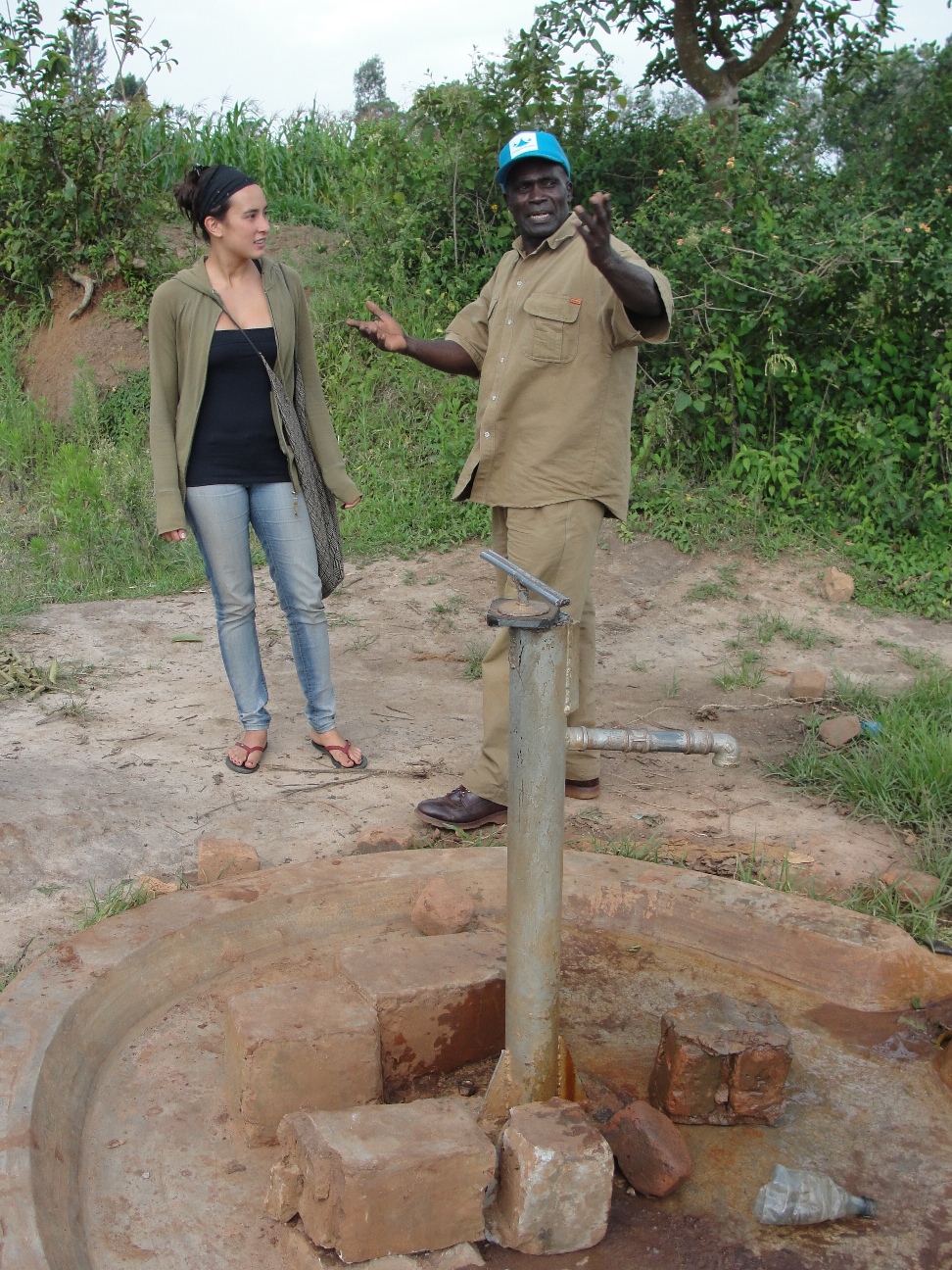
Barnabus showing me the first well

We both arrived at the chaotic bus station in Kisumu around 8pm, but apparently it’s a hoppin place to be so every hotel but the last we tried was full. We ate some tough chicken and Tusker lager for dinner, and the following day set off for Tulwet. The bus we chose told us they were leaving in 20 minutes and pulled out 50 minutes later, and then took 4 hours instead of the quoted “3,” but this was all very good according to East African terrestrial travel standard.

We were greeted in Kitale, the nearest town to Tulwet, by Maina, a project organizer for Freewaters. He works for a Kenyan company called Love Mercy Drilling, and they helped facilitate the bore-hole drilling.The Freewaters Kenyan team leaders Barnabus and Franco took me and Jon out to the field, into the heart of Tulwet village. We drove along mud-red roads meant for bare-footed people, so the old range rover barely scraped through the narrow trails to each of the 6 wells we would visit.

They were scattered around the rural village, spread out so that no family would have to walk more than a kilometer to fetch fresh water. We also visited one dry well, and at the drop of a rock discovered it was full of water, making the Freewaters project 7 wells strong.

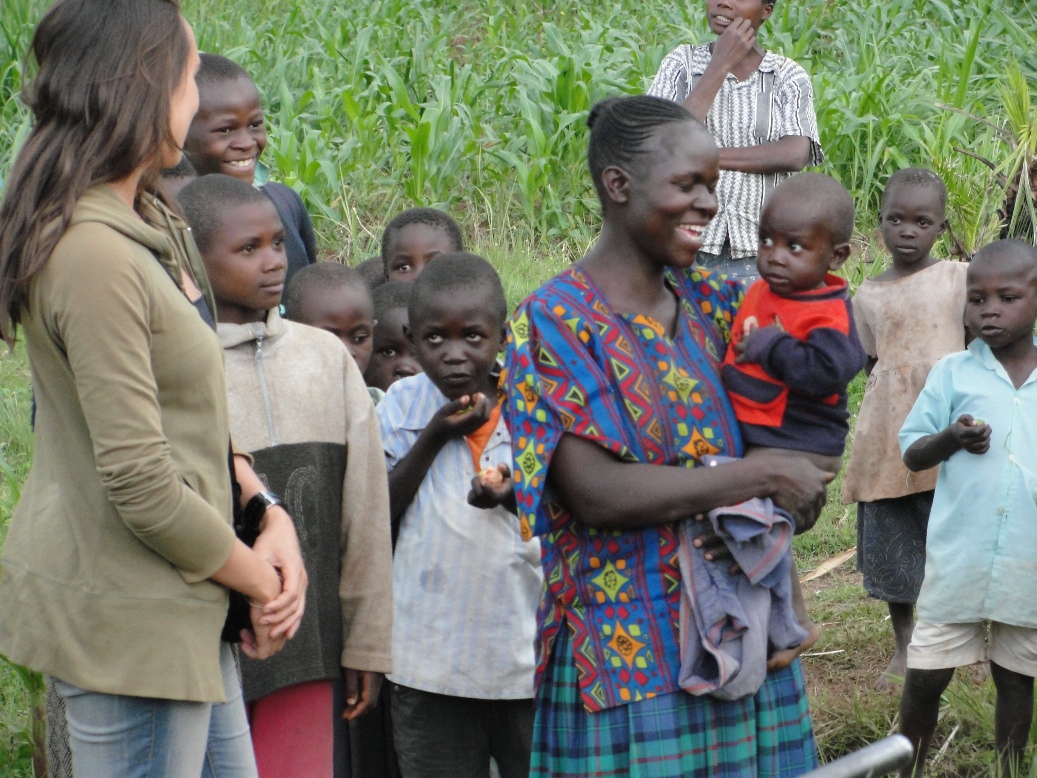
this mother shared her gratitude for the wells with lots of smiles and laughs and a tow of children who may or may not all have belonged to her

The villagers, especially the numerous children, always ran out to greet us, watching intrigued at our examination of every well. They admired silently, but once in a while peeped out a smile or word of thanks. They looked at me as the personification of their Freewaters gift, and wanted to hold my hand and thank me over and over for the clean water they now have, and all the healthy children and seniors who have stopped dying from contaminated water and water-borne diseases. They asked for more wells and more visits, yet had no idea how the shoes I was wearing were the reason behind the project.

my Vezpa shoes on the well, with some usual miniature spectators


Becoming a Masai Princess


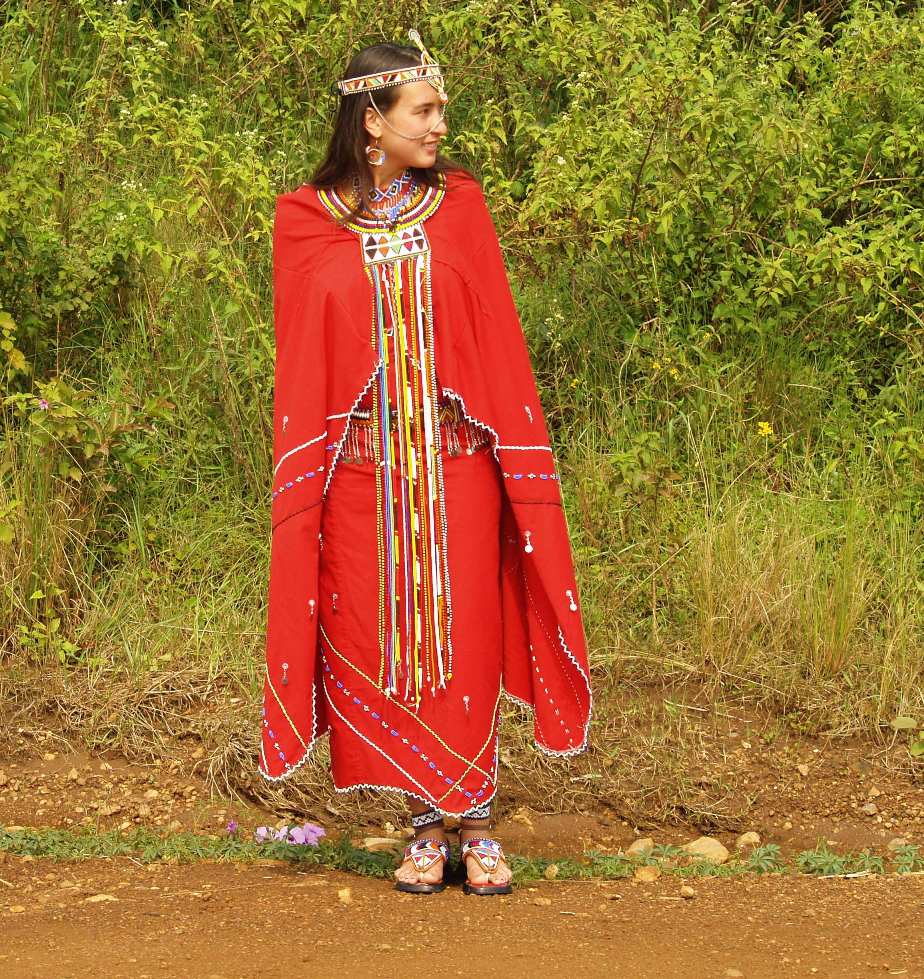
my masai garb

There is a road from Serengeti, Tanzania, to the Masai Mara, Kenya, since these two parks are essentially the same national park within two country borders. Google maps shows this road, and it was once possible to cross the border within the park. Its unclear to me whether its closed only to tourists, but the pitiful thing for me was I now had to get to Masai Mara in the most indirect, complicated way possible.

It took me an entire day to travel back out of Serengeti, west all the way to

me and "Wilderness Willy"

Lake Victoria, then north to the border town of Sirare. It took another day to drive with Kenya back east to the Masai Mara, along a flooded, pot-holed road at an average speed of 30km an hour in my friend’s Land Rover. I was visiting two Masai friends I had made at the Tourism Conference in Kampala earlier this month, and made the mistake of offering to pay fuel which turned out to be $180US. I would have paid three times more for the treatment I received, since both friends gave me an unforgettable experience in the national park they call home.

For the two days I was with them, I wore the most beautiful Masai dress. It was bright red, covered in beads, and my ankles, wrists and head were adorned in more colourful jewelry. I was treated as a Masai by all we met, with utmost respect and attempts at communicating in the Masai language. I did not pay for my tour-guided game drive, park fees, meals or accomodation because of their generous hospitality.

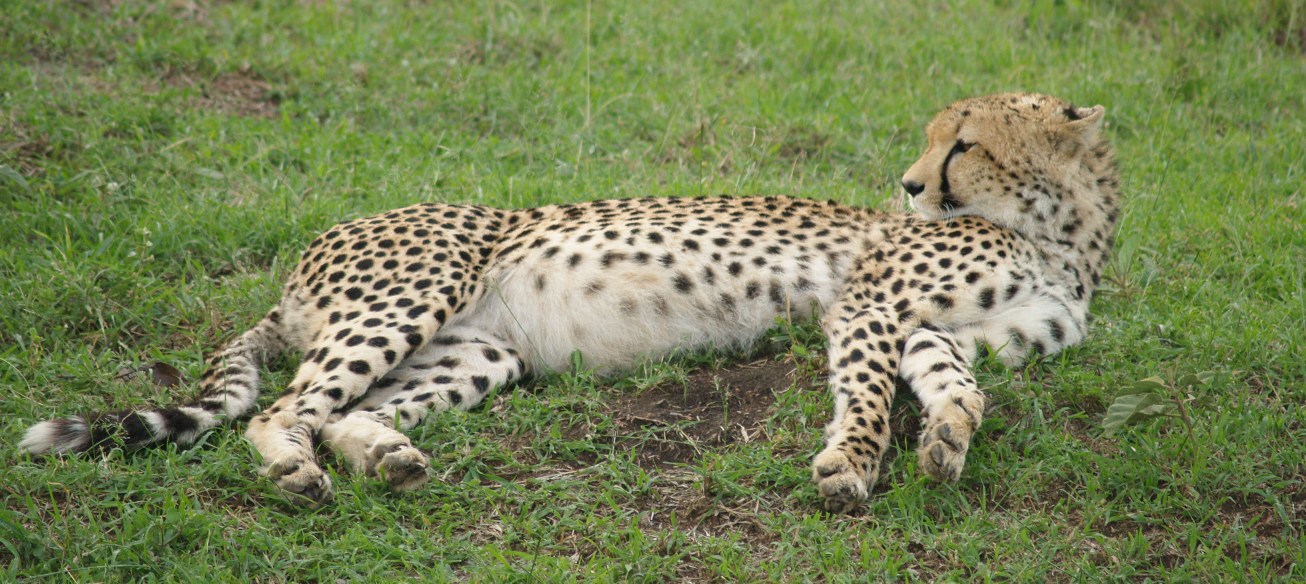
a cheetah!!

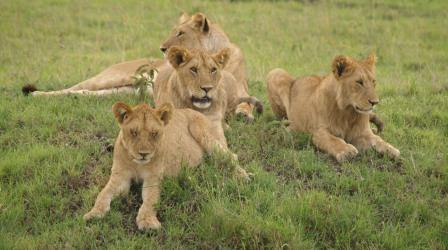
I had dreamed of seeing a leopard or a cheetah, and within an hour of entering the park I saw both, as well as a pride of lions and a herd of elephants. Masai Mara national park was so different from Serengeti – it was a vast, flat plain, with single, isolated trees once every square kilometer. The grass was so well-grazed that you could see the horizon curve, the ground just a uniform, green carpet.

the lionesses and cubs

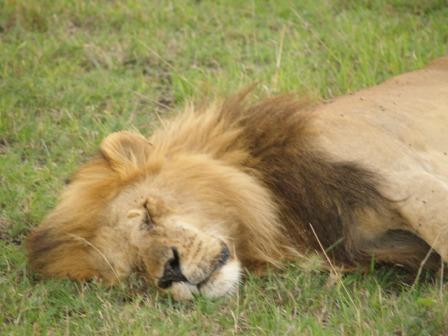
the lion king

As you approach the park from the west, the road drops down a huge cliff, into the valley of the Masai’s. The Masai people are still living in and around the park, in the same way they have for hundreds of year. They are one of the few tribes in Kenya that maintains a long history of culture, resisting ‘development’ and ‘westernization’ by keeping their mud huts and colourful dress. They live side by side with the wilderness of the park, boys as young as 13 killing lions with a spear, and men spending years of their lives nomadically grazing cows. They wander freely between countries, indifferent about the political notion of a ‘border’, their Masai culture irrespective of whether their brothers are from Tanzania or Kenya.

My friend James, attending grad school in South Carolina, told me that the thing he misses most when in the US is being with his cows. One cowboy will spend weeks alone with his cows, knows exactly how each and every cow is, and forms incredible bonds with his herd. Their sole purpose is to stay with the them, live off their milk, and at all costs protect their lives from the free-roaming lions, hyenas, cheetahs and leopards constantly posing a threat.

a leopard feasting on a buffalo kill, which could very well have been an unlucky cow

One of the most beautiful yet paradoxical sights I saw while in the Masai was a herd of cows and zebra grazing together. My ‘western’ notion of an African Safari or National Park, the ideology of a conservation area full of wild animals, doesn’t allow me to picture zebras grazing alongside livestock. The idea that domesticated animals, their farmers, and all the stars from the Lion King live harmoniously in a lawless land is still something I can’t get my head around.

Serengeti – home of the world's densest mammal population

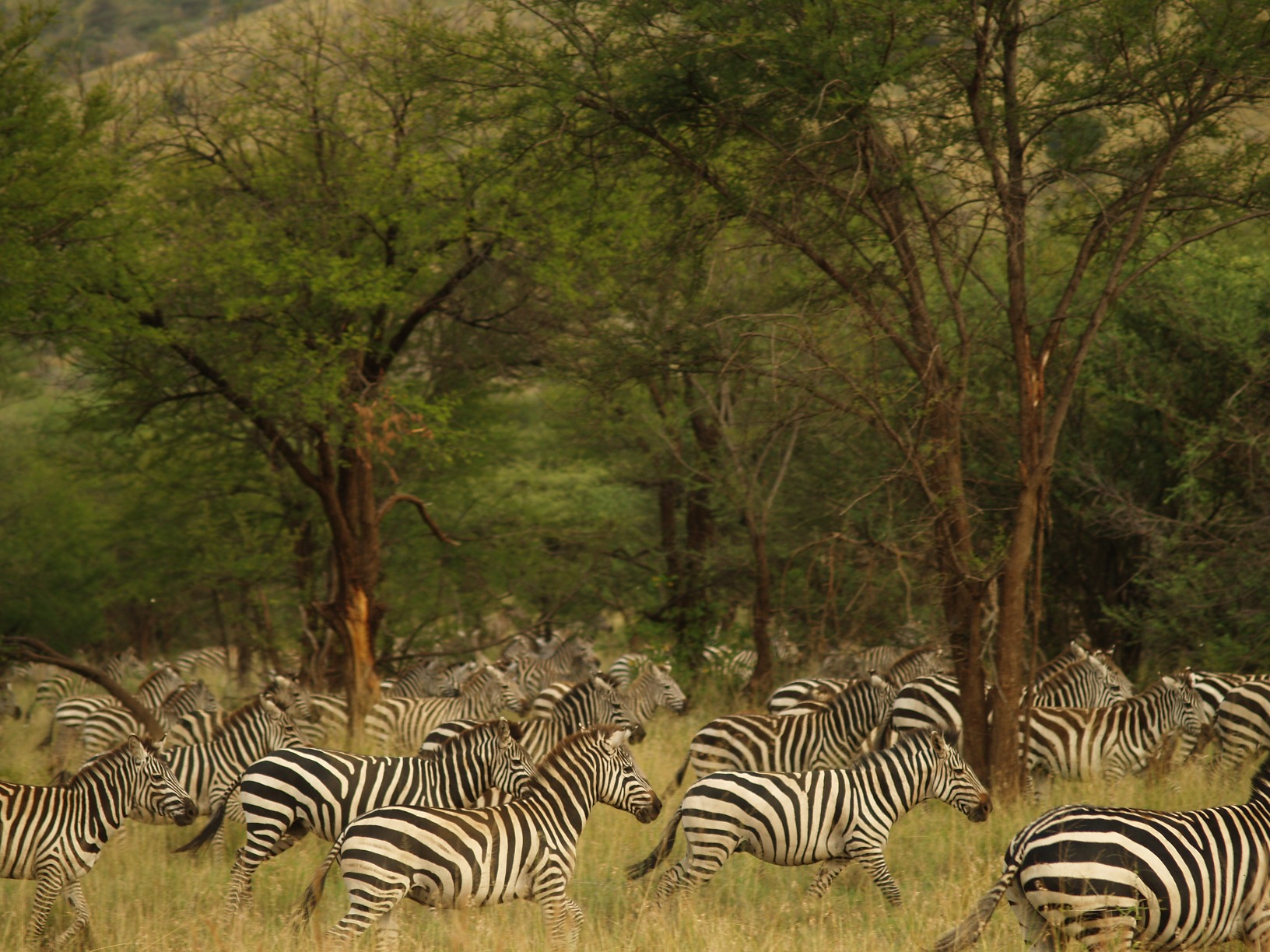
flashes of zebra stripes

It’s supposed to be the dry season, but it rained last night in Serengeti. The weather, like the world all over, has been strange here, confusing the animals and vegetation. However, it’s the perfect time of year to watch the great migration, as hundreds of thousands of wildebeest make their way from Tanzania to Kenya for greener pastures. I was lucky enough to see a herd a few thousand strong, headed slowly from Serengeti to Masai Mara.

wildebeests as far as the eye can see

Getting to the Serengeti was quite a mission, since it tailors poorly to backpackers who rock up and think there’s a cheap alternative to visiting the park. The better prepared tourists have planned their safari tour before they even arrived in Tanzania, and hiring a car for a day from outside the park gates will cost you a cool $450, payable only in US cash.

I was in Mwanza, a sort of gateway town to the Serengeti since its only 2 hours away, and also touristy since it sits on the shores of Lake Victoria. I took a local bus to the west gate, and stopped at a campsite there called Serengeti Stopover. The receptionist there quickly shone light on my ill-preparedness, but tried everything he could to help me. After two hours of discussing, making some important phone calls, and talking to another safari car already at Stopover, we had succeeded in the luckiest plan.

OLYMPUS DIGITAL CAMERA

elephant crossing

I would go with the 7 passenger range rover, claiming the last seat, for free because the other passengers had already paid for the car and the driver couldn’t ask me to pay more. Im not sure why they agreed; maybe they felt sorry for me, maybe they were curious to see what I’d do once inside the park, or perhaps they’d never met anyone from Iceland and wanted to seize the opportunity.

hippos out of the water, a special sight

We took a leisurely 4 hour game-drive into the park, spotting huge herds of zebra, wildebeest, elephants and hippopotamuses. It was 145km to central rest camp, where I would meet Paolo, the park ranger Stopover arranged my park permit and accommodation with. All the camps and guesthouses were full, so I would stay at Seronera, the staff village. I did not even have to camp there, since they had running water and electricity to all the houses, and I stayed in one of the nicest rooms I had seen in East Africa, complete with a hot shower. The next morning I went out into the village to wait for my bus back out of the park, the staff bus which costs $12 per person, payable only in Tanzanian shillings.

frisky little vervet monkeys

A bird managed to poop on my computer screen as I typed under a shady tree waiting. People lazed around the unfenced camp, and others waiting for the bus sat on their suitcases. Chickens waiting to be slaughtered gobbled in the heat, tied up an unable to move. I was sitting watching a bunch of vervet monkeys play a few metres from me, migrating between the ground, the trees and the roof of the restaurant. I saw an adult steal two tomatoes thru the tiniest crack in the door of the kitchen, and he managed to run back up the tree with one hand full back to the roof without anyone but me noticing. Unfortunately, he got a little clumsy as he greedily started eating the first, so the second tomato slowly rolled down the slanted roof to drop on the floor infront of the shopkeeper. This caused the three women of the house to start waving sticks, brooms and chucking rocks at the monkey on the roof as they taunted him with the lost tomato in a fist shaking hand.

It was hard to believe I was still in Serengeti park, as routine life carried on in Seronera exactly as it does in all the other villages I had seen.


Tanzania: Swahili, mafias and 12-passenger sedans

When I first arrived in Uganda, I kept thinking I was in Rwanda and asking silly questions like “What is the local language called in Rwanda?” or “What are the most famous tourist destinations in Rwanda?” People just stopped and stared, wondering whether they should try to answer or ask if I really meant to ask that. Now in Tanzania I keep thinking I was in Kenya, and reflecting on all the stereotypes I thought I had of Kenya in light of what I was seeing and experiencing in Tanzania. It doesn’t help that I’m not sure how to inflect Tanzania; Tanz-EY-nia, Tanz-AH-nia or Tanzanee-AH?

They have a response to Uganda’s Waragi called Konyagi, but what someone says it it sounds like “cognac” and I got pretty confused when served a shot of gin. Its unclear to me why some people say or said English is an official language here, since Swahili or Arabic seem to be the only languages spoken country-wide. Even then, some areas only speak their local languages, and when I arrived at the border town of Ngara, I started to realize the potential problems I would run into.

I spent about an hour at the actual Tanzanian border, having just left Burundi and still 38km from Ngara. There were maybe 5 buildings there – the immigration building, a hotel, a house or two, and a bunch of shacks lined up in what seemed to be an empty parking lot or deserted marketplace. Three of the shacks were painted with bus company names like “Taqwa bus,” and each one had 5 or 6 men waiting in and around them. I approached to ask for a bus to Ngara, and each and every person there informed me that no such bus was coming until tomorrow, even though it was only 11 am and 38km away on a safe, paved road. Many also admitted, sheepily, they didn’t work for the bus companies, and that the offices weren’t really open since no tickets were to be sold that day.

Then I asked for a moto-taxi or a taxi, and it took half an hour to communicate that this was also impossible. As I stood there, puzzled and contemplating the time it would take to jog there, an old, beat-up Subaru hatchback pulled up and announced “NGARA NGARA NGARA!” I immediately took the front seat, thrilled that I would avoid spending a night at the border, and got comfortable. Then another woman got in the front seat. We would share. The driver would also share his seat. The backseat would take 4 people and 2 chickens. And the trunk? 4 more.

After an hour, we finally got to Ngara, bottoming out on all the speedbumps along the way and playing an intricate game of Tetris every time we stopped to let someone in or out. Ngara is a town on 2 intersecting roads, no bigger than those 4 blocks around it.

OLYMPUS DIGITAL CAMERA

the Supermarket store front

There was only one bank and one ‘supermarket,’ and I could buy water and change money at the supermarket. The woman at the cashier was Arabic, from Oman, and spoke excellent English. Our initial interactions were testy – she tried to give me half of the going exchange rate, which I bluntly refused and quoted her the correct rate with confidence, saying she’d have to get closer to it. She smiled as she realised I was no fool, and probably appreciated the sight of another strong, independent woman infront of her. She gave me a great rate and then suggested the one hotel and one restaurant I should stay and eat at, 200m away. With the nod of her head and the snap of her fingers, the shop lights were turned off, doors shut and locked, and two men escorted me out the back door into a van. First, I thought she was kidnapping me. Then, I thought maybe she’s offering to drive me there, since it was hot and time for her siesta. We got into her air-conditioned, Japanese-speaking car and after driving the length of the town in a matter of minutes, I was invited for lunch at her home, in a similarly testy way.

Without saying more than “thats the hotel” and “thats the restaurant” and driving past them, we then turned into a sketchy side road where we honked to be let thru a gate. She lived behind 2 sets of steel doors, manned by 4 guards and a junkyard between, in a beautiful mansion teeming with children. I stepped out of the van, amazed I had found such hospitality from such an intimidating woman. Her daughters, cousins, and their daughters all unveiled at the comfort of me being a woman, and we ate with our hands around a regal, long table.

Sabrah, the Pacino of Ngara

After lunch she dropped me to the hotel, where I met a Canadian miner in town for the night. He was familiar with the town, since he worked 2 hours away in a nickel mine, and explained “Oh, I see you’ve met the legalized mafia!” Turns out, she owns the supermarket, the hotel, the restaurant, and virtually runs the town. Everyone works for her, buys from her, or deals through her since she’s a big piggy bank and speaks the local dialect, Arabic, Swahili and English fluently. Now that I had become her friend, her newly-extended circle of trust would mean I was safer than ever – everyone in town soon learned I had been with her, and Ive never been left in such peace! I could give money to no one, not even for the hotel room, and everyone wanted to help me… but only if it didn’t bother me.

Burundi

A transit visa allows you only 3 days in Burundi, and because its tiny and all travel advisories I read about it before coming suggested I shouldn’t go at all, I opted for the 72 hour sampler. Rwanda helped transition me into a French frame of mind, but I find the African-French accent more difficult to understand. Adjusting to another exchange rate is always tricky, since changing money at the border gives you a pretty good chance to getting ripped off handsomely. Its about 1500 Burundian Francs to $1US, and the smallest bill is 50 francs – you can imagine how many bills you end up with if trying to carry $20USD in small notes. The actual bills are the most well used pieces of paper I’ve ever seen, something so worn it should be taken out of circulation and put in an ancient articrafts museum.

In 3 days, I only had a few hours in the rural areas in my transit in and out of Bujumbura, the capital city. After crossing the northern border from Rwanda, things changed slowly to reintroduce me to another country. The terraced hills became fewer, a little more crooked. The language in Rwanda and Burundi is basically the same, but people spoke differently. The villages became more haggard, people – dustier, things – cheaper. Arriving from the rolling hills into the city was an unexpected site – Bujumbura lies on a flat plain bordering Lake Tanganyika.

Transitioning to French as the lingua franca was a small problem, but only for me since others spoke enough English to help me through any language failures. Feeling lost in communication was the least of my problems when I tried to navigate Bujumbura’s central market. It’s this intensely vast market, open at the sides but covered by a vaulted roof high enough to keep fresh air circulating through the congested corridors.


the sewing section

Arriving at one of the entrances resulted in stares and cheers, and I guessed it was from wearing shorts so I took my scarf and wrapped it around me as a skirt. People quieted once I was inside the market, and instead I heard quite “Karibu’s” and felt faint touches on my arm as I walked past each vendor, welcoming me to look in their stall. The market was overwhelmingly large, but perfectly organized, with each type of good in its designated corner. You can anything you can imagine there, from clothes to flour to pesticide and alcohol. I wandered in circles and made left and right turns that just resulted in me turning myself around so many times I had no idea where I started. I never walked the same alley twice, and only when I returned back to the raw meat butcheries did I recognize a corner of the market I’d already seen. I was totally lost for about an hour, and felt like I had been to the most dense shopping market imaginable. It was a zoo of people and things, unintelligible calls for what they sold, and I, the only person not buying or selling anything.

Informal Couchsurfing

Right now Im sitting at the shores of Lake Tanganyika in Bujumbura, the capital of Burundi. The lake is so big it looks like Im looking out at the ocean, but I know Im not because there are 5 hippos wading in the freshwater grunting like asses every few minutes. Its 5:17 and the sun is about to go down, directly infront of me. Im at a place called the Touristic Beach, which is a huge restaurant/bar/patio/disco venue with seats for about 300 people, but Im only one of about 11 people, half of them staff, in this whole place. Im the only non-burundian, and alone, so it’s a perfect time to write.

the very lonely touristic beach, except for the wading hippos

Im staying here with a Burundian/Belgian couple, a pair of couchsurfers that live right by the lake. Its such an amazing luxury to be welcomed into someones house with a place to sleep, and in todays case, a hot lunch, when they’ve never even met me before. Couchsurfing truly revolutionizes travel.

Ive only had to stay in paid accommodation 2 nights so far, and my previous two hosts were informal couchsurfers. Elaine, a Tawainese American living in Kampala, offered me to stay with her when a mutual friend of ours wasn’t able to, after knowing eachother all of 15 minutes. I had her spare room, in the company of one playful mouse, who somehow found it entertaining to climb into my mosquito net, scurry up the side of it, hang upside down from the top, and then drop straight down on my shoulder, scaring the hell out of me dead asleep. Elaine lived on campus so it was perfect for attending my conference, and we went out one night for hookah and Ethiopian food before she literally gave me all the information I needed to plan my trip to Rwanda.

me and jon with a big silverback

She connected me with a couple of Belgian guys and one awesome South African guy named Jon in Kigali, where I was headed next, and after intending to only stopover a couple days, spent 3 nights in their house one night in Parc Volcan. There we managed to see the gorillas for an actually affordable price because of a friend of Jon’s, and took the best trek to the Susa group where more than 30, totally habituated gorillas surrounded us on a Dr. Seuss-esque landscape.

From Jon’s expat life I bounced to Ed’s expat life. In Bujumbura I spent half my time with an ex-schoolmate of Jon’s who introduced me to the mini-Europe community living in Bujumbura. On my first night there, we went out in a group for dinner to Belvedere, a patio restaurant on the hillside overlooking the city. None of us actually knew it at the time but we had the best seats to the lunar eclipse, so we watched the moon turn yellow, then orange, then almost deep red before totally blacking out. As eerily as it disappeared, it starting growing, fading to yellow again, until it returned to its normal white glow despite the apocalyptic feeling of it all.