Memorable Impressions of Central America

I found it weird that Christmas was in full swing the minute after Halloween ended, and also weird that Halloween was any occasion in the first place. I didn’t see any trick or treaters, but I did crash a family Halloween party in Panama city with a lot of orange and black decorations and a dalmation dog wearing pumpkin lights. Christmas songs have been playing on the radio and Christmas lights have been on sale in the markets for all of November, and I guess that might have something to do with the fact that they don’t celebrate Thanksgiving or Rememberance day between the two holidays.  

I had to get used to the fact that a lot of men just carry around machetes strapped to their belts, both in town and in the lonely countrysides, occasionally convincing myself that they’re probably not used as weapons, just crop tools. Although it made me wish I carried around some functionable item that doubled as a weapon. My friend Jeff in San Jose, Costa Rica, lent me his umbrella one day that did just that, but they’re just to big and clumsy to travel with. Maybe they make sweet smelling pepper spray that can double as deodorant? Someone should patent that.

for the best market finds, pay only in cash, with small bills (or coins). Across from this market in El Salvador Guy paid $0.02 to use the internet for 5 mins, so dont say pennies are useless

Having to function in a new currency and exchange rate every week was fun, trying to figure out all the coins and bills and actual values of them. In Honduras, their lowest paper bill was 1lempira, which is the equivalent of 5.3 American cents, and they had bills in denominations of 2, 5, 10, as well as 5, 10,and 25 cent coins!

One reoccurring problem I always had was that people hate accepting big bills or making change. It may have something to do with the fact that things cost next to nothing, but even if you were paying with a bill with the equivalent value of 2 euros, people would scratch at it and hold it up to a light to make sure it wasn’t fake before grumbling about having to give you change.
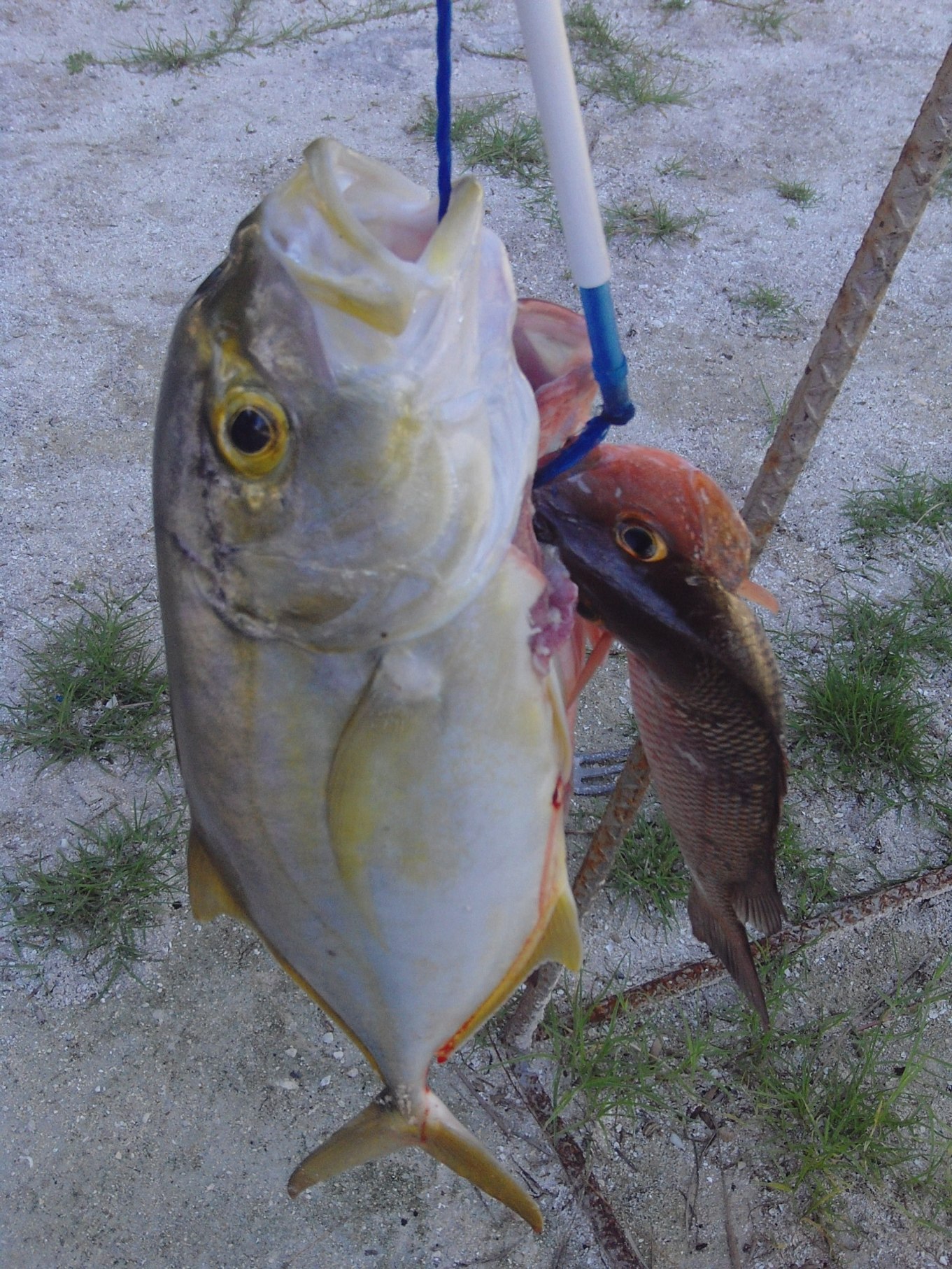
the one time you dont need cash for dinner is when you fish it yourself - these catches in Caye Caulker thus tasted even better

Cash seems to be the only way to go as well, with atm’s and banks nonexistent at borders, replaced by a bunch of businessy looking men strapped with the biggest wad of cash their hands can hold. I guess there’s no point in using VISA for $0.25 purchases, but then when you want to buy something expensive, the only way to get it at a reasonable price is to pay in cash or else they charge weird visa surcharges. To make sure I always get the haggling discount, I had to visit in ATM every week or so to minimize the amount of cash I had to carry around, and of course they only dispense big bills for big withdrawls. Shockingly though, one ATM in El Salvador dispensed $10, $5 and $1 US bills – $1 US bills out of an ATM!
Tongue Twisting Place names: An Excercise for your Spanish Pronounciation

I have to admit that all my memories of different places have sort of melded into one big impression of Central America. Even though each country has had its own quirks and isms, things kind of start to feel the same after a while. Not in a boring way, but in a  comforting, familiar type of way. As my spanish has improved I’ve also gotten more comfortable in all the new places, and a little bit more confident in my travels alone.

Every time I open my lonely planet Central America shoestrings book, I have to think for a second what chapter to open to because I can never remember what country I’m in. Trying to remember the name of the town I’m in would take even longer, but one can always rest assured that every single city has a parque central with an iglesia (or two or three) within walking distance, with all the things, information or amenities you could ever need all in one square.

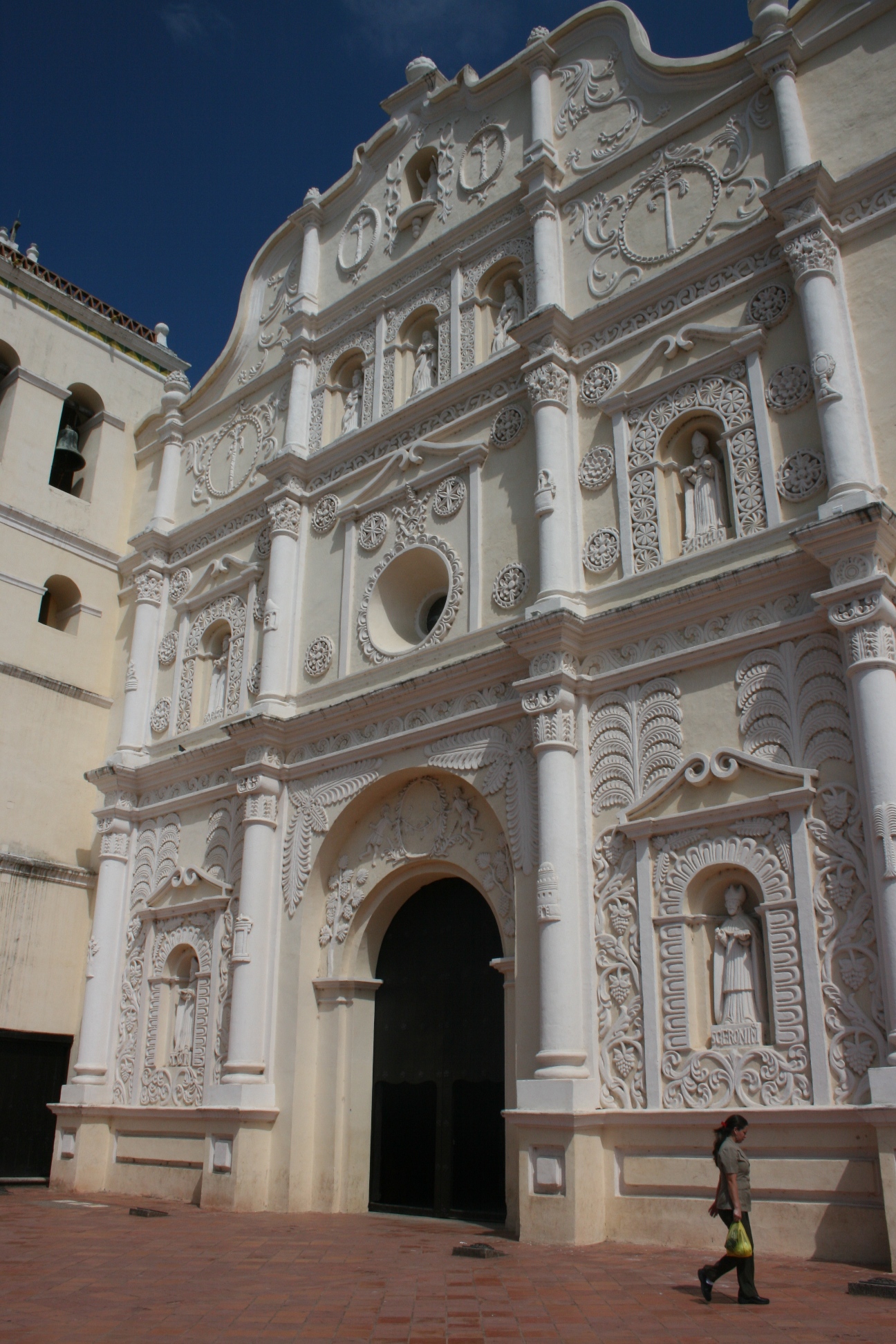
the main church in Comayagua's central park

Once I remember what town I’m in, spelling or pronouncing it is almost always an issue, especially in El Salvador when there was one day we went to Ataco, Apaneca, Ahuachapán and Juajúa all in one day with 5 different buses, and the only words I could think about to help me remember was ‘jube jubes’ and ‘a taco.’ Trying to say ‘jubejubes’ or ‘taco’ to the different bus drivers taking us around didn’t seem to help much, except put a big, confused smile on their face.

Tegucigalpa took some practice, but I still can’t say Quetzaltenango or Quetzaltepeque. Sometimes the same town existed twice or the names were so similar I almost ended up on the wrong bus headed in the totally opposite direction. Frankly, I can’t believe that hasn’t happened yet.

Every Latin American country seems to have an endless supply of town names beginning in San or Santa’s, like San Ignacio, Santa Maria, and every country so far has had a town called Agua Caliente. Towns beginning in ‘Ch’ were tricky in Guatemala because of cities like Chichicastenango, Chimaltenango (not Chalatenango in Honduras), and Chiquimula, not to be confused with neighbouring Chiquimulilla. Other tongue twisters included Huehuetenango, Cuauhtemoc and a bunch of towns beginning in the letter ‘X’ which I’m still not sure how to pronounce.

A floating house in San Pedro, one of the many San- towns, but not the same as San Pedro Sula

Each country has also had its own special Spanish accent or slang words to make things more difficult, and towns where Maya inhabitants still thrive often had one Spanish name and one Mayan name, like Xela which is actually the same place as Quetzaltenango but not the same place as Xel-ha, Mexico. I guess as long as I can remember my own name I’m doing just fine 😛

Honduras with some pretty Honduran guides

SONY DSC

our cozy hotel in Chinandega

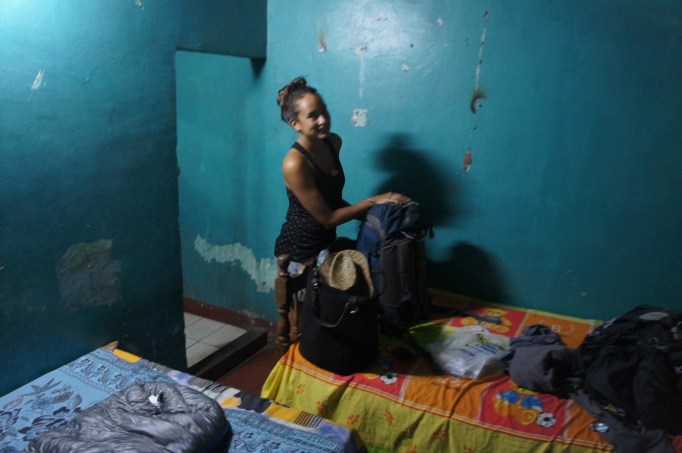
When me and Guy left Nicaragua, waking up in our $6 hotel room in Chinangega was a bit of a shock. We had arrived the night before at 11pm from our 7 hr horse carriage ride from Leon, and thought anything not as hard and bumpy as our cart would be comfortable, but the room was atrocious. We just laughed about it, but still a little repulsed by the bathroom and resident 3 inch cockroach territorial of the sink.

maxell Digital Camera

the view of Tegucigalpa from Hondura’s version of the Christ the Redeemer, except this one looks out over the largest Coca Cola sign you’ve ever seen

We left for the bus terminal, a few blocks away, and got into the first bus that agreed to take us to the ‘frontera,’ but then ended up at the Guasaule crossing instead of Las Manos. We just went with it and carried on, with a chicken bus, to Choluteca, and then called my Honduran friend Claudia to let her know we were getting closer to where she lived in Tegucigalpa. We got on another chicken bus to the capital, which we learned later dropped us off in one of the worst part of towns, on a bus company not even Claudia would ride on. Oh well, we ended up ok, and made a toothless friend who sang Eric Clapton to us while waiting on the side of the road.

SONY DSC

Santa Lucia, one of the prettier towns located in the surrounding hills of Tegucigalpa

Claudia and her Dad poked some fun at us for our choice of transport, and then took us on a driving tour around Tegicuigalpa, introducing us first-hand to the slightly nerve-wracking way Hondurans drive. We almost hit a few people, but then made it home to the most delicious home cooked meal I could have ever dreamed of. The next day we drove around neighbouring colonial towns with Claudia’s sister, Sabrina, and she reconfirmed the driving standard. The following day we left on a 3 day road trip, and most painful during the drive was always the unnecessary, but very numerous speed bumps along the highway, that Sabrina insisted on taking at 0.5km/h, or, when she didn’t see them, at 80 km an hour with someone yelling from the side of the road “Slow Down!” Both were equally uncomfortable, but also just as hilarious.

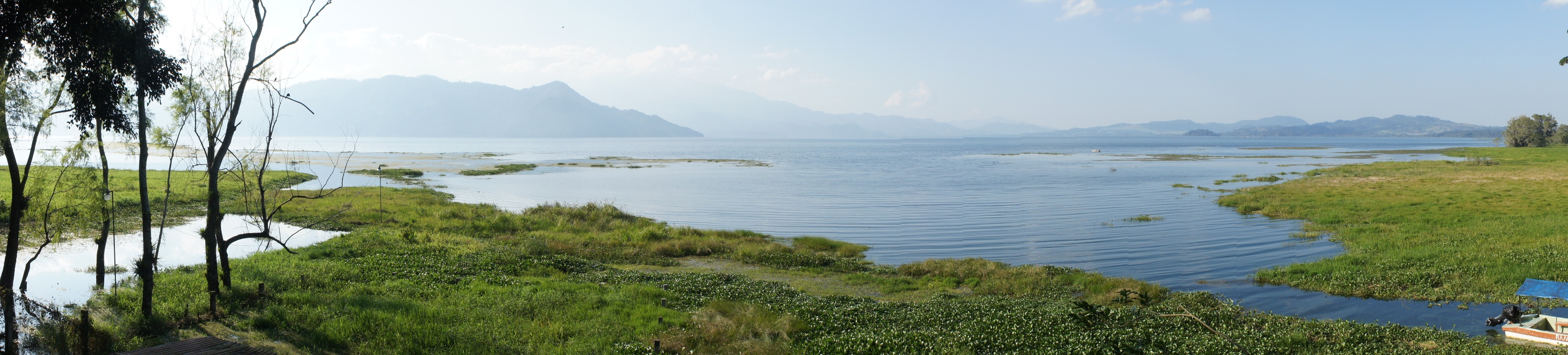
we drove past Lake Yojoa but had to stop for a photo

We ate alot of pupusas (stuffed torilla thingies), baleadas (tortillas folded with beans), and drank horchata (like chai tea but better) under our excellent Honduran guides’ recommendation. We saw so many beautiful towns and beaches along the way, many of which I didn’t ever even learn the names of, and also visited her other sister in San Pedro Sula who treated us equally like family.

SONY DSC

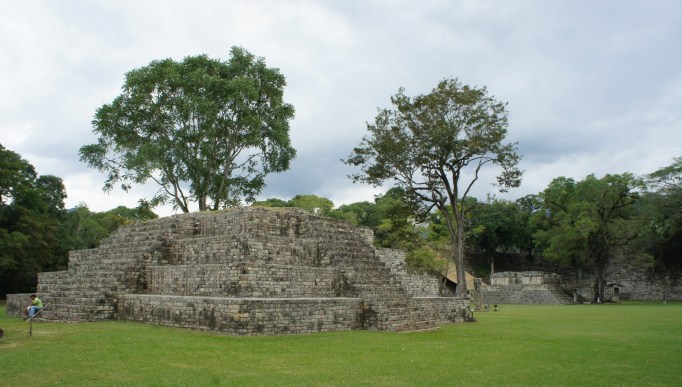
Copan Ruinas

We ended our road trip in Copan, where I had my first salsa dance this entire trip. Amazing how little latin dancing I’ve been able to find in the last 2 months, shameful really, but I got it out of my system with a Guatemalan salsa teacher who danced excellently. My other first on the trip was the Copan Ruinas, my first Maya site visit, and prefaced what has become probably my highlight in every country since.

Terrestrial Travel in Central America

Traveling from Panama to Mexico is actually pretty easy, so long as you don’t mind taking a lot of time to get from A to B. Transportation deserves its own blog entry because I’ve probably spent half my trip just traveling. So far I’ve kept track of 41 buses, 25 collectivos and taxis, 5 private cars, 6 boats, 2 horse carriages, 1 horse and 1 scooter that have got me to where I am now in Belize. The roads have been horrendous, and I’m not talking back streets, but main highways and the only roads connecting towns to one another. Sometimes they’re just plain old undriveable due to flooding, rockfall, mudslides, missing bridges or collapsed banks, yet so many huge, coach buses and semi’s traverse them regularly. And I’ve never seen so many semi’s full of rusted metal cargo, anyone know what that’s about? In addition to all that, impossible mountains, curvaceous roads and reckless driving always kind of made me wish I was walking instead. Although, with the exception of rowing into Panama, I always got to walk to my next country since buses drop you off at only the first of 2 border crossings needed every time, one to exit the country you’re in and the other to enter the country you’re going to. Sometimes the two crossings are more than a kilometre apart, and I can’t understand how they really control the area between since locals seemingly wander freely between both. Sometimes I have a hard time even finding where I need to go for my stamps and accidentally end up in the next town without realising I’ve ‘entered’ the country, just strolling along.

maxell Digital Camera

one of the cliff-hanger, deadly switch-back roads leading down the mountain into Lago Atitlan, Guatemala

Buses are actually like driving markets since street vendors sell everything on board; no need to go to the market. While on the bus, street vendors take the opportunity to hop on, both while we’re parked and also just come along for a few kilometres before hopping off, and sell all sorts of random things. People carry their entire inventory somehow attached to them in an organised, presentable way. One guy pitched toothbrushes, backscratchers and a foldable fan all in one breath. Some come on dressed as clowns and act out a short comedy sketch for tips. Others come on claiming medical knowledge to sell you creams and herbs that all look like tiger balm to me, and some just want to show you their own health ailments like dumbness, missing limbs or freaky tumors growing out of their stomachs. Those who only sell one thing specialise in yelling it over and over in rapid succession, most popular being ‘PAPASFRITASPAPASFRITASPAPASFRITAS’, and ‘CHICLETSCHICLETSCHICLETSCHICLETS!’ Some don’t bother coming on board and at a stop light just come up to the window, ‘FRESASFRESASFRESAS’ or ‘AGUAAGUAAGUAAGUA’ while sticking said item into your window on the end of a big stick.

SONY DSC

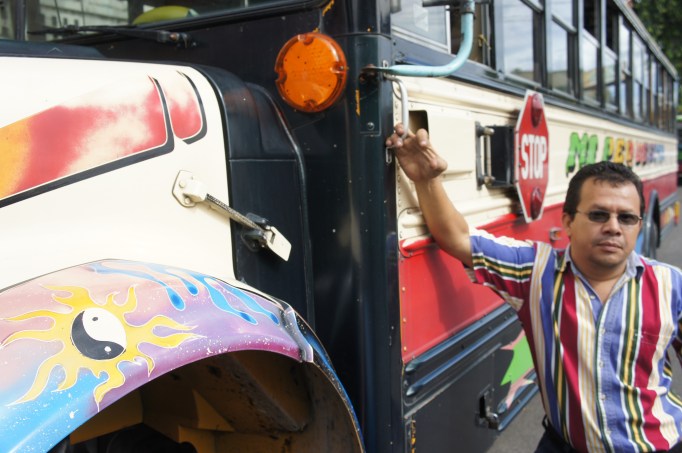
our friendliest bus driver, who smiled all the time except when a camera was pointed at him, and insisted we have a photoshoot outside his bus

The buses in central America are beautiful works of carbon-spitting art, to put it simply. Drivers put a lot of pride in the decals, stickers, disco lights, neon and colour patterns both on the inside and outside of their buses, and the most popular long-haul local bus is an early 90’s Blue Bird school buses that probably got shipped here from the US when they couldn’t pass smog check anymore. They have the capacity of about 55 children, but maybe 60 adults squish the popular routes. They’re affectionately called chicken buses, and some upper class locals even refuse to take them, but in my experience they’re a lot more entertaining, but a lot cheaper for a much longer (just in time, not distance) journey, and I always appreciate more bang for my buck. Just be prepared that the journey will take at least an hour longer than the driver tells you, and will include numerous stop and go pickups of people on the side of the highway that don’t count as “stops,” so all buses are “direct.” Not quite true, but I’m not in a rush so I’ll just keep enjoying the scenic route.

Why traveling with a Guy helps

My first day solo in Panama City I ran into this guy named Guy at the canal. Well, actually he ran into my taxi from the locks back into town and we discovered we were on the same journey north through Central America. We only spent a day being tourists together in Panama and lost each other for Costa Rica, but reunited again in Granada, Nicaragua a few days later. The fact that his name is Guy provided endless pun jokes, but he himself provided splendid entertainment. One morning we were walking on a totally empty sidewalk and he had is head down in my lonely planet book when he walked straight into an electricity pole as wide as him. I was half a step ahead and only heard a loud thump, then him mutter ‘well that was stupid.’ When I turned back to see him just flip the page and keep reading on, I had to put two and two together to figure out what had just happened and then almost peed my pants laughing. The next time he made the same comment to himself I had to ask what happened since he was in the bathroom, and he casually explained he had just put soap in his eyes.

girl and Guy on our nicaraguan road trip

The most ridiculous thing he ever did was stroll right into a dog napping on the road, this time without any book or distraction but just total oblivion of where he was stepping. His reaction this time was a simple ‘Oh, hello’ as the dog wimpered off totally in shock, not sure what had just happened in his deep, peaceful sleep. Then there was the time he almost walked off the top of a Mayan temple in Copan, but realized just in time the edge of the path we were walking on didn’t have any steps down. In Honduras, me and Claudia convinced him to try painting his toe nails red with us, but that really didn’t help the fact that locals always hear is name pronounced as ‘gay,’ not Guy.

SONY DSC

very steep steps to fall off

Aside from being my complimentary entertainer, he provided great travel company with some great philosophical debates, discussions on faith, and shared incredible stories from his time as a professional cyclist on Lance Armstrong’s team. He had a heart of gold, listening to everyone’s life story and trying to be friends with any locals he interacted with. He was always trying to give away all the most valuable stuff he had, and for some reason that kind of generosity was never abused. When we took a horse-drawn cart 9 hrs for only $20, he offered to pay the drivers with his ipod instead, worth probably $150, but they preferred the cash in hand. While we were traveling, we cracked a few beer and he only took one sip of his before passing it off to a guy peddling his bike alongside us, going just slightly slower than our horse and looking a bit more fatigued. When we met up with my friend Claudia in Honduras, she told us about how she had gotten mugged just a couple weeks before, and when she told Guy her blackberry was the last thing taken, he offered over and over to give her his blackberry, even though I’d say that was the only thing he was dependent on, communicating with family and friends hourly. The most ironic give away he actually succeeded in was in El Salvador; we were looking for a restaurant that was serving lunch and when the first place we asked was out of food (?), he gave the owner a bag of raw potatoes covered in salt and hotsauce he had bought in the market a few steps before, probably thinking it was some delicious fruit.

Claudia, Guy and I at the border of Honduras via horseback

One valuable thing I learned traveling with this guy named Guy was about safety. There is something always unnerving about traveling alone as a girl, and his company was extremely comforting in the dozens of sketchy buses and dark streets we had to frequent along the way. He explained something pretty profound to me too: one time he walked right past a guy trying to say hello, ignoring him probably as a precaution, but the guy responded to his brush off by yelling ‘well there’s one great way to get robbed.’ He said he never feels afraid at 2 am in the most dangerous neighbourhoods because he’s already made friends with the street folk, and thus, he’s probably safer there than anywhere or anyone else. Being friendly to people is so important, and the trick Guy taught me was to always make people believe you trust them. I’ve been trying it and it does really work; once you make a personal connection, even if its just sharing a hello or a smile, the chance that they’ll hurt you is probably zero.

Cigars and Horse-drawn carriages in Nicaragua

SONY DSC

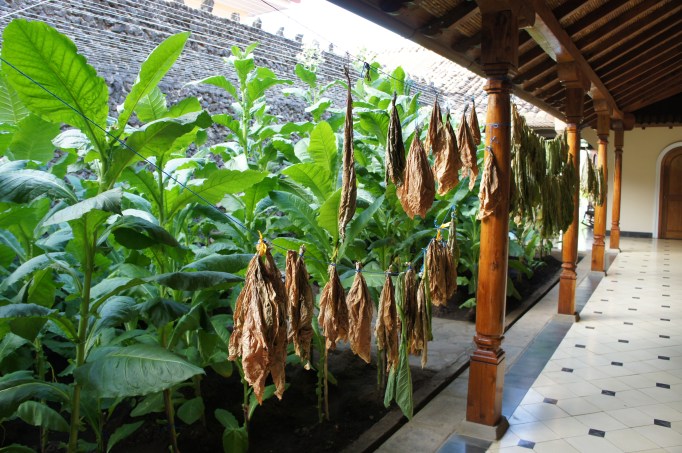
tobacco leaves growing and drying at Mombacho’s

The best discovery I made in Granada was Mombacho Cigars, a brand new elite cigar company founded by three Canadian guys. They are hand picking and rolling tobacco from nearby Mombacho mountain, employing only locals and paying them well, and have established themselves on the main street in Granada in the most beautiful colonial house, complete with a cafe, restaurant and rooftop view. We almost walked right past it, but got enticed to come in when one of the founders Fraser asked us  ‘Would you like to see how cigars are made?’ and of course, I did. I love cigars. And Mombacho cigars are really, really good, proven by the fact that I probably smoked 5 in 2 days.

SONY DSC

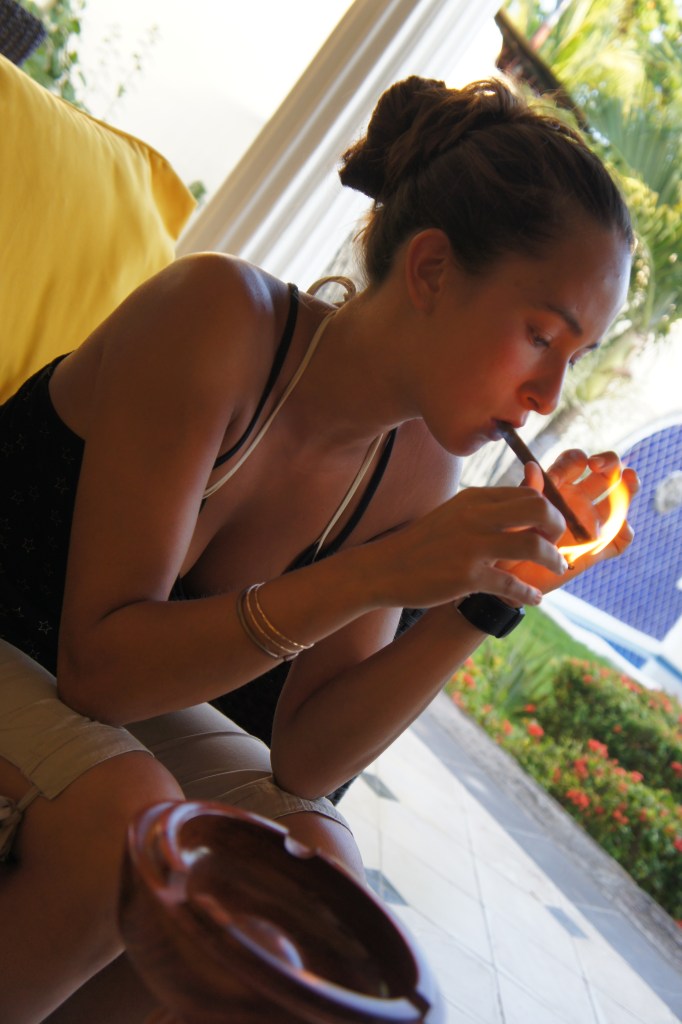
tasting a Mombachito, a mini Mombacho premium cigar

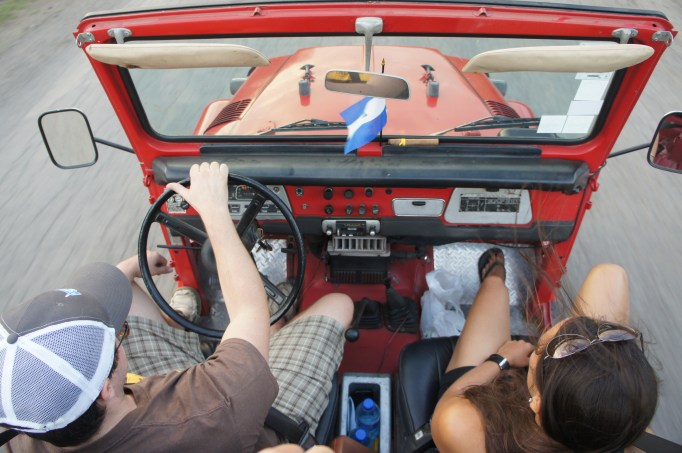
We made a good friend out of Fraser, and he was happy for the English-speaking company, so the next day we spontaneously decided to take a road trip to Leon, another tourist, colonial town similar to Granada. The best part was probably the road trip itself, since we took in in a topless 70’s Toyota truck through some marvellously scenic landscapes.

SONY DSC

no roof and no doors make an excellent road trip car

While I was in Granada I started thinking about how most forms of transport used to involve horses, either on horse back or with horse-drawn carriages. What a romantic and wonderful reality it would be, especially in a place like Granada, to have no cars, buses, trucks, tuck tucks, or dirt bikes.

SONY DSC

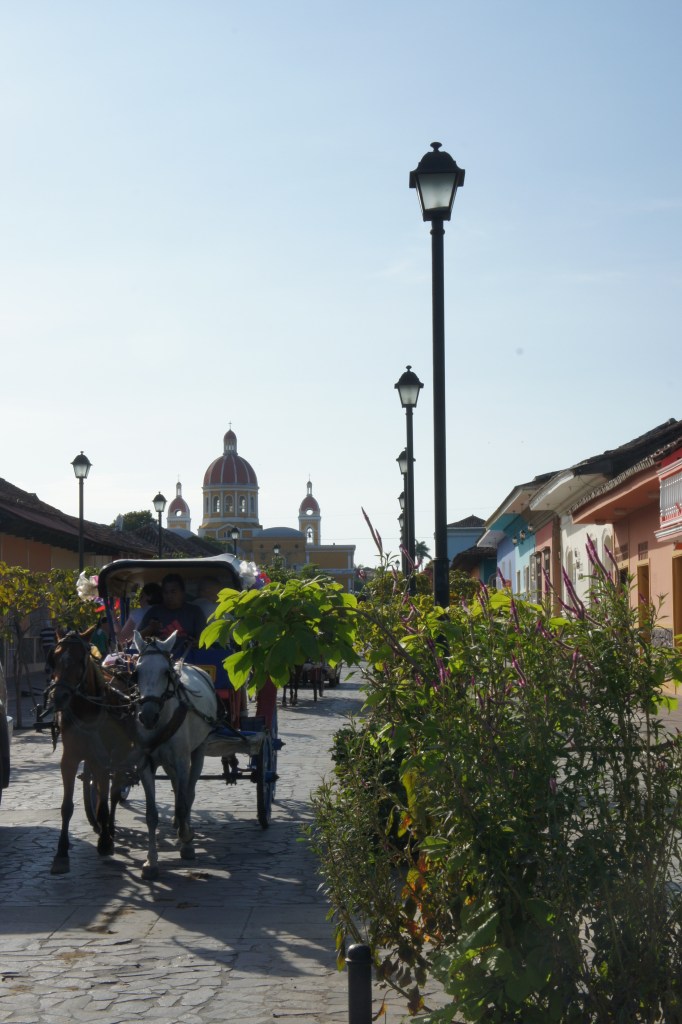
a horse drawn carriage strolls down Calle La Calzada

I thought about this while traveling around town with a carriage, but later decided I wanted to actually travel like that. Guy was up for it too, so it only took stopping a couple carriage drivers before one offered to take us to our next destination, a town called Chinandega reachable by bus in 1 hr. Instead, we took a 7 hr horse and cart into the night and quickly realised why vehicles are so much more efficient as hundreds zipped past us. However, it was still more enjoyable, we appreciated the scenery passing by so much more, interacted with all sorts of locals on horse back or pedal bikes passing by, and made great friends out of our 2 chauffeurs. And, it did only cost $10, expensive compared to the $1 bus but still incredibly underpriced.

SONY DSC

our cart driving out of Leon through some Market traffic

Picturesque Nicaragua

concepcion

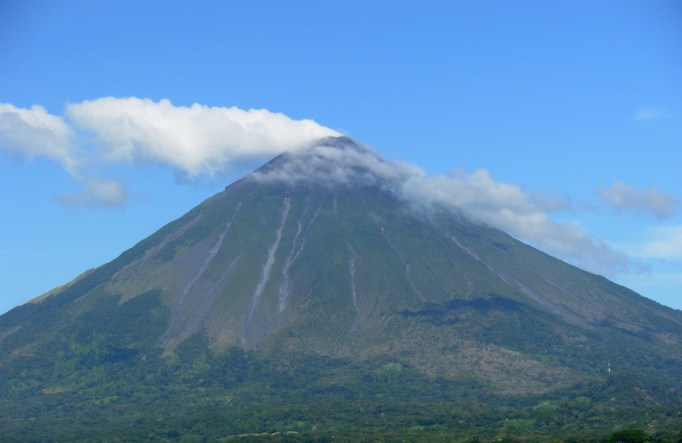
majestic Volcan Concepcion in Isla Ometepe

Leaving Costa Rica was actually pretty simple, as far as the scheduling and prices of buses, but I got so torn when I arrived in Liberia because I had the choice of going back south into the country and visiting Monteverde cloud forest but had so much anxiety about getting stuck in a bus for 2 days or having a bridge collapse under us that I decided to head north into nearby Nicaragua instead. It took 3 buses, a taxi and a ferry in a whole day of travel but I went straight to my first destination: Isla Ometepe. It is this beautiful island formed by 2 huge volcanoes that rise so high up from the middle of Lake Nicaragua, a fresh water body of water so big you’d swear you were in the ocean as you crossed the rough waves to get to Volcan Concepcion. It’s the most picturesque, perfectly symmetrical, cone shaped volcano, with a little bit of white cloud on its peak, and I’d definitely suggest anyone going to Nicaragua to be sure to spend some time on this sleepy island. However, don’t take the overnight ferry to Granada since traveling from 12 to 5 am on a rocky, oily smelling cargo ship doesn’t really let you appreciate the lake or the pitch black scenery going by. And, getting sea sick makes it much worse. So does drinking 3 double pina coladas before embarking… live and learn I guess.

SONY DSC

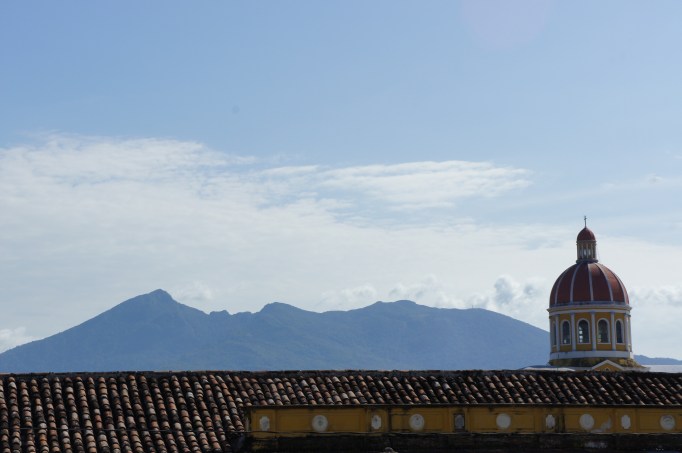
A view of Mombacho Mountain behind the colonial-style roofs popular in all the sleepy colonial towns

I arrived in Granada, the most popular destination for tourists in Nicaragua, and it was pretty easy to see why. It looked like a post card from Cuba, with so many colourful, 1-storey homes and degraded colonial churches and facades scattered around the walkable, cobblestone town. I couchsurfed here too, but with one Spaniard and an American, since it seems half the town are actually foreigners who came and never left.

SONY DSC

so many of the home fronts looked like colourful play houses straight from Havana

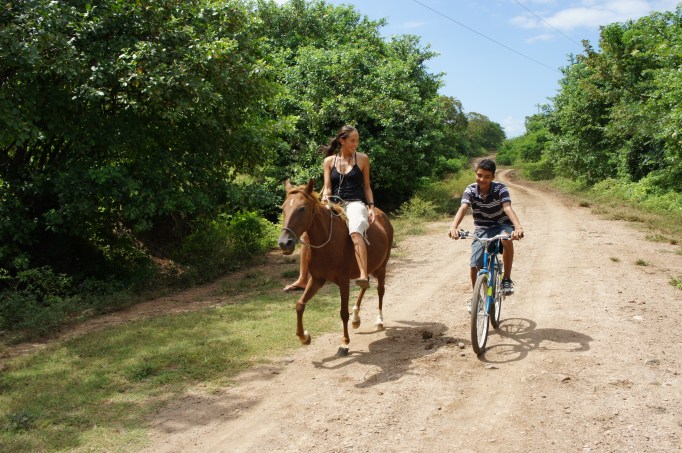
I spent one day with a couple American guys, one whose name is Guy and is a retired, professional cyclist and the other who owns a bike rental company in Granada. It was appropriate we spent a day biking together to nearby Lago de Apoyo, a big crater lake you can swim in, but on the way home I decided I was the weakest link in our bike gang so I traded my bike for a horse since riding those is more my forte. To my pleasant surprise, the pregnant belly on this mare made her waddle like an Icelandic tolter – perfect for sitting bareback.

SONY DSC

this boy traded my rental bike for his horse on the way home from crater lake in Granada

The Sunny Side of Costa Rica

 I only spent a day in San Jose, a very wet one, walking around the markets and seeing the few attractions there are, and luckily I didn’t get stuck on the bus from San Jose out to the Pacific. I took a 5 hr bus west to Tamarindo, a popular surf spot in Costa Rica and frequented by many tourists, and stayed at the Beach House Hostel – highly recommended to anyone who wants to stay on the beach, with surf a few steps away, for only $10 a night with some of the best staff and guests who all become like one big happy family in no time. My main contact was Murray, a British guy I met in Vancouver over 4 years ago and hearing his royal pronunciation accent came as a shock to me since I had forgotten how proper he sounded like in real life after only being in touch through Facebook.

maxell Digital Camera

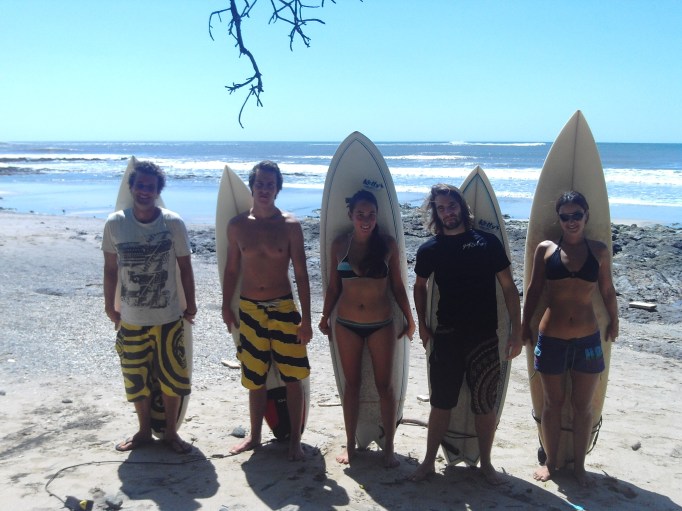
me with Australia, Netherlands, Sweden and Costa Rica

Like a good host, he took me surfing, with the rest of the Beach House friends and family, and of course the waves kicked my butt. I was riding a nice fishtail but when those points hit you in the thigh on a missed break, they leave very large, purple bruises. I did manage to kind of catch a few, but once I came in slightly sunburnt, tired and salt rinsed, I managed to rip my toenail off on a rock. I am so accident prone to my feet, I don’t know what it is…

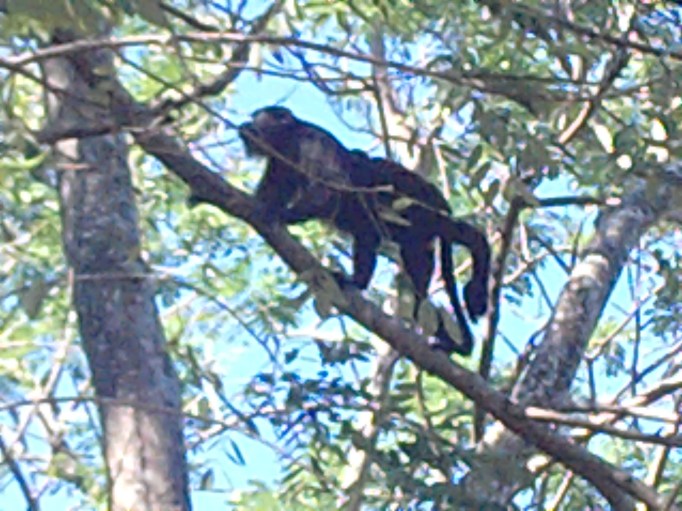
I decided that even though Howler monkeys are on the brink of extinction in parts of Costa Rica, I hate the obnoxious, growling sound they make constantly throughout the night, a loud sound that kind of resembles a lioness in labour outside your window. But, I do really like laying around in hammocks with a bunch of laid back surfers whose names I can’t remember, so I call them all by their country of origin since almost ever single person was from a different corner of the world.

maxell Digital Camera

a howler monkey with a baby dangling from its tummy strolls past trying to look innocent

I somehow got convinced to stay 3 nights in Tamarindo when I was only meant to spend one or two, but it seems like a perpetual problem with travel – you never spend as much time as youd like to when you find a place you really like. Not a bad problem to have, I guess, I just wonder what places coming up will be receiving the short end of that stick.

Tica Bus from Panama City to San Jose

Getting to Costa Rica was a nightmare; it didn’t stop pouring rain for the 2 days it took for me to get from Panama City to San Jose when it was actually supposed to take 15 hrs in a bus. The heavy rains came late in the wet season this year, and apparently with more rainfall than usual, so a bunch of mudslides and bridge collapses shut down many major highways and closed off cities from road transport. It was almost impossible to get out of Panama too because Nov 3rd was a national holiday celebrating their Independence from Colombia. Their Independence Day is actually more like a 5 day weekend holiday, and every Tom, Dick and Harry was both trying to get into the city and out of the city, causing every bus to be fully booked. I bought the last seat on my bus, which was actually the last seat in the back of the bus, conveniently located right beside the most foul-smelling, pee-covered toilet ever; I cringed every time the door opened, and since we had 46 people on the bus, it opened pretty frequently, offering a lung-full of sewer air every 10 minutes.

perfect depiction of a blocked road, from Frank Delargy at Virtual Tourist

We first hit a mudslide at around 9pm, after the Costa Rican border but still about 5 hrs away from San Jose. The bus decided to park beside it and wait, asking us all to get some sleep while we waited for the road to clear. When I woke up at 6 am, everyone else was also sleeping and looking out the window revealed no one had even arrived to start clearing the road. After spending 8 hrs in the nearest town listening to the radio and waiting for the road to clear, a police car drove through with loudspeakers announcing the way had been cleared. We drove on, passed the first mudslide, drove over an extremely distrusting, temporary bridge to replace a collapsed one, and then hit another mudslide. We waited roadside, this time only for 3 hrs, and finally made it to San Jose at midnight the next night.

Luckily I had a friend on the bus who spoke English better than my Spanish and kept me up to speed, and also got me a taxi out of the sketchy suburbs where we arrived too late for anything to be open, and I spent the night at a friend’s place. His mattress on the floor felt like a five-star hotel, and so did showering off the pee and crowded bus aroma of the 2 day journey. It was still raining outside, for the next 2 days I was there, but I wasn’t in a rush to get out of there knowing how many more mudslides still had to be cleared all over the country

Panama City

Well, I was expecting to write a blog with fabulous pictures of the San Blas right now, but unfortunately, I lost 4 days and $400 to El Capitan Kevin and his half-functioning sail boat without a trip through the San Blas since we had to flee the boat the moment we saw land to ensure our sanity… and to keep him from mutiny. We sailed towards Puerto Obaldia just after sunset and it looked like we had arrived to the middle of nowhere – just 2 bright lights guided us towards the small town of 500 and even then, Kevin almost ran us aground on some coral reefs skirting the shore. We paddled towards the only dock and were relieved to discover a hotel only a block and a half into town. Still everything was cloaked in darkness, so we relaxed in our room for $10 and smoked a cigar in the hammocks outside to celebrate land and our newfound freedom, although we had no idea how or when we were getting out of there.

DSCF1013

some turkeys strut the quiet, carless streets of Puerto Obaldia

The next morning, light arrived to uncover a tourist friendly, extremely safe town with two internet cafes, great cheap eats, and most importantly, an air strip with 2 flights that day to Panama city. After snorkeling for 10 minutes beachside and destroying my supposedly waterproof camera (never buy the Fujifilm XP10) and eating breakfast at a restaurant run by the same people who owned the hotel and sold plane tickets (it almost felt like the entire island was just one big family), we completed our 1 hr journey to Panama city, now only 1 day behind schedule but still without our dreams of sailing through the San Blas archipelago.

PHOT0024

a daunting cityscape, but quite an impressive skyline

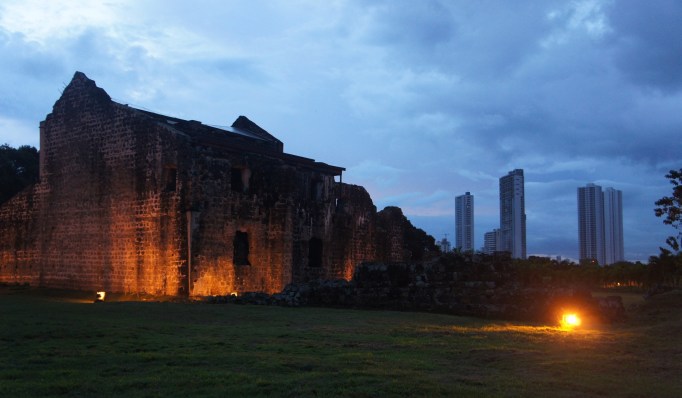
Panama city was a bit of a culture shock to arrive to after 5 days at sea with only the same 4 people around you and experiencing quite an extreme case of cabin fever. The highlights were definitely sleeping in a non-rocking, non-moldy bed at Luna’s Castle hostel – $13 per night including wifi and a banana pancake breakfast, which is in the beautiful Casco Viejo neighbourhood. Although an important colonial neighbourhood, it was extremely run down and reminiscent of Havana, Cuba with the decaying facades and lifeless streets. Panama Viejo was a modern neighbourhood built literally ontop of of the oldest ruins from the first European settlements in Panama.

panama viejo

the Panama viejo ruins, contrasted by downtown’s highrises in the background

Of course I had to visit the Panama canal, and was pleasantly accompanied by Guy East, a retired cyclist who is thinking of biking to all 200 countries. I challenged him to race, but I’m not that great at biking so Ill stick to planes, boats and buses.

DSC01024

a massive container ship barely fits between the last water lock

Panama downtown looked bigger than Miami beach, and the traffic and complexity of getting from point A to point B made it a little difficult to navigate – especially since taxis are reluctant to pick you up or take you where you want to go, and at least 3 protests/riots/parades in the 3 days we were there blocked some major routes. The Panama independence holiday occurring on Nov 3 is surrounded by the two days before and after also being some sort of holiday or reason to close of roads and prohibit the sale of alcohol, and getting out of Panama was even more difficult when heavy rains, flooding and bridge collapses turned my 15 hr bus journey from Panama city to San Jose, Costa Rica into 40 hrs.