Horseback and Hunting

Spending the summer riding horses gives you a new perspective of the landscape around you. For one thing, it passes much slower, as you have time to stare and think about the scenery unfolding. Getting into a car and flying at 90km per hour after a week of reaching maximum speeds of 30 (bouncy) kilometres per hour causes me to panic and hold onto the side of the car seat and wonder if Im moving at lightspeed. Requests for the driver to slow down just gets a chuckle from those in the car, but eventually people’s suggestions to relax are possible.

One thing I noticed is that crossing bridges is a lot easier in cars than on horseback. I was once riding a really safe gelding over a bridge while holding a hand horse, and at one point, in the middle of the bridge, they both decided they were too close to the sides of the bridge, and in attempt to stay as far away from the rail as possible, they stopped and had a push of war against eachothers sides. My leg was pinned between the two, and as one edged the other out, their shod feet started sliding out on the concrete, making sparks and stressing them more. The herd pushed from behind, also uncomfortable to be stuck halfway on the bridge, and eventually we made it over without losing anyone overboard.

One lonely old male has made a home out of Fljótsdalur, near this narrow

4x4ing through glacial streams

bridge where you get the most beautiful sight of glacier water mixing with the heavier fresh water and causing the bright blue water to line up against the brown stream. We also saw a herd of 900 reindeer when we were driving up to Vatnajökull for a glacial walk, blasting through river crossings and peering into icecaves.

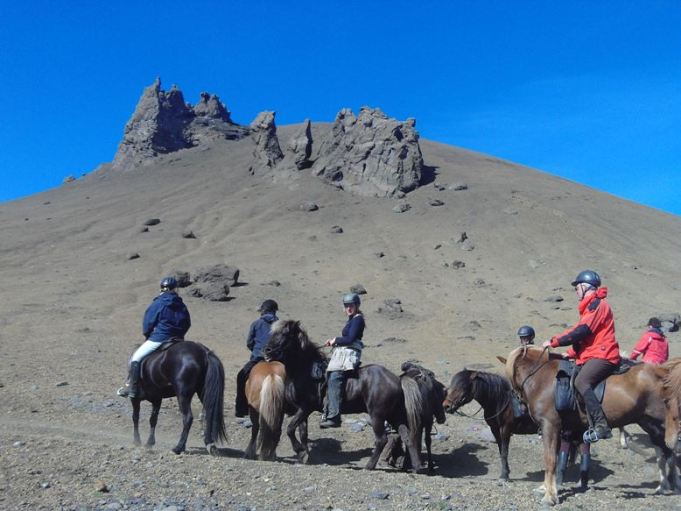
At the end of August, I went reindeer hunting on horseback with 5 hunters and 14 horses. We started 15km north of Egilstaðir town, from a farm at the base of the snow-covered mountains. The beginning was a bit rocky, as 4 riders fell off their horses and we temporarily lost the herd as the 7 loose horses galloped off. I realized the hunters weren’t true horsemen (yet), and that having handhorses might reduce the chances of the herd galloping off with our food, beer, tent and sleeping bags again. We eventually got our act together and made it to Hrundalur where we tented in a rented Marmot tent that came with no ground pegs. We creatively experimented with saddles and extra horse shoes to hold fasten the tent down securely.
_MG_1447

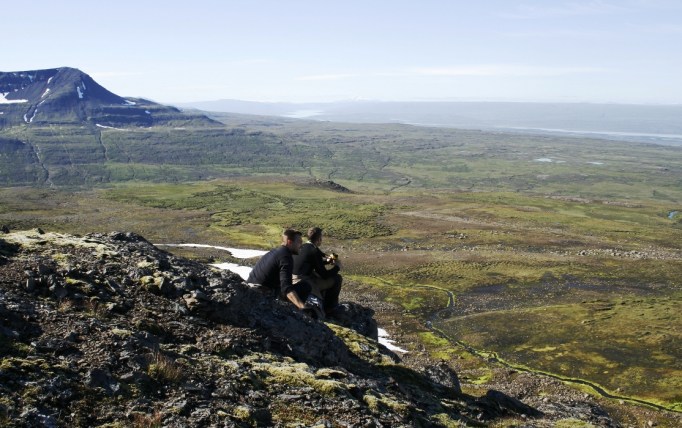
searching for 200 reindeer, not as easy to spot as youd think

The next day we hiked hours into the mountain tops, and spotted a herd of 200 reindeer. There were 4 hunters on the trip, all doctors and good friends, but only Kalli had the hunting permit. By noon, he had shot a 90kg male, that we had to gut, chop into three pieces, and tie down on the back of one very calm, patient horse called Postskjoni. He carried the deer back down the steep slopes where we left it submerged in an icy river.
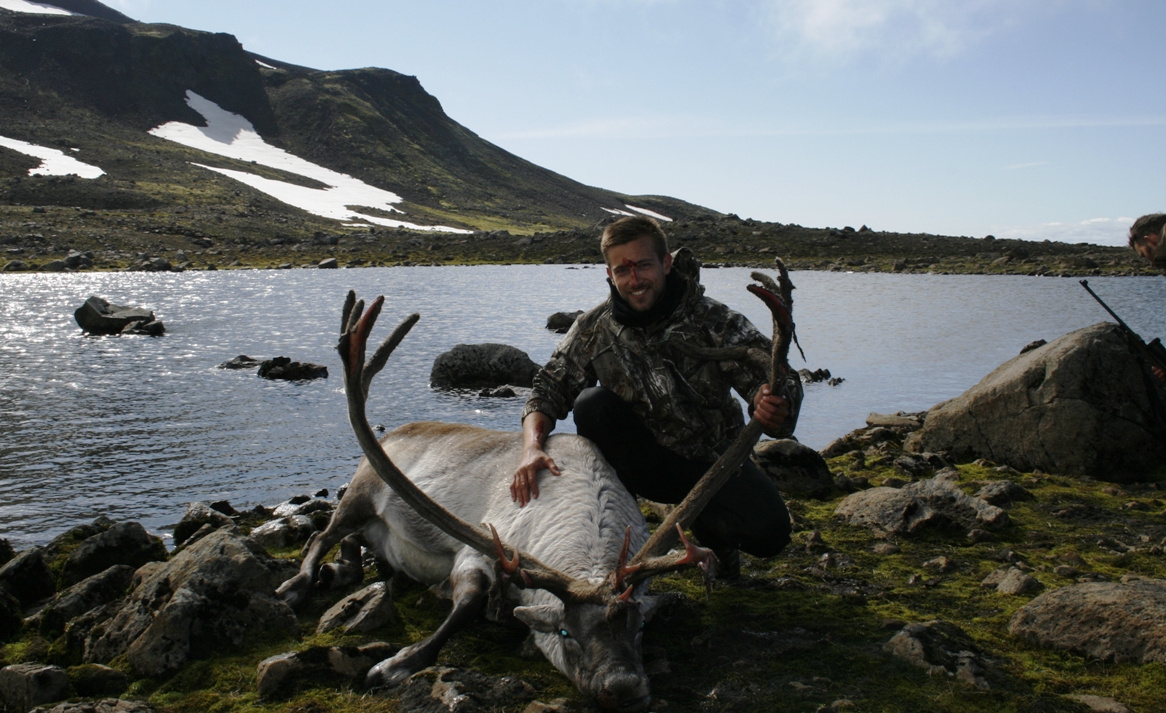
Kalli, the hunter, with his reindeer
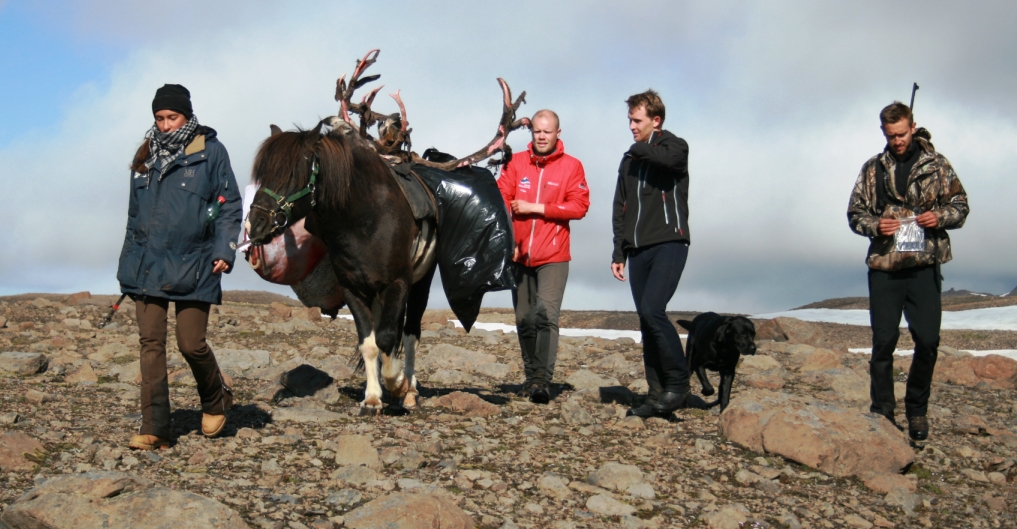
Postskjoni carrying the deer down

There was 1 reindeer hunter guide, and me, the horse guide. I was the new Denni of the trip, in charge of all the horses and also the riders who transformed magnificently into true horsemen after 3 days of riding. Instead of Leo, Denni´s dog with the innate knowledge to herd and nip at heels regardless of getting kicked square in the head, we had Molli, a black labrador that was more interested in our wellbeing than the horses. He paced alongside us, always looking up at us riders for eye contact and assurance that we were doing ok.

IMG_1611

the hunters, our horses and the dog Molli

I remember one of the first horse trips I rode with Denni, he wore converse shoes and a cowboy hat, so I tried to put some style into my outfit and wore Timbalands and an old beige riding hat I found at a second hand store for 450kr. Jón, the former Denni, could ride with a wild goose in one hand and a bottle of schnapps in the other, but there was nothing I could do to top that except drink a little schnapps during riding pauses.
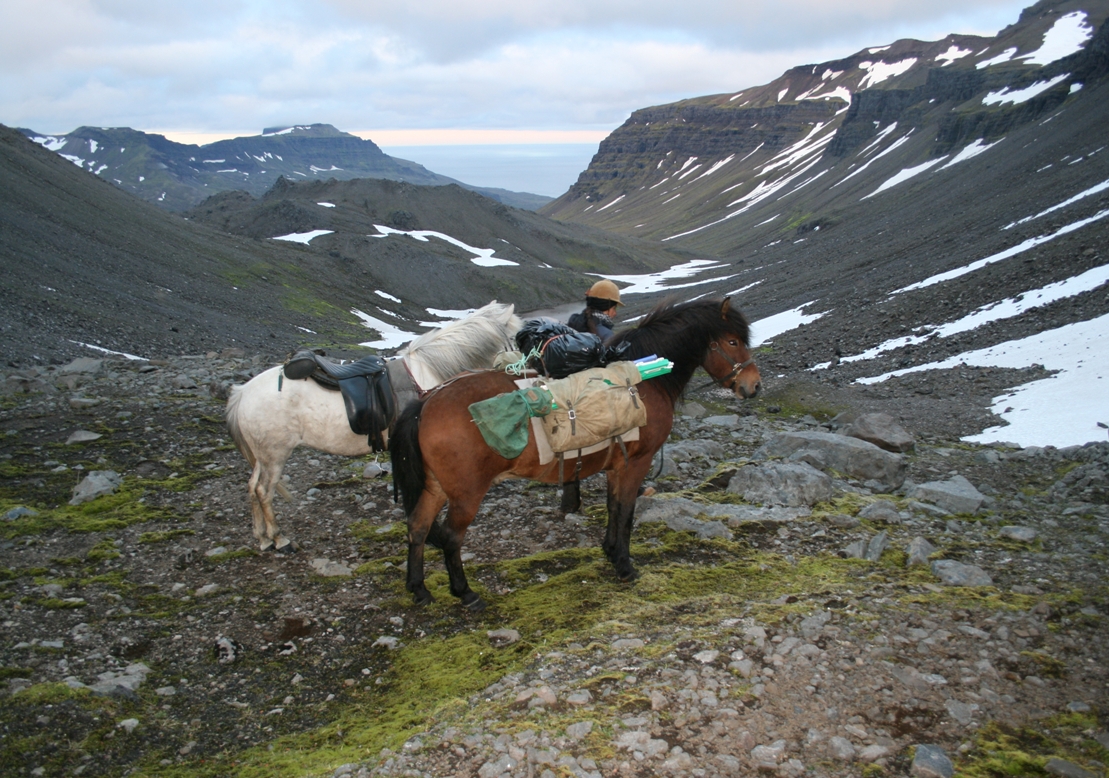
taking a break at the top of a moutain pass

This trip was a little more difficult, with no path or tracks to follow, and the horses unsure of where they were or where to go. At least I knew all the horses by sight, no longer confused by the lookalikes or needing strips of coloured tape to tell them apart. We also didnt have to ride past other herds of horses, since we had one stallion escape twice from a fence and run along with our herd during the summer trips. On the first day of the Ishestar trips, my cell phone fell out of my pocket and a herd of 90 horses trampled it dead, but on this trip we only lost one pocket knife. We may as well have lost our phones, since we rarely had service and my battery was basically dead the entire weekend, relieving me of any contact with the outside world and only focusing on the horses and my new best friends.
IMG_1658

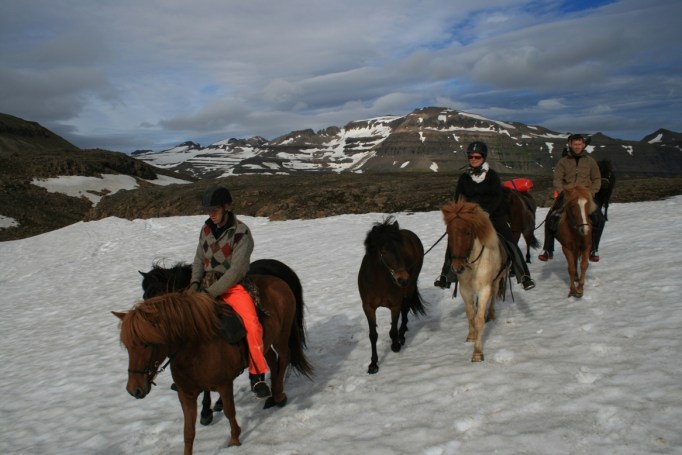
riding with hand horses

After completing our main hunting mission, we rode over a mountain pass, over rivers and snow, to Klyppstaðir, arriving well into the unexpected dark of night, to tent at the afterparty of a country ball in the valley where the icelandic band KK had just finished playing. We sat under the stars and watched northern lights flicker behind the silhouette of the mountains, and ate sheep heads, salted lamb, dried fish, homemade moonshine and whiskey. All 6 of us crammed into the 6 person tent that probably fits 4 more comfortably just as we started to feel a little dizzy, as the horses grazed just beyond our heads.

goose hunting on Fljotsdalsheidi

I got to choose the horses I knew and liked best from the Ishestar horse trips, and pair rider to horse like an intricate matchmaker. It was nice not to have to ride the crazies and untamed, like the case so often was one the regular tours. By the last day, the hunters had transformed into horsemen, as we all found our groove and rode triumphantly back into the valley we started, over another icy mountain pass. The next day, they skinned the reindeer, and after becoming a tight riding, tenting, hunting family unit, the boys invited me goose hunting. We drove Frikki´s Land Rover up into Fljótsdalsheiði and sat beside the pond with the most abundant, shiny goose poo that we could find and waited for nightfall. We sat very still, nibbled on chocolate, and only one flock of geese flew overhead but never landed. I fired the shotgun once anyway, without killing anything, and decided I liked goose hunting better than reindeer hunting.
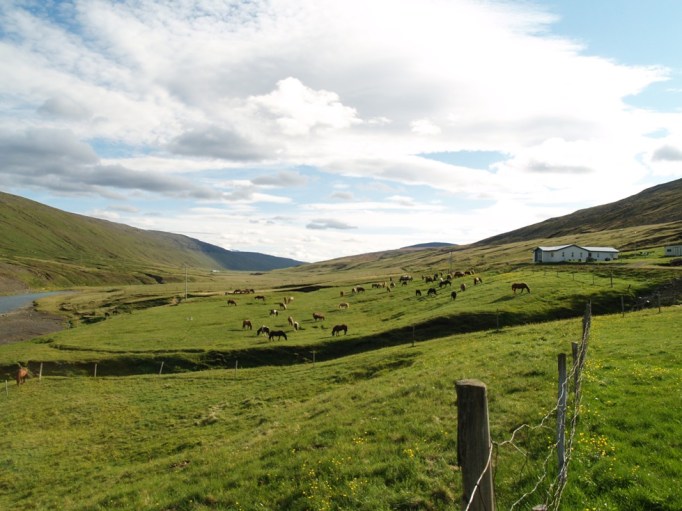
Summer in Iceland

September creeps up on you like the chill of sunset sneaks under your skin after a sunny day in Iceland. All of a sudden its getting dark at 8:30 when you’ve grown accustomed to never fearing nightfall, and you start to realise how much you appreciate the warmth of the sunrays in this sub-arctic island.

OLYMPUS DIGITAL CAMERA

a glorious summer day in the countryside

Reykjavik awakens for the summer months, with a noticeable population boom from all the tourists walking downtown decked out in outdoor gear and big-lens cameras. People are out and about, drinking coffee and beers on patios, mothers walking their babies in killer heels, and the city folk flock to the countryside for hiking, bathing and summerhouse time.  There’s also a surge of concerts and festivals, the biggest two days this year being Gay Pride day and Menningarnótt (Culture Night).

the view of Reykjavik from the top of Esjan

Gay Pride in Iceland is probably the only place in the world where its more of a family event than a sexy, nudist, liberal movement. Last year’s gay pride saw Reykjavik’s current city Mayor dress up as a drag queen in the parade, and this year the parade, open-air concerts and sunny weather forced all road-traffic to be replaced by hundreds of thousands of rainbow-decorated people wandering around town.

Menningarnótt was even more vivacious, blessed by the best weather day imaginable, and organized into a 4 page spread schedule in one of the local newspapers. There was always 20 things going on at once, and there was no way to pick what to go to, since there were always two things happening simultaneously that peaked your interest, compounded by 5 other things that you had no idea what they were and your curiosity sometimes got the best of you. I had ten friends in town, 2 from London and 8 from New York, so I spent most of the day battling through a crowd with 8 obnoxious American men in tow, so my more mellow British friends had no difficulty in finding us in the crowd. I visited the Faroese embassy for some rotten food and nordic cider, saw a choir sing Psalms at Hallgrimskirkja, shopped an outdoor market that resembled more a garage sale, and listened to the informal Kaffibarinn mens choir sing acapella, pissed drunk at Austurvollir. There was always live music, and a couple main stages where the night came to a close with a bang. A sparkling Harpa and firework show sealed the deal, unimpressive by international standards, but a big enough deal to Icelanders that a parking spot within a 5 km radius of downtown could not be found as everyone came to town to see it, all 5 minutes of it.

crowd

the concert crowd at sunset on Culture Night

I went to Bræðslan, a 2 day music festival in Borgafjörður, a small sea-side village in Iceland’s easternmost fjords. Glen Hansard was the headliner, but

Glen Hansard performing at Braedslan

like a true icelandic concert, Jón Sigurðsson and some other of Icelands other most famous artists ended the concert. The final encore included everyone coming on stage and jamming together, improvising and freestyling with a

my cousin Sara, cooling off

crazy light show in the abandoned fish processing plant where the amped crowd flocked. It was July 23rd, the weekend when summer finally arrived, and people spent the days lounging in the sea and icy rivers to keep cool. We tented at the base of  a place called Elf hill, and the magic in the place was real, atleast to me.

One of the riding days on the Egilstaðir riding tour takes us to Sanddalur, a remote sandy valley accessible only by foot, horse or 4×4, believed by the superstitious to be rich in elf life. Their troll-like faces are cut out in the jagged rock, blaring out from the steep, sandy slope, and while we take our lunch break there, the restlessness of the horses can only be explained by one thing – elf presence.

maxell Digital Camera

Sanddalur

Growing up in Iceland and Canada has given me a lot of privileges, but they say allergies are a bigger problem for the advantaged, since 30% of people develop allergies from having too much hygiene. I’m allergic to summer, all the pollens and freshly cut grass, even horses themselves and the sun-dried dust clouds a herd of them kicks up.  This was the coldest summer on record in 75 years for Iceland, and even the warmer east only saw summer fully bloom in late July so I survived more comfortably than expected. Still, I frequently suffered from a runny nose, snored from congested sinuses, and breathed a little raspy from asthmatic suffocation. Ironically, the hottest days were just this last week, with temperatures reaching 20 degrees even though the confused trees have started to golden. Now the rains will start to come, but with the darker skies come northern lights, a sight that makes the arrival of fall more welcoming.

Arctic Adventures

It’s amazing to think about the far-reaching effects of the tourism industry in Iceland. We’re a tiny country, 103,000sq.km and only 306,000 people, but this year, around a half a million tourists came and scoured every corner of this country, seeing more in 1 week than most Icelanders see in a lifetime of living here. You notice this on Laugavegur, Reykjavik’s main street where everyother person passes you speaking a different language, and also on highway 1, the ringroad around Iceland littered in rental cars and some serious campervans shipped over with Smyril’s car ferry from Europe.

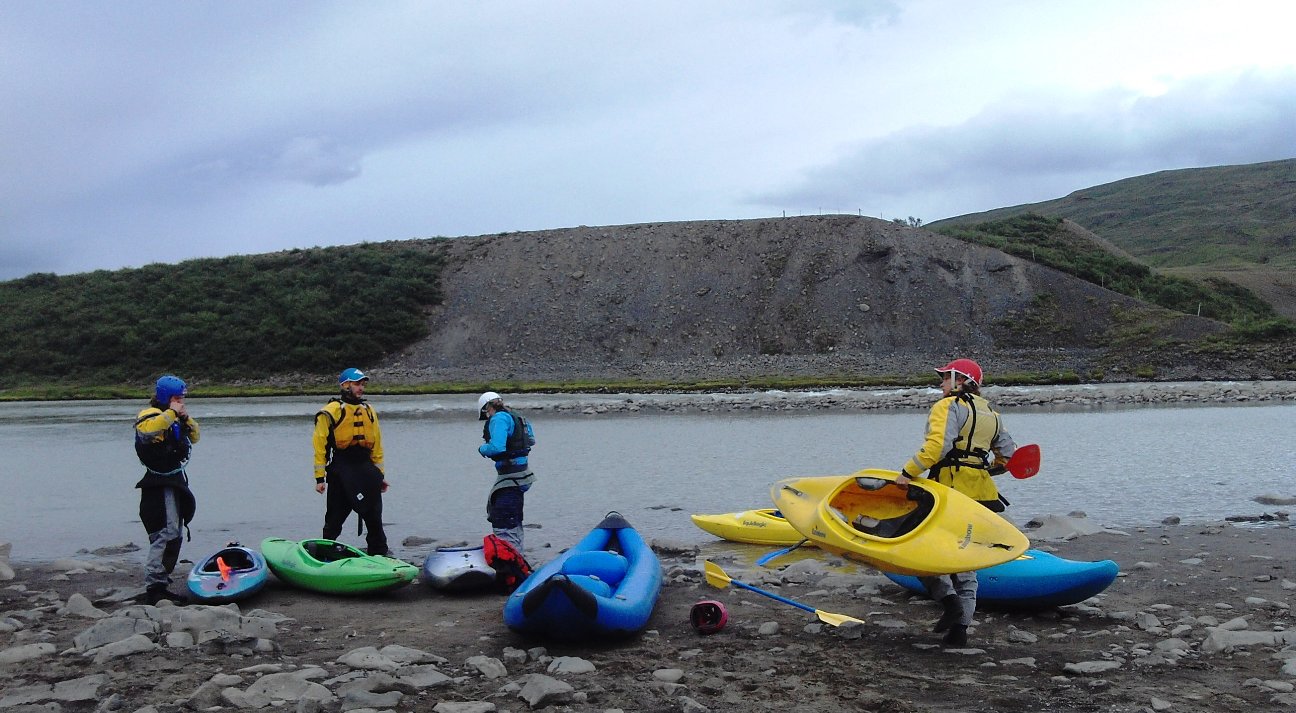
Working with Ishestar riding tours and also at the Radisson Hotel in Reykjavik, I get a sneak peek into the lives and plans of some of these tourists, fulfilling life-time dreams of traveling in Iceland, riding horses over snow-topped mountains, icecaving in glaciers, and photographing active volcanoes. There’s a tour company called Arctic Adventures that specializes in all the most extreme types of sport tourism, including snowmobiling, 4x4ing, river rafting and white water kayaking. I went with some river guides and Arctic Adventure staff from Drumboddstadir down a class 2 river, experiencing Iceland as totally adrenaline-filled tourist and enjoying the feeling of taking a vacation in Iceland.

they use old American school buses to transport kayakers and kayaks to the top of the river

I was with Frikki, a doctor who river guides in the summer but also happens to be the chairman of the Reykjavik Hunting Association, so we were on our way to the east for the reindeer hunting trip. He knew all the staff at Drumbo, and we kayaked until nightfall, pulling our kayaks and canoe out of the water well after 10pm. We stopped in one gorge to do some cliff jumping, 5m into the glacial river in our dry suits that didn’t keep us so dry but did bob us like stuffed scarecrows back to the surface immediately. That night we ate chicken masala and tapped into a bottomless keg, exchanged shoulder massages and then went into the sauna together where swimming suits are banned. I discreetly wrapped myself in a towel, but tried very hard to remain casual as 3 naked men posed like Troy all around me.

The next day we drove north to Skagafjordur, where a glacier river called Jokulsa has a west and east arm both great for kayaking and river rafting. We joined a tourist group and took 2 rafts down the class 4 east river, and drifted through the intimidating rapids with names like the Green Room, which was more of a 4+class rapid. We made it through the 3 drops and boiling currents without flipping, but watched in horror as the second boat tipped on the first waterfall and everyone got sucked under and dragged out. Paddles went flying and the safety kayaks had to rescue all the stranded souls, but eventually we were all in good enough spirit to go cliffjumping again.

kayaking is a pretty colourful riversport

We stayed at the staff house again, grilled a few hamburgers, and crashed on the couch. The staff there were from Canada, England, Nepal, France and Guatemala, creating an international hostel vibe in this remodeled barn in the middle of farm country. We were a few kilometers away from Varmahlíð, and stopped at the natural hot pot Fossalaug on our way north. We continued roadtripping our way East, driving out from Skagafirdi to Akureyri through Olafsjordur and Hofsos, stopping in at Frikki’s uncle’s farm to have the best smoked arctic char I’ve ever tasted. We were invited in for coffee and cake, and got to peek into the private life of farming. We also visited his aunt, glimpsing into her arts and crafts life out of a remodeled warehouse where she harvests down feathers from eider ducks and turns them into the clothes as soft as clouds.

To get to Iceland and go on your own Arctic Adventure, its pretty easy to find cheap flights here.


The Íshestar Egilstaðir Tours

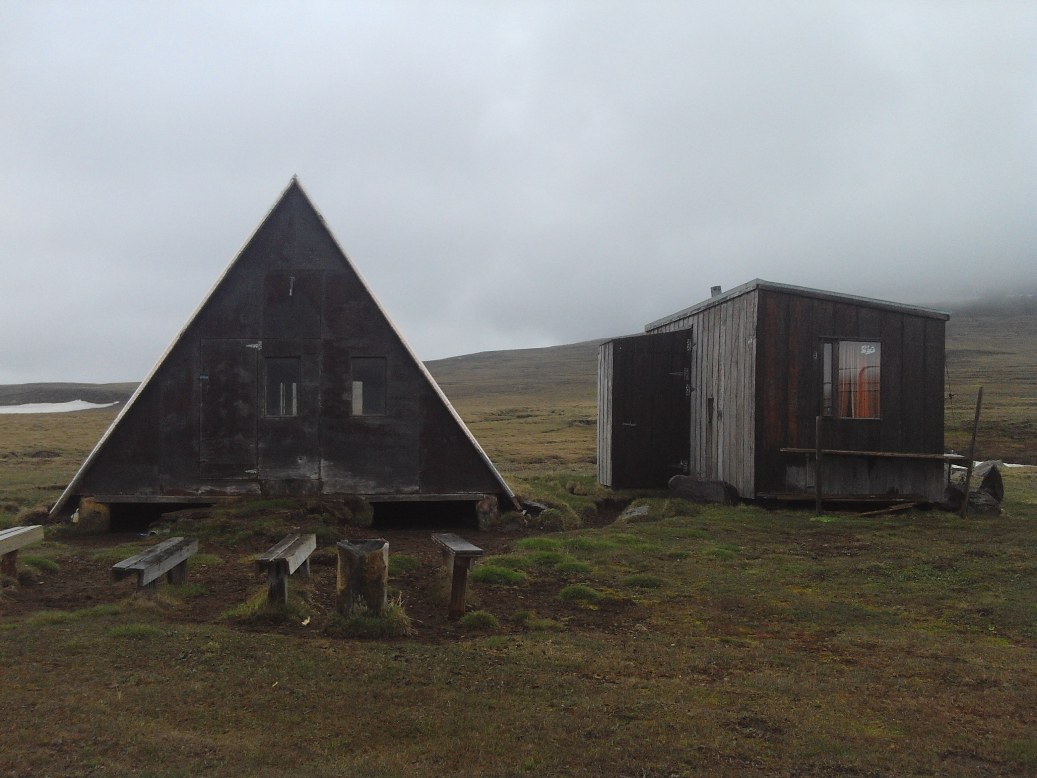
a turf hut, which used to be a sheep-house which we used for dining in and storing our saddles overnight at Fjallaskal

The horse trip season in East Iceland was only 6 weeks this summer, with 4 groups arriving for weeklong trips. I flew between Reykjavik and Egilstaðir between trips with Air Iceland, and thoroughly enjoyed the scenic flight over Þinvgallavatn, Hekla, and various different glaciers, still dusted black with Grimsvotn´s volcanic ash. The first trip started July 4th, and the highlands looked as if it was still early may. Snow still covered the ground, with grey skies, brown grass, moist earth and dismal signs of life. Not even the swan pairs you normally see in the snow-melt graced the ponds, and to believe

The first Fjallaskál we stay at, a mountain hut without electricity or running water as it looked on the first trip

reindeer and foxes could survive there was difficult. We delivered a few rolls of hay in the day prior to the trip, and the thermometer read only 3 degrees Celsius. I had heard the summer was better in the east, typically warmer and sunnier, but the temperature hovered around only 6 degrees or 9 degrees most days, though we barely had any rain or wind
The trips have 15 or 16 guests, 5 or 6 staff, and 65 – 75 horses. So 21 saddled horses and their riders follow a loose herd of 50 horses, up over mountains and across wetlands with very few roads or fences, and travel over 250km in 6 days riding anywhere between 5 – 12 hours a day. However we don’t ride straight – we stop to change horses once or twice a day, we stop for lunch and cookies and coffee, and we stop to rest the herd, let them graze or drink. Then we have to stop when people fall off, which has happened on every trip, including every staff person. Horses change between the trips as some fall ill, lame, or just too old, tired or prized to come again.

behind the herd, forming a perfect head-to-tail line up

The trip journey also changed from week to week. On the first week, snow and snowmelt prevented us from riding over the wetlands to Sauðárkofi, a primitive mountain hut near the dam. We also couldn’t drive to Vatnajökull for a glacier walk planned each tour, so we drove to the dam.
On the last day of the trip we drop back into Fljótsdalur, the valley where we

riding over some leftover snow in August

start, from Laugafell – a mountain at the end of the valley. Its up in the highland area where Snæfell is, the highest mountain outside of a glacier at 1836m, and where Vatnajökull National Park begins. This area is also home to the infamous Karahnjúkardam, the biggest hydro-electric power station of its kind in Europe and a source of contention for many environmentalists.
The trip journey also changed from week to week. On the first week, snow and snowmelt prevented us from riding over the wetlands to Sauðárkofi, a primitive mountain hut near the dam. We also couldn’t drive to Vatnajökull for a glacier walk planned each tour, so we drove to the dam and over the locks with a hair-raising drop down to what used to be a raging glacier river. However, we always try to ride the same way, and if its not weather conditions that divert us, we simply get lost. Herding 50 horses over rivers and ravines trying to find the path again is tricky, especially when Denni is always directing me to follow the track and without a track we make new ones and often reach a fork in the road that no-ones really sure which to take except Denni. Then there’s a difference between horse tracks, sheep tracks, and road tracks, so sometimes the hoof prints leave the car tracks or the paved road becomes a dirt road and its impossible to pay attention to where you’re going, what your horse is doing and where the herd is trying to go, and synchronize this all with the same end destination. We have walkie-talkies between the herd leader and herders, but trying to get it out of your pocket, hear and speak into it while riding and yelling at a herd proves difficult. Somehow, we always make it to where we’re going, with all the riders and horses, so that means its been a good day despite how many falls, turns or hours it takes.

riding at the front of the herd, towards Snæfell, along the easily visible horse tracks in a rocky desert


Austurland: East Iceland

Returning to Iceland only gave me one day in civilization before flying directly to Fljótsdalur, a farm-filled valley in East Iceland where reindeer roam freely and sheep crossings are the only form of traffic control. The human population is less than a couple hundred, but there are hundreds of horses and more than a couple thousand sheep, nestled on either side of a never-ending glacier river that carved out the valley eons ago. Some farms have been abandoned, standing almost as lonely as the ones still inhabited, and unreliable cell phone service enforces the feeling of being left behind from the outside world.

Egilstaðir, the farm where I stay

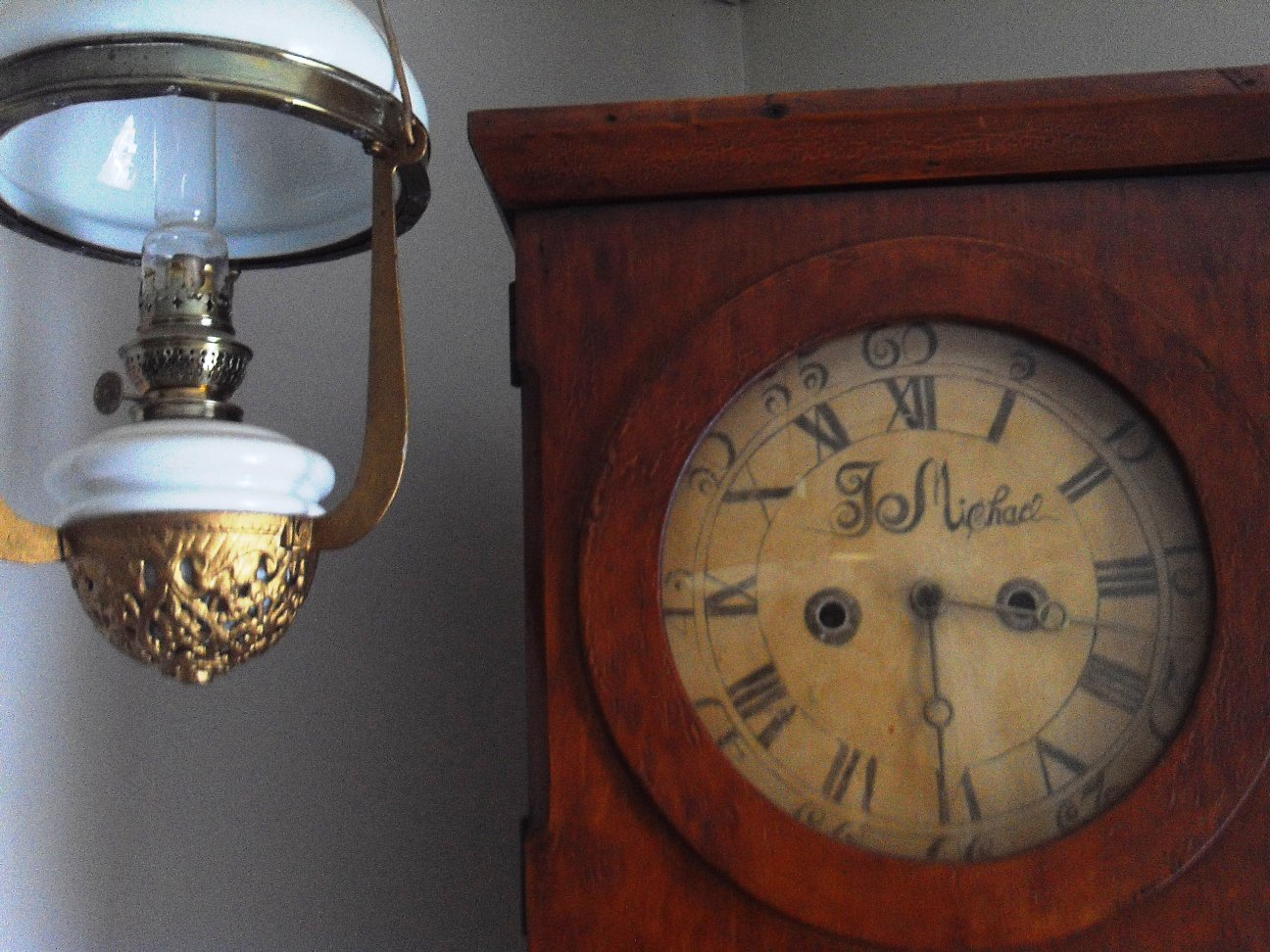
Ironically enough, the farm I’m staying on has the fastest internet I think I’ve ever used, but still my phone roams endlessly. Im staying in a house built in 1940, full of antique clocks, furniture and décor from each the last 3 decades. There’s an iron made in 1815 and a grandfather clock from the turn of the century that has a hand-written clock face. There’s a phonograph from the

hand-written clock face

1920’s, and tons of nick nacks from the 50’s, 60’s and 70’s, many of them horse-themed. The room I sleep in has a very narrow, wooden bed, a horse lamp and some new toys from my friends’ 11 year old daughter.

I only stay here the two nights per week – the night before the horse trips start, and the night after the 6 days trek has ended. Its extremely cozy, with that natural feeling of home even though I had never been here before this summer. It’s the furthest functioning farm in the valley, with a couple abandoned barns a few kilometers deeper. A border collie named Leo wanders in and out of the house, keeping the sheep away from us… or us away from the sheep, I’m not sure.

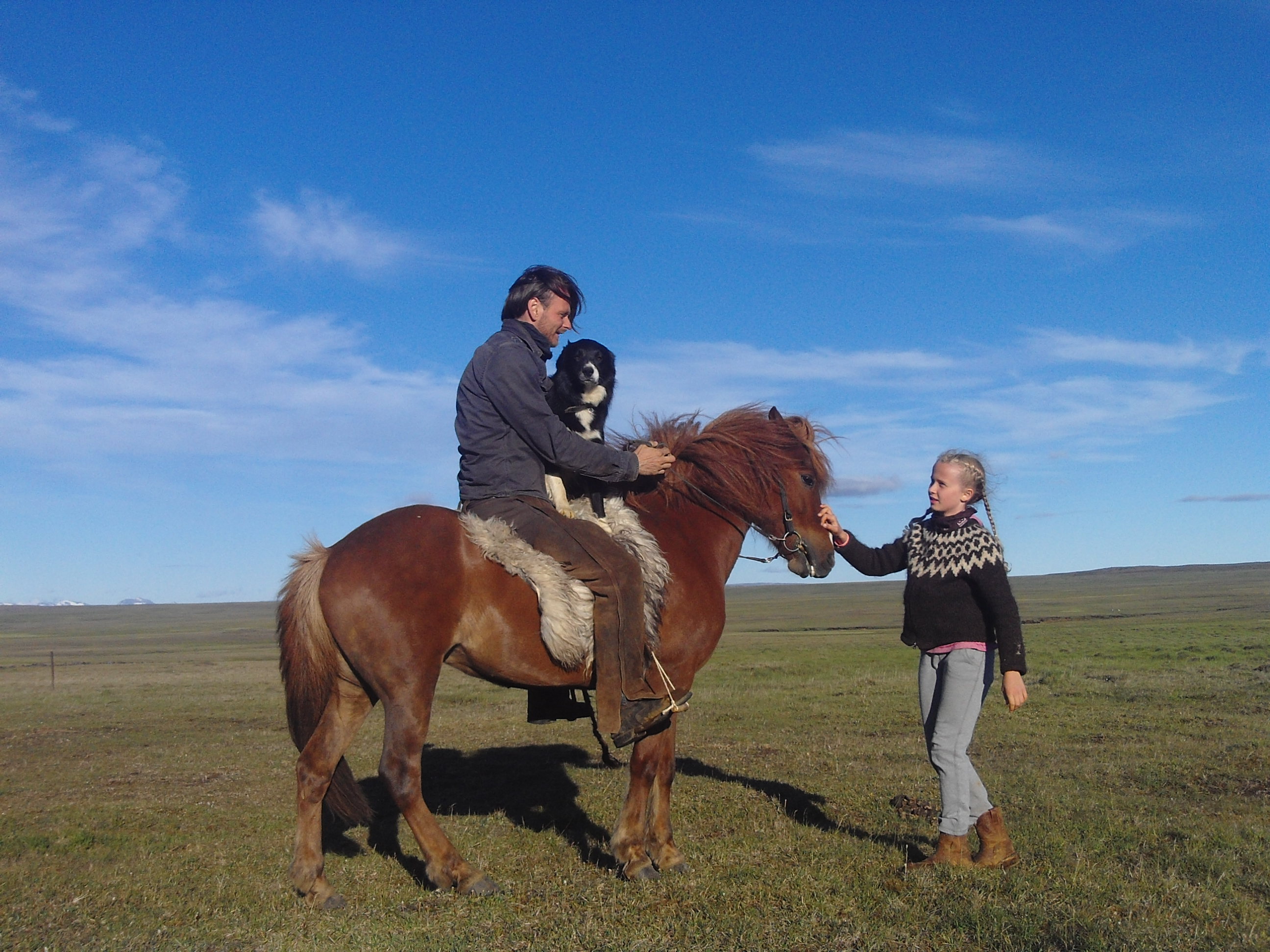
It’s commonly said the weirdest and most creative people in Iceland come from Egilstaðir and around the east, like the famous Icelandic painter Kjarval. My friend that lives here, aka the big boss of the horse trips, is leading these Ishestar highland riding tours for the first time this summer, but has been guiding horse trips all around Iceland each summer. He can miraculously catch and ride any horse, even while holding (and snapping) a 2m  whip, and sometimes rides with his dog. He must be some sort of an animal whisperer, since Leo only listens to him and the animals seem to let him do whatever Denni wants to do to them. He’s got bright blue eyes and disheveled hair that suits his film-maker identity he holds during the winter. He also has his quirks, a man of few words who knows horses really well but still forgets their particular names, having confused some for others, mistakenly caught (and ridden) the wrong horse, and then not having a clue who one or two even are. He almost accidentally bought the wrong horse, when he realized the farmer was trying to sell him the spastic brother who happens to look almost the exact same. He’s soft-spoken almost all the time, except for when yelling at his dog and the horses since they don’t always listen exactly to his whispers.

Denni, the horse and dog whisperer, his daughter Soffia, and Leo

Denni is from this area of Iceland, and happens to be related to almost everyone in the valley, so the riding tour is a bit of a family affair. Horses from ten or more farmers that are all his uncles and cousins and second and third cousins make up the herd of 70+ horses we ride with, and each farmer has his own quirky story. There´s Baldur, who has the longest sideburns I´ve ever seen, who lives on a farm full of turf houses and usually smokes a pipe. There´s another guy who´s super active on facebook and uses his manure-spreading tractor as his profile picture since its his pride and joy. There’s Jón, the former big boss of the horse trips, who always abides by the rule ´its always 5 oclock somewhere,´ which, unfortunately, eventually lead to his demise. There´s a farmer who owns a hobby farm, a kind of a petting zoo, full of the usual aves, dogs and sheep, plus some pet reindeer and arctic foxes. He speaks with a glottal, rolling “R” that makes you second guess if he’s trying to speak Danish, but its just regular Icelandic that’s slightly more difficult for me to understand. He met his wife by sending a picture of his kitchen window-view many years ago to the local midwife school advertising “this is what you could have.” One very lucky girl responded positively and now spends her time making arts and crafts out of reindeer leather on their farm, probably staring out that very same window.


Murchison Falls: Worth it?

I had heard about Murchison Falls in epic travelogues from authors like Ryszard Kapuscinski, that it was beautiful and difficult to get to. I didn’t realize until after going that it’s recently been extremely dangerous, but becoming more secure. It was supposed to be quite easy, according to local advice and the travel company we booked with, but turned out to be quite the adventure. My travel companion for the trip shares the story from his point of view, for my first ever guest blog post. Enjoy!

Murchison Falls in Northern Uganda

Katrin negotiated a van and a driver “who knows the park” to take us on the “two a half hour drive” to the Falls, from the hotel where we overnighted in Lira. Adding chill time at the Falls, and the short drive on to Masindi we thought we were looking at about five to six hours, easily enough time for us to catch a bus on to Kampala. After a rough few weeks backpacking alone and some trust issues arising, it was a good day for Katrin to defiantly declare “nothing is going to stress me today!”

An entire air-conditioned van to ourselves was luxury beyond imagining after being matatu bound for several days. Put twenty people in a minibus designed for fifteen, add luggage (occasionally living), a preacher, a whole lot of dust, and continuous stops; and you have a classic matatu experience. Two hours later we arrived at the park to discover some fees that we had been assured did not exist. Not a big surprise, just an expected inconvenience. But TIA (“this is Africa”), so we laughed it off, since it was only a few dollars, and the Falls were only a trivial half hour away. When we arrived at a park hotel soon after, things looked a little different.

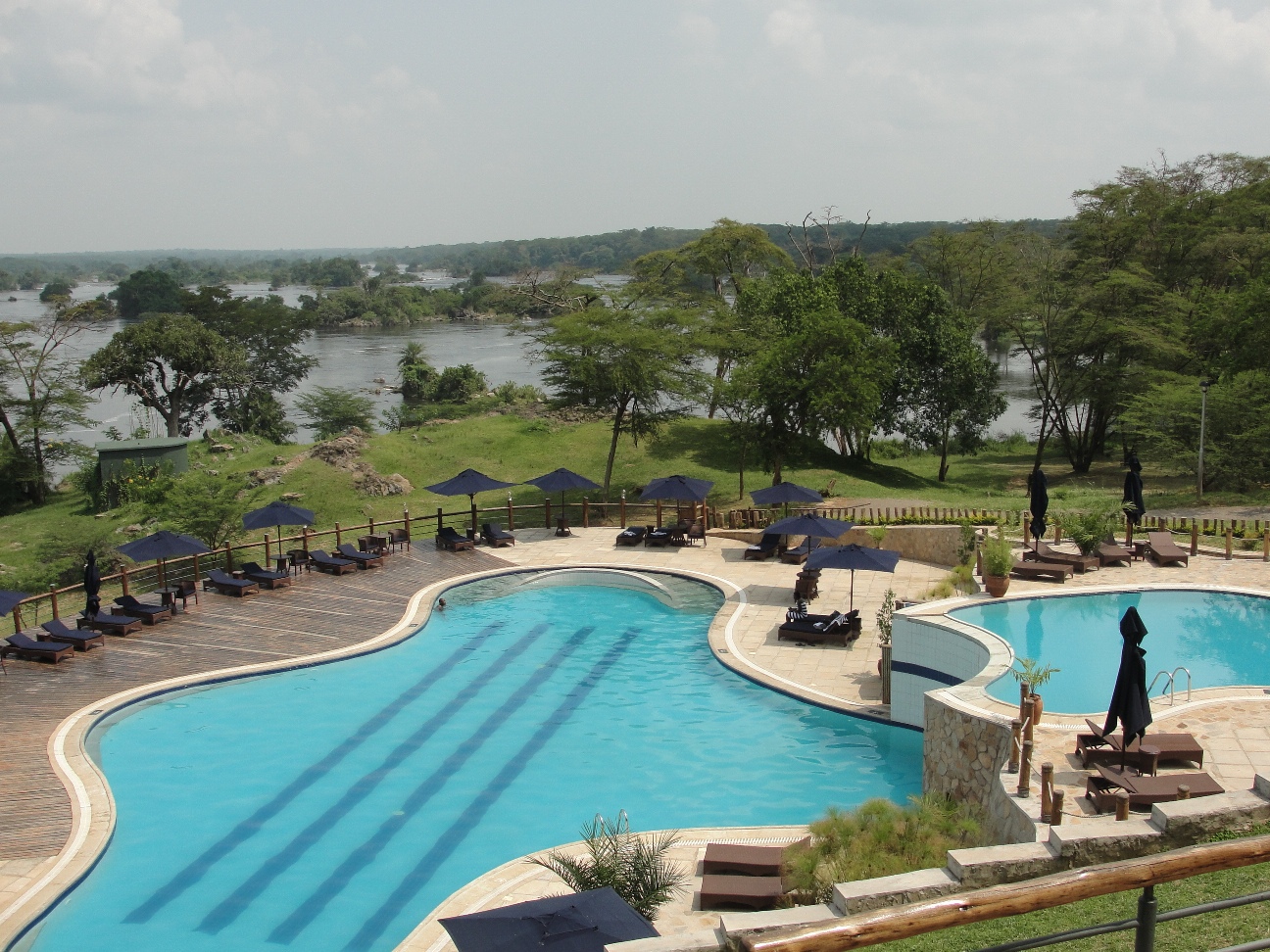
not quite the falls, but a pretty comfortable resort in the middle of a jungle

Consultation with the hotel map revealed that we were nowhere near the elusive Falls. We were at the far end of the park and faced three hours driving to get there. It was too late to pull out. We had paid for the day’s car hire and all of that money was back at the hotel so we had no means of recovering it. We decided to push on, the driver wilting a little at our annoyance.

The driver bribed a military officer who approached us as we slowed over a bridge, preferring expedience to argument and grinning a “This is Uganda” over his shoulder. Shortly afterwards he started driving suspiciously slow along a clear section of road. Given his proclivity for speeding this was rather strange, and I asked him what he was doing. “There are people around here who sell cheap fuel”, he said enigmatically over his shoulder. Translation: there are people around here who have no fuel, i.e. us. It didn’t take long before the engine cut out. He then proceeded to try and start it. Repeatedly. Katrin thought he might be signalling the “cheap fuel people”. I was slightly more cynical.

Suddenly the driver hopped out of the van and flagged down a boda-boda (motorcycle taxi). Momentarily distracted in conversation, it took a while for us to notice that he was attempting to siphon petrol out of it. “What does he think he’s going to do with that?” wondered Katrin, disparagingly. Obviously the fact that our vehicle ran on diesel did eventually occur to the man because suddenly the boda-boda was upright again, with him on it. “I go fetch fuel”, he said, driving off. Naturally confidence in our experienced driver was waning at this point. Refuelled, it didn’t take long for him to strengthen his case with a juddering fishtail across a dirt road.

Katrin was tight as a spring, accumulated travel travails eroding her tolerance, the recurring problem of worthless information delivered with confidence taking its toll. Barely recovered from typhoid, there was little that could faze me, but as the hours went by even I started to feel like we were on a road that would never end. It was a shock when the road opened into a parking lot with a large wooden sign proclaiming “Murchison Falls.”

Murchison Falls is more a fissure than a waterfall, the whole of the Nile forced down a narrow crack. Its as if the earth decided to close its fist on the river. The water, so serene and steady before, lashes in fury like an enraged reptile. Our arrival was celebrated with bottlecap shots of Kenyan cane; a spirit probably better suited to fuelling 4x4s than drinking pleasure. Katrin takes her cane about as well as a four-year-old takes root canal without anaesthetic. To her credit, that doesn’t stop her instigating its consumption.

changing the spare tire

While we wandered around the Falls, the driver discovered and changed a flat tire. He also realised that we were not going to manage the 50km to Masindi with the fuel light already on. We decided to chase diesel further into the park, following a cryptic Shell sign. Fortunately we met another car and were informed that the Shell was 18km away on the far side of a river ferry. They were able to point us to a resort that fixed the tyre and sold us some fuel. Subsequent to the service, the driver informed me he had no money to pay for the repairs.

About 10km down the road, the driver looked out of the window at the newly repaired tyre. “Flat”, he muttered. He then began to accelerate, despite the horrendous noise of the tyre being snakebitten by the rims, as its “too dangerous” to stop in the park with dark falling. In the face of increasing dissent, he finally pulled over, straight into a muddy ditch. When I told him he was going to get stuck he denied it, but belied his certainty by gunning the engine, tyres spinning, mud flying. Eventually he responded to our collective shout of “stop”.

I got out to have a look and was barely clear before the man threw the van into reverse. Clods of clay flew past my face as I absentmindedly ducked, my mouth probably lucky to avoid snaring a missile the way it was hanging open. Mud from the rear tyres hammered into the inside of the car as Katrin desperately grabbed at the sliding door in the violently rocking vehicle. The van careened back, carving a muddy path of devastation. I honestly thought he was going to roll it – scenes of trying to extricate the two from a rolled van flitted across my vision. Eventually the vehicle shuddered back onto the main track, the right front tyre now ripped so badly that one side of the rim was actually resting on the ground.

The driver was quickly out and down next to the tyre that looked like it had

mud splattered all over the open door

been through a cement mixer. He didn’t say a word. I walked toward Katrin, struggling to hold it in, and failing. I exploded into crying, choking laughter. Eight ridiculous hours into what should have been an easy trip with “an experienced guide”, it was just too much. When my sanity returned, and Katrin’s had been slightly contaminated by infectious hysteria, we inspected the mud-spattered interior together, grinning. Meanwhile the driver discovered that the spare tyre had somehow ended up flat after the tyre fixing pitstop. He also discovered that his mobile phone was missing. It was already the 6pm park closing time and light was rapidly failing. A night in a dangerous section of park (where you aren’t supposed the leave the vehicle) was starting to look like a real possibility. The driver constantly warned us no stay close to the car, and we’re not sure if it was in lieu of the buffalo or the Lords Resistance Army.

Happily another group arrived in a 4×4, and after assuring the driver that using their spare tyre (which was at least 2inches taller than the upper wheel guard on the van) was not a viable option, they kindly offered to give us a ride into town, bringing along the spare tyre. Once in town the driver asked us to pay for more repairs and enough fuel to get back to Lira. Having already paid almost twice what we had been assured this would cost, for value that would have been questionable at half the price, there was absolutely no chance.

The driver looked dejected with his flat tyre when we left him in town – no phone, no money, no plan. I gave him 20 000 shillings, unable to walk away in clear conscience. “God bless you”, he said earnestly, bobbing his head sadly. “I am so sorry about this”, he added. I looked down into his small brown eyes. His right iris looked like it was melting in the top left corner. Four teeth were missing, and the remainder did not look particularly permanent. Incompetent though he was, the responsibility for the days’ events ultimately lay with his employers, and I could not help but feel sorry for him.

We wandered around town looking for accommodation, the last bus to Kampala long gone. In the first place we tried, the landlady deftly kicked a slipper over the huge spider that ran across the floor as she opened the door to the room. She didn’t have anything big enough for the four-inch drain cockroach that followed. Now, this didn’t really inspire elation in me, but I was reluctant to be caught being the priss. I looked sideways at Katrin and asked, “Too much?” She walked across to the en-suite. Two more monster cockroaches stared up at her, “Too much”, she agreed. Eventually we found a rather nice place, our willingness to cheap it somewhat eroded by the long day. The evening was pleasant, casual conversation over beer and local staples, but the upbeat camaraderie had peaked and given way to tiredness. Getting into bed I couldn’t help but think of the driver alone in town and wonder if he had found a better deal than the cockroach den we dodged.

East Africa Travel Advice: how to normalize

Learn to squat for hole-in-the-ground toilets, and always carry toilet paper.

Exercise patience (people talk and work very slowly), and learn to talk and do things slowly yourself.

If you’re going to Tanzania or Kenya, learn some Swahili. If you’re going to Burundi, Congo or Rwanda, learn a lot of French.

People speak quietly, unintelligibly even, so practice focused listening, and never yell or raise your voice to be better understood.

Expect variations on the English words used in different countires. For example, public tansport can be called either taxi, bus, matatu, or special car, but they all refer to slightly different things, ie. A mini-bus, a coach bus, a local bus or a private car. A hotel can refer to a bar, restaurant, or an actual hotel, and I haven’t quite worked out what hostel refers to since there’s lots of them, but the most hostel-looking hostels are usually called guesthouses or backpackers.

Be grammatically flexible: prepare for misspellings, ie. You’ll stay at a ‘resourt’ and buy meat at the ‘butcer,’ get used to different pronunciations, ie. Bon-shuu for bonjour, and some phrases like “hello” are often replied with wrong responses like “fine.” The internet is called “network,” as well as cell phone service, and  you won’t have either “network” in many places outside of urban areas. When you do have network, you’ll realize how much you took for granted the fast internet connections we’ve grown used to.

Bring a book to stay away from your ipod, and buy an unlocked cell phone from 2004 to avoid standing out with a fancy smart phone.

Passerby, independent travelers aren’t the norm yet; people will as where you live or work since East Africa is full of expats, so be prepared to explain your story of why you wanted to backpack through East Africa.

Be prepared for missionaries and their prophecies; many will ask if you are Christian, so either say you are with some evidence to back it up, or learn to enjoy spontaneous bible lessons. These can come from white, American Missionaries from Kentucky, or your bus driver from the Serengeti. Even the most indigenous tribes are often Christian, and Masai’s are often renamed at baptism, so get used to meeting a lot of James’ and John’s.

Throw your East Africa Lonely Planet out the window. The Africa shoestring book as more pages on the Congo and Burundi than the East African book (7 pages on Burundi, and 5 pages on the Congo, a country 40 times the size of Rwanda). My East Africa journey was the first solo-trip I’ve ever done without a guide, and although Frommers and Bradt may be ok, Id still say throw you guidebook out the window – facts and things are so variable and dynamic that by the time anything is published on prices or times or places, they’ve most likely changed, and one person’s recommendation for how, where, when or why to do anything is always different from anothers.

Embrace the beauty of chaos and revel in the disorganization of freedom. You can talk your way in or out of almost anything, remember that no never means no, and become friends with the hard working African mindset that anything can be done, either with enough time or money.

Get used to walking between countries, and always crossing two borders to get across. One to leave the country you’re in, and one to enter the county you’re going to, that will have a $25-100 visa payable only in US dollars.

For Rwanda, most countries need to preapply online for a visa, atleast 24 hours before you arrive. NOTE: this may only be true for a little while, or only true of some borders, but there is no way for me to confirm or deny what the real truth is since the transmission of knowledge seems to act like a skipping stone – only some are privy to the truth, others can only speculate what the next skip is as they sink out of sight. Most visas are around $50, and you can only pay with fresh, new US dollar bills. It’s a different year for each country, but I remember cut off mint dates being 2000, 2004 and 2006.

There’s supposed to be agreement between Uganda/Tanzania/Kenya to offer an informal East African Visa, but Ugandan authorities don’t seem to know anything about it and it only dismisses you from paying a single entry visa more than once while not having to preapply for a multi-entry visa when moving between Tanzania and Kenya. There is still rumor about an actual East Africa Visa among all the Lake Victoria bordering countries, but who knows if and when that will be available.

US Dollars in denominations of $5, $10 or $20 get worse exchange rates, about 25% less, than bills of $50 or $100. ATM’s often give you about 5% less than a cash exchange rate, so come with a lot of US cash, especially since ATMs aren’t so common anywhere but large towns or capital cities.

The entire country of Burundi is off the international banking grid, so no ATMs exist and you cannot use any type of debit or credit card.

I still cant remember straight, but some East African countries drive on the left, others on the right, and both right and left-hand drive cars are used in both environments so it gets very confusing if and when you’re on the wrong side of the road.

You can skip the malarone and other slightly-anti-malarial pills, but sleeping without a mosquito net is not ok- so bring your own for the hotels and homes you stay in that don’t have one. It won’t protect you from the sound of creepy, heavy crawlies around or under your bed, but it will keep small bugs from buzzing around your ears all night and biting up your forehead.

Theft is unusual, if there’s any chance of being caught, since stealing is a big deal, even punishable by death. There was an incidence where a farmer in Tanzania walked to Burundi and stole some cows, and 3 days later, had been found by the Burundian farmers and hacked to pieces with machetes, and another where a young man stole a motorbike, and once caught, was doused in fuel and burned to death, right in the middle of the street.

The buses will always say their leaving soon, but they aren’t. They’ll leave the engine idling so you believe they are, and despite high fuel costs, they make the sacrifice as a tactic to try and get the next passengers onboard, which will make their bus filled first, and thus, their bus leave first. If you ask how long a bus takes, seven people will tell you different times, and all will be telling you driving hours not including stops, or they’ll tell you the distance. Knowing the kilometers unfortunately doesn’t tell you anything, because it depends on the road quality, weather, type of car, and if they have to fill up on fuel or wait for a paid passenger after leaving the bus station.

You’ll miss mzungus, and at the sight of one, stop yourself from pointing/waving and yelling “MZUNGU!” like everyone else does to you since you start to think this is a normal reaction. Then when you do see one, you’ll feel strangely intruded, wondering “what are they doing here?” Other times youll feel relieved, have someone to talk to at a more familiar level.

Know you’ll be experience such intense sensory overload that you actually start becoming desensitized. One may also call this a normalization: Normality shifts, time slows, your reactions mellow, your hygiene standards vanish, your comfort boundary expands, and your tolerance for everything and anything increases. One may also call this transformation a rite of passage, since this is the one piece of advice that you can only really understand after having travelled through East Africa yourself.


London: Reverse Culture Shock

My reverse culture shock began as soon as I arrived at Entebbe airport in Uganda. The British Airways flight I was on had more Westerners than I had seen all month, and the duty free shops were full of over-consumptive, unnecessary and overpriced goods. The 9 hour flight to London had a confusing selection of food, drink and entertainment, but having my own seat to sit on was nice, plus a pillow and blanket to put me to sleep.

Getting into Heathrow and maneuvering the underground to Victoria station and onward to Chelmsford was more chaotic. The price I paid to get to my cousins house would have paid for a week of day-long buses, so I started immediately to miss the price of things in East Africa. All the people I passed never made eye contact, and if they did, would look away immediately, never sharing a smile or a “hello how are you.” The Londoners all had somewhere to be, or just valued their time such that walking was like a race. Perhaps that’s in all train stations, but it was impressive to see the business women in heels speed-walking, zooming past myself, a little dazed and lost. I noticed everyone’s heightened sense of fashion – matching shoes and purses, shiny leather work bags, brand name scarves and beautifully painted faces and hair-do’s.

I finally found my way to platform 6, and boarded my train due north-east. I was still covered in a layer of red-dust and my backpack had become permanently dirty, so I met a few strange, side-wards glances but no one asked any questions. My cousin met me at Chelmsford station, after waiting for an hour on the other side of the tracks from where I was also waiting an hour. It was only 11 degrees, grey and rainy, an atypical summer day but somehow a perfect London day. After finally being reunited, we gossiped about family, drank some bubbly and ate butter chicken. For desert we had hookah, and finally crashed at 12:30am.

At 3 am, when I was dead asleep, I started having this dream that someone was breaking into my room. I was sleeping upstairs, in my cousins’ daughter’s room, and remember looking around in the pitch black trying to remember where I was. Africa? No. England? Yes. Hotel? Nope. Safe house in a quiet suburb? Yes. Convinced I was having a nightmare, I blinked several times to make out the two arms wailing around, trying to pull themselves in through the open window. As my heart beat shot up, I realized I was awake, and that this was really happening. 6 weeks in Africa without a single robbery, break-in, rape, nada, and my first and only night in England someone is actually trying to destroy my clean record. At this point, a minute had passed and he was about to make it all the way in, and frozen in freight I decided to cough to announce my conscious presence. He had been mumbling to someone else or himself and fell silent, pulled his arms back out, and disappeared.

I fumbled to the door, to my cousin and her daughter sharing the other room, and whispered “Marisa, there’s someone trying to break in through my window.” She shot up like a lightning bolt, ran into the room, turned the lights on, pulled up the blinds, and stuck her head out the open window. Maybe not the way I would have reacted, but thankfully they were long gone. We called the cops anyway, made a report and had them check the perimeter of the house. At 5 am we finally crawled back to bed, and somehow I still fell asleep, still kind of pretending it was all just a bad dream.


What I miss most about East Africa

The kronur may be cheaper than it once was, but I still miss the prices of things. A pound for a hostel bed, a euro for a bus ride, a dollar for a beer, and 25 cents for a coffee. Its nice when the coffee is fresh, local coffee, but more often than not it was instant Nescafe. You have to order your beer warm or cold, and though they cost the same, only the tourists or elitists order it cold (though it warms up very quickly) since locals are used to drinking beer warm.

I miss the feeling of the equatorial sun heating my back and browning my face, accompanied by the endless sweat dripping from my forehead. Then the dust and grime in all public places collects on your sticky skin and every shower I take ends up in brown water running down me and forming a muddy pool at my feet.I miss the humidity of the air, keeping your skin moisturized and the nights warm.

I miss the gratitude I felt for shade, to get out of the sun for some relief from the heat, and the lottery I felt I won when sitting on an all-day bus on the non-sunny side. None of the buses were air conditioned, so I miss the bus routes, stopping every 500 metres, that speed up to go again, creating the most wonderful breeze through the open windows. I miss the risk factor of every bus, taking the one which looked least likely to break down, and checking out the driver who would soon have your life in his hands.

I miss the coziness of the buses, filled with twice as many passengers as they’re supposed to be, and each passenger carrying a bucket of flour, a jug of water, a live chicken, or an infant child on their lap. The convenience of never having to get off the bus to shop for whatever you needed was a lazy luxury – bottles of water, grilled corn, meat brochettes, gigantic avocados, the redest tomatoes or bananas of all sizes would show up at your window every time the bus stopped, for sale for a few cents.

The frequent lightning storms made the weather exciting; I miss the sight of electrifying blue lightning bolts with a hundred arms visible from miles away in the midday grey or lighting up the dead of night, and the awe of thunder so loud it shakes the building you’re in.

I strangely miss the bugs – the constant buzzing and cooing of hundreds of insects, mostly at night. The sign of life everywhere you look, even the cockroaches in the filthiest of corners. Little flies often shared my beer, drowning in glory in the foamy, alcoholic bubbles. One hotel room I went to look at in Mbale seemed to be ok from the outside, and the hallway leading up the room was newly painted, but upon opening the door to my room, a massive spider scurried past. The woman showing me the room put her slipper on it nonchalantly, and when a cockroach scurried past she did nothing, since he would be my roommate. Two more cockroaches inhabiting the bathroom made me decide I’d rather not intrude so they kept the room to themselves.

I miss the taste of street food, the little bits of grit you feel between your teeth as you chew gristly meat and under-ripe corn on the cob. Watching the transformation of fresh planted veggies into a delicious vegetarian dishes, and silky roosters slit, plucked and cooked into tough, chewy chicken. However, I have to admit I don’t miss the smell of freshly plucked chickens, or the chicken poo they sit in waiting, tied up, for their death sentence.

I do miss the general assortment of smells, the strength of stenches that ensure you your sense of smell is working just fine, and make you appreciate when you’re not surrounded by the stink of urine or the smoggy traffic exhaust that leaves you gasping for oxygen.

I loved how the tourism industry was East Africa’s Hollywood – everyone who made a job with tourists would presumably become rich, and meet foreign friends and possible spouses who could take them to their country to visit or work, even live forever. The kindness of people may have been because of my light skin or the type of passport I held, but I miss the people, their bright smiles and friendly hello’s, and how everyone calls me ‘sister.’ I miss the moral inclinations towards Christianity, everyone spreading Gods word for his love to shower those with nothing.

Freewaters Article – an update from Kenya's water project

A blog update from Projectfreewaters after my visit to Tulwet, Kenya, where they have their first major water-well digging project happening. Find out more information at http://www.projectfreewaters.org , or buy some sandals to support the cause at http://www.freewaters.com

Katrin Sif Einarsdottir, Freewaters Ambassador, visits Projectfreewaters

JUL13 2011 WRITTEN BY ELI

Katrin Sif Einarsdottir, Freewaters Ambassador and Product Tester, visited Projectfreewaters last week on her way through Africa.

Well, this pretty much sums it up: Katrin wearing our Vezpa sandals, standing on a new well apron in Kenya! The circle is complete!

Here you can see how the concrete apron directs surface water away from the pump head, ensuring that the clean ground water is never contaminated.

Kenyan team Leaders Barnabus and Franco demonstrate to Katrin how the well works.

This borehole is a typical example of where local families used to get their water. Because it is exposed to surface water, they are quickly contaminated and lead to a handful of water born diseases.

Locals report to our team that infant and senior mortality from water borne disease has virtually disappeared since ProjectFreewaters started back in December. Additionally, the distance for these families to walk to draw water has been reduced to 1km.

Katrin is a world travel blogger and a Freewaters Ambassador and Product Tester. Katrin, thank you and safe travels!! Check out her blog: katrin.dohop.com

see the full article: http://projectfreewaters.org/?p=207