Spring days in Taipei

Before moving on to the next destination, people always ask where I’m going next. When Taiwan was the answer, I always got a positive respone. People love this island and Taipei city, so I grew more and more excited to go. I had stalked the weather forecast for a while and knew it’d be around 20`C, and that the cherry blossoms were starting to bloom. I didn’t expect it to be so humid , and sometimes windy, so the 20` quickly felt like 10` since the sun rarely shone through. It’s a weird sky in Taipei, gloomier than a London gray, but not as thick as Delhi brown. It didn’t feel foggy or polluted, but the sky was heavy and no pictures turned out well in that kind of lighting.
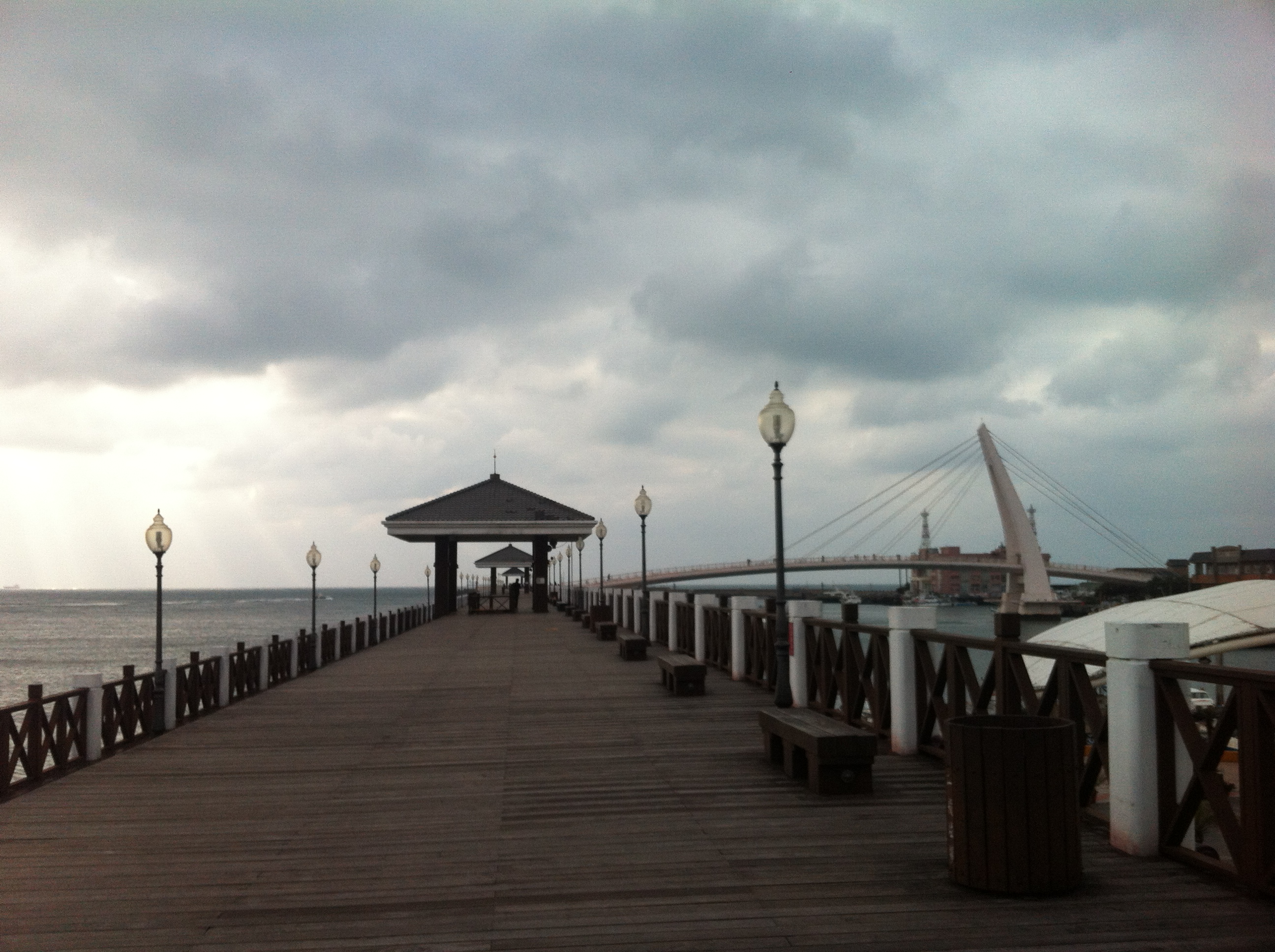
Gray skies over Tamsui

Gray skies over Tamsui

Still I loved Taipei too. It’s always intimidating traveling in a country whose language you cant speak and alphabet you can’t read, but most people knew enough words in English to help me out when I needed to communicate. It’s a tourist friendly city to visit, with cheap and regular public transport taking you anywhere you’d want by train, bus or free bicycle. There was free wifi nearly everywhere, one which was connected to my passport number. There was a free youth pass for people aged 18-30, which is so much better than the European under 26 rule (says the newly turned 28 year old). There was free hot and cold water stations in most public areas or tourist attractions, and every temple, palace and museum I visited was free except for the Taipei 101 tower top floor.
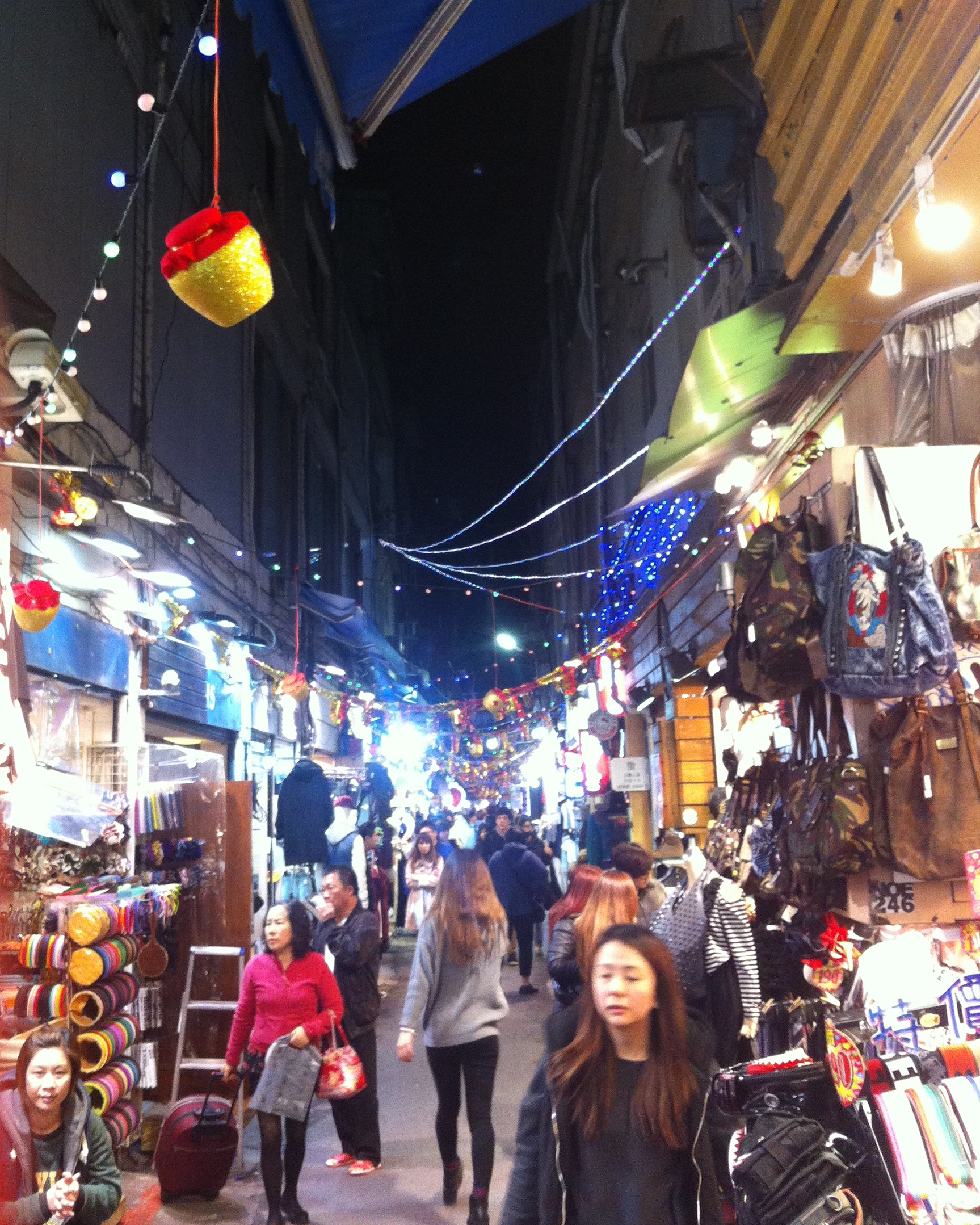
one of Taipei's many night markets

one of Taipei’s many night markets

The number of markets, and different types, was overwhelming. There were tourist markets, night markets, fish markets, flower markets, and jade markets, all spread out all over the city, and each and every market sold delicious cheap street food and a hundred varieties of teas. You could buy soup, wontons, dimsum, tempura, meat on a stick, sweet buns, fried noodles, Nutella crepes, or a whole squid on a stick for $3. Sometimes the market was hidden down a pedestrian alley, and sometimes it was in the middle of the road, but they were always crowded and easily reachable.
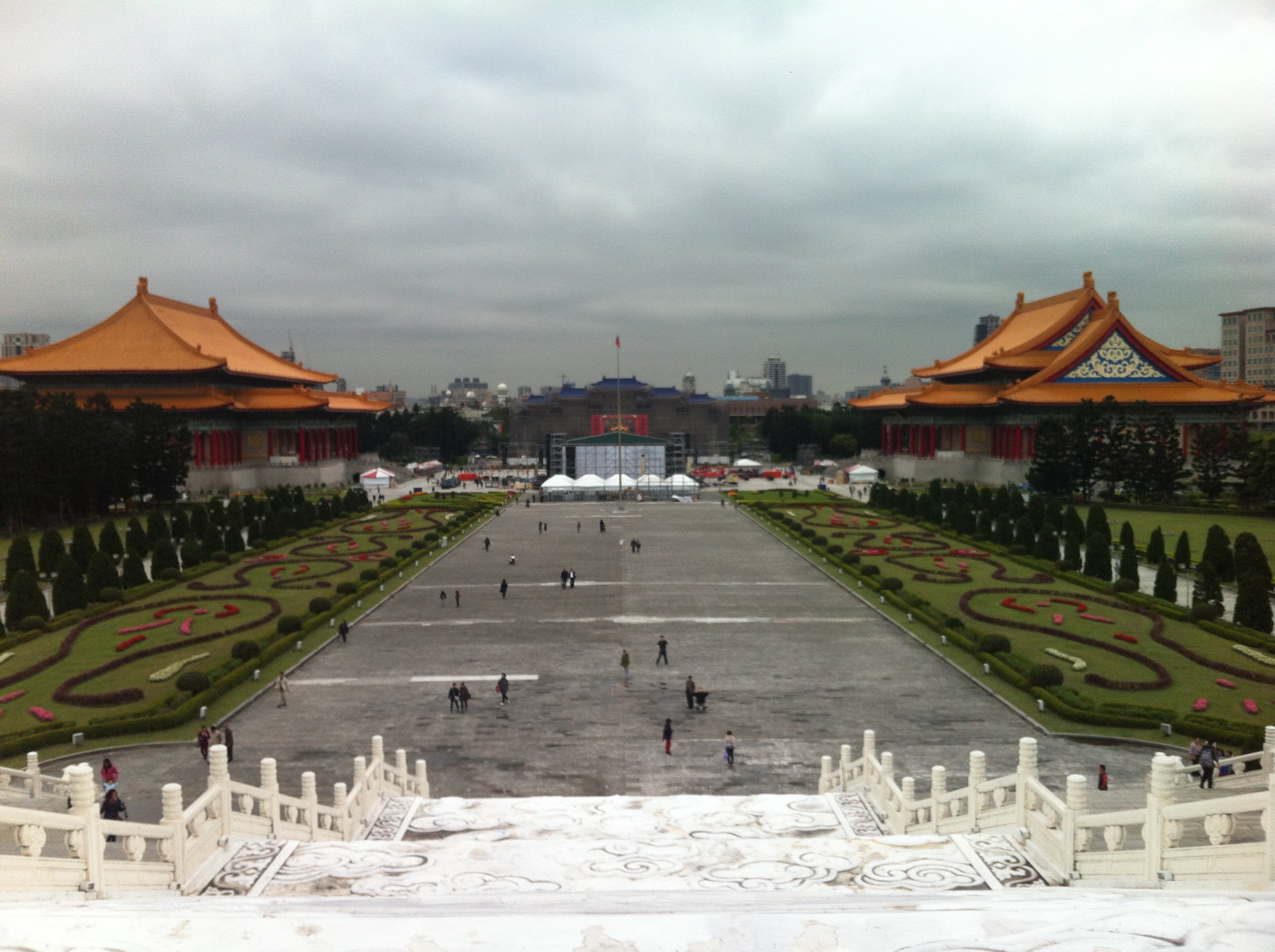
the pretty gardens at Chiang Kai-Shek plaza

the pretty gardens at Chiang Kai-Shek plaza

If you’ve ever been to Chinatown in Manhattan, imagine an entire city of Chinatowns and you’ve got Taipei. My favourite part of Taipei was all the shiny streets and lights balanced out by huge parks and green spaces. Even the garbage trucks were pleasant, since they drove thru the streets playing Fur Elise on a loudpseaker, which reminds me of the icecream trucks in Canada that play The Entertainer. The highlight of my visit was when the Taipei Symphony Orchestra gave a free concert in Daan Park, where they played only the most famous and beautiful songs on an open-air stage. That was the one day it actually hit 20` so it was warm enough to sit outside, but a little bit of rain cancelled the last few songs and I biked home along the streets which turned into mirrors reflecting all the shiny bright city lights. I got a little too into it when I skidded to late for a stop light and crashed my bike into the curb… the bike survived, but not quite my knee. I also think I got lice from my couchsurfer’s dog, but atleast they’ve both left little scars that tell a good story.


The Chinese and the Pacific

I didn’t expect to meet so many Chinese people on a trip through the Pacific islands, but they were on every island, in a very important way. The Chinese run most of the little corner shops, convenience stores and super markets, and sometimes all of the restaurants too. In the midst of a Mormon revolution and conservative bible belt, they are the ones who will work on Sundays and stay open late, sometimes even 24 hours, selling beer and the largest assortment of canned tuna. They import goods from China by the boat loads, and sometimes these goods are the only goods available to buy on an island. Food, drinks, clothes, car parts, furniture, and kids toys are all Made in China, and they sell like hot cakes every time there’s a new shipment in. Every island I’ve been to had a Chinese restaurant, sometimes it was the only restaurant, and sometimes there was a dozen, all with names like Fortune Star or Lucky Dragon. They served the cheapest and most generous portions of rice or noddle dishes, but the pork never quite tasted like pork and the chicken rarely had more meat than skin on it.

I always thought I’d chose Russian or Arabic as the next, most-useful language I should learn, but now I’m convinced its Mandarin. The Chinese who live and work these islands always learn the local language, in whatever dialect they speak, and that’s it, so no white-girl English. It’s funny to speak pigeon to a soft-spoken, pale, little shopkeeper, but if you don’t know Mandarin or Samoan or Tongan, then you just had to rely on body language and face gestures.

By the time I reached Micronesia, the Chinese population had grown, since tourists and business men started to grow exponentially. Palau is to mainland China what Mexico is to the rest of North America, a cheap and tropical little play land for the hard working to go and chillax. I happened to be in Palau for Chinese New Year, so there were literally thousands of them, filling every hotel and tour the island had to offer. Right after I went to Saipan, which and has successfully marketed car rentals (mostly Hummers and Mustang convertibles) as a tourist trap for teeny little Chinese and Japanese drivers that have rarely driven anything bigger than a Yaris.

boatloads of Chinese tourists empty out at the Milky Way in Palau's Rock Islands

boatloads of Chinese tourists empty out at the Milky Way in Palau’s Rock Islands

After coming to mainland China on my way back home, I decided I like Chinese locals much more than Chinese tourists. The worst experience I had with them was trying to snorkel around the Rock Islands and the famous Jelly fish lake – imagine a hundred black-haired people in leotard unisuits and life jackets flailing around in a sea they don’t know how to swim in, but meanwhile trying to look at all the pretty fishies through their awkwardly fitting snorkel masks, and every once in a while trying to adjust their snorkels while standing up on some super fragile coral or trying their best to pull out some clam shells or pick up some stingerless jellyfish to take home. There’s something about personal space they don’t respect above ground either (I’ve often been walked through by groups of Chinese tourists), but underwater (especially when I don’t have a life jacket) is a bit more dangerous, and I definitely choked on a few mouthfuls of seawater as floating Chinese kids thrashed into me or over me.

The best experience I’ve had with the Chinese was thanks to China Southern Airline. First of all, I was able to book a last-minute one-way ticket from Taipei to London for less than 500 euros, which is 2 flights connecting in Guangzhou, China. Upon checking in, I was informed I had a Premium Economy ticket, which would rival most other airlines first class cabins. I had a big comfy reclining seat with a foot rest and extra leg and arm room, a meal with wine, and free entertainment, just on the short 2 hour hop between Taipei and Gangzhou. I was expecting a shitty 16 hour overnight layover in the airport (which made sense since the ticket was so cheap), but then China Southern offers a complimentary hotel stay for connections over 8 hours. I’m not talking about a flight delay, but simply a layover entitles me to a 45 min shuttle to a beautiful hotel, where I was given a 3 bedroom suite, free breakfast, and a transfer back to the hotel, all for free. I literally couldn’t believe it, and thought it was some sort of scam and I’d have to pay later, but after drinking some Chinese tea while soaking in a bubble bath, I jumped for joy onto my queen sized bed, but realized a little too late that the bed was rock hard.

Its hard to imagine the pacific without the Chinese, but I did try. Maybe it would mean less industrialized islands with more self-sufficiency, not depending on shipments or trade… or maybe their seas wouldn’t be as exploited by the harvest of nearly everything edible (including coral). Or maybe the islands would have long gone under, tired of living with such limited resources and simple diets. Or maybe the Australians, Kiwis and Americans would have just filled the gaps instead… who knows. All I can say for sure is the Pacific economy would be totally different without the Chinese, and I wouldn’t have eaten nearly as well without them during my trip.