Gambia continues

20131119-111818.jpg

I find it difficult to actually stop and sit down and type on my tiny scratched up phone but I spend the entire day constantly thinking about lovely things to say about this place. I imagine these perfect sentences that I can never remember by the time I get to writing, and scratch my head trying to think of all it is that I wanted to say.

It’s been nearly a week since we arrived, and we’ve had 2 different hotels and 2 couchsurf hosts. The first hotel was in the popular Senegambia area, and our it’s night left us with an impression of Gambian prostitutes and Boss ladies – the opposite (white women buying black male love). Our hotel had both electricity and water, which we started to appreciate after our first host. Our second host coincidentally lived only a few blocks away from him in the same suburb of Banjul, and we’ve run into many of our taxi drivers and even people from out flight in this crowded little area. When walking the sandy streets at night, I don’t see a thing, but the lack of street lights doesn’t bother the locals at all, so I follow closely behind them and their super-human night vision. During the day, you weave through the residential areas, split into compounds where each family (or families) lives, and think you’ll never find your way bank home or out of the maze. But then, all of a sudden you find yourself recognizing the same puddle you accidentally dipped your toe into last night, stumbling in the pitch black.

The locals can also recognize eachother a mile away, just by the way they walk, and hear eachothers whispering voices over the roaring traffic, all in a way I think I could never learn. All who know eachother greet eachother, by just quietly saying their first name “Dawda”. My local name is Binta, or those who learn it’s Katrin and can’t say it call me Kadi.

They say “thank you” for most things – yes, right, I agree, I know, thanks, whatever. We’ve been eating the same staples for breakfast, lunch and dinner – bread, potatoes, onions, and sometimes eggs or fish if you’re lucky. We escaped to a nice beach side resort for one night to have a proper shower, feel some AC, and charge the batteries (literally and figuratively), but after some time there we started to get sick of the old, fat-ish, burned tourists, overpriced drinks, and packaged culture. Once we returned to the compounds to stay with our second host, we slowly got sick of sleeping on the floor with no fan, and having only a tap of water and hole in the ground to function both as a shower and a toilet. The grass is always greener on the other side, or we just never seem to be happy with where we are, but I think the latter will stay more of a reality. It might even become the luxury we miss soon… Water seems to be a commodity in Bissau, where we’re Headed next.
20131119-111658.jpg

Welcome to West Africa

20131119-110342.jpg

I arrived at the international airport in Banjul with my cousin 48 hrs ago, with no plan, hotel booking or local person to greet us. Now I’m sitting under a cloudy night sky in 33 degrees C and 70% humidity watching fireflies fly over us. I’m 2 shades darker and have probably drank 4L of bottled water since I arrived, and have made many local friends and plans since then.

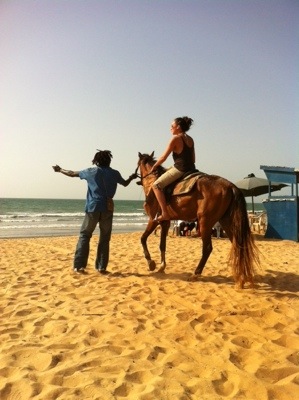
Our first night started late, landing at 10:30, and driving around for half an hour with our new taxi driver friend looking for a hotel to call home. We ended in at Babula’s in Senegambia, and the guard took us out to town for fried fish and local beer, Juls. The next day we walked 5 minutes to paradise, sitting on a sandy beach with straw umbrellas and snoozing in and out of our sunbathe. I found a horse to gallop on the receding tide only a few hours later, a tall skinny stallion that I rode barefoot on the sand.

We are now at our couchsurfer host, Hamza, whose idol is Barack Obama and his favorite artist is Celine Dion. He lives in a suburb area, where the dirt roads still show the tolls of a wet rainy season, and all the little kids follow us screaming ‘tubab’ (white person) when we walk through the neighborhood.

Today Hamza and his friend Youssef showed us around a few markets, including the biggest one in Gambia at Serrekunda. The smell of hot fish, rotting fruits and car exhaust didn’t make me particularly hungry, but the market made me feel happy and alive. On the way home we watched a local soccer game, on their half-sand half-turf field, and Villi paid the entrance (about 15 cents) for 20 children waiting by the gate on our way in.

Gambia is called the smiling coast of Africa, and I totally understand why now. Everyone here is incredibly friendly, greets is with ‘tabab’ of ‘hello’ or sometimes ‘how are you?’, and often offers their hand in a gentle shake. People are black as night, barely breaking a sweat in the noon sun, and walk so slowly as if they have nowhere to go. The women and children laze on little mats on the ground, cuddling and breast feeding as if they have no other place to be, and I’m starting to feel as if I have nowhere better to go either.

Final stop in Greece: Corfu

my tour guides

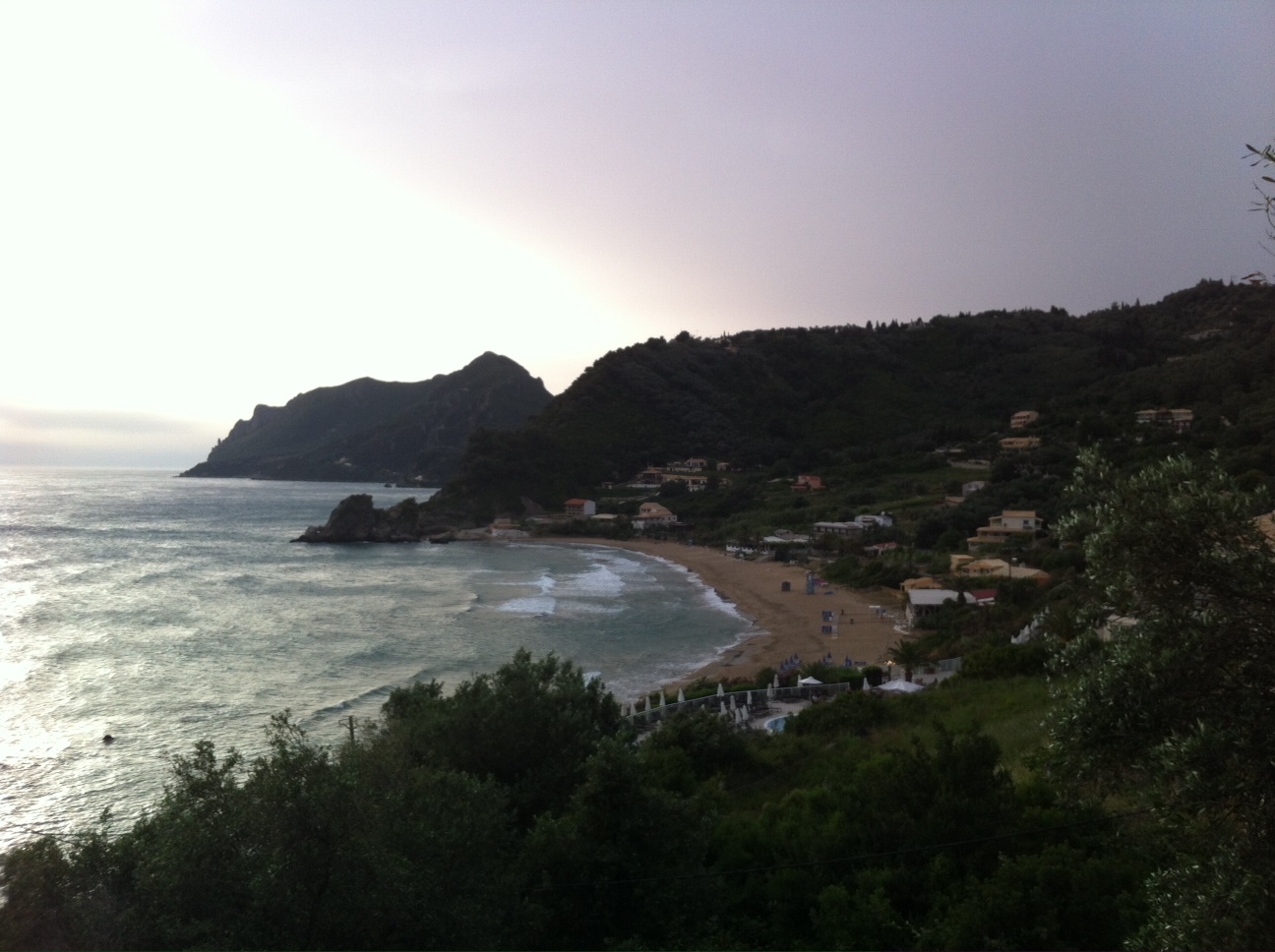
I had gotten delayed by at least one day in almost every place I visited in Greece, so by the time I made it to Corfu where my flight home was from, I only had 3 days to wet my appetite for everything Corfiot. My flight then got cancelled and I had to fly a day home early, so I was basically down to 1 and a half days. Luckily, my couchsurf hosts’ mother owned a 5 star hotel in Dasia, a beautiful mountain top suburb, and his best friends family owned the best restaurant in Corfu town, the Italian ‘La Famiglia.’ Between them and their friends, I basically saw all the islands best highlights in 36 hours, including a private beachside hostel where the owner home grew her own olives and vineyards and homemade her own cheese and raki.

home made cheese and raki

All the food in Greece had been a pleasant surprise: with a similar climate to Italy, they had exquisite olives, grapes, wines and limoncello. It’s a fact that Greece sells all its best extra virgin olive oil to Italy where its blended with Italian EVOO and sold as Italian. The fresh feta cheese, tomatoes, cucumbers, olives, olive oil and balsamic vinegar shaken together for a traditional Greek salad never tasted the same from home to home, but always tasted incredibly fresh and delicious. Greek mousaka and gyros were also made with a personal touch by everyone, but equally amazing every time.

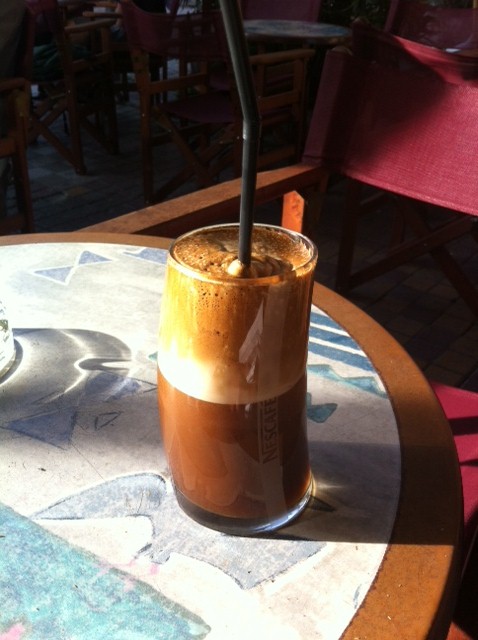
Greek frappe

There were many things in Greece that I either didn´t expect or became so regular that I couldnt imagine Greece without them. The first and best of all, was Greek hospitality; every Greek host or friend I made, I also met their closest friends and extended families. If I was ever alone and Greekless, a Greek guy would pick me up off the street or invite me into his shop for coffee. Even when I walked into coffee shops to order a cup of Greek coffee, the smiley waiter or owner would come out with coffee and a bottle of water and tell me ‘don’t worry about it, drink.’  On the way to Corfu, I stopped in Patras, and sat in a cafe alone to sip on a frappé (the Greek version of Instant coffee on ice with sugar). The guy beside, Xristos, me waited until I left to chase me down the street and ask me where I was from and what I was doing here alone, and then invited me out with him and his friends to the top of Patras for a vantage point out onto the sea. There I realized another Greek stereotype: philosophy. It means ‘friend of knowledge’ in Greek, and he wasn’t the first or last person in Greece I met who wanted to dig deep into my foreign mind and discuss existential philosophy.  Xristos’ friend started heavy, by asking me ‘do you have religion?’ and following up with my surprised answer with an even heavier answer, ‘What is God to you?’. Then he asked me if I believed all of the worlds problems couldn’t be solved with love, and if not, how or who can solve world peace. I met many more deep thinkers in Corfu, who drilled my beliefs for meaning and reason. When I told them about my ‘Quarter Life Crisis’ book idea, they told me it was brilliant, but that I had to be prepared to have the answers for the sequel, the ‘Rest of Your Life Crisis.’

Corfu town

Another weird re-occurrence was a fascination with Sweden. My couchsurf host in Santorini wanted to move to Stockholm, my couchsurf host Johnny Bravo in Corfu learned how to speak Swedish, and the Italian restaurant guy had lived in Sweden. All the friends in Corfu I met were also musicians or musically inclined, and of the 10 couchsurf host possibilities in Corfu, 3 more were musicians or singers. It reminded me a bit of Iceland, where every musician is involved with 2 or 3 different solo or band acts, and look to music as a way to get out of their home island.

the sunset view from Sunrock hostel

Every Greek home I stepped into, I was offered Greek coffee, homemade cheese, Hellenic beer or freshly picked olives. The Greek hospitality ideals must have been taken from the Persian past, and their current economic recession didn’t give them any excuse to spare an expense. Everyone complained about the current state of affairs, unemployment and wages at unacceptable rates, but in reality, the Greek people are not suffering nearly as much as their Scandinavian counterparts (ie. Icelanders) since they still have home and family ideologies that reign true. I don’t know if it was chance or luck that I was blinded, but I didn’t see the real consequences of the recession: if you have family, friends, and happiness, I don’t see what more love money can buy anyway, so ‘Ya-mas’ to the Greek philosophy of living.

Santorini

Iconic Santorini

I really believed that places like this only existed in postcards, but Santorini really was the picture perfect image of Greece I had always imagined. I had left Crete, which identifies itself as especially Cretan, not only Greek, and arrived at iconic Greece, with all the blue-roofed white houses hanging over the turquoise Mediterranean sea. Not surprisingly, it was super touristic, with people from all over the world flocking to the cliff-side villages for greek salad, ouzo, and a sunset picture from Oía town. Both Oía and the main town Fira are full of tourist shops, hotels, restaurants, cafes and bars, and not much else, but the rest of the island is a quiet pastoral landscape, with vineyards and olive trees growing like bushweeds.

the donkeys, er, mules

The donkeys in Santorini are something special, but most of them are not actually donkeys but mules bigger than Icelandic horses. They´re decorated with an assortment of saddles and straps, colourful blankets and trinkets, and jingle whenever they move from the cowbell strapped under their neck. Their purpose it to carry weary travelers up and down the hundreds of cliff side steps from the ports to the mountain top villages, and watching their farmer hands hoist dainty little women up and down off their donkeys is a hilarious sight.  I decided to walk myself down and up, feeling sorry for the poor things, but made friends with one of the farmers. He needed help taking his 10 mules home at the end of the day so he tied them together, head to tail, and insisted I ride with him. We rode the train of jingling mules up and over the town, through winding alleys and narrow steps, and arrived to the open farm land hiding on the slope below the town. I untacked and fed his mules, some of which were imported from Italy (and his most prized possessions , and he gave me one of the colourful trinkety bridles to put on my horses in Iceland.

the volcano, and Fira in the background (it kinda looks like Iceland with snowtopped cliffs, no?)

I took a tour of the volcano and hotspring, two of the most popular tourist destinations off Santorini´s main island. When the tour guides realized I was from Iceland, they immediately started apologizing for how lame their volcano was compared to Eyjafjallajokull (they could almost pronounce it correctly) and that their hot spring wasnt really hot, but just marginally warmer than the sea water.

I managed to find a couchsurf host in Santorini, Giorgos who worked at a car rental and tourist guide company. After finishing work every day at 7pm, he then carried on his professional expertise by showing me around the island. We caught the famous sunset in Oía, also drove to the lighthouse at the southernmost tip of the island, and explored other, half abandoned, white house villages. His parents were visiting him so the first night I arrived home to ‘meet mama and papa,´ an occurrence I´ve grown accustomed to from all my Greek friends so far. His mom fed us home made greek food and we dined out at the only Mexican restaurant on the island. We dabbled in a Friday´s night festivities but the grand, luxus clubs were mostly half empty, since summer and tourism season doesn´t really begin til June.

cliff side villages

Everyone kept telling me ´summer´is so great in Greece, as if 30°C and sunshine isn´t summery enough. It was my summer holiday anyway, and I´m just relieved I had more of greece and Greeks to myself. I left Santorini on the slowboat, since it was a 10 hour sail that stopped at 5 other cycladic islands. I started to realize that all these little islands had the same blue-roofed white houses, and as paradise kept repeating itself, I found myself day dreaming what it would be like if I just got off at the next stop.

Cretan Easter

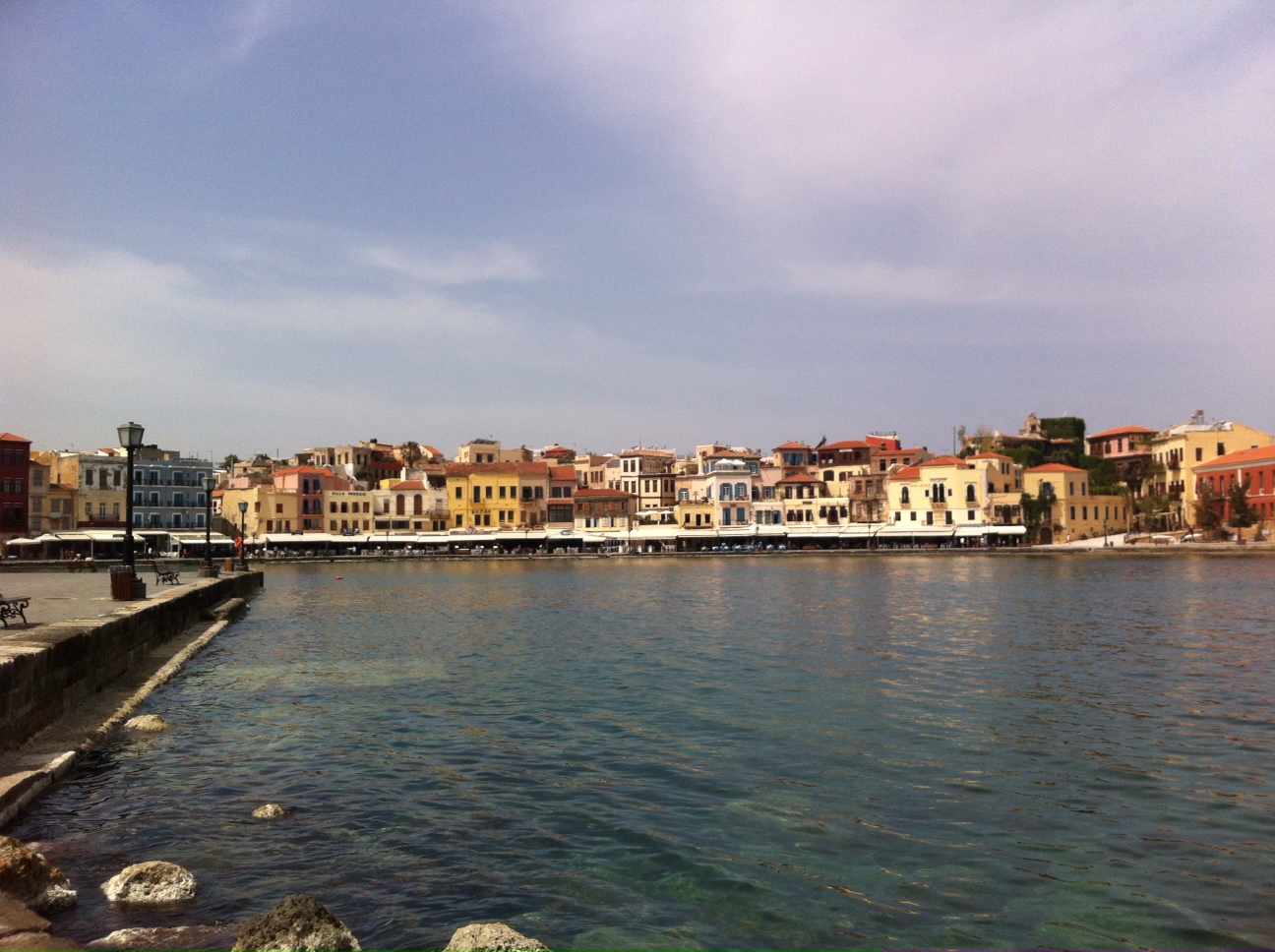
Chania

My travel philosophy of showing up without a plan or map backfired when I flew into the wrong town in Crete. I had expected to land in the capital where my couchsurf host was waiting in Heraklion, but instead I landed in Chania (150km west of Heraklion) on Easter Sunday. I was doubly confused since Easter had been a few weeks before in the rest of Europe, but the Julian calendar makes Greece’s Orthodox easter a little later. So, I was in a strange but beautiful town, with most of the city shut down and many people out of town. I strolled the Venetian harbour, with a handful of other sunkissed tourists, and only figured out the holiday was happening after passing a dozen lamb roasts – after days of fasting from meat, they put an entire lamb on a stick and rotate it over a barell sized bbq, yielding enough meat to feed an army.

lamb roast

I took one of the only buses going to Heraklion that afternoon and sat in the bus station there waiting for my host, who was actually standing 50m away from me. The pitfall of couchsurfing is that you never really recognize people from their pictures, so after standing beside eachother for 10 mins, it was only after I called him and his phone rang that we figured eachother out. Yannis was probably the best host I could have imagined, a local born and raised Cretan who thought it was only normal to give me his bed and take the couch, make his best friend show me around while he worked, and introduce me to his extended family for easter Monday brunch. We drove out to his parents village Zaros where 20 or 25 of his family members stuffed me with lamb and goat meat smothered in lemon and salt, and poured me full of home made wine and raki, the local alcohol which makes even Brennivin look good. We feasted all day long, only to reach dessert and coffee time, and I paid the next day for my food coma.

Yannis´ family feast

The day before there had been a tragic accident in the village, so Yannis explained that the meal had been quite tame and ended early. He also acknowledged how great it was that I had been the comic relief of his family, which I had noticed and laughed anyway at all the jokes I didnt actually understand. But the next day the joke was on me, as a wave of either the stomach flu or unweathered food poisoning paralyzed me for 24 hours. Yannis catered on me hand and foot, skipping lessons to forcefeed me soup for lunch, and thankfully it passed by the following day.

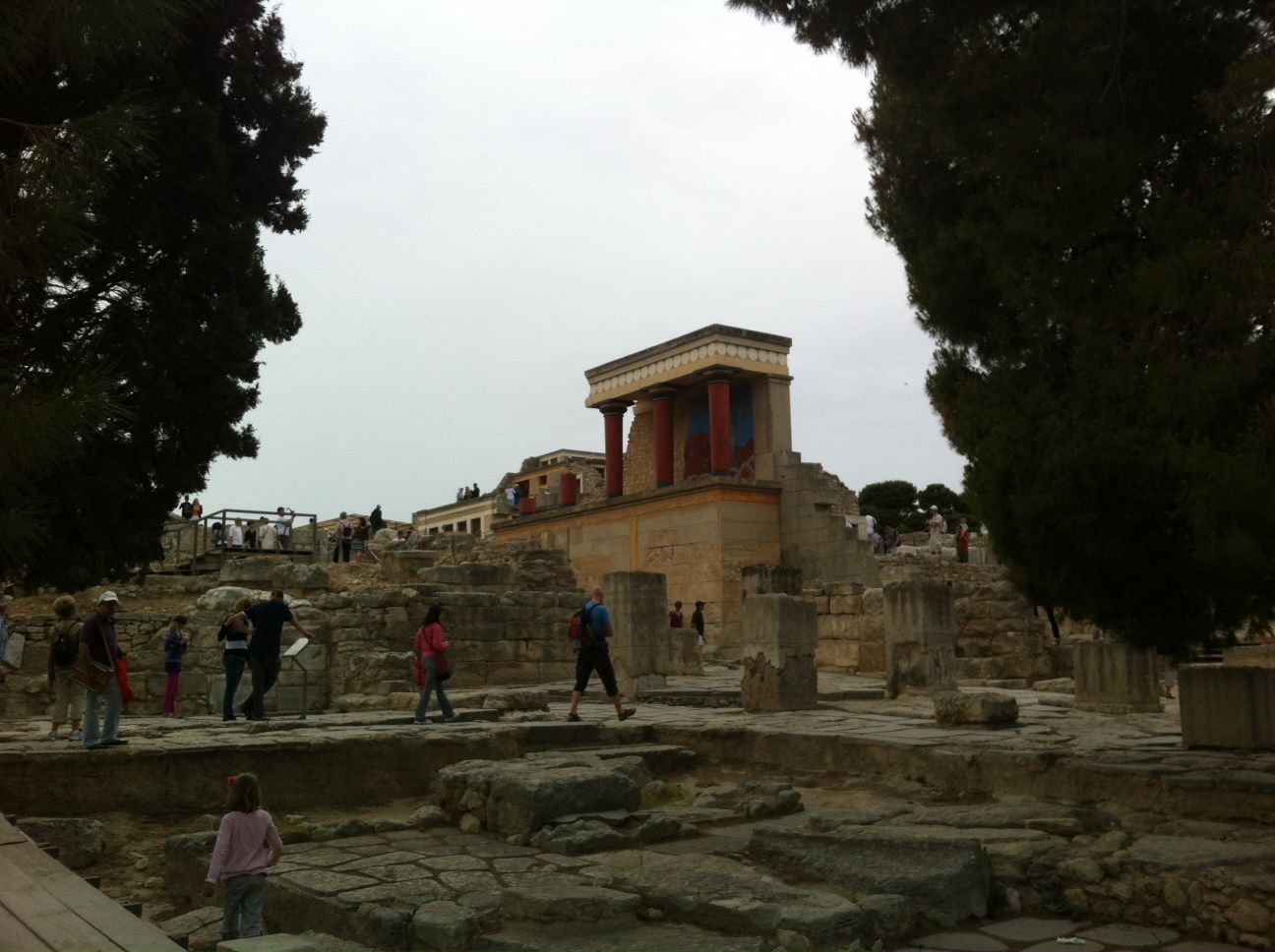
4000 year old Knossos

When Yannis arrived home every evening from physics tutoring, we drove around on his motorcycle to the ports, the beaches, look out points and the famous Knossos archeological site. Knossos is one of the largest Bronze age cities discovered, and perhaps the oldest European city ever found. It is the site of a Minoan civilization palace, supposed location of the infamous Labyrinth and half-man-half-bull minotaur, that has been inhabited since Neolithic times (7000BC).

With Yannis’ help, I learned to read Greek on my first day, which proved really helpful for understanding all sorts of signage. However, being able to read Greek didnt help me understand what I was saying, and it just seemed to confuse Greek people that I spoke only some words in Greek but didnt understand a word they said. He taught me to count to ten and all the important phrases I needed to know, including the “christos anesti” greeting I had to give to each and every one of his family members for easter. We roadtripped south to the hippy town of Matala, and along all the country roads was the appetizing smell of olives in the air. Little church shrines lined the road, where a life lost in a car accident would get a miniature church built for them instead of just a temporary cross or bouqet of flowers. We ran into a herd of mounted stallions on the way to Zaros, who were meant to escort the relocation of a sacred item from one church to another. I went with his bestfriend to the north coast of Crete to visit his summer house and aunties vacation apartments, and visited another friend of his working at a movie theatre for popcorn and raki shots behind the counter.

beautiful Zaros lake

It was only 5 days I spent in Crete, with one bed ridden day, but I felt like I had been there weeks with an old friend. I atleast knew I could have stayed weeks more, but Santorini started calling and I finally, regretfully, had to leave Yannis’ clutches of hospitality.

Southern Spain, Sangria and Sunshine

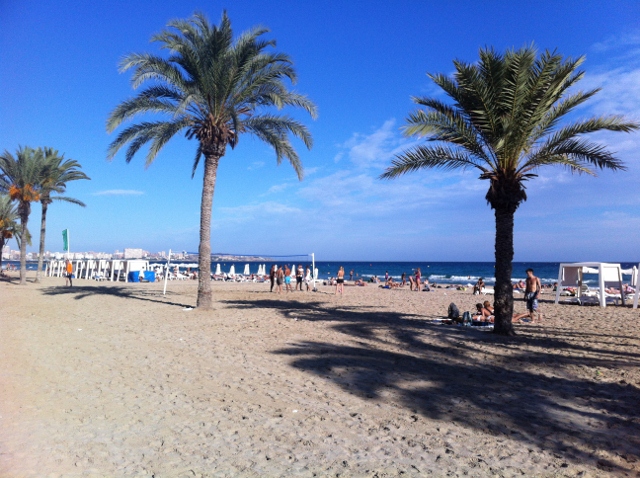
In my search for more summer sun, I took advantage of a return flight voucher from Icelandexpress. I used it in October not only because it was expiring soon, but because there had been rumors of the airline going under. I had a week off school, a “reading” week, so I decided to justify the trip by reading on the beach in Alicante.

a perfect place to read

Alicante’s city center is a stones throw away from the beach. And its  a proper, sandy beach with chairs and umbrellas to rent, right beside the main bus stop. On the other side of Plaza del Mar is the harbour, parked full of yachts and sailboats, one of which was supposed to be my first couchsurfing host place. I had to meet the Spanish sailor at 9pm in the Regatta Club, but instead a strange fireman approached me and asked if I was Katrin. He had replaced the sailor, who was stuck on a boat in Amsterdam, and asked if I would like to join him for dinner and crash at his place. I accepted his dinner offer first.

We had red wine and tapas to our hearts content, eating course after course and I slowly decided he was couchsurfing material. But, this was before I found out he lived in an apartment undergoing construction. This is partly due to my Spanish not being fluent enough (he didn’t speak english) and partly due to me thinking he was joking when he said “my apartment’s kind of a mess, but atleast it has one light and one running water source.” The light was a spot light, and the water hose came out of a hole in the wall where the shower would eventually be built. There were no doors or finished floors, and one huge open space where a window was still missing, but because he lived on the top floor, he had 2 beautiful rooftop balconies. And, most importantly, he had an extra mattress and a pillow which I could get a good nights rest on.

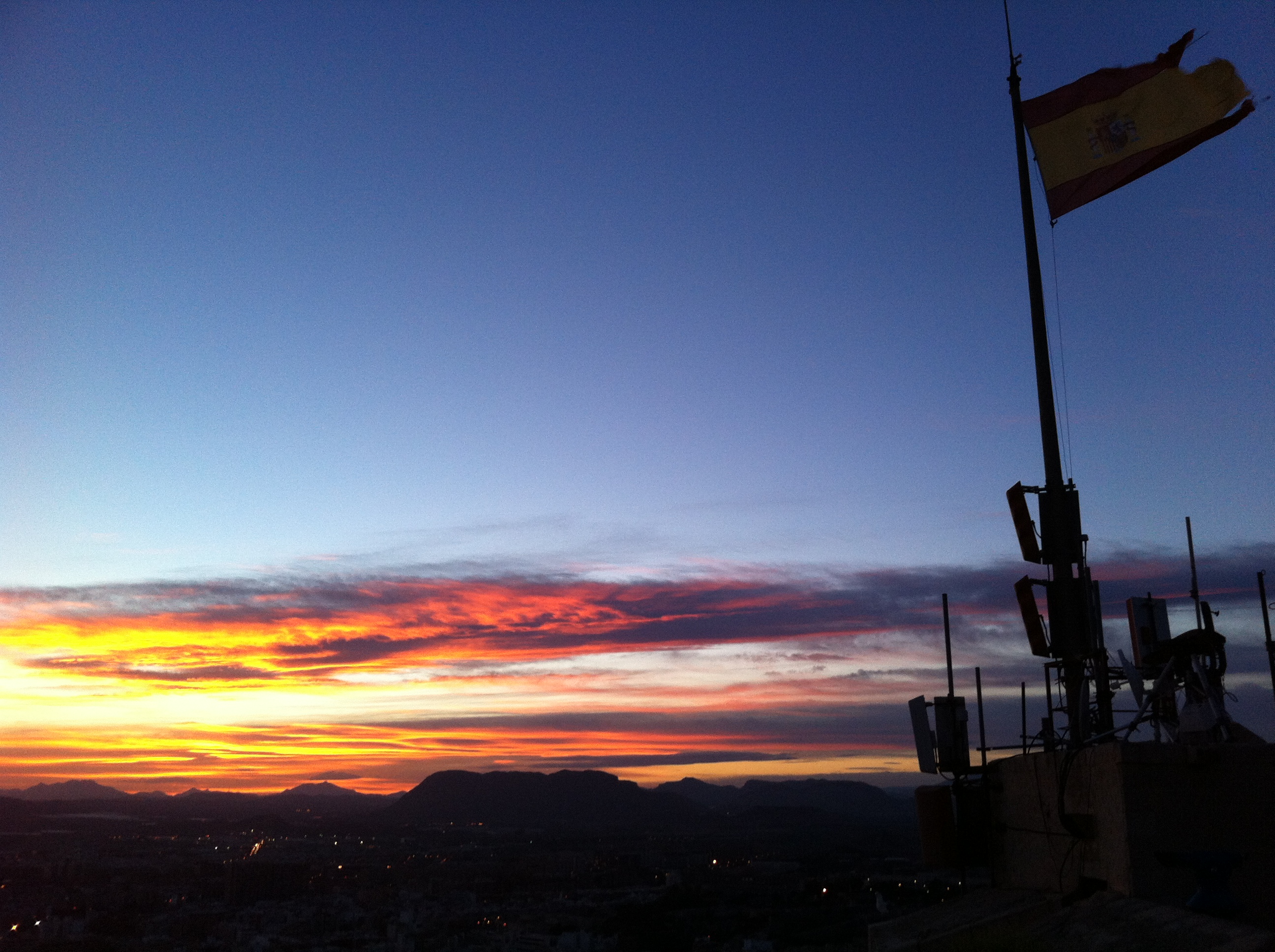
sunset from the top of el Castillo

I spent my couple days in Alicante wandering around the beach and the old City Center, and finally made it up the massive fortress that looms over the city and sea. The Castillo de Santa Barbara is a castle that changed hands between the French, Spanish, Moroccans, and maybe even British, Im not sure, but I don’t know who figured out how to build a castle at the top of a cliff in those days, somehow get overtaken or invaded, and then add on even more castle to the cliff, before the overtakers were overtaken. I could barely get up there without guards or guns pointed at me, but luckily my next couchsurf host had a car and a free evening to catch the sunset from the top with me.

Villa Joiosa

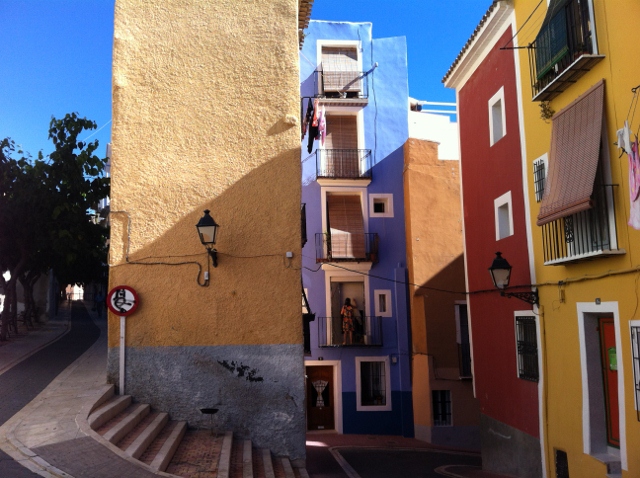
I traveled north with the local tram, an above-ground subway-like transport that can’t quite be regarded as a train. It takes you along the coast all the way to Benidorm, where I was headed, and stopped half way at Villa Joiosa. Its a colourful little walled village, also on the beach, with only sleepy dogs and old ladies to be encountered on the staired and narrow streets.

In Benidorm, I barely saw anyone else but elderly, half-burned British people and a handful of European students. The beach was lined with highrises, and the streets were tourist shops and tapas bars followed by more tourist shops and cheap tapas and wine bars.

Benidorm

The beach, or beaches rather (there are 2 long stretches divided by a peninsula) were beautiful, packed with people. Apparently the hundreds of tourists sunbathing now didnt compare to the thousands normally packed like sardines on every square inch of sand from June – August.

the art palaces

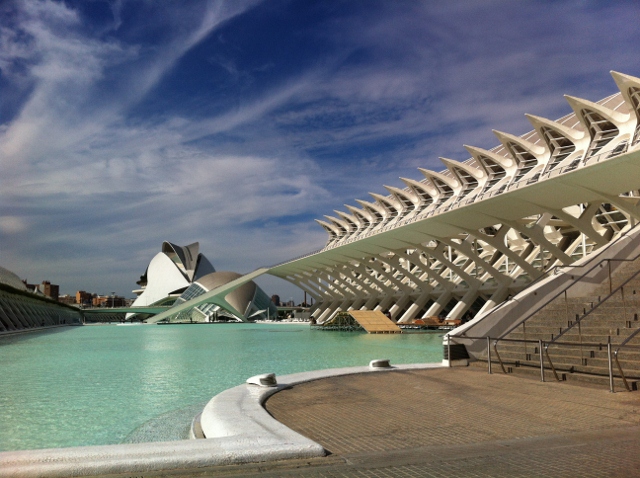
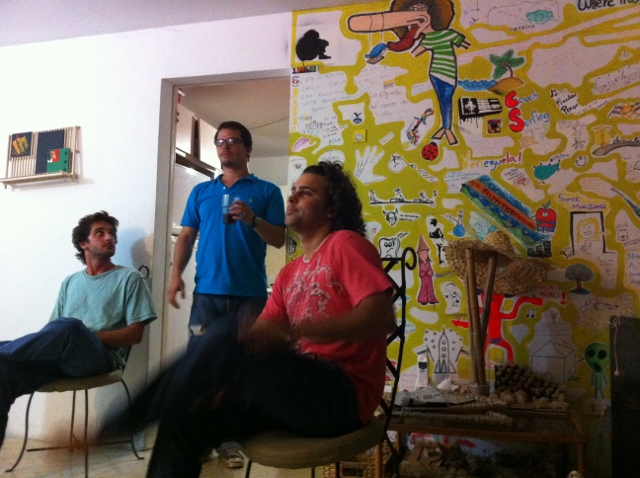
I made it further north and a little away from the coast to Valencia, the second largest ERASMUS University student town in Europe (after Bologne). I couchsurfed at a very international house, with a Brasilian marine biologist, a Spanish architect student, and a Hungarian linguist. We hung out for 3 evenings (I stayed 2 extra nights) despite it being midweek, finding lots of other students to enjoy nights out and cheap wine. They gave me a bici card so I could use the public bicycles to get around (Valencia is so much bigger than I thought), and I rode along the river canal park that surrounds the old city, past the Art Palaces, all the way to the beach a few kilometres away, and even through the old city center, zig sagging through the pedestrian only streets that wind around old churches and cobble-stoned squares.

cats in Tabarca

My last night back in Alicante, I couchsurfed with an architect who lived on the 10th floor of a beachfront apartment, with a 180 degree view through floor to ceiling glass walls. He is also a diver, and had just spent 2 weekends in Tabarca, an island off the coast of Alicante that I took a 1 hour ferry to visit. The island has been overtaken by cats, and all the so called inhabitants leave when summer is over, so it was mostly me, some cats, and the seagulls braving the wind and some strange sort of African dust storm prematurely darkening the day.

Concert in Plaza des Toros in Murcia

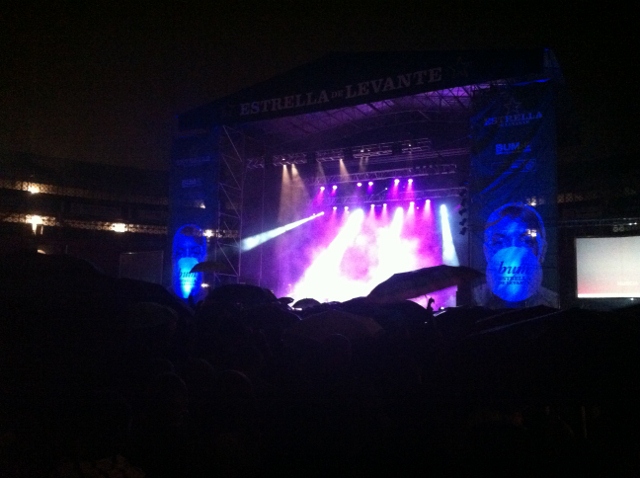
My last night in Spain, me and Dani the architect packed his car full of friends and roadtripped to Murcia, where we watched an open-air concert in a bull fighting ring. The headliner was Wilco, an American band, and a ridiculously good rock n roll Spanish sensation I still don’t know what his name was. I kept day dreaming about how days and centuries before, this ring was used for a matador to death dance with bulls, and now we stood there under umbrellas in the dark jumping around  to great music. Imagine trying to predict that kind of future to a Spaniard 300 years ago…

A Day in Caracas

One can get from Rapa Nui to Canada a number of ways. I took one of the more complicated options, and flew 4 times through 5 countries in 6 days. The journey was long and tiring, but started off on the right foot. I rode to the airport on a horse in Easter Island, arriving in time to check in, drop off my bag, and then gallop along the air field fence for an hour while waiting for security to open. Me and my horse also shared a bag of mangos, since they would not get through customs in Peru, my next destination. I had an overnight stop in Lima, and couchsurfed with a friend of a friend but did little else than sleep and shower.

I went back to the airport to fly next to Caracas, where I had a day and a half layover. I had never been to Venezuela, and had lots planned for my short visit, and tried tirelessly to extend my visit but the next 3 international flights I had to take wouldn’t allow it. Those I told I was going to Venezuela always asked if I knew anyone there, told me to be careful, and suggested I just stay atthe airport to save the hassle of getting around all alone. I didn’t know anyone, but of course found some inviting couchsurfers, opted out of sleeping at the airport, and made the 3 hour coach-subway-bus transit from the international airport terminal to Pueblo de Baruta.

the couchsurfers flat

I had an uneasy feeling about what I could or could not do but mostly because of all the warnings building up. Every traveler and latin person I had met had hyped up the safety issues in Caracas so much that I really started to believe I had to me more cautious and guarded. Yet, from the moment I left the airport and spent those 3 hours alone transitting to Eduardo’s house, I could not have felt more secure; the backpack on my shoulders and my nervous eyes were enough of a tell-tale sign that I was a gringa (despite my badass tan), and every person in eye-shot of me noticed and felt some sympathy. Those in earshot of me almost always said something, asked me if I was ok, and offered to help me in any way they could. “Do you know where you are going?” “Do you have a phone number to call your friend?” “I will keep an eye on the zippers of your backpack.” “I can help you translate any spanish if you need help with your directions.” Police officers walked me from the street to the right subway platform underground. My bus driver escorted me onto his bus, infront of the 3o or 40 passengers already queued in line, wouldn’t allow me to pay the bus fare, took Eduardo’s phone number in his cell, and called him to come and meet me at the stop he would drop me off at when we were 5 minutes away. Others just started chitchat, so curious about what I was doing on local transportation during nightime rushhour, alone, with a backpack, certain that I was in the wrong place at the wrong time and needed help to get back to where I belonged. But I felt that I belonged right where I was, under the safe cloak of  all the empathetic strangers I met.

the couchsurf crew on campus

When I met Eduardo, his roomates and  3 his Argentinian couchsurfers, I immediately felt like I had arrived into to a group of old friends. It was Monday night but we decided we could make a party wherever we went and drove around a sleepy Caracas to stir something up. We stopped by a stand-up comedy bar, went to a trendy lounge where we could dance salsa, and ended the night at some Irish-pub-feeling place before going home and sleeping in various arrangements on couches, yoga mats and camping mattresses.

the one pictured I managed to take from the car window

The next morning we squeezed 6 people into a little car and visited a university campus nearby. We drove to the center of Caracas and weaseled through the subway stations and trains which were more crowded and chaotic than NYC’s Penn Station at 6pm. While driving, I naively held my camera a little out of  my rolled down window to take some pictures, and Luis quickly grabbed my hands and laughed, explaining “the next guy on a scooter to pass us will just rip that right out of your hands and you’ll never see it again.” I guess you should never really let your guard down all the way, despite how safe a place can make you feel in one short day 😉


Paraguay

Paraguay is one of those places that doesn’t evoke any strong stereotypes, a place that you don’t have any preconceived notions or expectations, just a blank slate of wondering why you know so little about it. It doesn’t boast any famous landmarks or must-visit tourism destinations, and few backpackers make it there on any South American journeys. The barrier is really two-fold – you don’t know anyone that’s been there to vouch for its interest or safety, and you don’t know what to do or how to get there since few roads lead you in its direction.

But then there are the travelers who dream of this kind of place, an off-the-beaten-track surprise bag to go and discover for yourself. The lack of information or infrastructure just makes Paraguay more appealing, a black hole you want to paint yourself with and wear night-vision goggles in. The country is completely landlocked by Brazil, Bolivia and Argentina, its borders defined by the muddy rivers flowing between them. Its much bigger than you expect, and all its main commercial centers are at the borders, creating an economy that depends on its neighbours.

The population is only 6.5 million, a fraction of the 195 or 40 million in Brazil or Argentina. The customs/immigration office in Punta del Este, a border town near Iguazu, Brazil, shares its office with the Ministry of Tourism, and the front page of its eco-tourism marketing pamphlet has a picture of Iguazu Falls (that waterfall is actually only shared by Argentina and Brazil, though Punta del Este is a “gateway” town to it).

From there I traveled west, through a never-ending small town that eventually turned into the capital city of Asuncion. Here I waited at the bus terminal figuring out what do while meeting and conversing with a handful of local people. All of their concerns were the same; “Why are you here? Are you traveling alone? Can you speak Spanish?” I slowly got the feeling that gringas should have a better plan than I did, so I called a couchsurfer who I had been in touch with to see if we could meet. She said no, she was busy until 4, but then we could meet at her apartment and I could crash there.

The stairs up to her second floor apartment smelled like cat litter, but there was no cat in sight, and noone was home at 4:15. I thought maybe I was late and had missed her. I waited til 5. Then her downstairs neighbour came home and saw me waiting. After calling her from his phone, she said she’d be home in an hour. Since I was in a residential area that felt quite safe with little else to do, I figured I’d keep waiting. She finally showed up at 6:30, and continued speaking only in Spanish though all our exchanges had previously been in English. She was youthful and healthy, and perhaps a little obsessed with her body and beauty. Her apartment was very clean and organized, so much that she was on the verge of being OCD about it since hosting couchsurfers obviously distressed her. She spoke a lot, non-stop almost, and I felt it was either because silence made her nervous or because living alone didn’t giver her enough chances to complain to someone who would just listen. She didn’t always complain, but she preferred to tell me about her petpeeves instead of her interests. She also liked to explain the house rules and how to use everything properly, but kept her hospitality to a minimum.

Asuncion was a beautiful town, a walkable city, with plenty of colonial mansions and a few highrises that would have impressed in the 1980’s. The mercado quarto was my favourite place, a sprawling neighbourhood of merchants selling everything you could imagine. A lady described it to me as the Wal-Mart for Paraguayans, and I guess thats accurate, minus the shiny newness and organization of everything under one roof.

Rio de Janeiro and Ilha Grande

8 months ago, I was in Florence, Italy, visiting 2 American brothers. Their friends were hosting a Brazilian couchsurfer named Andre. After the group of us traveled to Cinque Terre together and hung out in Florence, I had convinced Andre to surf my couch in Reykjavik one day. 2 months later, he arrived in Reykjavik, and I told him I’d have to surf his couch in Rio one day. 4 months later, I was surfing his couch in Niteroi, with only 2 days notice.

Ipanema

It was impossible to reach him earlier since I was floating around in the middle of the Northern

me and Cristo

Brazilian Amazon, and I wasn’t sure he would be in Rio since he travels a lot. But, he welcomed me in to his family’s home as a couchsurfer and a friend, and Im so relieved I actually remembered I had the outstanding invitation (I have so many people left to visit I often wonder how many cities I’ve visited without remembering to call someone!)

IMG_1200 (598x800)

Sugar Load and the teleferico lines in the fog

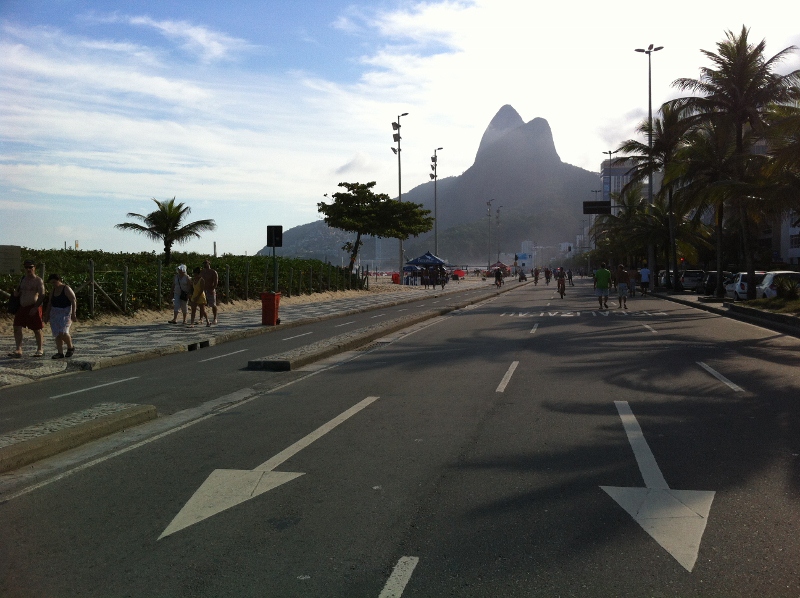
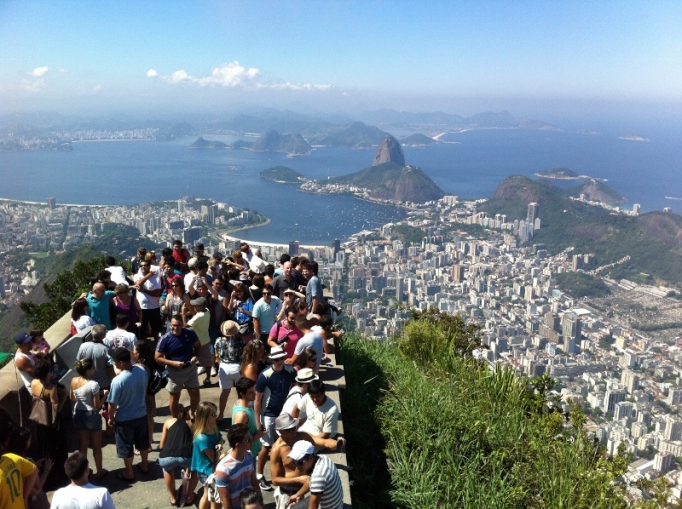
His home was in Niteroi, accross the bay from Rio, with a spectacular view of the Sugar Loaf hill. You could see Christ the Redeemer from his balcony, and it only took a 14 km bridge to get to the heart of Rio. He took me to Copacabana and Ipanema beaches, we took the gondola up Pão de Açúcar, took pictures from Vista Chinesa, and waded through the crowds up the Corcodova to see Cristo Redentor. I had planned for 6 days in Rio, but on my second day, we took an impromptu camping trip to Ilha Grande.

We were having buffet pizza with some other locals and backpackers on my first night when Digo invited us to go. He said we would need all our camping supplies and food for 3 days since the island is only interconnected by a series of trails and a few boat docks. We had to hike 3 hours to the ‘secluded’ beach we wanted to stay at, but then realized hundreds of other people had made the difficult trek searching for the same paradise… a perfect case of tragedy of the commons.

IMG_1127 (800x598)

the crowds and the view from Corcovado

But, instead of a wild and rugged weekend, we had a fun-filled beach vacation, making lots of new friends  while dancing and sleeping only inches from one anothers tents. I learned very quickly that I don’t speak Portuguese, but I can understand it, and when I try to speak, I’m actually communicating myself through Portunol and Spanglish, a mix of Spanish and English with Portugese decoration.

Martinique

I was couchsurfing in Fort-de-France, at a collocation of twenty-something metropole males and one French Guyanese girl. Heliott picked me up from the ferry terminal in the city center, which at 7pm on a Sunday was a total ghost town. Even the streets were carless, which was partly due to the gas station trike happening island wide. The few gas stations which were open had dozens of cars waiting patiently in line, some waiting over an hour just to refuel.  

Fort-de-France, looking little different than other island cities

I was back in France, but it just wasn’t the same France. Algae grows on the rear view mirrors of every Peugot and Clio, stainless steel gates are somehow stained, concrete walls and houses crumble, wood rots, and any white paint turns to shades of brown and grey. Martinique is a department of France, but its also a developing, decaying island constantly battling the humid, infectious jungle overtaking all the manmade comforts we’ve tried to establish in a place that screams to stay wild.

I was in Martinique only 5 days, but it was the first island I visited and felt like doing nothing. It was not because of the appeal of the island, but with myself, my tired body,

wildlife on our waterfall trek

 my exhausted mind from weeks of traveling. So many new places, people, sensations, and yet, a big blur of similar experiences, persuaded me to take an entire day to rest, digest. I sat still and relaxed for a day and a half, only seeing the balcony and my bed, and enjoying the people and things which passed by me. I met all the roomates, their boyfriends and girlfriends, tasted their rum, ate dinner with everyone, and talked in French and English about my journey so far.

waterfalls are much prettier than shitty-bat caves

By the second day, I still hadn’t looked at a map, and had no idea where I was except that I was in Martinique, but not even sure what or how big Martinique was. I was in Tivoli, near the middle of the country east of Fort-De-France. There is not much tourism in Martinique, and little infrastructure for a visting tourist. So the rest of my days in Martinique were equally relaxing, doing little else than fraternizing with my new household.

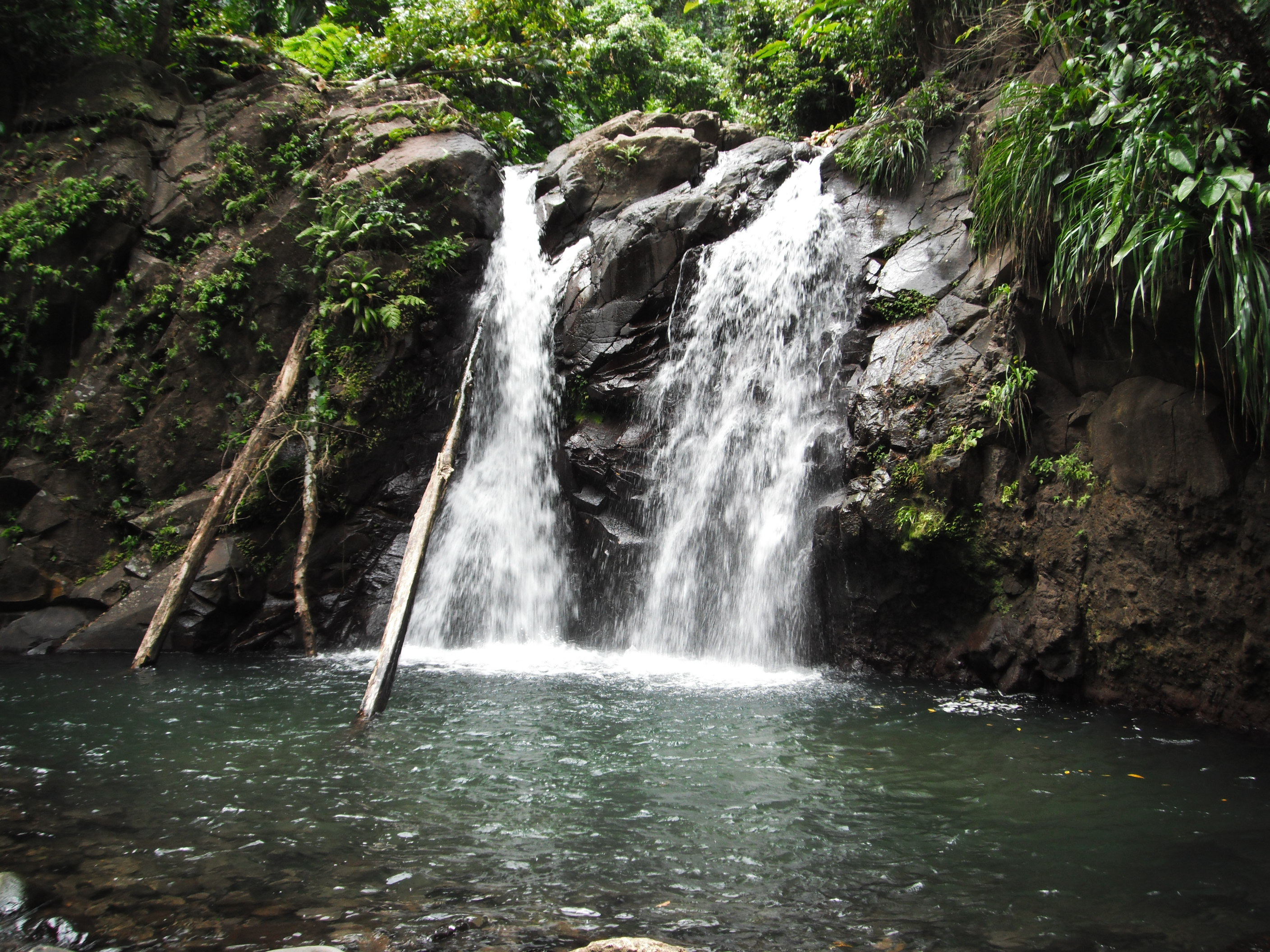
Julien, the other couchsurfer in the group, took me out of the house for a couple nearby hikes. We visited Chute des Didiers, a beautiful waterfall to swim under, so long

chutes du didier

 as you don’t mind freshwater crabs and shrimp scurrying past your toes. And, you have to make it through a 200m, dark, bat-inhabited tunnel, walking along a narrow, slippery, waterpipe, that if you slip off, end up in knee-deep bat shit/mud. Luckily, we managed to stay on the pipe.

Me and his roommate, Jerome, explored another river which wasn’t trail marked, and decided to follow it down to a small waterfall which wasn’t quite deep enough to jump into. But, we were stuck on top of it and had to go downstream to return to the car, so we took turns lowering eachother down and keeping our fingers crossed that no blood baths would result at the bottom.

Another day, I went with their neighbor Alex to the north west part of Martiniqe. We visited his friend in La Carbet, who lived in a house with a beautiful 180 degree view of the ocean from high up on a hill. Together we went on to St. Pierre, the former Petite-Paris and cosmopolitan capital of the French West Indies. It was totally destroyed in 1902 by a volcano, wiping out 28,000 people and all the beautiful architecture, a story similar to the catastrophe of Pompeii, but survived by two who lived to tell the story first-hand.