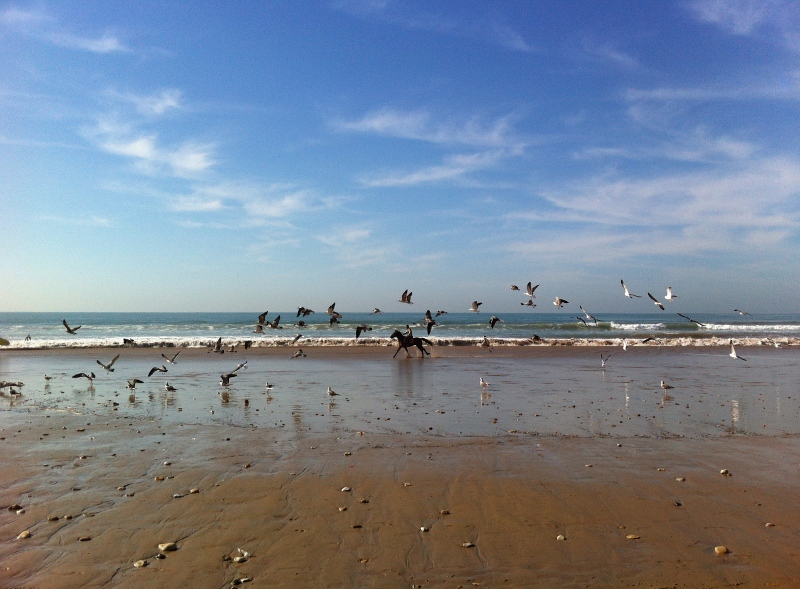
galloping on the beach in Taghazout
galloping on the beach in Taghazout

sorting horses in Skagafirdi

the first group, on Eyjabakkajökull
I rode 4 tours with Íshestar this summer, around the Eastern fjords and valleys, and up to the highlands around Snaefell mountain in Fljótsdalsheiði. I guided the first tour with 10 guests, a nice mix of Dutch German, Swedish, Belgian, English and Australian male and female riders. Last year we sometimes had groups of only 16 women or 14 German speakers, and few young riders, but this summer, there were riders even younger than me. Last year, the first tour began July 4th, and then the highland was a muddy grey swamp land, only just beginning to recover from the snow cover, but this years first tour was at the end of June, and summer was already full blown with green vegetation, sunny skies, and dry ground covering the highland. Once in a while we still encountered soft ground, and had to invent creative detours to avoid a domino effect of horses disappearing down into the slush. This was Susy’s greatest fear, and she could only get past these points by dismounting or riding with her eyes closed. Christian had absolutely no fears, and requested to ride only the crazy ones which he handled just fine, even with rodeo bucks, slipping bridles, and disappearing into the herd a few times. Some of the stronger riders rode stronger horses, which they slowly tired of having to hold back, so me and my horses ass became a useful brake. Between rides, we played in other ways; we had an epic snowfight on the glacier and went skinny dipping into a few glacial rivers.
The second trip was an exploration experiment, a staff tour for us to take to figure out a new way and familiarize ourselves with another highland region. We were 4 staff, with 16 horses, which
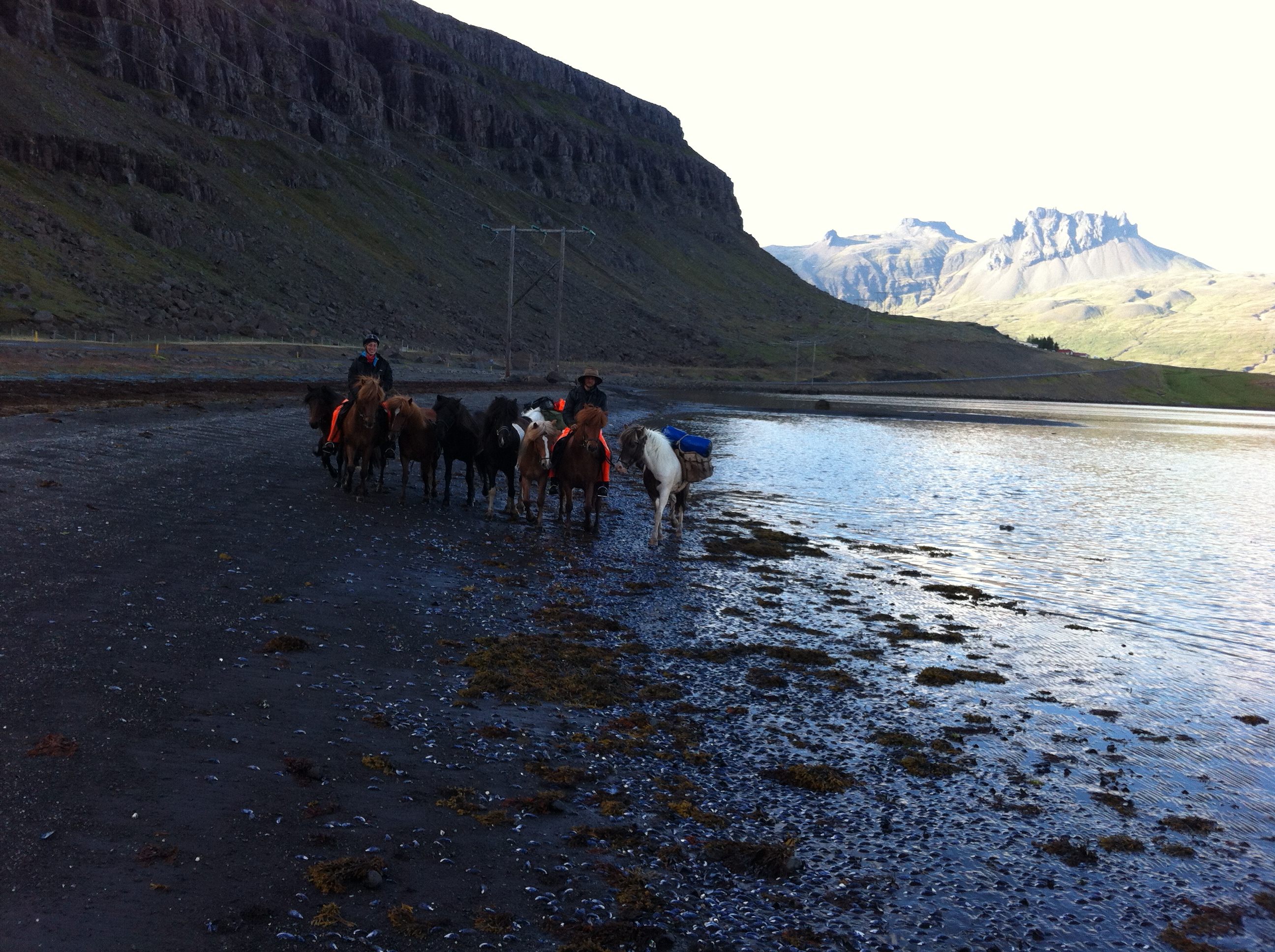
Denni and Arna with half the herd in hand
we rode with all has hand horses. Its difficult enough to maneuver some highland terrain on one horse, so being 4 horses wide and trying to balance the pack horse as best you could over the terrain was difficult, to say the least. We had packed our tents, sleeping bags, food and cooking supplies for 5 days, and even brought rope and poles to make temporary fences for the herd, but these things were rarely cooperative in staying put on the pack horses backs. We set off on the first day very late, leaving at 7pm and assuming the late night sun would be sufficient to light our way. But, then we got hopelessly lost and stuck in thick fog cover, so finally at 3 am we were forced to stop in the middle of nowhere and wait for clear skies in the morning. We were in a damp, rocky place, with almost no grass for the horses, it was freezing cold, and we realized our stove didn’t fit the primus so we couldn’t cook our food or heat up any water. We set up the tent for the three hours we waited there, but maybe slept 1 hour each since we were so cold and hungry and worried the horses would run away. Arna actually thought at one point she was freezing to death.
At 6 am, we set off again, and rode nearly 16 hours, dozing off on our horses as we descended into the wrong valley. We stopped once we reached greener pastures, for the horses to finally eat and for us to pass out in the sun for a warm, well-deserved nap. We rode all the way out to the coast, splashing along the beach, to round the fjord into the next valley we were initially trying to find. Fossdalur is a valley of a hundred waterfalls, with one very nice farmer who let us stay in his guest house and use his electricity to cook our food.
With this refreshing revitalization, we set off again over the same dreaded highland. After leaving 2 lame horses behind, we made it to Geitdalur after another long day without any fog or mid-night cold. There we camped and were able to scrounge up enough birch wood to make a campfire for cooking water on. Another day of riding finally took us back home, with some exhausted horses and our battered selves, and we could enjoy the week off before the next guests arrived.
The next trip was a pack tour with 12 guests, a 6 day trip with 5 pack horses to carry our 2kg of luggage each. Most of our food and camping supplies also got carried by pack horses, but we had

the pack tour
one truck sometimes dropping off tents or food refills along the way. We rode a new way, further north past Jokuldal and to Saenutasel – an old turf house farm. From there we rode to Laugarvalladalur, a geothermally active valley with a hot waterfall to shower under. The third day was the most interesting, as we rode with our horses, pack horse and herd of 40 loose horses over the Kárahnjúkar dam – a narrow bridge creating the boundary wall for the controversial hydropower plant built in the middle of the highland. The next days we rode almost the same way home, but circled the base of Snæfell and rode on the other side of Norður dalur back out into Fljótsdalur. We camped our last night and celebrated our last riding day by letting all the extra horses run free, and the truck support took all our packs so no rider held a hand horse.
The last tour was an extra long 9 day tour, a 300km trek from Höfn in Hofnarfjorður, over Lónsheiði and through the Fossdalur and Geitdalur paths we paved on our staff tour. We rode in and out of the dramatic south east coast, with glaciers or the ocean constantly painting our background. Highlights included taking whole herd for a gallop way out in the sea (through a shallow tide) and almost losing the entire herd in a glacier river as they tried, unsuccessfully, to take a shortcut home.
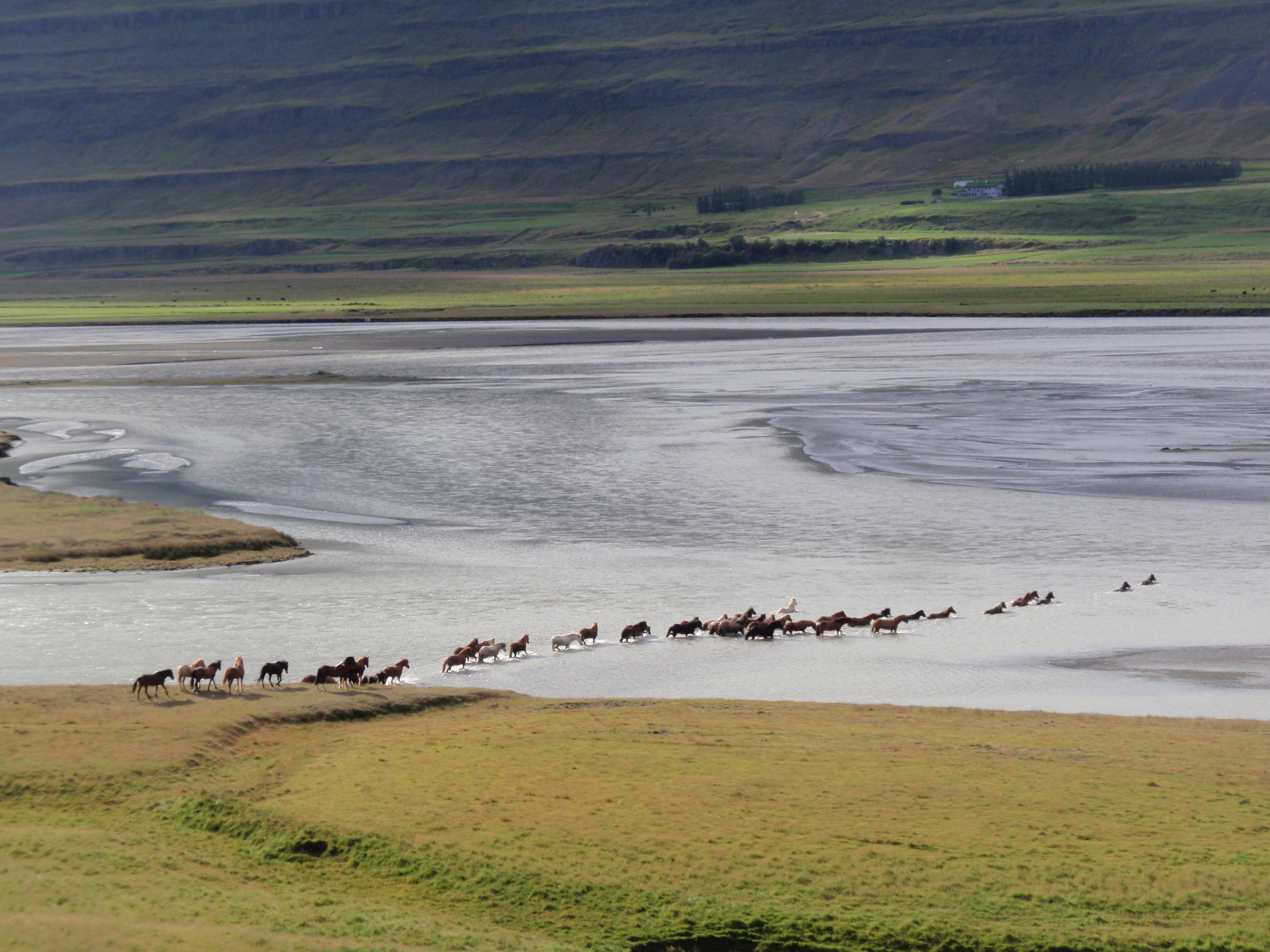
the herd swimming away!
The riding trips I took in the east this summer can all be summed up in one word: adventurous. Whether it was the beautiful landscape, changing elements, or pioneering sense of exploration, all the trips were full of (sometimes challenging) surprises and I couldn’t imagine any better way to experience the wild wild east other than by horseback.

the herd we ride with in the wild wild east, 103 and counting

the Rano Kau crater
Easter Island was up there with Antarctica and Greenland for most random and tricky-to-get-to places that were high up on my bucket list. Greenland was, luckily, not so hard while living in Iceland, and Antarctica kind of fell into my lap even though I couldn’t afford it and hadn’t planned to go there until after traveling some easier-to-get-to countries. But, it was the last continent and 2009 was the perfect time to go, when voyages were undersold for the first time in years because of the economic recession.

horses at Ko Te Riku
I was going to Chile for my friends wedding and promised myself next time I was in Santiago I had to bite the bullet and dish out for the trans-Pacific flight to Rapa Nui. Flights were between $688-$1100, and I couldn’t convince myself it was worth it. Then I realized that LAN Airlines was part of the One World alliance, which my mom had just given me 50,000 miles for my birthday, and I managed to book a round trip flight from Santiago to Mataveri for $157 and 20,000 miles, and still had enough miles to get from Santiago to Vancouver one way for another $300 and 30,000 miles. I even got all the right dates I needed to stay a comfortable 5 days. This was the perfect amount of time to spend on the 70 sq.km island with 800+ monolithic statues and almost as many horses.

sea-ward facing Moai's at Ahu Akivi
I took a red-eye flight to Rapa Nui and arrived at 6 am in pitch darkness on a jumbo plane that unloaded 300 passengers. I couldn’t imagine this little island had the infrastructure to host us all, but we dispersed from the tiny ‘airport,’ which consisted of a small building, a driveway and a couple taxis, to our respective homes.

Mihinoa campground where I stayed
The island has a population of 5 thousand, and almost everyone is working in the tourism industry. There are no chain hotels or restaurants, but family-run guesthouses and a few luxurious eco-resorts built in the style of the stone and turf houses the settlers used to build. Camping is popular, in the breezy sub-tropical climate, but your tent heats up alot after sunrise since few trees are left to provide any shade. There is only one ‘town,’ with a main street and a few overpriced supermarkets. There is a soccerfield and a couple beaches, just wide enough to lay a towel and give the only access points to the sea if you’re trying to surf the waves on a board or a boat.

stone carvings
The rest of the island is rolling green hills, a few volcanic craters, and dirt roads leading you from fallen statues to risen statues, underground caves and stone carvings. A large chunk of the island is national park (split into two areas), and another large chunk is a biological reserve area. Cows and horses graze in most pastures, and people use horses, mountain bikes or quad cycles to get around if they don’t own a jeep.

stone and turf houses at Orongo
Most of the Island is a world heritage site, littered with these huge stone faces. I still haven’t figured out the Moai’s, what they meant, how they were made or transported, and why they made so many. I guess there are a few theories, but noone’s really sure, and all I can say is they spent a whole lot of time and energy making them and moving then for some very important reason. They all looked a bit different, some made in the likeness of some VIPs or chiefs, some had red stone hats, some were small, others big (4 metres) and they all weighed a tonne or more.

an unfinished moai
I went to one of the quarries, where unfinished moai’s laid unfinished in the mountain. I biked around the island and saw many laying on their backs or on their faces, barely recognizable from another pile of rocks that probably had no historical significance. Some were left in transit, as if one of the seven plagues had just hit, and all the moai deliveries were dropped and left exactly where they were. All were raised facing land (except a handful of rare exceptions at Ahu Akivi) theoretically because they were built to watch over towns and perhaps the Rapa Nui people respected the sea in some special way.
My favourite way of exploring the island was on horseback, and I was lucky enough to find a guy with a mare he could lend me for a couple days. I ran around on her bareback through Hanga Roa and along that Ana Kai trail, and if it wasnt for the hordes of tourists taking photos of every statue, I could have escaped through imaginary time travel and ridden over to the next village to ask alot of burning questions about the Moai’s and the Rapa Nui people.
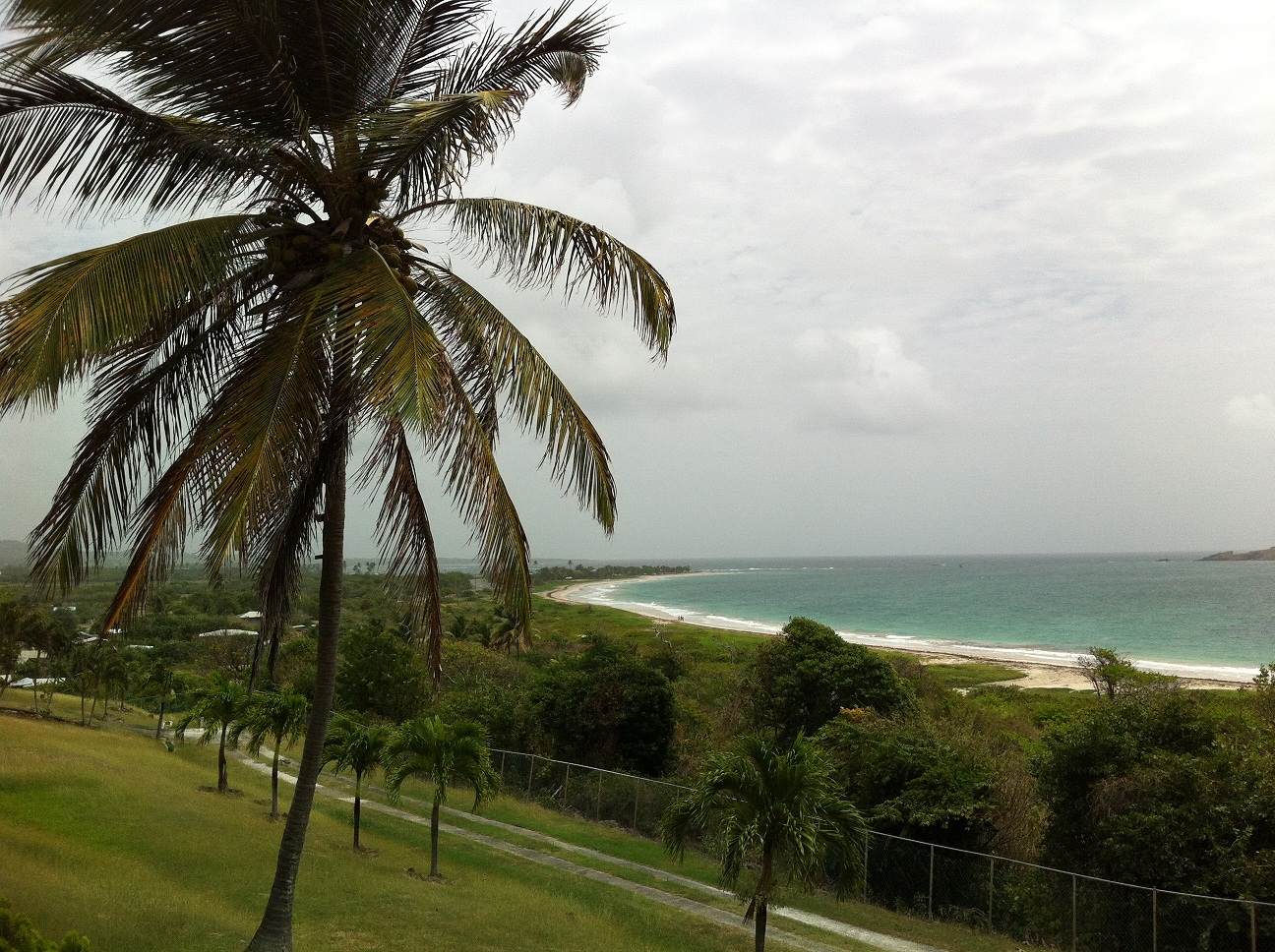
the southern coast of St. Lucia
The horses I rode in Dominica belonged to Valerie, a Canadian woman whose main stable hand was from St. Lucia. He got me in touch with his best friend there, a man named Lucius who owned 38 horses. Lucius agreed to host me and take me riding, so I took another Express des iles ferry past Martinique straight to Castries. We arrived to a staff-less immigration hall and waited for someone to arrive to start stamping our passports, in a long, hot, queue. Finally we could enter St. Lucia, one of the few independent leeward islands and the last one I would visit before returning to France.
I left the terminal to the bus station which was hardly a station, just a parking lot full of idle buses and wooden shacks covering people and the goods they sell to coin-pocketed passengers. I needed to go to the other side of the island, down south to Vieux-Fort, where Lucius was waiting to meet me at the ‘plaza.’ I pictured a latin square in the center of town, but in reality the Plaza was the commercial center of town, a small mall with a pharmacy, grocery store and KFC.
St. Lucia switched hands between the French and the British 15 or more times, and the creole language there is a perfect souvenir of this confusing colonial past. It was the first island I could not understand a word of their patois, unable to pick out any recognizable French or English word in anything people said. It didn’t help that people barely move their lips when they speak, and speak quietly, inaudibly even. It makes me wonder when accents or dialects stop being dialects and claim their own language identity… everyone knows and speaks English too, but they have to switch it on and off according to their audience, so I believe they are two separate languages and officially, the country is bilingual.
The other unique thing about St. Lucia is their music culture. They have a strange affiliation for country music. Not local country music, but deep, Southern, American country music. All the bars and karaoke I saw there had just as many country songs playing as reggae songs. I have no idea why or how that happened.
The island was noticeably hotter than the other islands, the sun humid, the air heavy… it may have been because I was closer to the equator, but not even the Caribbean island breeze sensation could be enjoyed from the coast. The sun setting still burned my skin hanging above the horizon, and the nights brought only darkness, not coolness.
Lucius was a shy, soft-spoken man with dreads held back under nylon. He was bigger than I imagined, strong from shoeing horses and wrestling fillies. He had 38 horses but no land, so twice daily he had to find each horse, tied around various parts of town, to water them and move their grazing spot. The island was full of these homeless horses, tied around all the open spaces, and even worse, roaming with stray dogs whose horrible abuse could be seen in their scars, skinny bodies and sad, tired eyes. Lucius had a house full of equipment – western saddles, English saddles, leather bridles, synthetic bridles, bits, bareback pads, halters, combs, riding boots, horse shoes – anything and everything you could ever need for a horse. He also had 2 vicious looking pitbulls, and a row of rooster cages for his fighting cocks.
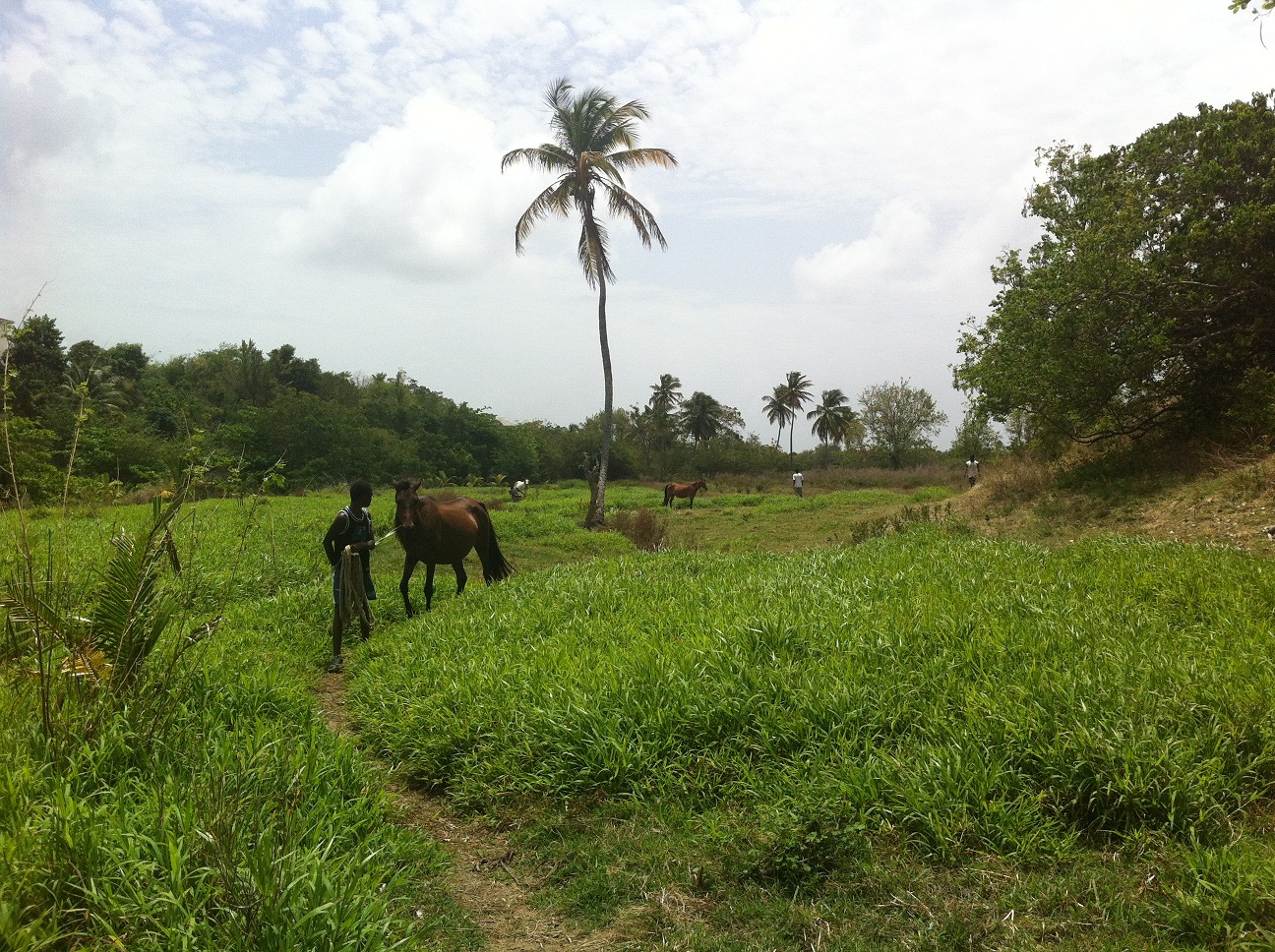
watering the horses
His best friend was Bobby, owner of Uptowns grocery and liquor, and quite possibly the richest man in Vieux-Fort. He drove a different car every time I saw him, mostly Lexus’ and Land Rovers, and owned more houses that I could see in the 3 days I spent there. We were at free reign to take anything we needed from his store, and what he didn’t have, he would buy for us, including every meal, drink and the pair of socks I needed to go riding.
I saw my first cock fight in Vieux-Fort, a savage, anti-climactic display of hormones and steroids battling two roosters. Each cock was beautifully kept, shiny and groomed to look as grand as possible, rubbed with alcohol and pumped with drugs to make them vicious and resistant. They fight to the death, which doesn’t always happen, but when it does, its from a broken neck the other inflicts on him by the spurs worn on his legs. People, mostly men, come and watch, cheering on the stronger cock, betting thousands of EC dollars on each fight. I came, watched, slightly horrified, and almost forgot to continue breathing when one cock finally dropped dead right infront of my feet.

cockfighting
I returned to my element when I got my hands on some horses, and was given the distinct honour (or condemnation, Im not sure) of riding the wildest stallion Lucius owned. Silver Treasure, a 5 year old dapple-grey Arabian, had never been under saddle, and only ridden a few times over a year ago. I saddled him, mounted him, held on for more than an 8 second bucking rodeo, and then paced him for half an hour while planes landed overhead. We were metres away from the International airport, and though he was used to the deafening sound of low-flying aircraft, it was a perfect excuse for him to remain restless. He finally calmed, and we established a peaceful relationship, friendship even, as we took a 3 hour trail ride through mangroves and beach along the Atlantic coast with 5 other riders, 2 with stallions. He had some of the most beautiful gaits I’ve ever ridden, and was the type of horse who would run to his death before tiring. His fiery attitude was fatally attractive, and I admit wholly to falling in love with that beast of an animal.
I met some med students there (surprise surprise) and was invited for dinner by a group of American guys. Visar was ‘my host’ and bent over backwards to make me as comfortable (and drunk) as possible. We went to a beach bar full of other American doctor’s-to-be, and I met one professor who could tango. I was wearing flip flops, and searched through the crowd of people with my head down to find a woman with size 38 heels I could borrow. I finally found a pair, and after some more time, convinced the dj to play a tango song, but by this time, was well too liquored to do anything beautiful with my legs, despite his perfect lead. So instead, I retired home early, and spent the Sunday recovering a bad headache and dreading my ferry ride to Martinique.
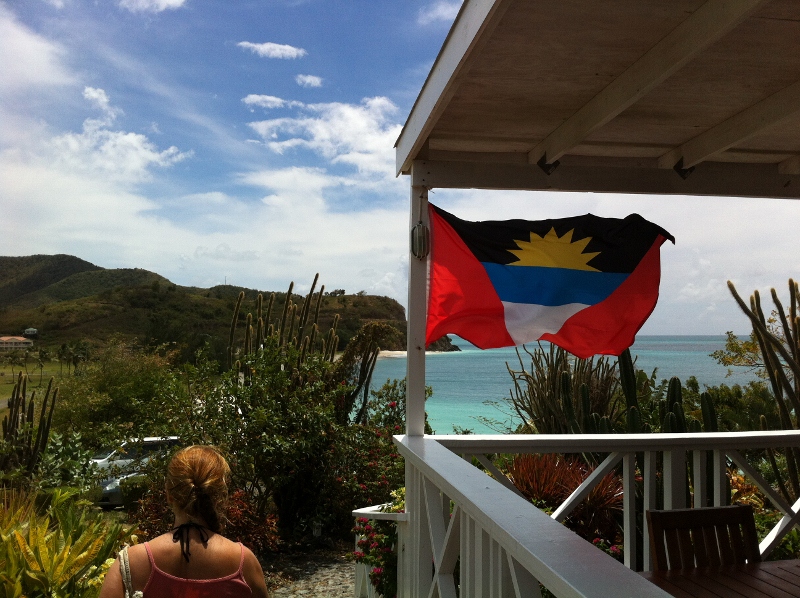
The Antiguan flag
Louise was a sour faced lady with boy cut hair and a kind heart she was too afraid to show. She was a short, frail, older white woman freckled and bronzed by the sailing and yachting she did regularly with her British Husband. She didn’t smile or laugh, a little awkward with eye contact, but her curiosity about me still poked through. She asked me questions, disinterestedly, and made few references about herself or her own life. She was uncomfortable when I sat beside her on the plane, which wouldn’t have struck me as unusual except that the plane had 50 other empty seats I could have chosen to spare her the act of friendliness. When we landed, she casually offered to drive me to my couchsurfers place, despite it being completely out of her way on the other side of the island.

Me and Julia
She dropped me off at Springhill Riding Center, a stable I would couchsurf for the next 5 nights with a Polish woman named Julia. She was beautiful, with orange hair as wavy as birthday ribbons falling all the way to her belt. Her bright blue eyes matched the turquoise Caribbean water she often took her horses swimming in, and her big perfect smile lit up her whole face everytime she talked about something beautiful. She thought everything was beautiful – the horses, the flowers, the trees, the fruits, the beach, the sea, the harbor, the boats, the cliffs, the trails, the roads…
She seemed to be 25 at heart, but the few wrinkles in her face gave her away for older, and only

swimming with horses
her weathered hands had aged to the 38 years she really was. Her hands were rough from a life-time of horse handling. Her English was good, her German, apparently better, and Danish and Spanish lingered somewhere too. She had decided to travel the world for horses, working in Poland, Germany, Denmark and now Antigua schooling horses and training riders.
We took the horses swimming one day, and the next 4 days I was given the duty of taking one lame horse for his daily swim. By the end
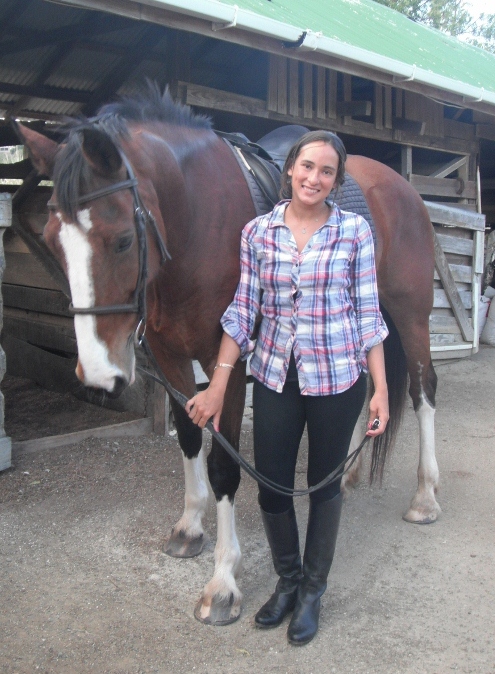
Big Joy
of the week, I took him on a trail ride and he had stopped limping all together. I took another horse riding named Joy, who was so much bigger than the Icelandic horses Ive grown accustomed to. I couldn’t even see over her back when I stood beside her, and her every step in any gait seemed like an exaggerated, slow-motion heave.
It was hard to leave the stable, but I wanted to explore more of the island. With Julia, we went out a few times to dance, meet other couchsurfers, and took the scenic drive along Old Fig tree road, where endless banana plantations and pinapple fields grow along the windy road along the coast. I went to one of her belly dance practices, where her and some other ex-pats jingled around in colourful, sequined bras and coin belts. Another dancer friend of hers invited us to their burlesque-show practice, where 5 middle-aged women sexily danced around in flirtatious Moulin Rouge attire.
We met another friend of hers named Pep, a retired astrophysicist who is also a UC Berkeley Alumni. He had plenty to talk about, full of incredible stories, and in his old age had become a
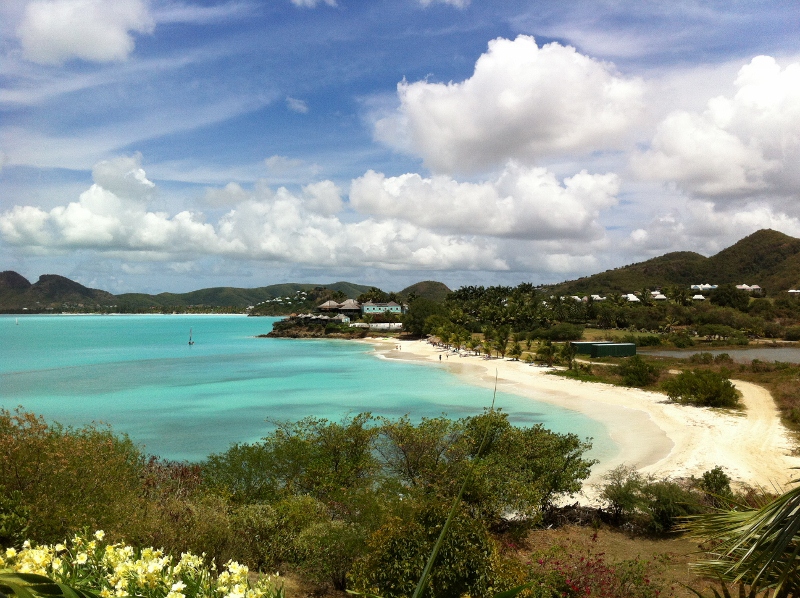
Beaches on Fig Tree Drive
single guy with an eye for younger women. He also had the heart of a 25 year old, and, I believe, was in love with Julia. He lived in a house on the hill overlooking Falmouth Harbour, and rented out his rooms to young boaters to have some lively roommates and company to mingle with. He asked me questions about my life in Berkeley, when I would go back, and I mentioned my (failed) attempt at a serious relationship there that would have otherwise still kept me in Berkeley. Then he really started to psycho-analyze me, and wanted to know why that guy didn’t knock me over the head and drag me into the cave then and there since Pep started to worry that I may now become the kind of girl who never settles down.
I tried and failed to make it to either Barbuda or Montserrat, since the one and only Barbuda ferry had lost its engine just 3 days earlier, and the Montserrat boat only traveled on Mondays, even though Wednesday and Thursday were advertised on their website. Instead I got to walk around St. John’s, lost in the midst of 2000 cruise ship passengers window shopping for overpriced jewelry and underpriced liquor and tobacco.
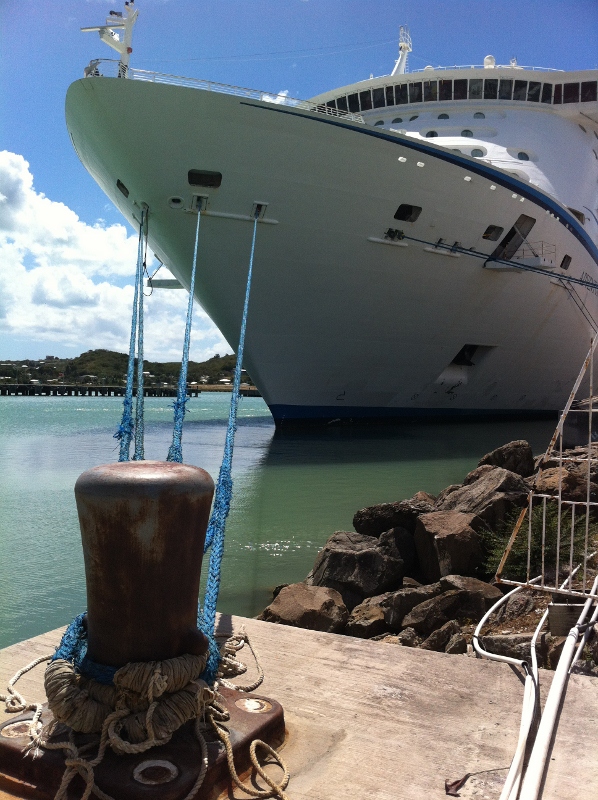
cruise ships in St. Johns
I stopped at a bakery to buy lunch and all they had was bread or buns, with ham or cheese. Still it took the baker 5 minutes to handle each customer, so I waited for a while to get served. The guy behind me in line was in pilot uniform, badged Liat, on and off the phone constantly to try and get out of flight duty. By the time I got served, he snuck up behind me and pretended to be with me, ordered the same thing I did, and paid for both our lunches. Then he got a call to say he didn’t have to fly, and offered to show me around on his afternoon off.
Simbo was Dominican, half-black, half-white, with the accent and build of an islander, but the skin and blue eyes of a westerner. He took me to the helicopter pad offering tours of Montserrat where a pilot friend of his worked. The island is a huge volcano, that blew up something fierce in 2007. I was tempted to take the $240US tour but for 45 mins of flying around a volcano and not even landing on the island to explore it seemed like a waste… especially since Pilots in uniform get to fly free and I could have just stopped at a costume shop to match Simbo. Instead he showed me Dickinson beach, where you cant walk 5 metres without being sold something – coconuts, massages, beach chairs, earrings, jet-skis, braids, or dread locks.

Nelson's Dockyard
I spent a day exploring English Harbour and Nelson Dock, where all the super yachts and privately owned sail boat mansions float around, looking shiny and unused. It also creates a huge sailor culture, of young crew from all over the world living and working on these boats for the owners who only use them a few times a year. I considered taking a stewardess job for 2000 euros for month (food and rent included), but the boat was going north and I was headed south.

Topless trees and mountains in the clouds
I arrived in St. Kitts at 10 pm and got picked up by my couchsurf host Mike in his beat up Nissan Sentra. It was missing both driver side and passenger side windows, the back bumper and the muffler, and a Phillips wrench replaced the key to turn the car on and off. Mike was all smiles, and had steaming hot Chinese take out ready for an impromptu picnic.
We drove out to Muddy Point, along a bumpy dirt road, and pulled up to a hurricane-torn apartment building surrounded my palmless tree trunks. We explored the graffiti-painted walls after having our midnight picnic under the brightest, full moon I’ve ever seen. The wind was so strong that the clouds seemed to pass overhead in fast motion, lit up as bright white mountains moving up and over the volcano peaks of St. Kitts. The moon cast our shadows on the black sand, the curling waves were as white as day, and even the coral was visible through the rough water because of its crystal clean clarity.
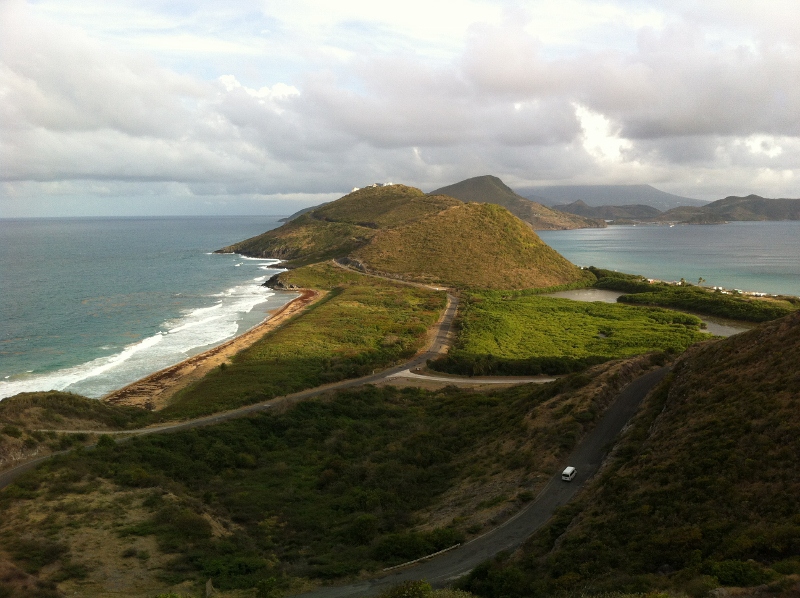
St. Kitts southern peninsula
I didn’t exactly couchsurf Mike’s place, but slept on a mattress in a tent on his living room floor. The tent was a mosquito net substitute and worked just fine, but with some minor rearrangement, we turned his living room from a campground back into a social space. We had another picnic on the southern tip of the Kittitan peninsula, sharing a whole chicken, some fresh tomatoes, and cheese bread in silence while we watched the sun go down. We then had to drive back over the mountainous road without headligths in the dark, since both the Sentra’s headlighs and highbeams strangely stopped working.
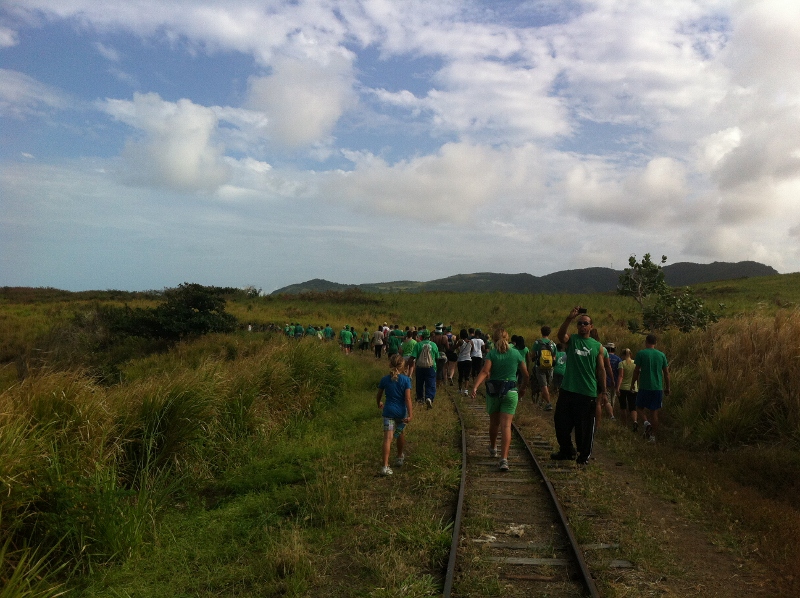
Hash House Harrier trail along the rail road
Mike took me to a Hash House Harrier event, a name I cant explain, but it refers to a group of people coming together and walking or running a newly marked trail once a month on a different part of the island. It was the St. Patty’s day Hash, so everyone wore green, and we trekked along the old rail road and through sugar cane fields down to a littered beach.
St. Kitts was the first Island I visited that felt like the real Caribbean. Im not really at liberty to say what defines the ‘real’ Caribbean, but I can try to explain it the way I perceive it. Life is slow, really slow, and simple. Locals were locals, with fewer rich expats exploiting their lifestyle, and no cultural divide between the locals and the colonial locals since St. Kitts is actually an independent country – different from the French, British, American and Deutch islands Ive been to so far. Small wooden houses in various pastel and neon colours had replaced the gated communities and concrete beach resorts, and communities lived together in walkable villages. Only one narrow road, 31 miles long, goes around the island, with a different village every 2 or 3 km. Each village was known by atleast 2 different names, and the streets and alleyways were unnamed and unmarked, with foot traffic and chicken crossings keeping the road in use.
The island looks lived in, not groomed, and tourism still hasn’t taken over all the industry in the island. You drive past countless abandoned windmills, left to ruin since slavery ended, surrounded by stone buildings and ancient churches built during colonial rule. Instead of restoring any of these places and turning them into tourist attractions or UNESCO World Heritage sites, they leave the guinea grass to take over their forgotten history, and keep on
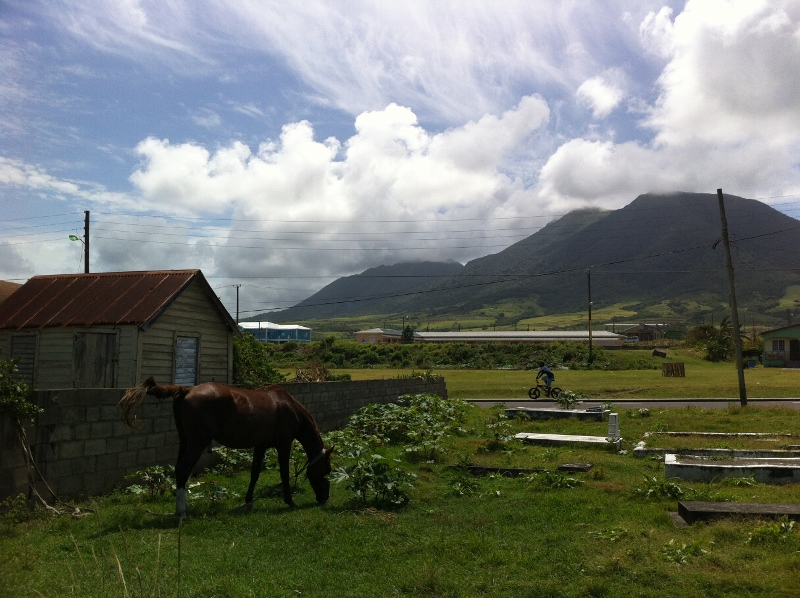
tombstone grazing horses near Kittitian Hill
growing sugar cane in the fields around to be processed by more modern methods. The churches are doorless and the wooden window shutters are half rotten, but some churches are still used. The cemeteries are overgrown and horses are tied to tombstones to try and eat down the luscious vegetation.
I settled into this atmosphere nicely, and got accustomed to the easy going pace of things. You could make friends with just a nod hello, and bus drivers and shop owners would treat you like a visiting relative to their home instead of making you feel like a passenger or a customer.
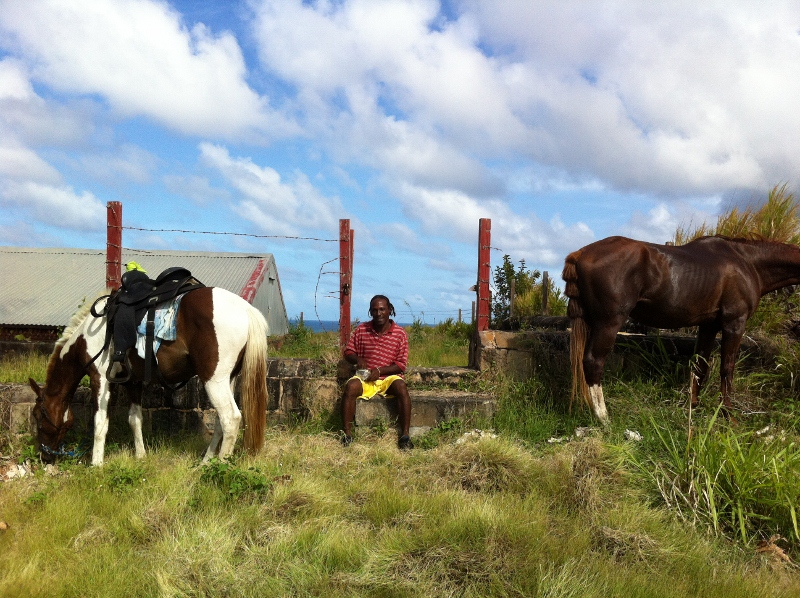
the man with the horses
At Black Rocks, one of the souvenir sellers became my friend after I bought a Ting (grapefruit soda) from her, and her dad was my bus driver back to town and her uncle was the taxi driver who later took me to look for a horse man. Everyone knows eachother in the villages, and you could find or run into anyone you wanted to, whenever you wanted to. My local friends said I even started picking up the local talk, after trying hard to put on my mothers Guyanese accent, and I got asked if I was an islander 4 or 5 times by other strangers. I learned that Guyanese are one of the largest minorities on the island, so that may explain why. I eventually met the man with the graveyard grazing horses and asked him to take me riding. I think he said yes because he recognized my Island talk, so together we took two stallions for a galloping sprint around the Cane fields and up Kittitian hill.
St. Kitts Island has many craters, mountain peaks, and one active volcano that if it went off, would devastate a lot of the island. They say the clouds in St. Kitts are always lower than clouds anywhere else, and its because they get trapped between the mountains and sit above the island like a roof above the low-lying coast. I visited Nevis for a day, the sister island just south of St. Kitts, which is round at its base, and pyramids straight up into one volcanic crater. There I made a friend called Whiskey, a 3 month old green vervet monkey that lived at a bar. The bartender, Lyon, saw I liked animals and tried to sell me one of 10 puppies he had adopted from a stray dog for $50EC (less than $20US).

Nevis in the clouds
I left St. Kitts airport on a late flight, and at 9pm the airport had only two staff working. A janitor mopped the floor and a luggage handler sat around with no luggage to handle. I waited ten minutes before someone arrived at the counter to check me in, and then walked up to an empty emigration hall. Me and Louise, another passenger, walked on to security and asked one of the two people working there to get us a customs officer to exit stamp our passports. Louise, an Antiguan, didn’t seemed phased at all, not even when the flight arrived 40 minutes early and took off only minutes after we rushed through security to board.
Pick up the latest edition of Sportveiðiblaðið to see the rest of this article. Its an interview with hunter Karl Kristinsson who I guided a horse-back trip for last summer for him and his friends to hunt reindeer in East Iceland.

a glossy 2 page article introduction

pages 7 & 8
If you’re ever down or bored, try writing a list like this. And if you do, I’d love to read it! Leave your your “like” list in a comment to share 🙂
I like painting my toes red or purple. I like tango dancing in red shoes.
I like sleeping with 3 pillows. I like candle lit rooms. I like meditating in old churches.
I like when butterflies land on me. I like when puppies attack me with love.
I like smoking cigars lit with cedarwood. I like fireplaces that burn real firewood.
I like eating before I go grocery shopping so I don’t buy too much. I like having exact change.
I like swimming naked. I like doing yoga in steam baths. I like hottubbing in the snow. I like towels that are actually bathrobes.
I like walking on the sunny side of the street. I like walking barefoot in sand that squeaks under my steps.
I like hosting parties of 3 or more. I like when awkward things happen but no one feels awkward about it.
I like riding crazy horses. I like feeling my heart pulse in my fingertips. I like listening to music that gives me goosebumps.
I like meeting people for the first time but feeling like Ive known them forever. I like smiling at strangers. I like people who have smile wrinkles around their eyes.
I like when my hair tickles my face from being blown around. I like watching the rain fall from under an umbrella, staying dry.
I like swinging in a hammock strung between two palm trees. I like balconies with a view of the sea.
I like spraying my scarf with 5 different perfumes at duty free shops so I smell really good, but not quite like anyone else. And that’s easy to do since I often find myself stuck in airports with huge duty-free shops where I can go wild experimenting with scent chemistry.
 nomadic cosmopolitan