The next island destination was Siquijor, an island charmed by rumors of with-craft and a reputation for black magic. The mayor has apparently made every effort to stamp out this mysticism, since the domestic tourism market, driven by the upper-class Catholic Filipino population, doesn’t really appreciate it as much as the foreign tourists who come seeking any sign of it. Shamans that can cure tobacco addictions and cleanse a sinful past are hidden somewhere among the trees, but we couldn’t figure out how to find them. We decided to seek out the less-spooky beaches instead, and ended up at JJ’s backpackers, a lonely planet top-choice hotel that we accidentally stumbled upon because it had a campground. I hung my hammock between two coconut trees and slept like a baby for 2 nights suspended under the stars.
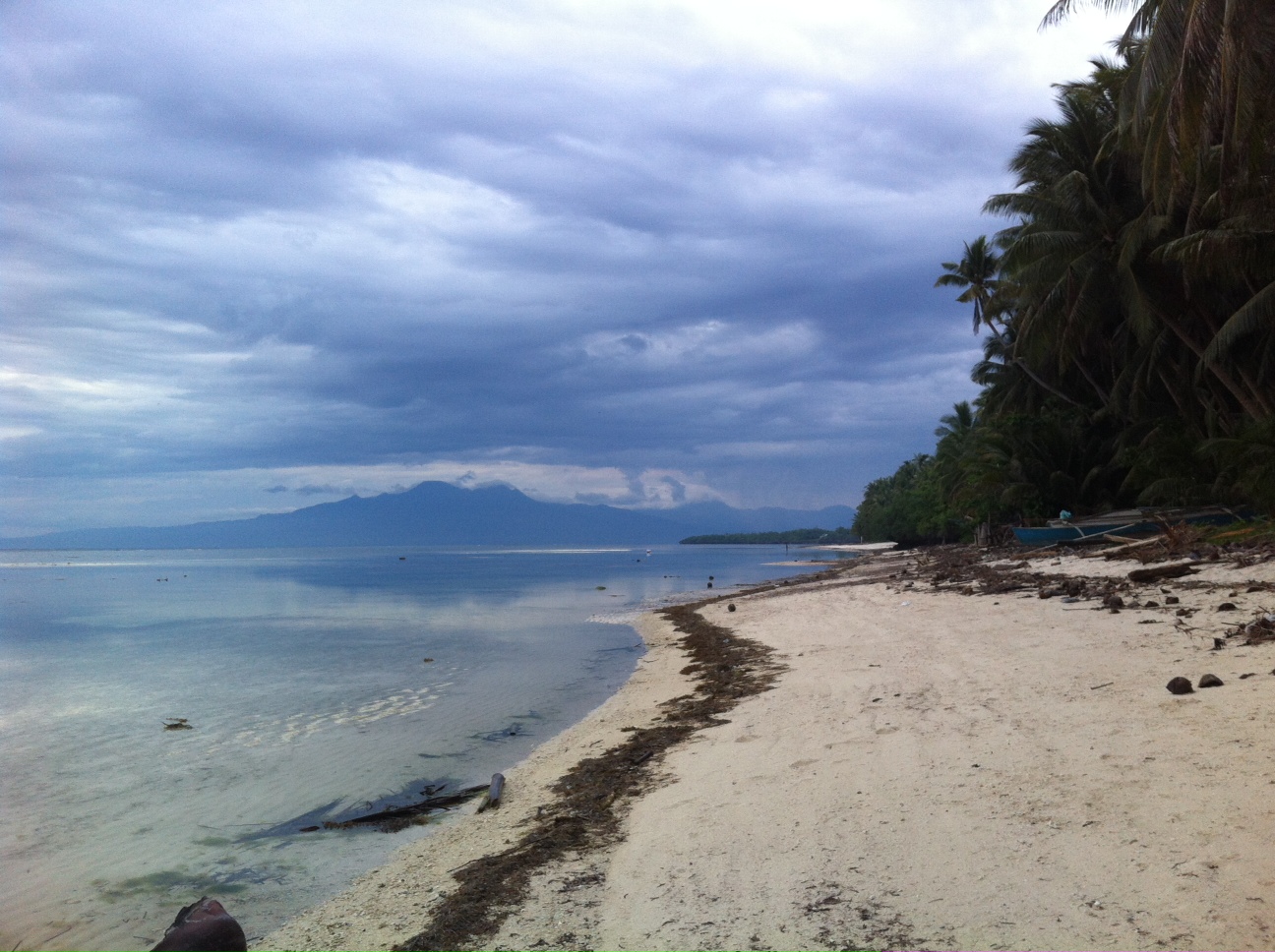
the mystical island of Siquijor
I almost got killed by a coconut on my morning jaunt along the beach, so since then I’ve become a lot more aware of the coconuts hanging above my hammock. Otherwise, there have been no safety issues, especially considering the fact that I’m probably bigger and stronger than most of the women and men here. The side streets and countryside villages are usually filled with an equal number of playful children, puppies and kittens, but few adults. The women are really friendly and smiley, and the men, jovial, and you can’t help but smile back when they’ve tucked their tshirt under their armpits or over their pot-bellies, exposing a hairless stomach the way most men do to keep cool. The only people you really encounter on the beach are harmless stray dogs and bottom-feeder fishermen taking advantage of low tide.
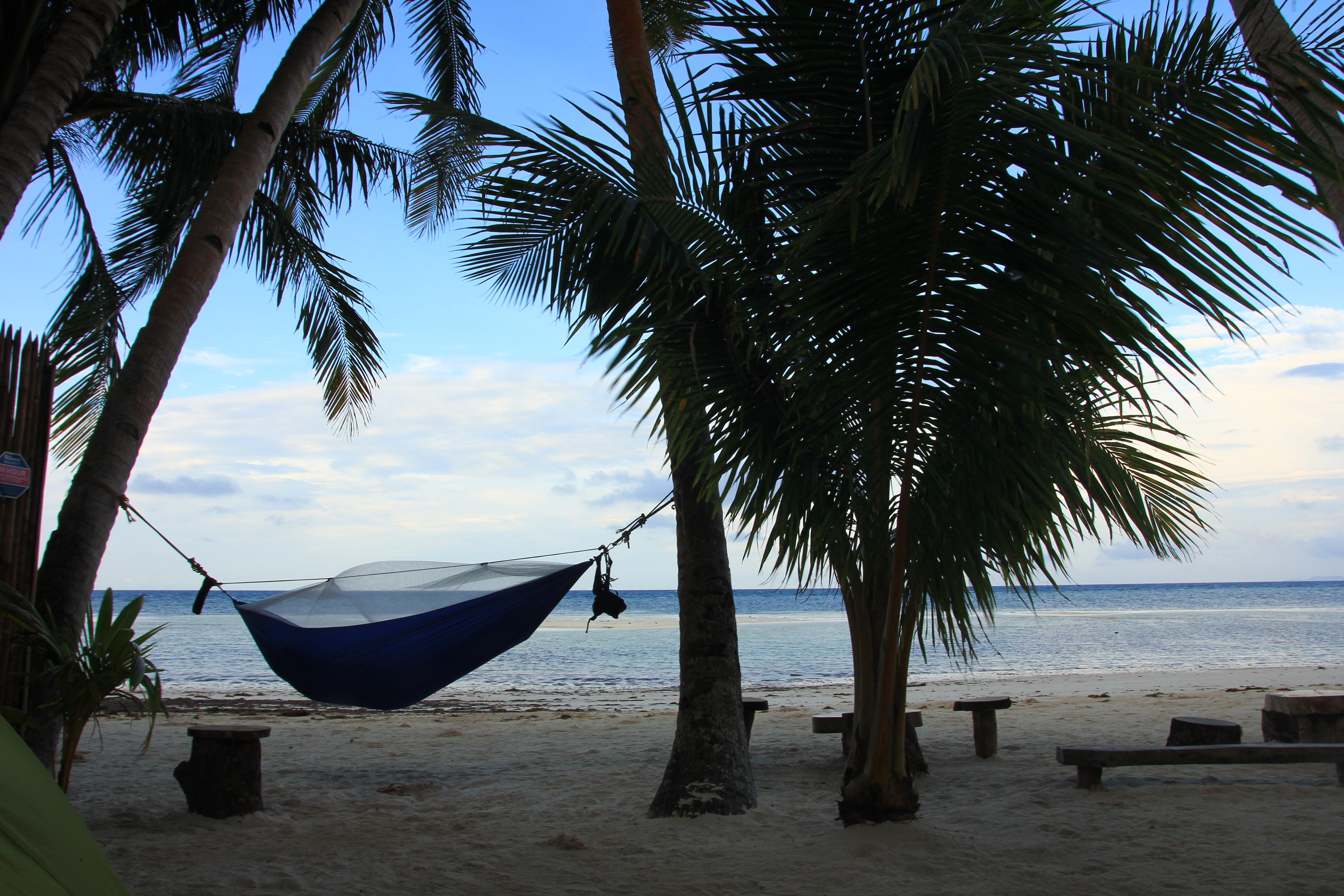
my bed at the campground
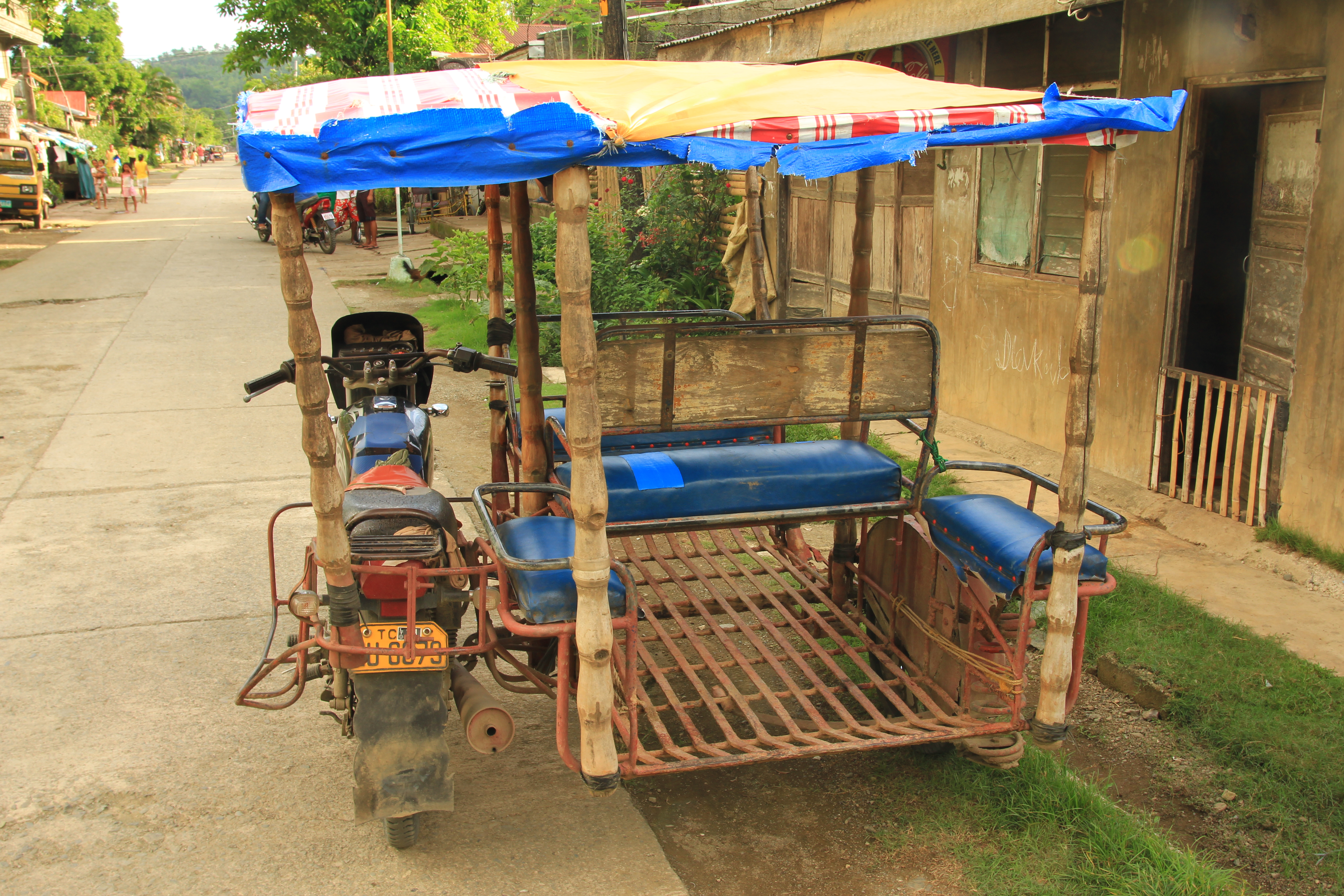
The locals don’t really approach us unless they’re a tri-cycle driver, and Im not sure if that’s disinterestedness or shyness. English is an official language here, but in practice, it exists mainly in print – from big billboards to traffic signs and advertising and menus, English is legible everywhere, but rarely spoken. That might be why the local tourism workers aren’t so aggressive, and barely bother to argue or bargain, but “ma’am,” “yes,” and “okay” are words commonly repeated, no matter what the question or if they’ve even understood you at all. People can usually understand the basics of your question, but not enough to answer correctly the first time, and sometimes they’ll answer in tagalog or their native tongue with a few Spanish numbers or English words interspersed. Conversations are hard to keep, but fun to have, and thank god for the signs and written English to fill in the gaps.
That being said, Filipino people often speak more than 2 local languages already, and literacy is nearly 100%. Schools are everywhere, even in the tiniest, remote settlements, and always look well built and meticulously maintained. Its nice when a school looks like an inviting place to learn, and all the uniformed school kids look so professional in their neatly pressed outfits.

 nomadic cosmopolitan