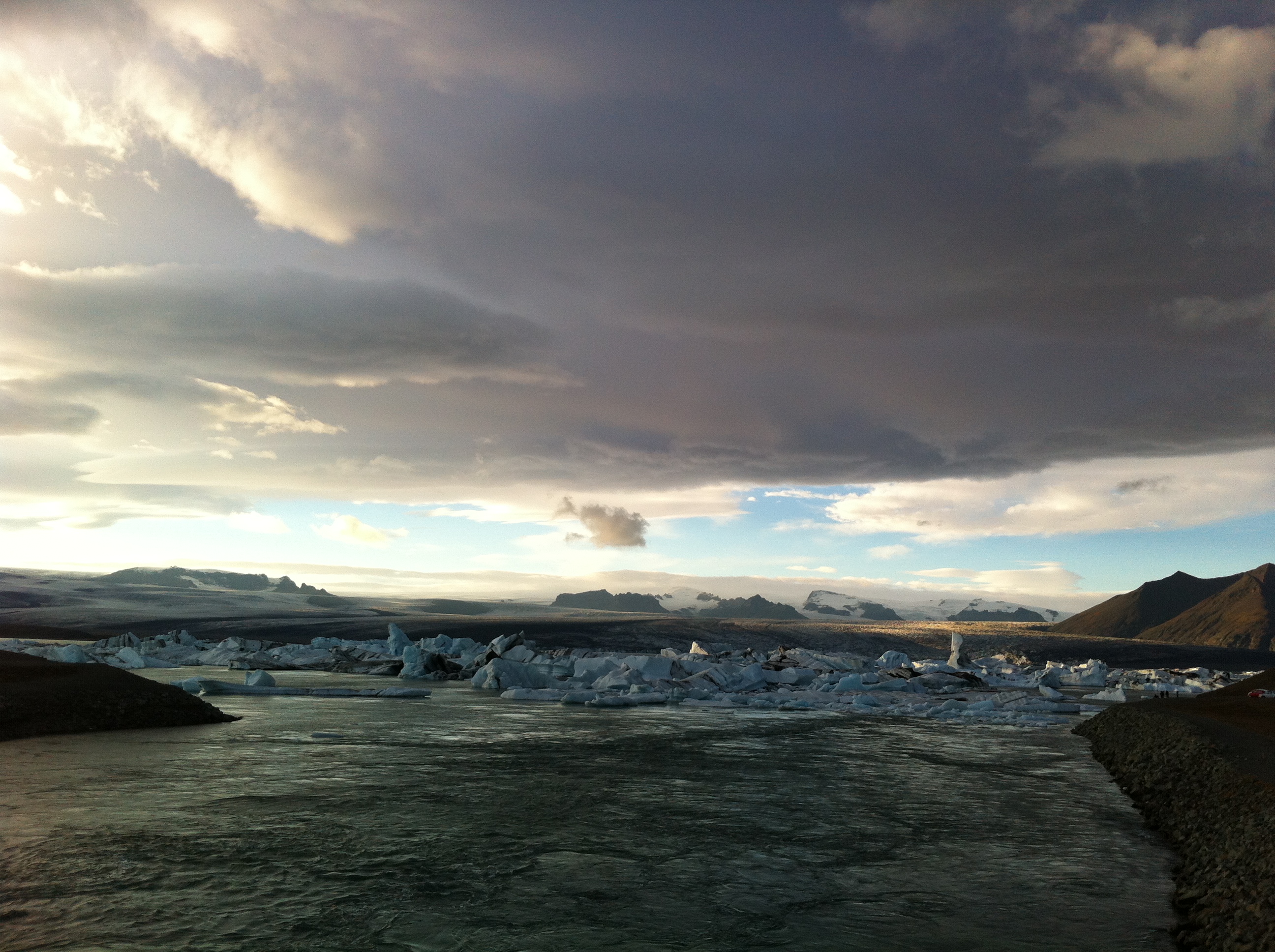
Photo Highlight: Jokulsarslon

The colourful moutains in Landmanalaugar
I got back from Poland and flew the same day to Höfn, an unusual place to end up after a week in Hamburg and Warsaw. Even coming back to Reykjavik sometimes gives me small-town culture shock, but Höfn’s airport makes you feel like you’ve arrived in the middle of nowhere. You’re right under Vatnajökull glacier, on an isolated peninsula that sticks out into the sea. They’ve got really good hot dogs there, and after the next 8 days riding horses from Höfn to Fljótsdalur, the first fast-food I ate again was another hot dog in Egilstaðir.
I got back to Reykjavik on a Saturday, and after almost 9 days without any contact with civilization except the other 15 riders, the same city now gave me big-town culture shock. I was actually enjoying being back in a heated house with running water, until my friend Tom called me and asked if he could come to Iceland and hike Laugavegur with me… on Monday. I had no time to hesitate, since he booked his flight 20 minutes later, and flew to Iceland 36 hours later. Then, we backed our gear and provisions and set off for the remote highlands, once again.

Landmanalaugar
We started in Landmanalaugar, a mountainous and colourful geothermal region 5 hours away from Reykjavik. The elvation is 6o0 metres there and though you´re in the highlands, its a popular tourist destination and thus built up with basic services. The best part of Landmanalaugar is the hot river you can bathe in. It was freezing cold and windy, so getting down to our bathing suits was the hardest part, but once we had sat there for an hour, it was no problem to retain the heat while we redressed and started the 11km trek to Hrafntinnusker. We hiked through yellow steaming mountains and moss covered lava fields, even over some snow, but 3 hours later we were 500 m higher, home at a rocky camping ground just before dark.

the highest elevation point, at Hrafntinnusker
The first night we had frost, a lot of it, enough that our whole tent was frozen stiff and we had to shake off the ice before we could pack it up. The next day we passed 2 huts, Álftavatn and Hvanngil, doubling day 2 and 3 into a long, 28km day. The scenery was incredible, and we had fun stripping down to our underwear for repeated river crossings, but the last 3 kms were the longest, slowest kilometres of the whole hike. The weather changed constantly, from bright sun and calm winds to sideways hailing sleet, but one thing was consistent; everything around us was naturally dramatic.
We only passed a handful of other hikers, centered mostly around the 2 huts we passed, but on the 2nd night at Emstrur, we made some friends. There was the tour group in one hut that gave us left-over kjötsupa (lamb soup), the tour guide who sold us beer, and a German couple who let us use their primus to make tea. We crashed in out tent that night, and wake up way after everyone else had left.
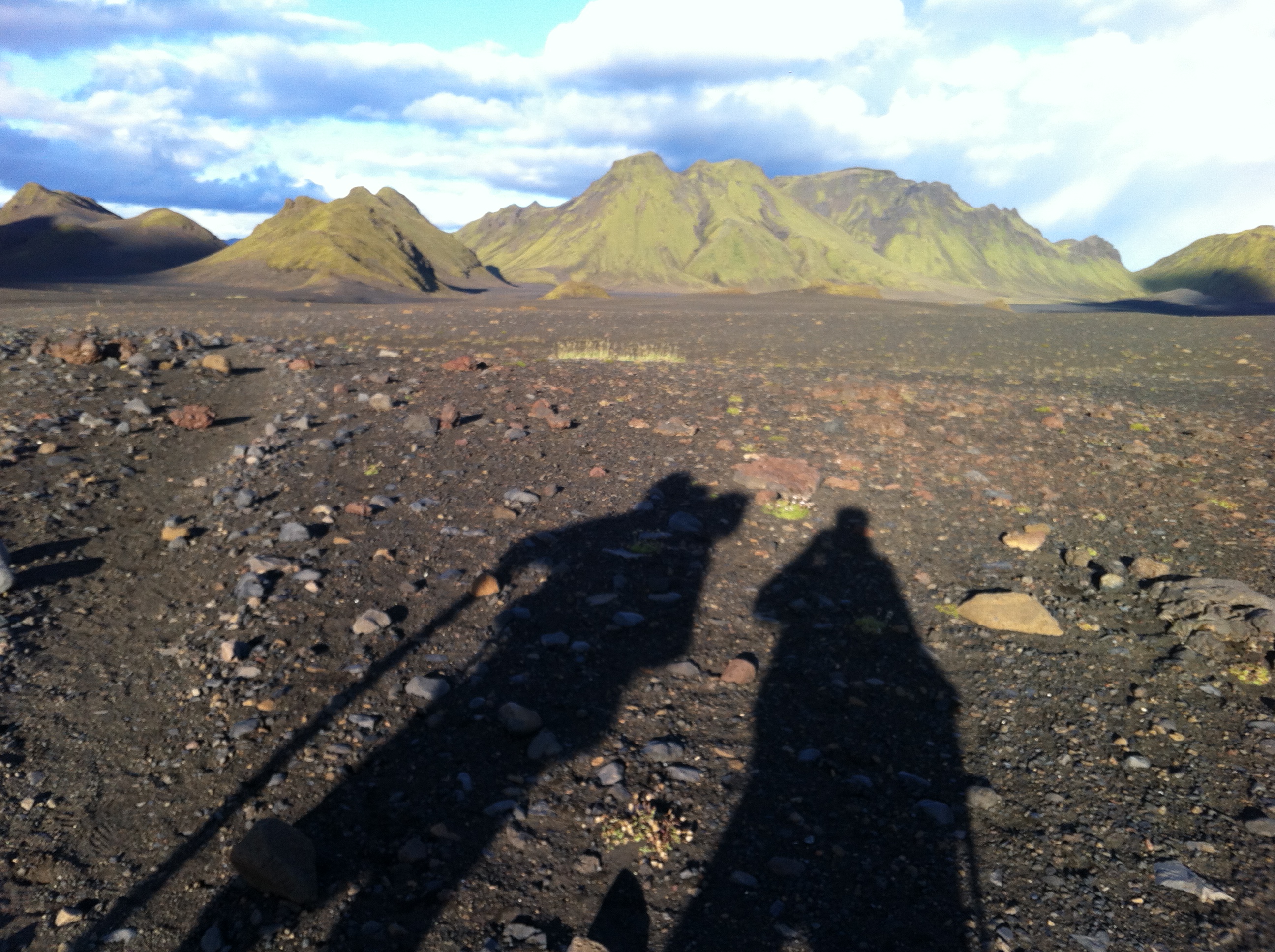
the last 3 kilometres…
The last day was a gentle 12 kms, mostly downhill, back to greener pastures, and we ended in Þórsmörk prepared to indulge in all the services they had. We heated and stretched our sore muscles in the sauna for 2 hours, swam in the hot pool, cooked soup, drank hot tea, cold beer, and the last provisions of whisky we had left. We made more friends by bonding over our hike experiences, and slept like babies before the bumpy bus ride back to Reykjavik.

the first group, on Eyjabakkajökull
I rode 4 tours with Íshestar this summer, around the Eastern fjords and valleys, and up to the highlands around Snaefell mountain in Fljótsdalsheiði. I guided the first tour with 10 guests, a nice mix of Dutch German, Swedish, Belgian, English and Australian male and female riders. Last year we sometimes had groups of only 16 women or 14 German speakers, and few young riders, but this summer, there were riders even younger than me. Last year, the first tour began July 4th, and then the highland was a muddy grey swamp land, only just beginning to recover from the snow cover, but this years first tour was at the end of June, and summer was already full blown with green vegetation, sunny skies, and dry ground covering the highland. Once in a while we still encountered soft ground, and had to invent creative detours to avoid a domino effect of horses disappearing down into the slush. This was Susy’s greatest fear, and she could only get past these points by dismounting or riding with her eyes closed. Christian had absolutely no fears, and requested to ride only the crazy ones which he handled just fine, even with rodeo bucks, slipping bridles, and disappearing into the herd a few times. Some of the stronger riders rode stronger horses, which they slowly tired of having to hold back, so me and my horses ass became a useful brake. Between rides, we played in other ways; we had an epic snowfight on the glacier and went skinny dipping into a few glacial rivers.
The second trip was an exploration experiment, a staff tour for us to take to figure out a new way and familiarize ourselves with another highland region. We were 4 staff, with 16 horses, which
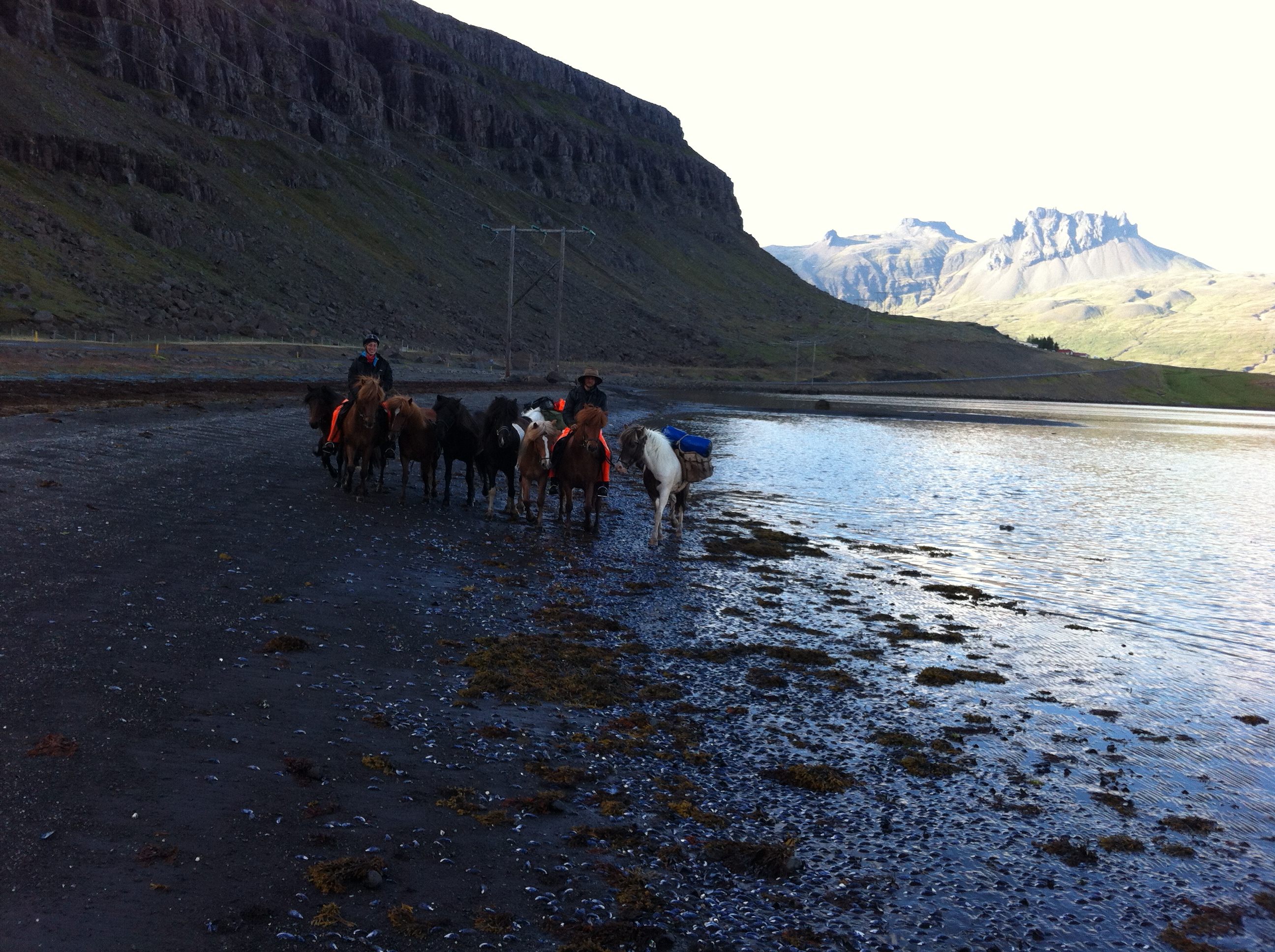
Denni and Arna with half the herd in hand
we rode with all has hand horses. Its difficult enough to maneuver some highland terrain on one horse, so being 4 horses wide and trying to balance the pack horse as best you could over the terrain was difficult, to say the least. We had packed our tents, sleeping bags, food and cooking supplies for 5 days, and even brought rope and poles to make temporary fences for the herd, but these things were rarely cooperative in staying put on the pack horses backs. We set off on the first day very late, leaving at 7pm and assuming the late night sun would be sufficient to light our way. But, then we got hopelessly lost and stuck in thick fog cover, so finally at 3 am we were forced to stop in the middle of nowhere and wait for clear skies in the morning. We were in a damp, rocky place, with almost no grass for the horses, it was freezing cold, and we realized our stove didn’t fit the primus so we couldn’t cook our food or heat up any water. We set up the tent for the three hours we waited there, but maybe slept 1 hour each since we were so cold and hungry and worried the horses would run away. Arna actually thought at one point she was freezing to death.
At 6 am, we set off again, and rode nearly 16 hours, dozing off on our horses as we descended into the wrong valley. We stopped once we reached greener pastures, for the horses to finally eat and for us to pass out in the sun for a warm, well-deserved nap. We rode all the way out to the coast, splashing along the beach, to round the fjord into the next valley we were initially trying to find. Fossdalur is a valley of a hundred waterfalls, with one very nice farmer who let us stay in his guest house and use his electricity to cook our food.
With this refreshing revitalization, we set off again over the same dreaded highland. After leaving 2 lame horses behind, we made it to Geitdalur after another long day without any fog or mid-night cold. There we camped and were able to scrounge up enough birch wood to make a campfire for cooking water on. Another day of riding finally took us back home, with some exhausted horses and our battered selves, and we could enjoy the week off before the next guests arrived.
The next trip was a pack tour with 12 guests, a 6 day trip with 5 pack horses to carry our 2kg of luggage each. Most of our food and camping supplies also got carried by pack horses, but we had

the pack tour
one truck sometimes dropping off tents or food refills along the way. We rode a new way, further north past Jokuldal and to Saenutasel – an old turf house farm. From there we rode to Laugarvalladalur, a geothermally active valley with a hot waterfall to shower under. The third day was the most interesting, as we rode with our horses, pack horse and herd of 40 loose horses over the Kárahnjúkar dam – a narrow bridge creating the boundary wall for the controversial hydropower plant built in the middle of the highland. The next days we rode almost the same way home, but circled the base of Snæfell and rode on the other side of Norður dalur back out into Fljótsdalur. We camped our last night and celebrated our last riding day by letting all the extra horses run free, and the truck support took all our packs so no rider held a hand horse.
The last tour was an extra long 9 day tour, a 300km trek from Höfn in Hofnarfjorður, over Lónsheiði and through the Fossdalur and Geitdalur paths we paved on our staff tour. We rode in and out of the dramatic south east coast, with glaciers or the ocean constantly painting our background. Highlights included taking whole herd for a gallop way out in the sea (through a shallow tide) and almost losing the entire herd in a glacier river as they tried, unsuccessfully, to take a shortcut home.
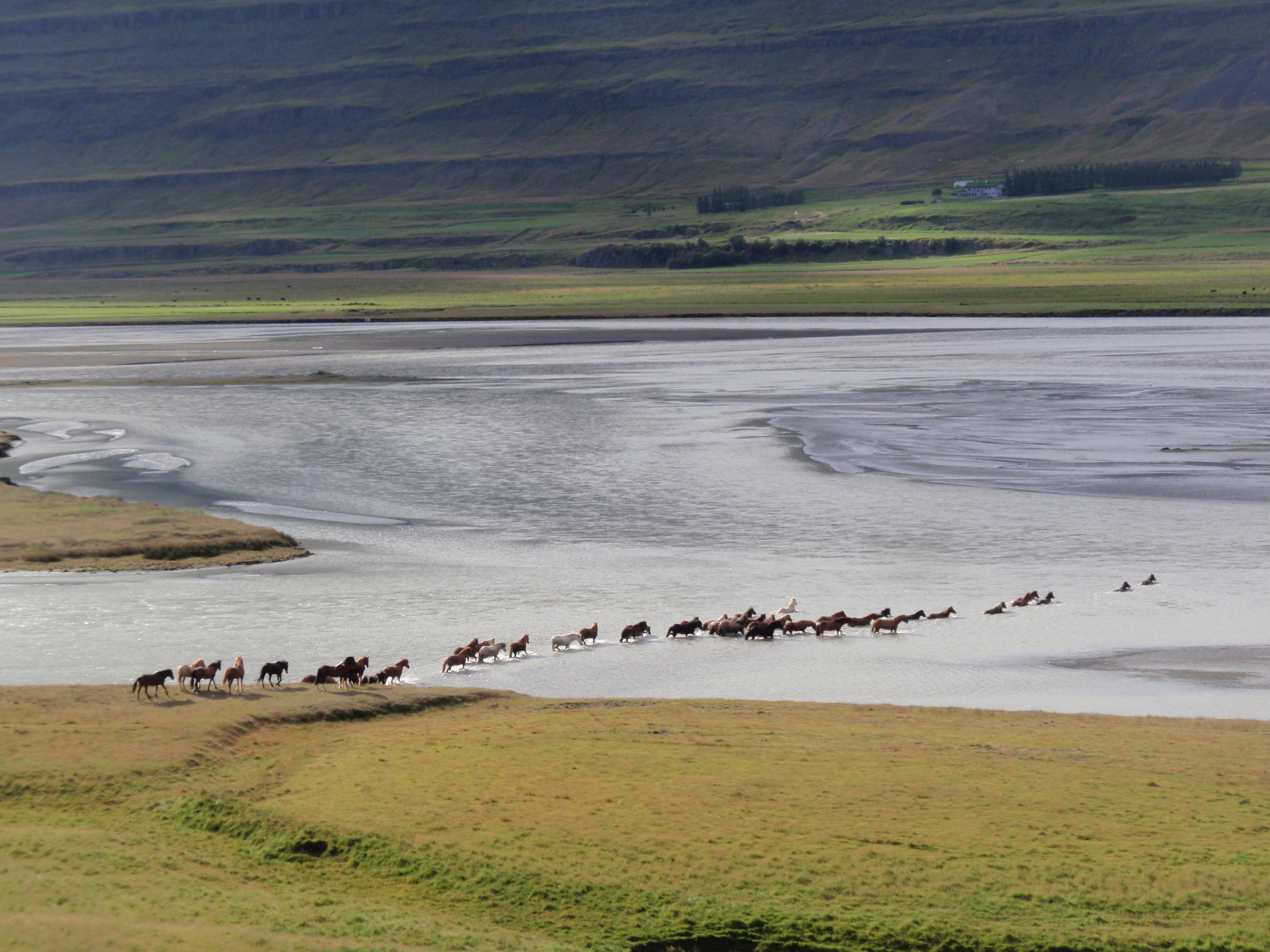
the herd swimming away!
The riding trips I took in the east this summer can all be summed up in one word: adventurous. Whether it was the beautiful landscape, changing elements, or pioneering sense of exploration, all the trips were full of (sometimes challenging) surprises and I couldn’t imagine any better way to experience the wild wild east other than by horseback.

the herd we ride with in the wild wild east, 103 and counting
I was somewhere between French Guyana and Brazil when my roomate in Reykjavik forwarded me a job advertisement for my dream job – get paid to ride horses. I exchanged some emails and then had an interview over the phone from a smeltering phone booth in Asuncion. The connection was staticky, with a half second lag, and my Icelandic kept creeping into spanish, but somehow I convinced Magnus to hire me.
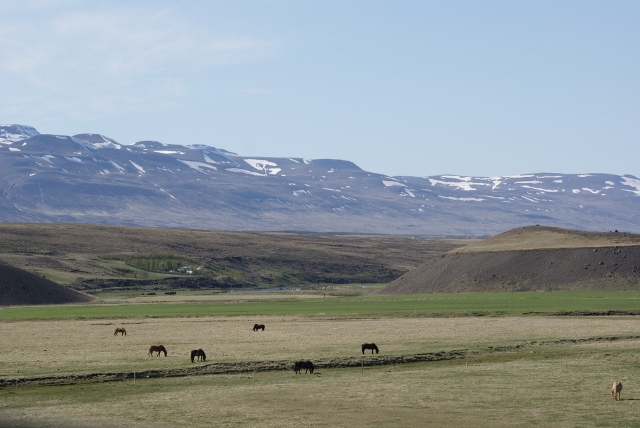
the hestasport horses at Vindheimar
I arrived back in Reykjavik for maybe 8 hours before packing my bags and moving to Varmahlid. I stopped in Borgarnes overnight and then hitchiked the next 250kms. My first pick up, a young Icelandic couple, asked where I was going and when I answered “Varmahlid,” invited me to join. We drove about 30kms before the driver asked me where abouts this ‘farm’ Varmahlid was… he had no idea it was actually a town 2 hours away. So, I got kicked out at Bifrost 5 mins later where their journey ended, and finally made it all the way with my next pickup.
I moved into a house of women, (well, German girls) and acquainted myself with all the pretty ponies Hesasport has. There were, like in any herd, the safe old horses, the crazy young ones, the lazy trained ones, and the question mark horses you had to figure out for yourself. We spent the end of May taking short riding tours around the Vindheimar farm, and two long tours in the begining of June riding past Maelifell and into Kjolur. Its a desolate highland, covered in desert, and sandwiched between 2 glaciers. The first tour we took had more staff than guests, since the 3 German riders wanted to take the whole herd into the mountains to shoot pictures for an Icelandic landscape calendar. We often stopped in the middle of nowhere to do a mini photo shoot, that required us to act as stuntmen and chase 20 loose horses down steep soggy slopes or gallop the whole herd through a river.

beside Langjokull glacier
Later we took a 5 day trip with a whole bunch of borrowed horses, many of them question mark horses we had to try out for the first time and hope it worked out as the herd was released. Then the third long trip went pretty smoothly, except for this poor Canadian girl who fell off her horse 3 times on the first day. Thankfully she made it through the rest of the trip, since she was part of the staff. Our cook also joined us on one trip riding, and fell off his own horse twice, which thankfully turned out okay too since we certainly wanted to keep on eating.
My last long trip was a 3 day tenting trip with 2 Danish girls. We took 6 horses and enough food, bathed in the frigid rivers, and survived a wind storm in a mountain hut that at one point we thought would blow away in the middle of the night. The first night we crashed a party at the Arctic Adventures river rafting base, and ended our trip at Fosslaug natural hot pot, very deservedly.
Then my season at Hesasport ended early, with my Ishestar friends from the east irresistably inviting me on a few long tours – a 6-day pack tour and a 9 day special tour from Hofn to Egilstadir. Just when I had finally figured out all the horses at Hesasport, I hitchhiked east to a herd of 103 horses I now had to learn and love just as much.
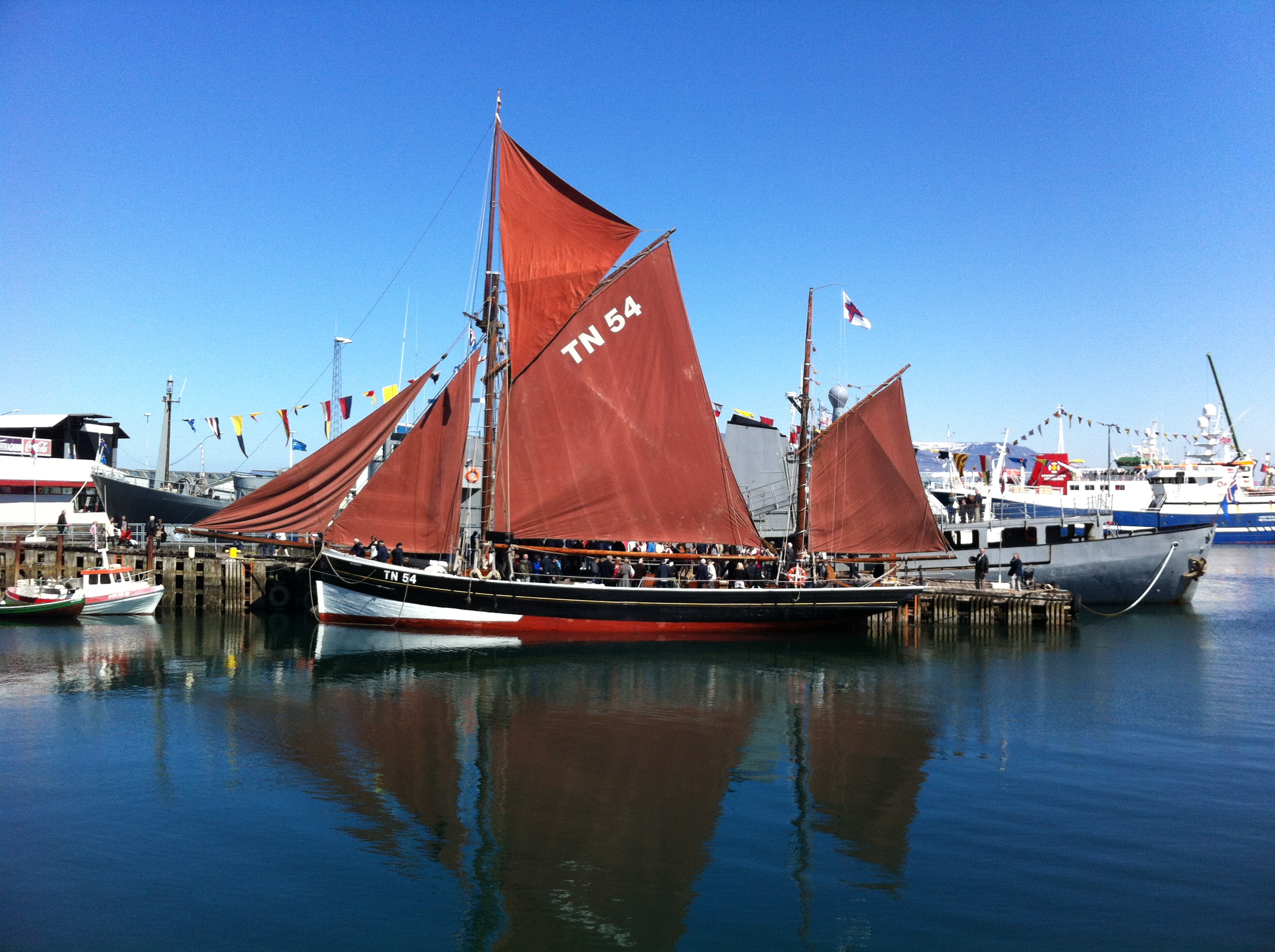
a day devoted to celebrating boats and sea-farers
I went on a tour offered by Arctic Adventures called “Blue Ice” and had my first intimate encounter with one of Iceland’s glaciers, Sólheimajökull. I´ve seen lots of glaciers, touched a few and chewed some ice off one, but never really played around on one.

arriving to the Glacier
It was pouring rain and grey, but the ice was actually glowing blue. Our tour guide, Valdi, explained that it takes 7m of cubic snow to form 1 cm of blue ice. That´s alot of snow. And Sólheimajökull, “Home of the Sun glacier” is one of the fastest moving glaciers in Iceland, receding about 75 cm and growing 65 cm every year. It is decreasing in size rapidly, mostly from a 10 cm annual height loss, and every day the glacier surface changes dramatically.
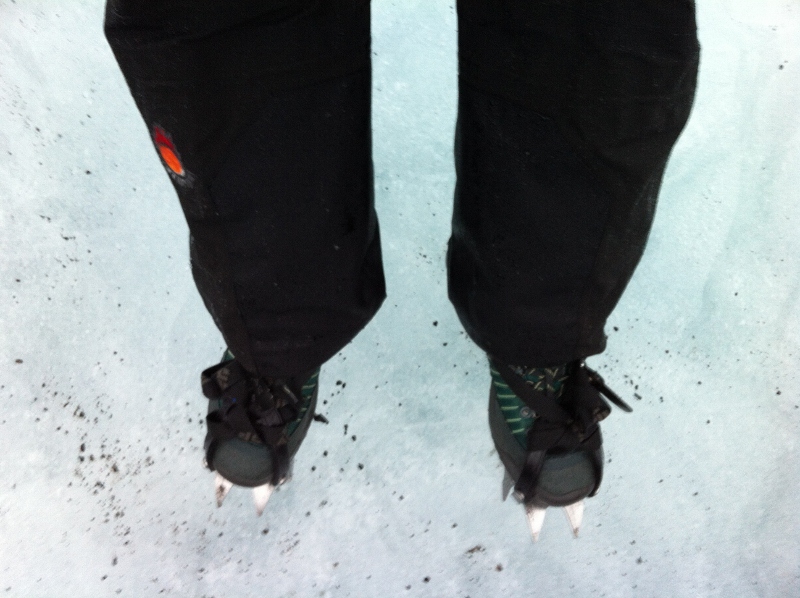
cramp ons
New moulins and cones form, with melting ice and lava gravel constantly shaping the topography of it, and lagoons of water and underground streams always thinning the ice layer.
We walked with cramp-ons over the glacier, which makes you feel like a small person with oversized feet, and you never quite trust the ground – the ice looks slippery, and the cramp-ons are supposed to give you adequate grip, but you’re always half-prepared to fall flat on your face. The ice is also transparent, sometimes for a meter or two, and you see the ice bubbles below the surface that could or could not be a thin layer of soon-to-break ice.
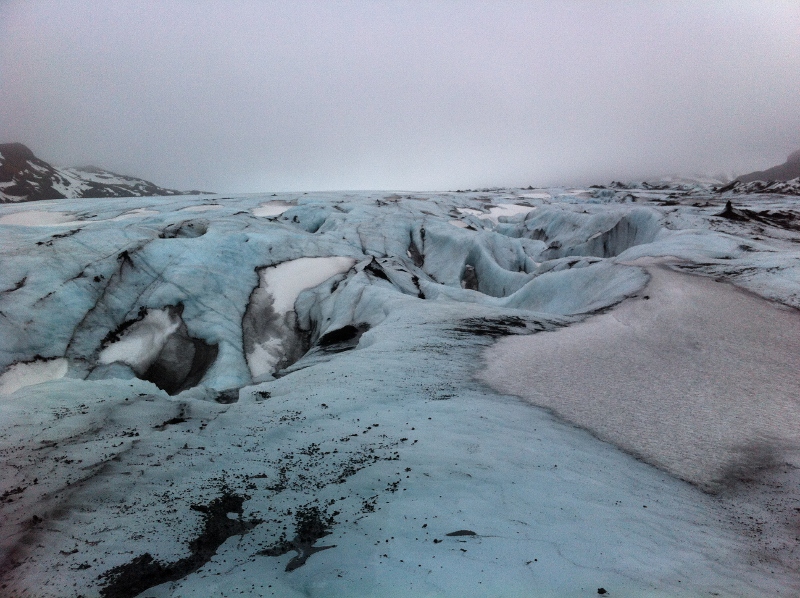
Sólheimajökull
Once you get used to stomping around, and figuring out the right angle to place your feet when going up or down hill, you realize you’ve been staring at the ground forever and remember to look up. The view is impressive – a scene from the movie Ice Age. Just blue ice, white ice, and black sand forming a massive landscape as far as your eye can see, disappearing into the grey horizon into what you know to be another, larger glacier.

the ice wall
We did some iceclimbing too, clumsily using two ice picks and the cramp ons to try and crawl up a wall of ice. We went one by one, each attached to our guide by a safety line, and awkwardly tried our best to reach the top while the other 8 tourists looked on. Most of us made it half way or more, but you could see the exhaustion in every person when their legs began to shake (“Elvis legs” our guide called it), and the point when one just had to give up, as they couldn’t muster up enough strength to get the ice pick lodged into the wall for another step. I barely made it to the top, and my hands and toes didn’t feel like they were there anymore. Repelling back down was much easier, and on the walk back to the car, I realized walking on ice seemed like a much simpler task.
Pick up the latest edition of Sportveiðiblaðið to see the rest of this article. Its an interview with hunter Karl Kristinsson who I guided a horse-back trip for last summer for him and his friends to hunt reindeer in East Iceland.

a glossy 2 page article introduction

pages 7 & 8
My parents had 3 daughters together, all of us born in Iceland, but raised most of our lives by our mother in Canada. Though we kept many of our Icelandic traditions and some Icelandic culture, we lost the language and became more Canadian. My mother is Guyanese, and imparted much of her British Guyanese influence onto us as well, so we grew up in quite the international, multi-cultural home. She dated an Italian, a Brit, most recently a Chinese guy, and married and divorced an Indian Guyanese guy during the time we lived in Canada. But we never really had a man around the house, since my grandmother helped raise us and we were barely allowed to keep male company without being chastised.
I went through a tomboy phase in my teenage hood, had only male friends, dreamed of having a brother, and wished I had a father. When I graduated university, I decided to move back to Iceland and be with my dad back home. Since then, I had the dilemma every year to decide whether I should spend the holiday season in Canada or Iceland, and always hoped the family could have just one more Christmas together.
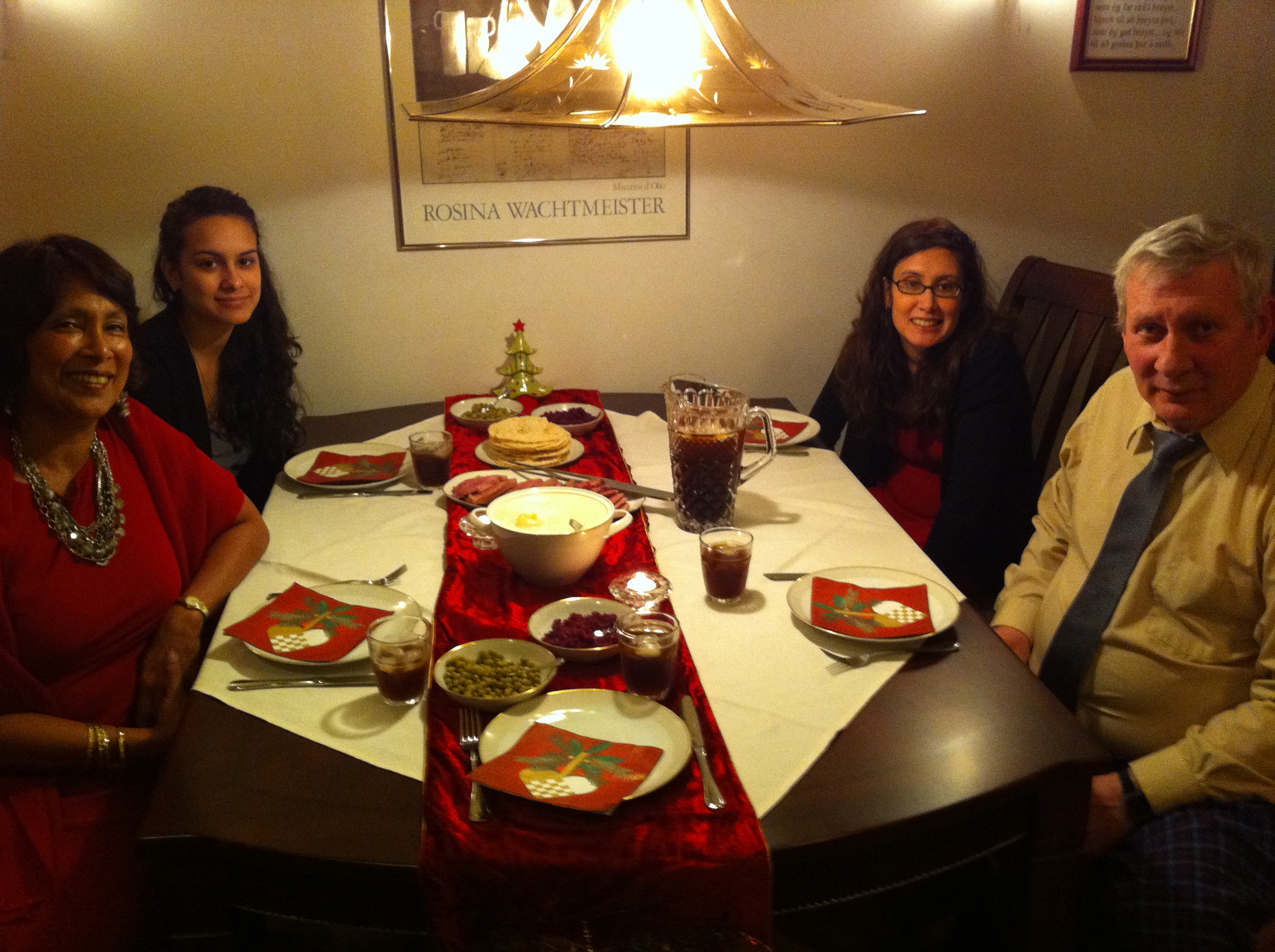
my family feast on Christmas Eve
This Christmas and New Years was the first I spent in Iceland together with my entire family since 1992. My mom, dad, sisters and I had Christmas together in Canada in 1994, but it didnt turn out so great since my parents had just recently divorced and my mom had emigrated us all to Canada without telling my dad. I guess time does heal all, so 17 years later, they talked about things other than custody or money, and us sisters all grown up appreciated having both our parents in the same room to contribute to another happy family memory.
It was quite the dysfunctional occasion though. My parents get a long okay when we’re around, but they couldn’t be left alone since my dad has no patience for my mom and my mom didn’t think it was appropriate to stay at his house. They both know they’re excellent cooks and want to parent us, but now we’re all grown up and scolded them more than they scolded us. My youngest sister is engaged to be married and somehow acts like she can’t wait to start her own (more normal) family. My eldest sister wanted everything to go smoothly but is an unspoken, passive aggressivist, and I ran around like a chicken with my head cut off trying to keep everyone busy and entertained… which wasn´t easy with record snow falls keeping us on the verge of getting stuck every time we had to go anywhere or park the car. But we only had a week and couldn´t let weather get in the way of or plans, so I was still the 24/7 driver, tourist guide, daily planner and phone secretary. However, I never minded since I was royally awarded with food feasts centered around family time every day they were here.
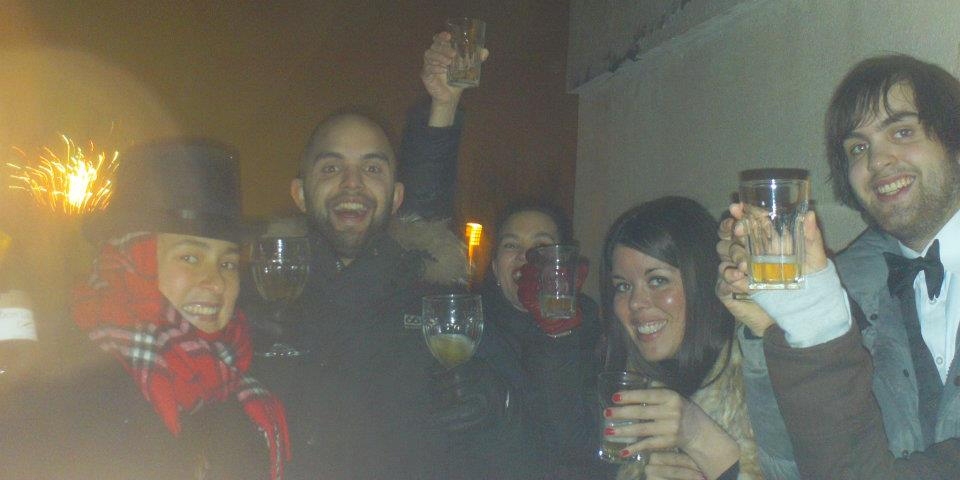
the first seconds of 2012
My mom has a sister in Iceland who married an Icelandic man and started a family here. My mom stayed with her and we visited our Aunty and cousins often for breakfasts, lunches and dinners prepared large enough for an entire army. We ate traditional smoked lamb with fixings, grilled leg of lamb with Icelandic mushroom gravy, lamb saddle and sheep head. On Christmas night we had lamb curry and roti, and Christmas morning we had Pepperpot, a delicious Guyanese dish made of oxtail and lamb
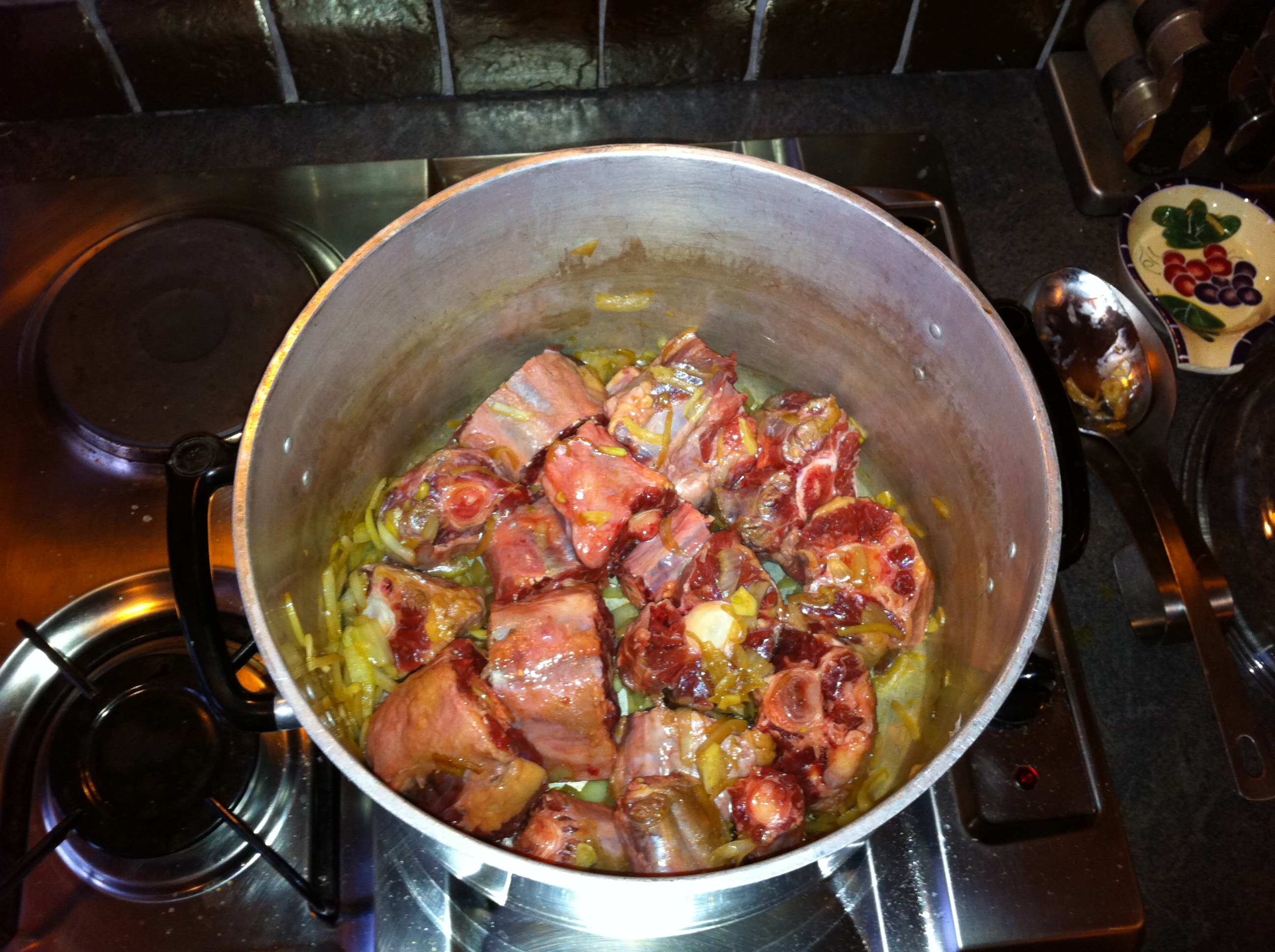
adding oxtail to the pepperpot
neck that takes days to cook. My friend Þráinn, one of the top chefs in Europe, came over and cooked some fine-dining langoustine for us one night. We tried every Christmas beer brewed in Iceland, and stuffed our bellies full of cookies and chocolate after every meal.
We visited our half brother, our old neighbours, and met many of my friends, including 3 hunters who fed us reindeer steak and reindeer carpaccio. We made it through the days with coffee and tea, leftover dinners, and hot dogs from hot dog stands. We rang in the new year with sparkling wine and almost got blown up by a wayward firecracker my cousin Svanur lit up too close to the balcony. We tried to make it to Vestmann Islands to visit our relatives from Dad´s side, but the weather wouldn´t allow it, or else we would have gotten to try some puffin and dried sea weed.
After a week of stuffing our faces and functioning like a family unit once again, we all had a great time secured by hundreds of photos to keep every moment of the holiday memorable. I like watching Modern Family to remind myself we´re just one of many dysfunctional families, with an ever-evolving definition of family unit. I appeciate how unique my family is – growing up apart, getting divorced, getting engaged, living in different countries – and learnt that it doesn´t affect our family ties, since these are just the things that make us normal. I guess all families have some dirt under the carpet, with some weird element going on, so we’d be abnormal if we weren’t a little dysfunctional.
I had never flown in a helicopter before, and I’ve missed so many perfect opportunities before. I should have seen the volcano eruption last year by helicopter, but it was ridiculously expensive, and I could have seen the Hoover Dam and Grand Canyon by helicopter, but the wait was too long. Then, a few days after returning to Iceland, my friend Frikki invited me to walk his dog with him. It was 6pm, dark outside, and we played fetch in Elliðaárdalur. He was bragging to me about how he got to fly with the Icelandic Coast Guard the night before. Then he smiled casually and said, “and I’m flying again tonight. Want to come?”
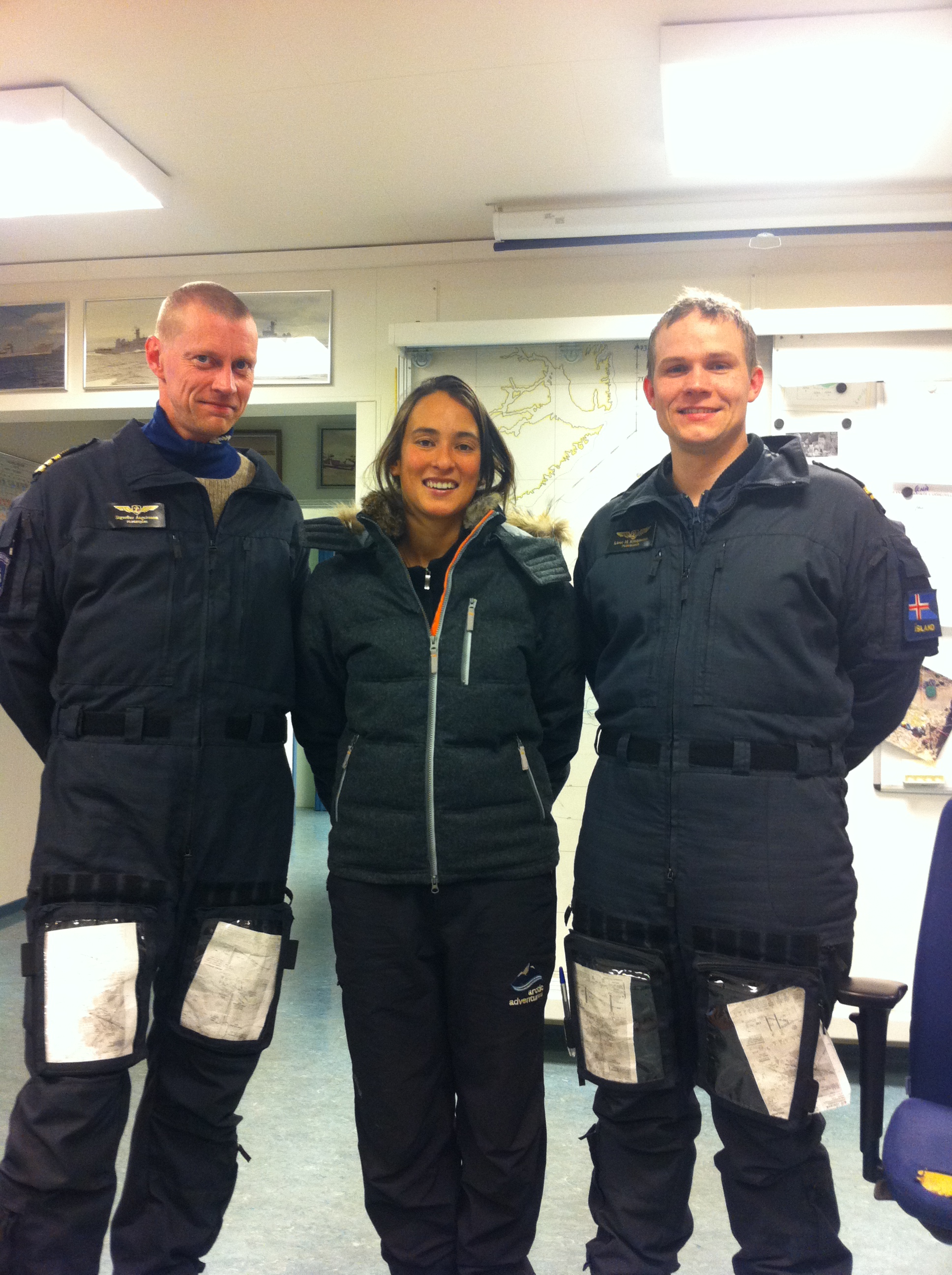
the pilots
The Icelandic Coast guard rescues farmers, tourists, seamen, and anyone else who gets into trouble when mother nature screws things up. They save injured fishermen from boats and evacuate tourists from glacier crevices – all very heroic, extreme stunts that require them to train full time. The coast guards are a group of manly men, and always fly with one doctor on board since the helicopter functions like a flying ambulance. They wear intimidating uni-suits and helmets fitted with mics, headphones, and some serious night-vision goggles, since they do almost all their training in the winter months after dark.
Frikki is a doctor, not for the coast guard (yet…), and they don’t mind flying with a couple extra people since they can practice mock-rescue situations. We were fitted with some fancy helmets too, and told to do exactly as we were instructed at all times, including the moment when we would get dropped out of the helicopter with just one cable cord as our life line.
After some debate, the pilot decided to fly us to Þórsmörk, a beautiful part of Iceland near Eyjafjallajökull only reachable by foot, horse, or helicopter.
The helicopter they fly is HUGE. Its blades are so long that you’re convinced it’ll fly even though it looks like an immovable tank. I sat in the front of the helicopter, between the two pilots, and watched them flip a bunch of switches, read check lists and make notes, over and over while the blades spun faster and faster. It was completely dark inside, and they had flaslights on their fingers. When it was time for take off, I barely noticed the helicopter lift off the ground, and hoover itself around the building and up into the sky, flying away from Reykjavik city in the most epic way I could have imagined. I put on my night goggles to see better, and everything glowed green.
The goggles are some super tech invention that the most advanced militant forces use, each pair worth more than a car. They transform a pitch black sea into glowing green waves, moving and shining like something from another world. The night sky explodes with billions of stars, and when the helicopter flies full speed, they zoom past the front window like a Star Wars galaxy scene. Lucky for us, the ground was covered in snow, and with the little light that added, our goggles could show us everything. We saw cars driving and people walking, horses running through fields, farm houses glowing with christmas lights, steam rising from geothermal hotspots, and waves break along the coastal cliffs. We saw the city glow of Selfoss as if it was as big and bright as Times Square, and even Hvollsvöllir seemed like an Oasis in the middle of nowhere.

the helicopter
While flying, I became hypnotized by the green world passing under me. The ocean looked possessed, eerily exposed when noone else can see it. The droning sound of the helicopter, almost silenced by my headphones, mixed with the background chatter of the coast guards, sounded like a lullaby pacifying my excitedness. But, my adrenaline quickly returned once we arrived in Þórsmörk; the coast guard put a rope around my body, held down only by my arms, and pushed me out of the helicopter. I dangled like a rag doll, trying to stay as stiff as a board so my cable wouldn’t slip off. On the ground, another guy caught me and held me up against the tornado winds the helicopter was creating, and untied me.
I remember looking up at the helicopter, without my goggles, and watching it like some supernatural, divine object. Without it, I’d be in the middle of nowhere, in the middle of the night, near an angry volcano, blind, and lost. But, of course, it was thinkable only because I knew it wasn’t true, and the helicopter repelled us back up into its safety in no time. Going up was scarier, since I swung back and forth between the wheels of the helicopter uncontrollably for some time before they could drag me back inside, but I was helpless to scream since noone would hear me, and I couldn’t reach my arms out since I’d slip out of my harness. It makes me wonder how they manage to drag up deranged, hysterical or panicking rescue victims…
I wish I could share a picture from my photo memory, since no camera could capture that narrow, green world I saw through my goggles. But hopefully your imagination does it justice, or else I’d suggest making friends with some doctors who know the coast guards 🙂
 nomadic cosmopolitan