Hungarian Rhapsody

Coming from Czech and Slovakia, Hungary was a whole new world. The biggest difference was the food, it was finally delicious, mostly because they use loads of fat and paprika in everything. The beer was worse, but the wine better, and the language was a whole new mumble jumble of sounds I couldn’t understand. More people spoke English, probably because of how touristy Budapest is, and that wasn’t a surprise. Budapest is a beautiful city, Buda and Pest separated by the Danube, connected by many beautiful bridges, full of green parks, old castles and towering churches.

Vajdahunyad Castle in Budapest city park

Vajdahunyad Castle in Budapest city park

I love visiting churches in Europe, they’re some of the most beautiful examples of architecture over the centuries and the wealth of religion. The procedure of visiting churches is always the same – after you enter, you feel the cool air and still silence of the reverent hall. Then you take a few steps down the center aisle, your boots always clicking a bit too loud, and after you get a load of the religious paintings, gold fixtures and antique wooden furniture, you spin around to stare in awe at the organ, hundreds of tall and shining pipes at the back of the church.

a ruined piano serves as the bar shelves at Szimpla

a ruined piano serves as the bar shelves at Szimpla

Budapest is also known as a party place, the night-life district in the Jewish quarter boasting the 3rd best bar in the world (according to who, I’m not sure, but Lonely planet also loves it). Its a ruin bar, the gutted out frame of a protected building that costs too much money to repair, so some guys buy it for cheap and just turn into a public space of graffiti, broken down electronics and mismatched furniture. Then the crowds come from all over and buy their cheap drinks and delicious food, filling the hollowed out space and abandoned rooms to the brim.

Hungary is also famous for its baths. Its second only to Iceland for geothermal pools, but with bigger numbers, the baths in Hungary become a public bathing ground for entire towns. I went to Szechenyi bath, a spa with more than 15 pools and hottubs, at least 8 saunas and steam rooms, and at night time the place becomes a pool-party disco club. We lazed in the various temperatures of water, the coldest dip being 16`C and the hottest around 40. I shed a kilo of skin and sweat, but felt like a new born baby afterwards.

a rainbow peeks thru the storm

a rainbow peeks thru the storm

Another ecstatic moment was wine tasting in a crazy lightning and thunder storm – the rain poured down on us in buckets at the Jásdi wine cellar, and we drank wine for nearly 2 hours for something like 6 euros. There were another things that made the trip epic, but it was these kind of simple moments that I was most enthusiastic about. We watched the storm near us over Lake Balaton, and both the lake and sky turned dark grey, but a few sea snakes and ducks swam past us just jovially enough to remind us that the storm would pass and everything would be ok, as did the rainbows that broke all over the horizon a few hours later.
Slovakian Surprises

Very strange things happened to me in Slovakia. Only an hour after I had arrived in Bratislava central station, I walked past the city center’s famous clock tower and right between 3 people having a conversation in Icelandic. I was so dumbfounded I didn’t even say anything, since I didn’t know what to say and didn’t want to make them feel like they had lost their privacy of speaking a language no one around them should have understood. I just stopped, turned to them and stared, but they didn’t know me and I certainly don’t look Icelandic so they didn’t speak to me either. After I finished wandering through the city I stopped in a park to snooze and tan in the sun, and when I woke up, I realized I was in the backyard of the Presidential Palace. That night I tried to book my first and only night in a hostel on this trip, but I got picked up by a couchsurf host at a couchsurfing meeting where glasses of wine cost €0.90. That meant I could now buy 10 glasses of wine for the €9 hostel bed I didn´t have to pay for.

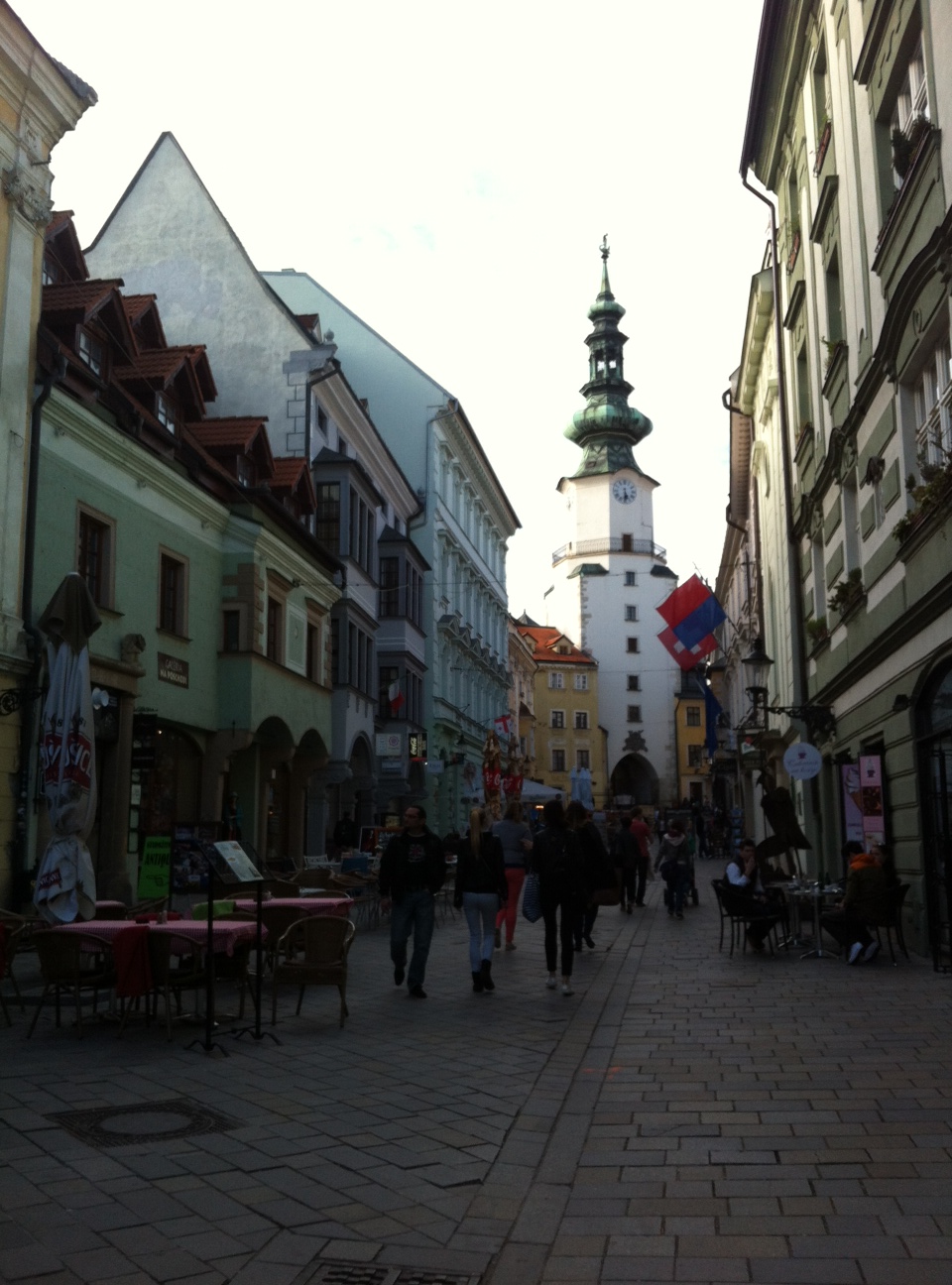
the church tower in Bratislava

the church tower in Bratislava

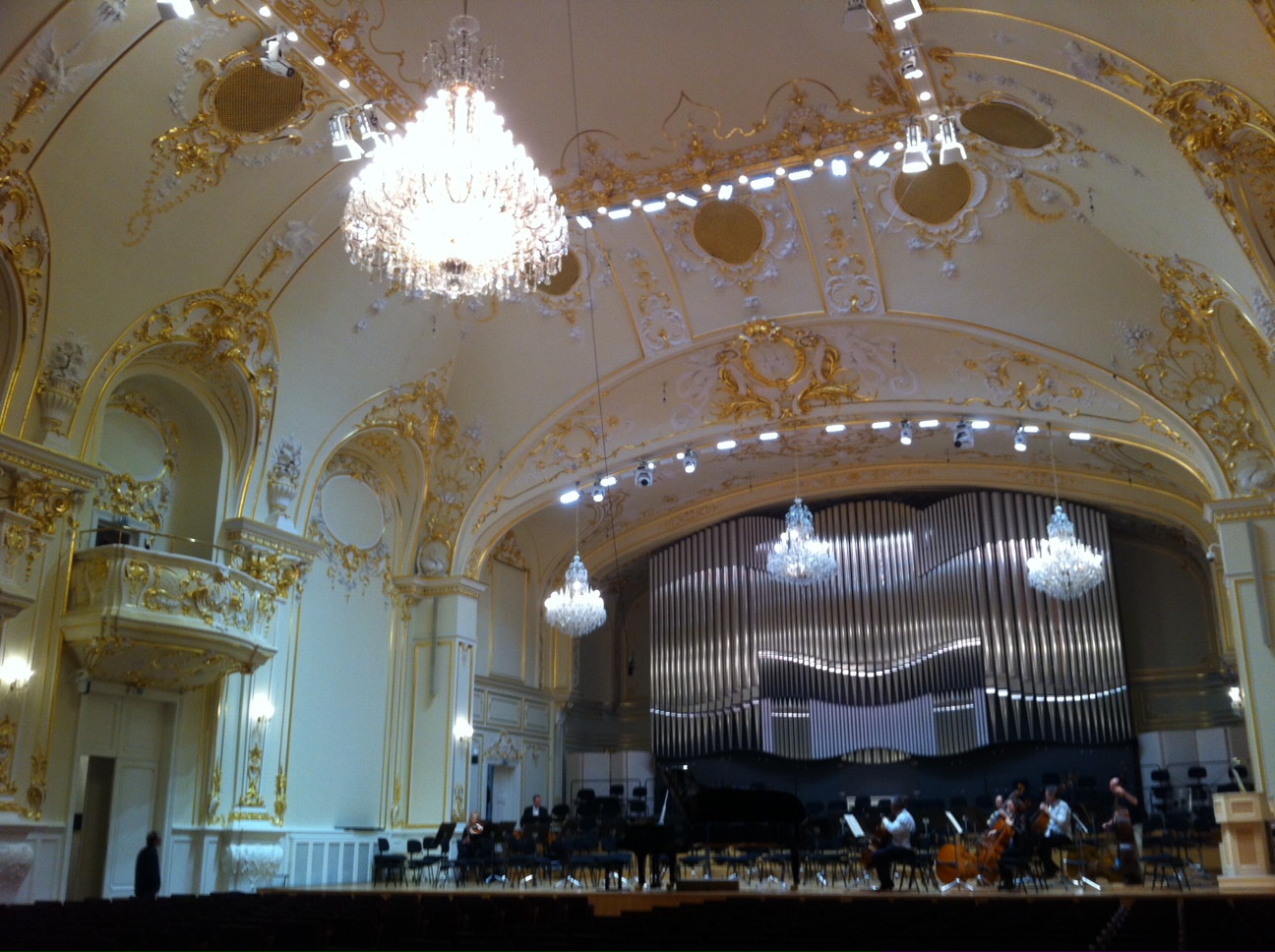
The highlight of my trip was watching the Slovakian Philharmonic play Beethoven’s 3rd piano concerto and Mozart’s Requiem in the national theater, where the symphony hall sparkled in white, gold and crystals. Then I heard about the Opera and Ballet hall in the new national theater building, where they were showing a ballet rendition of Shakespeare’s Midsummer Night’s Dream. It was just as wierd as it sounds – ballerinas preforming in strange costumes without spoken word – but the story was still somehow told as I remember it.

the Slovakian Philharmonic

the Slovakian Philharmonic

I took a day trip with another backpacker to Častá, a nearby town famous for its red stone castle. We took a local bus to the town, and then had to walk 2 km up hill to reach the castle gates. The entire first km of road was lined with speakers, dating from the propagandous communist era, and nowadays its used as a sort of public radio. Scratchy Slovakian folk songs played in the streets, loud enough for any house dweller to hear, and me and my friend considered sharing a dance but carried on instead. When we reached the castle, we realized it also doubled as an eagle training center, and casually ran into two different men at different times strolling the castle grounds with eagles on their arms.

Devín Castle

Devín Castle

Bratislava was another charming little town, with a lot of old churches and a castle fort. The city castle wasn’t that impressive, since it was only rebuilt in 1958 and recently renovated, but who goes to Europe to see a new castle? Every europtripper know that only old, crumbling ones are interesting, so Devín castle satisfied much better. On my last morning, I headed for the bus station, where both buses to Budapest were full. The next way out was a train in 4 hours, so in the meanwhile I wandered up to the Slavín monument, a memorial for the thousands of Soviet soldiers who died in WWII trying to protect Bratislava. It was a sad, sombering place, with an incredible view over the town from where I waved it goodbye.

Slavín momument

Slavín momument

I sat on a wooden bench, waiting for the first delayed train I’ve had on this trip. I shifted slightly to the right and implanted 4 huge slivers through my pants and into my ass cheek. I waited another 10 minutes sitting on this uncomfortable situation before dislodging them in the privacy of the train toilet, but please empathize for moment how difficult it is to remove slivers from your own rear end. The first thing I did after leaving Slovakia was watch a film about Iceland. My next couchsurf host in Budapest had made a video about his 2 week trip there, and watching it made me more home sick than I could have imagined. I had a hard time remembering where I came from, where I was or where I was going, but Iceland is definitely on the horizon and that’s exciting.

The Czech Republic

I think I made it through my whole visit in Czech-land without accidentally referring to Czechoslovakia, but it definitely slipped my mind a few times. Its cumbersome to say ‘the Czech Republic’ every time you ask a question, so I came up with Czech-land which was maybe an equally stupid tourist thing to say.

charming Telč

charming Telč

Czech land is a wonderful land, a green and charming place where summer love is in the air. PDA is out of control here, with frisky couples making out in the central squares and casually having sex in public parks, hidden only by the girl’s flowy skirt and not the broad daylight shining down on their bench of choice.

Karlův most, Charle's bridge in Prague

Karlův most, Charle’s bridge in Prague

My allergies have confirmed that its really summer, but never get in the way of spending more time outside lying in freshly cut grass. There’s so much green space around Brno, the second largest city, and its by far the dog-friendliest city I’ve ever visited. People take everything from toy-dogs in purses to rottweilers yielding teeth guards on public transport and inside the bars and restaurants. Prague had less dogs but a bazillion more tourists, since I ended up there over a long-weekend without knowing it and got lucky enough to find probably the last possible couch on couchsurfing to surf. Every hostel and hotel was fully booked, and the central square in Prague bustled like a circus fair, attended by every nation in Europe to see the bubble blowers, snake charmers and horse carriages parade around. My Czech host was a tango dancer, and we avoided the crowds by spending our nights tangoing and ballroom dancing, where I learned the not-so-significant difference between English and Viennese waltz.

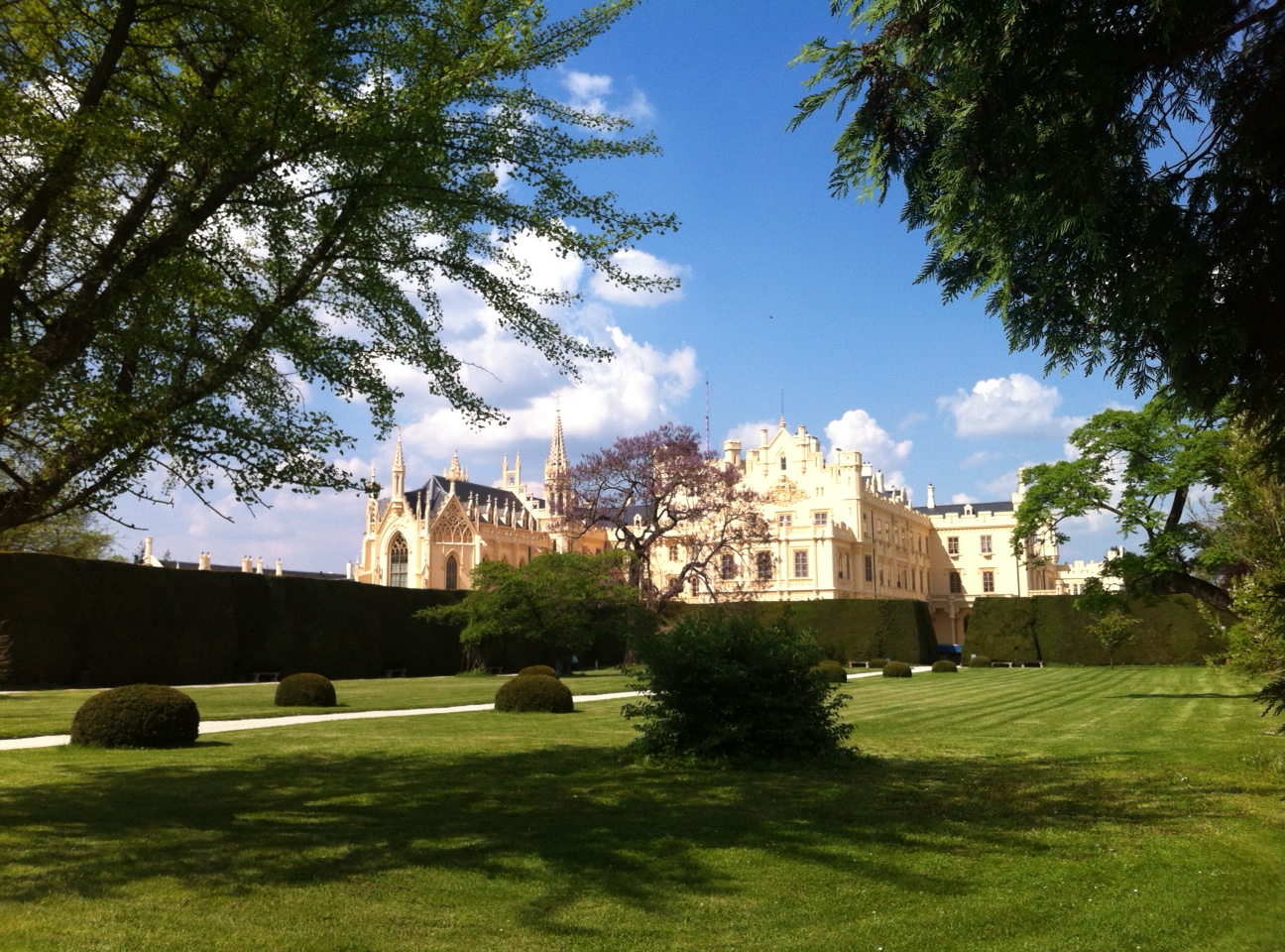
the castle in Lednice

the castle in Lednice

The Czech Republic is a very outdoorsy-kinda place; its popular among the locals to take camping, hiking, climbing, or biking trips around Czech-land, and even horse back riding and yoga is easy to find. This also means people walk around with big, back-packing back packs all the time, so I really felt like I fit in when I was wandering around the train and bus stations lugging my life around. Other things that were popular were not very Czech, like shisha bars, tea, and lemonade that’s usually made without any lemons. They think that if its fruity and carbonated it counts as lemonade, but whatever they want to call, its damn good, home-made stuff. Even more wonderful than that is the fact that vineyards cover the south-east countryside with delicious, affordable wines, and beer is actually cheaper than water. I heard they tried to pass a law against it, stating that beer could not be the cheapest drink on a restaurant menu, but as far as I noticed, this was rarely true.

Punkva cave in Moravsky Kras

Punkva cave in Moravsky Kras

My couchsurf host in Brno was not a local, but for a Jewish American guy he spoke pretty good Czech and had a hold on all the restaurants and local food culture (and makes killer bbq’d burgers). We were pretty active too, as I followed him through his various work-out days at yoga and the swimming pool. I met a dutch guy who took me horse back riding on his big dutch warm blood, and I spent all my free time hiking around little Czech villages, churches, castles and caves. The Moravian caves were magical and wonderful for many reasons, although they kind of smelled like bad breath and I never figured out if that was the odour of the cold, underground humidity or the wafts of air leaving the tour guides’ mouth. The more famous Punkva cave included a boat ride on a river through the cave, after standing at the bottom of a 200m sunken-cave hole, and then there was my very own name-sake cave, ‘Kateřinská jeskyně’ which literally translates to ‘Katrin’s cave’. I pretended they knew I was coming, but they didn’t get the joke. They don’t joke much in Czech-land, so I’ve also stopped calling it Czech-land, but if people did smile a bit more and spoke a language that wasn’t impossible, I could easily find myself staying here forever. 

London Town

20140503-191921.jpg

Most people travel to destinations, and so do I, but I tend to travel more to seasons. I was in search of some summer sun when I went island hopping last month, and then I went to Vancouver in search of some fresh, pink spring days. Now I’m in London for more spring time weather, but I always make the mistake of traveling through London, never to London. Its one of those places thats so big and intimidating its just too hard to manage unless you have a week (or month) or plain out move to. But I’ve been here over 20 times and I never stay longer than a quick hello and goodbye to friends and family that I wish I could see for longer.

This was a special visit to London because I had the chance to catch up with a first-year UBC friend, who used to lived on the same floor as me in Totem Park and then we became roomates on exchange at UQ in Australia. Elyse is from Oakville, where I visited her once, and we hadn’t seen eachother for 6 years. She lives near Chelsea, and I spent our first night reunited going around the chachi neighbourhood listening to stories about the (scripted) reality TV show “Made in Chelsea.” We went to a few bars and wondered why London guys were so shy, but then we got picked up by 3 at the same place and decided to stick with the one who was a promoter at Raffles. Before we entered the famous bar, Elyse reminded me not to make any references to Made in Chelsea, and then our night turned out just perfect. We met a (may or may not be) Swedish prince, and an Indian guy whos name I still cant pronounse or spell. But we we’re all very good friends after a second night out at Raffles complete with bottle service.

Now I’m on my way to summer again, in Brno where its 20`C and all the trees are in full green swing. The days were long in Vancouver and London, but not as warm as there, and then Ill head south through central europe until I reach some flip flop weather before heading back to Iceland, where summer is maybe (if I’m lucky) as warm as a London spring.

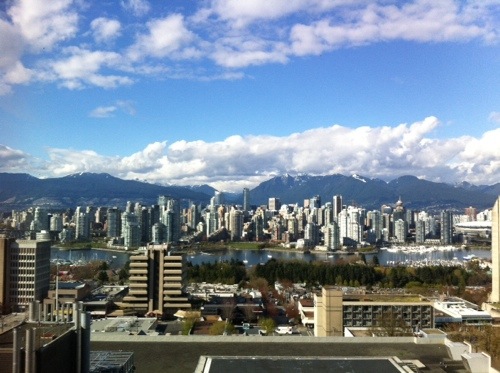
Vancouver, as a tourist

Everytime I come back to Vancouver, after more and more time has passed since I lived there and called it home, I feel more and more like a visitor and less and less like a local. People even ask me where my accent is from, and I wonder if I should admit to being Canadian or just play the Iceland card. The friends I have (or had) become fewer and fewer as time goes by, as the UBC 2008 alumni have moved back home or onto other cities with bigger things. Visiting UBC campus is nostalgic in many ways, since the university is always a sacred memory of the happiest and hardest years of your adult-forming life. But then you feel like an outsider there, and atleast 10 years older than all the youthful faces who have replaced you and stolen the constantly under-construction campus to become their own happy place. There are new buildings and faculties and programs sprouting up year after year, and its always tempting to try and find one where I would still fit in.

20140502-235346.jpg

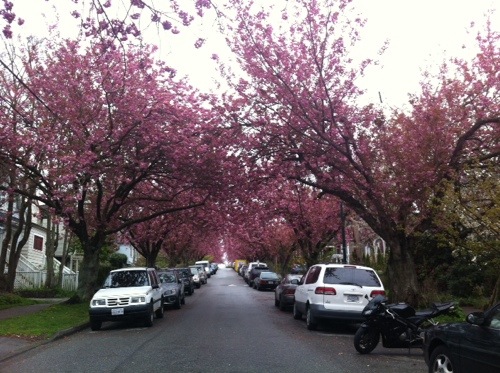
cherry blossom arches

Atleast Vancouver city doesnt change much, all the familiar streets, cafes, sushi restaurants, and shops that I crave when isolated in tiny Reykjavik. There are still a few new buildings and unfamiliar store fronts, but not enough to know for sure that they’re new to everyone or just new to me who had never noticed them before. I stayed at the Pan Pacific hotel, which has a huge, new Cactus Club restaurant right on the water beside it. I had to go there to see what it was like and pay my dues, since I have Cactus Club to thank for my first waitressing job, and the main supplier of my travel income for 2007-2008.

20140502-235417.jpg

bear crossing!

April is the most beautiful time to visit Vancouver, since the trees start blossoming, all at slightly different intervals, so that you can always find a street corner or park covered in various shades of pink and white petals. There are cherry, plum, crab apple and even Magnolia trees that colour every spring pink, and Vancouverites celebrate them with an annual Cherry Blossom Festival. But the best thing about a flowery spring in Vancouver is that its still a snowy time in the mountains, and spring skiing in Whistler and Vancouver mountains stays open as late as May 1. I didn’t make it snowboarding, but I spent enough time in the outskirts of Vancouver to throw myself into an icy lake (felt like home, Iceland-home that is), and see a family of black bears dizzily crawling out of hibernation.

Vancouver is nestled between the Pacific ocean and its many islands to the west, a towering mountain range and ever-green forests to the north, the lush countryside of the Fraser Valley to the east, and of course the American border only a few km’s south. This kind of location can’t be beat by any other American city, but the damn rain always turns out to be a major party-pooper. If it wasn’t for the gray, rainy weather, which i basically a 7-8 month long season, Vancouver would truly be the most livable city in the world.


Aruba and the ABC’s

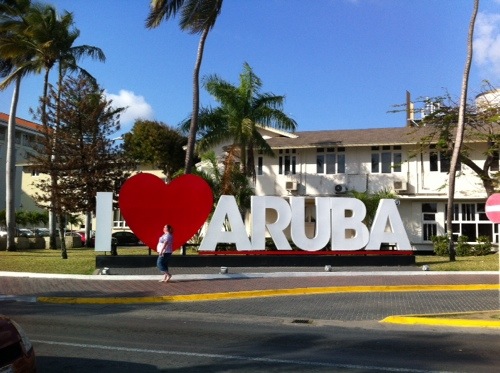
Aruba, Bonaire and Curacao have always been somewhat connected, in size, shape, history and geography. Arbua is somehow the cleaner, safer, most expensive, tourist popular and developed island of the 3. The ABC’s are just a skip away from Venezuela but you couldn’t be farther away from a Venezuelan reality than you are when that 5 star Norwegian cruise ship arrives in Aruba’s port and dumps off 3000 rich Americans. But there were alot of Venezuelans and Colombians living and working in Aruba, so many that most people I met didn’t speak Dutch or English very well. Then there are the Dutch there, living and working in paradise, happy to speak English to every tourist but clearly showed a preference to their own kind. And then there are the medical students, thousands of them, mostly coming from American states that rejected their applications, or elsewhere where medical school wouldn’t have nearly as much sun and fun as in the Caribbean. The Chinese, who’ve learned the local papiamento language, run all the corner stores and supermarkets.

20140502-235043.jpg

I walked along this beautiful beach from the airport to town

It’s easy to see how the island has turned into a melting pot of languages and cultures, but one thing is clear, that tourism rules. The island’s economy is dependent on the dozens of hotels, split between the low-rise area and high-rise area, and the 1, 2, 3, or 4 cruise ships that dock every day, all day in Oranjestad. Aruba has outmarketed itself from Curacao and Bonaire because it has the safety that Curacao doesnt, and the facilities and beaches that Bonaire doesn’t. But they all have world-class windsurfing, kite-surfing, and no shortage of diving and snorkeling. What’s amazing is that only the shores around the island are calm enough for snorkeling and diving, thanks to the outlying coral reefs, since no ferry service is available between the 3 islands. They’ve attempted a few different routes, but the heavy winds and crazy waves make everyone seasick, so they’ve never survived. Instead you’re stuck to the little Insel air planes that shuttle people island to island, and all the while Venezuela is just around the corner, but they cant run flights or ferries there either because everytime they try that, it becomes a massive good and drug-smuggling operation. Too bad, I guess, but not sure for who.


Dushi Curaçao

the Penha building in downtown Punda

the Penha building in downtown Punda

Dushi means “sweet” in Papiemento, and you can use it the same way; there are dushi people, dushi food, and dushi places all over Curaçao. The city center is split between dushi Punda and Otrobanda, literally “the other side”, separated by a big river with a floating, movable bridge. Whenever a cruise ship needs to enter the harbour, the pontoon bridge swings open, and pedestrians are either stuck on it or on either side of downtown shadowed by the floating city moving past. Sometimes there are 3 ships in town, and then Punda, the touristy-shoppy side, is filled with Americans or Germans buying over-priced jewelry and cheap souvenirs. There are also 100 cheap-clothing stores, run by Indian and Chinese owners, a floating market of fresh Venezuelan produce, and a strange market of home-mad love potions and alcohols sold by locals, Venezuelans and Haitians.

The Queen Emma pontoon brige

The Queen Emma pontoon brige

Noone actually lives in Punda, its just a commercial area that shuts down at 6pm, and downtown becomes a ghost town overnight. Otrobanda has more residential areas, but more dilapidated buildings and crime rates make it less popular with tourists.  The famous street with the baroque-style Penha building is the most photographed place in Curacao, but the buildings in Pietermaii are equally impressive, a neighbourhood full of restored 18th and 19th century Dutch buildings painted in all the brightest and prettiest pastel colours. I slept in an all-white, self-designed loft, that had a matching cat. Smit’s white hairs eventually covered all of my dark clothes and pink towel, so I quickly realized why everything had to be white inside. I was couchsurfing with an architect (who does actually live in Punda), so perhaps my impressions of Willemstad are a little biased, but I started to criticize everything by its design, structure, or aesthetics. I saw alot of infinity pools, and even an infinity beach (the Renaissance hotel built a beach ontop of a mall), and we went underground to a 200,000 year old limestone cave full of tiny bats.

the infinity beach-pool at the Renaissance

the infinity beach-pool at the Renaissance

Everything was so pretty, and the city was filled with boutique hotels that were all cosy and artsy in their own way. The Kura Hulanda hotel was once voted one of the top 10 boutique hotels in the world, and it was easy to see why; some developer literally bought a neighbourhood and restored it to perfection in its original Dutch colonial style. The alleyways wind past 100’s of different hotel rooms hidden behind wooden shutters (each one is uniquely designed), and courtyards open up to restaurants and pools every few meters. But as soon as you leave the hotel grounds, youre back to the poor, unsafe regular neighbourhoods of Otrobanda.

the Hato Caves

the Hato Caves

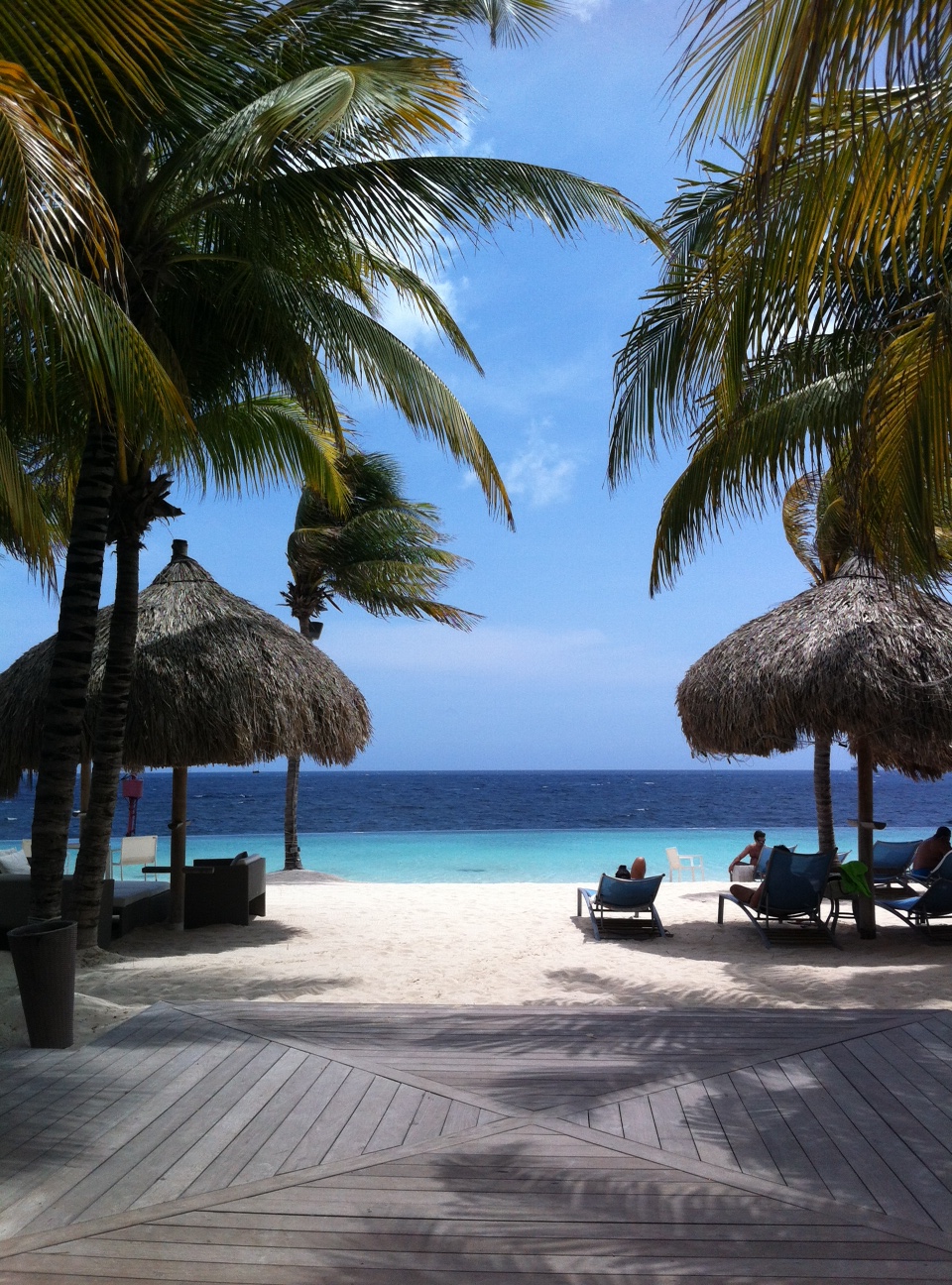
There’s a famous touristy area called Mambo beach, a stretch of built-beach area full of bars, restaurants and shopping. But its one of the only areas you can actually swim off the beach, since they’ve built a breaker out in the sea. Its rough seas in Curacao, lots of wind, windsurfing and kite surfing. There are also natural beaches, but they’re scattered around the island in small, isolated patches. We roadtripped to the west end of the island to visit most of them, and found only a few locals, empty restaurants and abandoned hotels around them. We saw flamingos and visited “landhouses,” the old-school plantation homes spread out around the countryside. The original Curacao liquor distillery is in one where they give free samples 🙂 I tried some, and then ate iguana for lunch at Jaanchies. If you make it to Curacao one day, go there and try some, its super dushi!

Beautiful Bonaire

beautiful Bonaire

beautiful Bonaire

The ABC’s (Aruba, Bonaire and Curacao) were all once part of the Dutch kingdom, or Netherlands Antilles, but after some confusing legal terms, paperwork and meetings, Bonaire is the only ABC that’s still part of the Netherlands (a “municipality”), along with Saba and Sint Eustatius which are over 800km away. But Bonaire still shares its unofficial “official” language of Papiementu with nearby Aruba and Curcao, which is a confusing mix of Dutch, Spanish, English and Portugese. Native American words from the Arawak Indians and some words from African languages are also mixed in there, but somehow It still sounds like a dialect whose vocabulary is based on a lot of borrowing. The governments and schools of the ABC’s still function predominantly in Dutch, since many of the words and spelling aren’t confirmed in Papiemento – the spelling is largely phonetic and makes it very easy to read but then changes from person to person. Thank God everyone speaks English, and while the locals are hard to pinpoint (where they’re from or what to speak), the tall, white, sometimes sunburned Dutch people are real easy to spot.

salt fields and pink seas

salt fields and pink seas

Bonaire is similar in size to Aruba and Curacao, but only 17,000 people live on this little countryside island. It’s flat and dry, with flamingos, stray donkeys and salt fields spotting the interior. The coast is lined with coral reefs and baby blue seas, but not so many sandy beaches. One of the main public beaches had all its sand blown away in a hurricane, and now they’re left with alot of rocky shores. Its a windy island, making it a kite surfers paradise, and tourists come from all over the world to windsurf and scuba dive. I get claustrophobic under water and prefer to fly kites from land, so I went for free-diving off Kleine Bonaire and windsurfing in Lac Bay… and loved both.

Windsurfing in Lac Bay

Windsurfing in Lac Bay

I couchsurfed with a tall white dutch guy, who was a breath of fresh air on the little island. He;s lived there for a year and half but seemed to already knew everything and everyone on the island. He took me to soccer practice and kick-boxing lessons, two more firsts after windsurfing. We partied and danced every night, even though there were only 2 places to do so, but they were really nice, waterfront places. We had a sunset beach barbeque on my last night, with all the new friends I had made, and even I started to feel like I had a lot of friends on the island. After seeing some flamingos, I got on a plane to Curacao hoping to do the same things on another island.

TCI, the Turks and Caicos Islands

Everyone’s heard of the Bahamas, but not really the Turks and Caicos, but its basically the same place, geographically. We flew over the Florida keys and the Bahemian islands to land in Providenciales, also too long and complicated to say, so its just Provo and TCI from now on. I was confused about how to refer to a local… i accidentally asked twice if a local was ‘Turkish and caico…ish?” but they were shocked and appalled that I could ever mistake an ‘islander’ (the correct term to refer to a local) for a Turk. Obviously I wasnt doing that, but it was a problem of linguistics… and Katrin speak.

Grace Bay, 14 miles of perfect beach

Grace Bay, 14 miles of perfect beach

It’s called the Turks and Caicos because one of the islands is named Grand Turk. Then theres North, Middle and South Caicos, but no north or West. Provo is kind of the west Caicos, and the biggest island, and finally Salt Cay. All of them have tourism, based mostly around fishing and resorts, but then theres also the migration of humpack whales and a friendly dolphin named Jojo that alot of people come to see.

so this is what conch looks like!

so this is what conch looks like!

These islands are somehwere, yet nowhere, since they’re a British territory inhabited by alot of Haitian, Dominican and Bahemian workers. The official currency is the US dollar and the international phone code is +1, but British passports are given out simultaneously with the TCI passprt. The way the islanders speak isnt quite with a Caribbean or American or British accent, but something inbetween all three. Very very few people live here, only 32,000 (a tenth of the Bahamas or Iceland), but thousands visit. And I dont blame them…. its kind of a magical, post-card place hidden away to the secrecy of the few who know the place, and always return. People own time shares or homes that they return to year after year, andall the locals know them by name.

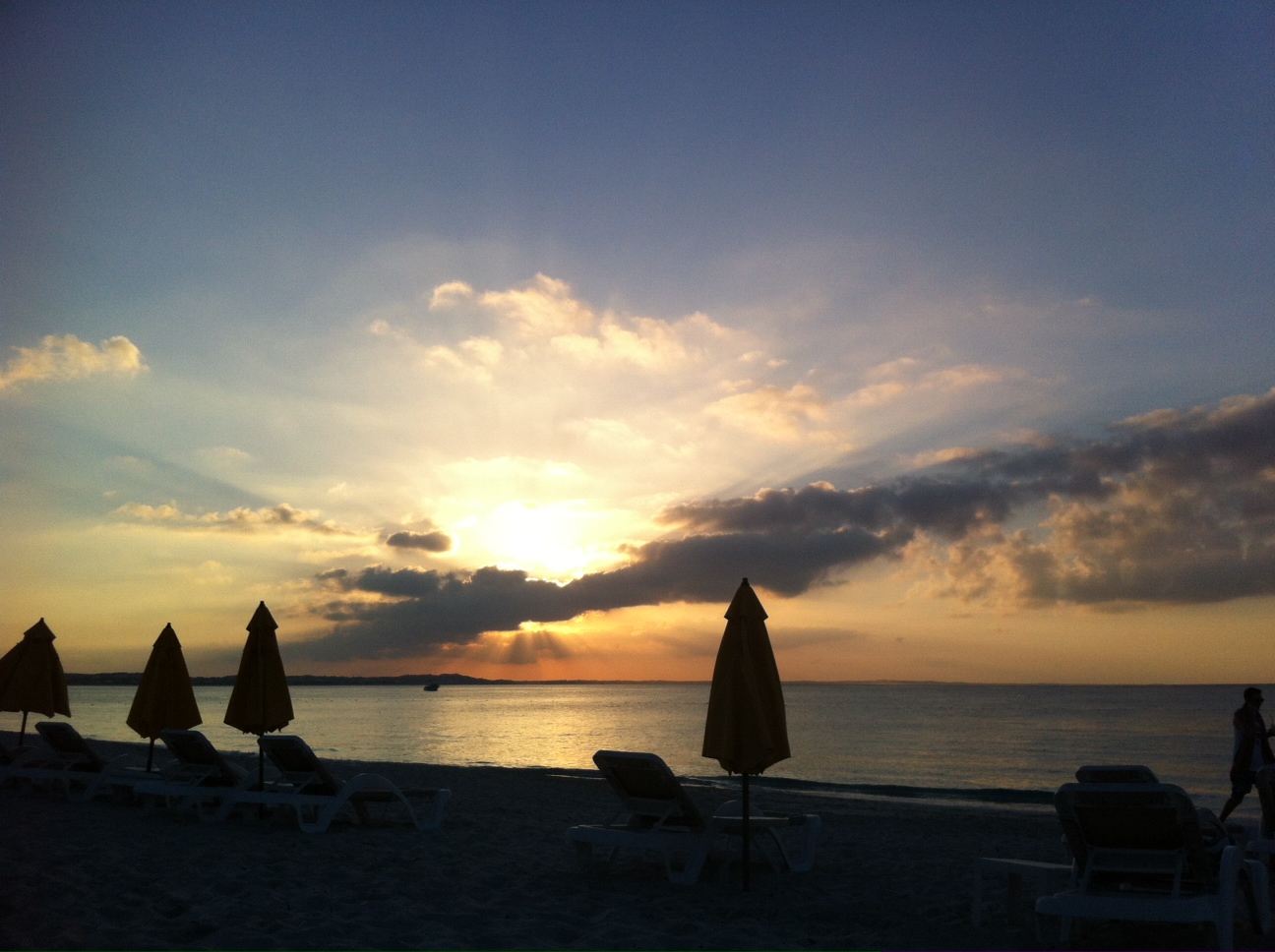
sunset in paradise

sunset in paradise

I didn’t know very much before coming here either. I mean I knew where it was but not what was there. To my surprise, there were still couchsurfers here, and at the last minute a host actually found me. Turns out he knew everyone and hooked me up with everything I’d ever want from an island get away – boating, snorkeling, conch diving, para-sailing and a lot, a LOT of rum punch. And thank God for him and all he did, because as it also turns out, TCI is probably the most expensive Caribbean island I’ve ever been to after St. Barth’s. If Cancun is for students on spring break, TCI is for families and the rich and famous any time of year. It’s kind of like  a smaller, more intimate, adult, exclusive and expensive Cancun, where older and younger siblings play together, teenagers and parents get along, and couples never fight. Everyone seemed to be smiling at me smiling at them, all in the common knowledge that we were the lucky ones who had found this paradise.