Chaos in Lagos

20131210-155203.jpg

I made the opportunist decision to visit Nigeria after I arrived in Benin and realized Lagos was only a hundred-something km from Cotonou. What I didn’t know was that it would take nearly 7 hours to drive that distance, and only with a lot of luck since I hitch-hiked a private car of some white business men from the border. I’m actually not sure if it sped up or slowed my journey, since their tinted-windows, air-conditioned jeep probably attracted more hassle than normal. We got stopped over and over, sometimes by officials in uniform for passport checks, yellow-fever certificates, or luggage search, and sometimes by a random guy blocking our way with ropes or spikes that only disappeared after a small bribe.

People had been warning me not to go to Nigeria, and my hitchhikers laughed when the found me walking between the borders saying I was traveling through, explaining that “Nigeria is not africa my friend, it’s another world.” The rumors about dead bodies lying in the side of the street and getting picked up every morning for med students to dissect is apparently true, but the value of life doesn’t come from a violent society, just a very chaotic environment. The traffic jams rival the worst I’ve ever seen in LA, and the rule of thumb is basically to get to wherever you’re going as fast as you can. The best drivers in he world are probably Nigerian, since they can calculate the exact location of the front, back and sides of their car down to the exact millimeter, as the push their way into the smallest space just ahead of the next car to ensure they get the right of way. In theory you also have to know the rules of traffic well enough to be able to break them, and have the experience of a few car accidents to know how to avoid them.

My couchsurf host Bolaji explained why the traffic was so bad with two simple explanations – one is that all the shitty cars and second hand buses that get rejected in the rest of the world come to Nigeria to die. So the number of break downs and flat tires and cars who don’t care whether or not you hit and scratch them dominate the road. The other reason is that only the main roads an big highways are thru-ways; for security, none of the side streets lead anywhere but dead-ends, or the streets are in such bad shape that you can barely drive them unless you’re in a jeep and going at 10km/hr.

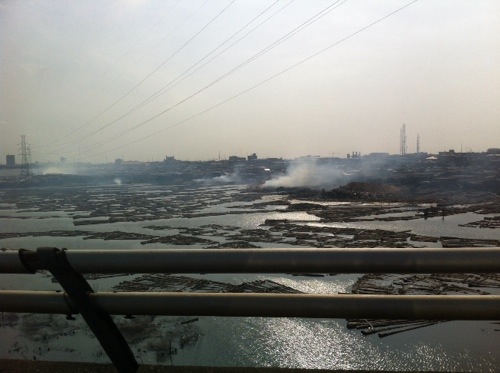
But despite all the chaos, I enjoyed Lagos. It was a city that could rival Miami or Rio de Janeiro, if any government officials or urban planners could get their shit together to figure it out. It was the first city in Africa where the towering high rises sat on paved roads all marked with street signs. The ocean, lagoon and waterways mark the cities charming coastal location, but the stinking stagnant water and burning garbage piles scattered throughout force their ways into sight everywhere you go. The gutters are more like mini-canal ways, wide enough for half a car to fall through, and filled with neon-green water that can’t possibly be naturally dyed.

The population census of Lagos is between 9-20 million, as if some 10 million people could be strangely unaccounted for. Apparently local people don’t take well to the consensus guys showing up and asking too many questions, so every time they try to count, they stop a few murders later.

A lot of Nigerian stories are probably heresay or intimidating exaggerations, but I can say the Nigerian people are still wonderful and I never felt unsafe in Lagos. Getting my visa was the weirdest experience, since they didn’t have the slightest idea why I was applying for a tourist visa or what “business” I had in Nigeria, but I’ll say that Nigeria just needs more tourism – it’s an exciting, massive place that a little exploration would probably uncover a lot more friendly stories.

Lagos is one of the richest, most developed cities in Africa, but starkly contrasted by the majority of Nigerians who spend their whole lives trying to reach riches. You can fly almost anywhere in the western world on a direct flight from Lagos, but still the planes only come in filled with business men and investors. In a country with some of the best education available in Africa, still the University of Lagos has been on a 5 month strike without any teaching. A lot of it doesn’t make sense, but I’m still grateful to have come here for a first-hand glimpse into this chaotic, complicated mega-city. Bolaji explained that in Lagos, there is chaos everywhere, but if you look closely at the chaos, there’s order in it, and that’s what you have to work with…. That’s how they’re surviving.
20131210-155248.jpg

Burkinabé whaat?

20131206-175114.jpg

Throughout my travels, few Africans have heard of Iceland. They think I’m from Ireland or somewhere in Asia. When I arrived in Burkina Faso, the Burkinabé people legitimately retorted that most Icelandic people have probably never heard of Burkina, or know where to point it out on a map. The fact that we don’t hear much about Burkina is actually a good sign, since low-profile countries usually correspond to the most peaceful – all the international media seems to cover in Africa is political unrest, poverty, war or genocide.

I arrived in Bobo-Dioulasso from Segou, Mali, after being swayed to skip Dogon country and Timbuktu. The man and two women seated with me in the first row shared everything they bought (and bought everything for sale), including their rice and chicken bones we dug out of plastic bags with our fingers. I had to overnight in Koutiala, where I only decided to stay after 2 hotels showed up on google maps (no other information by word-of-mouth or online could confirm the existence of a hotel). There was no mosquito net or running water in the room, so I used the fan on high speed to blow all my sweat and the Mosquitos away.

Burkina has ridiculously long city names, but they make sense once you figure out what they mean or how to pronounce them. Bobo-Dioulasso refers to the 2 different tribes that live here, the Bobos and the Dioulas. Ouagadougou is just waga-dugu, or Waga to the locals. Burkina is a huge land-locked country, bordered by 5 French West African countries and Ghana. They speak French plus dozens of other local languages, use the same French West African franc, and its one of the cheapest countries I’ve visited in Africa.

I couchsurfed in Bobo with a French guy and German/italian/American girl, who took me around by car or motorbike during my stay, a nice change from the constant battle of negotiating taxi fares. I met a lot of other expats living and working in Burkina, mostly related to research, mining or tourism. One Swiss guy ran a backpackers place who nearly kissed my feet when he heard I was Icelandic. In his “former, younger, more handsome” days, he had been a jeep excursion guide in Iceland. He reminisced about all the beautiful, unpronounceable places he had been, calling Iceland his dream country, and barely let me get a word in edgewise as he got carried away to a distant daydream of the time in his life he most missed. A bottle of wine later, I managed to escape his hospitality, but still feel a little guilty I didn’t go back the next day.

My visit to Ouaga was a little more functional. I tried, without success, to get this magical visa d’entente which allows you entrance to 5 west African countries. There was no one working the day I was supposed to pick up my passport, so I received the passport visaless, ID photos and money back. I didn’t have time to get any other visas, so I spent most of my days walking through the suffering heat and my nights battling the most Mosquitos I’ve had to deal with yet.

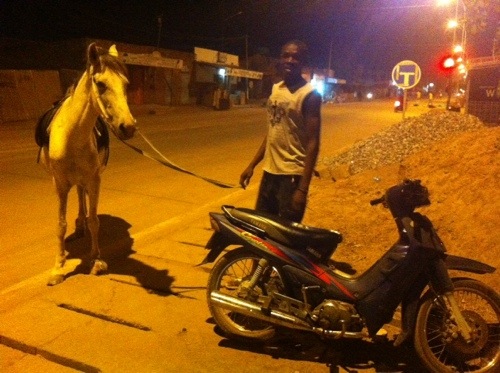
I met a guy at the hostel I was staying at, well I met many men who tried to small chat, but one got my attention when he told me that his family bred racehorses. We walked a few blocks away to a small paddock of 10 or 15 horses that night, and in the pitch black I met their 2700m-sprint champion stallion, and saddled up a pregnant mare to ride through the headlighted traffic. I’ve never ridden a horse through a city at night, but it wasn’t easy, nor was tying her up at the roadside bar while we tried to share a tonic. But it was totally worth it to get the sweet sweaty smell of horse and saddle all over my clothes to cover the now-nauseating stink of mosquito spray I had succumbed myself to.

20131206-175154.jpg

The Charming (and not-so-charming) things in West Africa

20131126-220938.jpg

There are so many small things that happen, insignificant moments, that I find so charming here. I remember arriving in Ziguinchor with my cousin Villi and him asking “what the hell is that sound?” I hadn’t thought twice about it since I’ve heard it before, but the sound of hundreds of frogs croaking in the dark actually sounded more like a dozen choirs of bass singers burping over and over. It’s not deafening, but it’s louder than some background cricket noises. Then a few hours later, there was a cricket on his head, and Villi kept explaining that he thought the crickets were so loud and close. But it took us a few minutes to realize why I didn’t quite feel the same, though I thought it was just my fault again for being used to the sounds.

I think it’s amazing how the cows and goats roam the streets and bushes, seemingly wild and free, but each and everyone has an owner who knows who and where they are. I love the way the women, of all ages, strut with such lazy confidence. It’s as if the heat keeps them soft, slow and supple their whole life, and their movements are all fluid enough to balance anything on their head. I love the timelessness of everyone’s skin, the unified shade of perfect black that shows no wear or tear. Wrinkles and white hairs are rare to see, even on people over 60, and the hairless arms I’ve touched are all baby soft. But then I caught myself smiling when I saw a little boy with a band-aid on his head – they’re not made in skin color for Africans! Only our beigy-pinkish shades of band aids are sold, even here, defeating the purpose of making them skin-colored.

I like the way the kids run around barefoot, or even naked, having so much fun playing with rubber tires or empty plastic bottles. Life is simple, but I guess too simple since those same kids rarely go to school and spend their later childhood begging or selling things on the street. I can just as easily reflect on all the things I won’t miss about Africa, which includes the young boys begging with tin cans for money to take back to their religious leader at some Islamic center. Also the Mosquitos. Potholes. Squatting toilets. 40•c and no A/C. Buses that always take twice as long. Buying warm bottled water. People staring at me just because I’m not black. But my skin color is something I cannot change and I’m kind of over it by now…

But it’s funny how the things I find not so charming and utterly annoying are just a matter of my cultural perspectives. I get angry every time I ask how long a bus takes, and it never arrives the time I’ve been told. And the next bus driver I try to get the right answer from him as if I can bribe him with my ticket unless he tells me. But who the hell am i to change the system?

Then at each hotel, I expect to bargain the price down when there’s missing water or limited electricity, as if it’s the receptionists fault they live in a country without guaranteed supplies of either. And a dirty bed or missing mosquito net is just my problem to deal with, I’ve learned that by now. At the restaurant I ate dinner last night I ordered chicken, and got half a chicken cooked with no meat on it, and what there was was burned to the bone. I thought about sending it back to the kitchen, as if they’d be able to find a fatter chicken to slaughter and cook for me in their little village. Yeah right.

I catch myself talking to myself a lot, small internal pep talks to get me through the weird stuff. I’m usually convincing myself “this is okay” but end up just dictating “Katrin – deal with it.” Sometimes I argue back “I just can’t deal with this,” but then I always do. So, keep calm and carry on, as they say.

It’s funny to try and explain what it’s like here without sounding like I’m a little bit complaining. It’s not like I’m trying to be negative but the accident of birth forces me to experience everything with my Western, white-person perspective. It’s easy to take the goggles off and see everything around me as novel and wonderful, but then it’s still impossible to describe the feelings and sensations without being slightly cynical. Traveling here is tough, filthy, and slow, but the negative connotations of those words don’t reflect the wonderful feeling of being in a place that’s different from home, and amusingly trying to thrive in a place with unfamiliar social standards and cultural norms.

Wierd things about West Africa

20131125-090504.jpg

I’ve been slowly adding to this list as time goes by, but I think it will continue to grow…

Wierd things that happen in West Africa

1.) My alarm clock is a guy singing Arabic over a micorphone. There are 5 calls to prayer every day, but since schedules vary, there are usually more than 10 calls every day, starting as early as 4 am.

2.) Women tie their new born babies and all the way up to 5 year old children on their backs with a cloth, and theyre forced to follow them around everywhere they go and usually you dont even notice them.

3.) People brush their teeth with sticks… like small, wooden root things that they chew to pieces.

4.) Horse drawn carriages collect the garbage, and the horse working are always calm stallions.

5.) Taxis have horse tails and buses are painted with horse heads

6.) People are usually dressed really well, everyone has a cell phone, but still they usually live in shacks without water or electricity

7.) People can’t count or add very well. Have exact change and buy one thing at a time.

8.) Touristy places, like hotels and restaurants, are usually empty and expensive, so its like paying for a private pool party wherever you go.

9.) Every country is scared of the next and advises you to stay within their borders

10.) People hit eachother alot, in a very violent way, to show affection and tease eachother.

11.) Goats live on the roof and patios of peoples houses

12.) Childre like to be given pens or candies

13.) Africans can see perfectly at night, and recognize faces in the pitch dark

14.) Buses always take 2x longer

15.) The guards job at every residence is ironic since they’re actually doing most of the crime… They end up knowing too much, earning too little, and I guess give in to temptation.

16.) People here really like my hair, and I get asked if they can touch it or if I would sell it.

17.) Africans are afraid of water and dogs, especially big, barking dogs.

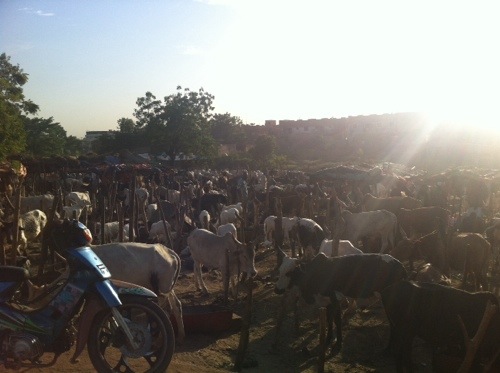
18.) Oxen herds roam the highway, and everywhere else actually.

19.) Celine Dion is always on the radio. Her French songs play in French West Africa, and her English songs in the anglophone countries.

20.) Sitting cross-legged is impolite. Sit with your knees together and a straight back anyone in front of any official.

But, these wierd things have all become less and less wierd as I get used to them, so now their just regular normalities Ill probably miss when I leave this place…

Nevermind Mali, everything's fine

20131123-205301.jpg

It didn’t seem like a good idea to go to Mali, but then again no one really knows what’s going on there, where it’s all going on, or how safe it is for regular tourists. The locals are still traveling between the borders, so it couldn’t be that crazy to go, but after 32 hours straight on the same bus, it felt a little stupid. There was no AC or windows on the bus, or toilet or garbage cans, so the floor slowly filled with peanut shells and plastic as we put-putted our way east. We made toilet breaks on the side of the road, when everyone had between 30seconds and 2 minutes to piss on whatever rock you found, a few meters away from the next persons rock.

Mali was the first country in West Africa I’ve seen mountains. The horse drawn carriages of Dakar were replaced by a bunch of Eyore look-alike donkeys. The nighttime screams of crickets and grumbling of frogs was weirdly replaced by peacock calls. The local language Wolof, which had started to sound familiar, is now something stranger called Bambara, but French still remains, thankfully. Watermelons are in season, and I’ve seen piles as big as cars sitting on the side of the road. But everybody is selling a hundred watermelons, so I’m not sure how anyone ever gets rid of a car-sized pile at the end of the day.

I took a wander around the sprawling centre-ville of Bamako and got kicked out of the grand market at prayer time. It was Friday and the hustle and bustle came to a halt immediately after the call echoed over the mosques loudspeaker. As every man in sight rolled out a mat to kneel down on, the streets were even blocked from car traffic, and every woman magically disappeared. They rerouted me twice from the main roads I was walking on, and eventually I ducked into the only cathedral in Bamako to avoid my insulting presence (which stood miraculously on the second detour road).

I’m couchsurfing in Bamako and loving my French/Congolese couple hosts. Today we went to the zoo and the last few days have been spent running regular day life errands, which is basically all there is to do in this unsociable town. They say it’s because of the situation in the north, but it’s strange to see an icon of West African tourism advising foreigners not to go anywhere or do anything. Not even Timbouctou or Djenne. But I’m not entirely convinced…

20131123-205801.jpg

5 Lessons to Learn when traveling in West Africa

20131122-181058.jpg

1.) There are three questions you should never ask:
-how long does it take?
-where is an atm?
-where can I buy wine?
First of all, no one has any idea (or respect) of time, so 3 African hours can easily equal 6 normal hours, and you have better luck asking how many kilometers are left, although that still doesn’t help you guess how long until you’ll reach your destination. The roads are pretty terrible, and none of the stops along the way seem to be planned or timed. But Bon voyage anyway 🙂

Secondly, no one here seems to use banks, and almost no one I met has ever needed to use an atm. The idea of using a machine to make money appear out of thin air is another reality for them, and when they’ve never had to do it, they have no idea what kind of place your looking for. Most times we ended up at a cell phone credit recharge place, since that’s the most common way people share money, or a western union, which is one place they know cash can magically be wired to someone in Africa. I ran into one cleaning lady who had been sent to an atm to withdraw cash for her boss, and she needed my help to insert the card and type 80,000, since both were feats she couldn’t imagine doing herself.

Thirdly, in a majority Islamic culture, wine and beer aren’t sold just anywhere. And where it is sold, the sellers aren’t advertising it. So the shop right beside will have no idea to send you next door, and will usually send you instead to the nearest big city, sometimes hundreds of kilometers away. In St. Louis, we bought the alcohol from the city distributors, who supply the hotels, since we never found an actual store. So better yet, don’t plan to drink anything but dirty water and warm soft-drinks.

2.) Bring a lot if passport photos, atleast two per country, and expect to spend most of your budget on visas and random border or security check-point bribes. And try to get a visa for the next country as soon a you arrive in the neighboring country – sometimes it takes a few days and weekends don’t count.

3.) If you have time, you can save money, but if you have money, you can buy a lot of time. Transport is slow, hot and uncomfortable, but domestic flights are sometimes more expensive than a flight to Europe. So stick do the crappy roads, just remember not to ask “how long does it take.”

4.) If someone stares at you, especially if he does it for a long time with a serious face, all you have to do is say “Bonjour, ca va?” And his face will quickly break into a smile as he replies “bonjour ca va bien” and looks away shyly. But don’t ask too much more or else you’ll have a shadow following you for the next kilometer expecting more conversation, money or food.

5.) Always carry small bills and lots of coins with you, even if it weighs down both your pockets. Few vendors or taxis have change, or are willing to make change, and they’ll take ages to break your bills, asking every other vendor or driver around for change they also don’t have.

Food and Fun in Senegal

20131119-133613.jpg

I was getting used to eating bread and boiled eggs sold in old Deutch newspaper, and water and soda sold in plastic bags, but then Dakar happened and I’ve even drinking French wine and coffee that isn’t instant Nescafé for the first time since I left Paris. The restaurants and bakeries here are amazing, with fresh caught fish cooked in other ways than just oil-fried. I ate the best mutton stew I’ve ever tried, at my newly adopted female-only family, who also taught me how to cook traditional fish and couscous in the Senegalese way. They used their hands and a dull knife as their cutting board, their fingers to juice the vegetables, and a mortar & pestle to squash the spices. They had an intricate system of water buckets, some filled with clean or dirty water, for cooking with drinking, or washing their hands or the couscous. They had one iron pot and one propane tank, and the entire feat took 3 hours to finish. After it was all ready, we feasted with our hands out of the same steel bowl, as many families are used to eating all their meals from the same big bowl.

Tea-time is another two reoccurring tradition in West Africa. Thé a la menthe is mint tea they brew very strong with a lot of sugar, and serve it in little glasses that have to get passed around and shared by everyone. The kitchens are usually located outside, nothing more than a few coals burning on a small metal stand, or one pot sitting on a gas tank. They squat over the heat and need only the light of the heat to see everything their doing, and the dusty pavement serves as their counter tops to store the bits and pieces of food needed to go into the pot in a very particular order.

I went to a local nightclub called D Yengoulene where the crowd was majority men, but that didn’t stop them from dancing together. They grouped together for some synchronized dancing, and the better shakers faced eachother in intense dance offs. It looked like a big music video audition for Jay-Z or something, since each and every guy on the dance floor was as captivating to watch as the next, all of their movements totally fluid and in rhythm. When a girl got into the mix, the show quickly turned into a porno-film rehearsal, since the men took the girl into as many different sexual positions as he could think of and dry humped her as fast as he could. I wouldn’t know if I call it dancing, but I knew it was dangerous to dance anywhere near them, since dancing with them would have put me face first on the floor.

We went to an open-air DJ concert in some random industrial area, and the vibe was like any summery music festival in Europe. There were two guys doing tricks on roller blades, dancing to the music while navigating a course of small pylons. The place was full of white hippies and hipsters, and I ran into the designer of an African handmade tshirt I was wearing.

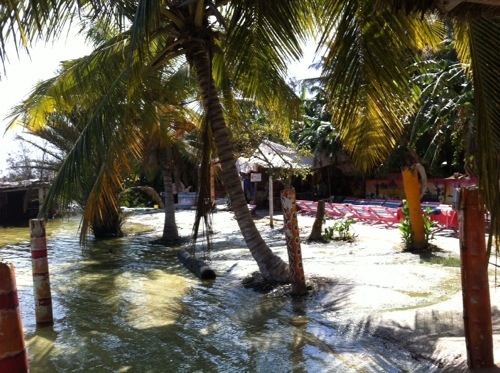
There have been a lot of other memorable, funny moments. I saw a paralyzed hedgehog falling asleep on his tiresome journey across the hotel grounds in Lac Rose. And Lac Rose wasn’t even a pink or purply lake, it was more like a greenish flooded salty pond. You didn’t really float without swimming either, but swimming in the pools and beaches has always been fun for a few different reasons. One is the waves, who crash ontop of you as warm, clean water with a sandy bottom to always get back up on. The other is the locals who can’t swim, and many are just plain old scared of the waves. I tried to teach my fiend Dawda to swim in Senegambia, but he just ended up sinking under water every time he lifted his feet of the ground and snorting a lot of salt water up his nose.

“Wow” means yes in Wolof, and I keep mistaking people to be in awe every time they shake their heads and slowly say “wow” when I ask a question. I learned a few other phrases in Wolof, but those who don’t speak French are usually quite difficult to communicate with. Even place names have a local name, so trying to get a bus to St. Louis meant we had to listen for a guy driving by screaming “Luganda”. Many taxi drivers are illiterate, so writing something down or even showing them a map just ends up in them staring blankly at the screen and saying “wow”, even though they have no idea where they’re going. A taxi driver will always shake his head yes when you ask him if he knows where a place his, and in the same movement say a price. Once you’ve agreed on a price and he’s gotten you in the car, then it’s always fun to slowly realize that he has no idea where he’s going or how far it is. Then he starts to complain about how little your paying as he starts to ask every block where the place you’re going is… Until he eventually finds it (which is almost always).

20131119-133709.jpg

Fashion and transport in Dakar

20131117-192354.jpg

I had high expectations for Dakar, after hearing so many wonderful things about this cosmopolitan city people call the capital of West Africa. Sure enough, the rain-washed dirt roads turned into divided highways and tunnels and overpasses, traffic jams became even more polluted, and the welcoming sight of electricity lasted 24 hours. Reaching Dakar was somehow like breaching a border, a transition from humid wet lands to desert dry lands, and traveling from the post-card picture of West Africa to a more North Africa meets the Middle East. The dust roads and light-skinned faces made me feel like I’d reached a new land, and the invasion of metropolitan Frenchies made me much less exotic than I had been elsewhere.

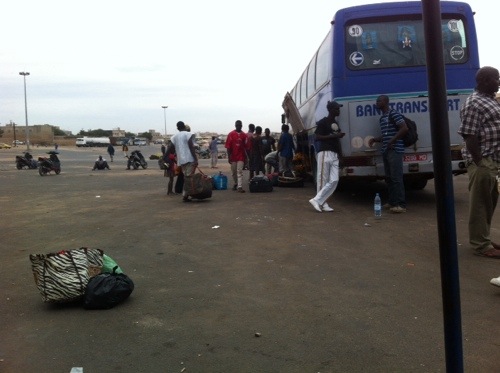
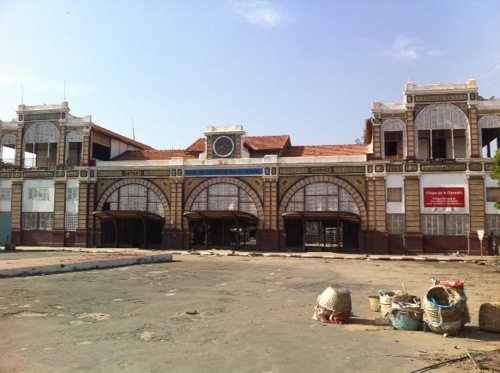
Dakar is a harbour city, jutting out on a crowded peninsula with the international airport basically in the middle of everything. The abandoned railway station no longer works, but instead a few squatters have called the colonial refuge building their home. The central bus and taxi station is a big waste basin, splattered with urine and empty plastic bags outnumbering the decapitated sept-place cars drivers keep hassling to fill. A “seven seater” is the means of long haul travel in Senegal, which is usually a rusted old hatchback car, usually with most of its windows intact but not much else, and incredibly uncomfortable for hours of travel. The gear shift usually reaches all 5 gears, but you’d be lucky to have a car where the gas or speed gage works. It’s probably for the better, since you don’t want know how fast you’re going, since you’re almost always going too slow (and still the car shakes in the wind and bottoms out over every pothole).

The problem with the plastic bags is enormous… you can basically buy everything and anything in a plastic bag, and here they have little or no system of garbage disposal or recycling, so the streets and fields end up covered in plastic. You buy salt, sugar, water, oil and even soda in a bag, a convenient, single-use way for street sellers to sell them individually and through broken car-door windows.

The other main street selling merchandise is second-hand clothing. Containers full of Salvation Army donations that can’t get resold in the first world arrive here a few years later, and the outdated fashion and random t-shirt branding gets very confusing – yesterday I saw someone with a UC Berkeley sweater and I almost approached him saying “hey, I went there too!”.

People wearing sweaters and scarves is weird, since it’s always so bloody hot, but what I really can’t figure out is all the hats. The men cover their shiny black heads with toques and woolen hats, which I can’t believe is cooler for them than letting the sun shine on them, but they must believe that the hats somehow insulate the heat out, or they’re just like regular old white men who are having a hard time dealing with balding… either way, my favorite look is still the men and women in flowing dresses covered in colorful patterns, with their heads covered in large baskets and buckets carrying tons of who-knows-what.

20131117-192501.jpg

My New Fear of Boats

20131119-110833.jpg

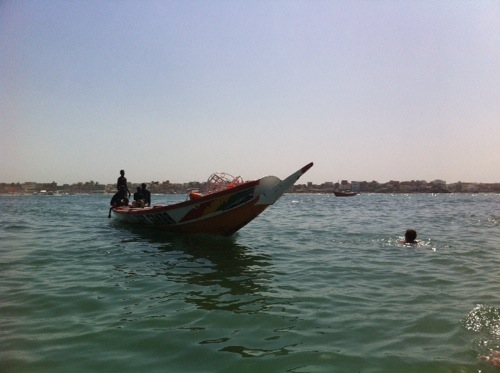
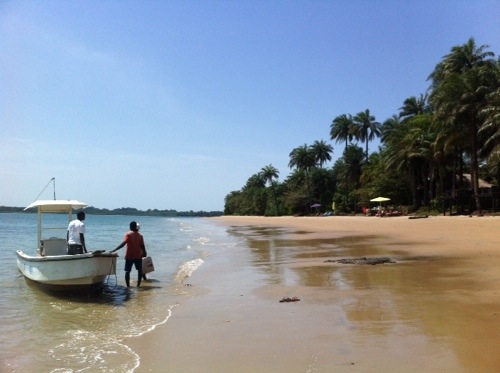
Wandering around Africa’s west coast has needed a few boats from time to time. Our first canoe ride, between the Gambian and Casamance border, got us across the river, but not legally into Senegal, only stamped out of Gambia. The next boat we searched for was a ferry from Bissau to the islands of Bijagos Archipelago. Once in Bissau, we realized it’d be hard to find water, electricity, and money, but didn’t expect how hard it was to find out if and when the next boat was going to Bubaque, the main island in Bijagos. We did find out the once weekly ferry was broken down, which usually went on Wednesdays, Fridays or Sundays (we’re still not sure), but knew that sometimes canoes made the journey instead. We wandered around the hangout for half an hour, talking to the market sellers, military soldiers and fisherman, before finally finding a boat that went at 10:30… no 11…. Actually it left at 12… But that’s still good time in Africa. The journey took 4 hours on a hard wooden plank, but with shade, a cool breeze, smooth seas and the tide in our favor, it was much better than the 5-7 hours the canoe could take.

Next boat to find was one to take us from Bubaque island to the national park at Orango. That boat was also only once weekly, on Saturday, but we wanted to go Sunday or Monday. Through a gay Spanish guy on the island, we met a local fisherman’s brother, his lover, who agreed to take us plus two other backpackers to Orango on a wooden canoe. We agreed to pay for 50L of gas plus some extra to pocket, but he only bought 25L and we set off, saying that the small engine wouldn’t need more. 5 of his homies came too, and we had to drop one of them off in the middle of the jungle where she lived. Once we arrived in Orango, 3 hours later, we had no gas left. Thus, we couldn’t cruise around to see the salt water hippos, or return home for that matter. After negotiating with the captain of a fishing boat, we bought another 25L of gas, and set off back home.

Then, we had to stop again at the village, to pick up the girl again plus half the village’s supplies. With a chicken and some more cargo, we set sail just before sunset. But, we didn’t make it far before the engine stopped working. After some small efforts to fix it, the sun disappeared behind the sea, and we were left floating in the dark, miles from shore and even further from Bubaque, our destination. We and the chicken got more and more restless, as the cockroaches on the boat started exploring the bottom and sides of the canoe with the cover of dark. Dolphins popped up around us, but we could only hear their splashes and blow holes exhaling, since not even a moon shone down on us. No boats were in sight, but once in a while the bioluminescent creatures in the sea sparkled in a wave.

After about 5 hours of floating hopelessly, wandering what to do and using the only phone on the canoe that had call credit, we reached the same fishing captain from Orango island to come rescue us. After 2 hours of them searching for us in the pitch black, they found us, but then began an hour of quarrels about needing more money and gas from us white folk to get the canoe to land. We basically did what he said, just so we could leave the canoe, since he started threatening the fisherman with the military for “stealing his clients without paying.”

We returned back to Orango at midnight, got well fed with the days catch, and slept like angels in beds we never thought we’d see again. The extravagant bill for the rescue mission, dinner and hotel came the next morning, and we were still far far away from Bubaque. We then found a hotel shuttle boat to take us, for another large cost, and finally got home to our wallets and backpacks to settle all our debts.

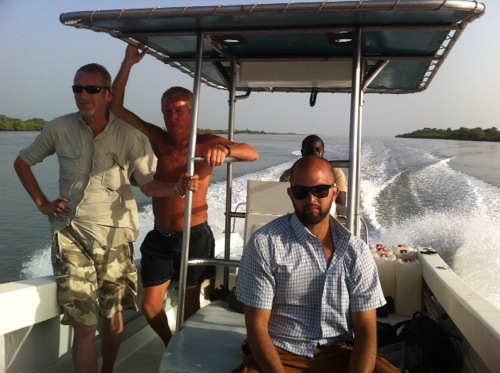
The only blessing in disguise from that catastrophe was the fisherman, who offered to take us the following day back to Senegal in his speed boat. Needless to say, that also turned into a small disaster. Our supposed 4 hour transfer took 9.5 hours, after the GPS broke and we lost sight of land. We weren’t sure how lost we were, but no one knew how to head east according to the sun except me. We then almost ran out of gas, but finally made it back to Casamance after a small lifter-upper – a pod of dolphins had greeted us on our way and surfed the waves of our boat for a small moment of beauty in all the stress.

The next boat was supposed to be an 18hr ferry from Ziguinchor to Dakar, but we had quickly had enough of sea travel, and decided to take a shared taxi by land instead. That journey turned into 13 hours instead of 6, since the car broke down twice and we needed to wait for yet another boat to make the ferry crossing through Gambia. After finally arriving in Dakar, I’m happy to say the future of my west Africa trip lies inland, and I don’t have to deal with any more boats or ferries, just a whole lot more taxis that always take twice as long as they’re supposed to.

20131119-110908.jpg

Transit to Guinea-Bissau

20131119-111421.jpg

I have been in West Africa for only a week, but it feels like a month has already passed. I can’t even remember the sensation of sleeping under a blanket, and it seems my throat is having an allergic reaction after sleeping in an air-conditioned room last night. The AC only brings the temperature down to about 25 degrees, and you don’t really notice or appreciate the difference until you step back outside into the humid, sticky, reality of the outside temperature. The make-it or break-it of the 35 degree days isn’t necessarily the temperature, but the humidity level, whether or not there’s a breeze, and if the sun rays bare down on you directly or not. Shade is a luxurious commodity, and the coming of nightfall is always a welcomed relief.

When it rains it pours, and makes things slightly cooler, since a breeze usually accompanies the rain. The rain washes away the stagnant smell of old water pools, but brings more humidity and new mosquito-breeding puddles. Showering is a fun surprise from day to day and place to place. Most “showers” are big buckets filled with water, and a little bucket you’re meant to throw water over your body with. It’s the same bucket you might use to flush the toilet, if there’s a toilet, since it’s almost never connected to running water, but only a hole in the ground. Toilet paper is a rare discovery, and I still haven’t figured out what women do when they have their period.

In Bissau, electricity is also hard to find, and the city turns into a loud grumble around 6 or 7 pm when all the generators start up. It cuts out regularly, and most of the mid-town area stands in dark silence. On the way here, our bus took nearly 8 hours to drive the 110km between Ziguinchor, Senegal, and Bissau, the whole time with the gas light warning lit up. I think he only bought 7L, so I’m still not sure how we got here. The duck and chicken crossings may have slowed us down a bit (chickens are faster to cross the road FYI), but more so the livestock crossings (cows and goats are a little more chillaxed), and a crocodile even crossed the road twice without getting run over (I didn’t know they could move that fast).

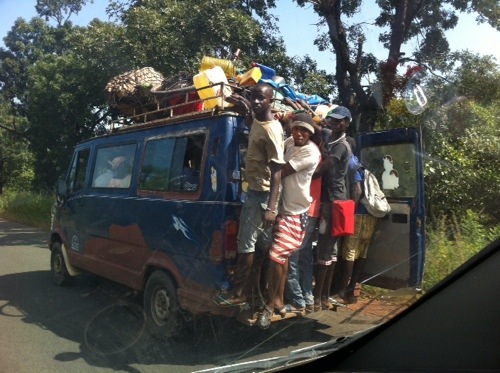
Mostly it’s the check points and all sorts of customs officers that slow us down. I counted more than 10 check points, half of which required us all to get out of the car, walk an arbitrary 50m, then pile back into the sweaty, stuffed seats like sardines again. Despite all these delays, the local villages still think it’s a good idea to put huge logs in the middle of the road to deter our speed… As if we really needed speed bumps.

Traveling by land has been really interesting, as we reach these places I’ve heard of or seen marked on maps, but they’re more like non-places, rusted signs on the side of the street marking a place where some people may live discreetly. It’s hard to come to a place you’ve never hear of before, imagining it a certain way based on the last place you where at, but it never quite reaches your expectations for a cleaner, more organized, or civilized city. The concept of city is just something I’ve thrown away, since African cities are never everything you hoped for, and today we were lucky to find a bank in Bissau that we could actually withdraw money.

We’ve been traversing not only borders, but colonial histories and different languages. Though many people in Gambia, Senegal and Guinea-Bissau speak some common local languages, they’re educated as children in some “official” language – so far, it’s been either English, French, or Portugese. It’s very strange to hear the Brazilian flare in people’s greetings, but the official language thing isn’t really holding up. Many children don’t go to school, and those who do never use the “official” language at home or with friends, so these European languages are just insignificant rules for those who want to get a job in government or tourism. Otherwise, they see no use with them, but it’s definitely a relief for me.

The one thing that’s kind of remained consistent is the blend of religion. It’s been majority Muslim so far, with the 5 daily calls to prayers and Arabic schools and writing splattered around from here to there. But all of West Africa has seemed a little bit like West Indies déjà vu. The dreadlocked Rastas and reggae music is one and the same, while the curvaceous and well-endowed women know how to shake what they’re mama gave them. The palm tree beaches could easily be a Caribbean island, with the smoke of Mary Janes a common scent every evening. They suck their teeth to express discontent, and do that super irritating “psssssst” to get your attention. The Caribbean islands should really be called the West Africa’s, the faces of both places resembling eachother perfectly, but the biggest thing that separates them is religion. And the Christian West Indies also drink more beer.

20131119-111518.jpg