Islands and islets in New Caledonia

Vanuatu had a mixed French-English history, but now in New Caledonia it was all French, about as Frenchy as it gets. It’s like you’ve dropped down in tropical Paris after weeks of fighting for electricity and something to eat that wasn’t rice or fried. Now there were supermarkets stocked full of cheese, pastries, wine, and vegetables that weren’t in season. You could eat lunch at a creperie and filet mignon for dinner, but you’d also have to pay the Parisian price for it. The cafes and bars were lined along the beach, so you could take a dip in the crystal blue water between lunch and dinner while working on your tan. The highways were painted and streets were signed, and a lot of fare skinned youngsters drove around in tiny Peugots.

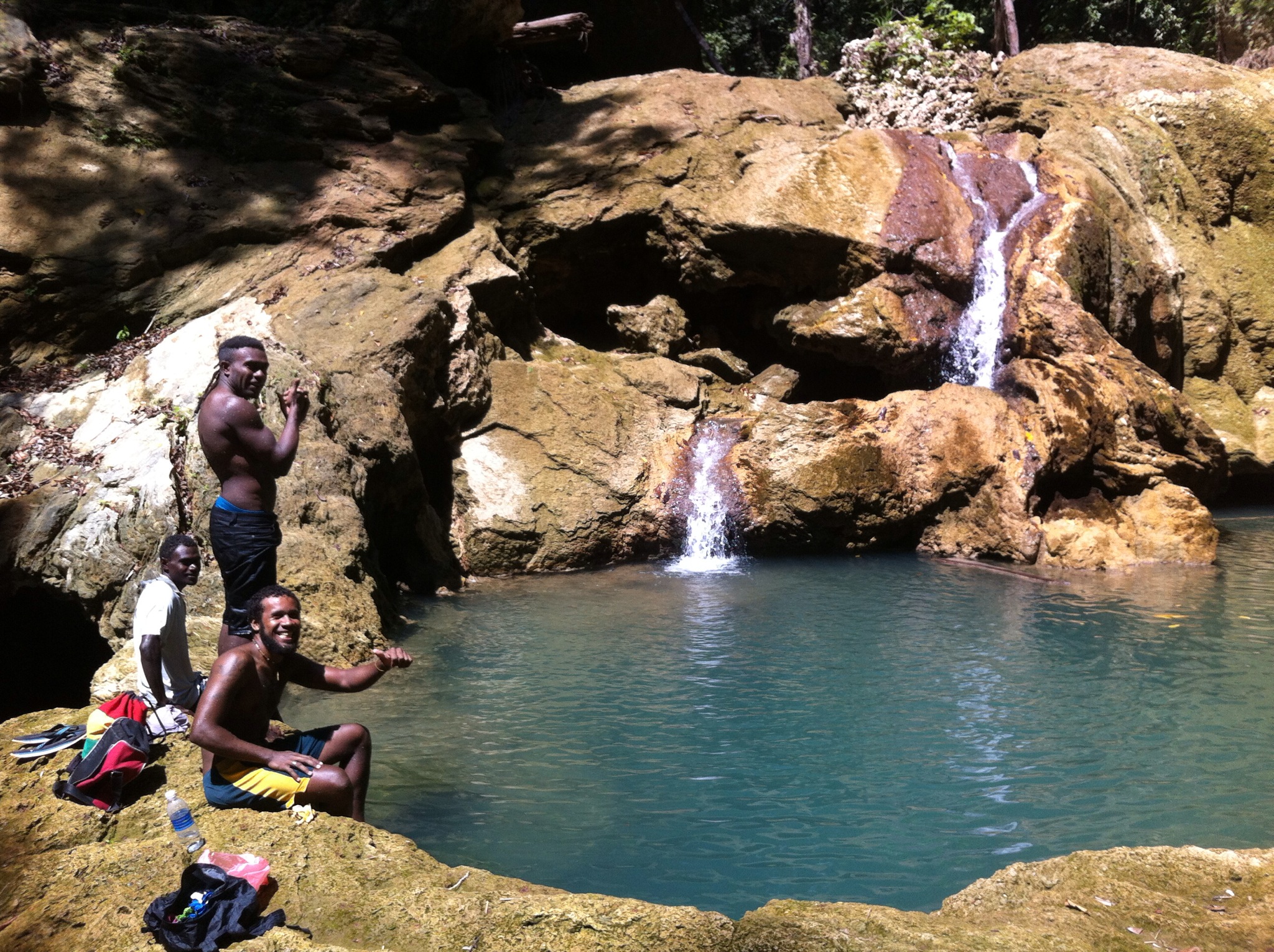
cliff jumping in Dumbea river

cliff jumping in Dumbea river

I looked for a host on couchsurfing, and stumbled upon the same guy that hosted me a year and half ago in Martinique. Him and his roomates treated me like a guest of honour – I took the penthouse bedroom in exchange for cooking meals, and they took me to two of the most beautiful places in New Caledonia. First we spent the day at the base of a water dam, where a bright blue lagoon sat amidst cliffs and house-sized stones that you could jump off from different heights. The second day we hiked 2 hours into the Dumbea river valley, filled with waterfalls and freshwater pools, and did pretty much the same thing.

bungalows at Ilot Maitre

bungalows at Ilot Maitre

While the boys were at work every day, I busied myself with ferries to different isles and islets around Noumea. Two of them are reached by a 15-20 minute water taxi: Ile aux Canards is a couple kilometers off the coast, about 200m around, filled with beach chairs and one little restaurant, but I spent most of my time there in the water staring at colourful fishes and huge corals. Ilot Maitre was slightly bigger, a long narrow strip of sand and trees surrounded by a hundred kites. It’s a kite surfer’s paradise on the windward side, and the leeward side has more corals and pretty fishes, plus a handful of luxurious bungalows built right over the lagoon for lovey-dovey Japanese honeymooners.

Amedee lighthouse

Amedee lighthouse

Amadee Islet was a similar size, but you can only visit by day and its a lot further away. Its kind of a tourist trap, but still a lovely, all-inclusive day trip to paradise island. Its the kind of island you’ve seen on a thousand post cards of the south pacific, the ideal, isolated palm-fringed, white sand beach island, surrounded by perfect reefs holding turtles and sea snakes swimming among the big parrot fishes. There’s a towering white lighthouse in the middle that gives you an amazing aerial view of it all. After getting our fill of snorkeling and beaching, we feasted on a seafood buffet while watching Polynesian dancers shake their tattooed bodies and hips adorned with leafy belts.

Isle of Pines

Isle of Pines

Ile des Pins was just that – a tropical island filled with pine trees! They stuck out taller and darker than the palms, but made the island look even more magical than it already felt. People actually live on Ile des pins (there hadn’t been any locals on the other little ones), but it’s a small, isolated and picture perfect place that’s catered to French, Australian and Japanese tourists to come and buy into a slice of heaven for just the day or weekend. The locals work according to the plane and ferry schedules, opening shops and cooking stalls just for our arrival, and once we’ve left or gone to bed, they disappear back to their private lives, unmolested by light, noise, or any sort of hectic stress that Noumeans have to live with.

Horsing around in Vanuatu

On my journey through PNG and the Solomons, I was trailing a few weeks behind a Bulgarian backpacker named Tihomir taking the same overland route. I found him through couchsurfing, and after exchanging a few emails with him and following his blog, I was able to plan my own trip. It followed pretty much in his exact footsteps, except that he crossed the border in Bougainville a bit differently and stayed with other people, but I would never have made it to Honiara without his help. Only a handful of tourists cross into the Solomons this way, and after being on the move for more than 10 days without ever really knowing how to move or where to stay, I looked forward to arriving in Port Vila and staying put for a while.

Vanuatu isn’t a stranger to tourism, so its okay to just show up with no plan and wing it. It’s an archipelago of 80+ islands and islets, and 65 of them are inhabited, with ferries, boats and little planes connecting everyone. The international airport is on Efate Island (the 3rd largest and home of the country’s capital city Port Vila), which is only 160km around but sustains 65,000 residents and a couple cruise ships a week. Its a bilingual place, with colonial ties to England and France, but its been independent since 1980. Now the largest ex-pat community is probably Australian, and they’ve managed to keep a few touches of European culture alive. The food, wine and coffee culture was an especially nice surprise, but my favourite hobby was horses. They had horse farms, horse breeders, show jumping competitions and trail rides, and I found the biggest herd at Club Hippique.

tropical horse paradise

tropical horse paradise

The owner there, Heidee, became my best friend instantly. I could talk to her for hours about horses, Iceland, life, or love. I basically moved in with her and her family for a week, and spent every day between the stables and her house. Her huge Great Dane and her cuddly cat took turns sharing my bed, and I have to stay I prefer the cat, since she liked to sleep on my feet and only weighed a few kilos, whereas the dog weighed 55kg and took up most of the mattress (she was always on my side of the bed!).

The farm sits on a big saltwater lagoon, so I could chose between kayaking or swimming with horses off the beach, or riding through a tropical forest covered in trails and coconut trees. I rode every day, I taught her lessons, and I trained her (recently gelded) stallion. At night we cooked dinners of steak or prawns and paired them with wine and champagne, and if I ever needed to go anywhere, I could drive her purple scooter (it only happened once – why would I want to leave that place?).

My visit to Vanuatu was a total breath of fresh air – slowing down the pace of travel and actually calling somewhere home for a while. I miss all the people and 4-legged animals that became my temporary family, and kind of wish I had stayed longer. I barely thought of doing any reading, writing, or researching for my upcoming trips, since I really felt as though I wasn’t traveling anymore. But now that I’m on the move again, I feel a little homesick and slightly disorganized… but hey, that’s all part of the package, so keep calm and travel on.

If you’d also like to live and work on Heidee’s farm, or just visit as a regular tourist, you can contact her through her facebook page, or apply to volunteer with her through Woof.

Munda to Honiara

From Gizo, I took a 2 hour speedboat to Munda, a touristy little town for divers to base themselves. No more expats or NGO’s, just legitimately interested tourists… but all staying in the confines of Agnes lodge, which is a hotel, restaurant and tour operator monopolizing all of the foreign money and white people that come to the island. I stayed at Munda Guesthouse, which was basically just paying a family $100 Solomon dollars (approx. $13US) per night to sleep in an empty room in the upstairs unfinished part of their house. Its incredibly comfortable, clean and cozy, especially in tropical rain storms, so I’d direct any tourist away from anonymous Agnes Lodge to this guesthouse, a few hundred metres away from the beach but nestled in a tall coconut tree forest (don’t forget to look up when you walk under them!).

IMG_4417.JPG

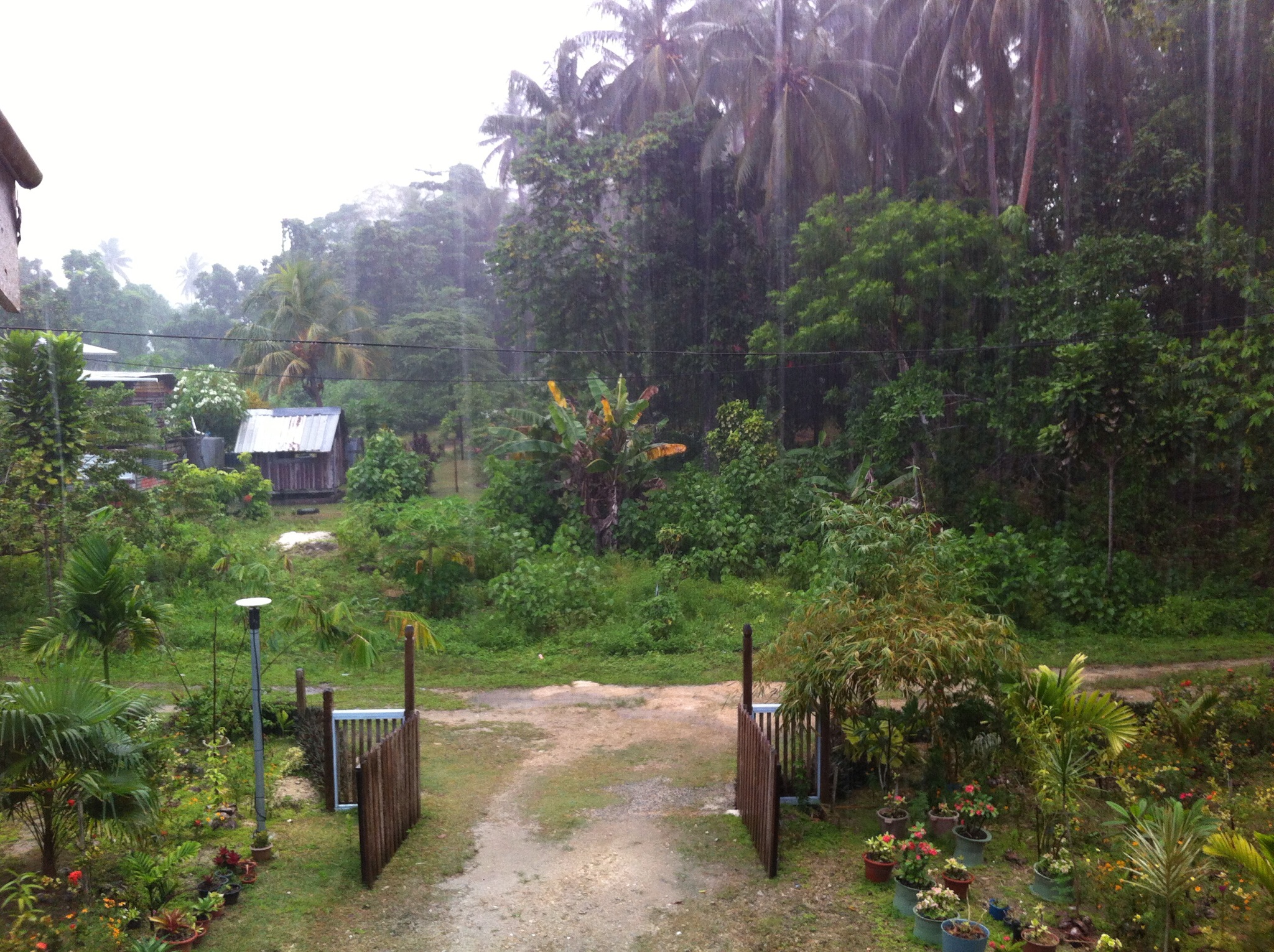
rainstorm at the Munda guesthouse

I learned that I’m quite the pool shark, after visiting the local pool bar 3 nights in a row and beating a lot of big men I refused to take bets with, but was paid in beer instead. I was one of few women, the others much older but all beautifully adorned with flowers in their hair, and some of them equally defeating in pool. I finally got kicked off the winner-owned table by one such woman, but made great friends with some politician, the son of the owner of my guesthouse, and a tattooed guy named Rex whose tattoos were barely visible on his dark skin.

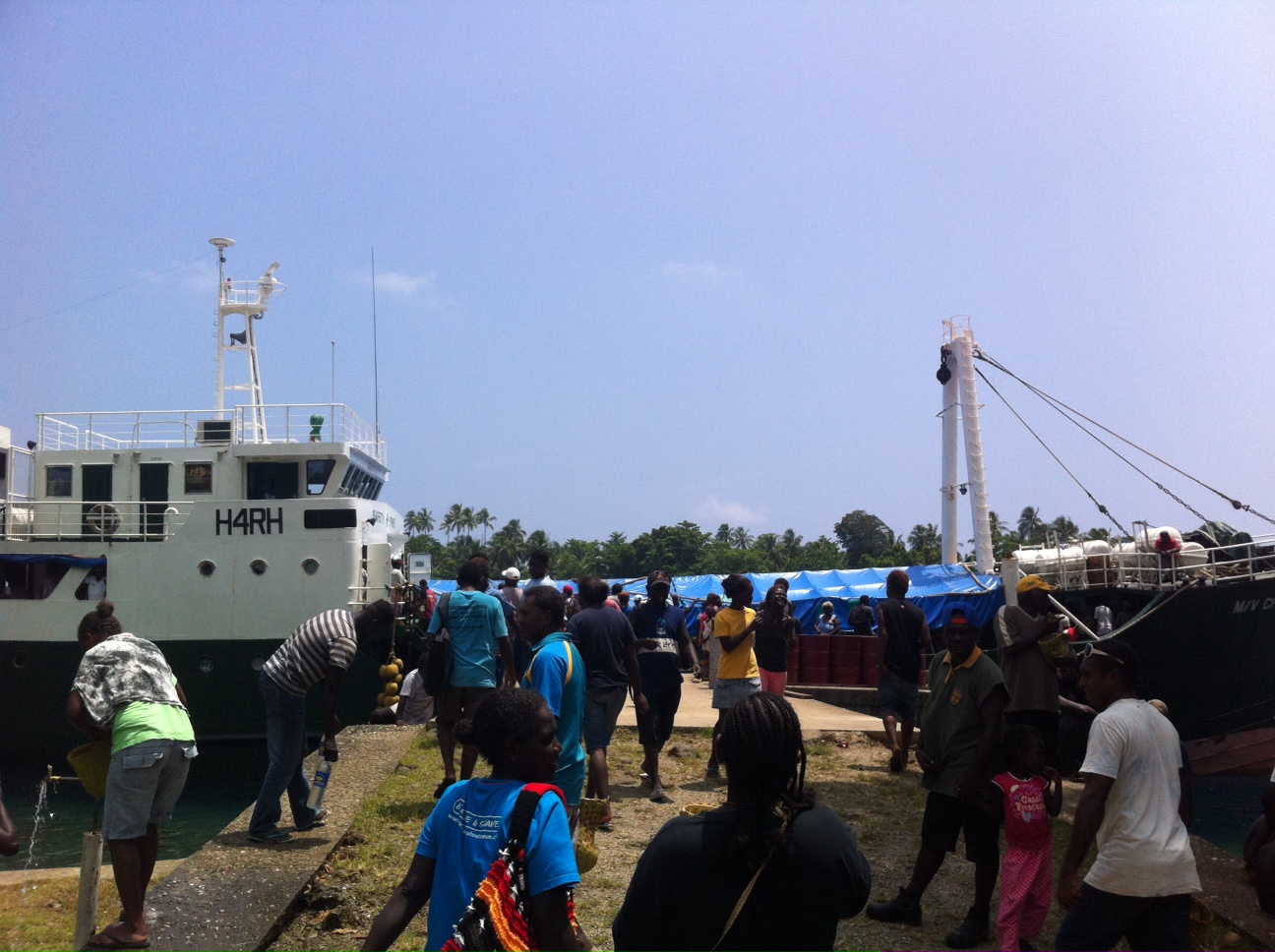
the MV Chanela, our carriage from Munda to Honiara

the MV Chanela, our carriage from Munda to Honiara

I later traveled with the mother and son from Munda guesthouse all the way to Honiara on an overnight boat, and she mothered me the whole way. She made my bed made with a mat and sleeping bag on the floor, sharing a crowded but air conditioned room with another 30 people sleeping on the floor. Our food for the journey, bought at different port markets we stopped at along the way, was seaweed and roti and cherry tomatoes and clams… not the best mixed together but seaparately, all delish.

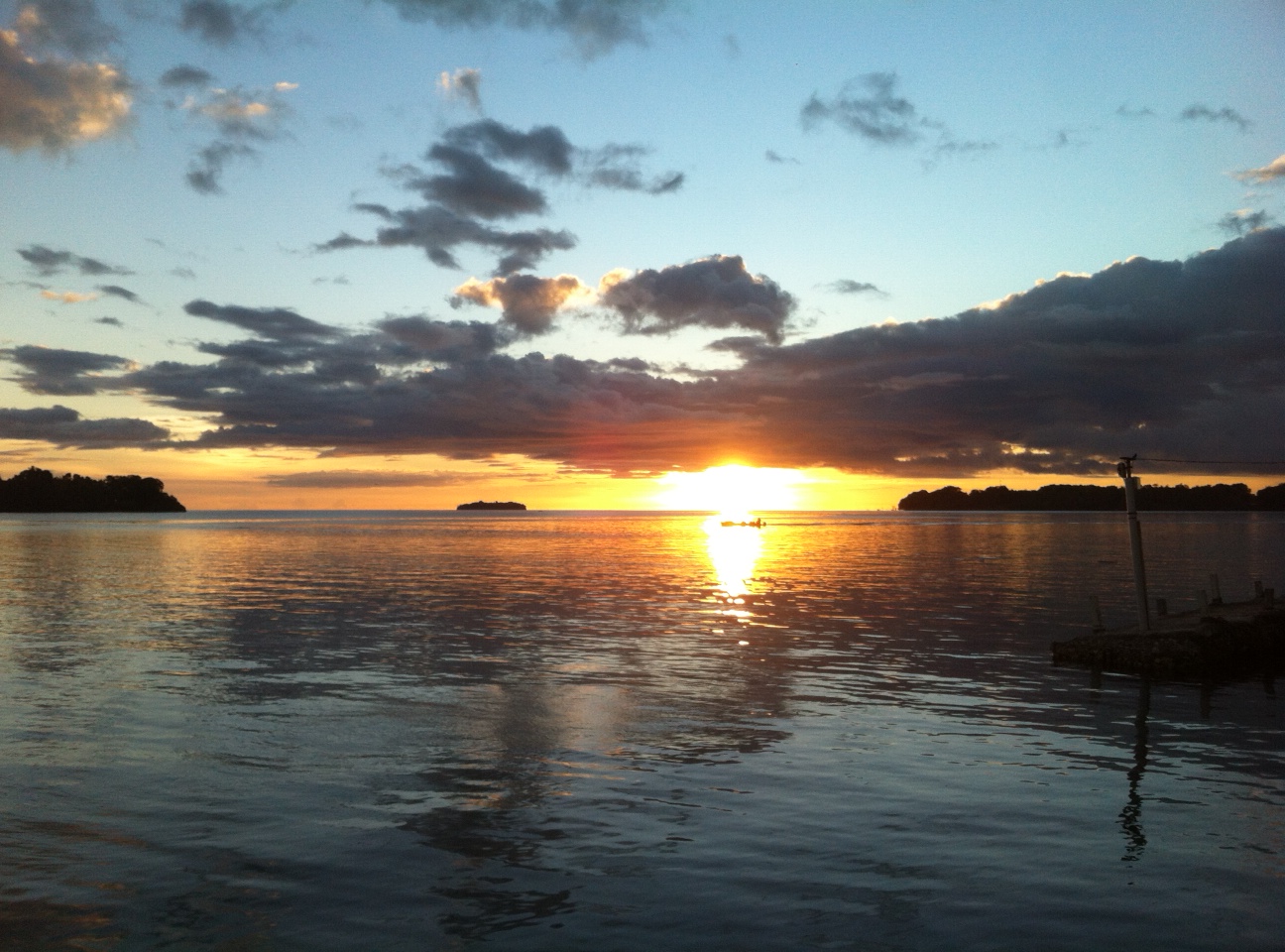
sunset from the ship

sunset from the ship

In Honiara I stayed with Sara at the Hibiscus homestay, and she had the most rotted red teeth I had seen yet, since she still had all her teeth! I never saw her spit, but she was always chewing on something, and covered her mouth whenever she smiled or laughed. She wouldn’t let me sleep in my hammock, but she slept in it and I got the bed. She fed me food whenever I was home for mealtime, and I’ve never tasted such tasty rice… it must be the cinnamon she puts in the accompanying pork dish.

My favourite part of Honiara was a little ways inland, where little villages settled along a river leads you to a waterfall called Mataniko falls. Its only a few kilometres from the sea, but it’s a roasting 1 hr hike in, where only the last few minutes offer any shade whiles you climb down into the forested canyon to get to this little paradise oasis of cold, blue water after being scorched by the sun. Instead of hiking back along the barren hill tops, we followed the river back out to town, swimming with our shoes and clothes in one above the water to keep them dry. Sometimes we could walk in the shallower bits, or follow the river bank, but we were basically stuck in the narrow river canyon, climbing over fallen logs and big rocks, and only encountered some tiny frogs, a few fish and one eagle on our wet and windy way back.

IMG_4456-0.JPG

Mataniko falls

A Warm ‘Welkam’ to the Solomons

Once I landed in Gizo, I really felt like I was in the second largest town in the Solomons, landing on a tarmac runway, pulling into an actual wharf (the airport is also on a neighbouring island connected to Ghizo island by banana boat transfer). But, with some perspective, I later realized that it was hardly a town, but a busy little village, with a handful of hotels, shops, and only a couple of unsealed roads, churches and banks. But I was able to withdraw money, check into my own private guesthouse (tourists are a rare commodity in the northern Solomon islands), and feel like I had returned to predictable civilization.

sunset in Munda

sunset in Munda

But the everyday things hadn’t changed much from Bougainville – people who spoke the same local language called eachother “wantoks” and their pidgin english was basically the same. The market had the same fruits and veggies for sale, the betel nut and cigarettes were sold on every street corner, peoples red stained smiles matched the red spit-covered dirt roads, and still everyone smiled at the sight of such a lonely white girl so far away from home. People’s faces and hair were lighter, perhaps also a bit bigger, and the prices of things had gotten cheaper, so as much as I had liked Bougainville, I was happy to be in Gizo where I could afford more and stand out less.

There are a bunch of islands, both smaller and a lot larger, surrounding Ghizo, comprising the Western province, and between them, a bunch of WWII wrecks and amazing coral reefs. But, unless you’re a scuba diver or an endurance freediver, they’re pretty hard to get to, especially if you’re the type that’s claustrophobic under water in open seas.

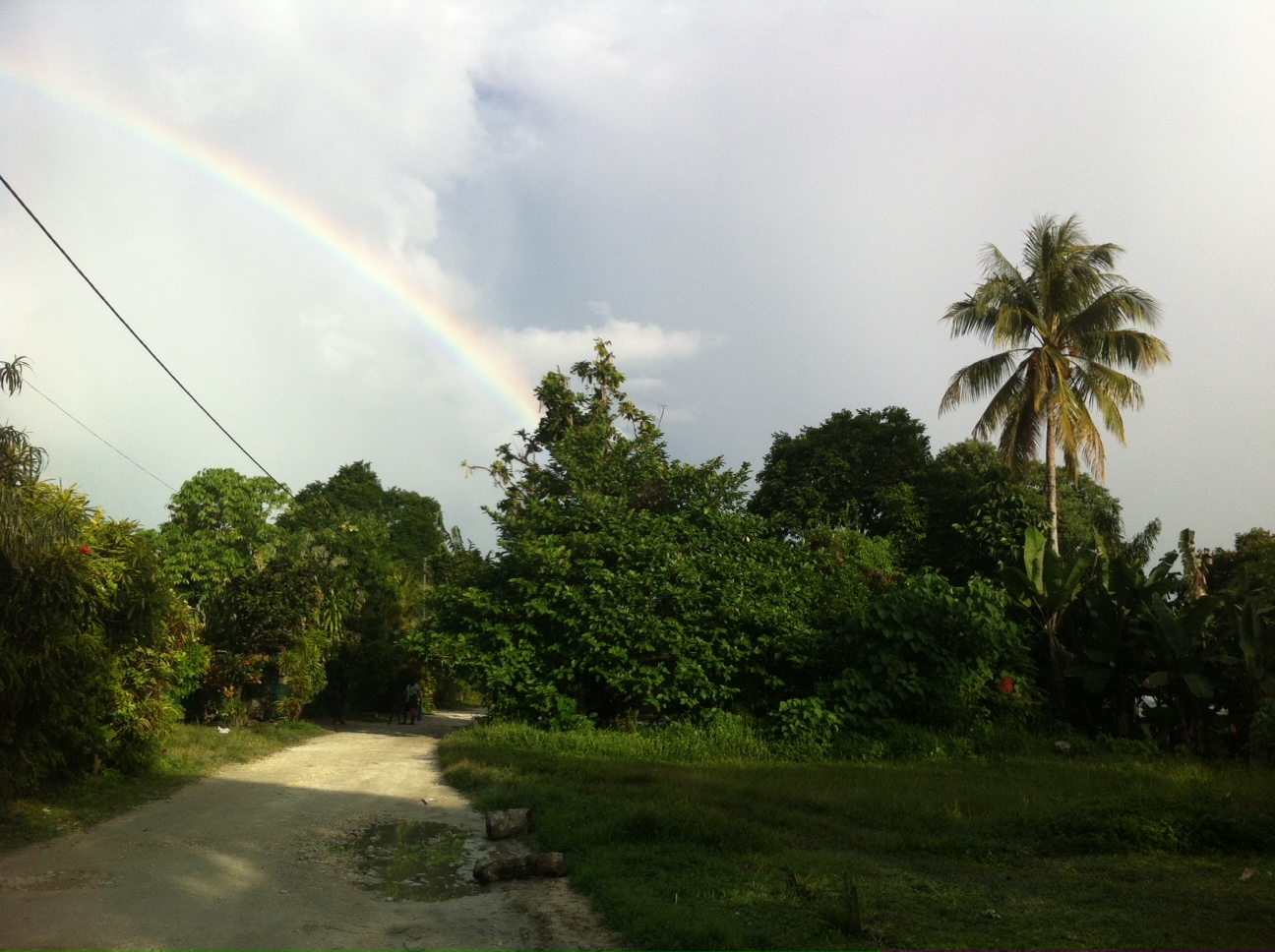
rainbows and dirt roads, isnt it beautiful

rainbows and dirt roads, isnt it beautiful

They have a saying here, or at least a slogan I saw printed on tshirts: “Solomon Islands – as beautiful above as it is below” with a picture of the palm tree beaches and mangrove forests filled with birds above the colourful scene of an underwater reef and all its peculiar fishes. I decided to stick to the above water half, especially since the people (which this picture fails to acknowledge) were my highlight. They always make eye contact and greet you, which, if returned, turns into huge smiles and more glances. Sometimes your face can hurt from smiling so much, since they’ll actually smile to the breaking point of laughter, and since you don’t want to feel like you’re laughing at them laughing, you try to keep a controlled smile, but their rotting red teeth are somehow more comical a sight to see stretched out in such care-free happiness.

Crossing the PNG-Solomon Island border by banana boat

I’ve had some wonderfully unorthodox border crossing experiences before. I walked into silver-back gorilla territory of Congo and rode a horse from Honduras to Guatemala, and I’ve taken my share of private and public boats between islands, but the little banana boat that took me from Bougainville to the Shortland Islands was a pretty simple journey. If I hadn’t known before that a border existed between these islands, I wouldn’t have believed it, nor would there have been so much stress around getting a boat in time. Its hard to explain in words but a google map search will show you that big Bouganville, as underdeveloped and inaccessible as the southern part is from the rest of Papua, is only 10 km from the Solomon owned Shortland islands, and they are just a tiny, undeveloped, far off islands in comparison to the rest of the Solomons… so the Solomon islanders go to Buin, and Bouganvillians trade with them. They exchange fish and jewelry at the market, and the only petrol station for all their little banana boats is in Buin.

Rainy Ghizo

Rainy Ghizo

There’s a small market on Thursday (mostly catering to the Sabbath observing Seventh-day Adventists), and the big Market on Saturday, when other Bouganvillians from Arawak and even Buka come all the way down to Buin. I got there on a Wednesday night, and stayed at one of the unnamed guesthouses (there are around 3 or 4 but none of them are named or signed but all cost 180/120 Kina per night with/without dinner and breakfast). The PMV driver from Arawak (PMV’s leave from the Arawak market in the afternoon, around 3pm, but also early mornings on Thursday and Saturday) took me to the main guesthouse, or I guess the best known one, which is owned by a guy who owns ‘Lease Investments’ but run by a plump little buck-toothed lady. I had missed her dinner serving so had to wander around the sleepy town to find the one open shop selling some canned tuna and cold coca cola, since the betel nut and beers didn’t seem an adequate meal.

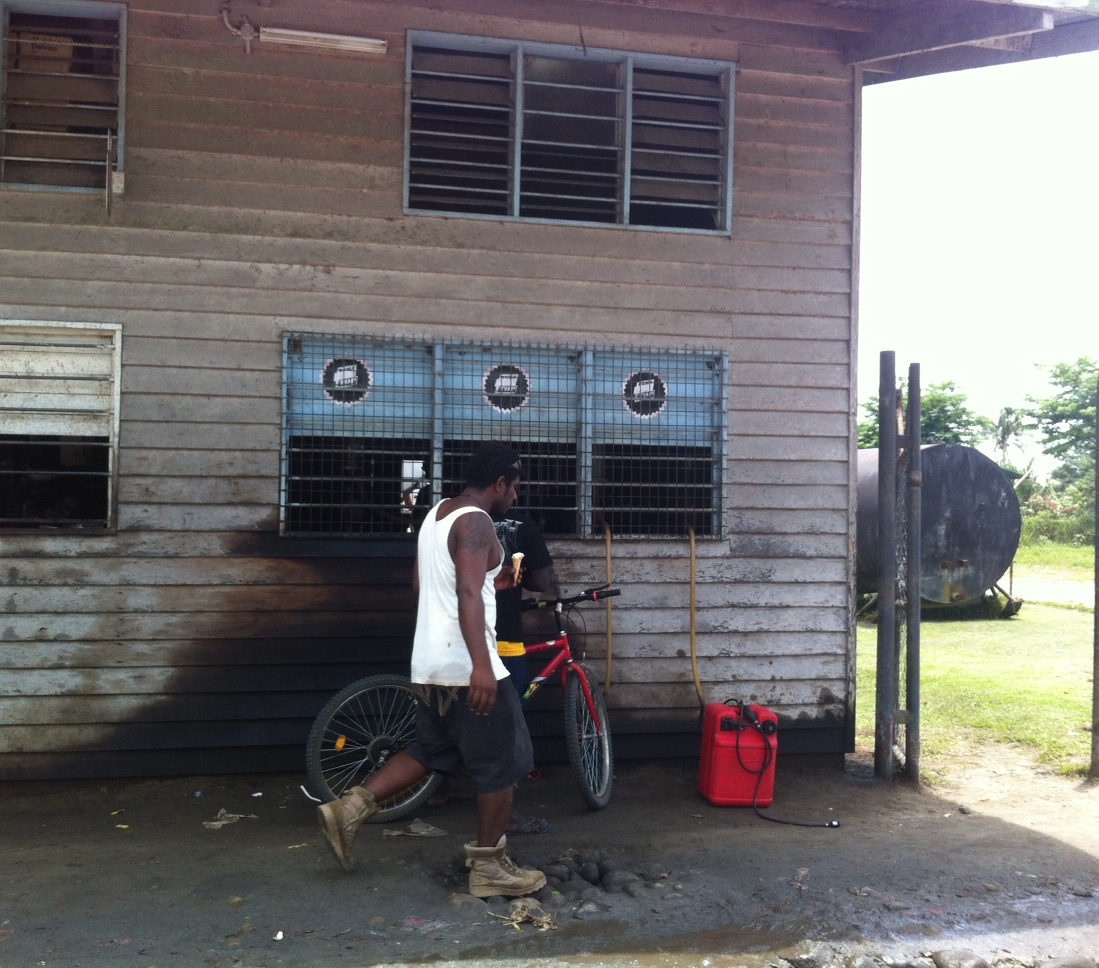
my captain getting fuel in Buin

my captain getting fuel in Buin

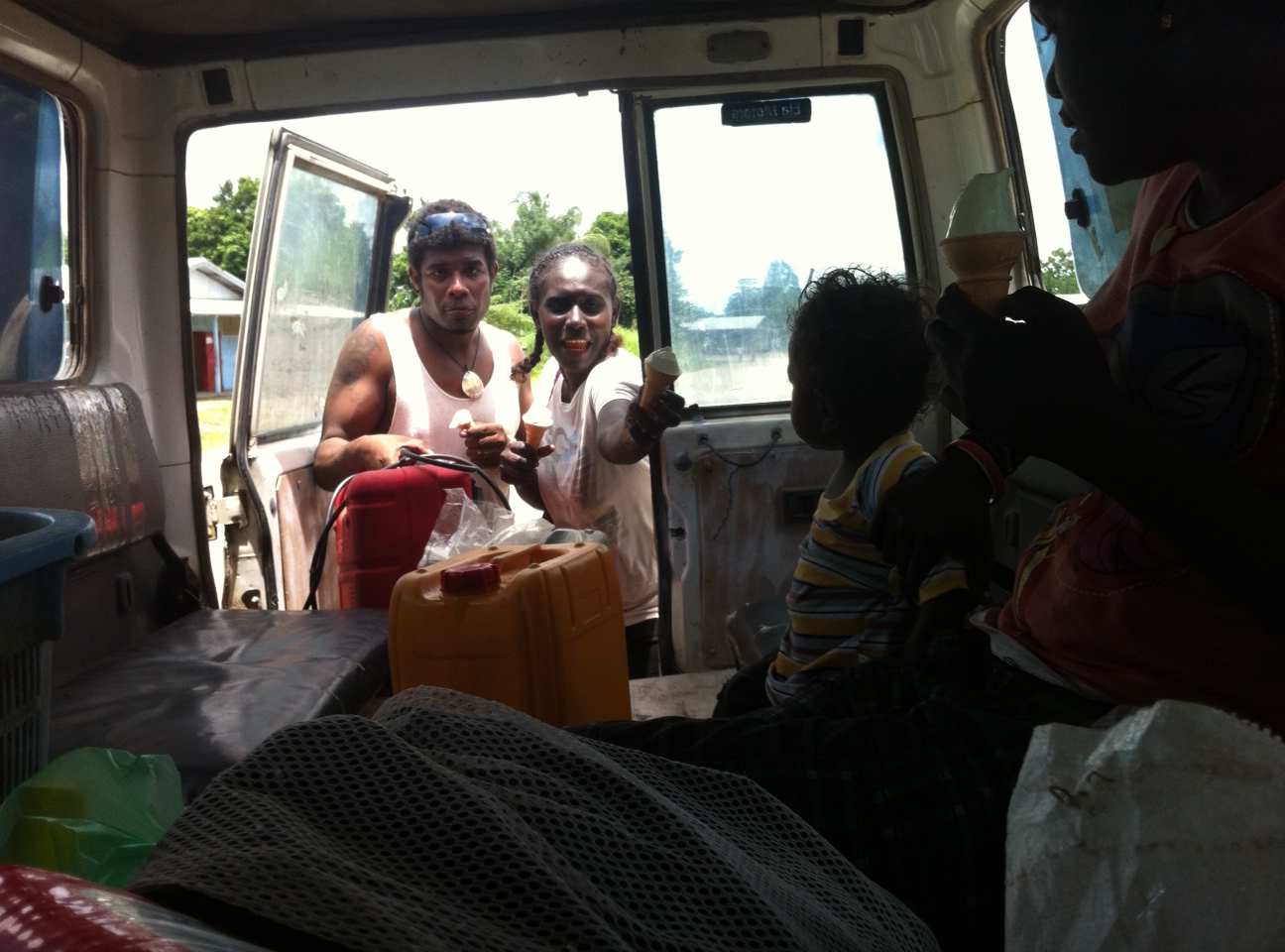
The next morning I was up with the sun, which is an hour too soon for anyones liking (Bougainville follows the time zone of mainland Papua New Guinea, even though they’re hundreds of kilometers east in the Solomon Island time zone), and the market started shortly after. The Solomon islanders were easy to spot, with their lighter coloured skin and greasy shell jewelry for sale, but some of them blended right in with their jet black skin and smokey stinky fish that other Bougainvillians also sold. The market lasts until they’ve sold all their goods, then they drive down to the beach 15 mins away and roll their banana boats over the sand back into the sea for their journey back to the Shortlands. I waited to see who would finish first, since I had an afternoon flight leaving at 15:30, and by 12 noon I had negotiated a ride for less than $10. It was a young couple and their child and nanny, and we filled up on petrol, ice cream and Fanta before jumping on the little put-put motor boat. The airport is on its own separate island, a little further down the coast of Shortland, and it took a whole hour to get there.

boarding the plane at Balalae

boarding the plane at Balalae

Don’t think of an airport airport, just think of a sleepy green island, and the only thing differentiating it from the rest of the islands scattered about was the bunch of banana boats anchored to its shore, and the barely visible clearing down the middle of the island. It’s a grass run way, and a small concrete structure had a man at a desk with some paper and pens, and a scale from the 1920’s to weigh you and your luggage. The check in was just a verbal spelling of my first name and the ticket number from my email confirmation. There are 2 flights on Thursday afternoons, but only one stops in nearby Gizo, the other one heading straight to Honiara, Solomons capital. My flight to Gizo came first, even though it wasn’t supposed to be due for another hour, and they ushered me on. No security check, no document check, no gangway, just me, a plane, and a bunch of people that didn’t talk or treat me any differently than Bougainvillians on our way to civilization.

A few notes on the border I did or didn’t cross:

I couldn’t get an exit stamp from PNG because the guy in Buka told me there was a guy in Buin to do it, but when I arrived at his ‘office’ (it was just the basement of a house with a colour-print, laminated sign saying ‘Papua New Guinea Customs’), nothing was set up except his computer and printer, and he didn’t have a stamp or stamp pad, or an exit card or anything official feeling. But, he wrote me a very lovely letter, which took him forever and a day to type out and print (even though it was from a copy and pasted letterhead from the last tourist that did this crossing in July), and not one person read or checked that letter between Buin and Gizo.

You can only go from PNG to the Solomons with most western passports, since entering PNG requires a visa you can only get upon arrival at the International airport in Port Moresby. If you live in PNG or have a multiple-entry visa for PNG, then you could go the other way, which would certainly be easier since you don’t have to worry about catching a once-weekly plane, but then you’d have to wing it for your own boat transport from the Balalae airport to Shortland island, and/or the boat to Buin… unless it’s a market day and you happen to find one of the 5 or 10 sellers going across. There’s very few people around, no banks or petrol stations, but the friendly people and handful of guesthouses make it a totally hospitable place to be lost or stuck. Once in Buin, you can make the 3 hour PMV ride to Arawak or 5 hours to Buka (where there is a bank and airport) each morning. They’re almost finished building an airport in Arawak, but that will probably only fly within PNG, not to the Solomons or internationally… but who knows, anything can happen in a place so rich in mining and tourism prospect.

Once in Gizo, a woman named Rose will have to stamp you into the Solomons, giving you a tourist visa for however many days you might need. She loves chocolate cake, and sweet talking her with a slice of that and some supporting documents (ie. A copy of your departure flight from the Solomons and this seemingly useless letter I got from PNG customs) plus a photocopy of your passport (she doesn’t have a photocopy machine) will get you in without any hassle… even if it’s a day or two late, no one seems to care you’ve informally entered the Solomons.

Bougainville

I had heard of this island state, but always heard “Bogan Ville,” which made sense since it was Australian occupied for so long, but didn’t add up why there would only be bogans. But, its actually named after some French guy Captain Louis-Antoine de Baugainville who mapped it for the first time a long long time ago but never set foot on land when he sailed up the east coast of the island in 1768. It was the burial ground of many Japanese during WWII, while Australians and Americans also left some dismal footprints, and It just came out of a bloody “crisis,” a war waged between Bouganvillieans and the Australian over a ludicrous mining industry that took copper and lime-stone from the land without proper land-rights compensation. After being discovered in 1964 and thousands of people and millions of dollars were invested in the mine, Panguna mine was shutdown in 1989, and a civil war broke out as Papua New Guinea’s richest town became a black hole, deserted by the government and declared an independent republic in 1990. Some 12 years later, Papua New guinea recognized Bougainville’s claims to autonomy, and now that peace has been restored, only the burned-down remnants of Arawa, the mining town now squatted by locals, and a few road blocks to the mine still remind one of what actually happened.

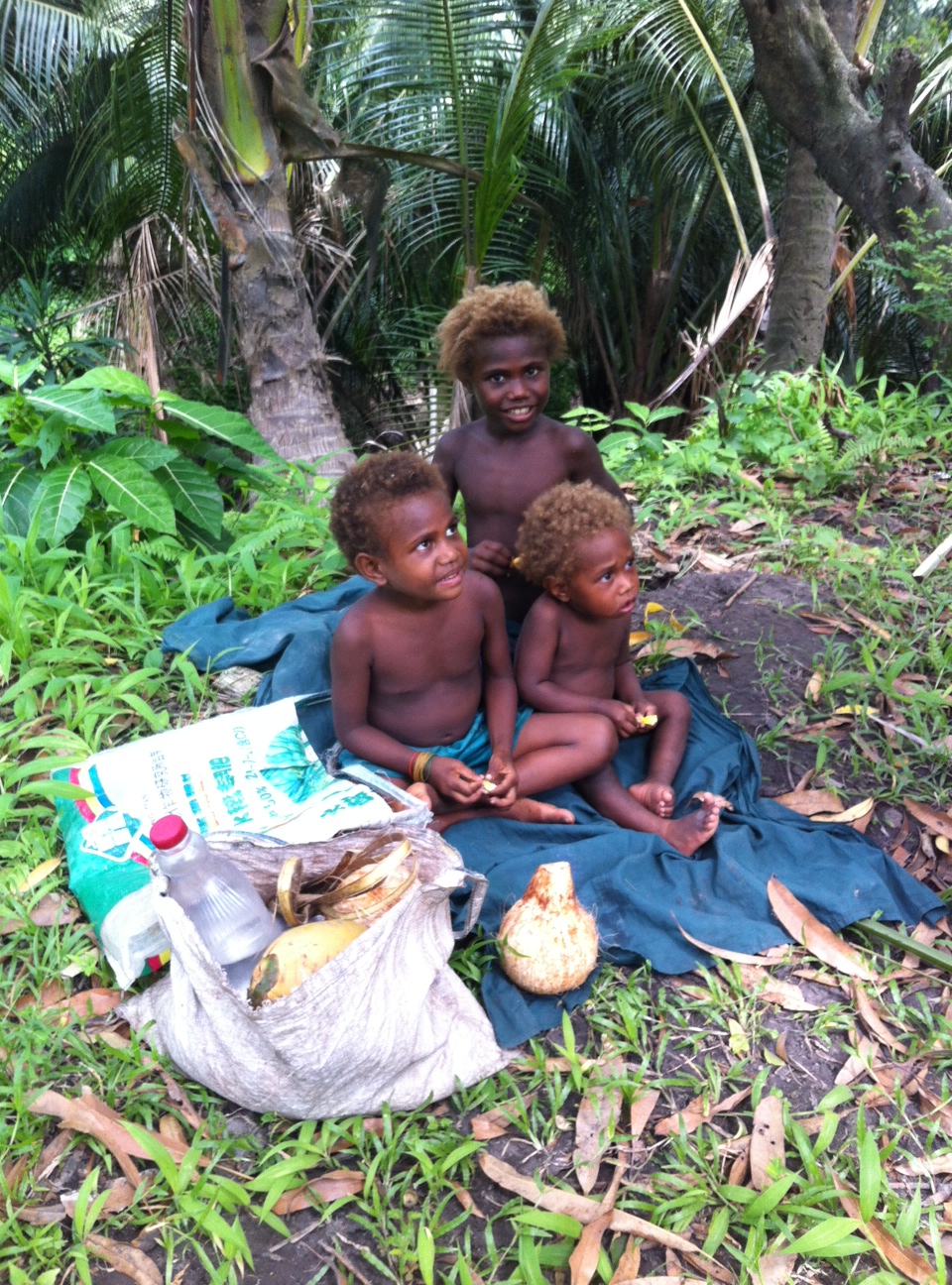
Bougainvillians are usually black all over, but these kids have some red or brown blood, with light hair, and oh so cute

Bougainvillians are usually black all over, but these kids have some red or brown blood, with light hair, and oh so cute

I flew from Rabaul to the auntonomous state of Bougainville, where a smaller island north of the main island called Buka with a city of the same name has remained largely unscathed and now full of expats (they say its one of the fastest growing cities in Papua, along with Kokopo). I stayed with some Kiwi girls, who volunteer for the Volunteer Service Abroad, and also the head guy for Australian Aid there. He comically explained to me its not fair to be white in Bougainville, since everyone can always seem him at night but he always jumps out of his socks everytime someone passes him and says “Evening!” and he can barely make out the whites of their eyes right beside him. They really are as black as night, and one of the independence slogans I saw for Bougainville was “Black is beautiful.” They call other people, who  aren’t jet-black, brown or red, which I nearly could have resembled as far as skin tone, but since I didn’t have the fluffy hair, I was white as white. Some of the super-black skin had brown or red hair, which looked almost blonde in the contrast, but I haven’t really figured out why. It cant just be sun-bleaching, since I’ve never seen that in West Africa, but it could be genetic, or even a sign of malnutrition.

I took a PMV from the north of the island accross the Buka passage to Arawa, a 4 hour journey, and made the mistake of not peeing on our pee break. So when I finally got the courage to ask the driver to stop for me, he nearly broke a sweat trying to find a place, since everywhere he slowed down to check out, he’d speed off again saying “no no, plenty people.” I couldn’t see a soul around, and quite frankly I thought we were in the middle of nowhere, but finally he liked one patch of jungle more and let me out to pee. The woman beside me came to guard watch, and after 3 mosquito bites on my rear end, I returned to the car relieved.

I couchsurfed with a german guy who works for Geneva’s International Committee of the Red Cross, and his project there is fascinationg. They’re helping families find missing persons (which are mostly bodies in unlocated mass-graves) to facilitate the process of closure to many people’s grieving. The energy in Arawa made me strangely aware of this unfinished business, with the spooky energy of a destroyed town and its forgotten history never properly dealt with. People were peaceful, but also incredibly timid, shy and quiet, their inaudible voices rising only out of a whisper if you were more than 5 m away and heard a friendly greeting of “abynoon” (pidgin for “good afternoon”).

Toby took me snorkeling at one of the most beautiful coral reefs I’ve ever seen, and if you could ignore the sunken car batteries and floating plastic, you’d almost believe you were creeping up onto the Great Barrier reef. More than that, it was on a totally deserted beach, backed only by a few private fwellings, so keeping with their very sensitive land-use rights, we paid for our snorkel with a few beetel nuts to the land owner.

A Solomon Islander/Bougainvillian couple gave me Fanta and icecream before our boat journey together from the market in Buin to the airport in Balalae

A Solomon Islander/Bougainvillian couple gave me Fanta and icecream before our boat journey together from the market in Buin to the airport in Balalae

Eventually I ended my tour of Bougainville on the southern end, where the town of Buin is closer to nearby Solomon Islands than Arawa. It took another 3 hour PMV to get to the end of the island, and while I lucked out with the passenger seat up front, the rest of the men sat in the open-air cab of the jeep, hooting and hollering the whole way. I’m not sure if they were screams of joy or just normal greetings, but all the passerby’s hollered back and the fireflies seemed to twinkle more in response.

Rabaul under Ashes

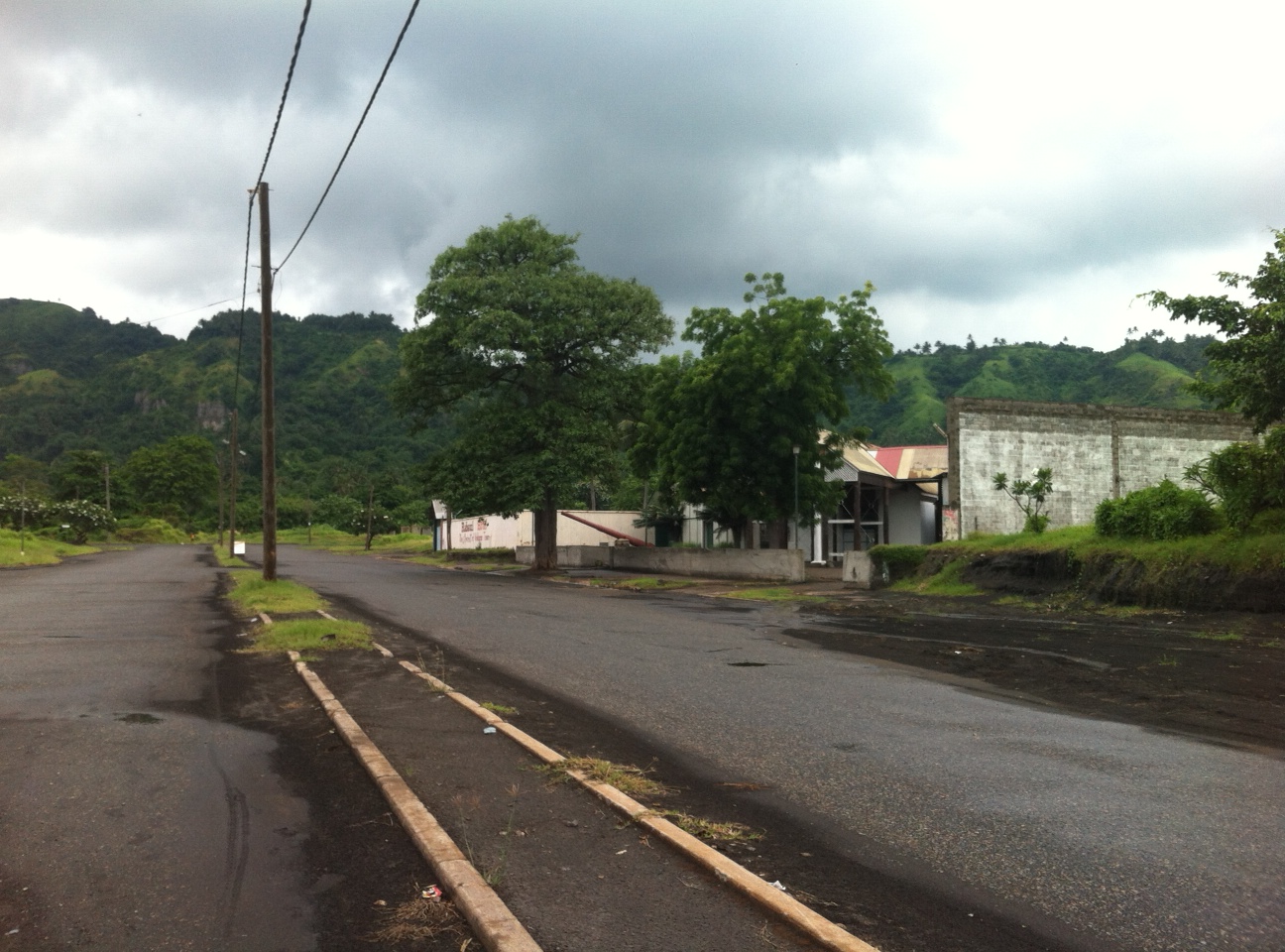
I flew from Port Moresby to Kokopo, which is the replacement city to Rabaul, a harbor town destroyed by two volcanoes in 1994 (and 1937). There was once a booming town, now buried under 6 feet of ash, with a busy domestic airport and lots of international tourism, but all there’s left of it is a steamy volcano crater, and 3 or 4 concrete buildings that still need to sweep away ash that gets blown around on a daily basis. Miraculously the town is actually covered in green, the mounds of ask creating the perfect fertile grounds gor a new forest to spring up, and the roads have been excavated to provide access to a few villagers still squatting the modern-day Pompeii, but most of the life has moved 30km away to Kokopo, PNG’s quickest growing city.

Rabaul under ashes

Rabaul under ashes

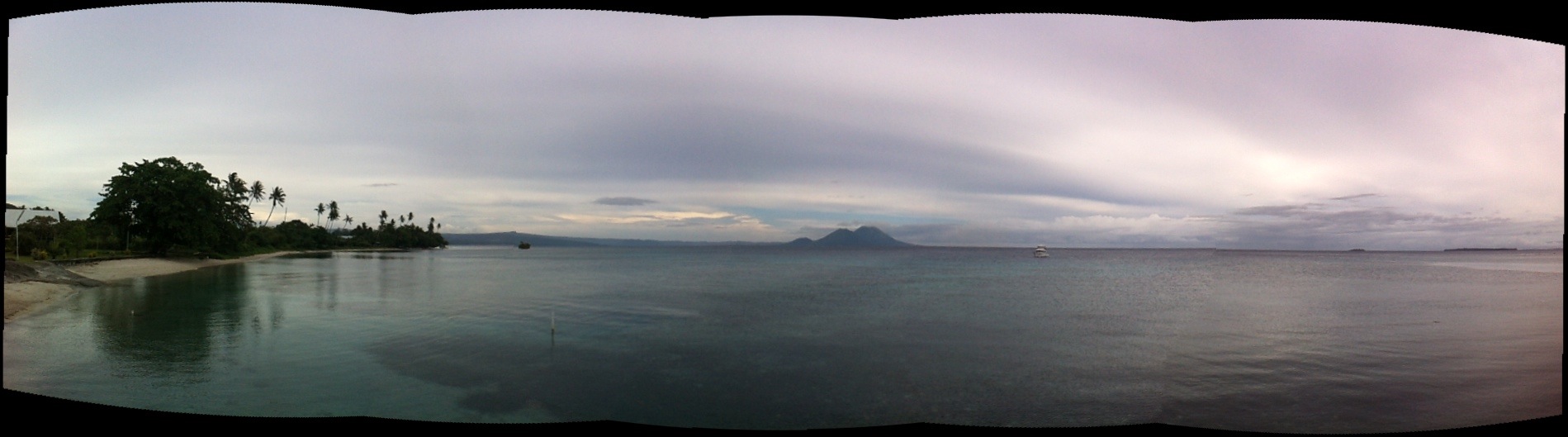
The little harbor between Rabaul and Kokopo is basically a chain of volcanoes, 3 which are dormant and 2 which are very active. I had heard of atleast 10 hotels between Rabaul and Kokopo I could stay at, all ludicrously expensive, but after trying my luck at 6 of them which were all full and almost getting killed by a coconut walking out of the Ropopo Resort, I called my friend in Port Moresby to help. He made a few SOS calls, and 2 degrees of separation later, I had the friend of a wife of his friend of his put me up in her cozy apartment in Kokopo. I got attacked by a huge butterfly at the golf club and went to the housewarming party of some aussie, and otherwise most of my time was spent closer to Rabaul, taking in the scenery of a near-Armageddon.

ontop of the Mother

ontop of the Mother

A group of us hiked up a dormant volcano called Mother, which looked down on the dormant Daughter and the active, steam-billowing Tavurvur beside her. We ate coconuts on the way down, the coconut milk, meat, and some weird variation of a seedling coconut whose insides turn into this fluffy cotton candy floss. I spent some time at the market, where the common fare is betel nuts, mustard sticks and lime powder, but also pineapples, cucumbers, tomatoes, peanuts, lettuce, eggplant, avocado if you’re lucky, and some very colourful hand-woven purses.

the man purse

the man purse

They were made of palm leaves and yarn, and no matter what shape size or colour, they all ended in frilly bits and unkept ties, slightly resembling ths feathers-on-a-stick charms called “fascinators” that they sell, all to resemble the most beautiful birds and flowers found in nature. The man-purse was taken to a whole new level, since men had just as colourful handbags, but hung them around their necks in an attempt to make them more masculine. But no man went anywhere without his wallet, a woven-leaf basket in a half-moon shape, holding all his most important things (money and betel nuts).

An Introduction to Papua New Guinea

Papua New Guinea is a huge place, with more animals and plants than scientists even know exist. They’re still finding new species of birds and strange marsupials*, and haven’t even covered half of the country’s densely forested highlands, still inhabited by tree-dwelling tribes that speak over 700 languages. Although it seems like an obvious tourist attraction, the infrastructure is nearly non-existent, and in fact, the tourism industry that once was is even dwindling, since during their colonial ties with Australia in the 60’s and earlier, many more tourists used to come and tour companies and services have since slowly disappeared. Now there´s hardly any recognition of a tourist, traveler or budget backpacker, but the resident ex-pat on holiday or government official largely make up the clientele for guesthouses and domestic fliers.

the beautiful nature scape of Rabaul harbour

the beautiful nature scape of Rabaul harbour

The official languages are English and tok pisin, a kind of pidgin English mixed with some german words, but its hardly a mutually intelligible dialect since a native English speaker wouldn’t understand more than 80%. Its not a complicated language, so learning it would come quickly, and reading it was slightly easier, since its actually quite simple and phonetic. Ten Q is how they write thank you, and wantok or 1tok means one-talk, and your one-talks are the people from your village who share one of the 850+ local languages with you in addition to the universal tok pisin.

The form of public transportation is in mini-vans or Land Cruisers called PMV’s, “people mover vehicles.” If they’re longer than an hours journey, they make random stops along the side of the road for pee breaks, market shopping, or fresh water holes.

The local beer is a big capital SP (South Pacific) in yellow on a green can, and its plastered the same way in every other shack that sells it, warm or cold, sometimes they’re out, you never know. They’re not cheap, at 2 euros each, but I wanted to buy 4 from a guy who was sitting in for the lady boss, and he couldn’t compute 4 times 6, but she had written a time table in her notebook “1xSP= 6 kina, 2xSP=12kina, 3xSP=18 kina” etc. He did very well at making change of 1 kina for my 25 I paid him.

The prices of things here are outrageous. Like, think expensive, then double it, then that’s what you should expect. One guy told me he paid $1000 per month for internet (800 euros for 20GB was his exact quote), and to rent a Land Cruiser costs $500 Australian dollars per day… including the driver but not including fuel. A crappy hotel can cost anywhere from $75 to $175 per night, and somehow they’ll still fill up with government officials and visiting NGOs or volunteers from abroad. An internal roundtrip flight will cost you more than going to Australia and back, and the less than 2hr flight to Honiara, capital of neighbouring Solomon Islands, will cost you more than flying from Auckland to London. But, ironically enough, there are still tribes in PNG that use a special type of shell as legal tender, and this currency is often used in dowry payments, even by foreigners marrying a local.

the cockatoo begs for a scratch from the meri

the cockatoo begs for a scratch from the meri

A woman is called a “meri,” and most ex-pats have a house meri, and I was the visiting white meri. I spent a day with one of my couchsurf host’s meri, and she took me to the Nature Park/Botanical Gardens in Port Moresby to cuddle some cockatoos and other beautiful birds. They have birds of paradise and plenty of the same-named plant, and in one bird atrium, a lorikeet took a fancy to a students afro and tried to mate with his head. The cassowaries, beautiful black versions of an emu with multi-colourful heads, were in bigger pens that we walked above, and my house-meri guide wouldn’t come within 10 feet of the snake or crocodile pens. We saw more types of kangaroos than I knew existed, especially off the Australian continent, and the wallabies and tree-kangaroos cuteness could have melted a grown man’s heart. After a kid-in-the-park afternoon, I offered her some money in gratitude and she eagerly replied “thank you! I love you!”

this is the most they'd smile for the camera... but they do have red mouths

this is the most they’d smile for the camera… but they do have red mouths

The men and meris love to chew betel nuts, which kind of look like miniature green coconuts, and inside is a yellowish white seed thing that they chew, with the help of some green mustard stick and some white lime stone powder. It looks like flour or cocaine, but apparently that’s what happens when you burn lime stone. The biggest mystery is how it all turns blood red, and people’s smiles are stained so brightly red that it looks as if they’ve chewed a whole tube of lipstick. They spit out mouthfuls of bloody spit, more than you’d believe fits between their cheeks, and after a while it stains their teeth so black that only a few remain among their rotting gums.

Kakadu National Park

Kakadu is one of, if not the most famous national park in Australia, and even worldwide, boasting caves filled with Aboriginal stone art from 20,000 years ago all the way up to the 20th century. It’s a living nature reserve and aboriginal culture museum, burned and flooded every year throughout its six indigenous seasons. It’s massive in size, taking nearly the same amount of time to drive through as it takes one to drive clear across Iceland. Half of it isn’t even accessible in the wet season, but the whole of it can hardly be called ‘accessible’ in the dry season since it was a scorching 42`C high every day and hiking around to all the art sights, billabongs and look-out points were nearly suicide missions (I swear I almost melted).

a dwindling billabong, crowded with birds

a dwindling billabong, crowded with birds

It’s nearly the end of the dry season, and the only water left was a few muddy puddles, covered in lilies and hundreds of birds, plus three major rivers, affectionately named West Alligator River, South Alligator River, and East Alligator river (aren’t their only crocodiles in Australia? and the South one was really the middle one, since they were all parallel in a row… unimportant technicalities I guess). It was scorching hot, even at night, and I don’t think I’ve ever drank so much water or sweated it out so quickly.

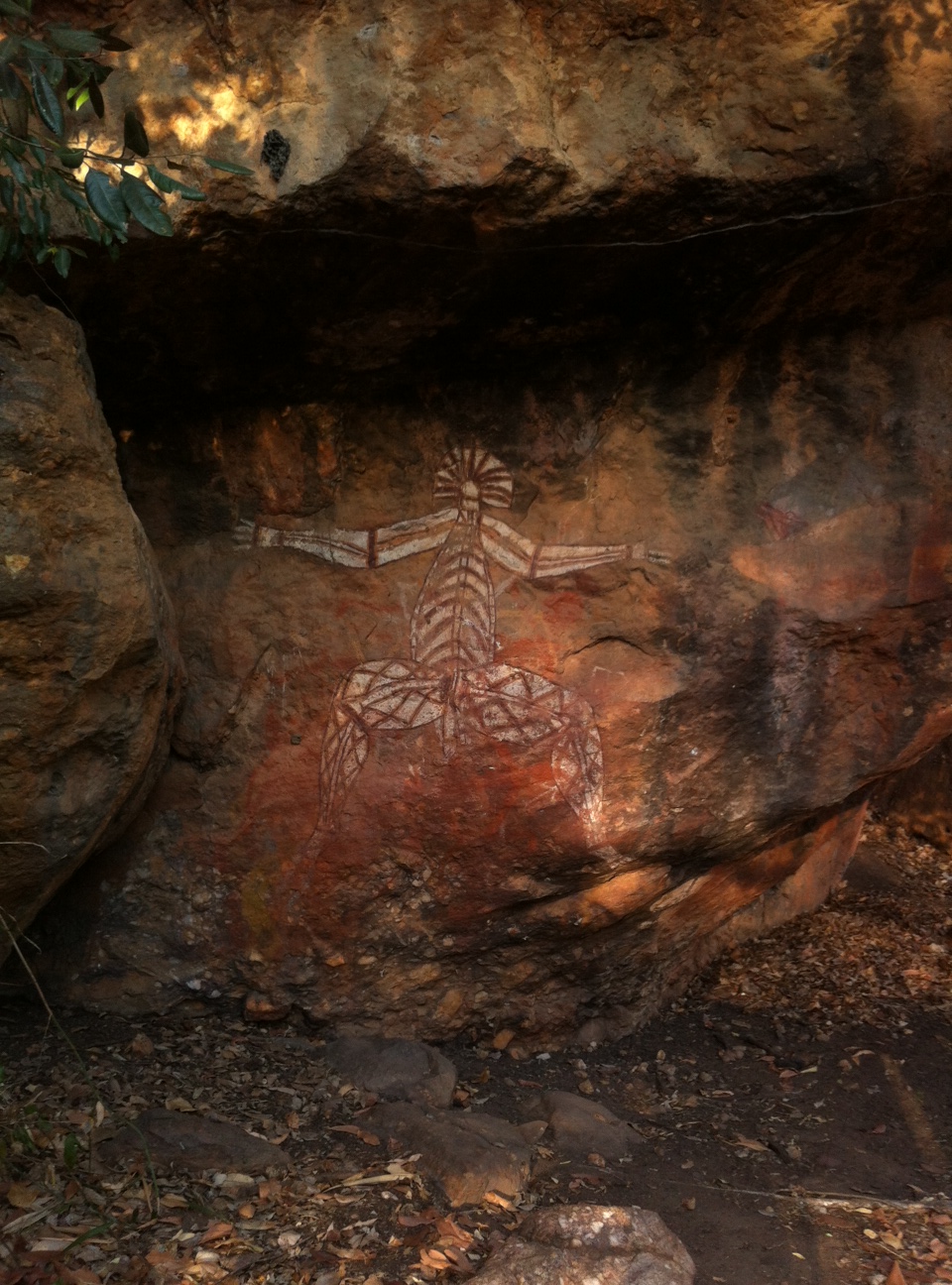
aboriginal rock art

gunbim at Nourlangie rock

Luckily we had a car with air conditioning to provide temporary relief between the walk-abouts, and the hikes always proved worthwhile once you stood under a shady cave covered in cartoony but intricate images of fish and kangaroos painted by someone in red-ochre thousands of years ago.

We saw dozens of kangaroos and hundreds of birds – geese, storks, and colourful parrots to boot. Yellow-crusted cockatoos flew overhead as often as lizards crossed our paths, and we even saw one crocodile make a lunch out of one unlucky bird (or fish, it’s hard to say… just glad it wasn’t one of us). Our luck continued as we drove out of the park, where we sighted a dingo cross the road, and 3 wild horses, aka brumbies, grazing right beside the road!

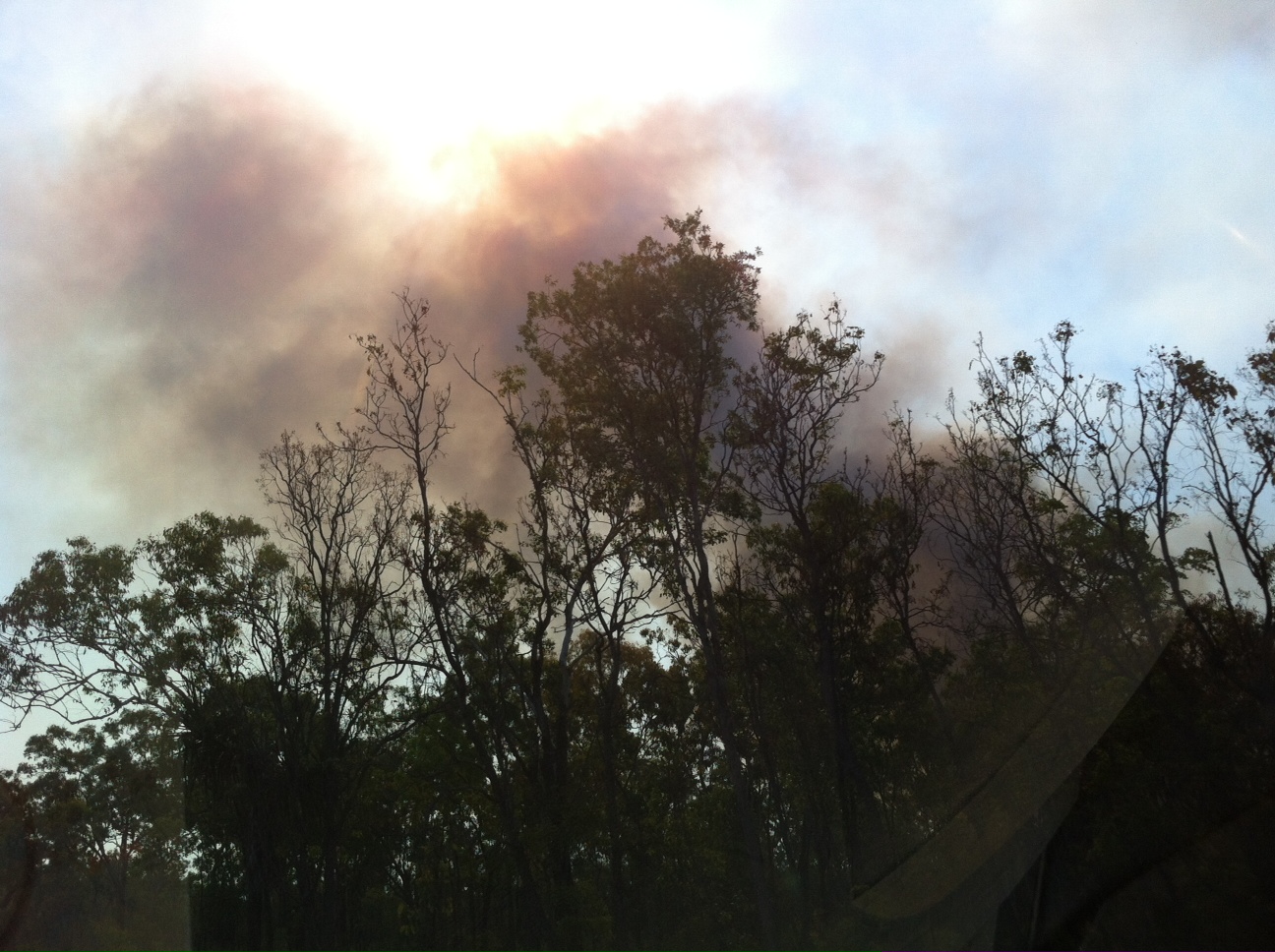
the park is purposely burned every year, causing huge smoke plumes

the park is purposely burned every year, causing huge smoke plumes

We found the perfect Kakadu decompression site on our way home, the Douglas Daly hotspring national park, where we bathed in hot water, but at maybe 36`C, the water mas still cooler than the air and we managed to enjoy it under the shade of cockatoo-perched trees. It’s hard to imagine places like this exist, naturally, and total in the wild, and all it took was a weekend roadtrip from Darwin to find them.

South-east Asia to the South Pacific, via Australia

There are only 2 direct flights out of Dili, the one from Bali that I took to get in, and the one to Darwin I took to get out. Landing in Australia was only a 90 minute flight, but years and worlds away from Timor. The last time I was down under was 2007, when I lived in Brisbane, and the North Territory is totally different to the east coast. It’s gotten a lot more expensive, according to my memory of the average price of a meat pie and gingerbeer, and the Australian dollar is also stronger, so I was happily couchsurfing to avoid the $30/night hostels filled with German teenagers.

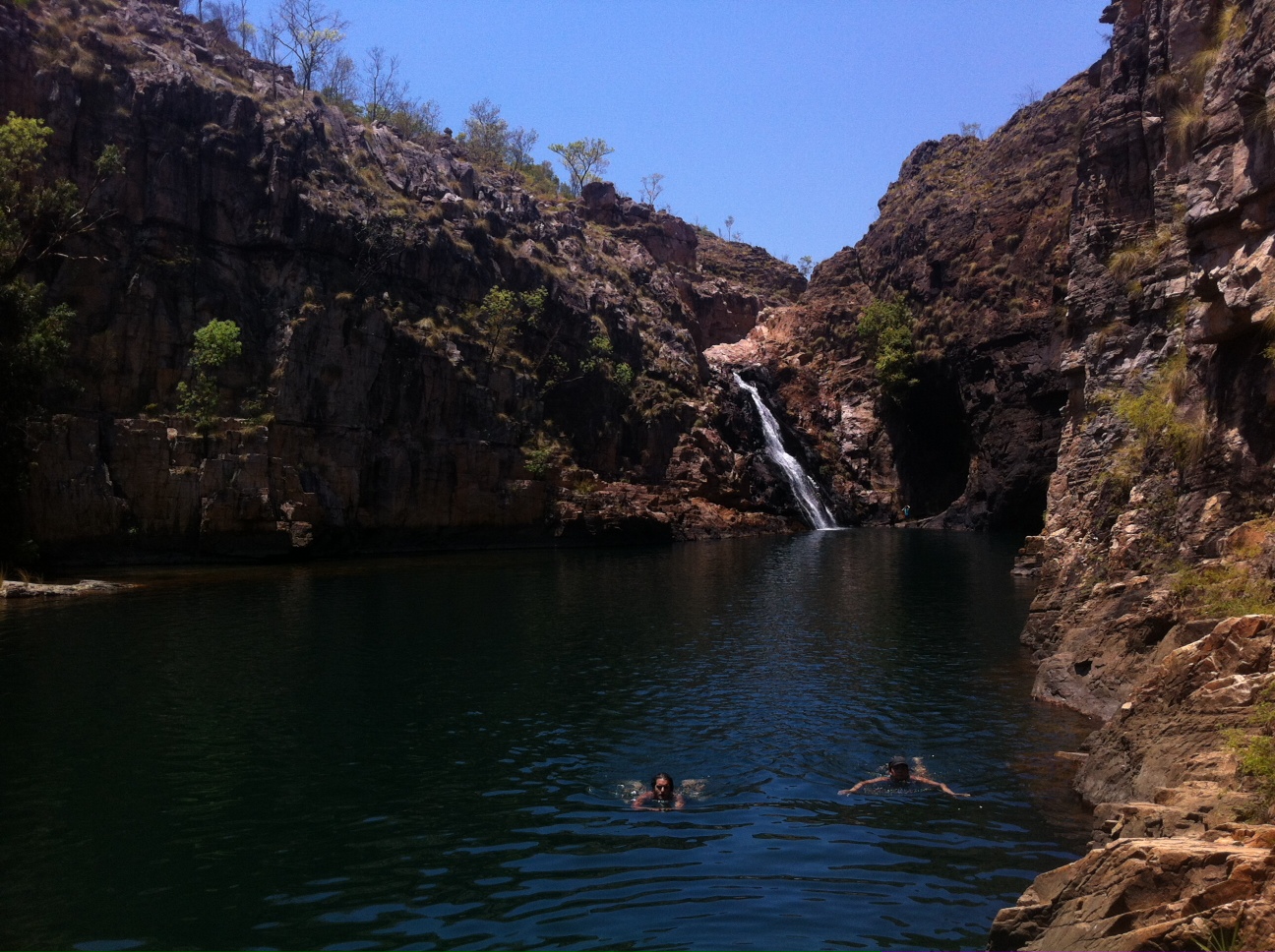
Maguk Pool at Kakadu

Maguk Pool at Kakadu

I wanted to go from Timor to Papua, since they’re sort of geographically contingent, but of course that doesn’t matter to airlines. If I wanted to do that, I’d have to go to the Indonesian side of West Timor, fly to the Indonesian Paupa, and cross overland to Papua New Guinea and take a handful of days to travel overland to Port Moresby. Or, I could fly to Bali and pay another $35 visa on arrival and $20 international departure tax just to use Denpasar. But, the easiest and probably most enjoyable way to cross from South-East Asia to the South Pacific is through Australia.

I didn’t spend much time in Darwin, but landed on a Friday and spent one roaring night out with my host Nick. In our brief introduction chat, he suggested Kakadu national park as a place to spend the weekend, since he had never been there either but had a jeep and the weekend off. So I spent Friday afternoon rushing around Darwin trying to take in some of the shops and sights, and made it as far as the post office to send some post cards and birthday gifts. I saw the man-made beach, but didn’t make it down the 80 steps to the crocodile-free lagoon.

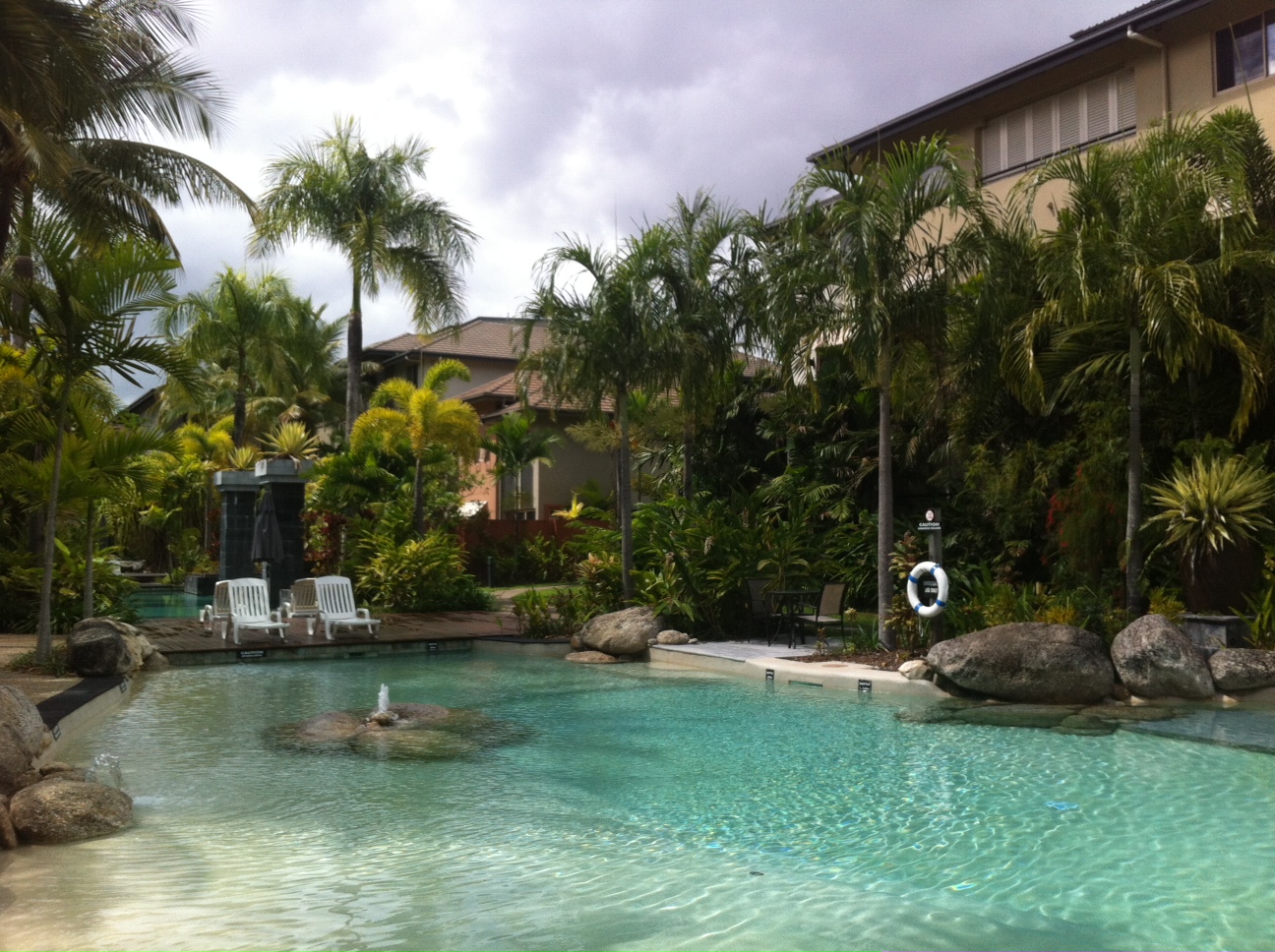
My couchsurfing accomodation

My couchsurfing accomodation

To get to Port Moresby, I coulnd’t fly from Darwin, so I took a 2.5 hr internal flight to Cairns. I once drove there from Brisbane, and remembered the low-lying square blocks around the CBD which reminded me of an old Western town – just replace the cowboys with European backpackers and swinging-door saloons with tourist booking offices.

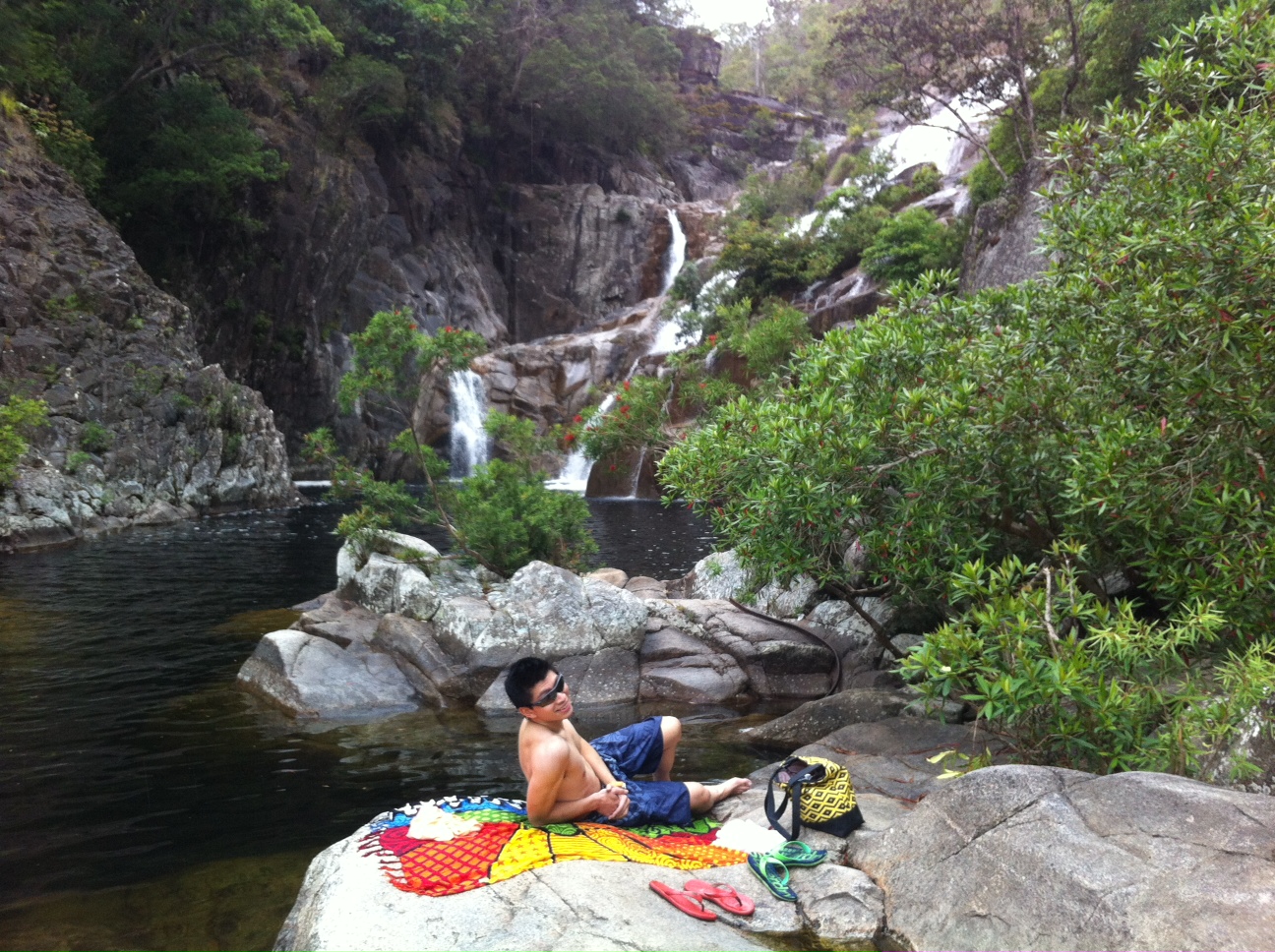
I couchsurfed with Willy Chu, whose name made me want to break out into singing Beyonce, at an apartment that slightly resembled a resort in Bali. I ate some pies and actually made it to the crocodile-free lagoon there, and Willy took me hiking to a freezing cold water hole where we could swim under waterfalls without worrying about crocodiles.

Willy Chu at Bahana Gorge

Willy Chu at Bahana Gorge