Icelandic Studies

When I didn’t get funding granted for doing my Phd in forest ecotourism, I pulled a 360`turn and decided to enroll at the University of Iceland to study Icelandic History and Literature. It’s a program officially called “Medieval Icelandic Studies” and focuses on the sagas and manuscripts orally transmitted and eventually written in the 10th-13th centuries, but we spend almost all our time reading the secondary literature written on it by Medieval Icelandic specialists from all over the world. Some of the most highly regarded academics in this field come from the UK, the US, and even Australia, and have no connection to Iceland except their obsessive fascination, so it seems an honour to be able to study these topics in the homeland, as a native Icelander.
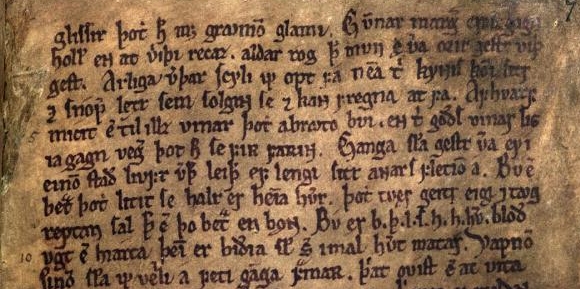
the codex regius

The classes are held at the Árni Magnússon Institute, a building on campus that holds manuscripts dating as far back as the 12th century. They have, what some consider to be the single most important man-made item in Icelandic history and culture (see http://www.sagenhaftes-island.is/en/book-of-the-month/nr/2582), the Codex Regius, a book that tells of Kings Sagas, Nordic Mythology and epic poetry. We got to meet the book, a small, wooden-bound book of thin, fragile pages, and I remember wondering if or when I would ever get to touch something so hold ever again. The text was still legible, in beautiful script, and many words still comprehensible to the speaker of modern Icelandic. Some letters and words were strange, but familiar names like Loki and Freya had their names written their some 900 years ago for me to read today.

The courses we take are based on the Icelandic Medieval manuscripts, discussing all the stories therein and wondering how fact or fictional some of these records can be to represent the daily life and culture of Icelanders in those times. We dissect the poetry and kennings, all the foreign words and heitis used to rhyme, and compare different transcriptions of the same story. We read  secondary literature on how the laws were used, first in oral tradition, and then how written law changed the administration and legistlation of courts. We discuss the Christianization of Iceland, and how the Christianized scribes may have altered manuscripts they copied. We look at archeological evidence of Paganism and Christianity, and the influence of latin on our written culture and diction.

We take a mandatory course in Old Icelandic, which feels somehow like a course in Proto-Old-Norse, and may be what Italian or Spanish speakers feel like learning Latin… I dunno. I worry I´ll be better at reading, writing and even speaking Old Icelandic by the time I finish this program, since its an extremely strict, regimented and dense way of teaching students to be able to read and translate the sagas from the original sources.

Then you can take courses on Modern Icelandic literature, divulge in some Laxness and Sjón, modern Icelandic language, Icelandic Culture, and the history of Medieval Scandinavia. Whenever I´m sitting in class, I look around at the other students – males and females, age 20-50, from Hungary, Poland, Germany, England, Colombia, the States, and very few from Iceland or other Scandinavian countries – and wonder what the initial appeal is to start such a program. Is it the glorified viking? Is it the Old-Norse-Icelandic literary corpus that rivals all other historical literary works in Europe? Is it the sagas and Nordic mythology of Thor’s hammer and Sif’s golden hair? I’m not sure, but I somehow felt obligated to take the program and learn this for the sake of being Icelandic, but now I’m realizing that this may be one of the most interesting fields of academic study any linguist or historian could ever take, and I’m glad I fell into it without knowing what a pleasant surprise it could be.

Now, if only I’d stop blogging and be able to keep up with my readings, papers and exams… I had no idea it could be this much work to become a Master in Icelandic studies, especially since I thought I somehow had an advantage by being Icelandic (which isn’t the case, since I know much less than the Danish guy sitting beside me describing why Odin is depicted with 2 dragons in a 14th century manuscript I’d never heard of til now).

New England to Long Island

I basically spent all of May to September in the countryside and highlands of Iceland, depriving myself of temperatures over 20`C, with the exception of a few heatwaves that passed thru. I tried to go to Poland in August to soak up some sun, but Warsaw and Gdansk only offered overcast skies and 16`C. Before the sheep round ups, an event that officially marks the end of summer, and inevitably chasing sheep in the snow, I got away to Boston and New York for a week, and finally got me some heat.

Boston

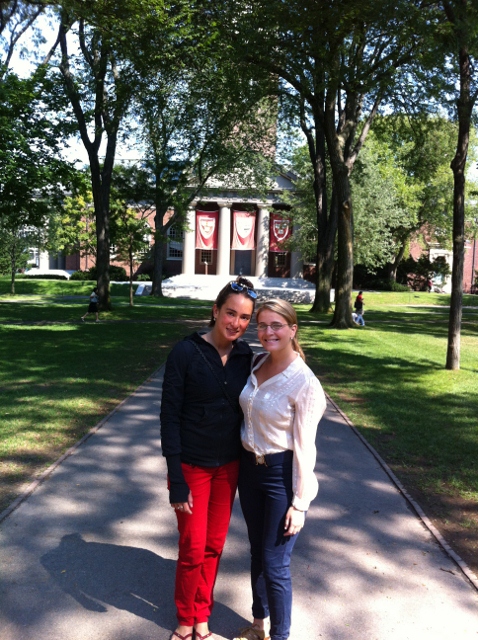
I’ve been to Boston, but had never really been to Boston before. Stopping over and passing through never really made me stay to visit, but now my one and only college roommate (and best friend) lives there and gives me plenty of good reason to visit. She’s a smarty pants – doing her master’s at Harvard – and all sorts of mature after leaving her St. Marks Place party apartment in the East Village for a 2-storey house with a backyard in the quiet neighbourhood of Somerville. She gave me a tour of Cambridge and the campus, and barely had enough time to sleep between her endless studying and me nagging for her attention. We ate clam chowder and schmoozed her classmates at a Happy Hour that she organized since she was running for a position in student

Ursula & I at Harvard

politics (which she won). We met up with some other Semester at Sea alumni and reminisced about life on the ship and traveling the world together. I also entertained myself by meeting other friends I knew in Massachusetts, going to the beach, and shopping for the things I can’t afford to buy in Iceland.

I rode the train from Boston to Penn Station without sleeping my last night in Mass, and emerged from the underground a few blocks away from Times Square, dazed and confused. I was suffering some serious culture shock – 4 months of open spaces and more horses than people, to a city corner with more cars and lights and faces than I had seen all summer. I had to reprogram myself to function in the chaos, get an orientation of place and direction, and walk on without looking totally lost. The overwhelment was exciting, it was as if I was in New York City for the first time, like a kid in wonderment sensing all the colours, smells and sounds in high definition.

New York city was sunny and humid, stickiest underground where the intricate web of subways and walkways  intermingle below the streets and avenues of yellow cabs and pedestrians. It took some time to become familiar again, but I never felt guilty of sticking out since everyone and everything seems to fit in to the city puzzle somehow. All the peculiar fashion and unintelligible languages I passed made me feel less foreign, and a weekend trip to Long Island was like becoming part of the ‘in’ crowd.

the beach in Montauk

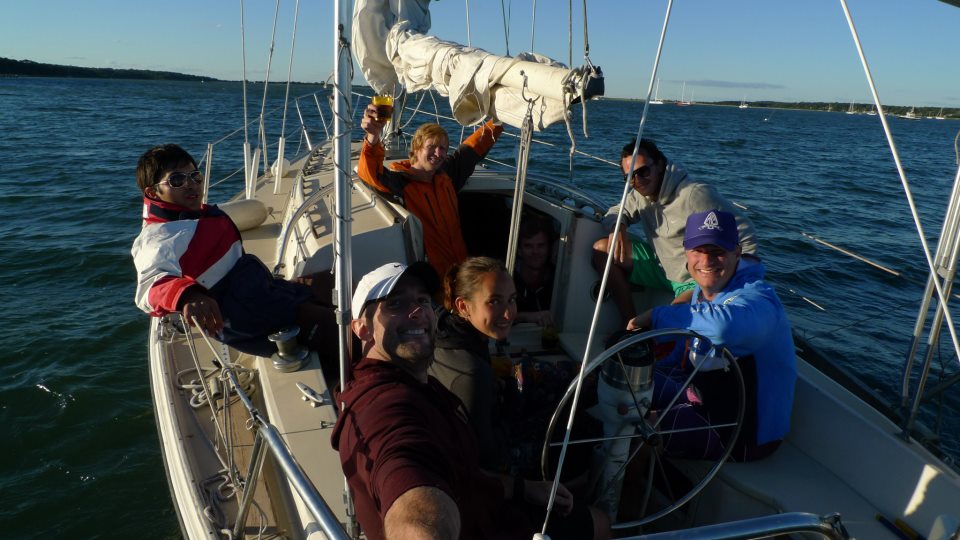
My friends from the city rented a house together in Montauk, spending every weekend there during the summer. A lot of people do this, but after Labour Day weekend, mostly only locals are left, with the beaches and nightclubs all to themselves, with the same warm weather lasting a few more weeks. We indulged in the sunshine by sailing around the hamptons, sitting on the beach, and drinking cocktails poolside. We went to an art gallery to see a photo exhibition and tasted beer from the Montauk  Brewing company. The warm nights we spent barbequeing on the patio and dancing like crazies on the empty dancefloors. It didn’t matter, since we were always a big enough group of people to have our own party, and our expressive (and excessive) dance moves took up a lot of space.

the dancing crew, sailing

Montauk was a special place – a surf town with alternative and creative culture, mixed with an artsy, upper-class eliteness you can’t get quite as friendly with. Its a slow and spread out place, with a beach or harbour always a stones throw away, but enough forests between that deer graze along the road, barely shying at your headlights. You need a car to get around, and a lot of money to eat or do anything there, but I’m so grateful for the friends I had to share this little piece of paradise with me.

Laugavegur trail: hiking from Landmannalaugar to Þórsmörk

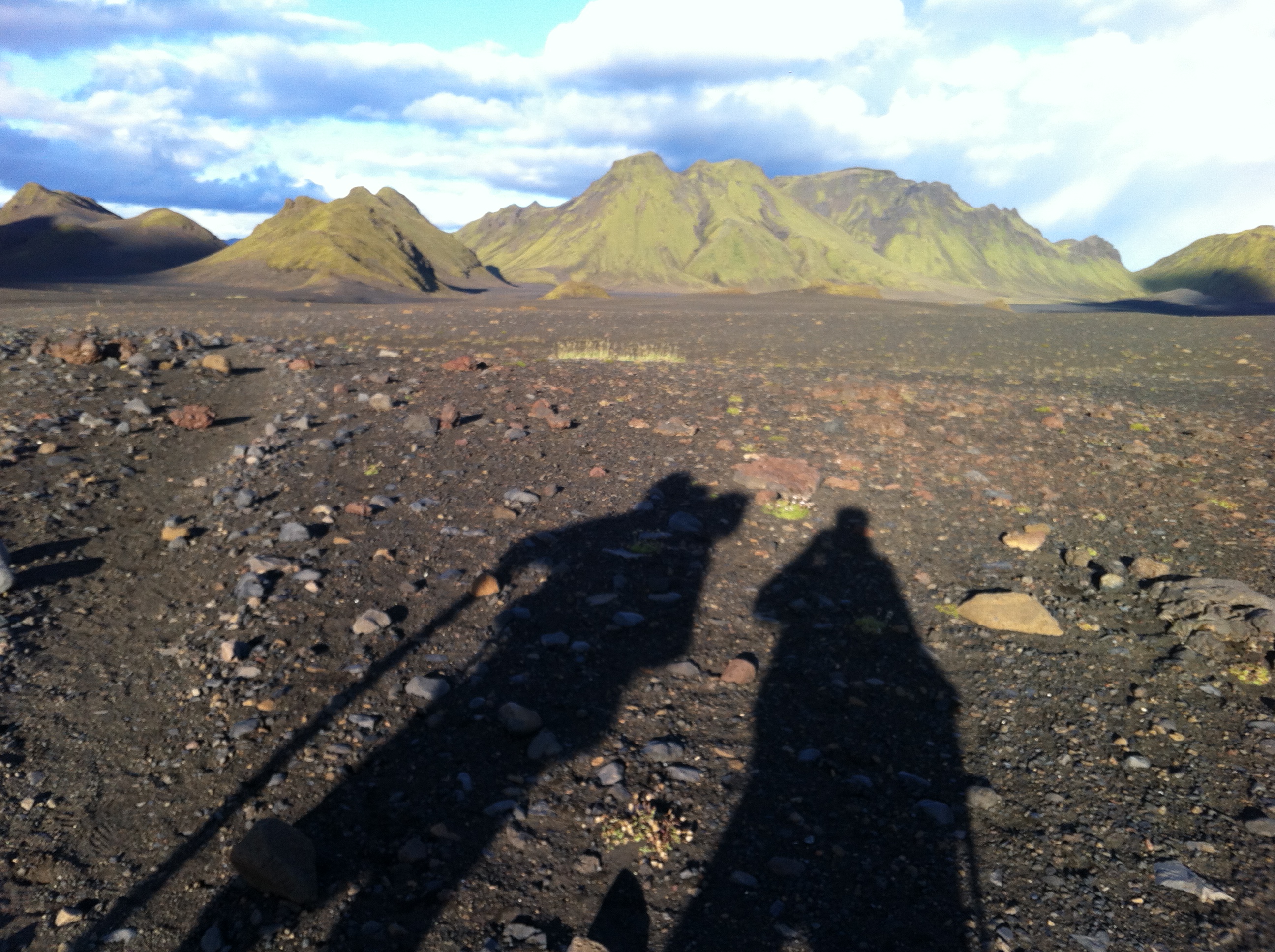
The colourful moutains in Landmanalaugar

I got back from Poland and flew the same day to Höfn, an unusual place to end up after a week in Hamburg and Warsaw. Even coming back to Reykjavik sometimes gives me small-town culture shock, but Höfn’s airport makes you feel like you’ve arrived in the middle of nowhere. You’re right under Vatnajökull glacier, on an isolated peninsula that sticks out into the sea. They’ve got really good hot dogs there, and after the next 8 days riding horses from Höfn to Fljótsdalur, the first fast-food I ate again was another hot dog in Egilstaðir.

I got back to Reykjavik on a Saturday, and after almost 9 days without any contact with civilization except the other 15 riders,  the same city now gave me big-town culture shock. I was actually enjoying being back in a heated house with running water, until my friend Tom called me and asked if he could come to Iceland and hike Laugavegur with me… on Monday. I had no time to hesitate, since he booked his flight 20 minutes later, and flew to Iceland 36 hours later. Then, we backed our gear and provisions and set off for the remote highlands, once again.

Landmanalaugar

We started in Landmanalaugar, a mountainous and colourful geothermal region 5 hours away from Reykjavik. The elvation is 6o0 metres there and though you´re in the highlands, its a popular tourist destination and thus built up with basic services. The best part of Landmanalaugar is the hot river you can bathe in. It was freezing cold and windy, so getting down to our bathing suits was the hardest part, but once we had sat there for an hour, it was no problem to retain the heat while we redressed and started the 11km trek to Hrafntinnusker. We hiked through yellow steaming mountains and moss covered lava fields, even over some snow, but 3 hours later we were 500 m higher, home at a rocky camping ground just before dark.

the highest elevation point, at Hrafntinnusker

The first night we had frost, a lot of it, enough that our whole tent was frozen stiff and we had to shake off the ice before we could pack it up. The next day we passed 2 huts, Álftavatn and Hvanngil, doubling day 2 and 3 into a long, 28km day. The scenery was incredible, and we had fun stripping down to our underwear for repeated river crossings, but the last 3 kms were the longest, slowest kilometres of the whole hike. The weather changed constantly, from bright sun and calm winds to sideways hailing sleet, but one thing was consistent; everything around us was naturally dramatic.

We only passed a handful of other hikers, centered mostly around the 2 huts we passed, but on the 2nd night at Emstrur, we made some friends. There was the tour group in one hut that gave us left-over kjötsupa (lamb soup), the tour guide who sold us beer, and a German couple who let us use their primus to make tea. We crashed in out tent that night, and wake up way after everyone else had left.

the last 3 kilometres…

The last day was a gentle 12 kms, mostly downhill, back to greener pastures, and we ended in Þórsmörk prepared to indulge in all the services they had. We heated and stretched our sore muscles in the sauna for 2 hours, swam in the hot pool, cooked soup, drank hot tea, cold beer,  and the last provisions of whisky we had left. We made more friends by bonding over our hike experiences, and slept like babies before the bumpy bus ride back to Reykjavik.

The Wild Wild East


the first group, on Eyjabakkajökull

I rode 4 tours with Íshestar this summer, around the Eastern fjords and valleys, and up to the highlands around Snaefell mountain in Fljótsdalsheiði. I guided the first tour with 10 guests, a nice mix of Dutch  German, Swedish, Belgian, English and Australian male and female riders. Last year we sometimes had groups of only 16 women or 14 German speakers, and few young riders, but this summer, there were riders even younger than me. Last year, the first tour began July 4th, and then the highland was a muddy grey swamp land, only just beginning to recover from the snow cover, but this years first tour was at the end of June, and summer was already full blown with green vegetation, sunny skies, and dry ground covering the highland. Once in a while we still encountered soft ground, and had to invent creative detours to avoid a domino effect of horses disappearing down into the slush. This was Susy’s greatest fear, and she could only get past these points by dismounting or riding with her eyes closed. Christian had absolutely no fears, and requested to ride only the crazy ones which he handled just fine, even with rodeo bucks, slipping bridles, and disappearing into the herd a few times. Some of the stronger riders rode stronger horses, which they slowly tired of having to hold back, so me and my horses ass became a useful brake. Between rides, we played in other ways; we had an epic snowfight on the glacier and went skinny dipping into a few glacial rivers.

The second trip was an exploration experiment, a staff tour for us to take to figure out a new way and familiarize ourselves with another highland region. We were 4 staff, with 16 horses, which

Denni and Arna with half the herd in hand

we rode with all has hand horses. Its difficult enough to maneuver some highland terrain on one horse, so being 4 horses wide and trying to balance the pack horse as best you could over the terrain was difficult, to say the least. We had packed our tents, sleeping bags, food and cooking supplies for 5 days, and even brought rope and poles to make temporary fences for the herd, but these things were rarely cooperative in staying put on the pack horses backs. We set off on the first day very late, leaving at 7pm and assuming the late night sun would be sufficient to light our way. But, then we got hopelessly lost and stuck in thick fog cover, so finally at 3 am we were forced to stop in the middle of nowhere and wait for clear skies in the morning. We were in a damp, rocky place, with almost no grass for the horses, it was freezing cold, and we realized our stove didn’t fit the primus so we couldn’t cook our food or heat up any water.  We set up the tent for the three hours we waited there, but maybe slept 1 hour each since we were so cold and hungry and worried the horses would run away. Arna actually thought at one point she was freezing to death.

At 6 am, we set off again, and rode nearly 16 hours, dozing off on our horses as we descended into the wrong valley. We stopped once we reached greener pastures, for the horses to finally eat and for us to pass out in the sun for a warm, well-deserved nap. We rode all the way out to the coast, splashing along the beach, to round the fjord into the next valley we were initially trying to find. Fossdalur is a valley of a hundred waterfalls, with one very nice farmer who let us stay in his guest house and use his electricity to cook our food.

With this refreshing revitalization, we set off again over the same dreaded highland. After leaving 2 lame horses behind, we made it to Geitdalur after another long day without any fog or mid-night cold. There we camped and were able to scrounge up enough birch wood to make a campfire for cooking water on. Another day of riding finally took us back home, with some exhausted horses and our battered selves, and we could enjoy the week off before the next guests arrived.

The next trip was a pack tour with 12 guests, a 6 day trip with 5 pack horses to carry our 2kg of luggage each. Most of our food and camping supplies also got carried by pack horses, but we had

the pack tour

one truck sometimes dropping off tents or food refills along the way. We rode a new way, further north past Jokuldal and to Saenutasel – an old turf house farm. From there we rode to Laugarvalladalur, a geothermally active valley with a hot waterfall to shower under.  The third day was the most interesting, as we rode with our horses, pack horse and herd of 40 loose horses over the Kárahnjúkar dam – a narrow bridge creating the boundary wall for the controversial hydropower plant built in the middle of the highland.  The next days we rode almost the same way home, but circled the base of Snæfell and rode on the other side of Norður dalur back out into Fljótsdalur. We camped our last night and celebrated our last riding day by letting all the extra horses run free, and the truck support took all our packs so no rider held a hand horse.

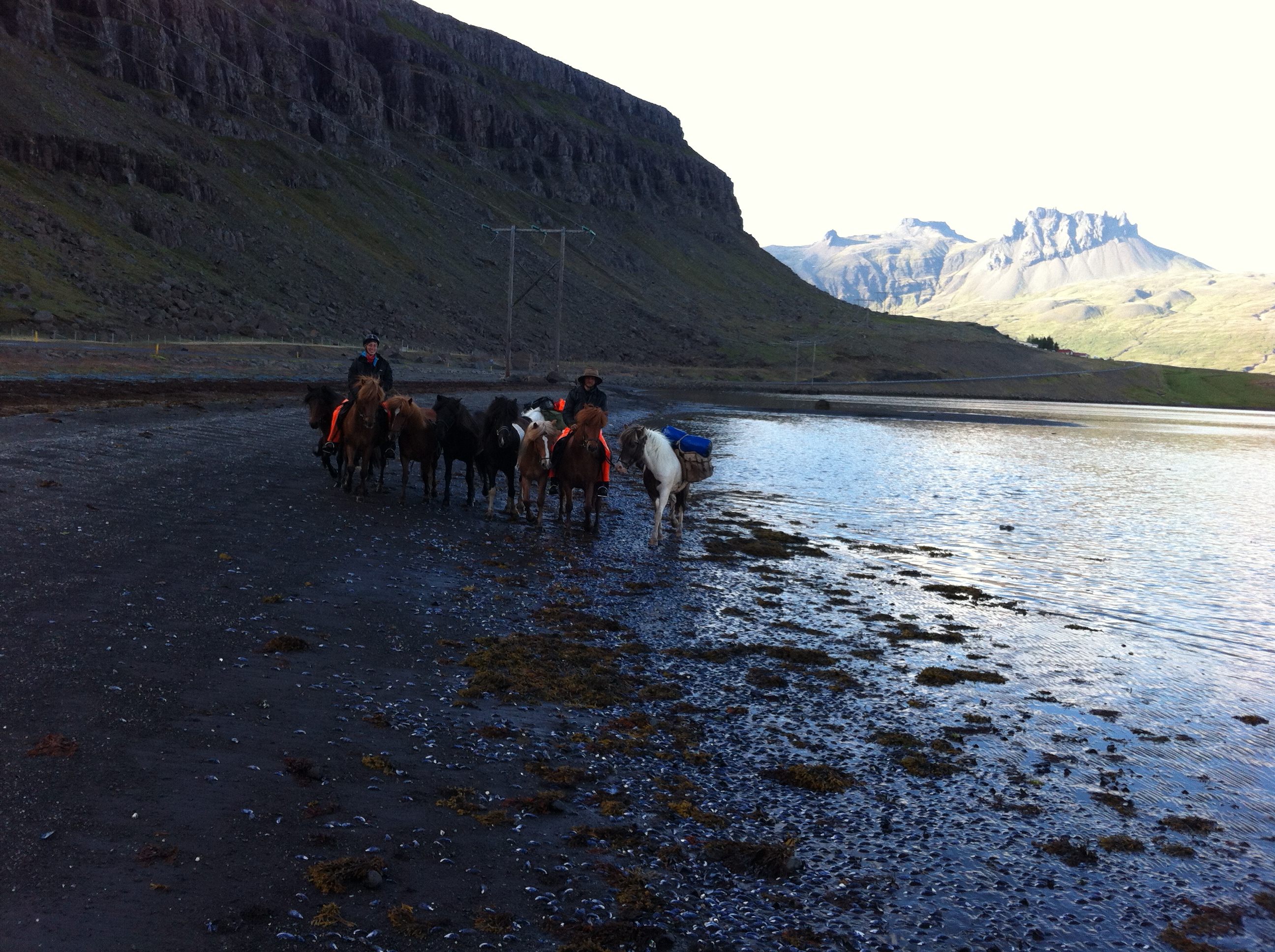
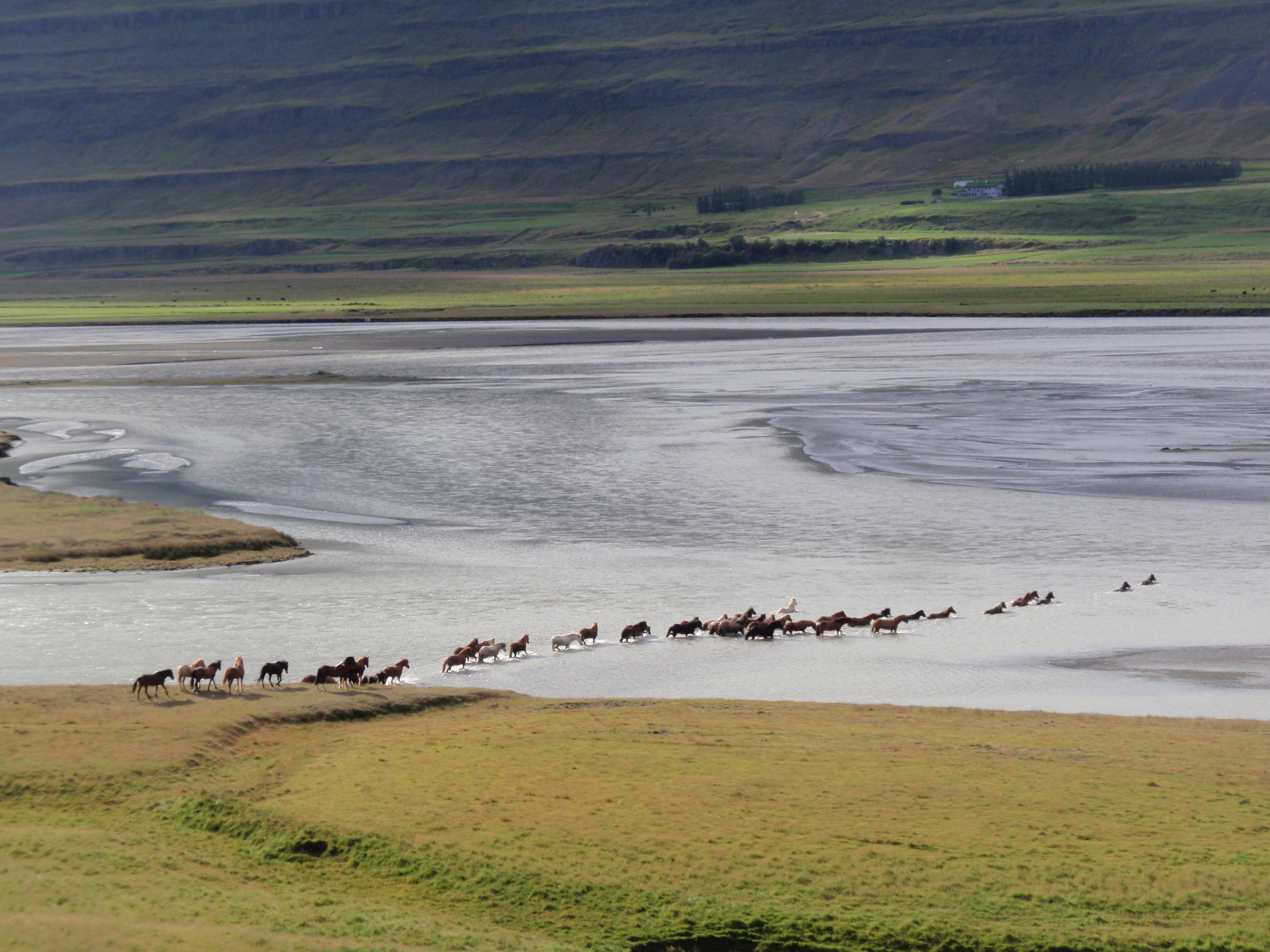
The last tour was an extra long 9 day tour, a 300km trek from Höfn in Hofnarfjorður, over Lónsheiði and through the Fossdalur and Geitdalur paths we paved on our staff tour. We rode in and out of the dramatic south east coast, with glaciers or the ocean constantly painting our background. Highlights included taking whole herd for a gallop way out in the sea (through a shallow tide) and almost losing the entire herd in a glacier river as they tried, unsuccessfully, to take a shortcut home.

the herd swimming away!

The riding trips I took in the east this summer can all be summed up in one word: adventurous. Whether it was the beautiful landscape, changing elements, or pioneering sense of exploration, all the trips were full of (sometimes challenging) surprises and I couldn’t imagine any better way to experience the wild wild east other than by horseback.

Pilgrimage to Poland

I grew up playing the piano, hopelessly in love with Chopin´s music. Chopin was born in Poland to a polish mother and Polinized frenchman, but spent his adulthood in Paris. He died young,

Chopin´s heart

with many works unfinished, and it’s depressing to think about all the romantic pieces for piano he never even started writing. His body is buried in the Parisian cemetery Pere Lachaise, but his heart was returned to Warsaw where it is encased in a marble pillar in the Holy Cross Church. I have visited his rose-covered grave in Paris, a sanctuary where women daily express their love for his music with dozens of flower bouquets. I wondered around Warsaw with a similar adoration, daydreaming about this city where he studied and performed his music as a young prodigy. I accidentally stumbled upon his heart grave, when I walked into the church and found myself standing right beside it as I stared at the golden organ. I found streets named after him, parks, statues of him, and finally visited the Chopin museum after 2 failed attempts (it’s closed on Mondays and Tuesdays offer free admission which causes long, long waits).

Warsaw wasn’t a conventionally beautiful European city. It was a fusion of time periods, the small core of Old Warsaw surrounded by modern and industrial

Nowy Swiat Street

architecture. Nowy Swiat street, a main road for shopping and dining linking the old town to the Royal Castle, felt fairy-tale-ish, like a colourful reconstruction of the pre-World War II Warsaw. The architecture mixture is a grave reminder of the destruction Warsaw suffered from the German occupation, and the remnant Soviet flare keeps you feeling further away from Western Europe.

The churches have cool, damp cellars that make your imagination run wild – they date centuries back through a complicated history and you start wondering, ‘if only walls could talk.’ I watched a baroque concert in one of these cellars, a string quartet that played Handel, Vivaldi and Pachelbel. I tried mead and polish wine, lots of bison-grass vodka, and stuffed my tummy full of pierogies, polish sausages, beets and sauerkraut. The food and drink was always reminiscent of somewhere else, as if you could taste a piece of Ukraine, Germany and Russia in all of it.

The old town is a romantic, walkable city, fortified on some sides and laced with Medieval architecture between.

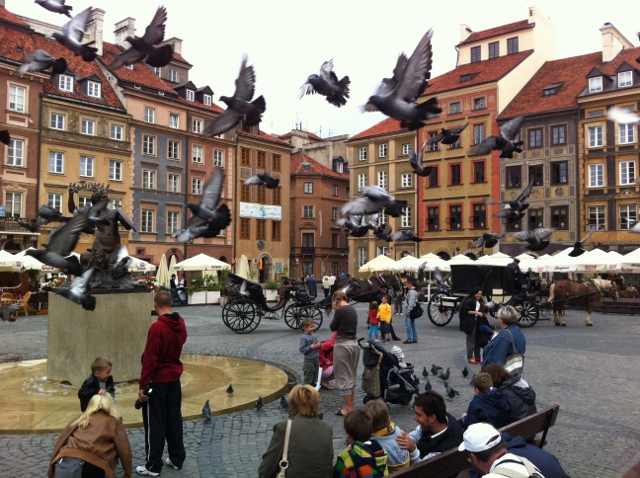
Old Town Square

Horse-drawn carriages roll slowly through the square with the mermaid waterfountain as pigeons fly away to the church steeples. The churches have cool, damp cellars that make your imagination run wild – they date centuries back through a complicated history and you start wondering, ‘if only walls could talk.’ I watched a baroque concert in one of these cellars, a string quartet that played Handel, Vivaldi and Pachelbel.

the food lane

I tried mead and polish wine, lots of bison-grass vodka, and stuffed my tummy full of pierogies, polish sausages, beets and sauerkraut. The food and drink was always reminiscent of somewhere else, as if you could taste a piece of Ukraine, Germany and Russia in all of it.

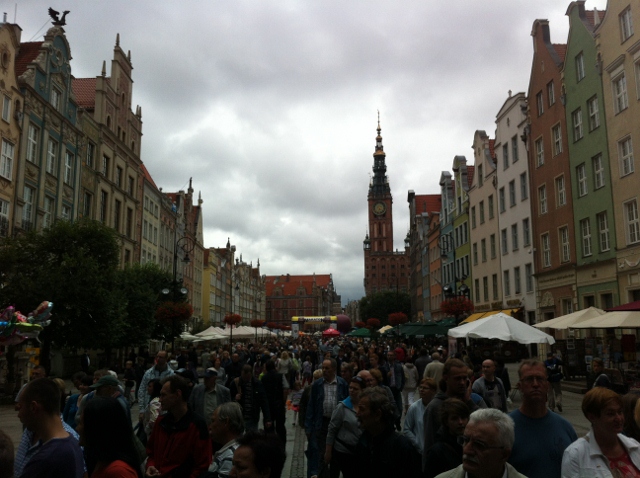
Poles joke about how their country is flipped the wrong way around – their mountains are in the south and their beaches are in the north. I went to the Baltic coast for some summer searching but it was only 15 or 16 degrees and overcast in G´dansk, not quite warm enough to make it to the beach. But it was a pleasant surprise to see how quaint this little city was, with even more grand architecture and promenades than in Warsaw. The timing could not have been more perfect – Aug 15 is Assumption day of the Blessed Virgin Mary, and also the anniversary of the 1920 Battle of Warsaw, so a long holiday weekend was celebrated with the entire city center being turned into a huge outdoor market. Each street had its own theme – one street sold antiques,

Aug 15th in Gdansk

one street sold sausages and other delicious food, one street sold amber and other pretty jewelry, and another street sold underwear and artwork. I fell in love with one piece, an oil painting of a woman holding her umbrella and standing under a lamppost and beside a single-horse drawn carriage. The painting was not only beautiful, but it was painted on an antique suitcase, which you could still open and use to pack a few things for your own carriage journey… I would have bought it if I could go back to the Old Warsaw for a carriage ride right then.

These are a few of my favourite things

I like to make lists. I make a lot of lists; to-do lists, grocery lists, travel lists… I started making a list of my favourite things: (and I hope it keeps growing)

Indian rugs. Persian hospitality. French Merlot. Pinot Grigio.  Dirty martinis. Napolitan pizza. Japanese girls. Argentine Tango. Salsa dancing. Belly dancing. Beach volleyball. Snowboarding. Swinging hammocks. Galloping Thoroughbreds. Icelandic horses. Arabian horses.  Chopin nocturnes. Rachmaninoff piano concertos. Steinway grand pianos. Antique Instruments. Used bookstores. Old Maps. Polka dot bikinis. Nonconformity. Spontaneity. Adventure. Couchsurfers. Chimes. Happiness

Then I thought of making a list of things that aren’t my favourite, like when cockroaches fly; when condensation drips from a cold glass; when people drive crazy; when idiots boast; talking rudely to people; and I dislike being disliked. (but I like that this list is shorter)

I made a list of stupid things I once believed:

  • That brown cows make chocolate milk.
  • That you could kick a street lamp to turn it on.
  • That it was hottest in the south pole.
  • That smart phones were too smart for me.
  • That I could be a lot of things but never grow up.

And then I made a list of things I don’t understand (answer if you know):

  • Why doesn’t the moon cycle west to east?
  • Why do people underachieve greatness when they’re great?
  • Why is it normal to drink soft drinks with a straw but not beer?
  • Why don’t all pretty people know when they’re beautiful?
  • Why do I have man hands?