Hestasport Ævintýraferdir

I was somewhere between French Guyana and Brazil when my roomate in Reykjavik forwarded me a job advertisement for my dream job – get paid to ride horses. I exchanged some emails and then had an interview over the phone from a smeltering phone booth in Asuncion. The connection was staticky, with a half second lag, and my Icelandic kept creeping into spanish, but somehow I convinced Magnus to hire me.
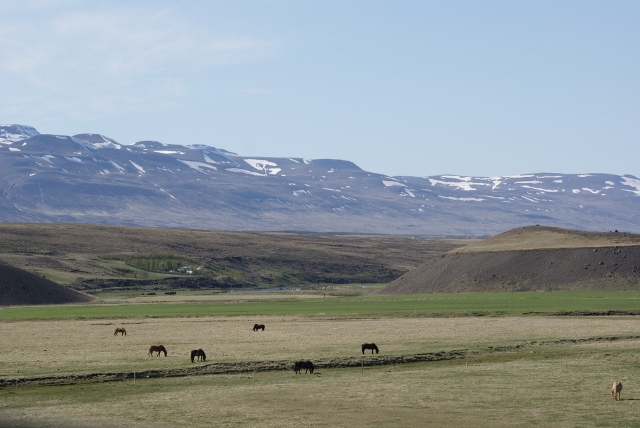
the hestasport horses at Vindheimar

I arrived back in Reykjavik for maybe 8 hours before packing my bags and moving to Varmahlid. I stopped in Borgarnes overnight and then hitchiked the next 250kms. My first pick up, a young Icelandic couple, asked where I was going and when I answered “Varmahlid,” invited me to join. We drove about 30kms before the driver asked me where abouts this ‘farm’ Varmahlid was… he had no idea it was actually a town 2 hours away. So, I got kicked out at Bifrost 5 mins later where their journey ended, and finally made it all the way with my next pickup.

I moved into a house of women, (well, German girls) and acquainted myself with all the pretty ponies Hesasport has. There were, like in any herd, the safe old horses, the crazy young ones, the lazy trained ones, and the question mark horses you had to figure out for yourself. We spent the end of May taking short riding tours around the Vindheimar farm, and two long tours in the begining of June riding past Maelifell and into Kjolur. Its a desolate highland, covered in desert, and sandwiched between 2 glaciers. The first tour we took had more staff than guests, since the 3 German riders wanted to take the whole herd into the mountains to shoot pictures for an Icelandic landscape calendar. We often stopped in the middle of nowhere to do a mini photo shoot, that required us to act as stuntmen and chase 20 loose horses down steep soggy slopes or gallop the whole herd through a river.

beside Langjokull glacier

Later we took a 5 day trip with a whole bunch of borrowed horses, many of them question mark horses we had to try out for the first time and hope it worked out as the herd was released. Then the third long trip went pretty smoothly, except for this poor Canadian girl who fell off her horse 3 times on the first day. Thankfully she made it through the rest of the trip, since she was part of the staff. Our cook also joined us on one trip riding, and fell off his own horse twice, which thankfully turned out okay too since we certainly wanted to keep on eating.

My last long trip was a 3 day tenting trip with 2 Danish girls. We took 6 horses and enough food, bathed in the frigid rivers, and survived a wind storm in a mountain hut that at one point we thought would blow away in the middle of the night. The first night we crashed a party at the Arctic Adventures river rafting base, and ended our trip at Fosslaug natural hot pot, very deservedly.

Then my season at Hesasport ended early, with my Ishestar friends from the east irresistably inviting me on a few long tours – a 6-day pack tour and a 9 day special tour from Hofn to Egilstadir. Just when I had finally figured out all the horses at Hesasport, I hitchhiked east to a herd of 103 horses I now had to learn and love just as much.
Coldnoon: Quarterly of Travel Poetics

Article published in Volume I, Issue III

Lotourism: Low Impact, Low Cost, Localized, & Lonely – The Ecotourist on a Budget and Redefined.

I studied ecotourism and wrote my masters dissertation on the discrepancies between defined and actualized ecotourism since I have always battled with the ‘ecotourist’ identity. I liked to think I was an ecotourist, also called an alternative tourist, sustainable tourist, or an environmentally friendly tourist. But then these terms lead us to more definition inconsistencies, since “eco” and “environmental” and “sustainable” are all buzzwords overused and often misunderstood.

After completing my thesis, I realized the term ecotourism is a vague, green-washed term, whose definition is undecided among academics, and sometimes unidentifiable in practice. I like to travel, and I love the natural world we live in, but often times by carbon emissions and ecological impact contradict my obsessive compulsive desire to go all over the place, taking boats, planes, cars and buses at an unsustainable rate. It’s easy to feel guilt about my carbon footprint but also unclear where I can accept accountability for planes and buses that will take their routes with or without me.

However, it is possible to have an ethical travel consciousness without identifying as an ecotourist. Ecotourists pay more for greener experiences and off-set their flights by planting trees, but for sustainable tourism to become a thing of elitists is not fair. Ecotourism has also been set aside from culture tourism, offering strictly nature and adventure getaways in wild areas, but humans are an intrinsic part of nature and the true ecotourist should still be touring the cities and villages people call home. Mass tourists take their flights and book their all-inclusive hotels or cruises but travel intensively for only one or two weeks. My travel style has fused and forgiven aspects of both styles of tourism, into something I have coined “lotourism.” It is a philosophy of travel for the weary backpacker who wants to see the world and everything in it. They do not pay more, but pay less, and see more, over longer periods of time, with fewer modes of transport taken by traveling locally and avoiding long-haul flights.

I had the idea to invent a new word to describe the way I travel since it doesn’t suffice to say I’m a backpacker, just a traveler, a tourist, or an ecotourist. I want a word that describes my travel mentality and approach to seeing the world in a more sustainable way. I have a dialect of English my friends call Katrin-speak, but this is isn’t a word I’m pulling from my bad English vocabulary – its more like a philosophy of travel that I’ve adopted and want more people to share. “Lotourism” is a theory of tourism that isn’t captured by any other, one word.

I like to think I travel sustainably, but not just natural resource sustainably – I am financially resourceful, traveling with minimal luggage, staying with locals, and traveling slowly but steadily over short-haul distances. I can live off $10 a day or less in some places. I never stay in hostels or hotels, but couchsurf and make new friends everywhere I go. I have one small backpack and all my possessions and necessities for 3 months in it, a 35L 20kg bag.

Im not really a backpacker, since I avoid backpacker hostels and hate being defined by the stuff in a bag on my back. Im not always a tourist, since I try my best to camouflage into my surroundings and see things from a local perspective. I adopt the local way of living, eat where locals eat, dance the way they dance, dress as indiscriminately as possible, and don’t say much unless I’ve learned the local language since I never want to be that white girl screaming English in slow motion to someone who has no idea what I’m saying. I’m definitely a traveler, but so is the American guy sitting in business class flying to Dubai for a 2 hour business meeting before returning to London via Dakar for dinner in England’s most authentic Turkish restaurant. So I’ve realized there are different types of travelers, doing different types of travel, and when asked how I travel, my new answer is “I’m a lotourist.”

Lotourism is, in a nutshell, is kind of like ecotourism, but redefined and on a budget. It is travel that is low-impact, low-cost, localized, and lonely. So, for any other lotourists out there, get the word out on the new word. And, if you understand the idea, agree with the philosophy, and like the way it works in travel, spread the word so more lotourism can exist in this globalizing, traveling world of ours.

see the rest of this article at http://www.coldnoon.com/March-2012/Katrin-Einarsdottir.php

My Little Sister's Wedding

I grew up with 2 sisters, one older and one younger, raised by my mother and grandmother, sandwiched in a testosterone-dry family. We were raised slightly strict and conservative, with men out-lawed from getting too close to any of us. My mother remarried and divorced in a quick 2 years, and other than that the only men coming around were uncles and ‘friends’ I could never admit were boyfriends. Yet somehow we all knew Ruth, the baby of the family, would be the first to get married. We knew that when she was only 4 years old, still attached to my mothers umbilical cord, and grew up the most ‘domestic’ of us all, baking with my grandma and learning all my mother’ secret recipes.

the beautiful bride

Ruth went to Trinity Western University, a private school nearby my moms home town. She started dating a boy in her second year, and then we all started predicting when the wedding would be. It was still a light-hearted joke after they had been dating a couple years, but before we expected it, they were engaged.

After an 8 month engagement, finishing all their final exams, and graduating from University, they were married a week later. We weren’t surprised, but still scratching our heads with the unusual feeling of marrying off the baby in the family. Me and my older sister, unmarried and childless, were the maids of honour, watching in awe as our youngest sibling out-aged us somehow, as a youthful beautiful bride already starting her life with a man after all these years of being an integral part of our women-only family.

the original hen house

They were married  in a beautiful spring ceremony on an apple orchard in Kelowna, at the grooms home in the interior of British Columbia. My sister wore a $50 dress she found at a bride-swap fair, and layered it with lace from another second-hand gown the grooms sister found for her. She wore a belt around the smallest part of her waist, he hair down and curled, with lacy flats she bought somewhere for a few dollars, and looked like a million bucks. She glowed from the tips of her manicured fingers to the ends of her pursed lips, and her colourful bouqet made from an arrangement of flowers picked from the garden couldn’t distract you from her smiling face.

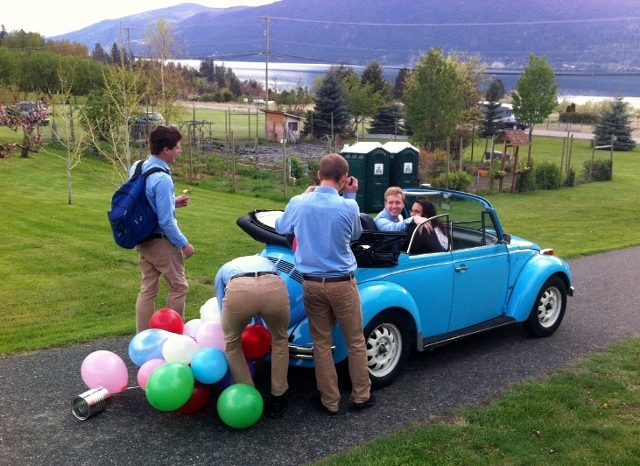
the getaway car

The wedding ceremony was simple; my mom catered it with home-cooked food, only a few people made speeches, and with no alcohol or dancing, it was over by 9pm. We watched the newlyweds drive away in a blue convertible 70’s Volkswagen bug, dragging behind them cans and balloons, and couldn’t help but feel a pang of loss at the sight of our little sister being the first chick to fully flee our home nest.

Sleepless in Seattle

I’ve been to Seattle countless times, but never to visit Seattle, only to go to SeaTac airport or drive through the I-5 to Oregon. I’ve driven to the suburbs of Seattle for cheap shopping or eating at a restaurant Canada doesn’t have, but now I’ve finally been to Seattle just for Seattle’s sake.

I went there to pick up 3 guys from Iceland who were arriving from Hawaii after a trip around the world. They were met by Conrad, an American-Icelandic tango dancer I met three years ago in San Francisco. I didn’t know him very well, and had only ever danced with him, but I figured the Icelandic connection made us all some sort of family. Conrad lives in Seattle now, and he let all 4 of us stay at his girlfriends place for 2 days after picking the guys up at 6 am from a redeye flight.  The guys also knew an Icelandic couple that lived in Seattle who we stayed with a third night, so after 3 days in Seattle, we managed to do all the sight-seeing things I should have done a long time ago.

We went up the Space Needle, and visited the EMP (Experience Music Project) Museum below. The guys shopped at Pike Place market, and we walked up and down Pine street window shopping. We bought some cheap American fashion and an unlocked iphone, as most Icelanders do when visiting the states, and indulged in delicious mexican food and cheap sushi that you would never get your hungry hands on in Reykjavik.

Our first night together was filled with gourmet food and port and a wine tasting session, followed by tango dancing and micro-brewed beers. We had all been traveling for the last 2 months and spent the previous night in transit, but still stayed up as late as we could and then sent Conrad off to Reno on a 7 am flight.

During our stay with Bjossi and Gudrun, the Icelandic couple, we squeezed 3 of us onto a sofa bed. We were almost asleep when an intolerable, screeching siren started sounding and could not figure out what was happening. First, half-dazed, we realized we weren’t dreaming, and that putting the pillow over our ears wasn’t helping. Then we checked all our phones and the electronics in the apartment to figure out what could possibly be making so much noise. After taking out the battery from the fire alarm didn’t work, we realized it was the fire alarm ringing throughout the entire apartment building. We grudgingly went outside and stood around with a hundred others, in their pajamas, wrapped in blankets and holding their pets. After a fire truck and a few firemen finally let us back in, we crawled back into bed without ever knowing if and where there was a fire, and were too tired to really care.

On our last day in Seattle, we drove back to SeaTac airport and picked up my father, who was flying in for my little sisters wedding. We drove my moms convertible, full of Icelanders, back to Vancouver, through the daunting evergreen forests that made us feel very farm from home.

A Day in Caracas

One can get from Rapa Nui to Canada a number of ways. I took one of the more complicated options, and flew 4 times through 5 countries in 6 days. The journey was long and tiring, but started off on the right foot. I rode to the airport on a horse in Easter Island, arriving in time to check in, drop off my bag, and then gallop along the air field fence for an hour while waiting for security to open. Me and my horse also shared a bag of mangos, since they would not get through customs in Peru, my next destination. I had an overnight stop in Lima, and couchsurfed with a friend of a friend but did little else than sleep and shower.

I went back to the airport to fly next to Caracas, where I had a day and a half layover. I had never been to Venezuela, and had lots planned for my short visit, and tried tirelessly to extend my visit but the next 3 international flights I had to take wouldn’t allow it. Those I told I was going to Venezuela always asked if I knew anyone there, told me to be careful, and suggested I just stay atthe airport to save the hassle of getting around all alone. I didn’t know anyone, but of course found some inviting couchsurfers, opted out of sleeping at the airport, and made the 3 hour coach-subway-bus transit from the international airport terminal to Pueblo de Baruta.

the couchsurfers flat

I had an uneasy feeling about what I could or could not do but mostly because of all the warnings building up. Every traveler and latin person I had met had hyped up the safety issues in Caracas so much that I really started to believe I had to me more cautious and guarded. Yet, from the moment I left the airport and spent those 3 hours alone transitting to Eduardo’s house, I could not have felt more secure; the backpack on my shoulders and my nervous eyes were enough of a tell-tale sign that I was a gringa (despite my badass tan), and every person in eye-shot of me noticed and felt some sympathy. Those in earshot of me almost always said something, asked me if I was ok, and offered to help me in any way they could. “Do you know where you are going?” “Do you have a phone number to call your friend?” “I will keep an eye on the zippers of your backpack.” “I can help you translate any spanish if you need help with your directions.” Police officers walked me from the street to the right subway platform underground. My bus driver escorted me onto his bus, infront of the 3o or 40 passengers already queued in line, wouldn’t allow me to pay the bus fare, took Eduardo’s phone number in his cell, and called him to come and meet me at the stop he would drop me off at when we were 5 minutes away. Others just started chitchat, so curious about what I was doing on local transportation during nightime rushhour, alone, with a backpack, certain that I was in the wrong place at the wrong time and needed help to get back to where I belonged. But I felt that I belonged right where I was, under the safe cloak of  all the empathetic strangers I met.

the couchsurf crew on campus

When I met Eduardo, his roomates and  3 his Argentinian couchsurfers, I immediately felt like I had arrived into to a group of old friends. It was Monday night but we decided we could make a party wherever we went and drove around a sleepy Caracas to stir something up. We stopped by a stand-up comedy bar, went to a trendy lounge where we could dance salsa, and ended the night at some Irish-pub-feeling place before going home and sleeping in various arrangements on couches, yoga mats and camping mattresses.

the one pictured I managed to take from the car window

The next morning we squeezed 6 people into a little car and visited a university campus nearby. We drove to the center of Caracas and weaseled through the subway stations and trains which were more crowded and chaotic than NYC’s Penn Station at 6pm. While driving, I naively held my camera a little out of  my rolled down window to take some pictures, and Luis quickly grabbed my hands and laughed, explaining “the next guy on a scooter to pass us will just rip that right out of your hands and you’ll never see it again.” I guess you should never really let your guard down all the way, despite how safe a place can make you feel in one short day 😉


Rapa Nui – Easter Island

the Rano Kau crater

Easter Island was up there with Antarctica and Greenland for most random and tricky-to-get-to places that were high up on my bucket list. Greenland was, luckily, not so hard while living in Iceland, and Antarctica kind of fell into my lap even though I couldn’t afford it and hadn’t planned to go there until after traveling some easier-to-get-to countries. But, it was the last continent and 2009 was the perfect time to go, when voyages were undersold for the first time in years because of the economic recession.

horses at Ko Te Riku

I was going to Chile for my friends wedding and promised myself next time I was in Santiago I had to bite the bullet and dish out for the trans-Pacific flight to Rapa Nui. Flights were between $688-$1100, and I couldn’t convince myself it was worth it. Then I realized that LAN Airlines was part of the One World alliance, which my mom had just given me 50,000 miles for my birthday, and I managed to book a round trip flight from Santiago to Mataveri for $157 and 20,000 miles, and still had enough miles to get from Santiago to Vancouver one way for another $300 and 30,000 miles. I even got all the right dates I needed to stay a comfortable 5 days. This was the perfect amount of time to spend on the 70 sq.km island with 800+ monolithic statues and almost as many horses.

sea-ward facing Moai's at Ahu Akivi

I took a red-eye flight to Rapa Nui and arrived at 6 am in pitch darkness on a jumbo plane that unloaded 300 passengers. I couldn’t imagine this little island had the infrastructure to host us all, but we dispersed from the tiny ‘airport,’ which consisted of a small building, a driveway and a couple taxis, to our respective homes.

Mihinoa campground where I stayed

The island has a population of 5 thousand, and almost everyone is working in the tourism industry. There are no chain hotels or restaurants, but family-run guesthouses and a few luxurious eco-resorts built in the style of the stone and turf houses the settlers used to build. Camping is popular, in the breezy sub-tropical climate, but your tent heats up alot after sunrise since few trees are left to provide any shade. There is only one ‘town,’ with a main street and a few overpriced supermarkets. There is a soccerfield and a couple beaches, just wide enough to lay a towel and give the only access points to the sea if you’re trying to surf the waves on a board or a boat.

stone carvings

The rest of the island is rolling green hills, a few volcanic craters, and dirt roads leading you from fallen statues to risen statues, underground caves and stone carvings. A large chunk of the island is national park (split into two areas), and another large chunk is a biological reserve area. Cows and horses graze in most pastures, and people use horses, mountain bikes or quad cycles to get around if they don’t own a jeep.

stone and turf houses at Orongo

Most of the Island is a world heritage site, littered with these huge stone faces. I still haven’t figured out the Moai’s, what they meant, how they were made or transported, and why they made so many. I guess there are a few theories, but noone’s really sure, and all I can say is they spent a whole lot of time and energy making them and moving then for some very important reason. They all looked a bit different, some made in the likeness of some VIPs or chiefs, some had red stone hats, some were small, others big (4 metres) and they all weighed a tonne or more.

an unfinished moai

I went to one of the quarries, where unfinished moai’s laid unfinished in the mountain. I biked around the island and saw many laying on their backs or on their faces, barely recognizable from another pile of rocks that probably had no historical significance. Some were left in transit, as if one of the seven plagues had just hit, and all the moai deliveries were dropped and left exactly where they were. All were raised facing land (except a handful of rare exceptions at Ahu Akivi) theoretically because they were built to watch over towns and perhaps the Rapa Nui people respected the sea in some special way.

My favourite way of exploring the island was on horseback, and I was lucky enough to find a guy with a mare he could lend me for a couple days. I ran around on her bareback through Hanga Roa and along that Ana Kai trail, and if it wasnt for the hordes of tourists taking photos of every statue, I could have escaped through imaginary time travel and ridden over to the next village to ask alot of burning questions about the Moai’s and the Rapa Nui people.

A Chilean Wedding Reunion

My first good friend from UBC got married this year, causing good reason for a UBC alumni reunion of old friends and roomates. We all started our undergraduate degrees in 2004, as young, naive teenagers, far away from home for the first time. Now we’ve matured, grown up, moved away, gotten jobs, and for those as lucky as Stefan, found someone to share it with.

Stefan and Mane, the newlyweds

Stefan is a New Mexico native, born in Chile to American parents. He speaks Spanish and has a Chilean passport, so he decided to take his exchange semester from UBC in Santiago. We all took our exchanges in 2nd or 3rd year, many went to Australia or New Zealand, but not many dared to venture out to a non-English speaking university. Stefan extended his stay from one semester to a whole year, working in Portillo Ski resort and traveling through his birth country, and I was lucky enough to be backpacking through South America when he was still there. I visited Stefan in Santiago, only weeks after moving in with his girlfriend. Mane was also working at Portillo as the nurse, and Stefan had set his eyes on her the moment they met. I could tell instantly from the moment I met her that she was adorable, fun, smart, and confident. Stefan must have noticed she was a keeper, so he did exactly that, keep her.

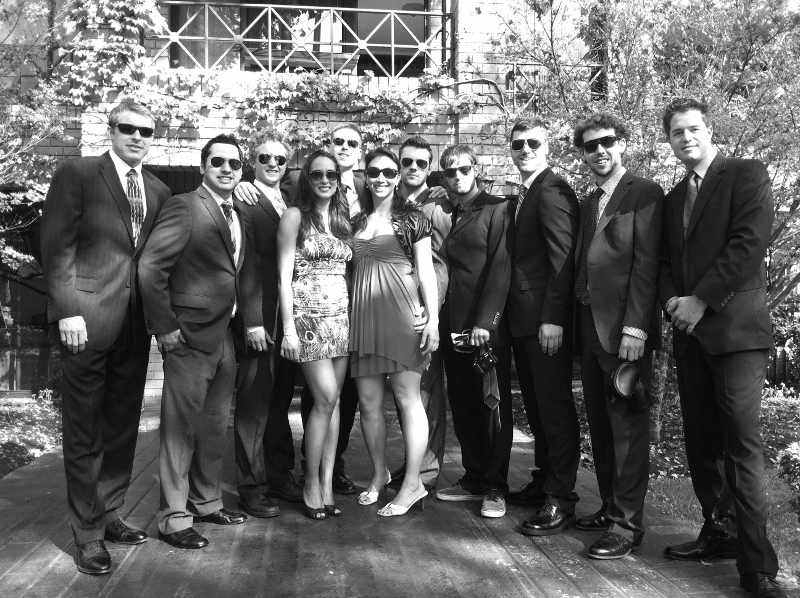
the UBC crew

Ten UBC friends (plus one highschool friend and Stefans family from New Mexico) attended the wedding, which was held in Santiago – a long way to go for the Americans and Canadians. Though we were largely outnumbered by the Chilean guests and Mane’s family, we certainly tried to make up for it by being louder and more obnoxious. Apparently we drank the same amount of pisco as a wedding of 400 by the time 6 am rolled around and the party finished with the last 30 stragglers (all of Stefan’s foreigner crew still present).

Their wedding was held in the most beautiful setting, a place you picture only in romantic fairytale movies. When we arrived, a flock of peackocks walked past the small lake between the mansion and the stone church, and flowers and champagne glasses shone in the sunlight. Their ceremony was magical, with live music from family relatives, tears flowing from bride and groom, and 100+ guests dressed in their Sunday’s best taking pictures and throwing a rainbow of flower petals.

the view of Vina's coast

We spent some time together in Vina del Mar, on the top of a hill in a highrise building with an incredible view of the coast. We rented apartments in Santiago for 4 nights, drinking wine and coke and having completo hot dogs as all good tourists should. My highlights were the Fish Market and Pablo Neruda’s home-turned-museum, and the 6.1 Richter scale earthquake that hit us while on the top floor of an old apartment building. The whole thing shook, and we all looked at

a completo

eachother with a mix of confusion, panic, and even glee, while debating which door frames to stand under and who should get in the bathtub. Needless to say we survived, so a few days later we were on our separate ways, some going South to the Lakes Region, some going home, and I flew across the South Pacific to Easter Island.