Victoria Falls, Zimbabwean Style

Even though it only took 2 flights to get from Iceland at the top of the world to the very bottom of Africa, it still took 3 flights to get from Cape Town to Botswana, and then another hour drive to get to my actual destination, Victoria Falls on the Zimbabwean side. I flew with Mango Air from Cape Town to Johannesburg, then Air Botswana from Joburg to Kasane, connecting in Maun, in very tiny 40 passenger planes. Mango Air was your typical budget airline, but Air Botswana was a delight – their idea of an airplane lunch snack was biltong (dried meat similar to beef jerky) and beer, even though the flight was only 45 minutes long at 11 in the morning. Now that’s my idea of airplane hospitality in a world of increasingly stingy airlines – Icelandair doesn’t even feed you peanuts on the 5 hr flights to North America anymore.

The original plan was for me, Steve and 2 other friends from Berkeley to meet in Kasane, but we weren’t meant to meet until the following afternoon, so when I made it all the way to Kasane (the north eastern-most park of Botswana) and Steve didn’t (he flew threw Windhoek and had flight delays), I made an opportunistic plan to somehow make it to the Botswana-Zimbabwe border, only 15 km away, and onward to Victoria Falls for my spare 24 hrs. Luckily there were 2 Americans on the plane who had befriended a British/Zimbabwean tour guide, and when they also befriended me, explained that the tour guide was driving straight to Victoria Falls and I took the generous offer to catch a lift. On our one hour drive we saw warthog, monkeys, baboons, kudu and elephant all from the road. He escorted me through both borders (you have to exit Botswana in one building and 50m away enter Zimbabwe in another building), and drove me straight to the doorstep of the main backpackers in town. It’s called Shoestrings, a super cozy, inexpensive ($11US/night/bed) hostel/camp ground, with a pool, hammocks, 2 resident Great Dane/Irish Wolf hound crosses (BIG dogs), and it’s all open-air except the bedrooms.
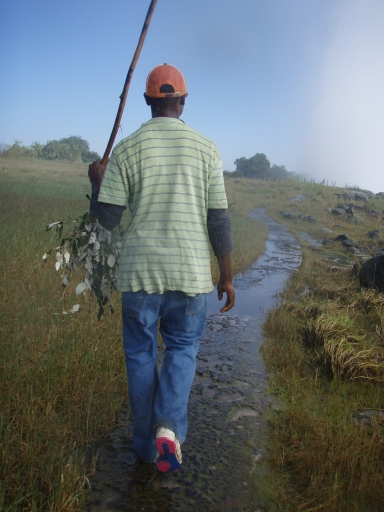
Likey and his leaf brrom, with the waterfall spray soaking our path

Likey and his leaf broom, with the waterfall spray soaking our path

I was really looking forward to paying billions for everything, but just in the last year Zimbabwe’s official currency has been changed over to the US dollar. The economic transition seems ongoing, and I get the feeling US dollar bills are still few and far between, hard to get your hands on, so when you do get an actual bill in your hand, they’re often well-used, tattered, dirty pieces of paper. Even though Shoestrings wasn’t nearly at capacity, later that evening an overland safari tour bus full of drunken Aussies, Americans, Canadians and Brits showed up and completely emptied the $1.50/beer bar. The last thing I was expecting on my impromptu trip to Zimbabwe was to party with a whole bunch of young westerners, but I can’t say I didn’t have fun. I also met one local white guy, a middle aged Trophy Hunter guide, so if that didn’t make him seem odd enough, he took to expressing his feet fetish to me by sniffing and biting the ends of my toes to ‘inspect how well-traveled I was.’ Even though I wasn’t supposed to go to Zimbabwe on this trip, or at least I hadn’t planned on it, I really wanted to see Victoria Falls since I’ve had somewhat of a waterfall theme going on in my travels as of late. I made it to Iguazu Falls in Argentina in January and Niagra Falls in March and had been daydreaming about Vic Falls (and Angel Falls in Venezuela) ever since. The next morning I finally fulfilled that curiosity, and spent all morning at the water fall. I walked in shortly after sunrise with just enough money to pay the slightly expensive $30US park fee and my waterproof camera, and all the staff and street sellers tried to convince me to get an umbrella or poncho.
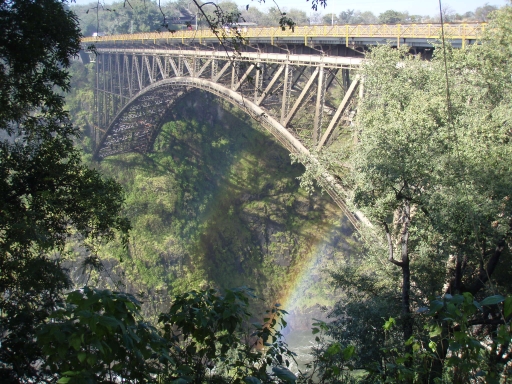
the bridge to Zambia

the bridge to Zambia

I decided even if I got wet, it was hot enough to air dry in minutes, but after walking around for a few hours, I literally got rained on from all directions, with waterfall spray hitting you from below, sideways, and above, in big heavy raindrops. One of the ground keepers found it amusing and decided to follow me around the park, pretending to sweep the path with his broom made from tree branches full of leaves. For every leaf he swept off the path, he put another 2 on the path, so Im not sure if that was really his job or if it was, that his job was actually productive, but I let him walk me around anyway. He told me all about his family, the falls, the resident butterflies, the impala that we saw in the forest, and a beautiful piece of bee hive that had fallen to the ground. He explained that you could eat it, and after putting a piece of perfectly symmetrical hexagons into his mouth, admitted it just tasted like wax, not honey. His name was Likey, and if you’re in Vic Falls anytime soon, look for the teenager spreading leaves all over the walkways and ask him to show you around. He definitely gave the best tour of the park, and for sure costs less than the hired tour guides who won’t give you that type of one-on-one attention.

The similarity of Vic Falls to Iguazu was astounding since I really felt like I was having déjà vu. In both places you have the river and a massive waterfall accessible by two countries, and a little to the east, another border and a small community trying to be a gateway town to the falls tourism. For Vic Falls there’s Zambia a stone’s throw away to from Zimbabwe, and the Caprivi strip of Namibia nearby, and in the same orientation, Brazil, Argentina and Paraguay all huddling around Iguazu. Both places had similar ecosystems, luscious greenery and thousands of butterflies fluttering around, but I guess they had slightly different feels since Iguazu didn’t have elephants…

Cliff under the 'entering Zambia" sign

Cliff under the ‘entering Zambia” sign

In the afternoon I walked across the bridge to Zambia, just for another view of the falls and to contemplate whether or not I had the guts to bungee jump off the side into the Zambezi River. I didn’t, but I did make another friend called Cliff who again politely asked to walk with me. We were hassled by all his friends trying to sell me copper bracelets or wood craft souvenirs, and one finally struck a deal when he offered to trade a bracelet for my old, dingy scarf. I did really like it and wear it a lot, but I naively thought he must have liked my scarf a lot and wanted to give it to his girlfriend or mom. After sealing the deal, Cliff later explained he was just going to resell it to someone else. If I had known that I might have kept my scarf since it was worth much less than his copper bracelet and I certainly wasn’t trying to rip him off, but I guess I’ll just pretend he did really like it and I did him the favor by trading.

Links: http://www.shoestringsvicfalls.com

South African Wine Route

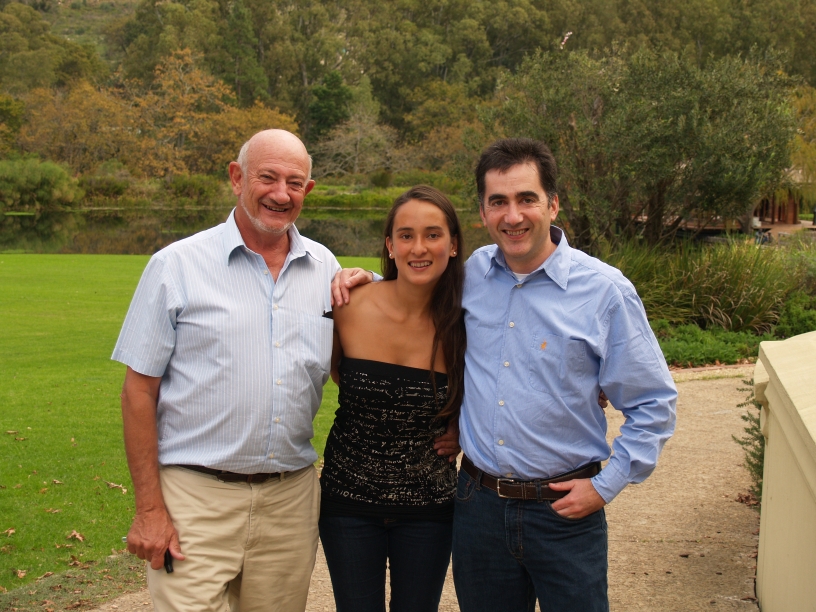
I spent some time with my two Antarctica friends, the Rotary guys Fred and Steven, including my visit to the waterfront and Robben Island with Steven. We all hung out one evening at Fred’s house for a braii dinner party. Their home is located on a wine estate called Steenberg Vineyards. It’s still a fully operational winery, boasting a golf course and a few small neighbourhoods of private homes, and is completely fenced in with tight security patrol. Arriving after dark we had to pass through a couple gates and tell our story to a few security guards before we convinced them we were allowed in, and then one of the guards hopped in the back of our car to escort us all the way up to their door step, unlocking another fence along the way with his thumb needed for the finger print scanner. To bring this type of security control into perspective was easy enough since exactly opposite the estate, separated only by a two lane road, was a maximum security prison with fences just as high, barbed wire just as pointy, but still a step below the estate safety standard since the vineyards fences were also lined with surveillance cameras every 20 or 30 meters. It’s strange to think that locking criminals in is just as important a precaution as locking the affluent in, or is it locking everyone else out? Im not sure…

Steve (my Steve, confusing, I know) managed to get well enough into Fred’s good books that he offered him one of his own home-made, personally-labeled bottle of red wine called ‘Pour Mes Amis,’ uncovered from  his underground cellar – witness to Fred’s established status as a wine connoisseur. I of course entrusted him to take me wine tasting the next day, sampling the best of South African wine in the Stellenbosch and Franschhoek regions.

Steenberg Vineyard

Steenberg Vineyard

We started at the Steenberg Vineyards Cellar on the estate early in the a.m. with some bubbly chardonnay for breakfast. From there we drove to Franschhoek and stopped first at Chamonix wine farm where we had samples of white, red and sparkling rosé, and then drove through the French-influenced town.

We had lunch under the vines at Moreson Vineyards and I sampled my first Pinotage. Its an excellent blend of pinot noir and cinsault unique to South Africa, and after drinking more Pinotage throughout the week, I’ve decided its probably my favourite red variety. I love good discoveries like that.

Me, Fred & Mr Stark Conde

Fred & Mr Stark Conde with me

We spent the afternoon in the better-known city of Stellenbosch, very famous for its wine and also the second oldest town in South Africa. We tasted at Starke Condé Winery, and this vineyard had by far the most beautiful setting and landscaping, with the newly built wine tasting room an open-air gazebo over a small lake, surrounded by lush greenery and vineyards, in a valley between two massive mountains, one of which had an old Palace fortress looking down on us. We also stopped by Stellenbosch town, to see the university and feel the young student, Afrikaans vibe of the place. It was very quaint, with Cape Deutsch architecture remnants all around, and heavily vegetated with big Oak trees. We finished off at Middelvlei Wines which is specially known for their Pinotage… yum.

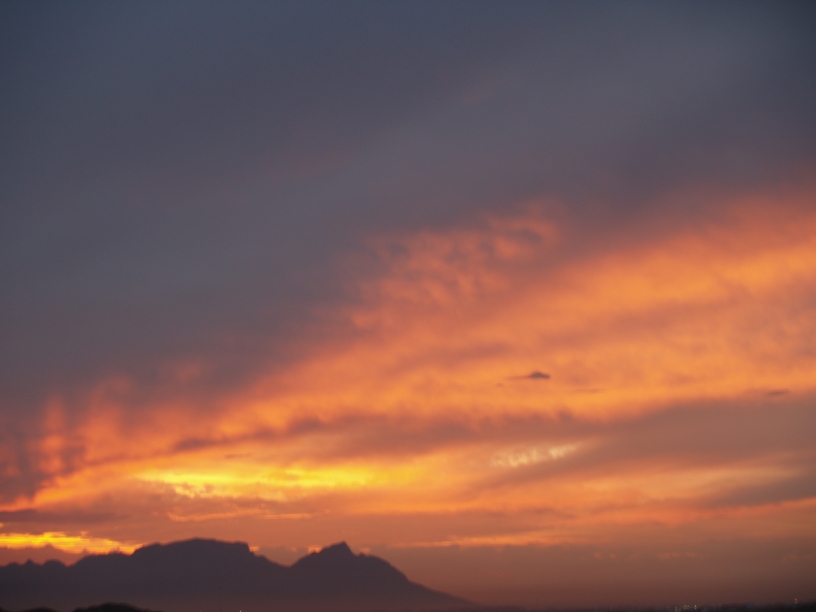
Sunset behind Table Mountain from False Bay

Sunset behind Table Mountain from False Bay

After a day of drinking in the toasty sun, I was definitely in a ‘bright’ mood, and we rounded off our perfect day at an African Themed restaurant called Moyo where you could dine in tree-top tables. We shared a fare-well drink before Fred drove me home, and we took the scenic route along False Bay with the beach to our left and the most beautiful sunset behind Table Mountain straight ahead.

Host City for FIFA 2010 World Cup

Of course the influence of the 2010 World Cup deserves some mention, since it felt like the Vancouver 2010 Winter Olympics all over again. Visa and Coca Cola sponsorships monopolised almost all advertising space in the shops, restaurants, billboards, cereal boxes, and tv commercials. Hype of the incoming influx of tourists was affecting all businesses, and the concern for crime and safety spurred officials to come up with all sorts of public announcements and positive messages to create that perfect, FIFA-host city image. Ironically enough, I never really felt threatened or concerned for my safety, and Im not sure if it was just luck or being in the right places or with the right people, but in general I found South Africans to be super friendly and smiley, always greeting you, making eye contact, and asking how I was. Their willingness to converse definitely contradicted any learnt presumptions to feel guarded, and even when unconvincing car guards in ‘official’ reflective vests offered to watch your car, I still felt like they were just trying to make a living, not threatening to break into your car if you didn’t tip them – something I’ve felt in more tame places like San Francisco.

The most telling incident of how laid back some South Africans really are was in Johannesburg Airport; the airport security woman who was directing people from the line to the next security screening station was doing so by dancing her way to the left and to the right, humming a small tune and smiling at you if you didn’t respond with a chuckle. Then the man at the x-ray machine who then told me to take my shoes and belt off next asked me why I was so cross, and I realised they actually disliked passengers who took the security checkpoint too seriously. If only it was like that in American airports!

The FIFA explosion in Cape Town also meant the sound of a vuvuzela was never far off, and almost every car had either a South African flag pegged up in the window, or both the rearview mirrors of the car wore these sock-like covers that displayed the South African flag on both sides when looking head on. As much as the World Cup inspired national pride, excitement, and arguably some form of unity within the Nation, it was still just another international event that cost a lot of money to run and created hidden incentives for all sorts of people and corporations to try and maximize personal gain from the games. You really couldn’t get away from Coke, Visa or Soccer in any corner of the city, and with many over-promised, under-delivered benefits and opportunities of the games to the local community just meant building frustration and anti-FIFA sentiments in much of the community. For those thousands who were interested in somehow participating in the events or supporting their country, the costs and limited availability of both tickets, accommodation and transportation to the games still meant many loyal fans were excluded.

While both praise and criticisms are endless for FIFA, the short- and long-term effects of having the World Cup hosted for the first time on African Soil are still uncertain. They at least have a big, brand new stadium in the center of town, an iconic building for their changed city-scape, and personally, I thought the suspenseful buzz of Cape Town and everyone’s concern to have the city on its best behaviour meant a very positive tourist experience.

Townships on the Cape Flats

Even though apartheid is over and proof of democratic progress can be seen in much of Cape Town, racism and segregation definitely exists in many respects. The vast expanses of townships extending out from Cape Town proper and covering much of the Cape Flats are probably just far enough away for the average visitor to miss, but ironically enough the trip in from the International Airport to downtown drives past many township edges. Townships are basically squatted land, with thousands of people living in shacks, and majority (if not all) are coloured or black. One initiative by the local government to improve their public image that was explained to me was to ameliorate these township outskirts by either improving the appearance of all the visible shacks, or build newer, higher fences to limit what you can actually see from the highways. These types of stories are disappointing and extremely frustrating to hear because the last thing townships need are to be hidden away or fix the walls of a few, arbitrarily selected homes.

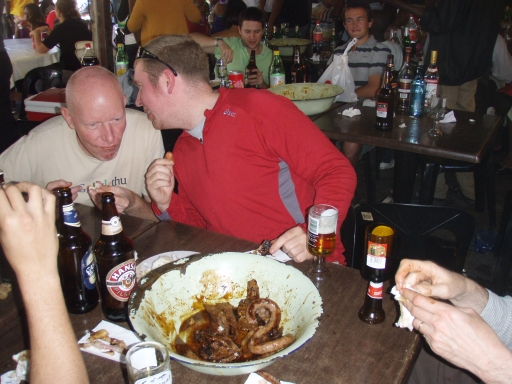
our feast of meat, with Andy on the left, the Gugulethu regular

our feast of meat, with Andy on the left, the Gugulethu regular

One day a group of 5 of us (all ‘whites’) visited Gugulethu township  with the guidance of Andy, an eccentric English-born South African who insisted we go to a famous barbecue held there every weekend. He insisted we take public transportation, and demanded we ride third class on the train. All that meant was we were in the crowded carts in the back half of the train, different from first class (there is no second class) where very few (usually white) passengers pay twice the price to take the same journey. Then we squished into a taxi bus all the way to Guguluthu, which was basically a butcher shop, a smokey, brick braii room, and a big roofed area outside full of drunk people sitting around limited tables listening to a dj play techno music over a semi-blown sound system. The basic point was to bring as much of your own beer as you could drink, go to the butcher and order as man kilograms of fresh cut meat as you wanted, then tip the braii guys in the smoky room to cook it to taste and smother it with salt and sauce, and then messily eat it with your hands out of the big, steel bucket that they served it to you in. Genius.

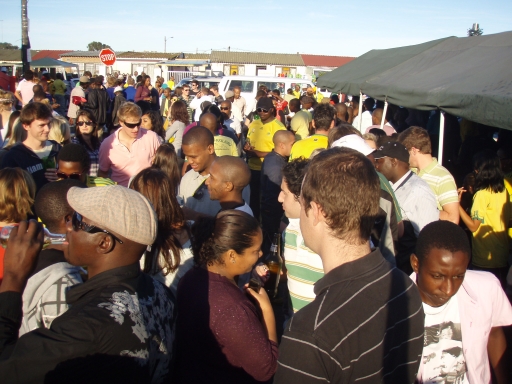
the dance floor at Gugulethu

the dance floor at Gugulethu

It also happened to be the day South Africa played Denmark in one of the preliminary games, so some promotional trailer had driven up and parked on one side of the covered patio with a tv showing the game. We ended up stuffing our tummies full of cheap meat and luke-warm beer with a bunch of other township locals, tourists, and soccer fans, and then when South Africa won, we all had a reason to keep on drinking and dancing until the sun went down.

Link to Gugulethu: http://en.wikipedia.org/wiki/Gugulethu

Cape Town Touristic Highlights

My younger sister Ruth went on a trip to southern Africa a few years ago with her classmates on a charitable/missionary-work trip, and when I mentioned South Africa to her once, she insisted there was no such country and it only referred to a region of Africa. But, after a small argument ensued, we established she was wrong, and I can now assure her of its existence as I started my own trip to Africa in (The Republic of) South Africa.

My first week in South Africa was amazing, full of all the sights and activities a good tourist should do in Cape Town. I flew directly from London to Cape Town on a very luxurious, entertainment-filled, all-you-can-drink, 12 hr, overnight flight with British Airways. I arrived at 8 am to an airport that was surprisingly small for an international airport to what I would consider one of the major African airport hubs, but it was a delightful surprise to clear baggage and customs within 15 minutes.

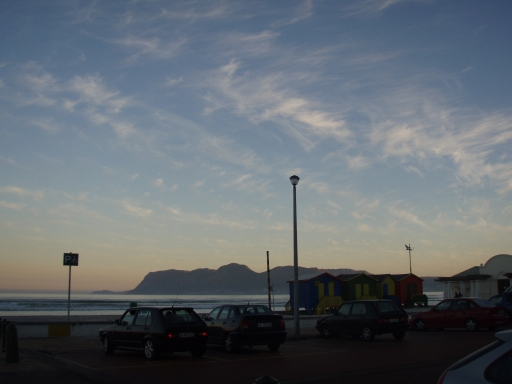
Muizenberg, the sleepy beach town I called home

Muizenberg, the sleepy beach town I called home

There’s only a 1 hr time difference between Reykjavik and Cape Town so jet-lag dismissed we made the most of our glorious, sunny Sunday by doing all the most stereotypical tourist things one should do in a day in Cape Town. Steve, who I met a few months ago at UC Berkeley and was staying 3 weeks in Cape Town for an Applied Mathematics/Public Health workshop – he can explain to you very well how they’re related but I won’t try – picked me up in our $17/day Suzuki rental. In South Africa you drive on the left side of the road in the right side of the car and it took some adjusting, but now I’m not sure I even register the difference since its quite easy just to follow the car in front of you and not even think about which side you’re supposed to be on… although parking lots are tricky.

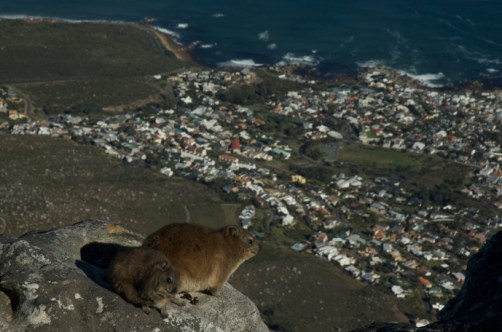
Hyrax enjoying the view of Camps Bay from table Mountain

Hyrax – considered the closest living relative to the elephant – enjoying the view of Camps Bay from table Mountain

First we visited Table Mountain; we took the cable car up and walked around the plateau with a free guided tour led by a presumably retired old lady who could barely talk faster than she walked. After losing patience with her, we wandered around with the most beautiful view of Cape Town on one side and Camps Bay to the north, and were super amused by all the little hyrax’s sitting on cliff ledges, also enjoying the view. On the way down, we saw a (slightly suicidal) rock climber ascending the sheer cliff face without any safety ropes and decided we were glad we didn’t walk down.

The cliff-top entrance for Table Mountain Cable Cars, and the death defying rock face you can see a ropeless rockclimber ascending

The cliff-top entrance for Table Mountain Cable Cars, and on the death defying rock face you can see a ropeless rockclimber ascending

We took lunch on Long Street, the main drag in town, at a delicious café called Pickwicks, and carried on to drive Chapmans Peak to Cape Point Vineyards for a little wine tasting. That ocean view drive is definitely one of the most beautiful roads you can imagine – and an amazing representation of road engineering genius.  We ended the day at Simon’s Town and went to visit the penguin colony there. What a sight to see hundreds of little grumbling penguins swimming in on the waves, avoiding all the boulders on the appropriately named Boulders Beach, and then scurrying up into the bushes and low lying forest all around  where they’ve hidden their nests and young ones. They were extremely habituated to human presence, barely even noticing your foot inches away from them and thus, allowing for some great, up-close encounters.

Friendly Penguins

Friendly Penguins

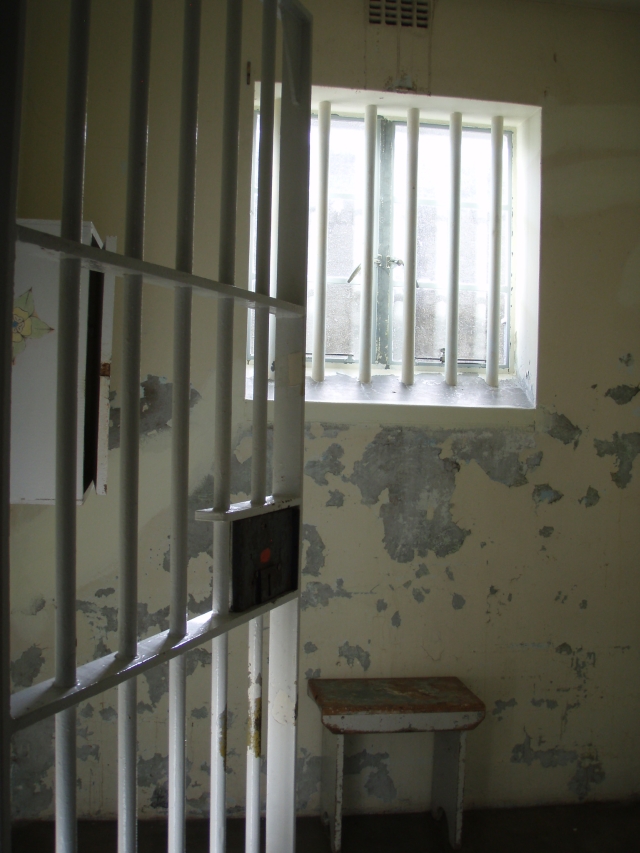
The weather all week was glorious, rare for mid-winter days, and the sun kept the temperature above 20`C almost every day. I made it to Robben Island and the Waterfront with a fellow traveler from Antarctica, also considered must-do Cape Town tourist stops, and was very impressed by the Pier 39/Fishermans Wharf inspired boardwalk offering an endless selection of shopping and dining. On the way home we also drove through the University of Cape Town main campus, the nearby Rhodes Memorial (he endowed all the land to the state where the university is currently located), and the Botanical Gardens.

Robben Island prison cell, similar to Nelson Mandela's

Robben Island prison cell, similar to Nelson Mandela’s

I stayed south of Cape Town in a suburb called Muizenberg, right on the beach with a corner store a block away that sold the most delicious, cheap eats. I was already impressed enough that you could find good meat pie and ginger beer, a luxury I haven’t indulged in since living in Brisbane years ago, but even more excited about their banana bacon burger (don’t knock it til you try it) and calamari bun – a burger filled with huge, deep-fried squid. The town is famous for some of the best surf in the world which apparently holds the Guinness World record for most surfers on one wave (circa 100+). Even though the water was almost too cold, I wanted to be cool and tried surfing in a full wet-suit, and not until I was in the water trying to catch my first few waves did Steve tell me these were some of the most shark infested waters around. To make matters worse, the day after, a small, badly bruised pigmy sperm whale washed up on shore, and after hours of failed attempts by some 20-odd surfers to push it back out repeatedly (it kept getting drawn back in with the waves since it could barely swim), shark spotters set of a siren to alarm everyone sharks were on their way in, probably from the scent of its blood.

struggling to help the beached pigmy whale before sharks got to it

struggling to help the beached pigmy whale before sharks got to it

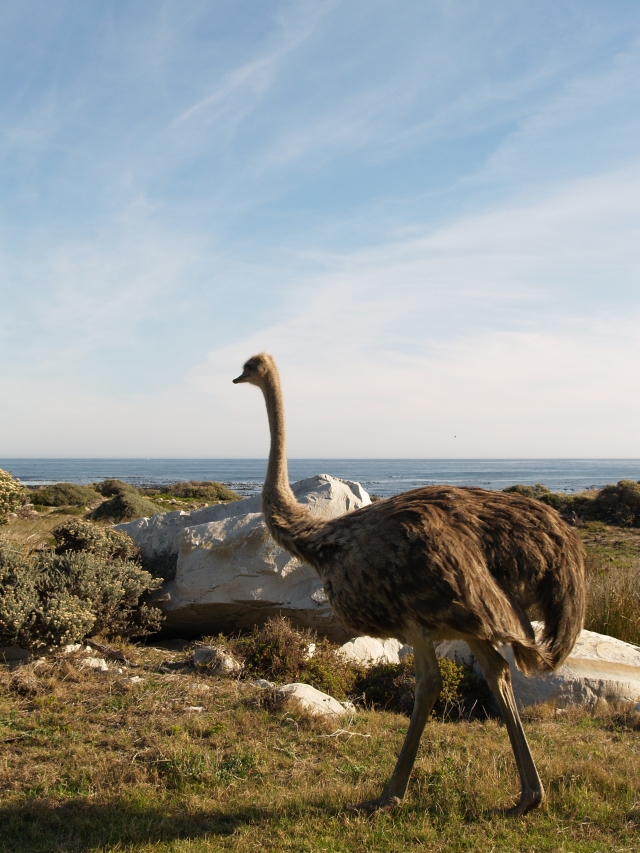
I also spent some time visiting my good friend Yashar, a fellow UBC alumni who is on a rotary scholarship to complete his masters in international relations at the University of Cape Town.  With proper Persian hospitality, we enjoyed hookah and drinks on his balcony with an amazing view of Table Mountain, and also made it to Cape Point National Park later in the week to have some intimate encounters with baboons and ostriches. Ironically enough, after I left Yashar, I attended a Rotary Club meeting, and two friends of mine, retired South African men who sailed to Antarctica on the same cruise as me, were Rotary Members of that same club and they made the connection that only 2 degrees of separation existed between them – it really is a small world.

an ostrich strolling along in Cape Point National Park

an ostrich strolling along in Cape Point National Park

Links: For more information on Yashar’s Charity, the beneficiary of his hard work and Rotary Club’s generous scholarship – Peace and Love: http://www.PeaceandLoveInternational.com

Have You Ever been to Africa?

Anyone that knows me might agree I’m slightly neurotic about travel, and even though I end up spending my last pennies on a trip I shouldn’t be able to afford, I still decided going to Antarctica at the start of this year was a great idea. I justified the trip to be able to say I’d visited all the continents, but then this question ‘Have you ever been to Africa?’ somehow made me feel as though I was cheating. Before this summer, I had only ever been to Egypt, and although it’s on the African Continent, culturally and historically it ties much closer to the Mediterranean and Middle Eastern cultures nearby, so technically I had never really experienced African tourism… until now.

No matter how cultured or well-travelled you are, it seems like Africa should be somewhat predictable from all the stereotypes and generalizations one draws from movies, media, documentaries, and especially development fund campaigns (we’ve all seen World Vision Advertisements). Yes there was poverty, underdevelopment and a lot of little black faces, but there was also blatant affluence, globalization and a lot of white faces. People still wear brand names, buy their internationally imported foods at big supermarkets, goods are all labeled ‘Made in China’, and Alicia Keys & Jay Z’s New York song could be heard almost anywhere. But, as soon as you got out of town into the wilderness, the Disney movie Lion King came alive with Timone, Pumba, Simba, and Wazoo all visible in a day’s game drive.

While this holds true for a lot of southern Africa, South Africa is in its own country genre, since it often resembles Australia or Europe more than the rest of Africa. It is extremely developed in certain aspects – highways and traffic infrastructure, education systems, debatably health care, – and a vibrant cultural arts scene. However, this type of modernity doesn’t exist in all parts of South Africa, and even though English and Afrikaans are widely used, 11 official languages in one nation gives you some idea of how diverse and complicated different areas of the country are.

I never actually realized that Afrikaans was basically a derivative of Deutsch; I always thought it was some conglomerate contact language the colonials and locals developed to communicate, but really it is no different than any other colonial country in the sense that their language was introduced into the area, into the education system, and slowly evolved to become one of the most widely used and official languages. It sounded really strange to me because I just heard a bunch of tourists speaking some German-like European language, and the locals speaking some sort of Creole or local tongue, but I finally figured out they’re all South Africans just speaking Afrikaans with different accents.

The diversity of faces, languages and general multiculturalism was still more than I expected; Cape Town struck me as a very culturally rich, ethnically diverse place, and the super colourful flag of South Africa is a perfect representation of this socially complex place. I’m not sure if this is too much of a leap, but besides personal safety concerns that I still thought were over-rated, I also thought Cape Town to be one of the most livable cities I’ve ever visited, with good weather and amazing biodiversity edging it ahead of other obvious candidates like Vancouver, Canada.

Photo Trips to 'hey, you forgot le yogert,' aka Eyafjallajökull

I heard about the first volcanic eruption about 1 minute after the news report was released, late at night around 1 am, and almost drove out to it that night. Hearing rumours of road closures and safety risks, I waited until the next day, and then life just carried on as usual, busy days doing nothing, until all of a sudden, the volcano was over!

I was expecting a 2 month or even 2 year spectacle and assumed I would eventually get out to it so I could also get my  photo taken with bubbling lava behind me like everyone else, but the couple weeks I waited proved to be too long. It was also because there was no sign or evidence of a volcanic eruption here in Reykjavik, as no sounds, sights or smells of the eruption reached us.

But then, we all know what happened, the real show began! The most recent eruption started at around 20 times the strength, defeaning sounds echoing around southern Iceland, and ash starting its quick and lethal journey to mainland Europe. I decided I of course couldnt miss this opporunity again, and drove out to it within a day of it blowing its top. The road was actually closed, but I was driving with an Icelandic friend of mine who convinced the authorities we had to go into Úlfsey to help a friend move horses. It wasn´t 100% true, but there was a friend and there were horses, but we were just going to take photos all night from beneath the volcano with our zoom lenses and tripods.

The lightning in the plume cloud was one of the most amazing natural phenomenons I have ever witnessed, the most beautiful, bright sight you could imagine in an otherwise horribly dark, grim volcanic ash cloud. It was red sometimes, orange other times, and even a white lightning streak sometimes lit up the whole cloud. It was soundless lighting though, and the missing thunder just made the volcano seem more scary, like a silent monster. Northern lights speckled the sky half way into the night, and the view of a billion stars all added up to make the night one of the most unforgettable I’ve ever had.

The next day we took advantage of the day light and took photos of the plume cloud, rising 10 km´s above the crater, and the endless, drifting ash cloud supposedly spreading ash in Russia and leaving ash on people´s cars in Norway. Crazy to think about.

I went back to the Volcano 2 days later, Monday the 19th, to see a much smaller, lighter plume cloud, but an even murkier, spooky ash cloud blowing straight south, barely missing the Vestmann Islands off the southcoast of Iceland.

The road closure was slightly closer, right at the bridge over Markarfljót, with the rebuilt ringroad highway that was originally torn apart to allow for glacier melting and run off water to flow. As we arrived, the time was 19:27, and the road block was officially lifted 2 minutes later. So, with a sense of adventure, everyone in the car thought we should carry on and we drive straight into the ash cloud. It was a spooky, eerie feeling, extremely silent and lifeless, and the sun looked like a radioactive ray glowing far away through the thick ash. We didnt get out of the car but took photos from the safety of our sealed windows.

After all the excitement, we started our journey back to Reykjavik, and as we drove away and nightfall set, we saw the flickering red glow of the volcano light up a pitch black sky, which we later learned was the turning point of Eyafjallajökull into a roaring lava flow eruption.

My Thoughts on Cuba

the view of what looks like havan ruins, but is actually the neighborhood directly beside the old centerCuba is a crumbling colonial city – literally. The few buildings that comprise the center of Havana and also the small town of Trinidad are immaculately kept buildings, preserved in their same state since colonial rule, but the rest of Havana and all the more rural towns are filled with buildings that are literally falling apart. The stereotypical colour array of brightly painted houses  only applies to the lucky buildings, and the ones that are in the middle of being restored look quite different as colourless facades completely gutted and surrounded by scaffolding old enough that vines have overtaken them. The deteriorating state of homes may have something to do with the fact that they are all owned by the state; individuals are allocated housing and have no ownership to the property, and of course when something isn´t yours, its harder to motivate someone to take better care of it!

The women are as colourful as the houses, wearing a lot of bright, bold colours like red, yellow and white, that stick out beautifully against their dark tans. Some of the people are actually quite fair; green and blue eyed beauties represent the many that are actually of European decent. The antique cars that literally fill the city are also as colourful, immaculately restored to look like they’ve been newly made in the 60’s just yesterday. The rest of the 50 year old cars, mostly Russian Lada’s, are barely running, heavily pollutant, and definitely wouldn’t be street legal in any other country.

People in cuba really do smoke a lot of cigars, but not the Cohibas or Montecristos that are exported for foreigners; they smoke 1MD (moneda nacional peso – the equivalent of 5 cents) cigars that I think are just as tasty, so long as you don’t get one that is totally dried out. You can also buy ridiculously cheap churros and ice cream, but only if you are far away from tourist central, since they will charge foreigners the peso equivalent in CUC (aka pesos convertibles) which are actually worth 25 times more than one MD peso. This is an extremely confusing pricing system, since both are referred to as ´pesos´but one is pinned to the US dollar and actually converted at a rate slightly stronger than it, and the other is their ´old´peso currency, but both still circulate as legal tender. The most ludicrous business in Havana is getting on the internet; since it was just recently legalised to have computers and internet connection, expect to pay around 4 or 5 euro per hour!

I visited the tranquil Cementerio de Colón, which was extremely beautiful, but some aspect of reverence was lost when a man in flip flops walked up to the cemetery wall (from who knows where since there was just a highway beside it) and threw a dead chicken over it. Weird.

Traveling as a woman in Cuba isn’t easy if its your time of the month since they do not sell tampons, anywhere. Couchsurfing is also, for the most part, non existent since it is illegal for Cubans to host foreigners. And buses and trains operate with extreme infrequencies, with posted schedules a rarity, and even if they were accessible, tourists get different bus services and ticket prices – about 25 times more the cost for long distance buses that only run once or twice a day.

All in all it was a wonderful trip, but one of the more difficult latin american countries to backpack through since little tourism infrastructure exists outside of Havana or the resort hotels. People outside of tourism hot spots are not used to seeing tourists, and definitely not aware of how the industry works, and frankly, not interested in finding out since the laws on interacting, hosting or charging tourists are extremely strict; instead of looking like walking wallets, most tourists probably just look like a reason to get in trouble. The quietude I experienced from almost noone hassling me for my money was something that has never happened to me while traveling, and at times I enjoyed it, but other times, it made travel a little more difficult since people almost totally ignore you and are much less inclined to help you or spend their time talking to you if you have questions! Kind of bizarre, but I don´t blame them, and when I did get to interact with the locals, they were an extremely happy, friendly bunch.

Niagara Falls

I spent a few days in Toronto on my way from Cuba back to Iceland, and it was a cold, windy weekend. I was staying with a friend who lives a stones throw away from King and Queen street – the main shopping drags – as well as a few blocks from the CN tower, so I couldn’t justify taking any public transport and spent a few days just walking around in the blistering cold. I was wearing my Olympic gear jacket and hat since it was the only winter wear I packed with me and felt like that kid who was wearing clothes that were ´so yesterday.´ My friends lived in one of a set of 2 storey, 150 year old brick buildings that looked like they were straight out of the Mary Poppins movie set!

I wanted to go up the CN tower but it cost a cool $25 just to take the elevator up to the top and look through the glass floor apparently many people dont even have the stomach for. I instead observed it in all its glory from outiside, and was almost blown over by winds so strong that taking a photo of that was difficult.

The highlight of my visit to Toronto was a daytrip I took to Niagara falls, about an hour and a half drive away and directly on the border between Ontario, Canada and NY, USA. It was even more windy and cold there, with some of the water from the falls being blown back up instead of falling down, and coming right over the observation deck and soaking everyone and their cameras. It was soooo horribly cold, and you couldn’t even look directly at the falls since water was literally being thrown in your face, so Im not sure I got the best Niagara experience, but I did have my waterproof camera and managed to get a few shots. Even if you walked a few hundred meters away from the falls along the cliff edge, still with a good view of the falls, it was raining, and with the wind combined, raining horizontally, still going straight into your face. It was like battle of the elements as I struggled to walk forward and in a straight line with winds strong enough to blow you over. The American Falls, a set of falls on the American side of the river and half a km away from the main horseshoe falls, were more tame, and also far away enough not to soak me, so I took a couple photos of that too, but the sight of casinos, and other highrise buildings in the background in Buffalo took something away from this ´natural wonder´attraction.

Vancouver 2010: an Olympic Party

The fireworks set off outside BC Place, where the closing ceremonies took place inside

The fireworks set off outside BC Place, where the closing ceremonies took place inside

During the winter olympics that just passed, Vancouver experienced the biggest party of its life. It traditionally has no festivals, concerts or carnivals that are large-scale enough to bring hundreds of thousands into the city, causing every hotel, resturant and bar to be packed to capacity 24/7. In addition, road closures and traffic bans were made, allowing the same thousands of people to flood the streets for any combination of shopping, walking, dancing, drinking or celebrating, and overflowing all the buses and sky-trains, and sea-buses despite increases in frequency.

On big game days, mostly men’s Canadian hockey, but also some skating events, and other days for no reason at all except that it was the olympics, you would feel the Canadian love simply by the sheer masses in the streets wearing red, screaming “Go Canada” and being overly happy. Everytime Canada won a medal, one of the large cruise ships parked in the harbour would blow its horn loud and clear, so that everyone in the streets erupted in cheers, whether or not they knew what medal or event they were yelling for. During the qualification playoff, quarter final, semifinal and gold medal hockey game, this would happen every single time Canada even scored a goal, so the entire city, whether they wanted to or not, followed the game’s progress until Canada won, and the same chorus of cheers lasted just a bit longer and louder to let everyone know the game was over and subsequently, that is was party time.

On the last day of the Olympics, Sunday February 28th, the combination of the Men’s hockey final and the explosive, impressive closing ceremonies sent the city into a full day (I’m talking an 8 am party start time) and night (til 4 am the next morning) long celebration for the most successful Canadian Olympics ever, with Canadian pride pouring thick and the colours of red and smell of alcohol inescapable in all the streets of downtown Vancouver. Im sure this happened in other Canadian cities too, but what was so suprising was the intense silence that followed Monday morning. No more fans, no more athletes, no more red, no more Canada cheers; the entire city seemed like a ghost town as businesses and people returned to their regular, every day lives, and traffic began to fill the pedestrian-empty streets.

Goodbye Winter Olympics, we loved having you!