
just another day at work
just another day at work
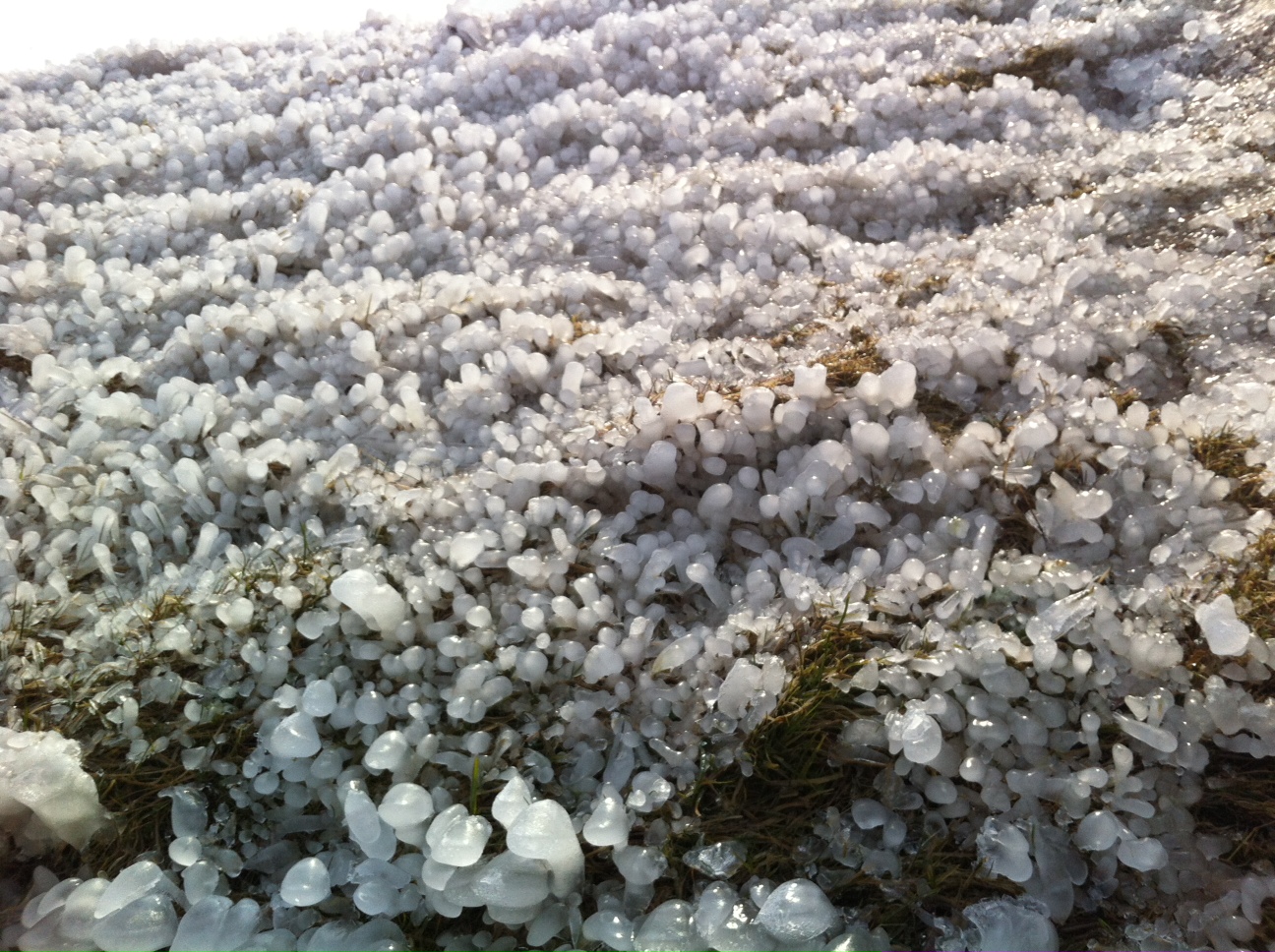
an icey day at Seljalandsfoss
Tourism in Iceland has been growing every year, and the last 3 years have really been booming now that the Icelandic kronur has fallen to an affordable exchange rate. Visitors from Europe and North America saw their dollars and pounds double in value, while Icelanders started cutting back on travel abroad and enjoying the ´stay-cation´ instead. The only thing missing as our tourism industry explodes is an informative site where tourists can go and figure out what to do, where to go, and who to talk to. Now, that problem has a solution: www.guidetoiceland.is

Contact a Local at Guide to Iceland
Guide to Iceland is only 5 weeks old, still under phase 2 of development, but now that its gone public, people are talking. Its the first website to have a comprehensive site with everything you need to know before coming to Iceland, written and run by Icelanders themselves. The website doesn´t sell anything itself, not even advertisements, but creates a forum where all the different tours and tour operators can be listed, compared, and reviewed by tourists themselves. The home page is divided into 9 tour types, where tourists can filter between city, nature, spa treatment or fishing tours, to list a few examples. Each of the general tour types is then subcategorized down to every option imaginable: horse back riding, hiking, surfing, kayaking, whale watching, snorkelling, diving, or taking it easy on an organized bus tour. The tours will take you anywhere you´ve dreamed of going, from glaciers to volcanoes, underwater to waterfalls, from fjords to mountains, or even to some kick ass ice caves. There are short tours, day long tours, multi day tours, and they´re even specially working on Greenland tours. You can choose your mode of transport: ATV, snowmobile, super jeep, rental car, raft, canoe or mountain bike. Then you can pick where to go: the West Fjords, Westman Islands, Akureyri, Skaftafell, the highlands, or Thingvallavatn. Finally, you can pick what to do: photograph northern lights, bathe in natural hotsprings, climb an ice wall, or swim through the continental rift. Then, after its all said and done, you can go back and share your experience with other soon-to-be Iceland-lovers by reviewing each tour you took.
We have an About Iceland section, with short, informative, picture-filled articles to give you the background info you need to know on everything Icelandic – the nightlife, the people, the music, the weather, food, history, and a forum where travellers can write their own article about Iceland, like what they recommend and how they liked Icelanders.

Let there be Northern Lights
Finally, the most interesting part of the site, and what sets it apart from all other travel guide sites, is the bloggers. On the page ´Contact a Local´, you have more than 20 local Icelandic people you can talk to directly. They all have their own speciality and marketing edge in some way, with travel or tourism experiences of their own in Iceland and abroad, and offer their help, services, or just a friendly email to anyone who needs advice with planning their trip to Iceland. There are people already working in the tourism industry as guides, there are bilingual writers helping speakers of Spanish or Chinese, professional athletes and musicians, and even a supermodel named Elli.
So, if you´re planning a trip to Iceland, want to know more about travel in Iceland, or just have an Iceland fetish and want to know more about this sub-arctic Volcanic island straddling the North American and European tectonic plates, check out www.guidetoiceland.is. Help spread the word, share your comments and reviews, and get to know some Icelandic people if you haven´t already!
Photo Credit (c) Iurie Belegurschi
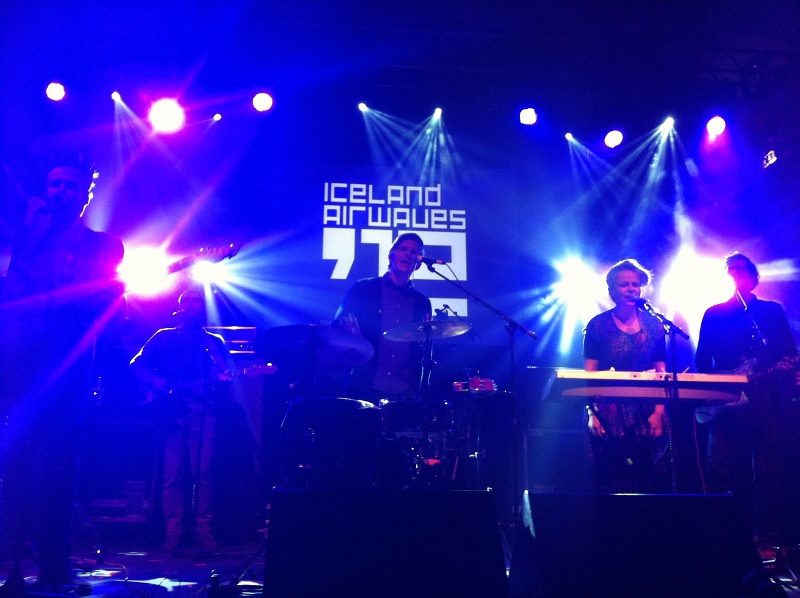
Prins Pólo perform at Listasafn for Iceland Airwaves 2012
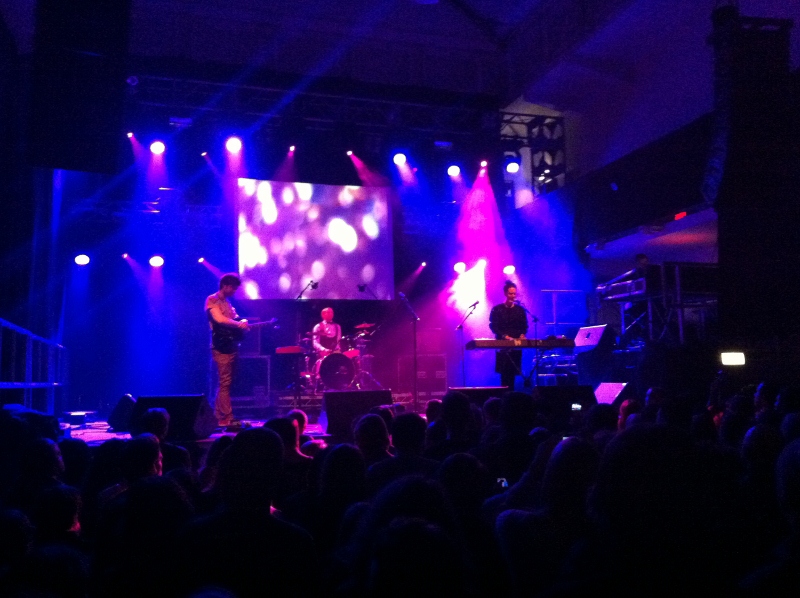
Sóley, the ´must-see´ artist
This was my first Airwaves, despite it starting in 1999, since I’m usually making excuses to travel outside of Iceland once the cold and dark starts to set in. The weather this weekend was definitely cold, with crazy windstorms on Friday and Saturday, that blew me over once, into oncoming traffic on the street once, and otherwise just pushed me around and made me look like a drunk trying to walk in a straight line. At least other countries issue hurricane warnings, but we just keep on going as if this is totally normal weather… which, I guess, it is, but not the safest. It would have been a hassle to wait outside in some of the long queues, but with a little luck and random chance, a friend of a friend from LA came to the festival with a VIP ticket +1, and crowned me the other darling. With the “darling” pass, we could jump the lines, in and out of all the official venues, which got us into a few places like the Reykjavik Art Museum in-time to see Sóley, one of the heavily advertised ‘don’t miss’ artists.
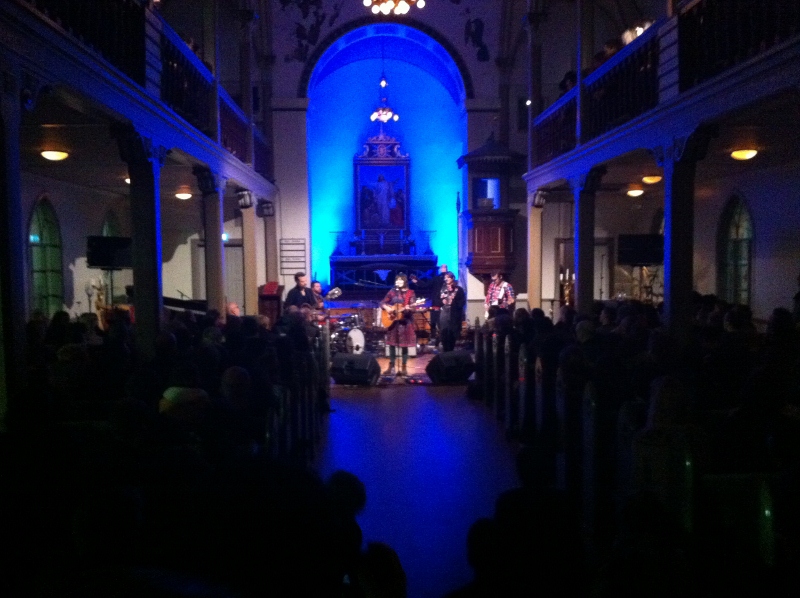
Lay Low at the church
The festival started on Halloween, and we fell in love with Myrra Rós´ voice at the Deutsche bar. Then there were 3 artists in a row that were on the top of my list to see, and from 10-1 we enjoyed Mammút, Sykur, and Ásgeir Trausti (I love him). On Thursday, we also saw Phantogram at Listasafn. We checked out Lára Runars and the Leaves, then settled in at Harpa to see Dikta, Bloodgroup and Of Monsters and Men. It was our most conservative night, since I had a midterm Friday morning, but on Friday we saw music from 4pm to 4am at probably 10 different venues, off and on venue. Highlights where Retro Stefson in the big white tent behind Hressó, Lay Low in Fríkirkjan (a beautiful church beside the pond), Mugison at Netagerði, and FM Belfast at Harpa. In between we bounced around for a little variety, listening to some death metal rock at Amsterdam, became hypnotised by Valgeir Sigurðsson´s classical violin at Iðno, and squeezed into Kaffibarinn to listen to Retrobot, an electrical-indie rock bank with a dash of 80´s vibe. I also saw Ásgeir Trausti play again, in the smallest venue of Airwaves – a little red summerhouse big enough for 5 people in the middle of Ingolfstorg.
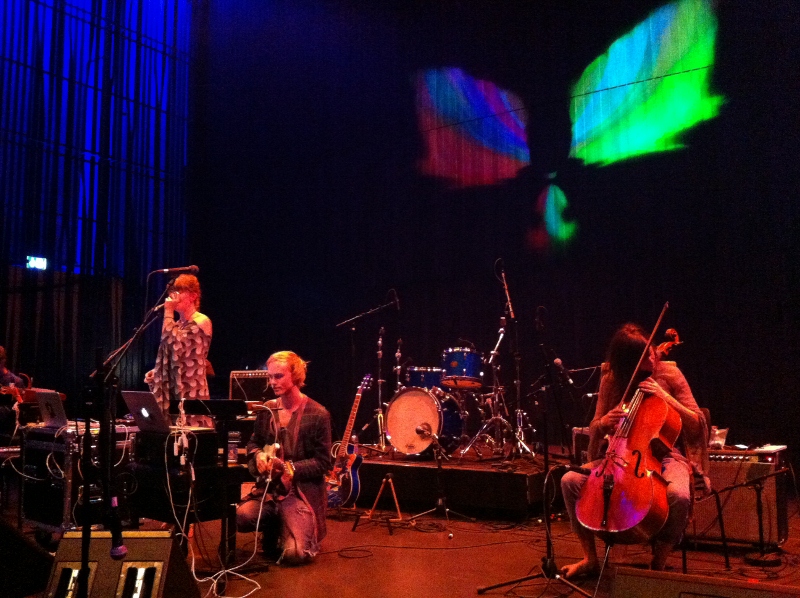
Kira Kira
On Saturday, our line up wishlist was tightest, with no time between bands (sometimes even an overlap) and each one in a different venue. Prins Pólo at Listasafn, Beni Hemm Hemm at Silfurbeg, Kira Kira at Kaldalón, Ásgeir Trausti in Norðurljós, I break Horses at Iðno, and finally Gus Gus to finish at Harpa. Kira Kira was incredible, I don´t even know where to start to explain her music, but the guitarist played kneeling down most of the time, the celloist was wearing a sweater that gave her wings everytime she bowed the cello, a lizard man played an instrument I have no idea what to call, and the singer Kristín Björk swayed around barefoot showing off her super soprano voice every once in a while. For Ásgeir Trausti´s set, I managed to get front and center in the audience, and stood under him with googly eyes wishing he would just open his eyes once to look back… but he never does.

Ásgeir Trausti at Harpa
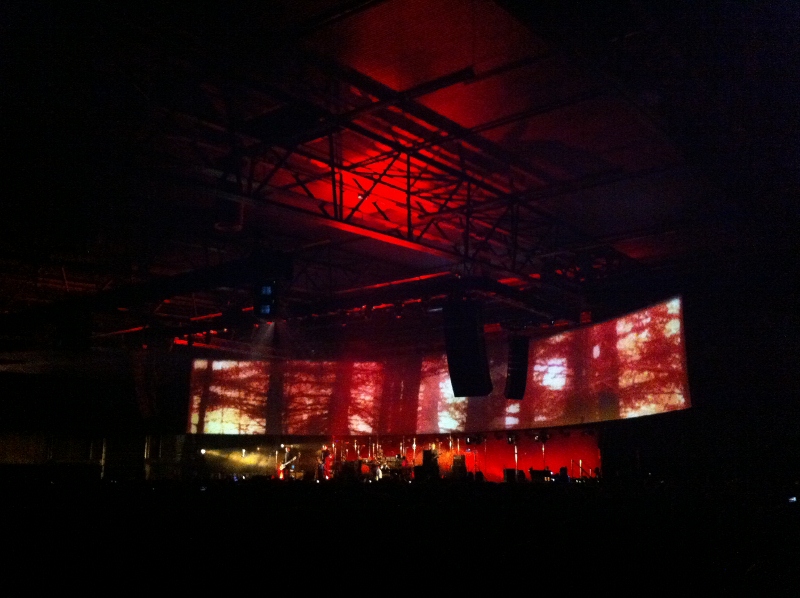
Sigur Rós´ amazing stage
The last day of the festival was slow but cosy, and I managed finally to get my greedy hands on a Sigur Rós ticket and stood awestruck by the bigger-than-life-sized visuals surrounding the stage. I heard Ylja at Eymundsson, a symphony play at Munnharpan, My Brother is Pale at Dillon, and, of course, Ásgeir Trausti one last time. He sounds the same everytime he preforms, and sings the same songs, always with his eyes closed, and barely says anything other than ‘takk’… its amazing how shy he can be after being the most played Airwaves artist of the 2012 festival.
When I didn’t get funding granted for doing my Phd in forest ecotourism, I pulled a 360`turn and decided to enroll at the University of Iceland to study Icelandic History and Literature. It’s a program officially called “Medieval Icelandic Studies” and focuses on the sagas and manuscripts orally transmitted and eventually written in the 10th-13th centuries, but we spend almost all our time reading the secondary literature written on it by Medieval Icelandic specialists from all over the world. Some of the most highly regarded academics in this field come from the UK, the US, and even Australia, and have no connection to Iceland except their obsessive fascination, so it seems an honour to be able to study these topics in the homeland, as a native Icelander.
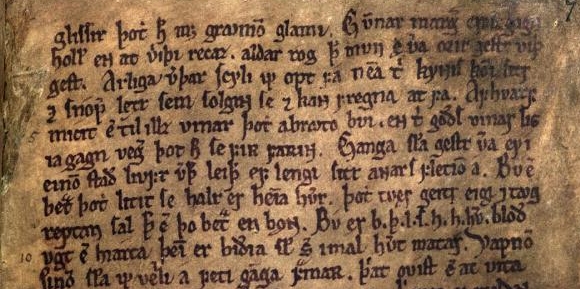
the codex regius
The classes are held at the Árni Magnússon Institute, a building on campus that holds manuscripts dating as far back as the 12th century. They have, what some consider to be the single most important man-made item in Icelandic history and culture (see http://www.sagenhaftes-island.is/en/book-of-the-month/nr/2582), the Codex Regius, a book that tells of Kings Sagas, Nordic Mythology and epic poetry. We got to meet the book, a small, wooden-bound book of thin, fragile pages, and I remember wondering if or when I would ever get to touch something so hold ever again. The text was still legible, in beautiful script, and many words still comprehensible to the speaker of modern Icelandic. Some letters and words were strange, but familiar names like Loki and Freya had their names written their some 900 years ago for me to read today.
The courses we take are based on the Icelandic Medieval manuscripts, discussing all the stories therein and wondering how fact or fictional some of these records can be to represent the daily life and culture of Icelanders in those times. We dissect the poetry and kennings, all the foreign words and heitis used to rhyme, and compare different transcriptions of the same story. We read secondary literature on how the laws were used, first in oral tradition, and then how written law changed the administration and legistlation of courts. We discuss the Christianization of Iceland, and how the Christianized scribes may have altered manuscripts they copied. We look at archeological evidence of Paganism and Christianity, and the influence of latin on our written culture and diction.
We take a mandatory course in Old Icelandic, which feels somehow like a course in Proto-Old-Norse, and may be what Italian or Spanish speakers feel like learning Latin… I dunno. I worry I´ll be better at reading, writing and even speaking Old Icelandic by the time I finish this program, since its an extremely strict, regimented and dense way of teaching students to be able to read and translate the sagas from the original sources.
Then you can take courses on Modern Icelandic literature, divulge in some Laxness and Sjón, modern Icelandic language, Icelandic Culture, and the history of Medieval Scandinavia. Whenever I´m sitting in class, I look around at the other students – males and females, age 20-50, from Hungary, Poland, Germany, England, Colombia, the States, and very few from Iceland or other Scandinavian countries – and wonder what the initial appeal is to start such a program. Is it the glorified viking? Is it the Old-Norse-Icelandic literary corpus that rivals all other historical literary works in Europe? Is it the sagas and Nordic mythology of Thor’s hammer and Sif’s golden hair? I’m not sure, but I somehow felt obligated to take the program and learn this for the sake of being Icelandic, but now I’m realizing that this may be one of the most interesting fields of academic study any linguist or historian could ever take, and I’m glad I fell into it without knowing what a pleasant surprise it could be.
Now, if only I’d stop blogging and be able to keep up with my readings, papers and exams… I had no idea it could be this much work to become a Master in Icelandic studies, especially since I thought I somehow had an advantage by being Icelandic (which isn’t the case, since I know much less than the Danish guy sitting beside me describing why Odin is depicted with 2 dragons in a 14th century manuscript I’d never heard of til now).

sorting horses in Skagafirdi

counting sheep in Fljotsdalur
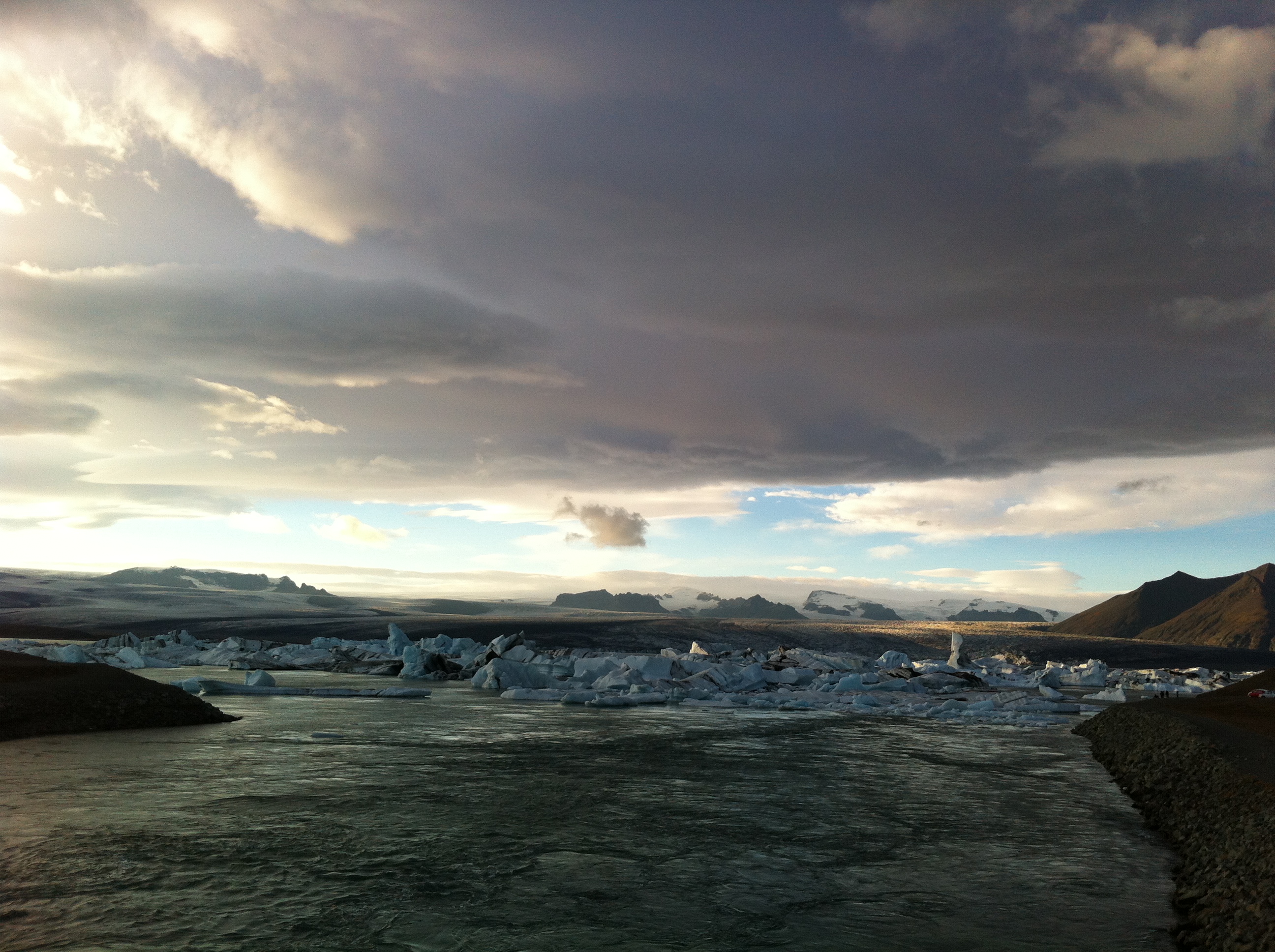

The colourful moutains in Landmanalaugar
I got back from Poland and flew the same day to Höfn, an unusual place to end up after a week in Hamburg and Warsaw. Even coming back to Reykjavik sometimes gives me small-town culture shock, but Höfn’s airport makes you feel like you’ve arrived in the middle of nowhere. You’re right under Vatnajökull glacier, on an isolated peninsula that sticks out into the sea. They’ve got really good hot dogs there, and after the next 8 days riding horses from Höfn to Fljótsdalur, the first fast-food I ate again was another hot dog in Egilstaðir.
I got back to Reykjavik on a Saturday, and after almost 9 days without any contact with civilization except the other 15 riders, the same city now gave me big-town culture shock. I was actually enjoying being back in a heated house with running water, until my friend Tom called me and asked if he could come to Iceland and hike Laugavegur with me… on Monday. I had no time to hesitate, since he booked his flight 20 minutes later, and flew to Iceland 36 hours later. Then, we backed our gear and provisions and set off for the remote highlands, once again.

Landmanalaugar
We started in Landmanalaugar, a mountainous and colourful geothermal region 5 hours away from Reykjavik. The elvation is 6o0 metres there and though you´re in the highlands, its a popular tourist destination and thus built up with basic services. The best part of Landmanalaugar is the hot river you can bathe in. It was freezing cold and windy, so getting down to our bathing suits was the hardest part, but once we had sat there for an hour, it was no problem to retain the heat while we redressed and started the 11km trek to Hrafntinnusker. We hiked through yellow steaming mountains and moss covered lava fields, even over some snow, but 3 hours later we were 500 m higher, home at a rocky camping ground just before dark.

the highest elevation point, at Hrafntinnusker
The first night we had frost, a lot of it, enough that our whole tent was frozen stiff and we had to shake off the ice before we could pack it up. The next day we passed 2 huts, Álftavatn and Hvanngil, doubling day 2 and 3 into a long, 28km day. The scenery was incredible, and we had fun stripping down to our underwear for repeated river crossings, but the last 3 kms were the longest, slowest kilometres of the whole hike. The weather changed constantly, from bright sun and calm winds to sideways hailing sleet, but one thing was consistent; everything around us was naturally dramatic.
We only passed a handful of other hikers, centered mostly around the 2 huts we passed, but on the 2nd night at Emstrur, we made some friends. There was the tour group in one hut that gave us left-over kjötsupa (lamb soup), the tour guide who sold us beer, and a German couple who let us use their primus to make tea. We crashed in out tent that night, and wake up way after everyone else had left.
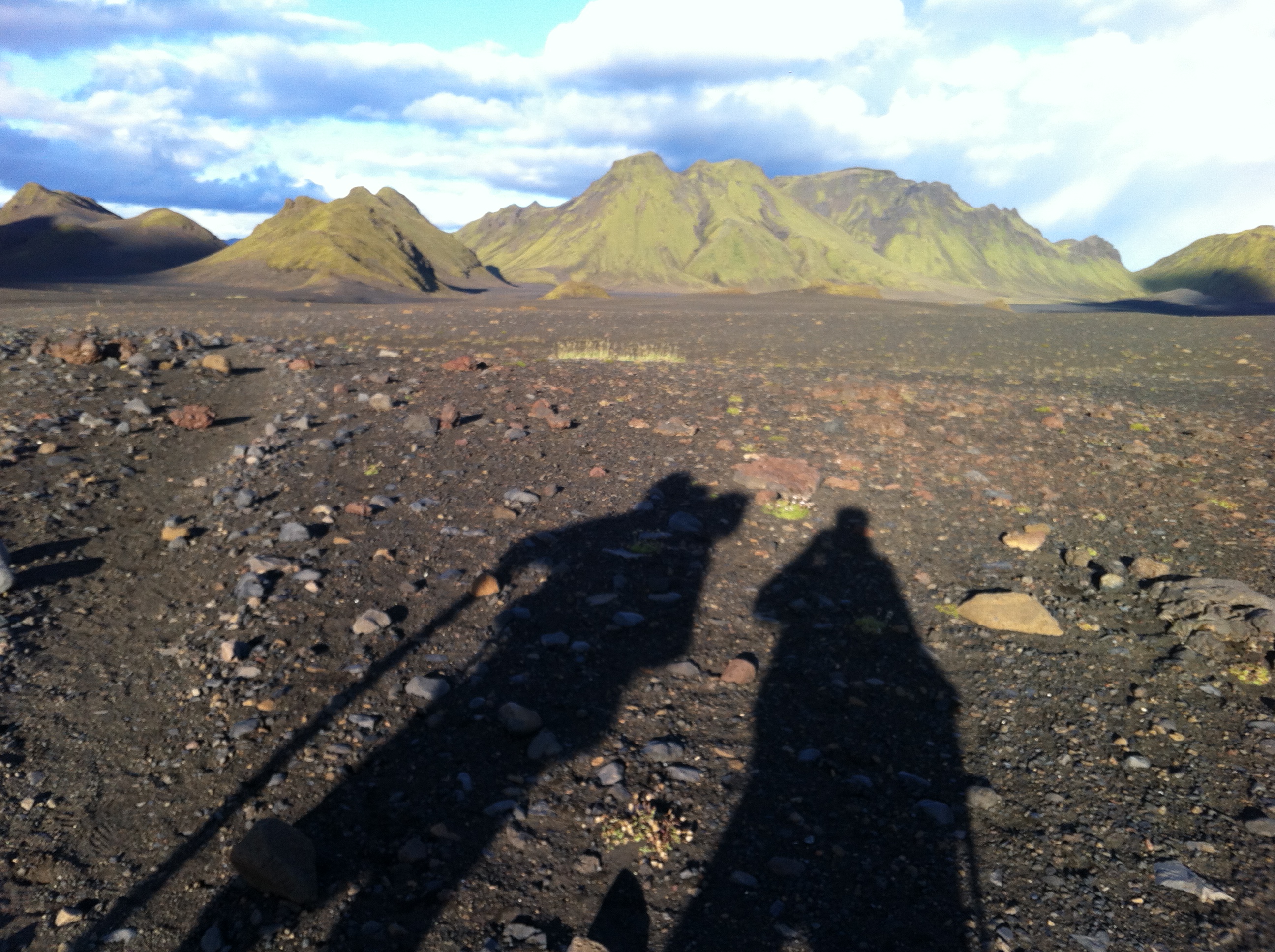
the last 3 kilometres…
The last day was a gentle 12 kms, mostly downhill, back to greener pastures, and we ended in Þórsmörk prepared to indulge in all the services they had. We heated and stretched our sore muscles in the sauna for 2 hours, swam in the hot pool, cooked soup, drank hot tea, cold beer, and the last provisions of whisky we had left. We made more friends by bonding over our hike experiences, and slept like babies before the bumpy bus ride back to Reykjavik.
I was somewhere between French Guyana and Brazil when my roomate in Reykjavik forwarded me a job advertisement for my dream job – get paid to ride horses. I exchanged some emails and then had an interview over the phone from a smeltering phone booth in Asuncion. The connection was staticky, with a half second lag, and my Icelandic kept creeping into spanish, but somehow I convinced Magnus to hire me.
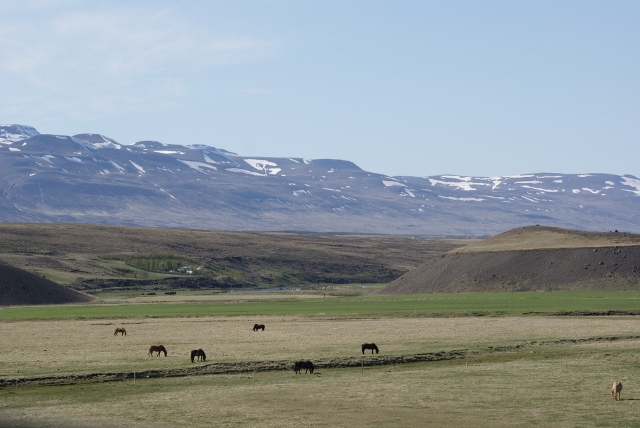
the hestasport horses at Vindheimar
I arrived back in Reykjavik for maybe 8 hours before packing my bags and moving to Varmahlid. I stopped in Borgarnes overnight and then hitchiked the next 250kms. My first pick up, a young Icelandic couple, asked where I was going and when I answered “Varmahlid,” invited me to join. We drove about 30kms before the driver asked me where abouts this ‘farm’ Varmahlid was… he had no idea it was actually a town 2 hours away. So, I got kicked out at Bifrost 5 mins later where their journey ended, and finally made it all the way with my next pickup.
I moved into a house of women, (well, German girls) and acquainted myself with all the pretty ponies Hesasport has. There were, like in any herd, the safe old horses, the crazy young ones, the lazy trained ones, and the question mark horses you had to figure out for yourself. We spent the end of May taking short riding tours around the Vindheimar farm, and two long tours in the begining of June riding past Maelifell and into Kjolur. Its a desolate highland, covered in desert, and sandwiched between 2 glaciers. The first tour we took had more staff than guests, since the 3 German riders wanted to take the whole herd into the mountains to shoot pictures for an Icelandic landscape calendar. We often stopped in the middle of nowhere to do a mini photo shoot, that required us to act as stuntmen and chase 20 loose horses down steep soggy slopes or gallop the whole herd through a river.

beside Langjokull glacier
Later we took a 5 day trip with a whole bunch of borrowed horses, many of them question mark horses we had to try out for the first time and hope it worked out as the herd was released. Then the third long trip went pretty smoothly, except for this poor Canadian girl who fell off her horse 3 times on the first day. Thankfully she made it through the rest of the trip, since she was part of the staff. Our cook also joined us on one trip riding, and fell off his own horse twice, which thankfully turned out okay too since we certainly wanted to keep on eating.
My last long trip was a 3 day tenting trip with 2 Danish girls. We took 6 horses and enough food, bathed in the frigid rivers, and survived a wind storm in a mountain hut that at one point we thought would blow away in the middle of the night. The first night we crashed a party at the Arctic Adventures river rafting base, and ended our trip at Fosslaug natural hot pot, very deservedly.
Then my season at Hesasport ended early, with my Ishestar friends from the east irresistably inviting me on a few long tours – a 6-day pack tour and a 9 day special tour from Hofn to Egilstadir. Just when I had finally figured out all the horses at Hesasport, I hitchhiked east to a herd of 103 horses I now had to learn and love just as much.
 nomadic cosmopolitan