Macedonia the Great

Macedonia has a lot of claims to fame. To begin with, Alexander the Great was Macedonian, and gets referred to as Alexander the Macedonian by locals. St. Cyril, the inventor of the Cyrillic alphabet in the 9th century, used it for his missionary work in the Slavic countries and helped spread the Orthodox faith throughout the Balkans. The holy city of Ohrid is a famous tourist and pilgrimage destination with 365 churches. Ohrid also has one of the oldest universities in the world. Mother Theresa of Calcutta was born in Skopje, Macedonia’s capital. The city of Skopje also has some infamous moments in history, like the 6.9 richter scale earthquake in 1963 that nearly leveled the whole city, and the infamous claim to fame as one of the most polluted cities in Europe. But neither Skopje nor Macedonia are in the same location as they were historically…. Causing some issues with Greece who believes the real Macedonia is in Greece and they deserve claim to all Macedonian fame and glory.

Lake Ohrid

Lake Ohrid

Macedonia is also famous for tobacco and wine. The city of Prilep is basically one big tobacco field, and you can buy Macedonian wine in all of the surrounding Balkan countries. Macedonia had a similar history to its neighbours, passing from the Romans to the Ottoman Empire and then Yugoslavia before becoming independent in 1991. It’s people are a mix of Macedonian, Albanian, and Serbain origin, plus a few Turks and Greeks, and a healthy mix of Muslims, Catholics and Orthodox Christians, plus a minority of Jews that were spared from WWII with the help of Albania. Despite all these curiosities, Macedonia still remains a poor and unkown country to many, and I had no idea what kind of place it would be to travel.

the top of Vodno

the top of Vodno

I couchsurfed with this guy Andrej and his dog, in a house beside the train tracks that shook every time a train rolled by. But many of the train services have been suspended since they’ve become flooded with thousands of refugees passing from Greece through to Serbia. Ive heard that as many as 6,000 per day may be passing through, but they don’t stay long, as they’ve got their eyes set on Germany and northern Europe. I didn’t meet any or see any trace of them, but I also couldn’t use a train to get to the south of Macedonia. Instead I took a bus to Bitola, only 16km from Greece, but still everything seemed as it should be.

Treskavec Monastery

Treskavec Monastery

It’s a landlocked country, full of beautiful lakes and mountains, and the highlights were Mavrovo park, Matka canyon, and Ohrid lake. There was a tiny monastery in the hills near Prilep called Treskavec, which may have been one of the loneliest places I’ve visited. Hiking to the top of Vodno mountain was amazing because we actually walked above the pollution line, seeing miles of mountain tops around us while the city of Skopje lay under a foggy blue mist. The city reminded me of others I’d been so far, the strange mix of decaying communist residential blocks, road works and construction sites, and the new and shiny development projects.

the new bridge

the new bridge

In Skopje they’ve built an entire new city center, of brand new buildings that are meant to look like they’re from another century, and two pedestrian bridges that look like they belong somewhere between Disneyland and Charles Bridge in Prague. They’re lined with the immortal faces of Macedonian musicians and artists and other historical figures, and look miniscule in comparison to the even larger statues of a naked Prometheus, St. Cyril and Methodius, Alexander the Macedonian and other war heroes riding horses. They’ve even cast Mother Theresa into a 30 m bronze statue, so unless they’re planning to build another bridge, they may not have space for any more great Macedonians.
Chasing leaves and Sunshine in the Balkans

I’ve been traveling for over a month in the Balkans, and I wish I could point on a map or scribble a line across google maps to show you where. I landed in Zadar, Croatia, where fall had hit hard with rain and wind, but the temperature was still above 20`c. Then I went inland to Sarajevo in Bosnia, where the temperature dropped down to the low tens, and I’ve been chasing autumn ever since. Next stop was Mostar, where it was slightly warmer, and then I crossed into Montenegro where the leaves had started to turn. Between Kotor on the coast and Podgorica the capital and south to Lake Skadar, the days were getting cooler but pomegranate was in full bloom and grew like wildflowers. The streets even smelled like pomegranate. The wind in Podgorica reminded me of bad days in Iceland, but the sun made up for it. I alo noticed people were all of a sudden much taller, with an average height 20 or 30 cm taller than their Balkan neighbours, rivaling even Icelanders.

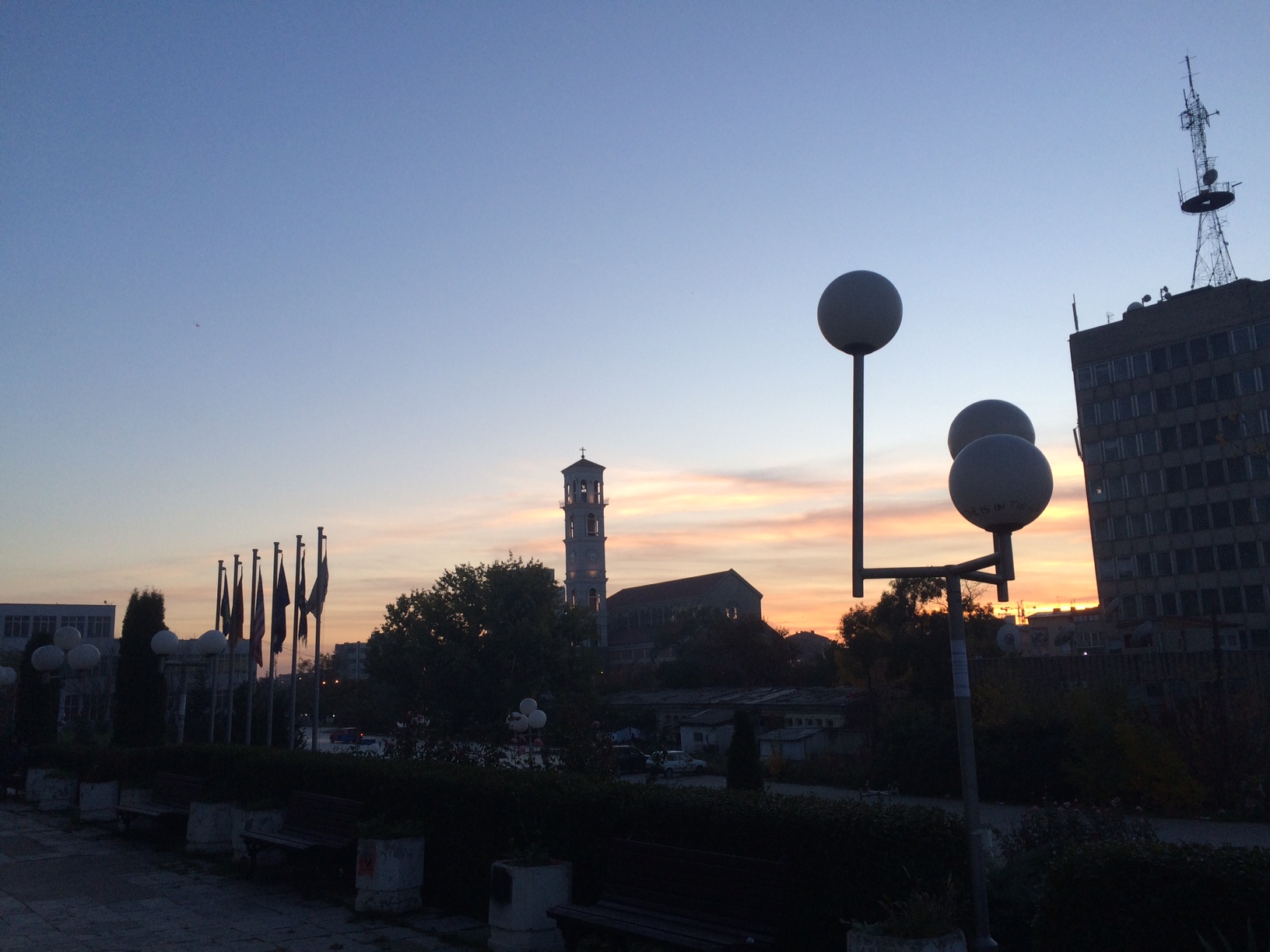
sun set in Prishtina, with the unfinished Mother Theresa cathedral in the background (apparently the biggest cathedral in the balkans, started 2007)

sun set in Prishtina, with the unfinished Mother Theresa cathedral in the background (apparently the biggest cathedral in the balkans, started 2007)

I went further inland to Kosovo next, across a mountain pass where the first snow fall had just arrived. Prishtina was colder than Sarajevo, and the night I arrived daylight savings had kicked in so it started getting dark before 5. The whole city was under construction, with roads ripped up and half-finished churches and old mosques under constant reconstruction. It seemed that absolutely everyone in Prishtina was young and beautiful, especially the men who all had better hair than should be possible. I learned later that they all own a blowdryer (and an assortment of hair products) and spend more time infront of the mirror fixing their hair than the average woman, and then I understood. I’ve never been shown so many glamour pics or selfies of men trying to be sexy or emo, but they loved to share them, as well as an instructional video on how to do your hair if you’ve got a crew cut.

The majority of people living in Kosovo, which is still considered by many as a part of Serbia, are Albanians and there were a lot of similarities between Kosovars and Albanians. The men are super affectionate (also with eachother) yet slightly homophobic. I met mostly self-proclaimed ‘unpracticing’ muslims, and the orthodox monasteries and churches were often guarded by Serbians or Austrian KFOR soldiers. It was a bit scarier to walk around Prishtina and Tirana since drivers rarely stop at pedestrian cross walks, something I missed about Montenegro where a car will always yield to you jaywalking.

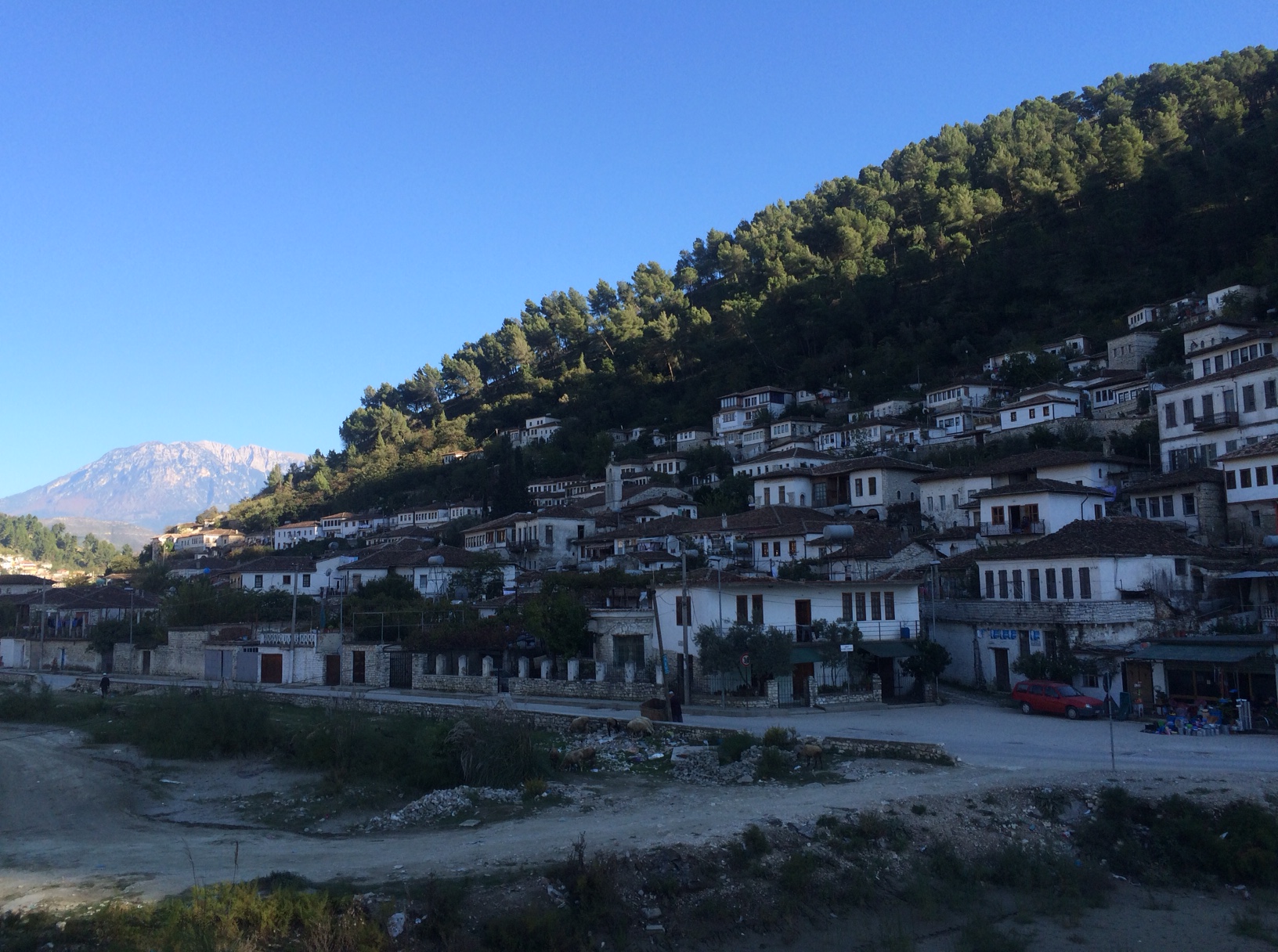
the UNESCO town of Berat falls into the shadows before 2pm

the UNESCO town of Berat falls into the shadows before 2pm

In Tirana, Albania, it got slightly warmer again, and I finally started to recognize the Albanian language. Its absolutely nothing like anything else in the Balkans, and it sounds like a confusing mix of Romantic, Slavic and far-east languages. Atleast they don’t write anything in Cyrillic, so it was a lot easier to read. Albanians may live a slightly better life than Kosovars, but even with salaries around €300 or €400 most  people have iphones and impeccable fashion. The biggest difference is their ability to travel, with Albania already an EU candidate with free movement within Schengen and visa-free access to around 90 countries. Kosovo, which isn’t even recognized as a country but its passport is treated differently than Serbias and highly scrutinized against, can only travel visa free to a handful of countries. Every tourist agency in Kosovo focuses its tourist market on getting people out, instead of helping tourists who are visiting. Strangely, Germany was some kind of dream land (or Austria or Switzerland would do), the ultimate destination for a better job or better life or better car. If people couldn’t speak English, they often knew German, and many German or Austrian soldiers work with KFOR.

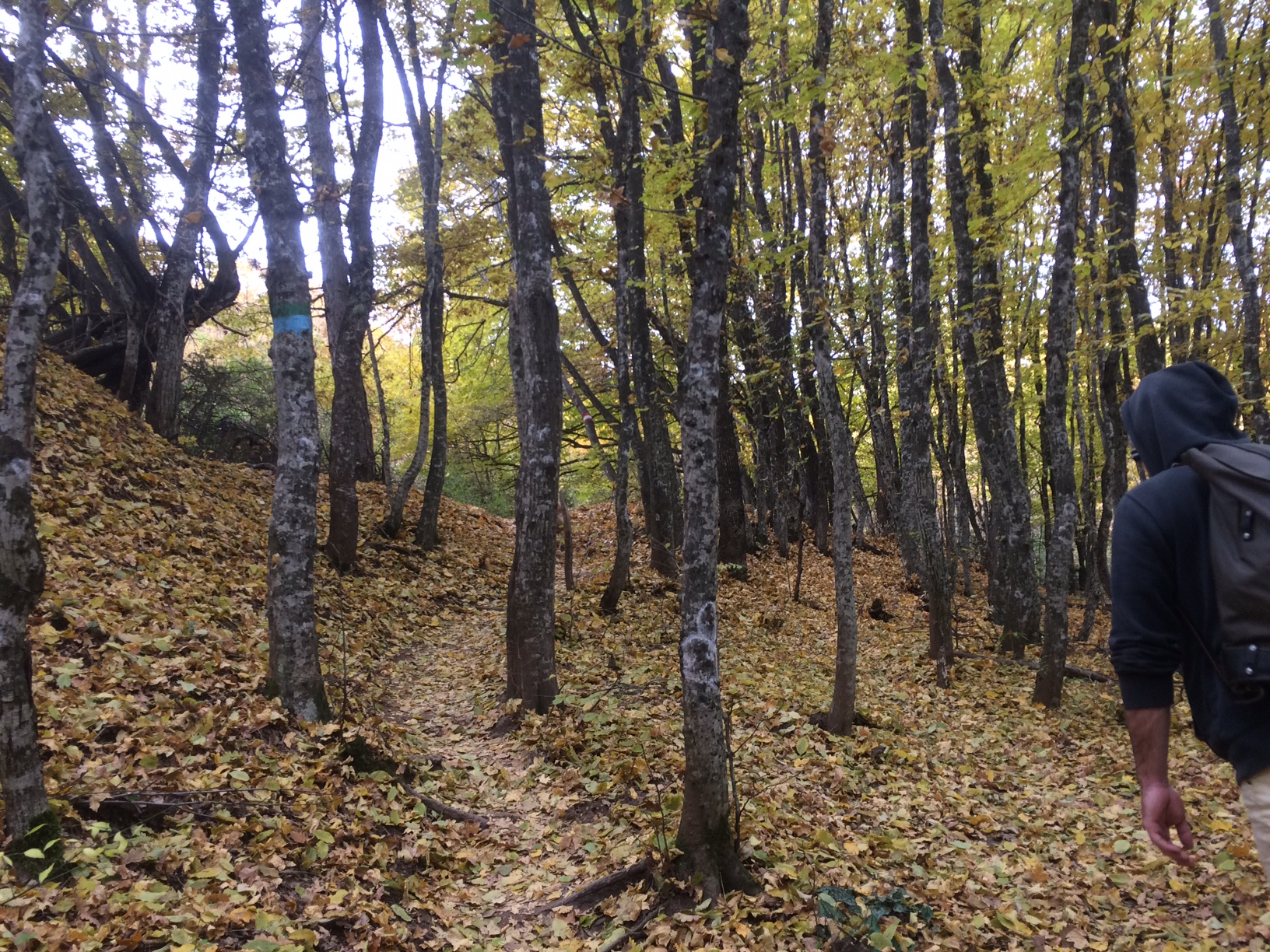
full-blown autumn trees in Skopje

full-blown autumn trees in Skopje

In Albania, the second language was often Italian or Greek, and both were just a couple of hours away, but soon it was time to head inland again, to a full-blown fall in Macedonia. The windy road to Skopje was nestled in mountains of golden yellow, burnt orange, blood red, rosy pinks and fluorescent greens.  The sun was always partly behind some mountain, so the lit tops seemed to glow in the sunshine while the shaded valleys still screamed in colour. Now there’s frost every night, the frozen dew slowly melting after 6 am when the sun starts to shine an hour earlier than it used to. I’m not a morning person so I must admit I’m looking forward to Bulgaria, where the eastern time zone will bring the days back to 7-6 instead of 6-5 or 4:30, but they’re getting shorter everywhere so Ill just keep chasing the falling leaves and hope for some sunshine.