Rabaul under Ashes

I flew from Port Moresby to Kokopo, which is the replacement city to Rabaul, a harbor town destroyed by two volcanoes in 1994 (and 1937). There was once a booming town, now buried under 6 feet of ash, with a busy domestic airport and lots of international tourism, but all there’s left of it is a steamy volcano crater, and 3 or 4 concrete buildings that still need to sweep away ash that gets blown around on a daily basis. Miraculously the town is actually covered in green, the mounds of ask creating the perfect fertile grounds gor a new forest to spring up, and the roads have been excavated to provide access to a few villagers still squatting the modern-day Pompeii, but most of the life has moved 30km away to Kokopo, PNG’s quickest growing city.
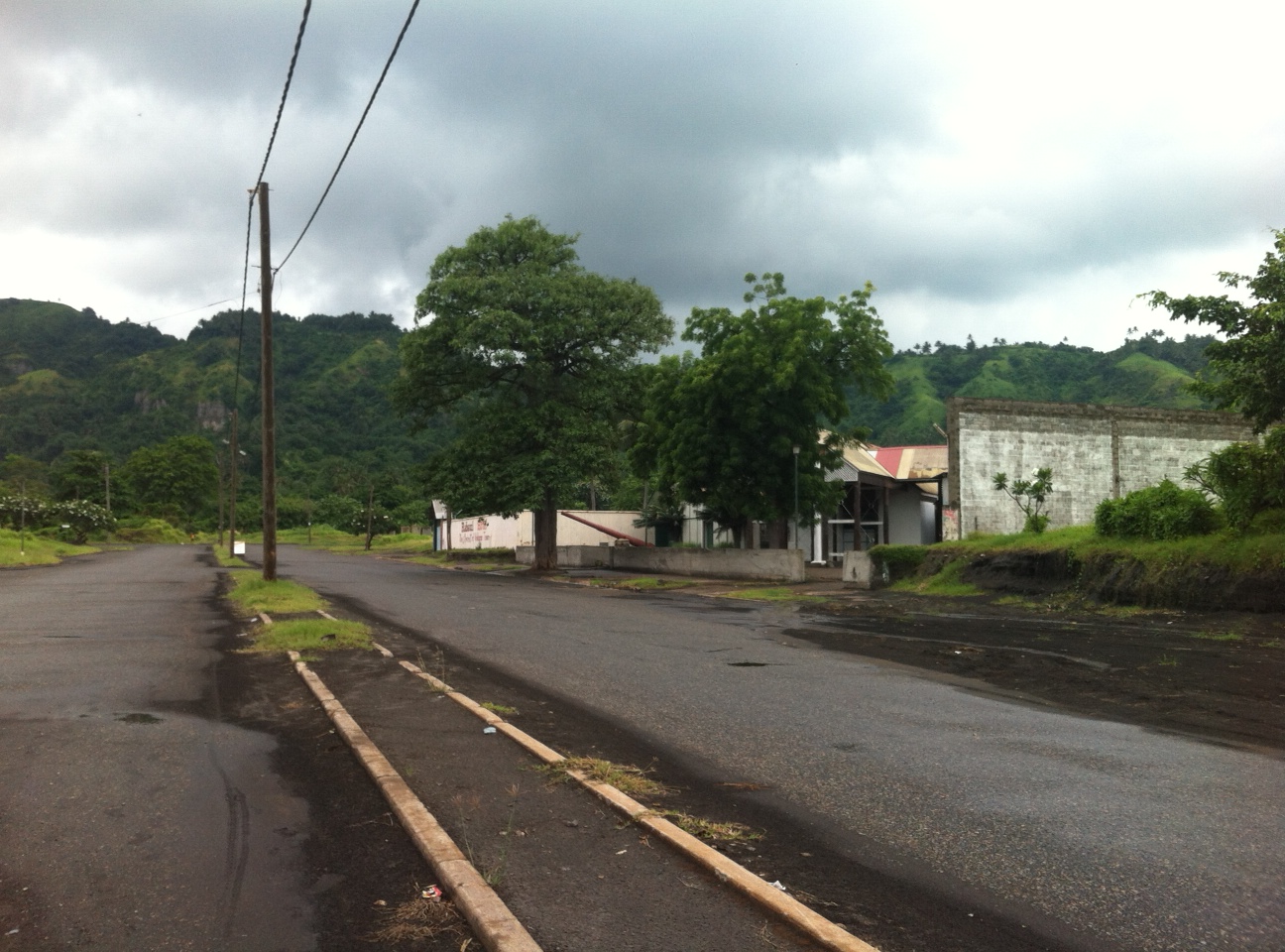
Rabaul under ashes

Rabaul under ashes

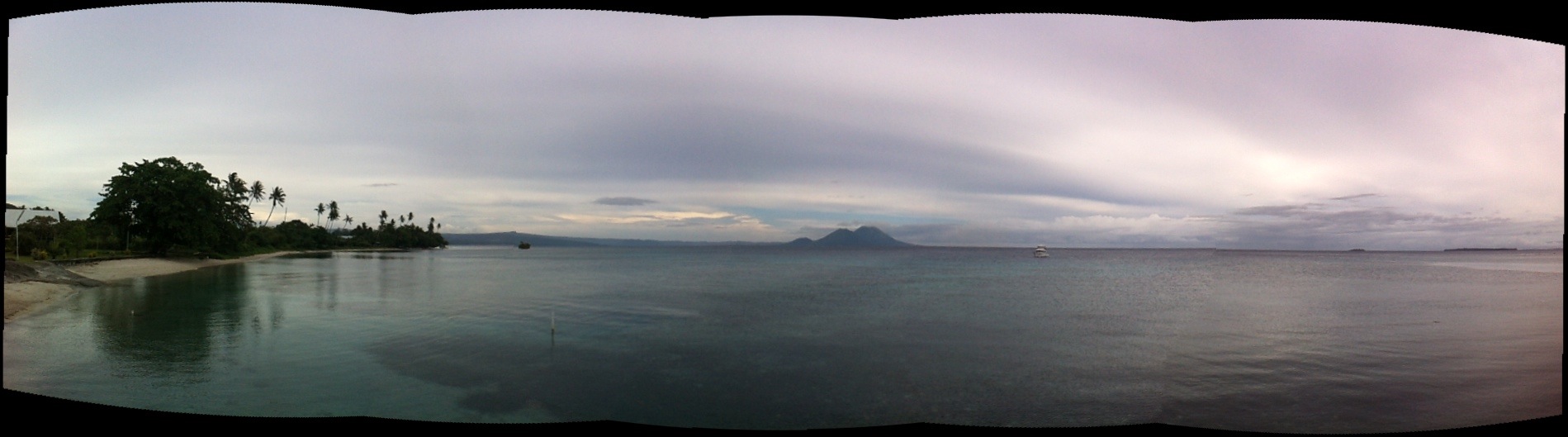
The little harbor between Rabaul and Kokopo is basically a chain of volcanoes, 3 which are dormant and 2 which are very active. I had heard of atleast 10 hotels between Rabaul and Kokopo I could stay at, all ludicrously expensive, but after trying my luck at 6 of them which were all full and almost getting killed by a coconut walking out of the Ropopo Resort, I called my friend in Port Moresby to help. He made a few SOS calls, and 2 degrees of separation later, I had the friend of a wife of his friend of his put me up in her cozy apartment in Kokopo. I got attacked by a huge butterfly at the golf club and went to the housewarming party of some aussie, and otherwise most of my time was spent closer to Rabaul, taking in the scenery of a near-Armageddon.

ontop of the Mother

ontop of the Mother

A group of us hiked up a dormant volcano called Mother, which looked down on the dormant Daughter and the active, steam-billowing Tavurvur beside her. We ate coconuts on the way down, the coconut milk, meat, and some weird variation of a seedling coconut whose insides turn into this fluffy cotton candy floss. I spent some time at the market, where the common fare is betel nuts, mustard sticks and lime powder, but also pineapples, cucumbers, tomatoes, peanuts, lettuce, eggplant, avocado if you’re lucky, and some very colourful hand-woven purses.

the man purse

the man purse

They were made of palm leaves and yarn, and no matter what shape size or colour, they all ended in frilly bits and unkept ties, slightly resembling ths feathers-on-a-stick charms called “fascinators” that they sell, all to resemble the most beautiful birds and flowers found in nature. The man-purse was taken to a whole new level, since men had just as colourful handbags, but hung them around their necks in an attempt to make them more masculine. But no man went anywhere without his wallet, a woven-leaf basket in a half-moon shape, holding all his most important things (money and betel nuts).
An Introduction to Papua New Guinea

Papua New Guinea is a huge place, with more animals and plants than scientists even know exist. They’re still finding new species of birds and strange marsupials*, and haven’t even covered half of the country’s densely forested highlands, still inhabited by tree-dwelling tribes that speak over 700 languages. Although it seems like an obvious tourist attraction, the infrastructure is nearly non-existent, and in fact, the tourism industry that once was is even dwindling, since during their colonial ties with Australia in the 60’s and earlier, many more tourists used to come and tour companies and services have since slowly disappeared. Now there´s hardly any recognition of a tourist, traveler or budget backpacker, but the resident ex-pat on holiday or government official largely make up the clientele for guesthouses and domestic fliers.

the beautiful nature scape of Rabaul harbour

the beautiful nature scape of Rabaul harbour

The official languages are English and tok pisin, a kind of pidgin English mixed with some german words, but its hardly a mutually intelligible dialect since a native English speaker wouldn’t understand more than 80%. Its not a complicated language, so learning it would come quickly, and reading it was slightly easier, since its actually quite simple and phonetic. Ten Q is how they write thank you, and wantok or 1tok means one-talk, and your one-talks are the people from your village who share one of the 850+ local languages with you in addition to the universal tok pisin.

The form of public transportation is in mini-vans or Land Cruisers called PMV’s, “people mover vehicles.” If they’re longer than an hours journey, they make random stops along the side of the road for pee breaks, market shopping, or fresh water holes.

The local beer is a big capital SP (South Pacific) in yellow on a green can, and its plastered the same way in every other shack that sells it, warm or cold, sometimes they’re out, you never know. They’re not cheap, at 2 euros each, but I wanted to buy 4 from a guy who was sitting in for the lady boss, and he couldn’t compute 4 times 6, but she had written a time table in her notebook “1xSP= 6 kina, 2xSP=12kina, 3xSP=18 kina” etc. He did very well at making change of 1 kina for my 25 I paid him.

The prices of things here are outrageous. Like, think expensive, then double it, then that’s what you should expect. One guy told me he paid $1000 per month for internet (800 euros for 20GB was his exact quote), and to rent a Land Cruiser costs $500 Australian dollars per day… including the driver but not including fuel. A crappy hotel can cost anywhere from $75 to $175 per night, and somehow they’ll still fill up with government officials and visiting NGOs or volunteers from abroad. An internal roundtrip flight will cost you more than going to Australia and back, and the less than 2hr flight to Honiara, capital of neighbouring Solomon Islands, will cost you more than flying from Auckland to London. But, ironically enough, there are still tribes in PNG that use a special type of shell as legal tender, and this currency is often used in dowry payments, even by foreigners marrying a local.

the cockatoo begs for a scratch from the meri

the cockatoo begs for a scratch from the meri

A woman is called a “meri,” and most ex-pats have a house meri, and I was the visiting white meri. I spent a day with one of my couchsurf host’s meri, and she took me to the Nature Park/Botanical Gardens in Port Moresby to cuddle some cockatoos and other beautiful birds. They have birds of paradise and plenty of the same-named plant, and in one bird atrium, a lorikeet took a fancy to a students afro and tried to mate with his head. The cassowaries, beautiful black versions of an emu with multi-colourful heads, were in bigger pens that we walked above, and my house-meri guide wouldn’t come within 10 feet of the snake or crocodile pens. We saw more types of kangaroos than I knew existed, especially off the Australian continent, and the wallabies and tree-kangaroos cuteness could have melted a grown man’s heart. After a kid-in-the-park afternoon, I offered her some money in gratitude and she eagerly replied “thank you! I love you!”

this is the most they'd smile for the camera... but they do have red mouths

this is the most they’d smile for the camera… but they do have red mouths

The men and meris love to chew betel nuts, which kind of look like miniature green coconuts, and inside is a yellowish white seed thing that they chew, with the help of some green mustard stick and some white lime stone powder. It looks like flour or cocaine, but apparently that’s what happens when you burn lime stone. The biggest mystery is how it all turns blood red, and people’s smiles are stained so brightly red that it looks as if they’ve chewed a whole tube of lipstick. They spit out mouthfuls of bloody spit, more than you’d believe fits between their cheeks, and after a while it stains their teeth so black that only a few remain among their rotting gums.