There’s Something about Somaliland

I could have flown from Djibouti to Somaliland, but I had heard a rumor that the Somalian airline Jubba Airways uses old, refitted livestock transport planes to transport their current human passengers… and that they’re flights are notorious for being delayed or cancelled, so I decided because of the latter to go overland. It was a little over 400km, and all I knew was that the journey would take a whole night and the mode of public transport was (outdated) 4×4 Toyota Landcruisers. In the end it took nearly 19 hours and the road there was merely a sand track repeatedly followed by the same Landcruisers, but their tires had no traction and a little bit of rain had caused 3 to get stuck on the way.

The border sold Somaliland visas on arrival, but I had had mine from the embassy. The other 5 passengers in my vehicle were either Somali or Djiboutian, and they needed a visa too, which 4 refused to pay for. Instead of turning them back, we (I didn’t realize I was innocent and free to move) were held at gun point (one was foot-cuffed) to see how long it would take them to give in and pay. In the end we waited more than 3 hours and only 2 out of 4 paid, but somehow 3 out of 4 made it through and Im still wondering what happened to that last guy.

the cornerstore

the cornerstore

Arriving into Hargeisa was an anti-climactic relief. The roads hadn’t really improved, just hardened and gotten dustier, and getting local money meant bag fulls of notes worth between $0.07 and $0.70 (there weren’t larger bills or any atm’s – could you even imagine withdrawing $100 from one?). Besides breaking my back being jostled around for a whole night, the Somali music had kept my spirits up, and I was happy to see some live music and eat local food at a cultural village my first night. We ate goat and camel while sitting on goatskins, but I wondered what the fat-tailed sheep might taste like or how the hyde would look with their tails flattened.

At first sight, Hargeisa had taken me back to a super conservative, Islamic place, where some women covered even their hands in gloves and girls years younger than puberty had already started covering their hair (and it was around 40°c). Covering was a nuisance in such heat, but its camoflauging ability wasn’t worth abandoning. Instead of a Holy Bible in the drawer like a typical American motel, prayer mats were provided at all hotels. Alcohol and pork disappeared, though I hadn’t really noticed it in Djibouti even though I thought I missed them, and the calls to prayer got louder and closer no matter where I was. Courtships between men and women were very discreet, with walled VIP rooms, private tents, or separation partitions set up between tables at restaurants so that no one could see who’s dating who. At least the women here were allowed to go out alone with their romantic interests, and they seemed to enjoy more colourful clothing and henna tattooing than their gulf country counterparts. Still many men had multiple wives but not as many marriages were arranged as in Oman.
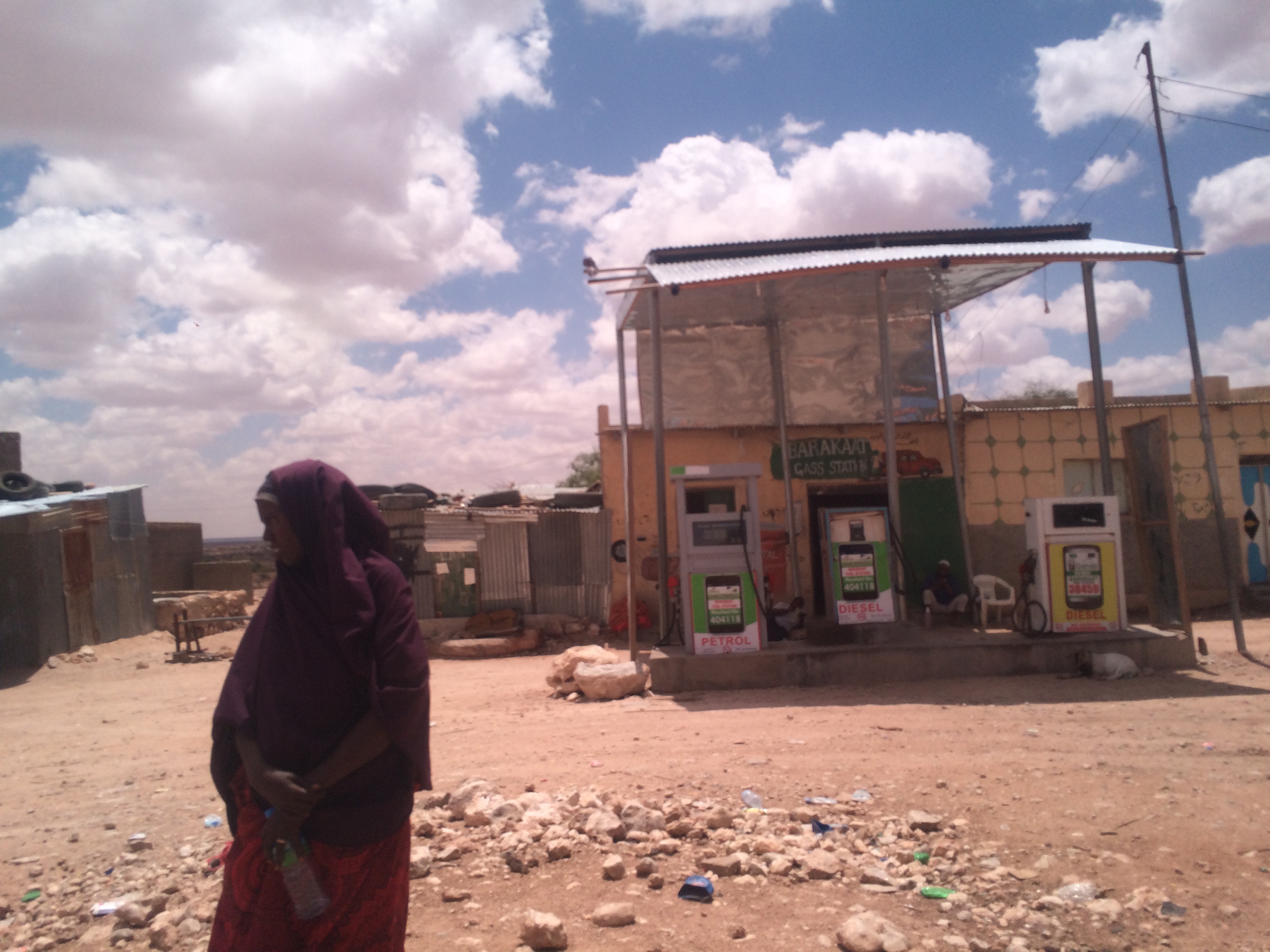
a woman waits for a bus at a gas station

a woman waits for a bus at a gas station

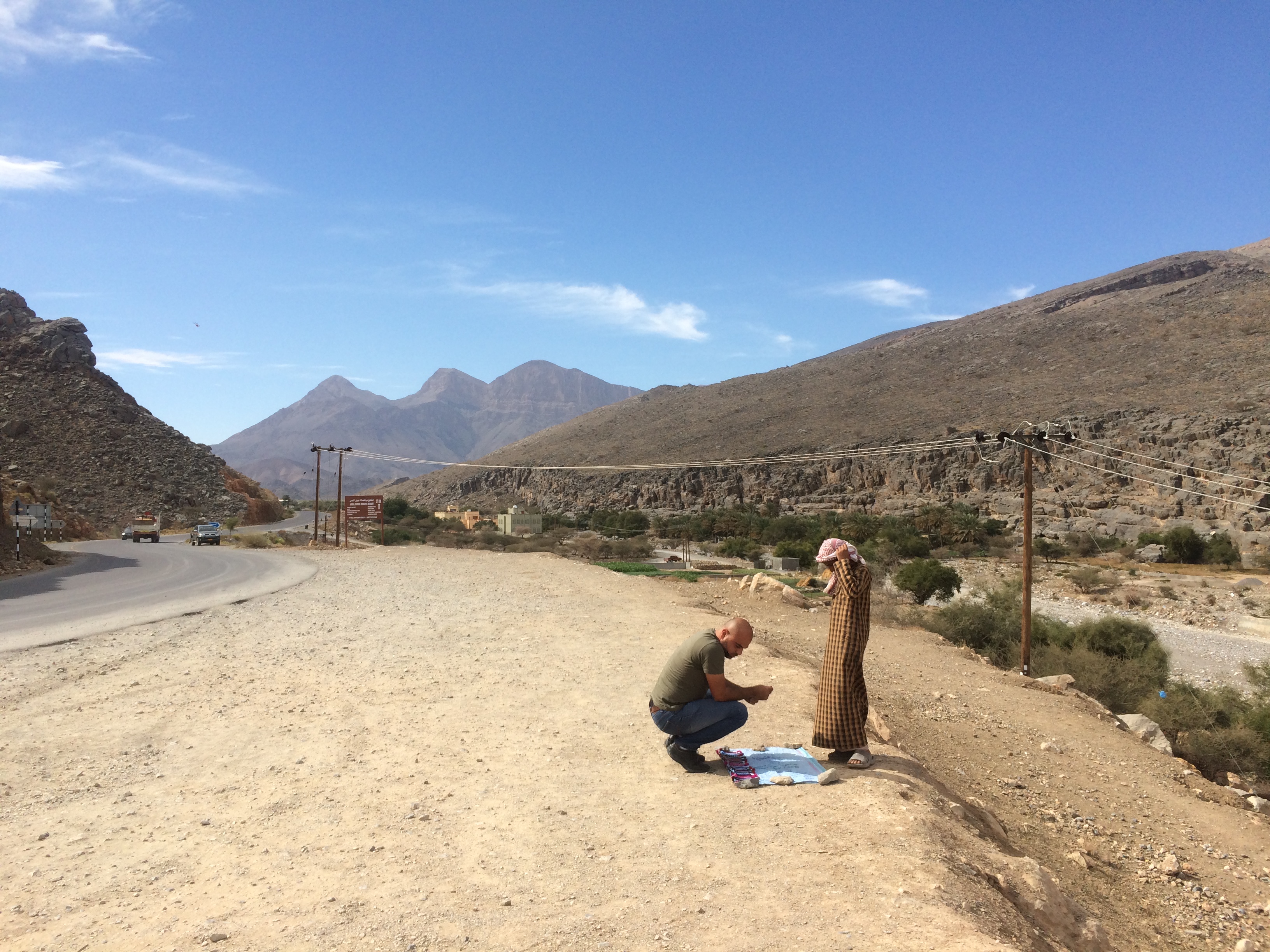
I managed to make it to Hargeisa and onwards to Berbera and back without hiring an armed guard. It didn’t seem to matter I you were covered and took a local bus, but I took a private car once and the guard in the next private car behind us had to pretend to take responsibility of me to get me through the regular checkpoints, turning a 1.5 hr drive into twice as long (even though the road was paved!). We often slowed for goats crossing or dodged a camel, and every village let their livestock roam free and only fenced in their trees to keep them alive.

It’s easy to get tired of this kind of travel: it’s slow, dirty, hot, and long, but the rewards become much simpler. The payoffs weren’t any major tourist attractions or natural wonders; they’re just simple luxuries like taking a normal shower (vs. bucket shower or cold water hose) or finding wifi and some cold water to drink. Someone explained that Somalilanders think cold liquids aren’t good for you, so they don’t refrigerate much or use ice. However, they go all out on telecommunications, with cell phone service and 4g available even in the littlest shacks and faraway places.
checkpoint

checkpoint

I left Somaliland with a tummy at war, disgustingly sick from an unboiled cup of coffee, but the memories of Berbera’s coast and endless beach still made it worth it (they happened on the same day). Las Geels ancient rock art on the road between Berbera and Hargeisa was also interesting, although it could be a lot better managed for the $25 entry the guard either pockets or you pay at the tourism office in Hargeisa. But that won’t happen until more people start traveling to Somaliland, so I encourage anyone with a different taste in tourism and a sense of overlanding adventure to try it soon. At the moment it’s the safest, most peaceful part of disjointed Somalia, but you never know how long that will last!
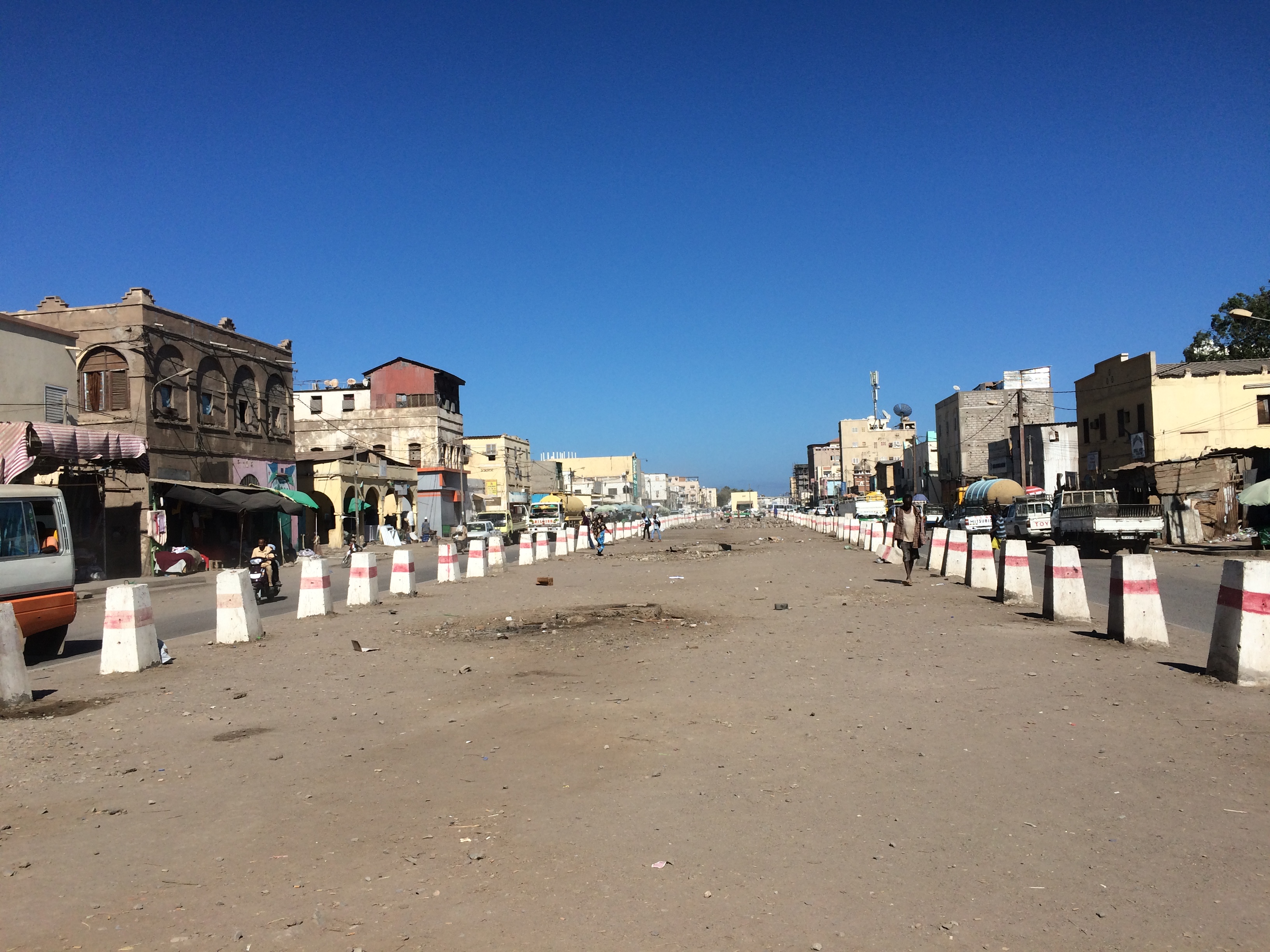
Djibouti: Somewhere between the Middle East and Africa

I reluctantly left Oman a few hours into my birthday, traveled overnight through Addis Ababa, and landed in Djibouti with an extra visitor, some birthday champagne, roses and cake. I couldn’t have imagined a better welcome or continuation to the day, but there it was. The next 2 days were spent indulgently at the Sheraton hotel, with French and South African wines and buffet breakfasts like nothing I had seen in the Middle East. It was hot, too hot, so doing nothing and laying pool or beachside in the shade were big-energy accomplishments.

the quietness of a hot afternoon in downtown Djibouti

the quietness of a hot afternoon in downtown Djibouti

After a few days of Gulf decompression, I swung into some East African vibes. Local delicacies were Ethiopian dishes and fatirah, a type of roti bread cooked up with tomato, onion, meat, and egg. Since Djibouti has a large French presence (military, air force and navy base), French delights were overflowing: real croissants and baguettes, crepe Nutella, and freshly toasted Paninis.

Tadjourah coast

Tadjourah coast

As far as traveling goes, the guide books seemed to discourage solo-backpacking, and the local ex-pat community have do-it-yourself kind of adventures only on the weekend, so taking public buses to any of the beautiful nature sights or renting a private 4×4 wasn’t possible. But there is Lake Abbe, a kind of African Dead Sea, the 3rd lowest in the world, and Lake Assal, also hyper-salted, and a bunch of pristine untouched coast to camp on. I ferried across the bay to Tadjourah, only to see a few sheep, fishing boats and a city of 7 mosques.

humble little mosques, but still just as loud

humble little mosques, but still just as loud

The ancestors of most Djiboutians are similar to those in surrounding Somalia, Somaliland and Somalian Ethiopia, and it’s hard to place your finger on these Africans who aren’t really Africans, not quite Arabs, but an ancient mix of the two, with only a small bit of sea separating this eastern horn of Africa from the Arabian Peninsula. The Gulf of Aden is still traversed for trade and travel, since the supply of camels in the peninsula is heavily dependent on Somali export, as well as their funny looking, fat-tailed goats. At the moment there’s a bit less movement because of Yemen’s status, but 20 minute flights and passenger ferries also used to shuttle people around. It’s amazing that history can keep repeating itself, but hopefully everything will return back to normal once peace is restored, which is the way things usually turn out after turmoil in the arab world… Inshallah.

Man oh Man Oman

If anyone wants to talk about a hidden jewel of the middle east, let’s talk about Oman. I used to associate Oman and Yemen as more similar than anywhere in the gulf, but they couldn’t be further away from one another in everything but geography. And I never expected Oman to be so different from the other GCC countries, but it’s literally a world apart (and a lot more beautiful!).

On the road to Jabel Shams with Couchsurfer Ibrahim

On the road to Jabel Shams with Couchsurfer Ibrahim

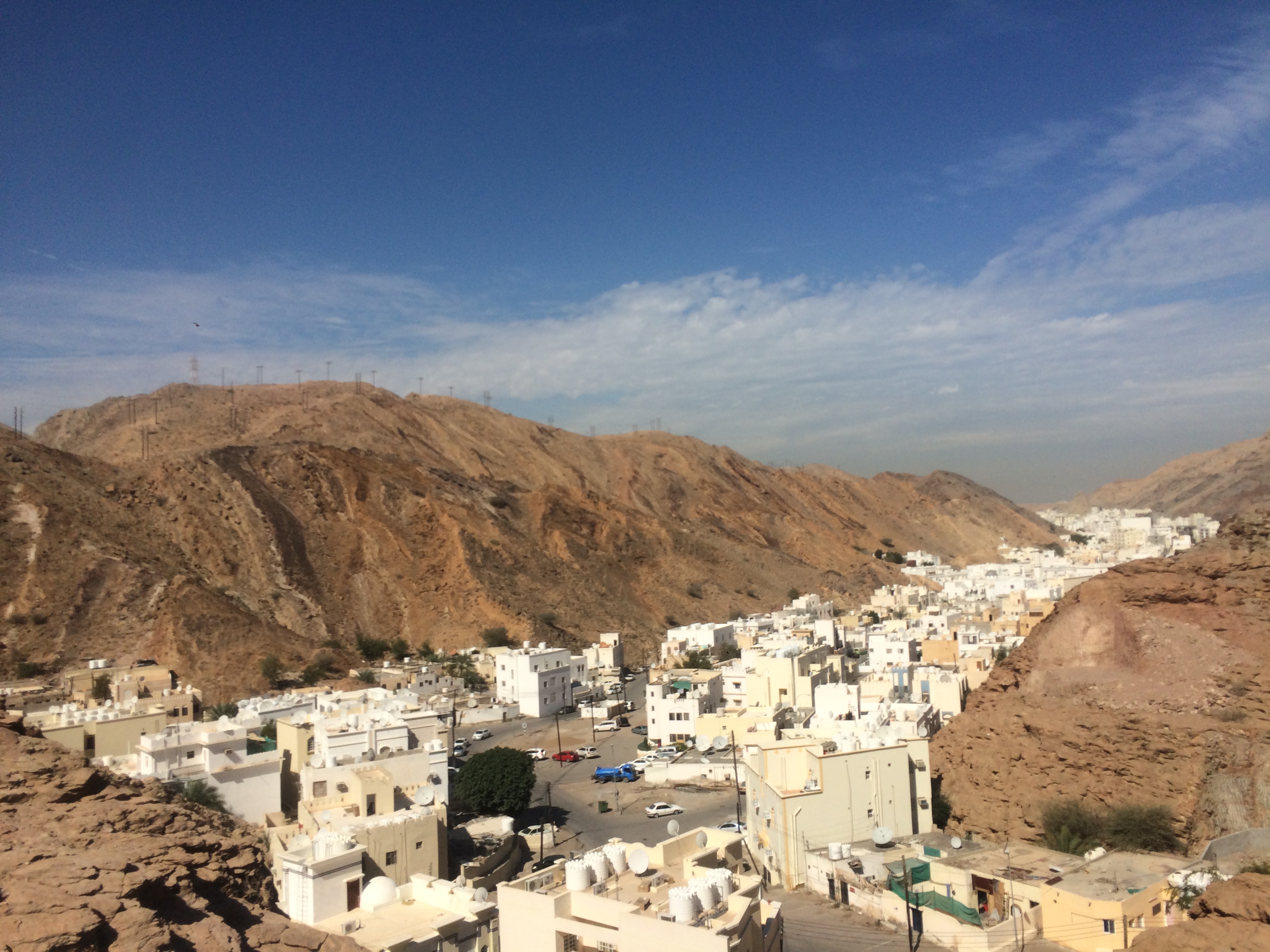
To begin with, there aren’t any shiny highrises or world trade centers, megamalls or shiny apartment compounds. It’s a city of small, traditional buildings, nestled between mountain valleys, with lively souks and humble businesses. The Sultan or ruling government put a legal limit on the height of buildings, specifically to avoid becoming another Dubai, and the houses that are built can only be a pale shade of 6 or 7 colours – bluish grey, beige to yellow, pastel green, purply-pink, sandy browns or plain white.

Electricity even reached the highest village in Oman, just a few families around Jabel Shams

Electricity even reached the highest village in Oman, just a few families around Jabel Shams

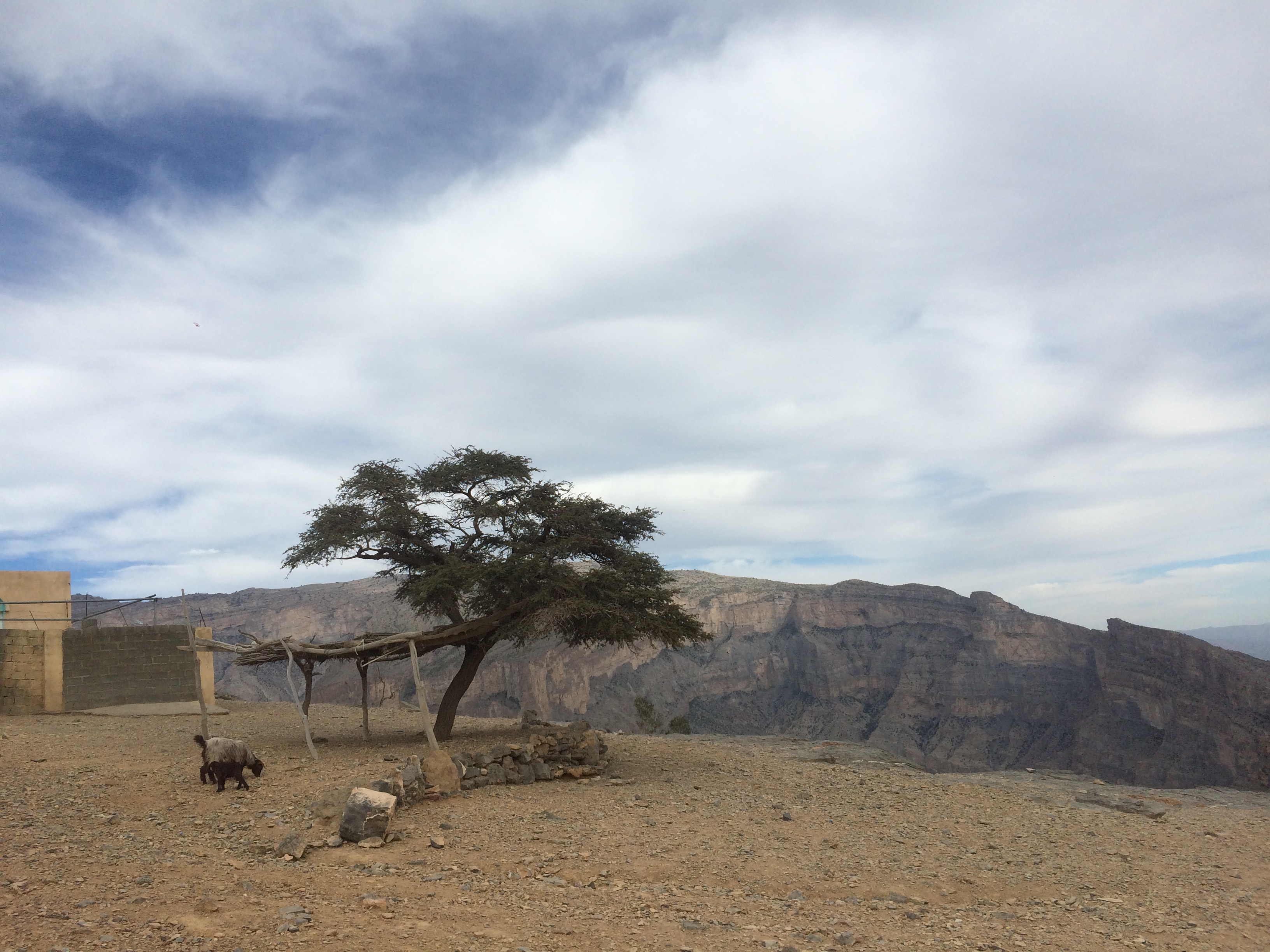
It’s still a very western, developed place, but nothing can take away from the feeling of finally being somewhere Arabic and exotic. The flat, dust plains have been replaced by rocky hills, red mountains and canyons wider and deeper than I could scale with my naked eye. Oases of date palms and little villages are always paired, and they appear and disappear after traversing a few hillsides in every direction out of Muscat. The government brings water and electricity to even the most remote villages, and if it’s not feasible, they build them an entire new village for them in a better location. I heard that many accept this offer (its totally free!), but continue living in their mountain top villages, and turn their new gated homes into goat stables, weekend retreats or just rent them out.

Muscat

Muscat

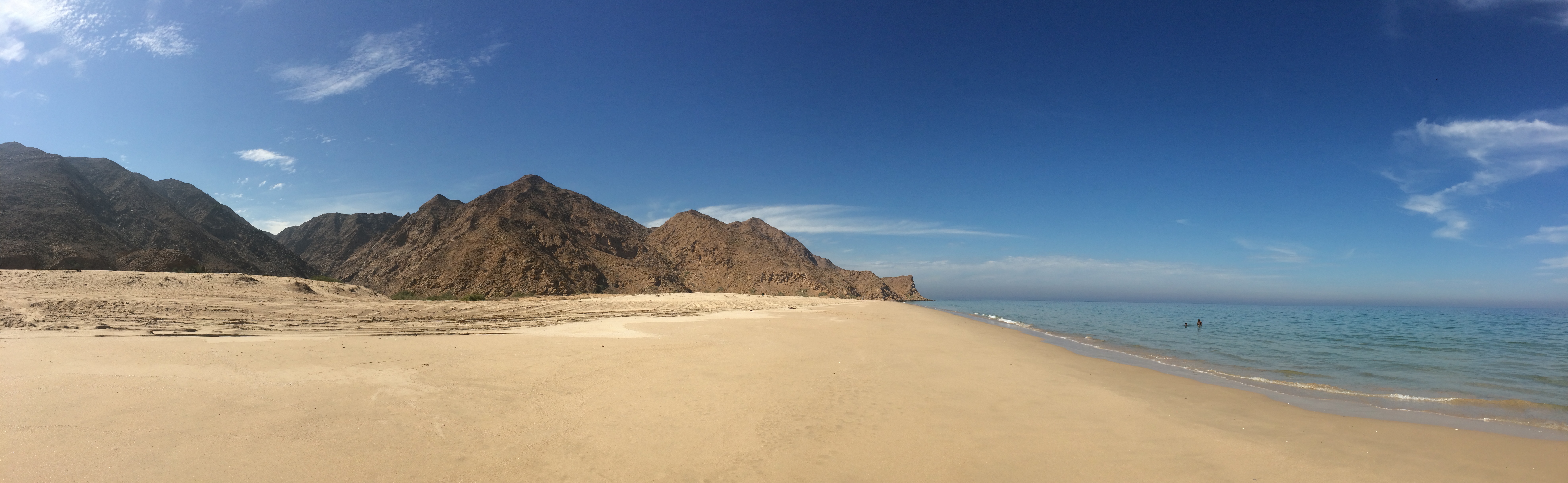
A lot of the places and people retain age old traditions, despite having the newest cars or iphones. In the souks they sell their goats and camels, keep them for farming, breeding or racing, and in the city they meet with foreign friends for a Lebanese meal or Starbucks coffee. Omani Coffee and dates are offered everywhere, from the souks and shops to hotels and restaurants. The beaches are vast and clean, scattered between cliffs that go straight into the sea, and fishermen take their boats out every evening to fish. They refuel their boats and trucks at cheap gas stations, where they can always answer a call to prayer since mosques are built at every one.

Al Sifah beach

Al Sifah beach

Even the fashion is different in Oman, the women more colourful and the men in sparkly kuma (hats). The men’s robes have little tassels hanging off-centered from their collar, said to be for oud (roll on perfume). Omanis were very superstitious with numbers, and are known to pay more for their license plates than for their cars. For example, a single digit number (1 or 5) or balanced double digits (12 or 44) are a sign of wealth, compared to the guy with the randomly assigned license plate number 27349.

The sinkhole with free pedicures

The sinkhole with free pedicures

Without giving away too many secrets of this place (I kind of like that its off the beaten track), make sure you visit some sink holes or Wadi’s around Muscat (ie. Wadi Shab and Wadi ibni Khalid), which are filled with pools of water to float down or cliff jump into. There’s a big stretch of nothing (affectionately called the Empty Quarter) nearby where you can drive your car thru sand for days. Barbeque some mishkaki (meat on a stick) with some locals, either at a picture perfect beach or at the top of a mountain overlooking the city nightscape. The latter I did for the eve of my birthday, where I was serenaded Happy Birthday by 12 couchsurfers, with a cake and candles and the whole 9 yards, while watching planes take off from the international airport. A few hours later I boarded my own plane for Africa, blissfully happy from my time in Oman but bitterly miserable for having to leave.

My CS birthday party

My CS birthday party

Another side of Abu Dhabi

It’s been a disappointing pain not being able to travel overland through Saudi Arabia, but when I finally got to the Emirates, it was possible to go overland to Oman. I visited Dubai a few years ago when an Australian friend of mine worked for Emirates Airline, but had never been to Abu Dhabi, and the flights were cheap enough that I decided to fly to Muscat instead, saving the time of driving thru no-mans-land to enjoying the open nothingness of Oman’s countryside.

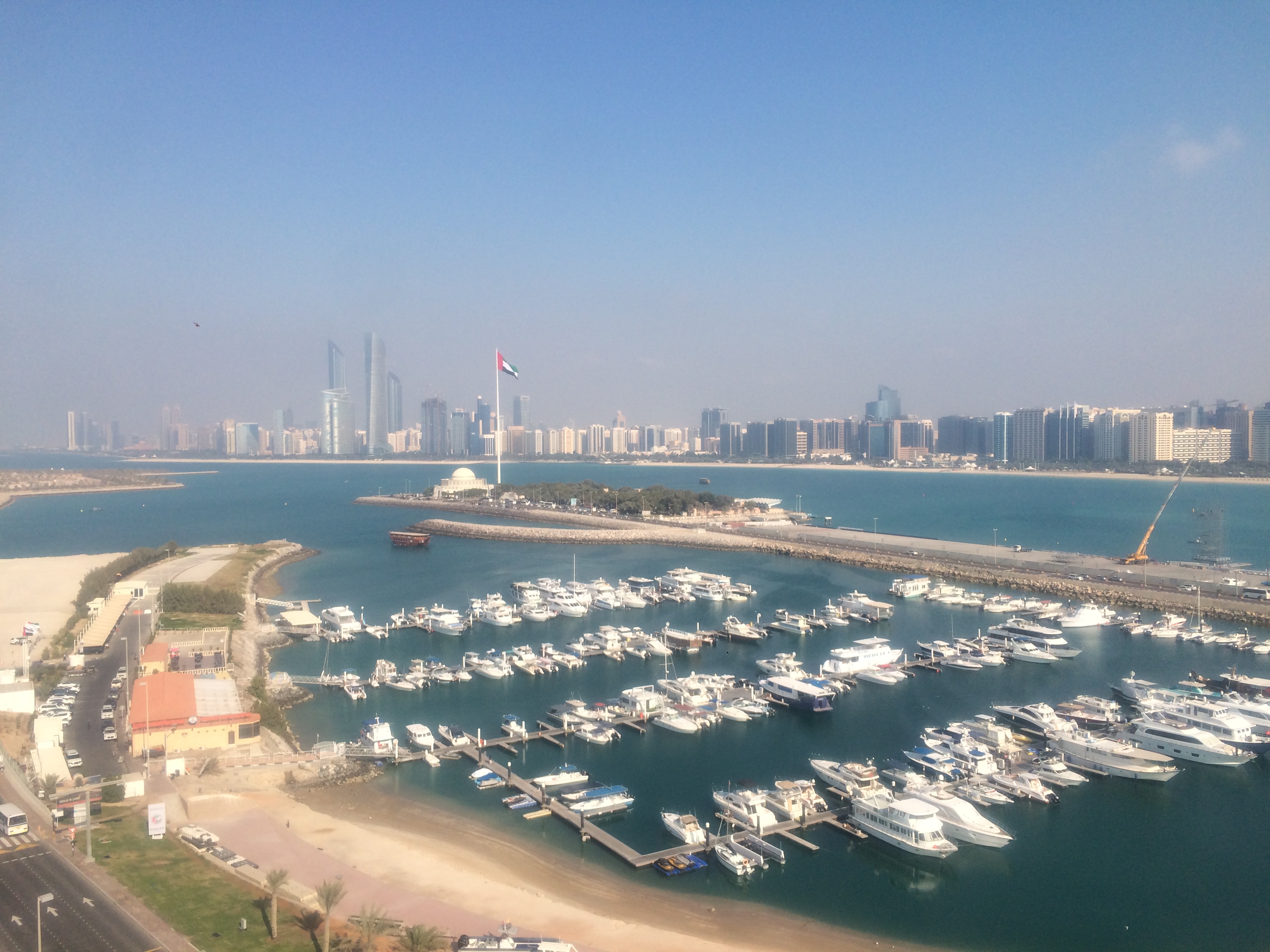
Abu Dhabi

Abu Dhabi

Abu Dhabi, the real capital of the UAE, was similar to Dubai, full of those tall and shiny buildings towering over the old and dusty classic buildings. The new and artificial feeling of a mega-city has stamped out the old and traditional, but tiny mosques still sit humbly between glass and concrete, even between highways and parking lots.

I couchsurfed with an American English teacher named Jackie, on the up-and-coming Al Reem Island, a man-made development project of highrises only 30% completed. Her 30 or 40 storey building had a pool that no one visited, but I thought the water was quite perfect. There are also public buses that no one I met had used, but eventually it only took one bus card and a little googling to figure out the system and avoid using taxi’s for everywhere.

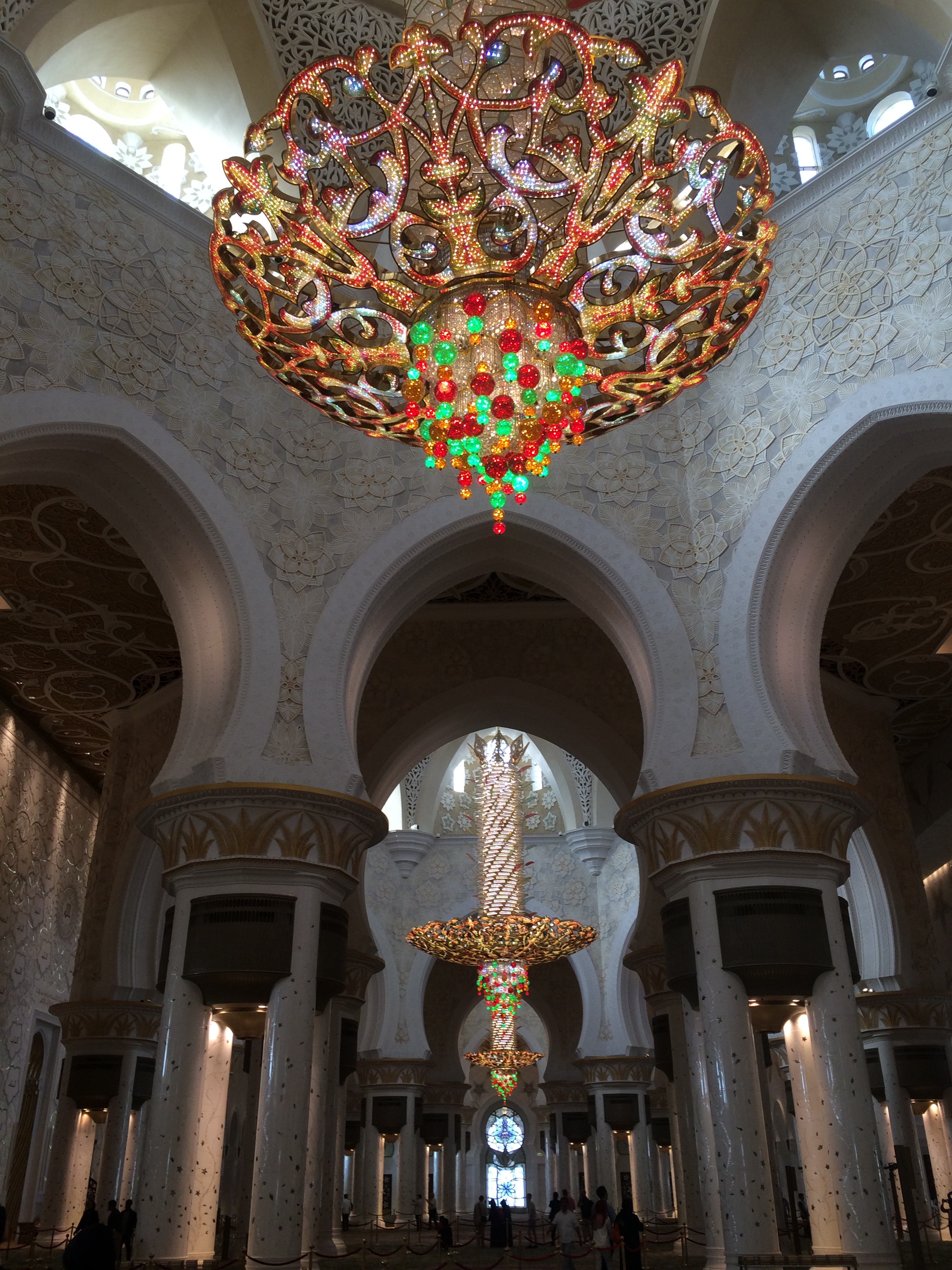
Zayed mosque's chandelier and carpet

Zayed mosque’s chandelier and carpet

My to-do list for 4 days wasn’t huge, but the places were. The World Trade Center was a commercial building, a residential building, a mall, and a souk, and the Grand Mosque can fit 40,000 worshippers under their multi-ton chandeliers and single carpet weighing some forty tons.

At Marina Island there was another mall, and a ferris wheel and some dhow boat cruises. At Yas Island there was an even bigger mall, a water park, and Ferrari world, with the fastest roller coaster in the world. There were desert safari tours and sand dune buggy tours, camel rides and horse back tours, and shisha and tea to lure in any stop-over tourist, but none of the local expats (which are more than 50% of the population) seem to have explored too far.

Some would say I didn’t either, but I felt very far and away from the glitz and glamour of Abu Dhabi when I visited a bachelor Pakistani work village, a sort of high-rise slum, where the 26 storey building 5 blocks from the WTC had 8 apartments on each floor, each with 1 bathroom, 1 kitchen, and 7 rooms of 3 triple bunk beds. This meant that 9 men lived in the space of about 9 square meters, them and all their stuff, and had to share one squat toilet which was also the shower, and cook meals communally and share them on the 2 square meter floor space each evening. I was invited to stay there, sharing the space of one bunk bed (not even a bed but a sheet of wood) with the only white guy in the entire community of 1,680 men, a Canadian couchsurfer, and would have stayed expect for the fact that I was the only woman in the entire building and had lied by saying I was his sister just to enter. The cultural and/or religious insult of sleeping in the same room of a bunch of men, married or not, made me feel just a little more uncomfortable than the dog-sized rats crawling around, so I returned back to Jackie’s and slept alone on her couch.

Tourism in Bahrain

I’ve been flying between the gulf countries, but the flights all last less than an hour, and we’re preparing for landing even before we’ve finished taking off. Its also cheap and easy, but it does take an extra hour or two on each side to get in and out of airport, get the visa, and clear customs. They search you on arrival, mostly for pork and alcohol, but people are very trusting and relaxed so I’ve never actually noticed an officer search or question anyone, and they’re barely watching the x-ray images to find a reason to. I would prefer to travel by bus, cutting in and out of Saudi Arabia, but getting a visa there has been a major issue, and will most likely end in failure (my third attempt was just rejected).

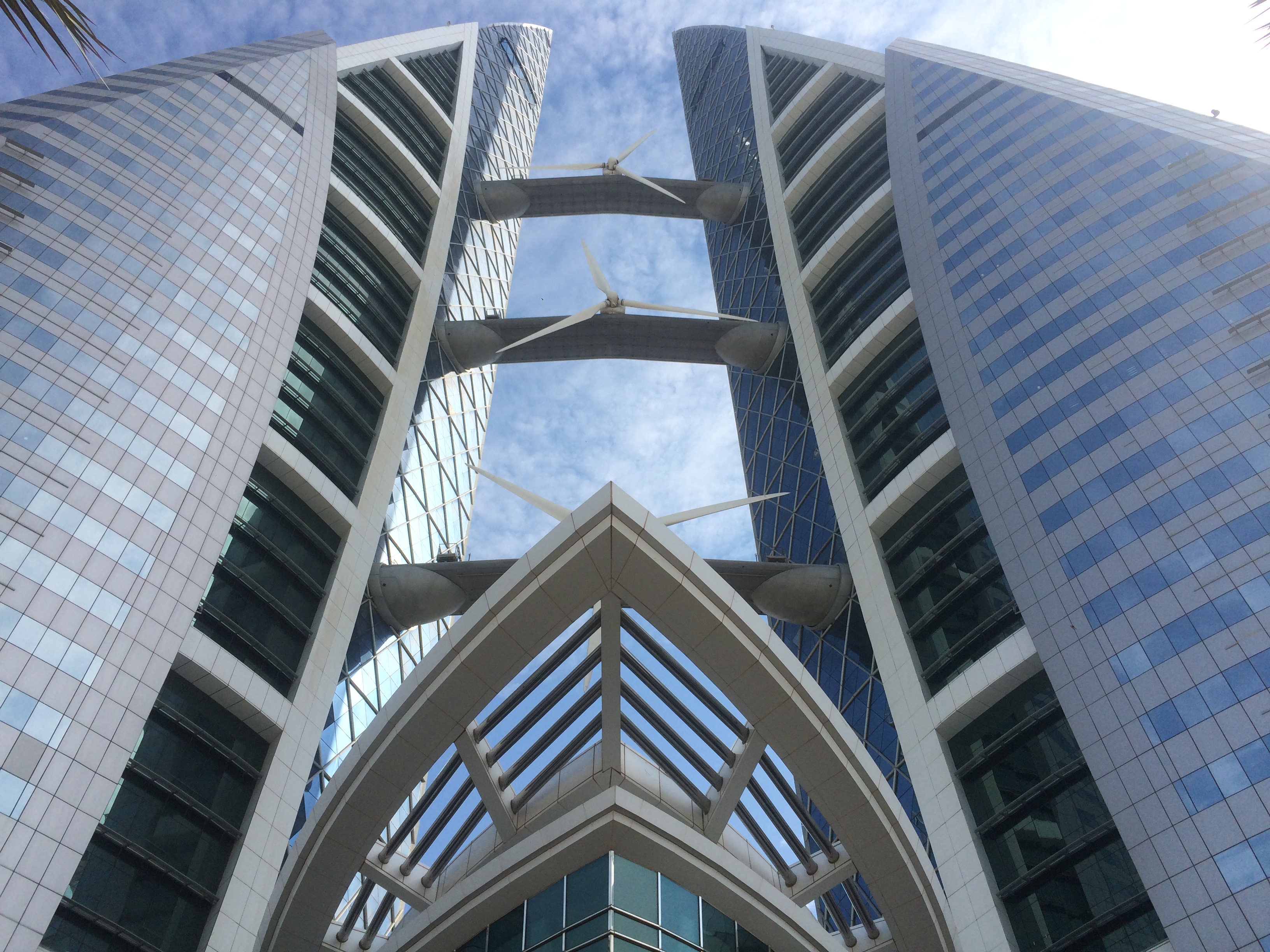
the WTC towers

the Bahrain WTC towers 

Bahrain is like Saudi’s Vegas of the peninsula, or their Amsterdam of the gulf. It’s where they go to play, indulge in all the ‘haram’ or forbidden indulgences of alcohol and seeing uncovered, single women in public places. Pork was even legal in Bahrain, but I imagine that’s a bigger luxury item for all the expats in Bahrain. Local Bahrainis make up less than half the population of the island, and an American Navy base brings a lot of Americans and American culture to the tiny place.

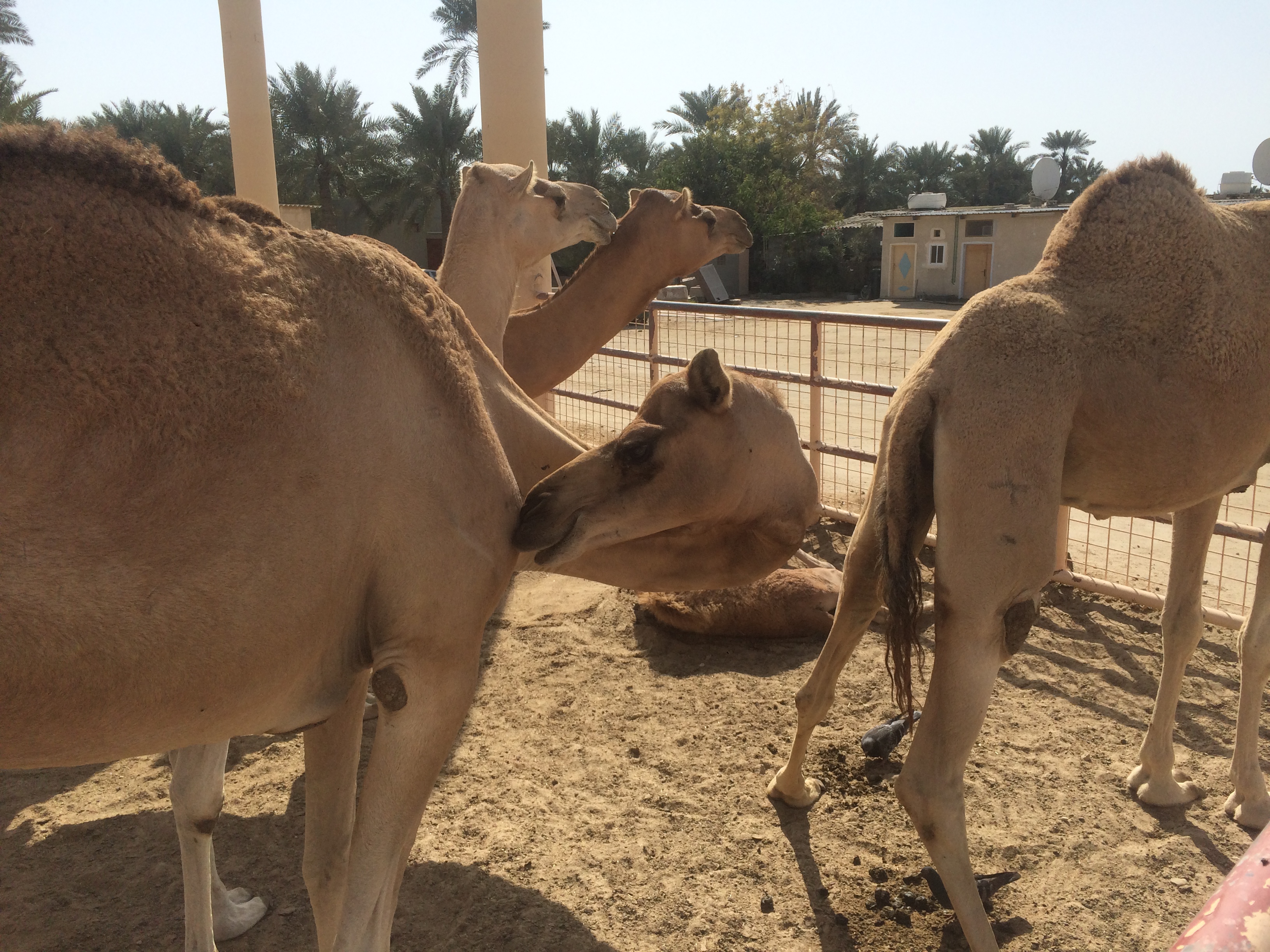
all the kings camels at the Royal Camel farm

all the kings camels at the Royal Camel farm

I was couchsurfing with an American couple, and I got to visit the base. Passing their security check was like traveling all the way to the US, a mini-world of American architecture, restaurants, a US postal service, and even dollars as their official currency. Theoretically you could stay there and feel like you were still in the states, having no contact with Bahrain, which I guess is kind of their goal. But the American influence spills outside their walls, with American cars, pubs and restaurants covering all of Bahrain.

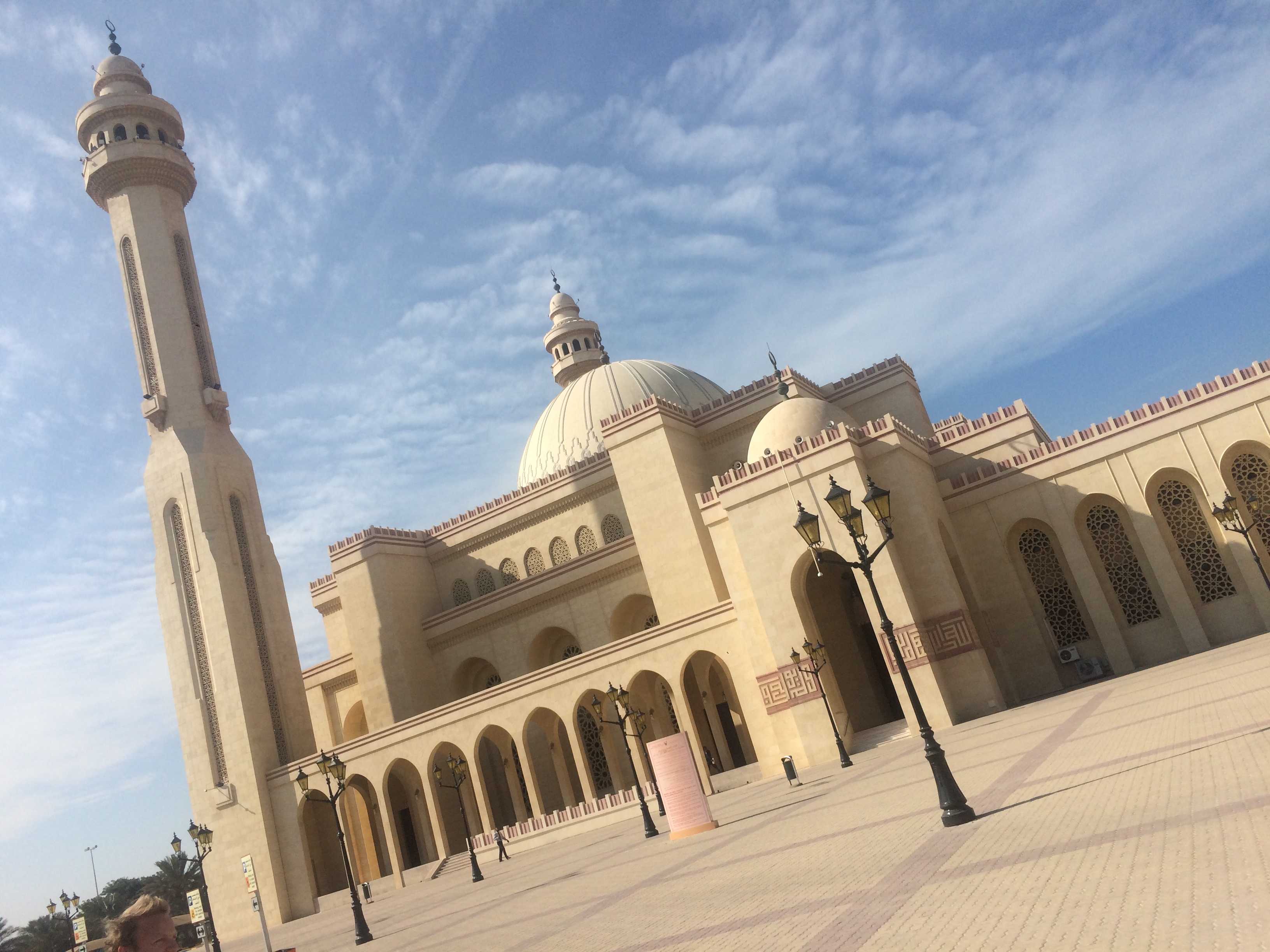
Bahrain's grand mosque

Bahrain’s grand mosque

Bahrain is one of the longest inhabited and historically rich areas of the gulf, formerly known as Tylos and before that, Dilmun. Oil was first discovered in 1932 (Bahrain had the first oil well dug in the gulf then), and until then they had lived off palm cultivation and pearls. Bahraini pearls are still a valuable resource (and brilliant tourist temptation), but oil has clearly taken over, as everywhere else in the gulf. Even though its a small island, a causeway connects Bahrain to Saudi Arabia, and the south and center of Bahrain have very little habitation. Only oil rigs and Badouin camps spot the dusty interior, and the tallest peak is a mere 134m, but every hilltop is a satellite or military area off-limits to the ordinary person.

sunset at the tree of life

sunset at the tree of life

I also couchsurfed with an Australian couple who owned a sail boat, and spent a day drinking with two Canadian teacher friends who live and work in Saudi, but come over to Bahrain to lift their imposed prohibition every couple weeks. I got my dirty paws on a horse to ride, at sunset near the tree of life. The tree of life is a lone, 400 year old ree sitting in the middle of the island, and perhaps the most eco-touristy thing I’ve done so far. The Camel farm, Grand mosque, Bahrain Fort, and Bahrain National museum were pleasant touristy activities, but my time was mostly spent sharing meals, of various ethnicities (like Mexican and Korean), and socializing over board games or shisha. I’m getting used to these kinds of norms, but it would be really nice to spend more time outside in this season of perfect weather.


Qatar under Construction

In the 1960’s, all of the major gulf cities were dusty little villages, with traditional houses made of sand, palm trees, or even wool. When oil money started pouring in, so did the concrete and glass, turning little villages into sky scrapers. Qatar’s capital, Doha, has grown unbelievably fast, and seems to be speeding up, an entire city under construction.

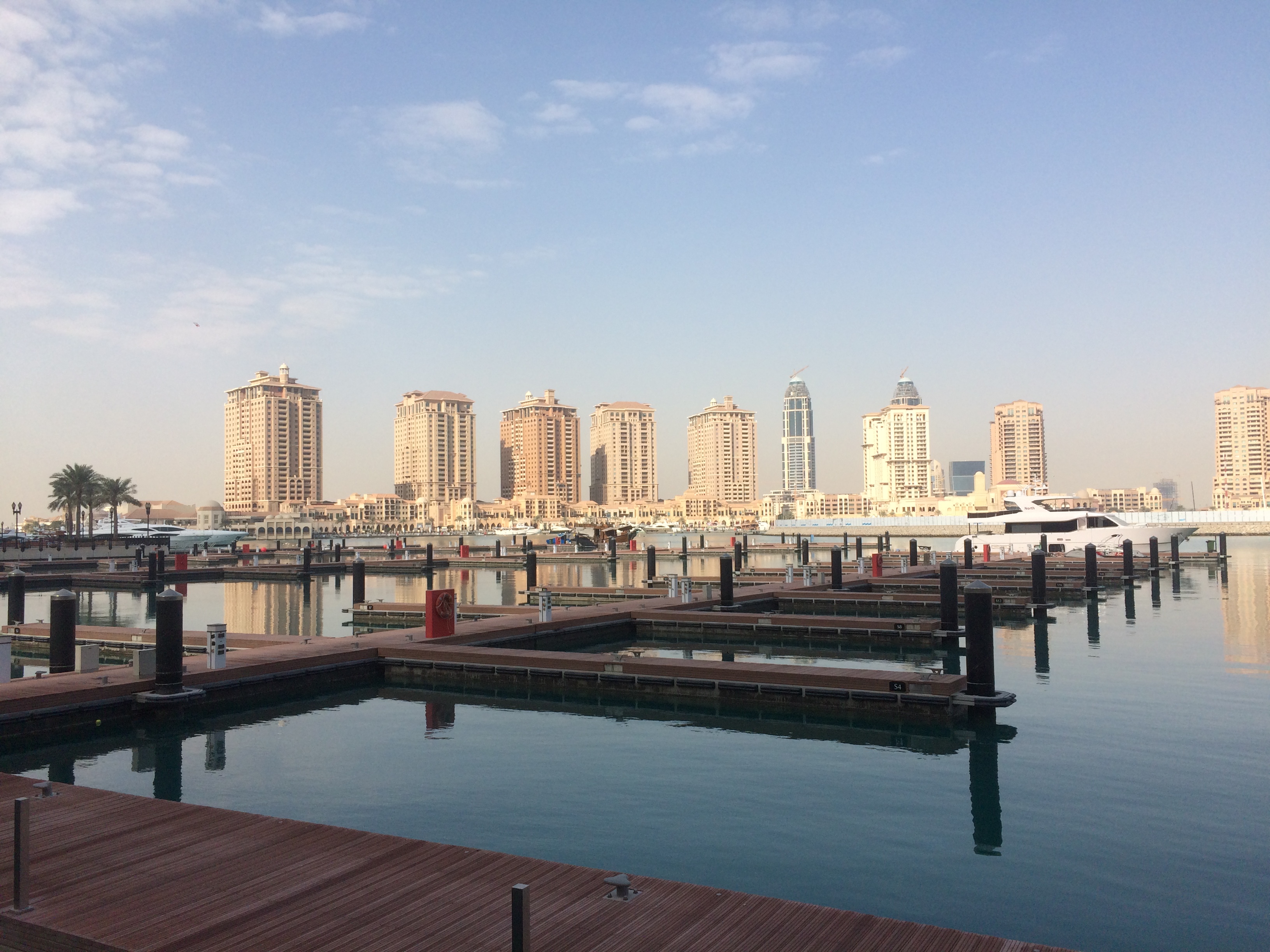
The Pearl, a brand new, man-made neighbourhood

The Pearl, a brand new, man-made neighbourhood

If you search the internet for a picture of Doha in 1979, you’ll see a picture of some tiny, beige, homogenous buildings, with the newly built, pyramid-like highrise Sheraton Hotel looming over them and the sea. If you look for a picture of Doha’s cityscape in 2006, there are just a couple more highrises. Now, there are dozens and dozens of buildings, only 10 years later, with dozens more under construction. They’re not only building but rebuiling, expanding, and creating new spaces to build more. Reclaimed land is the in-thing for all the gulf countries, filling and shaping islands out into the sea and constructing new motorways and sea-side corniches along an ever-expanding coastline. The highways move and grow to fit larger roundabouts or the new skytrain tracks, and left turns barely exist, replaces by u-turns and roundabouts to improve the flow of traffic.

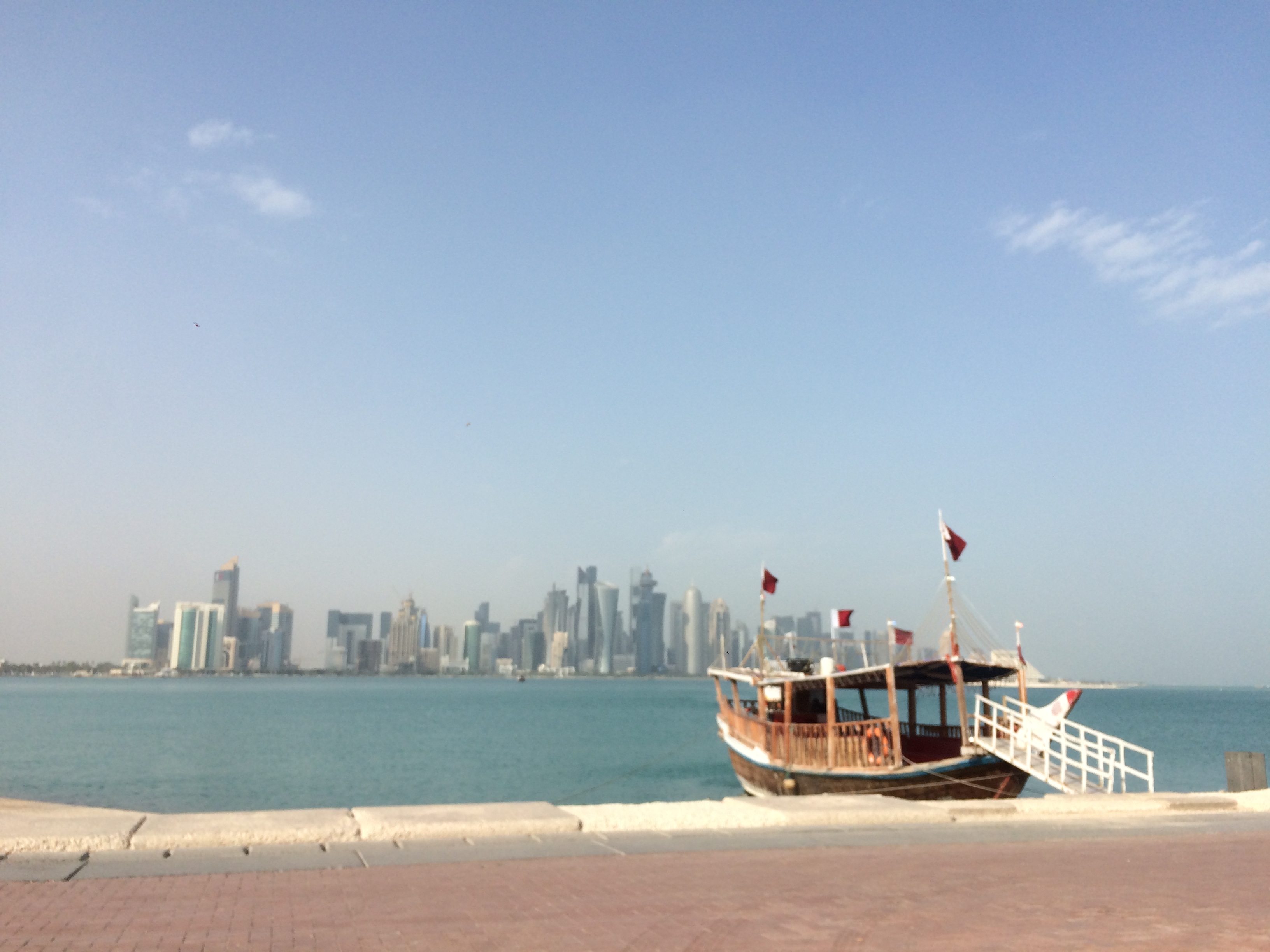
The old and the new, a traditional dhow boat and downtown Doha

The old and the new, a traditional dhow boat and downtown Doha

Doha is still dusty, even more so with all the construction, and they don’t worry about wiping it off. The cars are a little older and well-used than they were in Kuwait, and most trucks and SUV’s have a similar art decal sticker in waves of black or beige along the side which make them look like their all part of the same fleet. I couchsurfed with an Egyptian guy and his English roommate, who had 2 dogs, 2 cats and a horse (!). I managed to talk my way into a ride, and helped her walk the dogs by the beach, only to watch a Qatari guy hit her German Shepherd and drive off. Luckily he was only a little bruised, but the local treatment of animals, specifically dogs, left some distaste in my mouth. Driving in general was pretty bad, like the people who make a left turn from the right-most lane, cutting off 2 or 4 lanes of traffic, and I saw a giant Ford F-150 pummel into a compact Toyota hatchback, crashing them both onto the corniche I was walking on just a few metres away.

Pakistani pirate/CS ambassador and the sink hole

Pakistani pirate/CS ambassador and the sink hole

The Qatar Couchsurf ambassador was kind of like a Pakistani pirate – I’m still not sure what he does but he walks around with one limp leg and crutches, drives off and over massive sand dunes in his 4×4, and gets free tea delivered to his car window from just the honk of his horn. He took me out of town, to see some of the natural sights, including a sink hole and some singing sand dunes. We hung out with his core group of friends, including my host, and I got semi-addicted to watching episodes of Dexter which were always playing in the background. Eating was always an event, a social gathering, and extremely simple – you could order in anything, from shwarma to pizza and Mcdonalds or Subway, and it would get delivered straight to your lap. It was also common not to get out of your car for a corner shop purchase – simply park out front, wait with your window down, and one shop guy would come and take your order, for bottles of water or cigarettes, take your money and bring your change. I heard that even they do home deliveries once in a while, depending on how close you are to your neighbourhood shopkeeper, so in theory you’d never have to leave your house if it wasn’t for work or pets.

Five Star Kuwait

I didn’t know what to expect of Kuwait, but everyone I spoke to before going seemed to expect something tough and dangerous. I didn’t do any research on tourism or traveling there, but I knew I was visiting a friend that would answer all my questions once I got there. I knew Nima from university days back in Canada, and though he’s Iranian, he’s lived half his life in Kuwait and lives there now with his American wife and son. I thought they’d be an exception, but there were dozens of international couples and even more North American raised or educated residents and ex-pats.

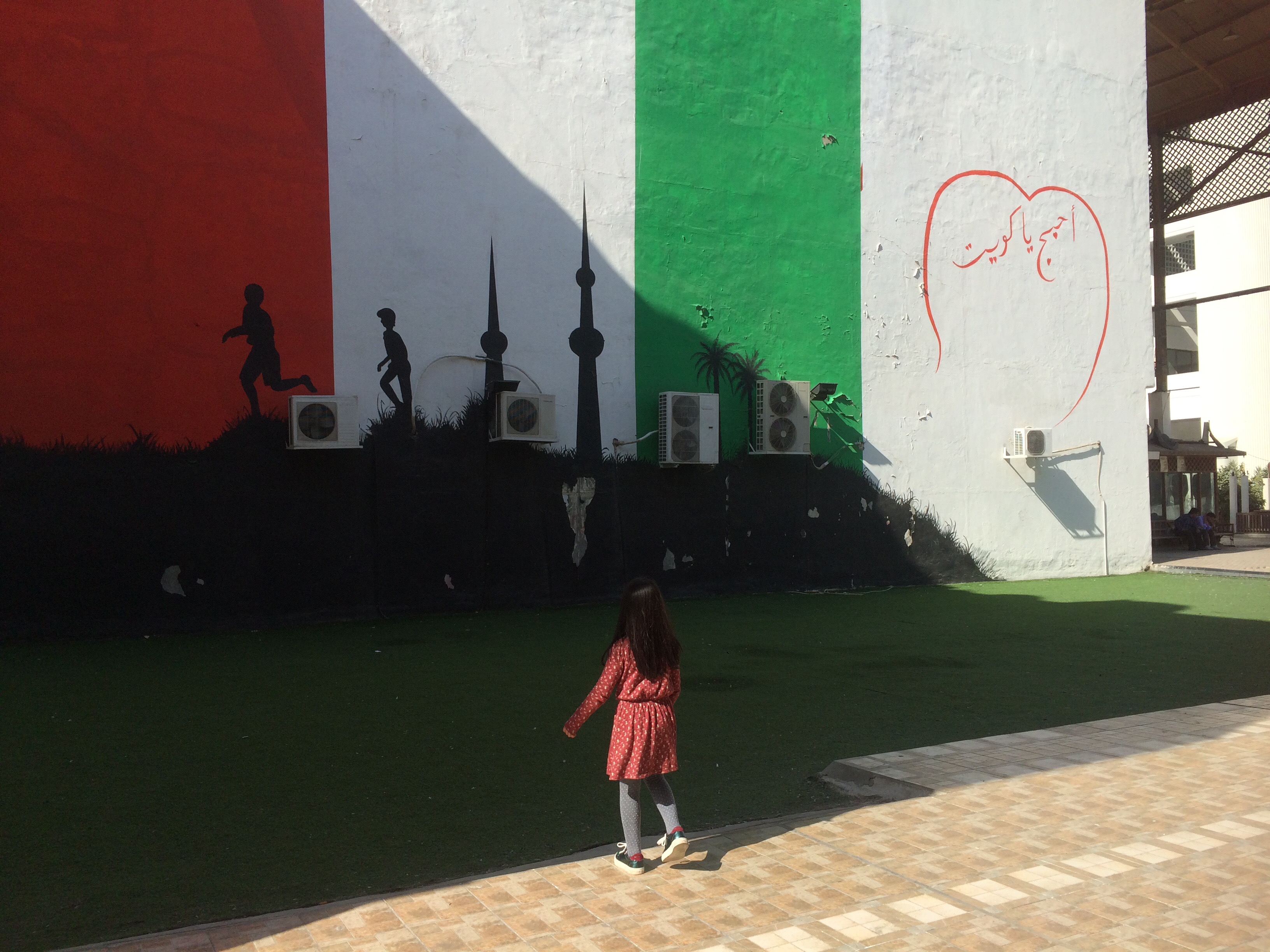
patriotic graffiti at the souk

The surprises started as soon as I landed. It was the middle of the night, but we drove to a neighbourhood of mansions where I was shown to their home’s guest bedroom, outfitted with a welcome package of toiletries, snacks, and my own pyjamas. Their house was more like a private apartment complex, with an elevator connecting the 4 floors. His family lived on the top floor, his brother below, his parents on the ground floor, and the driver, maid, nanny and cook in the basement, where they also had a gym, pool, and hottub. There was a library too, but it looked more like a museum of fine china, oriental ornaments and exotic collectables.

“I love Kuwait”

I soon learned that Kuwait is one of the safest and richest countries in the middle east, quickly rebuilding and developing itself since Iraq finally left them alone. They have one of the lowest unemployment rates in the world, and many jobs and even land are given by the government. They’ve also perfected a sort of modernized slavery, an economy of servants and workers imported to help the upperclass people avoid any undesirable or mundane tasks. Today Kuwait feels more like Southern California, with every American restaurant or coffee chain accessible from multi-lane highways filled with oversized Ford trucks or shiny Dodge sports cars. All the cars are shiny, since having a dusty car means you don’t have someone to clean it every day, which is an impressive feat in a desert country where dust falls constantly. There are also more Landcruisers and Toyota Landcruisers per capita than I’ve seen anywhere else, and just in our parking lot there were 5 cars, including a Bentley and Nima’s buttercup yellow BMW M3.

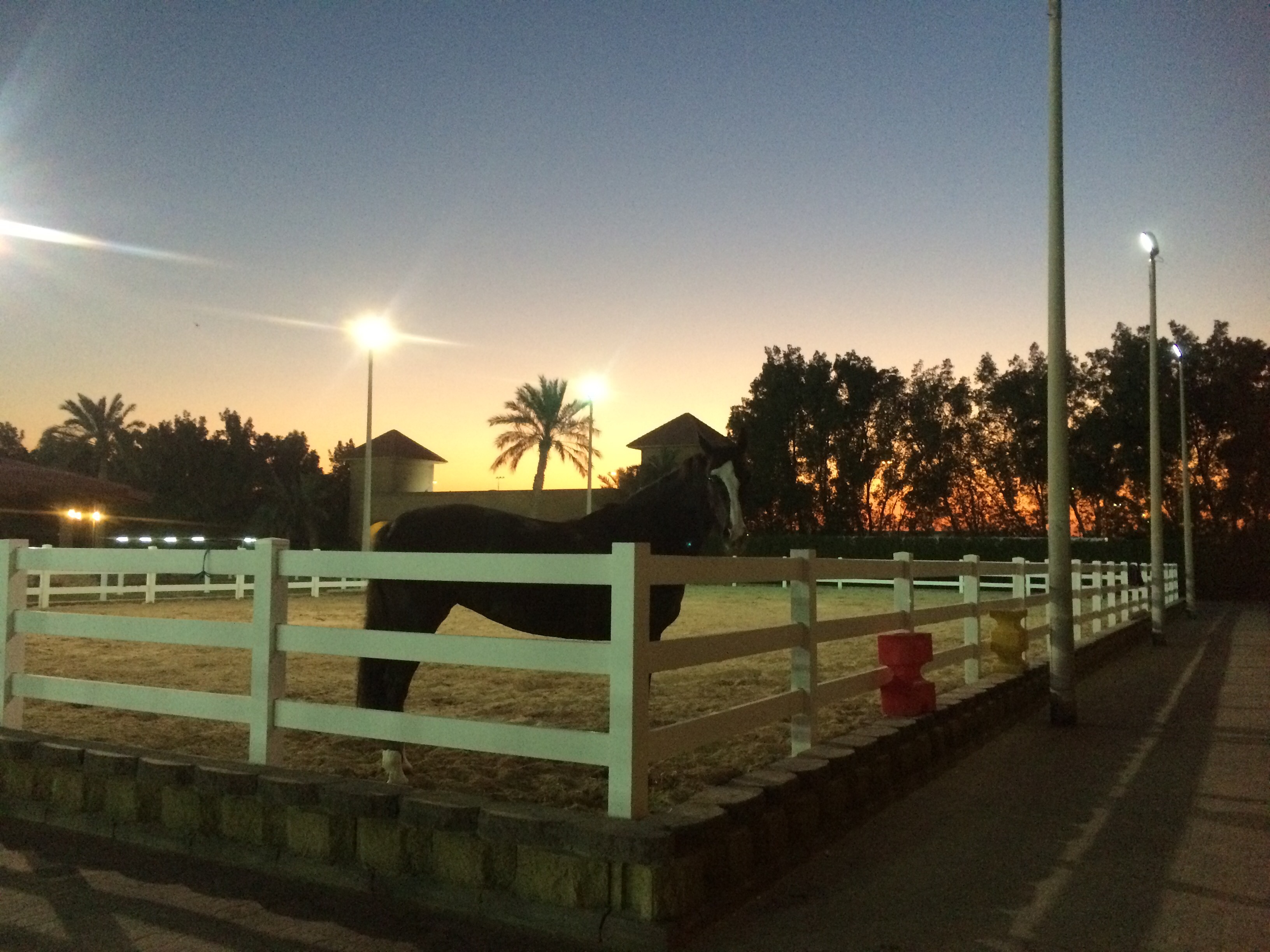
checking out the horses at the Kuwait Riding Club

But not all things are so modern in Kuwait, a country where some of the most conservative Muslims rule the country. There was even a call to prayer at the Kuwait International airport when I was flying out, a sound that’ s become all too familiar starting at 4 or 5 am and repeating itself throughout the day. Pork is illegal, and a luxury commodity for any ex-pats who manage to smuggle in some jamon Iberico. Alcohol is very illegal, for everyone except ambassadors, and those who manage to buy any off the black market pay an extraordinary premium. Other things, like gasoline, may as well be free, since the price for on liter of gas is more expensive than a liter of bottled water. I guess this helps people afford their gas-guzzling cars and other expensive hobbies, like horse-back riding which they do very well. I visited one riding club and don’t think I’ve ever seen so many beautiful, fit, well-groomed horses at one stable. I wanted to stay forever, but I don’t think the Indian or Pakistani grooms would have liked me trying to compete for a job.

Pampered in Tenerife

the harbour in Las Galletas

the harbour in Las Galletas

It’s sometimes nice to balance out a ski vacation with a sun vacation, and its always nice to sit on a beach in warm weather, so Tenerife became an obvious next stop. It was also so cheap and easy to coordinate Andorra and Tenerife from Barcelona, where we spent 3 nights between our trip visiting old friends and some Icelandic acquaintances. I’ve visited other Icelandic people abroad, but its extremely rare to run into a stranger speaking Icelandic anywhere in the world. However, last time I was in Barcelona, I ran into a very good friend from Reykjavik at an empty nightclub on a Tuesday night, totally by chance.

beach of the Americas

beach of the Americas

Tenerife is the only place where this is likely to happen. In high season, there are 3 direct flights a week between Tenerife and Iceland, and statistics say around 180,000 Icelanders (which is half the population) visit the Canary Islands each year. We would be strolling along the seaside and hear Icelandic, sitting in a restaurant at a table beside some Icelanders, and get haggled by West Africans selling cheap watches with phrases in Icelandic! For some reason this totally blew my mind.

whale and dolphin scouting on our catamaran booze cruise

whale and dolphin scouting on our catamaran booze cruise

We hit Tenerife on the hottest January in years, which was actually the perfect temperature around the clock. We had shirtless days, dry and warm, and long pants but flip-flop kinda nights, with clear skies and little wind. We got around by foot in our little area, Playa de la Americas, taxi or bus to tourist sights and the airport, and rented a car one day to drive around the whole island. We could always find chilled rose wine and delectable tapas, though we stayed in a hotel with our meals included. Unlimited cava was served with breakfast, and at dinner we got too full on steaks and ribs to worry about lunch.

It was a wonderful ski vacation decompression, and an even better pre-trip therapy for my upcoming Middle East backpacking trip. So after swapping out my ski clothes for my skimpy beach clothes, I’m now carrying a backpack full of big, black clothes that I’ll need to handle the gulf sun a little more modestly.


Skiing in Andorra

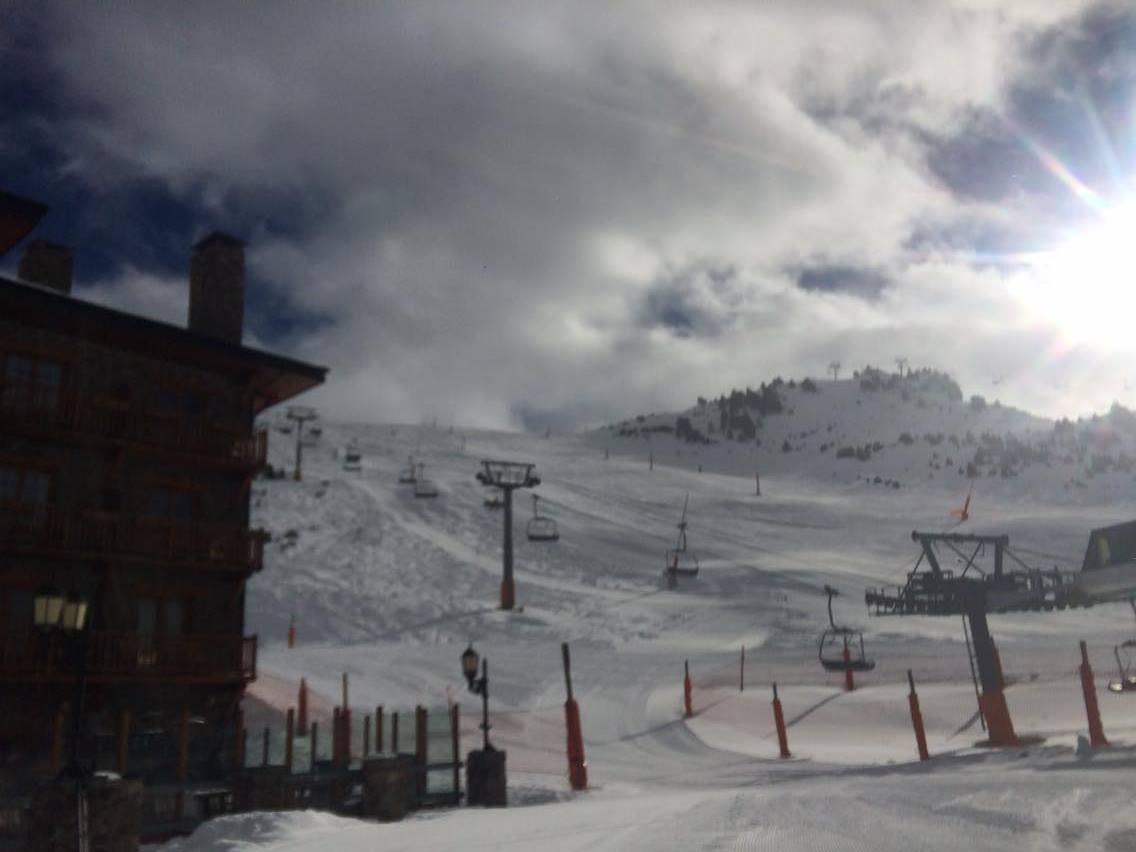
fresh powder

fresh powder in Grandvalira

I used to snowboard a lot when I lived in Vancouver, and Whistler haunted me this New Years when I was there for one short day and unable to ski. Skiing in Europe is also great, especially the Alps in France or Switzerland, but Andorra was my pick this year, since it´s easy to get to (2.5 hrs from Barcelona airport by bus), its super cheap (especially compared to Ski resorts in France), and as of November 2015 these Pyrenees peaks cover the biggest skiable area in Southern Europe (210km). Andorra is also a new country for me, bringing the total up to 173.

skiing under clear skies

skiing under clear skies

I was traveling with my amazing chef friend Thrainn, who works hard and plays even harder, so the trip was a party from start to finish. We stayed at the beautiful Hotel and Spa Resort in Grau Roig, where we had ski in and ski out privileges and breakfast delivered to our room every morning. Our room looked out over the slopes, and housekeeping left us little fudge chocolates on our pillow every night. Unfortunately, we had to fight a small bout of food poisoning the first day, but after enough visits to the spa and rehydrating with mimosas, we were in tip top shape on a mountain freshly covered in powder.

our hotel, Grau Roig

our hotel in Grau Roig

It snowed when we slept, so we spent our days under a bright blue sky working on our goggle tans. We played with his GoPro and my waterproof iphone case to take ridiculous photos in the snow, and managed not to injure ourselves in any way. Each day was a journey up and down the valleys, to the nearby villages of El Tarter, Soldeu, Encamp, Canillo or Pas de la Casa, and once we nearly didn´t make it back when a lift got stuck full of riders. And not making it back was a problem, since we discovered on our arrival day that no buses travel to Grau Roig and we had to walk 2 km through the darkness along a highway to check in. Thank God we didn´t run into any bears or wolves 😉


Barbados, St. Vincent and the Grenadines

I went to Grenada in 2006, and could literally see the Grenadines, but somehow didn’t make it until this year. I went with my Guyanese mother, who traveled on her Canadian passport, and kept introducing me as her daughter from Iceland, yet I was traveling on my Guyanese passport… so everyone was a little confused, even us. Mom spoke with a West Indian accent, I spoke with a Canadian accent, but we knew everything about the roties and curries and pepper sauces so at least we were warmly accepted.

Sparrows beach on Union Island

Sparrows beach on Union Island

They have their own version of Africa’s TIA, and they call it ‘island time.’ You’d think it just refers to when things are late, but its also an excuse for things that never happen. As the ignorant westerner expecting things to run as they should, you hear alot of ‘don’t worry,’ ‘don’t stress youself’ or ‘everytings gonna be arite man.’ I wouldnt say I was ever in a rush, and I kind of embraced the island time livin,’ but it was a bit weird when we went to a Wine and Tapas restaurant that didn’t have wine or tapas… but they had rum punch, so everyting really was arite.

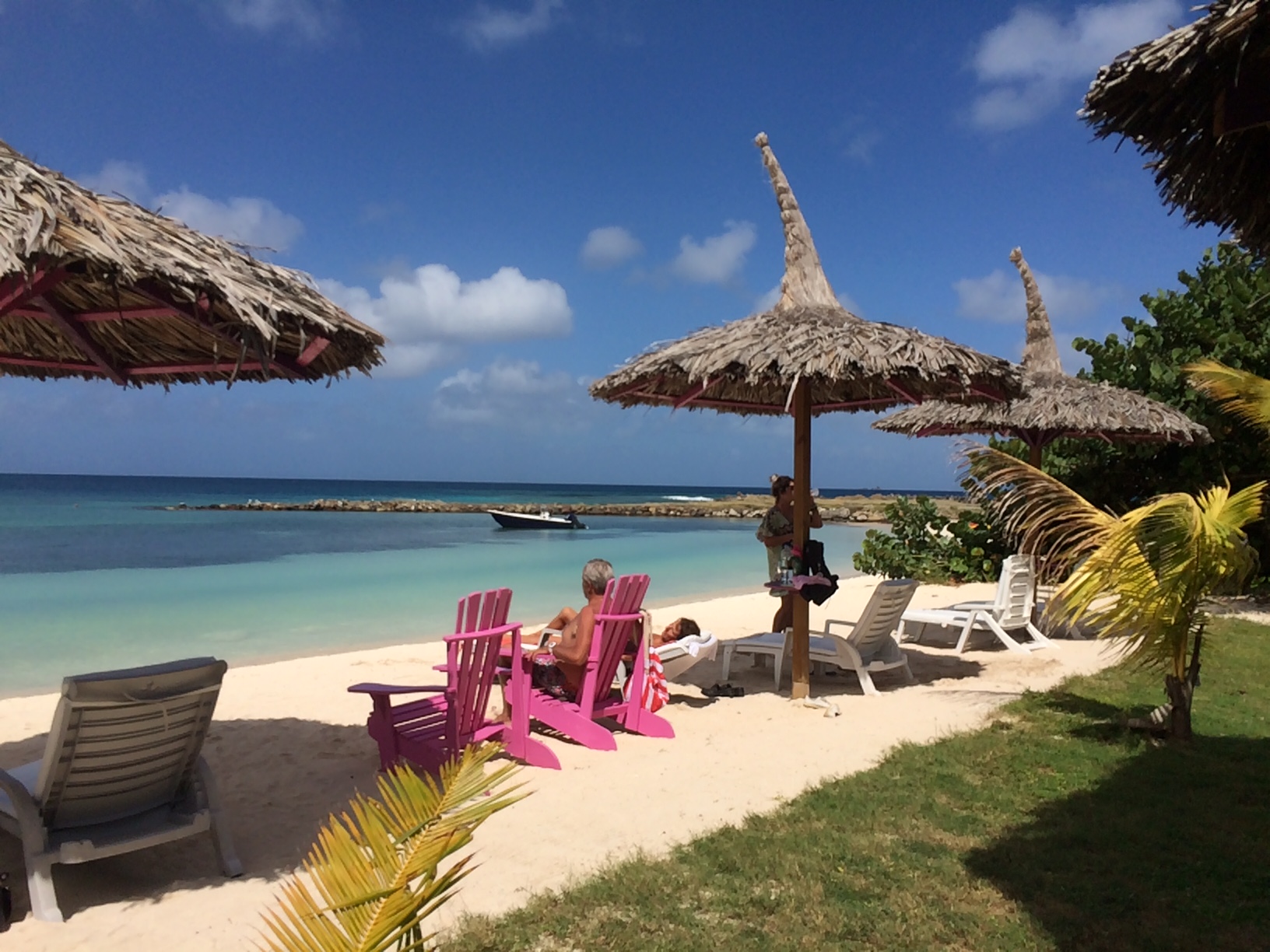
the only difficult decision is picking which palm tree to lay under.

the only difficult decision is picking which palm tree to lay under.

We were there a week, and island hopped from Barbados to St. Vincent in a plane, then ferried to Bequia and Union Island in the Grenadines. My so-called ‘uncle’ (its a term of respect for family friends but we’re not related) that I stayed with in Carriacou ten years ago had 27 children, and I though he was special, but I met a few other productive fathers. One guy, who I met on a rum-shop pub crawl, had nearly 20 brothers and sisters, and said he recently walked in on his father 95 years of age having sex. His mother had her last child at the age of 65, which isn’t impossible but still hard to believe.

At the northernmost part of Barbados

At the northernmost part of Barbados

St. Vincent makes an 85% rum called Sunset which could also be sold as lighter fluid or gasoline, which I discovered when our car ran out of gas on our rum shop tour. I ate conch curry for the first time, lots of amazing, fresh, sea food, and Guyanese rum and Cuban cigars were sold in nearly every corner store. Beaches and more beaches were the focus of our days, and fans and air-con the focus of our nights. I’ve always thought to be too cold is worse than being too hot, but there were definitely moments when I dreamed about being back in Whistler or Reykjavik in some fresh, frosty air, but now that I’ve left, I know those were just temporary brain lapses. Take me back to the sun please, even my skin is protesting from the lack of humidity.