Ibiza for a weekend for €0.60

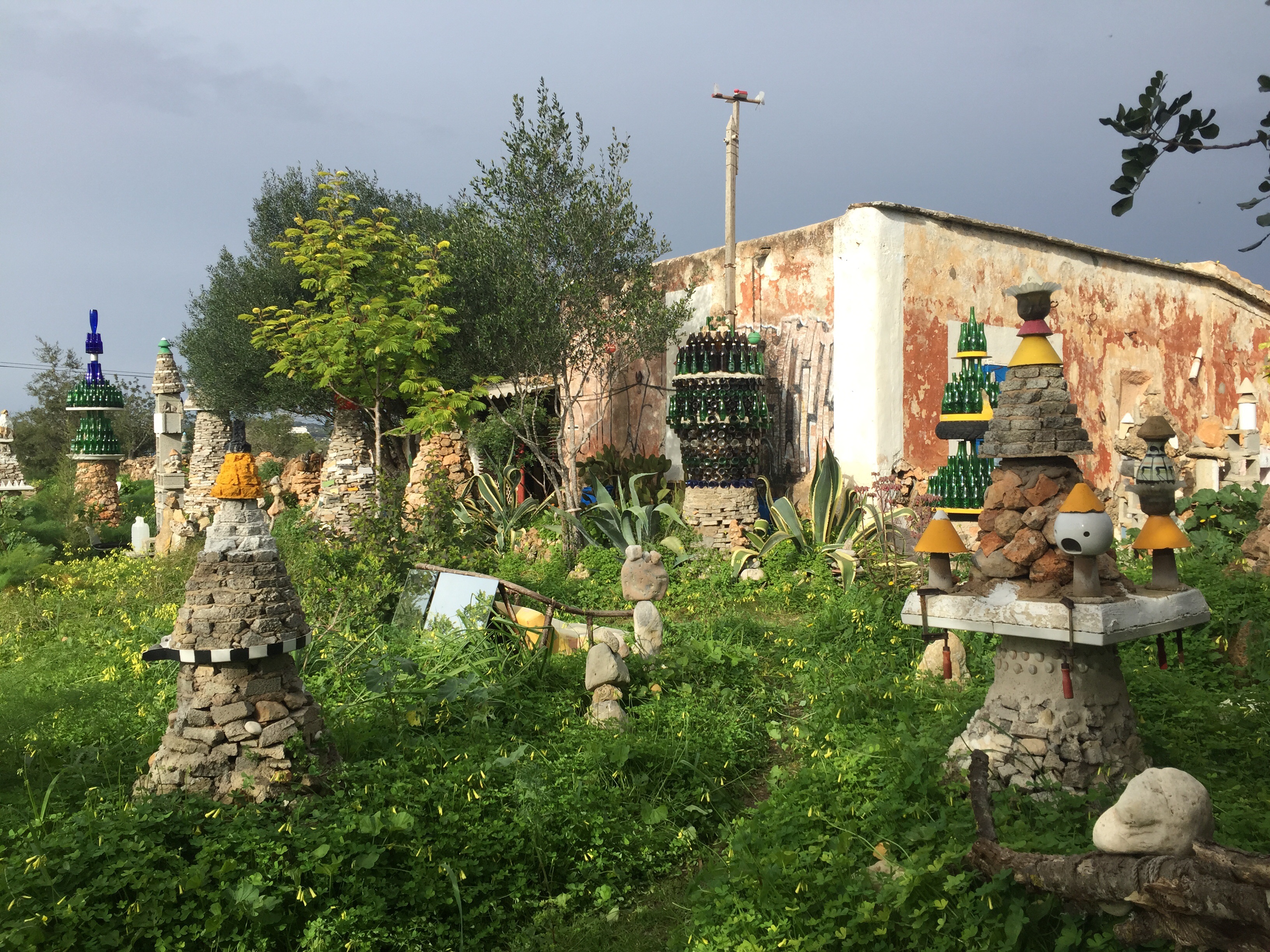
I spent a total of €0.60 in 3 days in Ibiza. 35 cents for a bottle of carbonated water, and 25 cents for a bottle of mineral water. I couchsurfed with a 53 year old local guy and his Peruvian wife, but could only understand 50% of what they said, which was still in a broken form of Spanglish where no tense was correctly used, ‘want’ and ‘have’ were the same word, everything happened in the first person, all verbs had Spanish endings, and he confused words like ´time´and ´weather.´ If he asked ´you have water?’ or ‘did you check the time’ I wouldn’t know if I should answer no or yes to get more water, or talk about the clock or the rain. But I was taken care of from beginning to end and everything in between, with meals, drinks, and movies offered to an endless supply. I got picked up at the ferry terminal, and for the first time in 5 days, it was walking about weather again. So we explored Ibiza town and the old city, the churches, the city beach, and picnicked on the fortress walls. On the way to his place in San Antoni de Portmany, we stopped at a stone garden, a place only imaginable on this island so commonly loved by the hippy trail.

the stone garden

the stone garden

San Antoni is a small city, but still half empty and shut down like every other village. One out of ten restaurants or cafes is open, and all bars and discos were closed for the season. Its only surprising because the season is only from May to September, so its hard to imagine how people can survive off only 5 months of business. All the hotels, sea-side buildings and boats just sit around for the other 7 months costing money and not making a penny, and the most touristic thing I did was visit about 5 or 10 free churches in the countryside villages (more than half of them were open!).

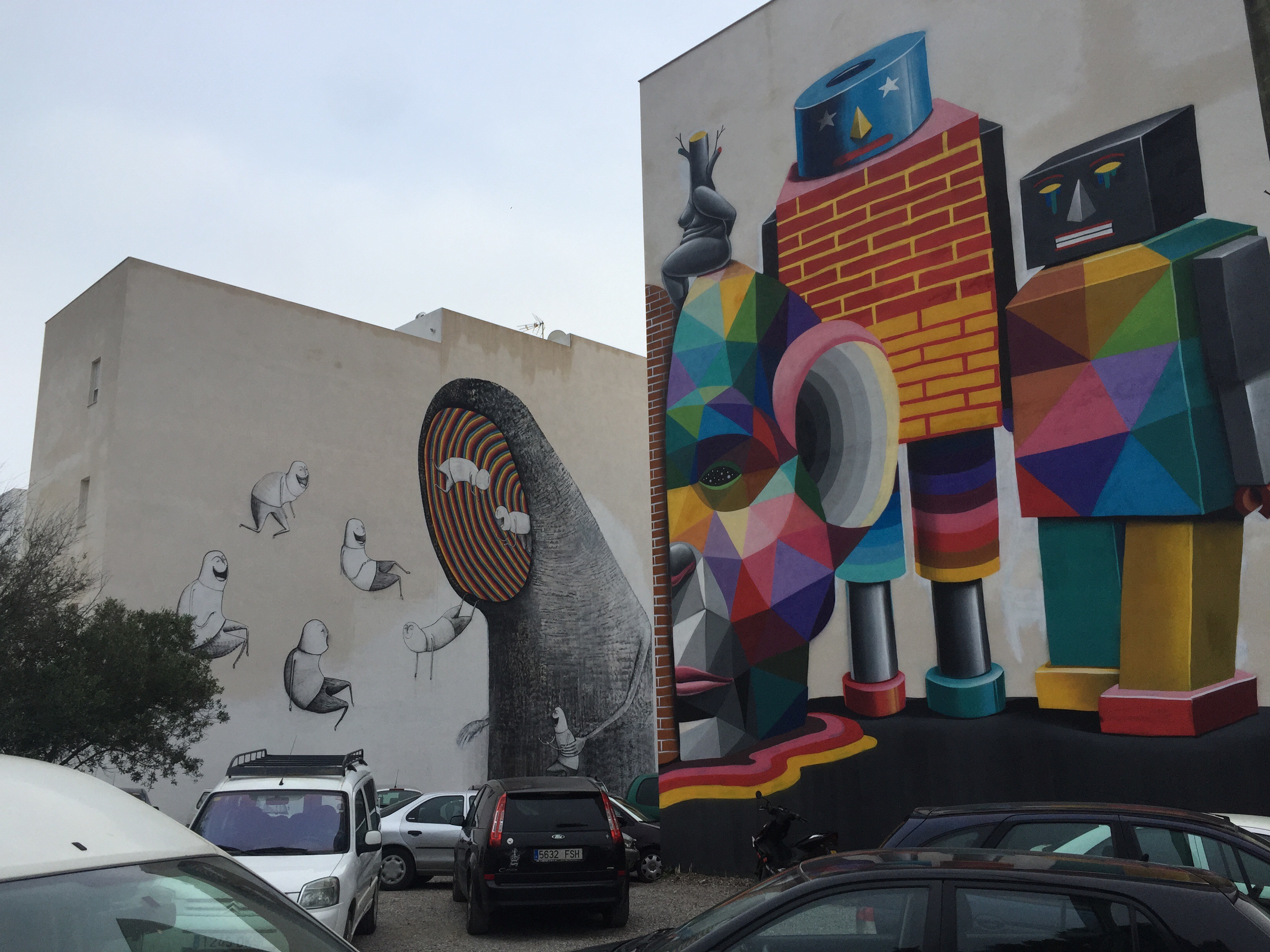
beautiful murals

beautiful murals

The street art in Ibiza was phenomenal. The line between graffiti and murals was indistinguishable, and both equally intriguing, but of course the occasional penis or ‘fuck’ was spray painted in inappropriate places. Art galleries and cemeteries were just as much information to process visually, while the rolling countryside of vineyards and almond, orange, olive and fig trees seemed endless. It was surprising how green everything was, despite the cold, but in fact the rainy wintery season makes it seem like an Icelandic summer, and in their dry summers, everything dies and greenery turns yellow and gray like an Icelandic winter.

Ibiza town

Ibiza town

If you make it to Saint Gertrudis, definitely go to Bar Costa. One of the only cafes open, it was packed, with wooden fires burning inside, and an art gallery from floor to ceiling of melancholic paintings. It was the first and only building I visited that was warm, since no one has central heating. There was no difference from leaving the house and walking outside or returning home, the temperature remained the same. I could literally see my breath when I exhaled inside my room, and the most mundane tasks became extremely uncomfortable, like having to sit on an ice cold porcelain toilet just to pee.

one of the many churches in a tiny village between beachtowns

one of the many churches in a tiny village between beachtowns

I enjoyed a roadtrip around the southwest beaches and ‘calas’ despite the storm, and finally toughed it up enough to accept the weather and dress in 3 layers of all the clothes I packed. It wasn’t that cold, maybe 10°c, but the humidity, wind and wet feet sent a chill thruout your body you could never shake since it never went away. Atleast it didnt hail or snow in Ibizia, and now that I’ve seen it all alone in off-season, I´m looking forward to returning when the island returns from hibernation and the sun shines again on the thousands of visiting (and local) faces.

Getting stuck on Menorca and Mallorca

I had been stalking the weather forecast for the Balearic islands for 2 weeks before finally arriving to Menorca. I arrived on a Saturday after 5 pm and got one lucky stroll thru Mahon city center, in pleasant weather with lots of life around. My couchsurfing hosts were two American English teachers, and we made seafood paella and salsa danced the first night away. The next 6 days were nearly all lost for exploring local life, since all was dead on Sunday, Tuesday and Friday were holidays, and the only bits of Monday, Wednesday and Thursday I saw outside of siesta time was clouded by stormy winds and pouring rain.

Cami de Cavalls

Cami de Cavalls

On Sunday, me and Joe managed to hike 22km, most of it along the Cami de Cavalls track with circles the island. We didn’t ride horses, but found lots to cuddle with, and met one crazy farmed who only keeps land to house his 5 ducks, 10 chickens, and 25 cats! By the end of the day, it had hailed once, and we had to hitchhike the last 3 km to Mahon because the wind literally wouldn’t let us walk forward anymore.

On Monday the storms really started. Ferries got cancelled, shops didn’t open, and people didn’t leave their homes. It snowed in Mallorca for the first time in decades and people told me it was the worst weather week in 35 years for the islands. By Tuesday, all the holidays events had been cancelled, but not the holiday, so everyone stayed in another day, hidden under their blankets and jackets even inside (the houses here aren’t built for cold). But since it’s a tiny island with a few thousand inhabitants, the barbeque and dances and other festivities just got moved to Saturday.

wind mills in Menorca

wind mills in Menorca

I attended one indoor barbeque, where potatoes were roasted inside the fire place, and had other visits to locals home since no one was going out. I visited a wanna-be producer and jammed out on his piano with two singers/guitarists. I sat infront of a space heater with some other Spaniards on their couch under a blanket and shared travel stories.

On Wednesday the ferries were still cancelled, so I had to fly to Mallorca. These are the kinds of moments where I love to have airmiles laying around, so instead of paying 100 euros for a 30 minute flight, I just paid 2.20 in taxes and got my ferry tickets refunded. The Mahon airport was the loneliest little terminal I’ve ever visited, although a similar sight after being on a deserted island where everything was also closed.

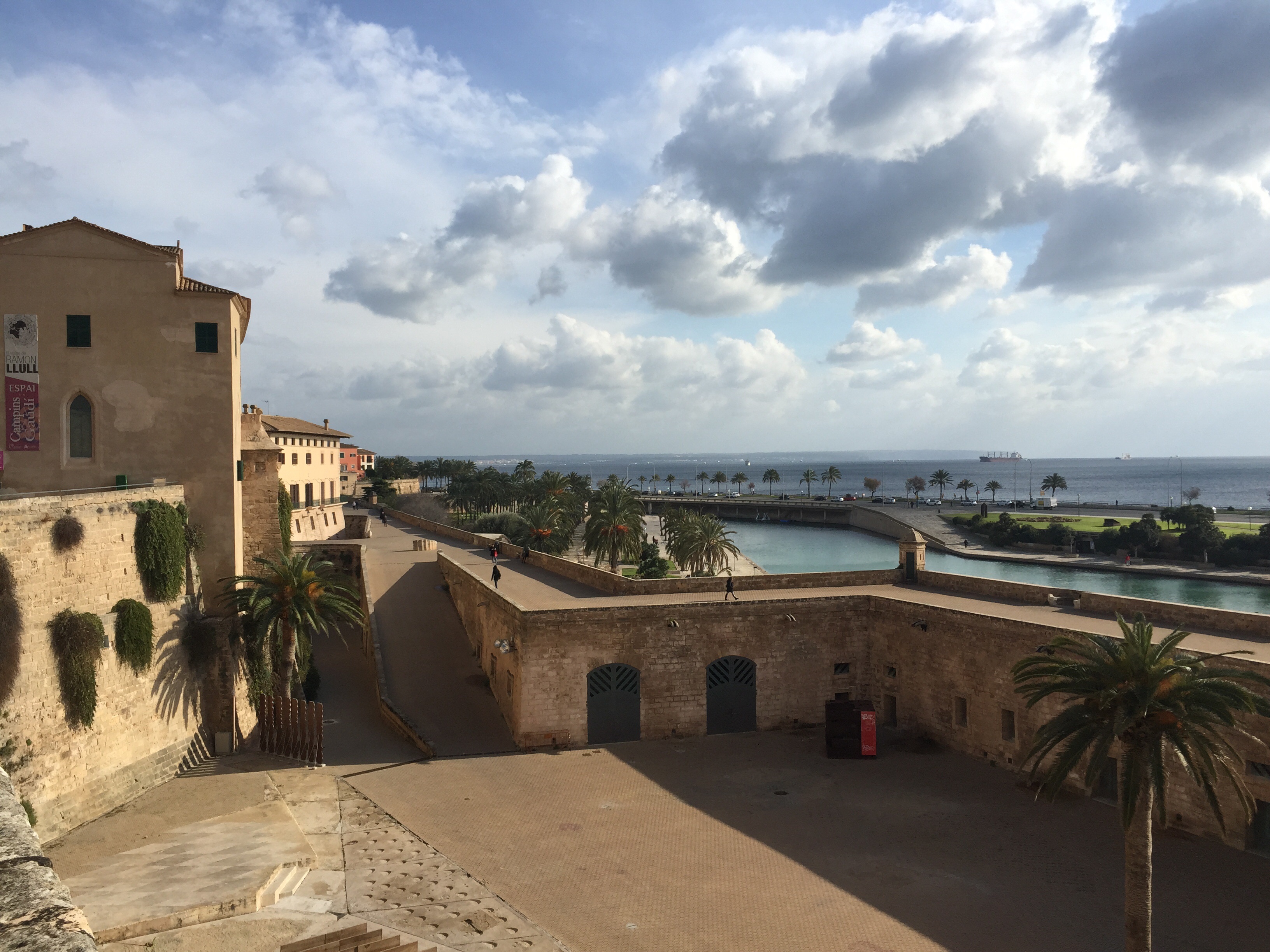
the only sunny day, in Palma under the cathedral

the only sunny day, in Palma under the cathedral

Palma de Mallorca was a bigger city, where winter and siesta don’t affect the local life as much, and can still keep a tourist entertained in January. The shops were open, and streets full of pedestrians. I couchsurfed there with a 67 year old woman and her 34 year old ‘friend,’ who could have been playing the role of a male mistress but maybe he was just a lost artist. A lot of people are in Spain as transitioning musicians or something similar. He had the rockstar hair any guitarist would dream of, but unfortunately also half of it ended up on my breakfast. After the 5th hair in 6 bites, he noticed and promised he tried real hard to keep it back, but I gave him the rest of my eggs and potatoes garnished with hair. We were in the heart of the city, and another festival had to be celebrated Thursday night. San Sebastian is a day where everyone flocks to the streets for public barbeques and outside concerts, and finally the little bit of wind and rain never stopped anyone.

BBQ in the street for San Sebastian festival

BBQ in the street for San Sebastian festival

My ferry to Ibiza, however, did get cancelled, but it may not have been because of weather. Its strange to be from Iceland, where the average weather is equivalent to a storm warning in the Balearics, but the weather did interfere a lot more when you’re trying to be out and about with a backpack to explore a place deserted of life. I knew January was off season, but I didn’t know I’d be so off.

A New Year begins in Iceland

Me and winter aren’t the best of friends, and I usually like traveling the full 8 months of Icelandic winter, but if I’m going to take a break from traveling, the holidays are the best time of year to take a break at home.

Iceland has a very special Christmas season; it actually lasts for 13 days (arguably 26 if you count the days all the yule lads come to town and leave presents in your shoe), so the last day of Christmas, also called ‘the Thirteenth,’ happens after New Years.

New Years Eve in Iceland is also special; its one of the few cities in the world you can actually hear midnight happen. Millions of kronurs of fireworks are exploded and showered over Reykjavik between 11:30 and 12:15, and the skies are full of lights, colours and smoke. It’s a little like bombs over Baghdad, plus the possibility of Northern Lights in the background – try to find that somewhere else in the world.

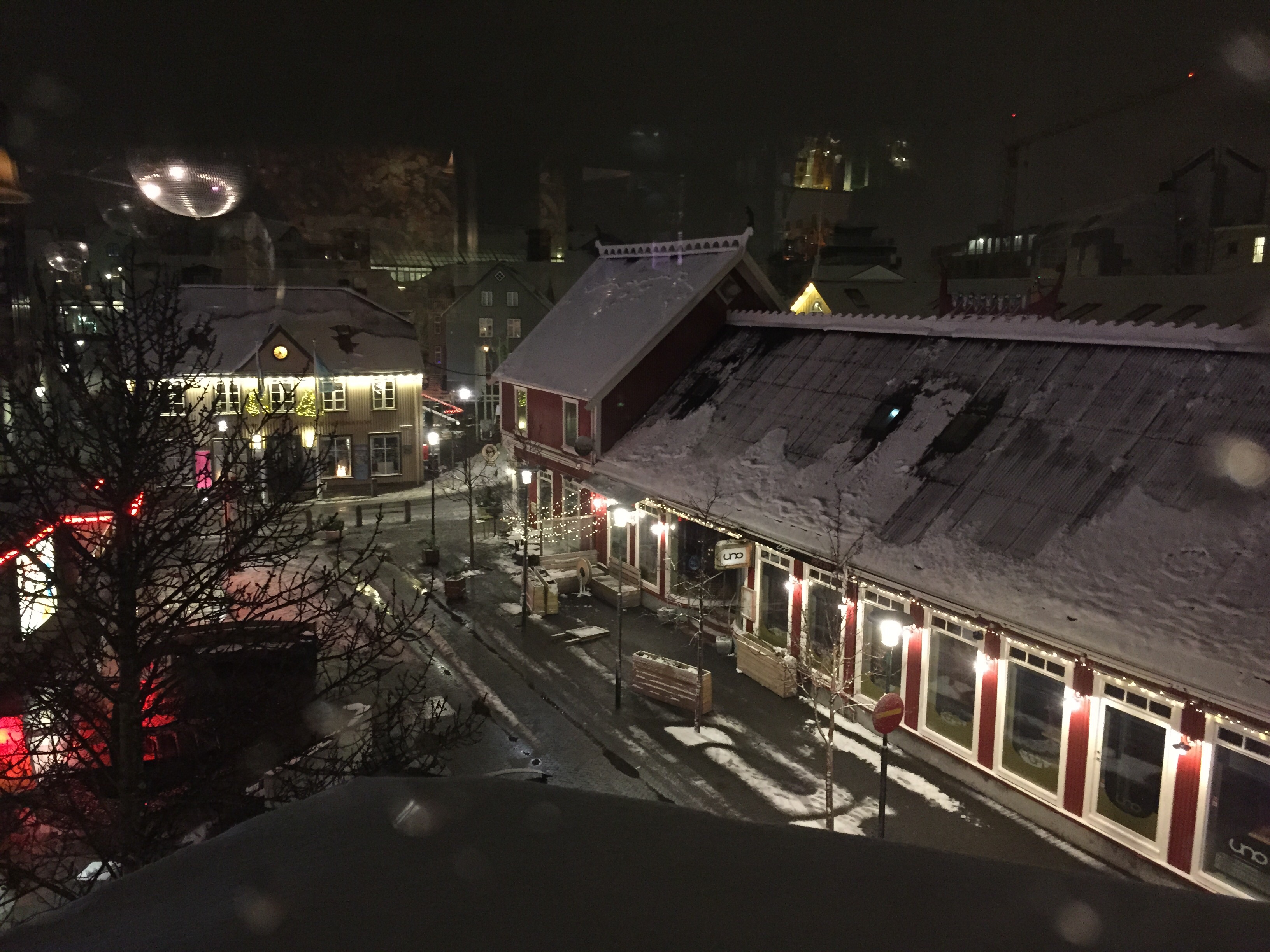
downtown Reykjavik on Christmas eve

downtown Reykjavik on Christmas eve

The weather has been very cooperative. Over Christmas Eve and Christmas Day, there was the most festive sprinkle of fluffy snow flakes falling quietly down over an already white winter wonderland. Then there were some storms, rains, and plus 7°c weather that iced it up and washed it all way. But for New Years, everything went cold and crispy again, no snow or rain fall, enough snow on the ground to brighten the night, and the clear, still skies welcomed the colourful explosions that actually last the whole night, with a deafening climax around midnight.

New Years resolution #1: go for more walks

New Years resolution #1: go for more walks

Then everyone makes their New Years Resolutions; the gyms get totally overcrowded the first week of January. People exchange unwanted Christmas presents and go bonkers shopping the sales and old year clearances. And ‘the Thirteenth’ happens, on January 6th, which is the last day you can legally set off fireworks, so the last day of Christmas is also sent booming into the sky, with screams and screeches and flashes of lights.

Dad at his birthday Gala Dinner

Dad at his birthday Gala Dinner

January 7th was my fathers 65th birthday. We celebrated in black tie dress-code of course – he was finally home after 5 weeks in the hospital and officially retired, so now the old man’s really an old man. He’s recovering from kidney failure, which means hes attached to a dialysis machine every night, but free to play all day and evening. We started the date with a Baejarinns Beztu hotdog, then attended a Viennese Concert by the Icelandic Symphony Orchestra, and capped the night off at the Icelandic Chef Association Gala dinner at Harpa. We were seated one table away from the president, and rubbed shoulders with all sorts of important and/or wealthy guests, but explained to everyone he was a retired teacher and I was an unemployed tour guide and didn’t seem to feel excluded.

I'll miss this sight!

I’ll miss this sight!

Now it’s time to hit the road again. Christmas is over, New Years and birthday celebrations are behind us, and we can no longer burn our money in the form of fire works, so its time to go spend it on the road. First stop is Barcelona; why? Because I found a one way ticket for a direct flight (4hrs15mins!) for 80 euros and the days there are twice as long and twice as bright. Of course the weather is better than in Iceland, though not great at this time of year according to Spaniards, but having the sun shine on the top of my head and actually feel the heat of its rays is sometimes enough. Sunshine, here I come.

DV Interview in English

What started as a 40 minute phone call turned into a few more phone calls, email exchanges and a 3,000 word article by Bjorn Þorfinsson in DV´s New Years eve paper. There were pieces of the article published online at DV.is, and the print paper advertised the article front page, top and center. The middle spread, 3 page print edition was of course written in Icelandic, so here are a few highlights of the article in English for those who don´t read Icelandic, entitled “I appreciate freedom and solitude“.

the center spread from DV

the center spread from DV

It is safe to the that the life of Katrin Sif Einarsdottir has been filled with adventure.  Despite her young age, she is one of Iceland’s most seasoned travelers and shows no signs of stopping any time soon.  Her 30th birthday is this upcoming February and she is currently planning to celebrate in the celebrations for her 30th birthday in Mauritius, the 200th country on her list.  She is born in Europe, traces her lineage to South-America and is raised in NorthAmerica.  She has visited all of the continents and was particularly fond of the Antarctic.  Typically, she will travel the world in the winter and spend the summers in Iceland working to save money.  Unexpectedly, she is spending the holidays in Iceland, due to her father’s illness, and gave herself time to chat with DV about her adventurous lifestyle.

Roots in three continents

Katrin is born in Iceland.  Her father is from the Vestmannaeyjar islands and her mother from Guyana, a small country in South-America.  Her parents separated when she was a toddler at which point she moved to Vancouver, Canada, with her mother, where she spent the remainder of her childhood.  However, she always missed Iceland which she views as her home country.  “I yearned to move back to Iceland and had a hard time not being able to.  My parents were going through a rocky period in their relationship and so I didn’t visit as often as I would’ve liked” she says.  Hardest for her was not being able to speak Icelandic with her sister during grade school in Vancouver, causing her Icelandic to deteriorate. In her adult life, she has brushed the rust off and now conducts interviews in native-level Icelandic.

Japan: the seed of wanderlust

One could argue that Katrin’s propensity for adventure started after a trip to Japan, where she spent time, at her mother’s behest, as an exchange student.  “We had a Japanese girl live with us in Vancouver for a few months, and then I visited her in Japan.  It was an awesome and eye-opening experience because everything was so foreign.  I didn’t understand the language or the script, and both the people and the cuisine was totally different from anything I’d seen up to that point.  I was completely enthralled and since then travelling has been at the forefront of my mind / [I have lived to travel],” says Katrin Sif.

DV.is page showing the most read articles

DV.is page showing the most read articles

College on a cruise ship

Katrin exploited the opportunities of her schooling to travel and experience new adventures.  After the positive experience in Japan, she registered for an exchange semester in Brisbane, Australia.  Even then, it did little to satiate her hunger for travel. “I did a Semester at Sea and that was an experience I definitely recommend.  It was like I was on a reality TV show for several months straight.  I couldn’t believe, as a 19 year old, I could live on a cruise ship, travel the world and get university credits for it,” Katrin says laughing.  Around 500 students participate in the program, which sails around the world, at any given time.  Katrin embarked in Mexico and three months later arrived in port in Florida.  In the meantime, the ship stopped in 13 different ports of call on the way an around 12 teachers taught classes aboard the ship. “This was an amazing experience that I highly recommend for others who want to do something fun and learn along the way” says Katrin Sif. This program is still happening and changes every semester. The last sailing in fall 2016 went from Hamburg to Greece, Italy, Spain, Morocco, Senegal, Brazil, Trinidad and Tobago, Panama, Peru, Ecuador, Costa Rica and ended in San Diego, USA.

Loved Antarctica

After the sea-adventure, Katrin Sif went back to her university in Vancouver to complete her bachelors degree. She then moved back to Iceland where she studied for an MSc. in Environment and Natural Resources. “I have always tried to use school as a means of traveling as much as I can. For example, I took one semester exchange to UC Berkeley in California. There I became very interested in ecotourism and I got the opportunity to travel to Antarctica for a case study. I enjoyed it there very much and could easily see myself going there again” says Katrin Sif.

Saves Money over the Summer

After graduating from HI, Katrin Sif has taken her traveling to another level. “Since 2010 I´ve worked in Iceland over the summers as a tour guide with multi-day horse tours and I love horses and riding. I take between 7 and 12 week long tours each summer and then buy a one way ticket somewhere and don´t come back again until May the following summer. Sometimes it happens that the money doesn’t quite last for 8 months of travel, so I sometimes have to come back in spring if the money runs out” says Katrin Sif humorously. According to her word, she feels best up in the Icelandic highlands on a horse over the summer. “I cant say I’m  big fan of the Icelandic winters so that’s why I always go abroad during the cold months” says Katrin Sif.

Travels with a Wedding Ring

Its expensive to travel so Katrin adopted the necessary habit of couchsurfing. Its an online social network for travelers and hosts, where locals can invite visitorys to stay for free at their home, or rather, ´surf their couch´. “Wherever you can find internet then its possible to find couchsurfers. I was traveling in West Arica a few years ago and even though people lived in tents, they still had smart phones and could register to host people thru couchsurfing” says Katrin Sif. She has just arrived home from a three month trip thru Iran, Afghanistan and Pakistan where she couchsurfed everyday with new people along the way. “It was an interesting experience to travel to these Muslim countries but by the end of my trip I had had enough. I was covered in black from head to toe, with my hear always covered. I had to walk in the street with someone else to avoid being harassed and follow a thousand other rules. I couldn’t smoke, sing, dance, drink coffee in the wrong café, nd not enter some mosques or holy places. I wanted to be less restricted and started dreaming about traveling to a remote sunny island, wearing nothing but a bikini, and be free from all the society´s rules and regulations.”

“It was a great way to travel and one learns much more about the country´s culture if you interact with locals. On the other hand, there are also dangers and annoyances that follow a solo traveler. “Being hit on or flirted with (uninvitedly) is the most annoying and I think I´ve had to deal with in nearly every country” says Katrin Sif, and admits its not just men who can bother her but women have also tried. For that reason, Katrin has started to travel with a fake wedding ring so she can keep unwelcomed come-ons by describing an appropriate fake husband.

some more pictures and my top 10 country list

some more pictures and my top 10 country list

2ooth Country is in reach

“I´ve never landed in any real trouble when I stayed with couchsurfers. I investigate all the details about a possible host and read all the references or information about them that I can. If everything seems safe there then we exchange a few messages and then confirm my stay. I have probably stayed with over 400 hosts and families!” says Katrin Sif.

As mentioned before, Katrin Sif has traveled to 197  countries but the UN lists only 193 countries. “I count countries like Greenland, Faroe Islands and for example Gibraltar. With territories like that included, there are around 230 countries in the world so I still have quite a few left to check out. I planned to travel to 200 countries before I turn 30 years old and that’s still the plan” says Katrin Sif. She likes staying a while in each country, to get familiar with the country´s culture and locals. “I usually travel alone though a friend sometimes meets me somewhere on the way for a week or two. I would rather have the freedom to spend each day as I like and not have to plan around other travelers” says Katrin Sif. She plans her visits based on what kind of country she is in. “If I´m in France, then I try to take in as much culture, arts and music as possible. When I’m island hopping in the Pacific Ocean then there´s very little to do touristically so then I just sit on the beach for 4 months and relax” says Katrin Sif and laughs.

“Stan” countries on next years travel plands

There are few areas in the world where Katrin Sif isn´t familiar with. “I still have to visit Syria and Lybi but think I wont go there anytime soon because of the current situation there. I have yet to go to central Africa, like Chad, Central African Republic and South Sudan. Since its also not the safest there, I may wait a little before going there. I also have to go to all the ´stan´central asia countries, ie. Kazakhstan, Uzbekistan, Turkmenistan and Tajikistan. There is a lot of horse culture there and I hve the idea to break up my tradition and travel there in summer so I can also do some riding” says Katrin Sif.

Obviously Katrin has had a lot of adventures. She has kept a blog online, first with the Icelandic travel agency Dohop.com, and now has her own website. In the works is one travel book that she hopes to publish next year.

Accidentally married a Kenyan Masai warrior

“One of the strangest things that ever happened to me on the road was accidentally marrying a Masai man in Kenya” says Katrin Sif and snickers. Katrin had been speaking at a tourism counference in Uganda where she met a Masai who was also speaking on tourism issues. “I told him I was traveling after the conference and wanted to go to Kenya after the conference and he said he would show me around.” Katrin took up his offer and when she met him at the land border, he gave her some traditional Masai clothing to wear before coming to his village.

“His cousin was with us and told me how to wear the red dress and beaded jewelry.” She dressed herself as was told, and met all the women of the village, was danced for by the men, and after the show and welcome ceremony then the Masai´s explained “I was wearing traditional wedding clothes and I was the bride who had just been married,” says Katrin and laughs at the memory. She put her feet on the ground and tried to explain that that’s not how it works in her culture. “It took a while to explain to him I wasn´t his wife, though he was happy to have me stay in his tent for the night. But after a while he understood it wasn’t going to work and we left the events just turn into a little joke.”

Motor problems on the sea

Of all the most dangerous adventures Katrin had, getting stuck on a boat with a broken engine off the coast of Guinea Bissau in west Africa. “I went on a little boat trip to a nearby island where we could spend the day. The boat was nearly out of fuel when we arrived so we had to buy some more gas to make sure we would get back. Later in the day we headed out and a few miles out we had to refill the gas tank. But the driver of the boat filled it with diesel, when it was a gas engine, and the engine stopped working.”

“We were too far from land and didn´t have any way to communicate for help. All the cell phones were either out of service or out of credit and the light was nearly gone. Before the sun set, we at there cooking, and once the sun went down, we sat in dark silence, with only the occasional sound from the ocean surface and wondered if they were sharks. On the boat were 9 people, 6 locals and 3 foreigners. The hours were passing and we only has d little bit of drinking water left and nothing to eat except one live chicken.”

“We had been floating there for hours before another boat drove by and we managed to get his help. But he only wanted to take the 3 foreigners and offered to drag the boat with the locals to land. I didn’t understand if he was being racist or what, but our boat driver also didn’t want us to leave since he taught they had a better chance of all getting rescued if they kept the tourists on the stranded boat. Eventually the rescue boat did take us, but only back to the island we had been trying to leave, where he fed us and gave us accommodation. The next morning he let his boat driver taxi us back to the mainland, and then charged us $400 for his services! So that´s probably why he only wanted to help us, to basically get our money.”

She finally made it safe and sound to the main land but had been avoiding boat trips for a while since then. “I tried to stick to planes and buses after that” she says and laughs.

Icelandic Passport is wonderful

Dual citizenship has always helped with Katrin´s travels. “I have an Icelandic and Canadian passport which I use equally as much, according to whichever one is more useful or less problems to apply for a visa. The Icelandic passport is great because Iceland has such few embassies in Reykjavik that its usually impossible to apply for visas at home, so I can just apply in whatever country I am in or nearby. The only country I haven’t managed to get in (after 3 attempts) was Algeria. I tried to get a visa in Morocco, Tunisia and Spain, but finally after visiting the embassy in London, they explained to me I had to go to Stockholm´s embassy as an Icelander and Ill do that soon” says Katrin Sif. Icelandic isn’t as useful on he road, but she is well-weaponed with other language skills. “I speak English, French and Spanish and with these languages I can communicate in so many places. For example, French is very useful in Africa” says Katrin Sif.

Plans to keep traveling

The future is unsure for Katrin, but she sees herself continuing to travel. Her family is also supportive of her lifestyle and no one is pressuring her to change her ways. “At first my mother wanted me to study more and be some important person, marry or have children, but shes over it now. She was very strict and controlling growing up and perhaps that’s why I am so addicted to the freedom of traveling. Dad always told me I was very determined nd independent. Nowadays I feel as though most of my family and friends are proud of what I do and who I´ve become because of it, despite my lifestyle being so different” says Katrin Sif. She dreams about maybe one day working remotely as a travel writer. She also wants to be like Georg Bjarnfreðarson and finish 2 more university degrees to have a total of 5, 1 in journalism and perhaps one Phd. “I wonder though if I would get bored of traveling if it was also my work. I like doing things according to my own spontaneous plans and could never see myself working 9-5 in a normal job. I appreciate my freedom and independence” says adventure woman Katrin Sif Einarsdottir.

Check out her adventures on Instagram (@nomadic_cosmopolitan) or Facebook and the online articles at DV.is
Home Sweet Home

Its wonderful to come home after months of traveling. Not only have I been away from home, but also homeless, in a sense of the word. On the road I’m constantly seeking out accommodation, either as the guest at someone else’s home, or the couchsurfer on some strangers couch. Not that I’m complaining… but its nice to finally be home again.

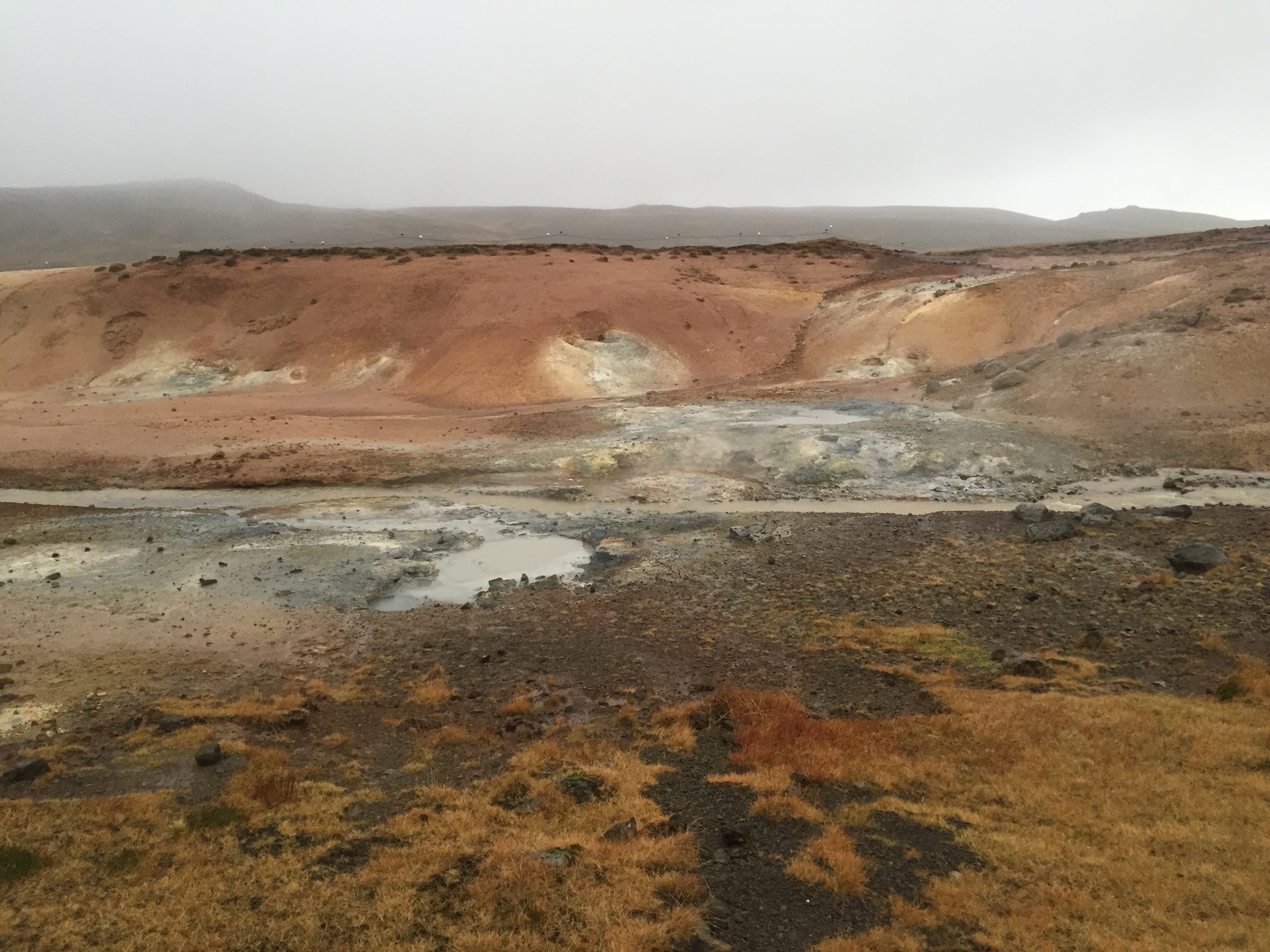
the natural geothermal area of Kyrsuvik

the natural geothermal area of Kyrsuvik

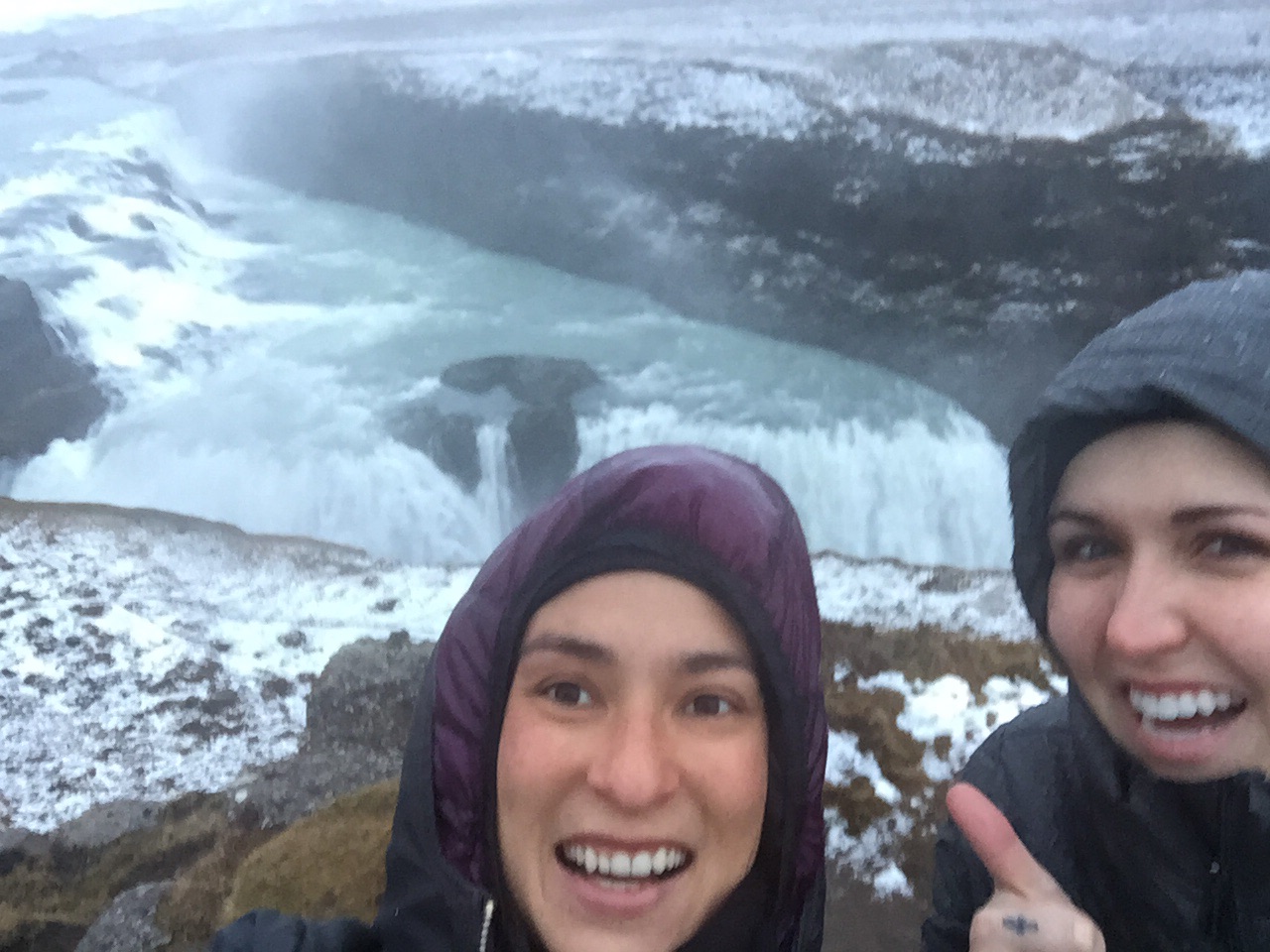
being a tourist at Gullfoss

being a tourist at Gullfoss

At the moment ‘home’ is Dad’s house, in the ‘countryside’ (this has a better ring to it in Icelandic). My bed is actually a couch there, but its my couch so I love sleeping on it. I missed drinking tap water, ice cold straight from the source, and showering in hot water that kind of smells like rotten eggs. But its okay because its smells like home.

I love bathing in open air, in an assortment of pools and hottubs, even the ice-cold sea, because there’s never a steam room or hot shower too far away. The wind on my wet skin and ice under my toes doesn’t even bother me after I’ve stayed long enough in the hottest hottub, and sometimes I purposely dip in the cold tub or sea just to remember how much more I love the heat.

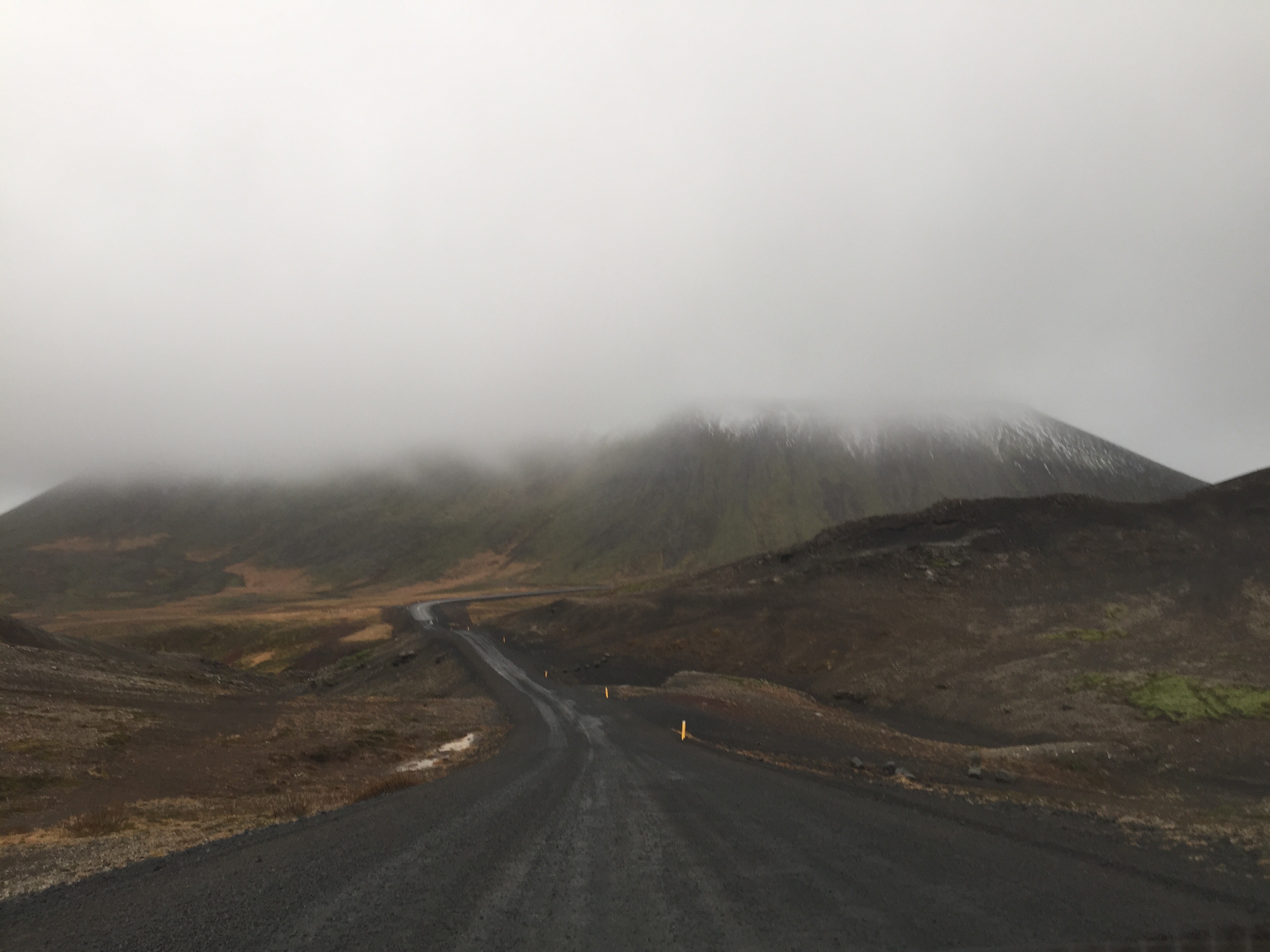
Iceland is still one of my favourite countries to travel, especially impromptu road trips

Iceland is still one of my favourite countries to travel, especially impromptu road trips

The sun doesn’t rise until after 11 am and sets around 3 pm… and the days have gotten shorter every day. Tomorrow will be the shortest day of the year, but I don’t mind, because that means every day after that until June 21 will be longer. Its cold, but not that cold, so I was happy to clean the snow off my car yesterday for the first time – it might mean that we’ll have a white Christmas, even though every day last week was warmer than in London, New York or Vancouver.

some random, friendly horses

some random, friendly horses

I’ve been home nearly a week now, and the only thing I’m still missing are the Northern Lights and my horses. Both are within reach, so I don’t feel homesick anymore, but it’s amazing how you can’t get enough of home even when you’re finally home. Oh home, sweet home.

Pakistan – land of the pure and mixed up

I´ve always wondered what the -stan suffix means. It´s in the names of may central Asian countries, and I always assumed it means ´land´or ´area,´ but some argue it doesn´t refer to any geographical boundary. In Pakistan, someone told me it means ´race´ or ´nation,´ and ´Pak´ means ´pure,´ so I’m currently visiting the land of the pure race. The ironic thing is that this place is completely mixed up, not only the people, but their language, culture, religion and look are far from homogenous.

Karachi at sunset

Karachi at sunset

I arrived in Pakistan, a country wedged between Iran, Afghanistan, China and India, and felt, literally, like I was in the middle of the middle. Where east meets the west, the middle east meets the Orient, Islam meets Hinduism, and a minority of ex-pats and local Christians thrown in the mix. You can dress in jeans and a tshirt, a colourful sari, local Pakistani dress (pants with a matching long shirt and shoulder scarf) or a black burka covering everything but your eyes – and either way you´d fit in. Karachi is a sprawling town of 20 million, and feels a little like Dubai growing on top of Delhi. American fast food chains and European coffee shops squeeze in among the local food shops and bustling street food markets, and like everywhere else in central Asia, banks sit on every corner.

local friends and one big ex-pat

local friends and one big ex-pat at the Jinnah Masoleum

I met a lot of bankers in Karachi. I couchsurfed with one, and met a dozen others, and realized I had fallen into a circle of privileged friends. Similar to in India or Nepal, there´s a social stratification system which ensures good education for some, less for others, and none for the unlucky few. Health, religious freedom, and economic stability are of course affected by this, but strangely enough, arranged marriages were still a problem. I met  woman who´s in love with a man engaged to his cousin since birth, and another who took years to finally divorce her ex-husband (from an arranged marriage) and now lives without him or her 18 year old daughter.

Still, my Pakistani friends had their freedom – not conforming to the rules of Islam and indulging in the same things any corporate slave would do, we drove around in their new cars, rode horses on the beach, visited the few tourist sights, drank sun-downers at the yacht club, shared beers at the British Embassy bar, and smoked cigars and cigarettes from their rooft-top patios. We ate home-cooked meals, fast-food-street-food, and dined at Karachi´s best restaurants. My couchsurfing host´s mother fed me breakfast and milk-tea every morning, and told me she loved me as her own daughter.

buses in Karachi are a piece of art

buses in Karachi are a piece of art

Being pure doesn´t mean the nation has to be similar – for me it meant a land of genuine people, a place where people made me feel welcome and they all took personal pride in being able to share their home with me. They were as friendly to guests and foreigners as they are to their own families, and if they could, they would have wanted to show me all of Pakistan first-hand. There were some unfortunate events that happened in Pakistan recently – a hotel fire and a fatal plane crash – but I can still say I felt very safe in Pakistan. Accidents happen everywhere, (as well as terrorism – but don’t indulge in any of the stereotypes you think you´ve heard about Pakistan) so I hope this doesn’t hurt Pakistan´s chance of receiving more travelers and them enjoying the same kind of hospitality extended to me. I´ve already promised to go back, and made plans to see the north with a local friend and backpack thru the countryside with another couchsurfer. I plan on keeping that promise very soon.

Escape to Nepal

I wasn’t planning on going to Nepal before Pakistan, since Pakistan is right beside Afghanistan, but the overroad routes between the two were unsafe and my fake husband Michael from Germany couldn’t get a visa. For whatever random reason, Icelanders don’t need a visa to Pakistan (which was a problem in itself, since every hotel and customs guy asked for my visa and I nearly couldn’t leave the country). But yeah, visa-free entry, not visa on arrival, for me and not German Michael. So, in Kabul, when it was time to leave Afghanistan, we had to go to the airport and find a way out by air.

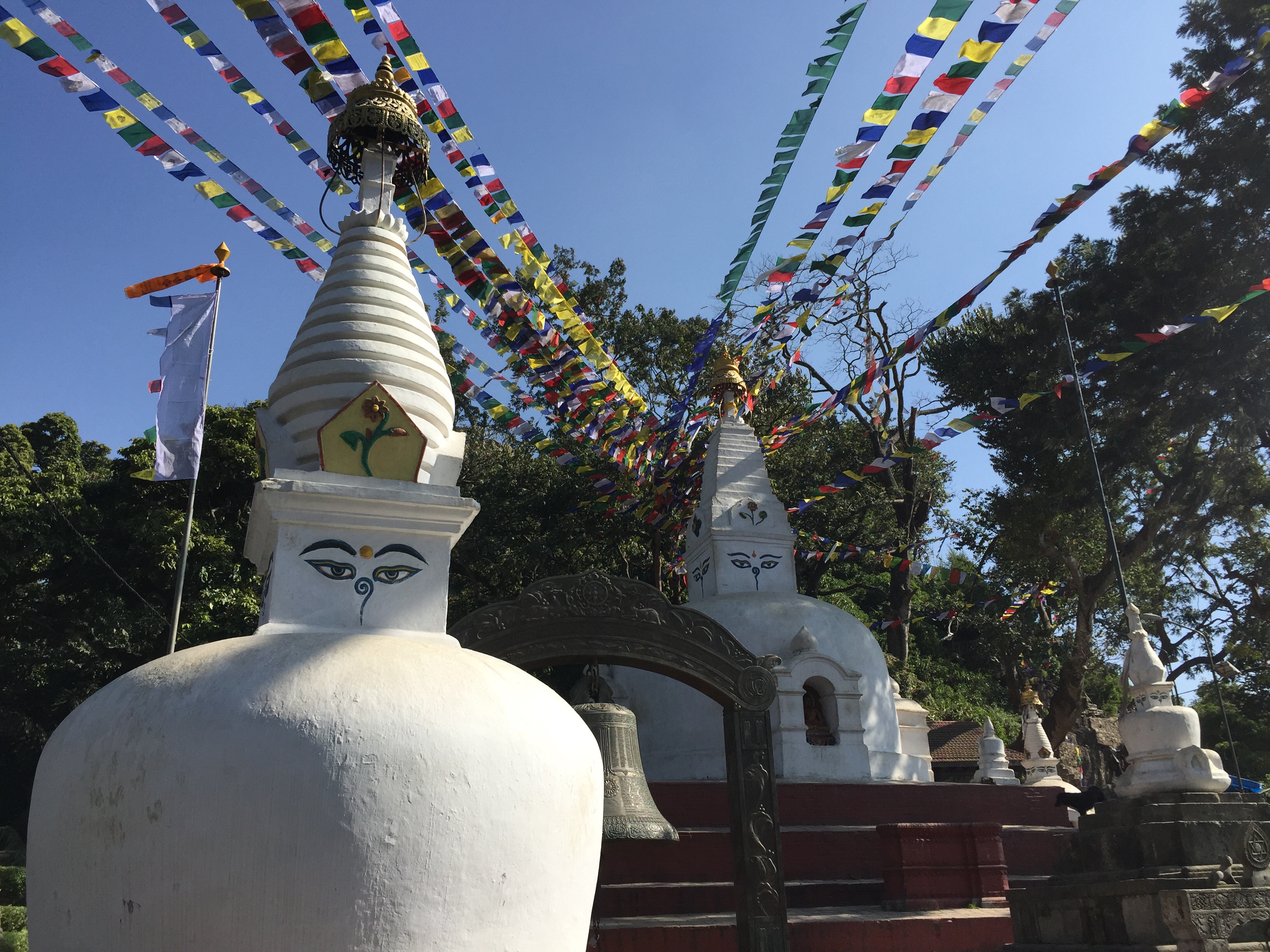
lots of stupas and prayer flags in Kathmandu

lots of stupas and prayer flags in Kathmandu

We had preemptivley booked the cheapest flight to New Delhi but missed it after our flight from Bamyan was delayed. So we bought another, much more expensive flight at the airport, to New Delhi, and instead of stopping there went onwards to Kathmandu because… well, why not, we had both never been there (and its hard to breathe in New Delhi). The trip was last minute and very unplanned, but after more than a month in Iran and Afghanistan, it was a breath of fresh air to arrive in a country where I didn’t have to be covered, and alcohol and pork were legally sold.

Boudhanath stupa

Boudhanath stupa

Kathmandu was smaller than I expected, but not as crowded as I feared. Its squashed between China (slash Tibet) and India and the mixture of Buddhist and Hindu religions all nestled under the Himalayas, making the most beautiful backdrop for a cultural mixture of faces and features.

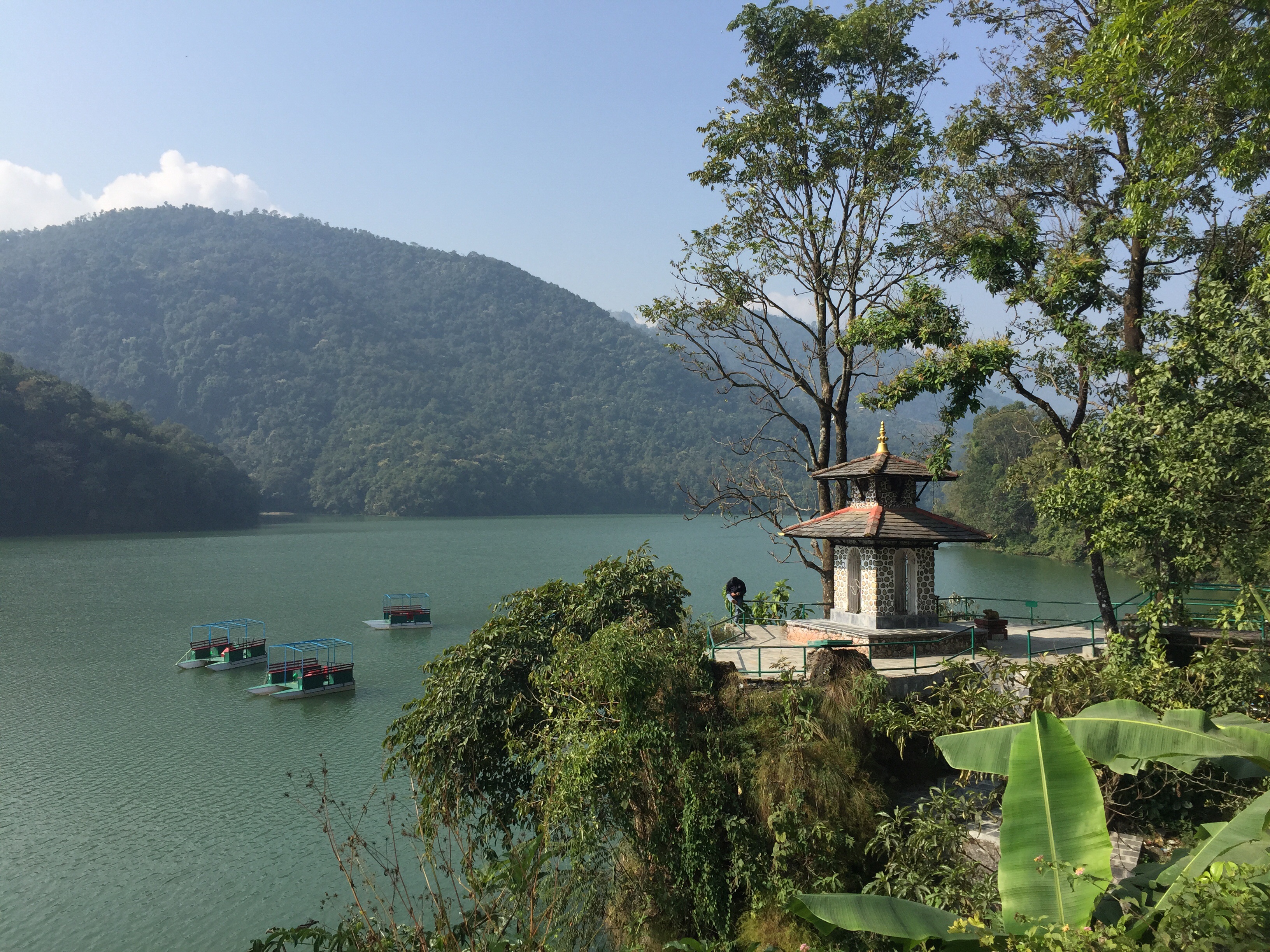
Phewa Lake in Pokhara

Phewa Lake in Pokhara

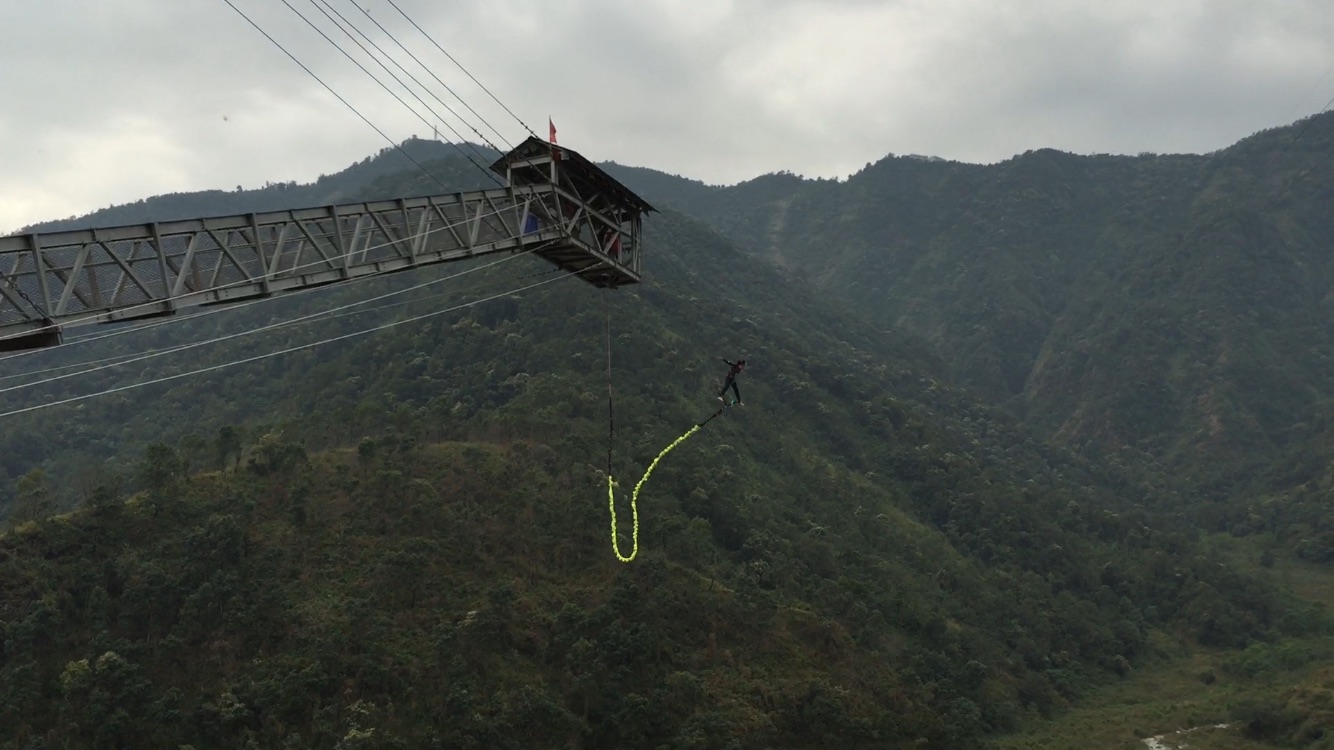
I felt as if I had escaped to a colourful place, full of freedom and spiritual enlightenment. In Pokhara, I took a 2 day course of yoga and meditation, and in Kathmandu, I managed to socialize in cafes and public places as a solo woman. Strangely enough both of those things were equally enlightening. I also jumped off a bridge 70m down to a woman herding her livestock home, but luckily the bungee line bounced me back up.

bungee jumping

bungee jumping

Nepal is a place to travel to for more than just an unplanned week. And escaping to Nepal in my tshirt and skirt after a month covered from head to toe in black clothes was a form of travel therapy. But a week in Nepal is better than no time in Nepal, and I sent Michael on his way to Germany and had to go back west to Pakistan. The road can get tiring sometimes, but the best thing about traveling is change. And Nepal was a pleasant break from the Silk Road.

Impressions of Afghanistan

Our first couchsurfing host was a 21 year old married man, living with his mother, wife, son, brother, 3 sisters, step-father, and some other cousins and extended family. One day we accompanied his older sister to school, where 650 of the 1000 enrolled students were female. Girls and boys only mix in the kindergarten classrooms, and the rest of the school day is split up – girls in the morning, boys in the afternoon. We met with the principal and the English teacher who acted as a translator. We learned that the school had been open (for girls) for the last 20 years, which includes a time under Taliban rule when they weren’t allowed to go to school. During those times, they taught the girls within an unmarked compound, and had a back door they’d let the girls run out of if any police came.

Band-i-amir in the north of Afghanistan

Band-i-amir in the north of Afghanistan

The English teacher talked a lot, and told us everything. He even asked me to help him find money or a wife, because currently he’s found a wife (his cousin) but his father says he can’t afford her at the moment. This happened more than once, also in Iran, that people looked at a visiting foreigner as a way out. The major difference is that in Iran, the government imposes most of the restrictions, and in Afghanistan, family is the most important rule-enforcement.

Here, wives are often chosen by the father, or given to a man by her father, in some cases as young as 13 or 14 years old. They’re not given away for free – a hefty price, in the thousands of dollars, is paid, and in Kabul, weddings are a big big business. Weddings are attended by thousands of guests, sometimes 4,000, and cost tens of thousands of dollars. In very small, traditional villages of Afghanistan, some girls are also given to the enemy’s family as a way of resolving (often bloody) disputes. It would be tough to be wedded to your brother’s murderer and imagine ever having a happy family life of your own.

Every person we met in Afghanistan told us not to trust anyone. This was hard to do, especially since we were couchsurfing, and meeting and staying with a stranger, meeting all his strange friends, and had little options of making last-minute changes or not trusting the people around them. Our host in Kabul had his driver and cousins take us around, his butler feed us and lit our nightly shishas, and even took us to work one day (he works within a government ministry) and had one of their drivers take us home. We had recently learned that ministers are a huge target for kidnapping, and ministries for attacks, and that very morning there was a suicide bomb attack outside the Ministry of Defense, killing six and injuring dozens. On our way to the Ministry of Commerce, listening to the news of that mornings bombing, literally nothing changed, and people were only slightly inconvenienced from the increase in traffic due to a few road blocks around the explosion. I cant say people weren’t affected, but I saw this as a sign of their resilience. In your average European city, any suicide bomb would have caused a state of emergency, and no one would consider stepping outside or going to work.

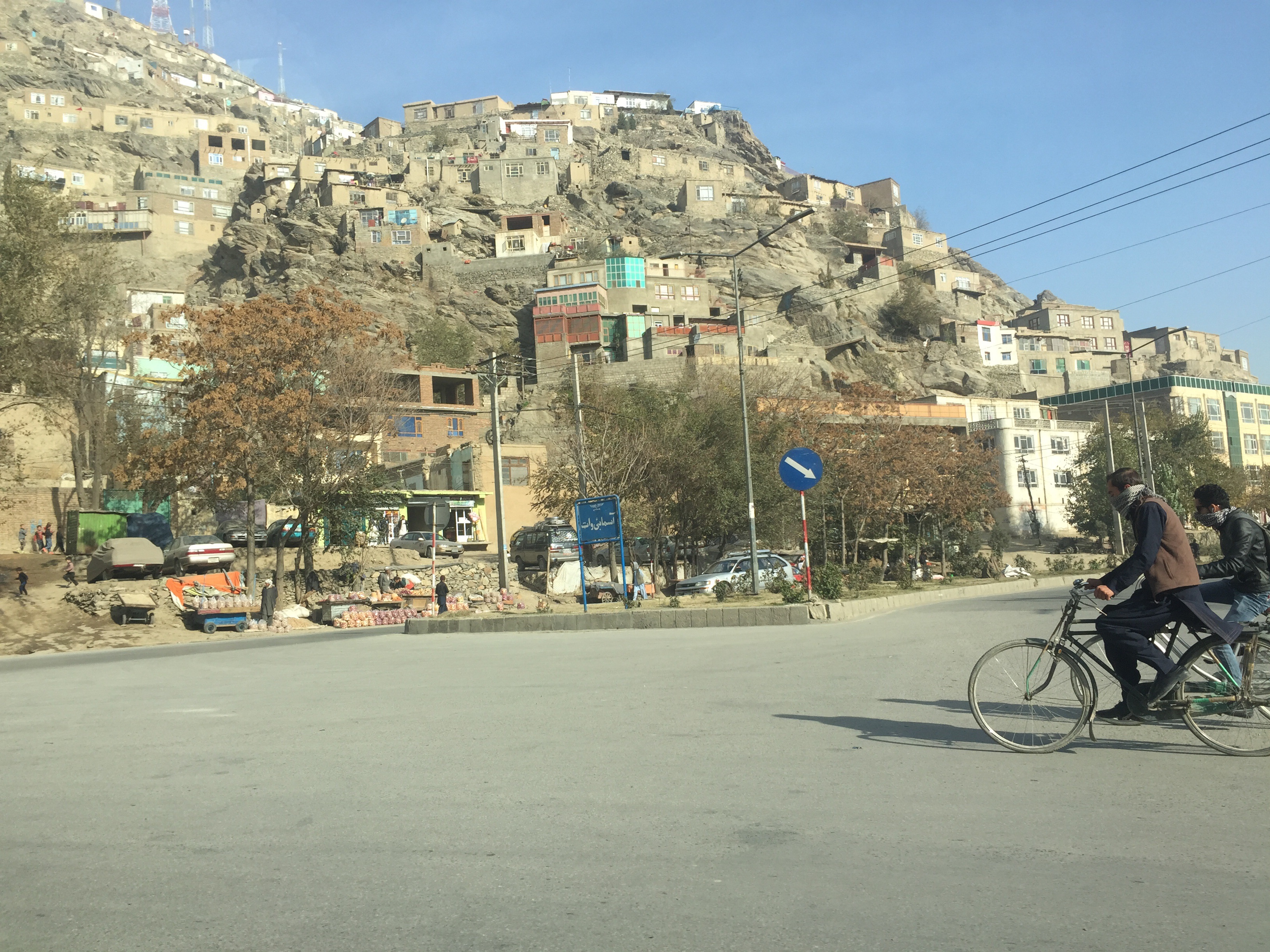
street scene from Kabul

street scene from Kabul

During the evenings at his home, we were surrounded by other ministers and important people in business and government, and one frozen yogurt franchiser. The first night we arrived to a yard of 14 men smoking shisha and playing badminton – at this moment I was very glad to be traveling with a fake husband. They all spoke perfect English, and had lived or studied abroad, and had many family members abroad. Still, some of them had left as refugees, and I cant believe their lives in Germany or elsewhere were any happier than in Kabul, especially since many of them had returned. Sometimes security is not as important as work and family, so they may be safer abroad but certainly not better off. They all agreed that the current safety crisis in Afghanistan is actually the reason why government officials and business men make multi-million dollar transactions; a state of peace would surely bring an economic crash. Can you imagine trading peace for money? Or job security?

Our host in Kabul explained it was dangerous to be in politics, work for (any) government, and all the international ex-pats or NGO’s or armies just make it more unstable. But without them, billions of dollars wouldn’t rush into the country every year. For him, the safest way to be was low profile. The same roads we had once driven in a bullet proof Land Cruiser with an armed guard, we would walk late at night, because of this reason. He felt safer walking in a hoodie in the dark than getting into a car where he was supposedly protected. During our night walks, it was always smoggy with a combination of fog, exhaust pollution, and the smoke of burning garbage. Seeing stars in Kabul was impossible, though the one I did see was a shooting star.

Bamyan from the top of Shahr-e Gholghola, or 'City of Screams'

Bamyan from the top of Shahr-e Gholghola, or ‘City of Screams’

Four foreigners were kidnapped the week before we go to Afghanistan. An ex-pat friend of mine living in Kabul told us not to worry too much about that – foreigners are usually stalked and specifically targeted after weeks of planning, so we were low-risk kidnap suspects. However, some instincts are hard to suppress, and once in Herat we walked into a tour agency office to ask for an ATM, and they told us sit down, they’ll make a call. We politely said no thanks, we’ll ask someone else, and got the hell out of there.

Wedding halls, malls, hotels and hospitals are some of the biggest businesses in Afghanistan. The biggest, brightest buildings were wedding halls, the grand casinos of Kabul, so to speak. The malls and hotels were hidden behind security checkpoint containers, walls and barbed wire, since they’re suicide bomb attack hotspots, and hospitals seem to run without making any difference except for the rich few. We visited one private hospital in Herat, and the 5 storey building had more doctors, technicians and administration than patients. The first hour of our visit there wasn’t a single patient to be seen, and the surgery room looked like it had never been used since the hospital was opened two and a half years ago. We met the hospitals CEO in his office, where an unplugged, unwrapped, printer sat on his desk. He told us Afghanistan is the only country in the world where polio is still present, few people can afford private care, and just the other day a woman’s child died after being delivered from a major tumor that could have been seen only weeks into pregnancy – if she’d gotten an ultrasound.

The Big Buddha's cave

The Big Buddha’s cave

We also traveled north to Bamiyan, a city only 2 or 3 hours away by road, but since its regularly checked by the Taliban, it was safer to fly. It costs $110 to fly 30 mins one way, but who can put a price on safety? Though we found out its probably more dangerous for the Hazare people, an indigenous group from the north of Afghanistan, to travel or be there. They’re characteristically more Asian featured, and having narrow eyes is seen as unlucky throughout Afghanistan. People believe if you paint black lines around a child’s eyes, it will make them open wider as they grow. I wonder if that’s been proven to work.

Being in Bamyan for a couple of days made the entire trip to Afghanistan worth it. We couchsurfed a construction site, with a man in his half-built home, and shared our meals with the construction workers, his son, and his daughter. We slept in a room heated by a coal stove, and there wasn’t any running water in the bathroom but we managed with our babywipes and one tap in the garden. Bamyan was a village in a valley, surrounded by caves dug out in cliffs from an ancient Buddhist civilization that once thrived there. In 2001 the Taliban tore down the 53 and 35 m budda statutes that had stood there for 1700 years, in an anti-islam purification effort, but their giant impressions still remain, hollowed out into the mountain, overlooking the peaceful village of Bamyan.

Planning a trip to Afghanistan

Traveling to Afghanistan has a lot of barriers, both mental and physical. Before going, you ask the inevitable question: is it safe? And everyone has a different answer or a different experience. Once you make a plan to go, you have to decide how to go – by road in almost any direction is risky. By air, you have to go thru multiple security checks just to enter the airport, and again before you enter the plane – to get in and out of Afghanistan. It’s hard to know what will happen even after you know how you’ll go.  Explaining to the Afghan consul in Tehran why I wanted to go as a tourist was as difficult for me to explain as it was for him to understand. So even after I finally had a plan and my visa, I still didn’t know if it would work out or be okay.

I made a plan to enter overland from Iran. I was going to couchsurf, but all I had was the names and numbers of people I had no idea where they lived, how they lived, or with who. So even though I kind of know where I was going, I didn’t have any idea how to get to the exact place. The border was fairly straightforward, but they never gave me a tourist registration card (which I found out later I needed to leave Afghanistan). I got to Afghanistan, and my host in Herat told me he doesn’t like living here because every time he leaves his home he’s not sure if he will come back home. Very reassuring…

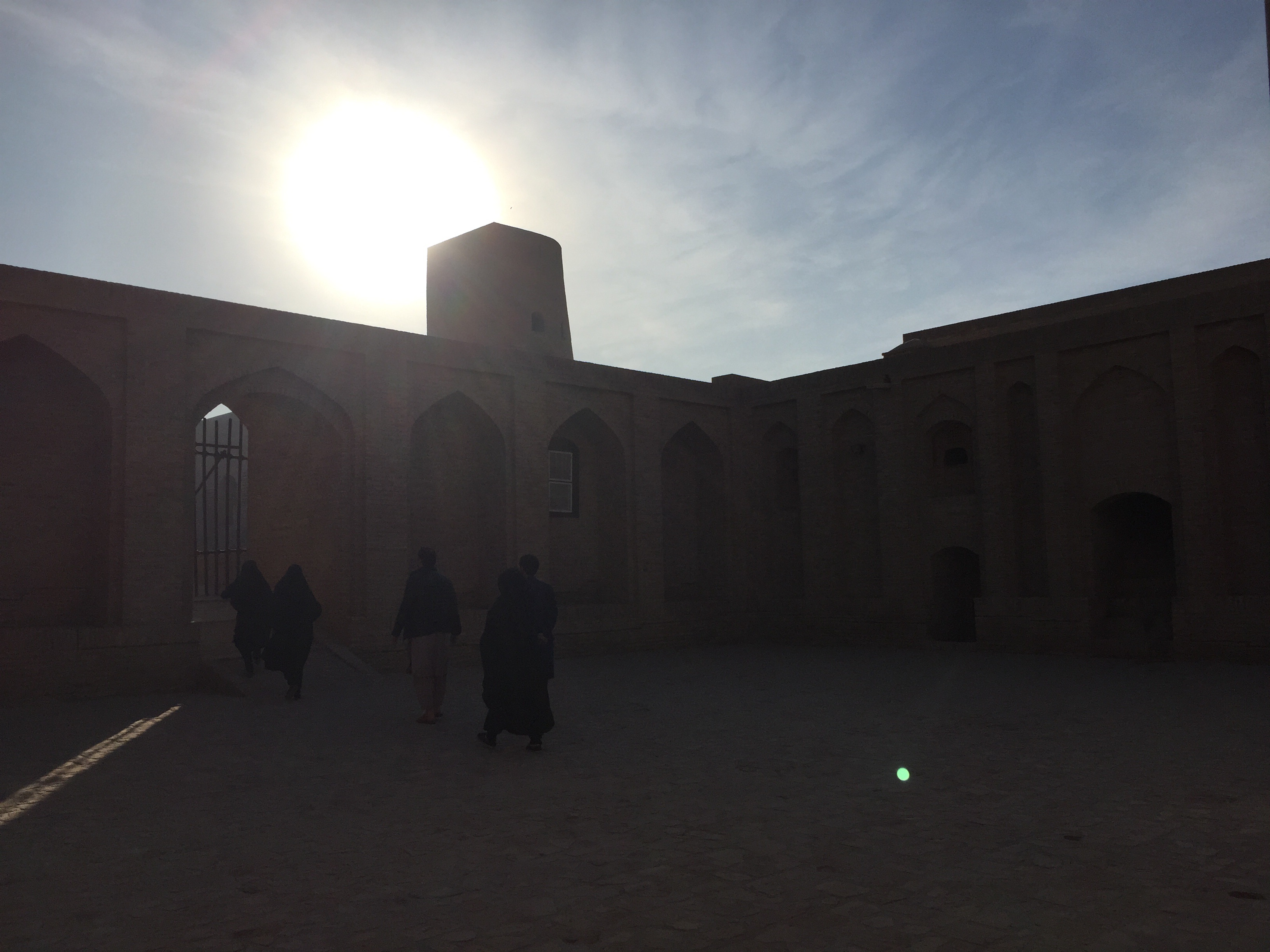
the Citadel in Herat is a major tourist attraction with no tourists

the Citadel in Herat is a major tourist attraction with no tourists

We did get home, all three days, and spent a lot of time with him at work in a cell phone shop, since walking around was always a little stressful. I noticed an immediate change in the people, they were more intimidating, but though the people were taller and dirtier, they were somehow more handsome. There were no visible signs of danger – only a few armed guards – but the strange looks on peoples’ faces who saw us never allowed us to relax.

I was traveling with a fake husband, Michael from Germany, mostly because its unusual for females to move without other members of their family or a husband. He wore traditional Afghan clothes, and I was covered in black, but the way we walked probably gave us away. But every day, after we returned within the safe walls of his family’s home, we were surrounded by 12 or 13 family members (almost all female), and taken care of with a kind of hospitality even my own family wouldn’t give me. But every kind person we met still advised us not to trust anyone, even the next kind person we met, so we hesitated to ever fully enjoy all our positive experiences.

Kabul from afar - a little more inviting than on the streets beside the walls and barbed wire

Kabul from afar – a little more inviting than on the streets beside the walls and barbed wire

Leaving Herat by plane, but only to Kabul, caused the KamAir flight attendant who greeted us on board to flash us a worried look, so after boarding was completed he decided to upgrade us to first class and we sat in the first row with a hot meal – but no champagne. We relaxed a little, but still couldn’t understand why Google maps said Kabul Airport was permanently closed even though we were sitting on a plane bound for it.

If you’re planning a trip to Afghanistan, do trust people, and enjoy Afghan hospitality. Get your visa, if you can, and enjoy being one of the only tourists there. Travel by plane if you can afford it, and Kabul International Airport is open and has many direct flights daily. Don’t try to check in less than 1 hour before departure because they will leave you behind. And take into consideration there are about 5 security checks or searches before you even enter the terminal. If you want to overland into Afghanistan, the road is apparently only safe between Mashhad and Herat, and also one or two roads to Tajikistan might be passable.

Getting a visa is tricky for some (a German backpacker was denied a few days after me in Tehran) and I had to take a blood test against HIV, Hep B and Hep C. I tested negative for all of the above, thankfully, so I got my visa. Other countries need a letter of support, and other countries (mostly in the west) simply don’t give tourist visas anymore. Read more about the visa application process at the Afghan Embassy in Tehran at the Caravanistan website.

Customs in Iran

Iran was what I expected it to be, in many ways, but I learned about some very strange customs. I always thought Iran was a safe, conservative society full of fairly well-off, educated people – atleast compared to the rest of central Asia. I learned about siga, a form of legal prostitution supported by the government. It’s a system where men can pay a woman to marry her, for 1 hour, 1 week, or even 1 year, and during this rental time, the man can have sex with her without her being called a prostitute or insulting the no-sex-before-marriage custom. For women that do this, or just any ordinary girl who may have lost her virginity to a boyfriend, she can buy her virginity back, through a surgical procedure that takes less than an hour, but has a woman bed-ridden for a week or more, and may take a month or more to recover from. This is probably more expensive than the rental wife, but I don’t know the figures.

Cheaper for women is to spend money on nose jobs, and I don’t know the statistics on that but a lot of women do it. A cheap surgery can be under $1000USD, and wearing the white bandage on your nose out in public during the healing process is like an honour badge, a proud mark of being able to buy a more beautiful nose.

The eyebrows are arguably the second most important facial feature. The natural uni-brow is embraced as a traditional kind of beauty, grown only by the lucky few in the history of Persia’s great empire. Women with detached eyebrows often paint them darker and thicker, sometimes in unnatural shapes or lengths that don’t really make sense to me. Also their lipstick often spills out of the natural boundaries, and then you’re left with a lot of women who have a brightly coloured mouth under their cosmetic noses and piercing eyebrows, all carefully framed by a scarf or hijab.

Food in Iran was amazing, but I was unlucky enough to have my two worst meals within the first 24 hours of being in Iran, and this was because they weren’t typical Iranian foods. My first lunch was a $3 Turkish doner, 95% comprised of an oversized loaf of bread, and %5 shaved meat, and since I’m avoiding gluten, I ate the few scraps of meat and decided to stay away from doners unless Im back in Europe. My first breakfast was a green tea latte (quite good) and a bagel with cream cheese – the bagel was dry, fluffy bread in the shape of a circle and the cream cheese was like those pie-shaped spreadable cheese you get at hotel breakfast buffets. After that I decided to stay away from any international foods and everything was fine, except for being unable to avoid the inevitable bread that follows all meals.

I saw a lot of beautiful mosques and shrines, from behind my hijab and mandatory chador

I saw a lot of beautiful mosques and shrines, from behind my hijab and mandatory chador

All the Iranian meals I ate had that home-cooked feeling, even in a restaurant, and the sauces, pickles, spices, herbs and tea that followed them were equally delicious. Bread is always served with breakfast, lunch and dinner, and the bread type varied from home to home and city to city. You are meant to eat with your hands, usually with a piece of bread in it, or else you’re only offered a spoon and/or a fork. Knives were not part of the dining experience, even if you had a lamb shoulder or steak kebab.

Most meals were followed by an offer of fruit for desert, and now was the time for mandarins, pomegranates and apples. Strangely enough the fruits were always served on a plate with a knife, and I’ve rarely eaten fruit so often or formally.

Iranians have a word in Farsi called ‘ta-arof,’ and it refers to the kind of hospitality they offer that you cannot refuse – they insist until you either admit you’d appreciate it, or just take whatever it is to avoid the argument. When offered fruit, you’re directed ‘Eat pomegranate.’ Noone asks or cares if you want it, just eat it. If you refuse taarof, its an insult. If it is a question, like “what table would you like?” or “would you like to sit?”, then your answer is barely heard, since your host quickly refutes “no, this table is better” or “please sit here its more comfortable for you.”

Another unbreakable custom was some men’s insistence on not smiling in photos. “Real men don’t smile” I was told, and everyone kept their stone face in my selfies. I also couldn’t understand their strict rules on public behavior – unmarried or unrelated males and females cannot walk in the street together, even if they’re a meter apart on the sidewalk, but on my overnight train to Mashad I shared a 4 person sleeper cabin with 1 woman and 2 men. I could not sit on the back of my friends motorcycle and move thru traffic, but I could get into his car and drive away to anywhere we pleased. I rode one overnight bus as well, and it was the most luxurious bus I’ve ever seen. They call them VIP buses, and a single, reclining leather couch seat was on the left, and basically a loveseat sofa on the right, complete with armrests and a steward that served us snacks and tea.

Traveling times and daily routines were always a little surprising. Overnight trains and buses began in the afternoon, before sunset, and would usually arrive at their destination in the wee hours of the morning before sunrise, just in time for the first prayers of the day. The work week is Saturday to Wednesday, and staying awake til 2 am on a work day was normal, and waking up at 4 am on the weekend was also not unheard of. It’s the year 1395, and none of the months or days of the week are familiar.

I couchsurfed my whole time in Iran, so I often followed my hosts schedule or sleeping patterns. Sometimes I could nap or sleep earlier, but I enjoyed being awake from sunrise to sunset. There isn’t much to do in the evenings, since nightclubs are illegal, although Iranians are crazy about going to parks at night. The conversations I had with my couchsurf hosts were often the same, about my country, my family, my work, and my impressions of Iran. They talked to me about the same, but usually focused more on how they could get to my country, or a wife from outside, or a job in Europe, and shared their less-than-glamorous opinions of Iran. Everyone seemed to want a way out, to get any chance of escaping to the outside world, and had little hesitations about leaving Iran and never coming back. If they didn’t have the vocabulary to explain these feelings, they were still happy to use me as a means of practicing English, and then came more questions about me, my age, and my future plans for marriage and children – since every woman must have those plans.

In many ways, Iranian culture wasn’t so different from western cultures, and my first host in Tehran told me that women basically could act and do the same things we do at home. But after a few weeks of traveling alone in Iran, I realized the few things that do differentiate us are based on really strict, important customs, so it was better not to ask any questions and just conform.