Skiing in Andorra

fresh powder

fresh powder in Grandvalira

I used to snowboard a lot when I lived in Vancouver, and Whistler haunted me this New Years when I was there for one short day and unable to ski. Skiing in Europe is also great, especially the Alps in France or Switzerland, but Andorra was my pick this year, since it´s easy to get to (2.5 hrs from Barcelona airport by bus), its super cheap (especially compared to Ski resorts in France), and as of November 2015 these Pyrenees peaks cover the biggest skiable area in Southern Europe (210km). Andorra is also a new country for me, bringing the total up to 173.

skiing under clear skies

skiing under clear skies

I was traveling with my amazing chef friend Thrainn, who works hard and plays even harder, so the trip was a party from start to finish. We stayed at the beautiful Hotel and Spa Resort in Grau Roig, where we had ski in and ski out privileges and breakfast delivered to our room every morning. Our room looked out over the slopes, and housekeeping left us little fudge chocolates on our pillow every night. Unfortunately, we had to fight a small bout of food poisoning the first day, but after enough visits to the spa and rehydrating with mimosas, we were in tip top shape on a mountain freshly covered in powder.
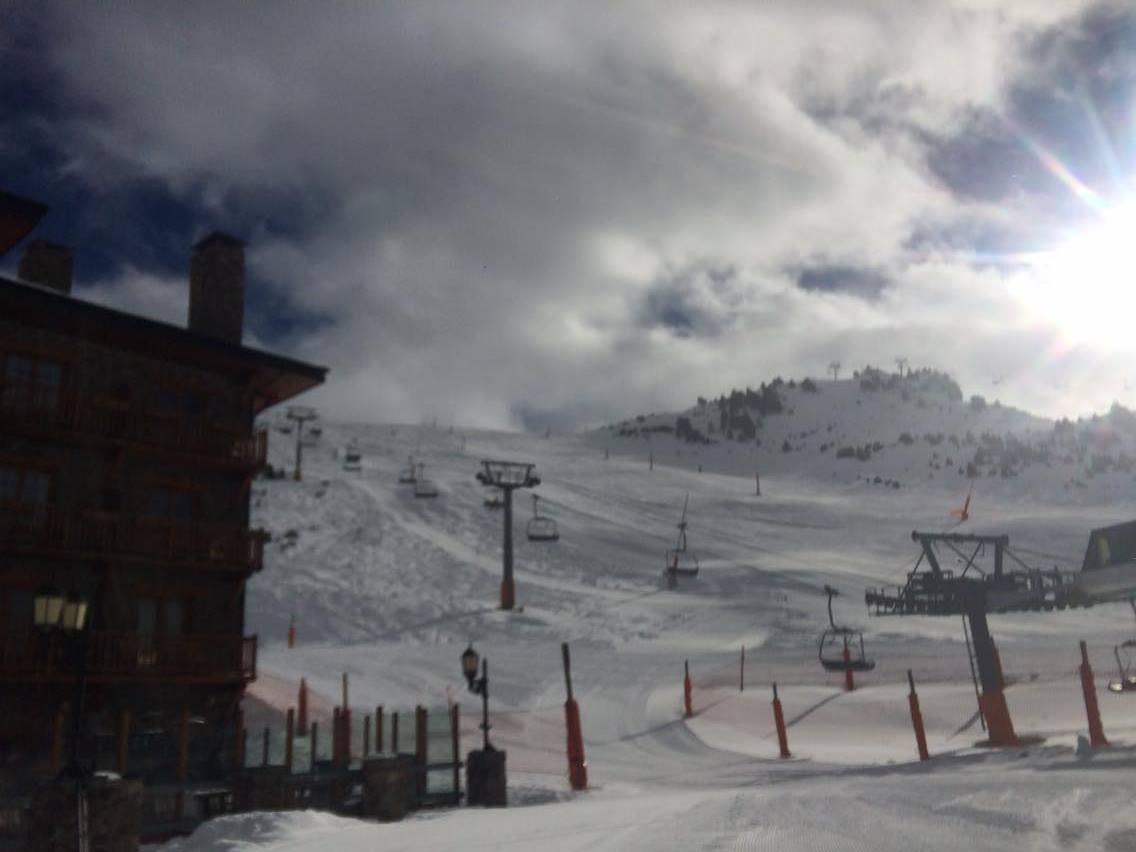
our hotel, Grau Roig

our hotel in Grau Roig

It snowed when we slept, so we spent our days under a bright blue sky working on our goggle tans. We played with his GoPro and my waterproof iphone case to take ridiculous photos in the snow, and managed not to injure ourselves in any way. Each day was a journey up and down the valleys, to the nearby villages of El Tarter, Soldeu, Encamp, Canillo or Pas de la Casa, and once we nearly didn´t make it back when a lift got stuck full of riders. And not making it back was a problem, since we discovered on our arrival day that no buses travel to Grau Roig and we had to walk 2 km through the darkness along a highway to check in. Thank God we didn´t run into any bears or wolves 😉
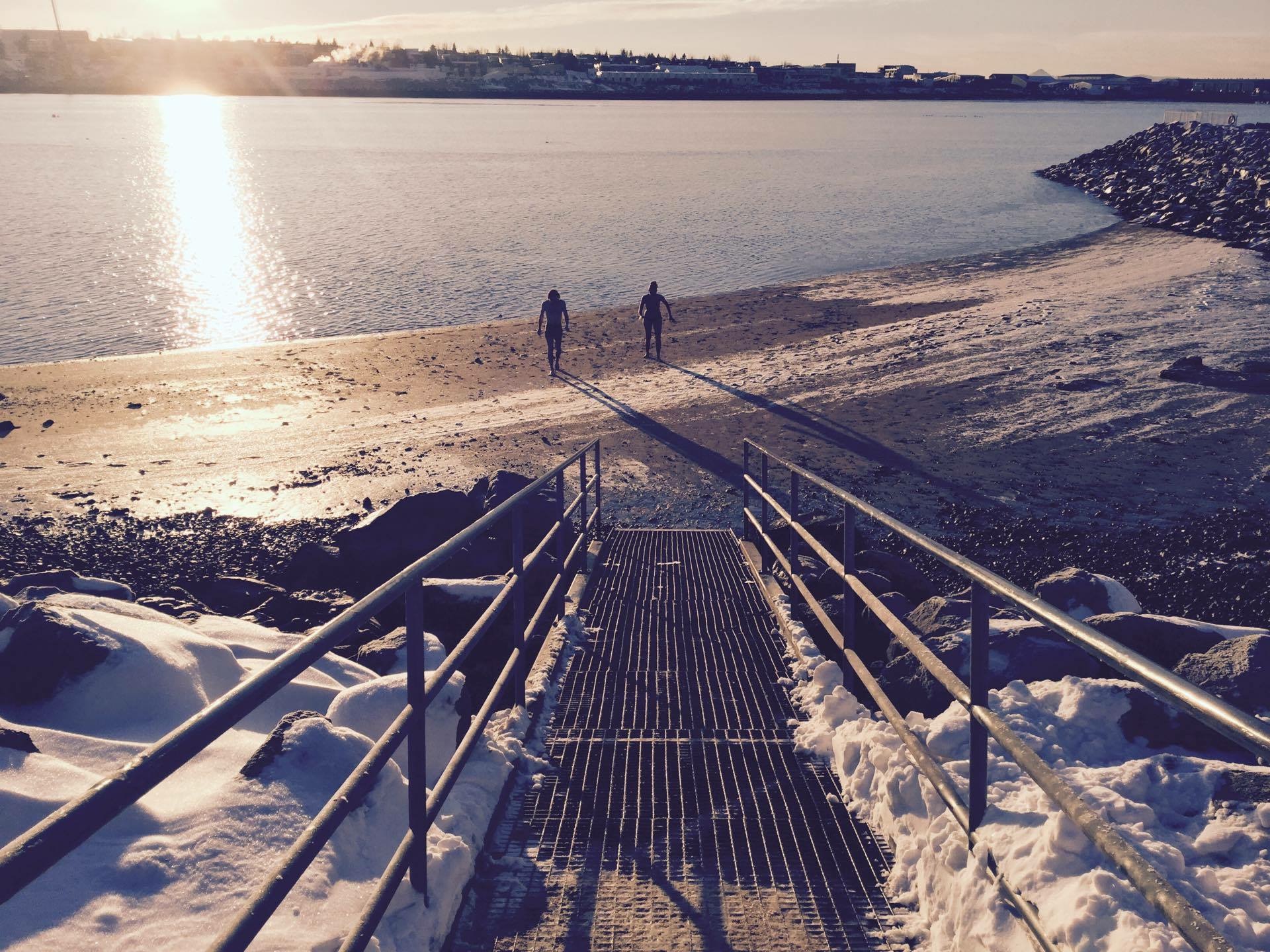
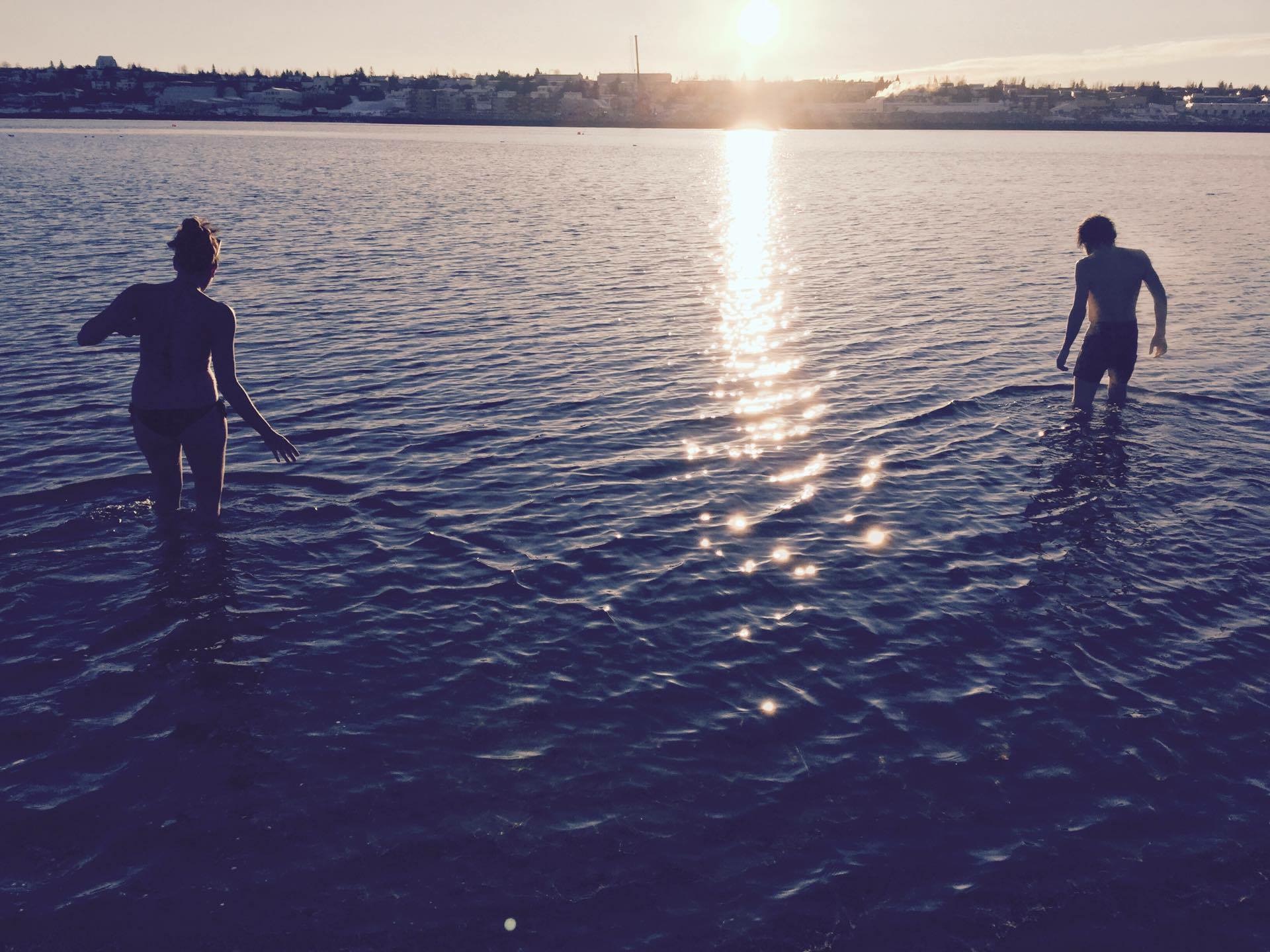
 

Photo Highlight: Polar Swim

I always love going to Nautholsvik whenever I'm in Reykjavik, no matter what time of year or no matter how cold it gets. This time it was -10°c.

I always love going to Nautholsvik whenever I’m in Reykjavik, no matter what time of year or no matter how cold it gets. This time it was -10°c.

A little dip in January in the freezing North Atlantic seemed like a good idea, until it came time to get in the water after walking barefoot and half naked across an icy beach

A little dip in January in the freezing North Atlantic seemed like a good idea, until it came time to get in the water after walking barefoot and half naked across an icy beach

Barbados, St. Vincent and the Grenadines

I went to Grenada in 2006, and could literally see the Grenadines, but somehow didn’t make it until this year. I went with my Guyanese mother, who traveled on her Canadian passport, and kept introducing me as her daughter from Iceland, yet I was traveling on my Guyanese passport… so everyone was a little confused, even us. Mom spoke with a West Indian accent, I spoke with a Canadian accent, but we knew everything about the roties and curries and pepper sauces so at least we were warmly accepted.

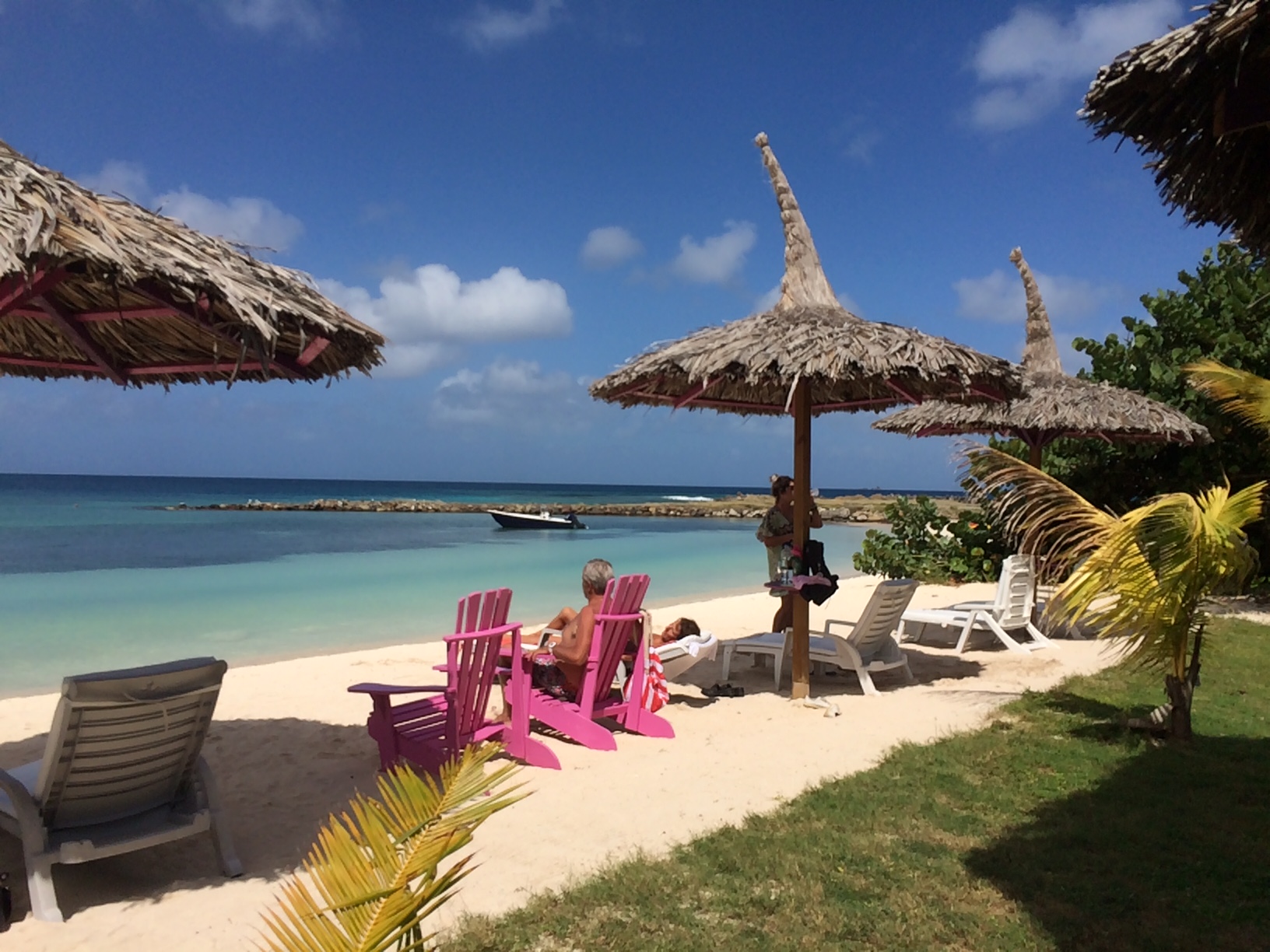
Sparrows beach on Union Island

Sparrows beach on Union Island

They have their own version of Africa’s TIA, and they call it ‘island time.’ You’d think it just refers to when things are late, but its also an excuse for things that never happen. As the ignorant westerner expecting things to run as they should, you hear alot of ‘don’t worry,’ ‘don’t stress youself’ or ‘everytings gonna be arite man.’ I wouldnt say I was ever in a rush, and I kind of embraced the island time livin,’ but it was a bit weird when we went to a Wine and Tapas restaurant that didn’t have wine or tapas… but they had rum punch, so everyting really was arite.

the only difficult decision is picking which palm tree to lay under.

the only difficult decision is picking which palm tree to lay under.

We were there a week, and island hopped from Barbados to St. Vincent in a plane, then ferried to Bequia and Union Island in the Grenadines. My so-called ‘uncle’ (its a term of respect for family friends but we’re not related) that I stayed with in Carriacou ten years ago had 27 children, and I though he was special, but I met a few other productive fathers. One guy, who I met on a rum-shop pub crawl, had nearly 20 brothers and sisters, and said he recently walked in on his father 95 years of age having sex. His mother had her last child at the age of 65, which isn’t impossible but still hard to believe.

At the northernmost part of Barbados

At the northernmost part of Barbados

St. Vincent makes an 85% rum called Sunset which could also be sold as lighter fluid or gasoline, which I discovered when our car ran out of gas on our rum shop tour. I ate conch curry for the first time, lots of amazing, fresh, sea food, and Guyanese rum and Cuban cigars were sold in nearly every corner store. Beaches and more beaches were the focus of our days, and fans and air-con the focus of our nights. I’ve always thought to be too cold is worse than being too hot, but there were definitely moments when I dreamed about being back in Whistler or Reykjavik in some fresh, frosty air, but now that I’ve left, I know those were just temporary brain lapses. Take me back to the sun please, even my skin is protesting from the lack of humidity.

Home for the Holidays

There’s no place like home, especially for the holidays, and even more so when you’ve got two places to call home. It sure was festive to be in the Holy land in the days leading up to Christmas, but arriving in Reykjavik on December 23rd to a white winter wonderland and -10°c couldn´t have felt better. The days were super short but the nights were lit up with Christmas lights, northern lights and starry skies. I stuffed my belly with traditional Icelandic Christmas food – my favourites being delicious smoked and boiled lamb leg and home-baked flat bread (´laufabrauð´ or leaf bread – try it!). Some other delicacies I avoided, like rotten sting ray (stay away from ´skata´), but of course i stuffed my face with Icelandic hot dogs, appelsin og malt (a mix of non-alcoholic malt and orange soda) and regular flatbread that´s best for breakfast with sliced lamb.

the brightest part of the day in Dad´s valley

the brightest part of the day in Dad´s valley

I flew to Seattle on Boxing day, where me and my best friend Mike celebrated by finishing half a dozen bottles of assorted whiskies in 2 nights. Then it was up to Vancouver to have a sister day and celebrating my older sister not getting married on December 29th (yes, it was a momentous occasion, the guy is a creep and doesn´t deserve even the small toe of Kristjana´s left foot). Grandma and mom have turned into very similar grumpy old women, but I guess it happens to most mothers when their kids don´t stick around to keep them young and cool or in the loop.

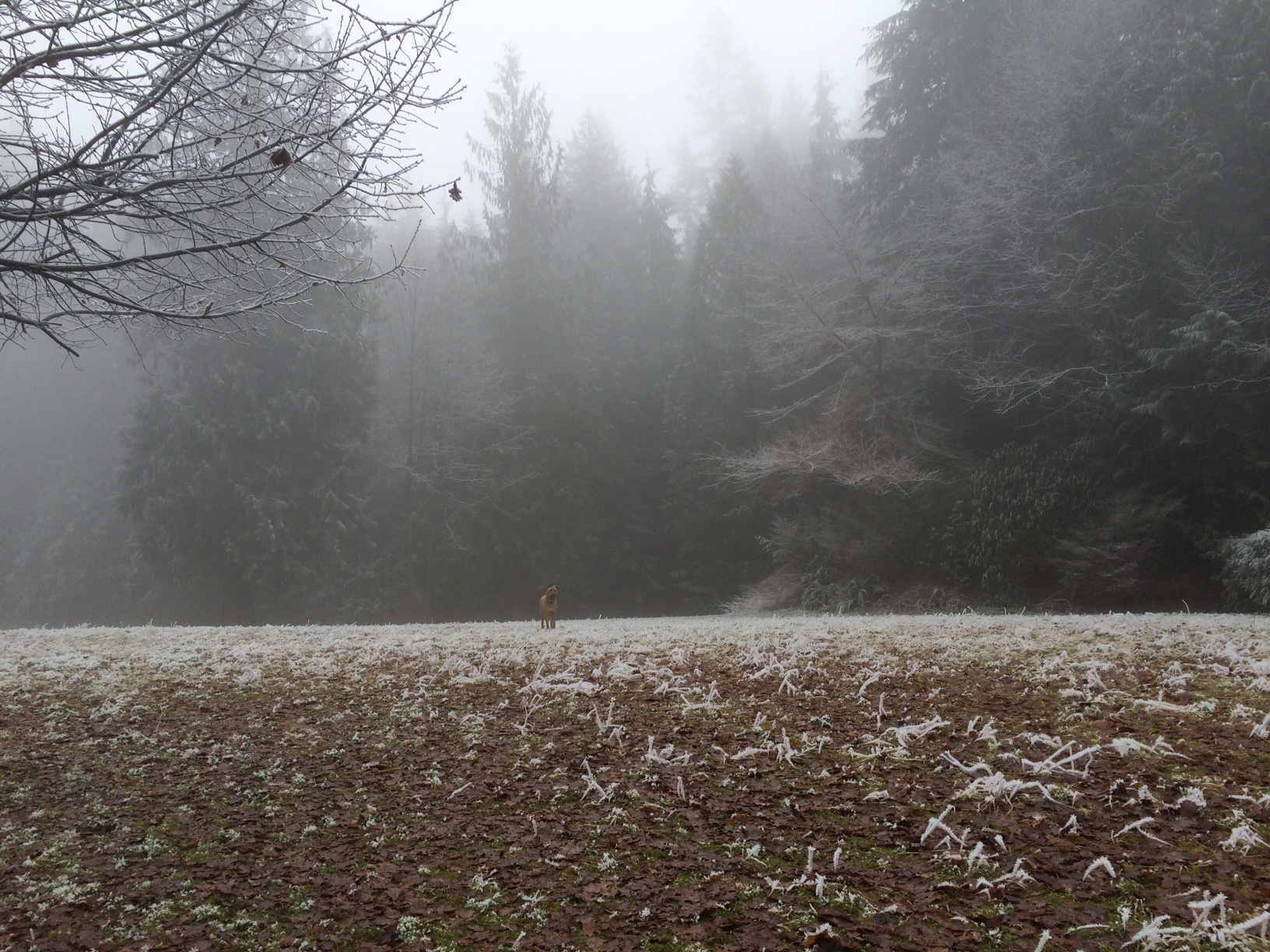
a friends dog at his cabin

a friends dog at his cabin

But anyway, this isn´t a food blog and my mouths watering, but I´ll emphasize again how refreshing, clean, crisp and amazing it was to have a really cold, wintery christmas, making the inside of any home or shop (and outdoor hottubs and public swimming pools too) feel ultra cozy and the festive feeling of evening last almost the whole day. I celebrated with Dad and his neighbour, where we mostly just exchanged chocolates as gifts, but I was thrilled to find some Christmas cards addressed to me in the mail box and small gifts from friends come popping up when they made appearances.

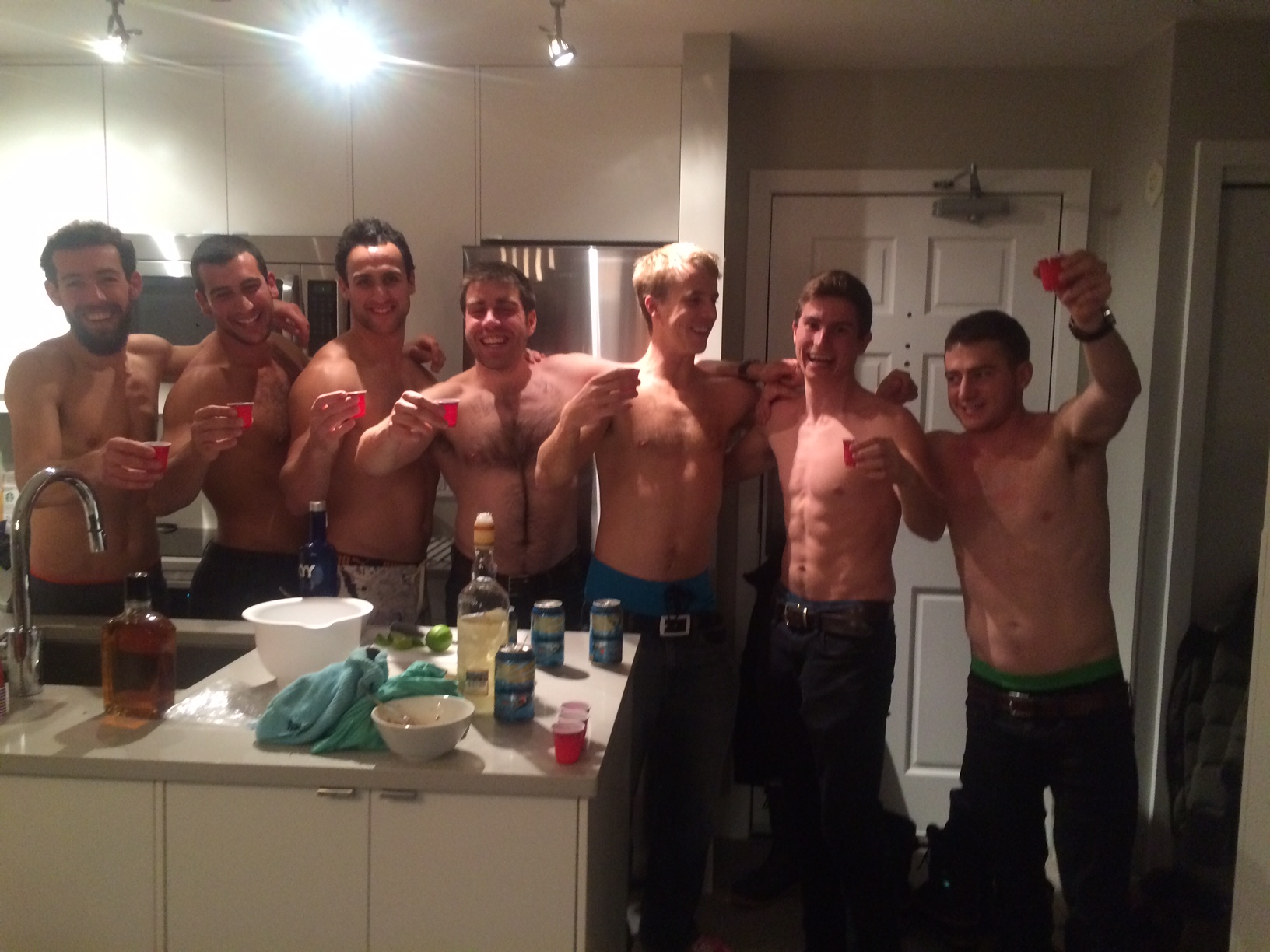
NYE crew keeping it cozy in Whistler

NYE crew keeping it cozy in Whistler

New Year´s was a real highlight, a reunion of UBC classmates in even snowier, cozier, whiter Whistler where we house partied like we were still freshmen. We lit firecrackers inside and outside of my friends cabin and drank way too many bad shots of bad tequila and gentleman´s jack, which makes a gentleman out of noone. My hangover lasted 2 days, which is a sign you´re getting old, but 3 days later I´m on a plane to the Caribbean to heal all wounds and work on my tan. A week of temperatures below zero is about all I can handle anyway.

Deserts and Jordan

Since Syria is kind of off-limits at the moment, I had to fly from Beirut to Amman. The plane took off west, over the Mediterranean, nearly over Cyprus, and then turned south, to fly over Israel and Palestine to land in Amman. The airport was pretty far from the city center, so I took a bus through rush-hour traffic to arrive in a cold, desert town 750m above sea level.

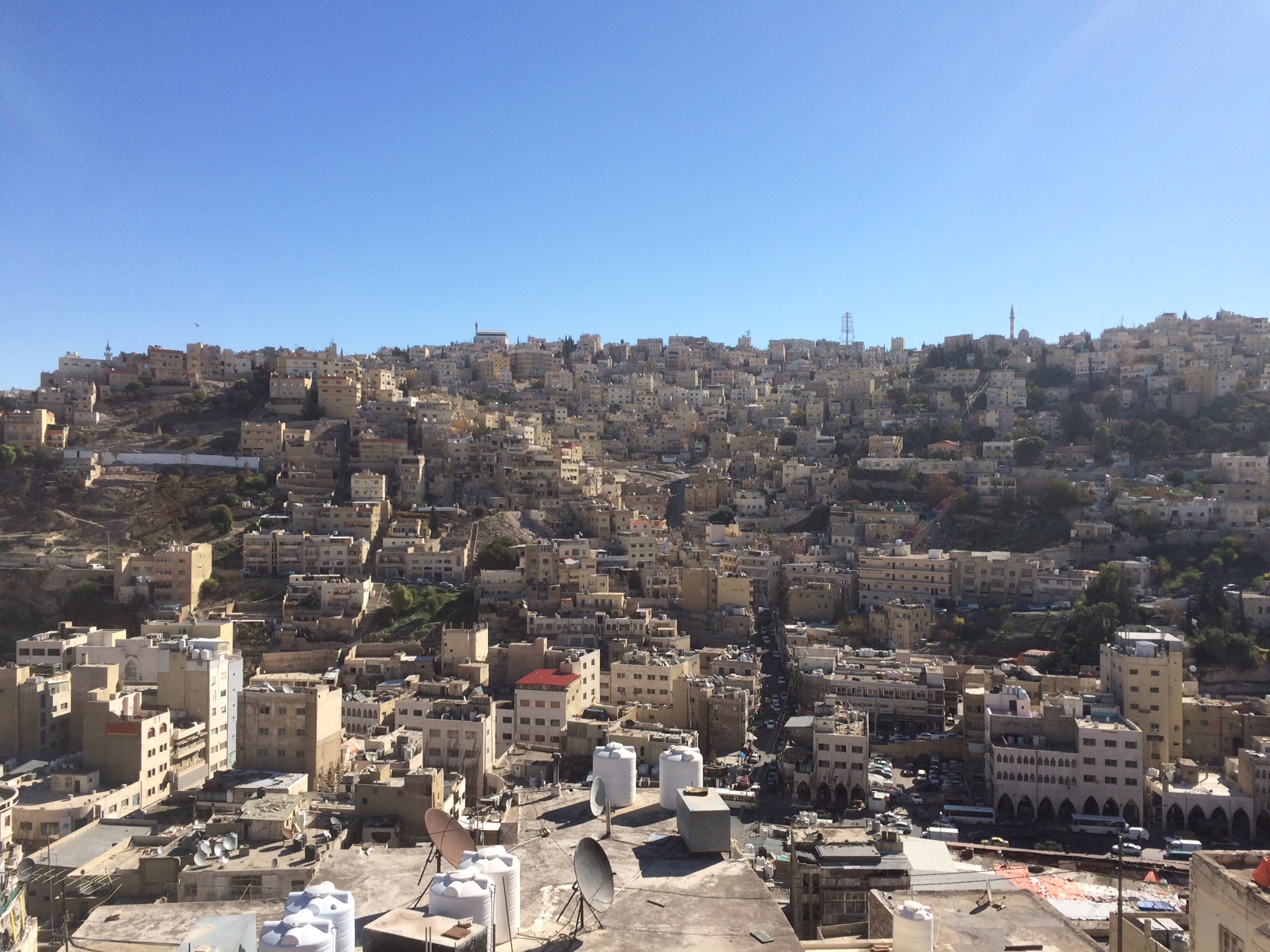
the view of Amman from the rooftop of the Rainbow house

the view of Amman from the rooftop of the Rainbow house

Amman looked like a typical middle eastern city, but it’s currently undergoing some kind of renaissance of creativity and liberalism. Artists from around the Arabic world are making a home of Amman, and international organizations like the Global Shapers community and the British Film society have active projects and participants in Jordan. I couchsurfed with a house of entrepreneurs and film-makers in a place called the Rainbow house, and nearby was a cafe/book shop popular with LGBT’s.

weightless in the Dead Sea

weightless in the Dead Sea

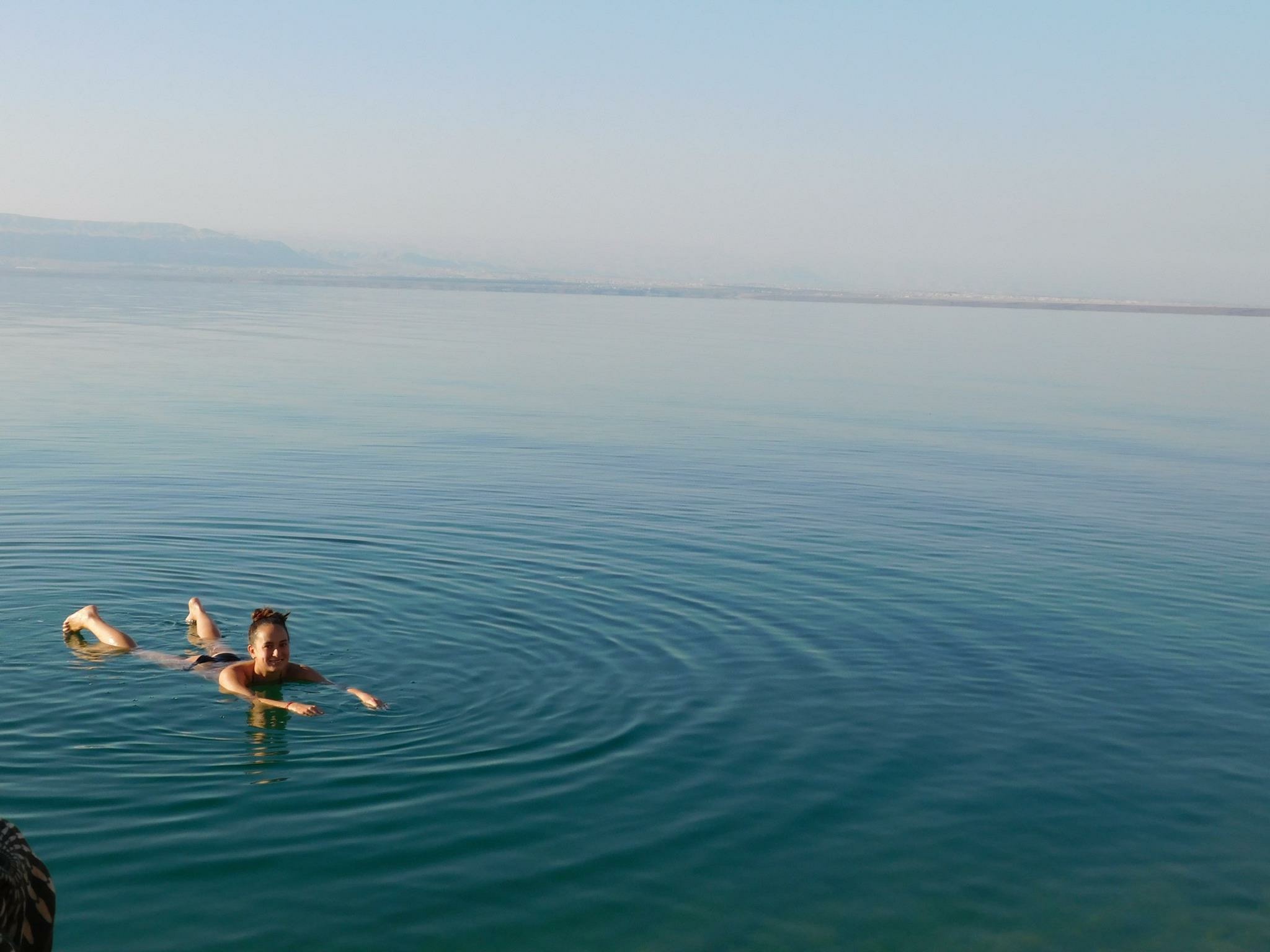
I tasted some Jordanian rum and wine and went tango dancing with a girl from Tunisia before taking a taxi to the Dead sea, more than 400m below sea level. There it was warm and sunny, and we floated around in our bikinis like inflatable toys in the slimy, salty blue water. We had to wait for a conservative Muslim Yemenite family to leave before we felt comfortable bearing so much skin, but it was all worth it when you could cover yourself in black dead-sea mud for a luxurious, spa-treatment feeling.

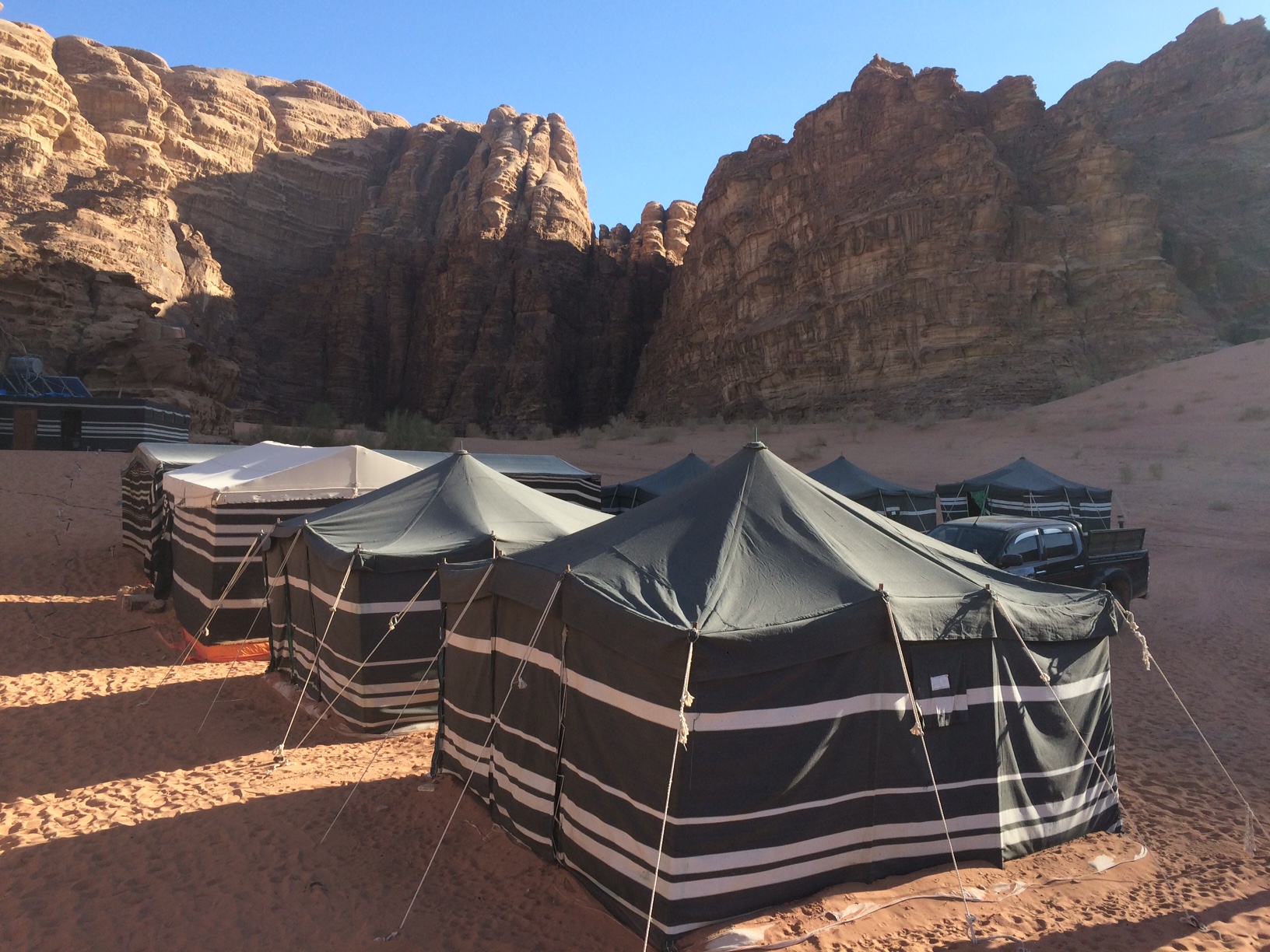
home base in the Wadi Rum desert

home base in the Wadi Rum desert

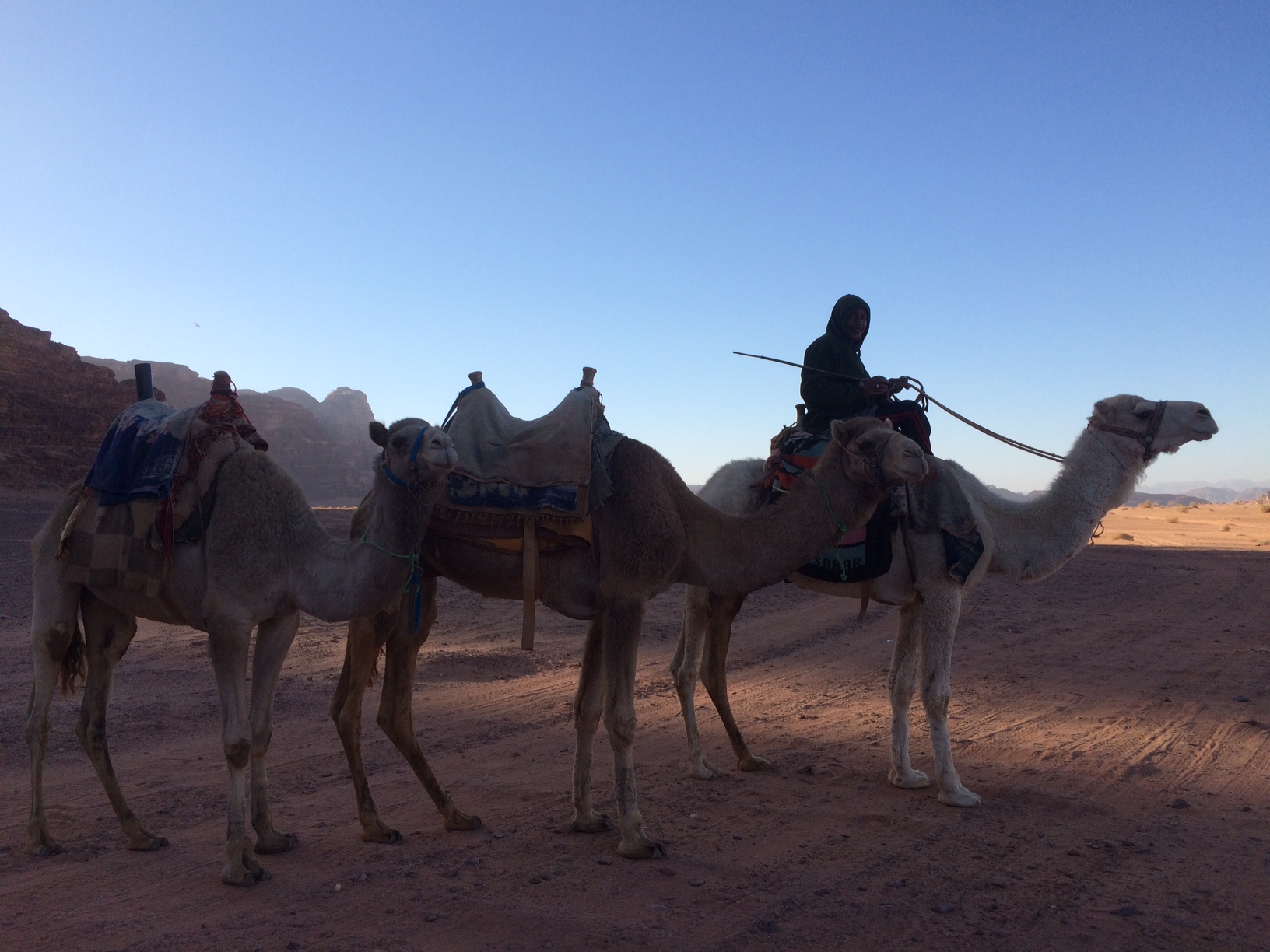
Everywhere I went, I was surrounded by mountains and deserts, but nothing I’ve ever seen can compare to Wadi Rum and Wadi Musa, the valley where the old city of Petra, carved into the mountains, sits. Wadi Rum is the valley of the moon, but sadly I was there the 3 days when the moon never rose, so instead we saw a sky full of so many stars it was even hard to pick out the Milky Way. We slept in 2 different Bedouin camps, both a collection of tents and campfires and 4×4 driving Bedouins who made our stay ultra-cozy. We ate food cooked in the ground while sitting together on the floor of the buffet tent, and took a jeep tour to visit Lawerence of Arabia’s stomping ground.

the main form of transport for Bedouins

the main form of transport for Bedouins

Petra was definitely the highlight, after hiking more than 10 km around an entire city of extravagant buildings carved into the mountains. We visited the Treasury and the Monastery, along with hundreds of other awe-struck tourists, and switched it up between camels, donkeys, horses and our own two feet to navigate the huge, ancient city. We were lucky enough to camp one night in one of those caves, along with some Bedouins and yet another camp fire, and hiking out of the valley through a little village the next day was just as spectacular as the first day, seeing even more caves and archaeological sites that no-one else walking through the Siq mainway sees.

Petra's many caves and stone-carved facades

Petra’s many caves and stone-carved facades

I left Jordan through the little Red Sea port town of Aqaba, a place where you can see 4 countries at once – Saudi Arabia, Jordan, Israel and Jordan. I had seen Palestine on the other side of the Dead Sea, so after crossing into Elat in Israel and being questioned for 2 and a half hours about my travel history and intentions, it was finally time to explore some more of the Holy Land in the West Bank.

Falling in love with Lebanese Hospitality

There are 4 million people in Lebanon, and more than 10 million Lebanese abroad, and I had met many on my trips in West Africa, Brazil, and the Balkans. They are beautiful, educated, worldly people, and most everyone speaks Arabic, English and French fluently, switching between them without hesitation.

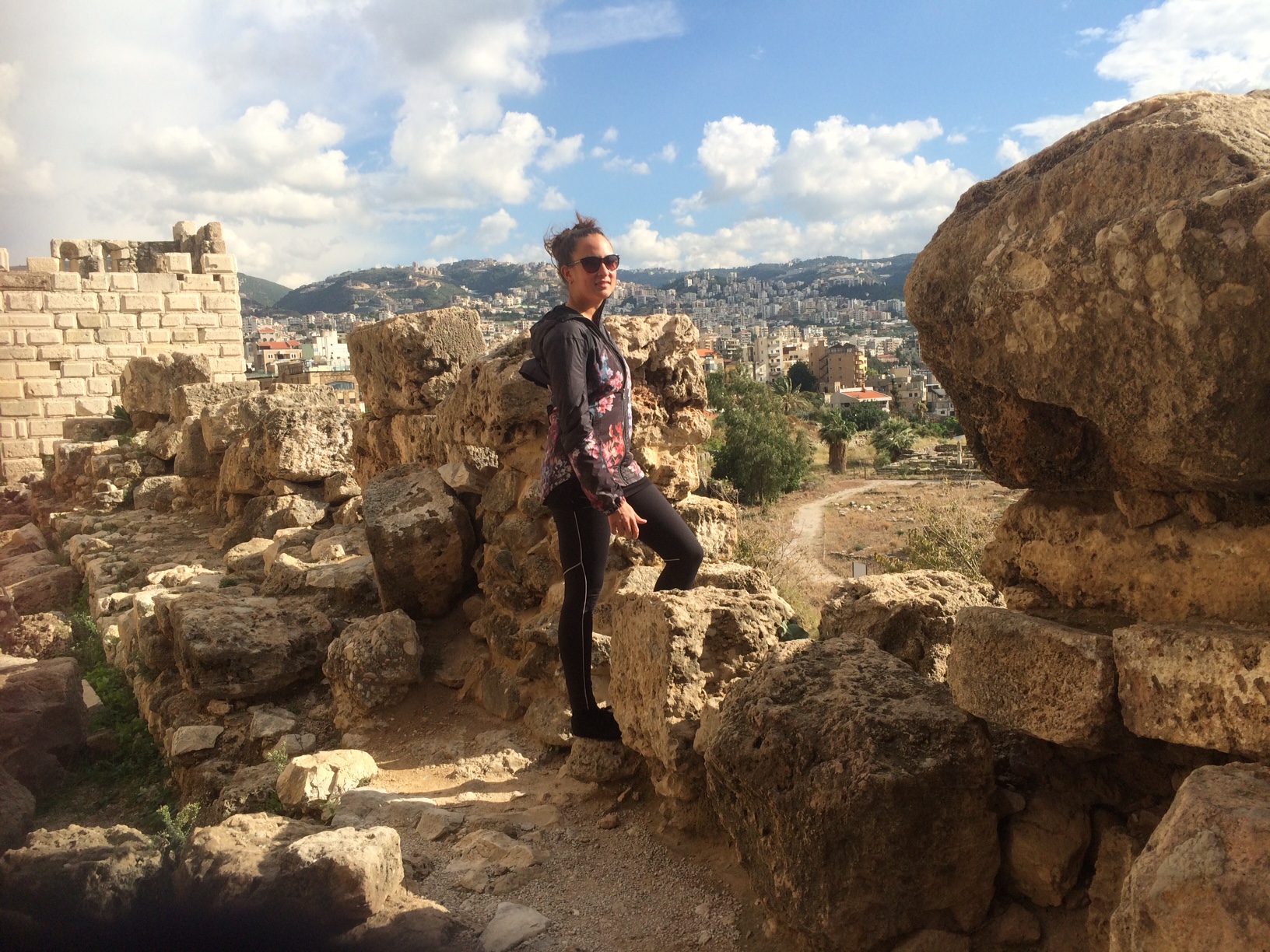
on top of Byblos' citadel

on top of Byblos’ citadel

My favourite guy was Assaad, who I met in Accra 2 years ago, but he was still in Ghana when I arrived in Beirut. But his mother Randa was in town, who I had also met in Ghana, and she took me in like a daughter. I spent 2 days with her, and we were more productive in these two days than the other 6 I spent in Lebanon. Randa took me from Beirut to Byblos, a town famous for its long history, old citadel, and beautiful Christmas Decorations. We drove through the churches of Batroun and nearly drove her car into the walls of the narrow old city, and then returned to Byblos to see the Christmas lights at night. We stayed at her beachhouse nearby, ate breakfast in Tripoli, and spent the next day preparing her home furniture and decoration store for opening day. Then we drove into Kadisha valley, passing the town where Assaad grew up, the home of Khalil Gibran in Bsharri, and finally the snow peaked mountains near the cedar forests. We ate lunch and took some hitchhikers back with us to town, and then went to the best hairdresser in Lebanon for a haircut and blowdry. All of these things being standard Lebanese fare.

at BO18

at BO18

Randa introduced me to her friend, a gorgeous and famous singer who took me to the infamous BO18 80’s nightclub with her gay best friend. She lent me clothes to fit in and the bar gave out fedora hats, so this plus my new stylish hair cut had me feeling better than ever. It also helped to have a gay guy to grind on all night, they’re always the best dance partners.

The first snow in Kadisha valley

The first snow in Kadisha valley

I couchsurfed the rest of my time with Ziad, who also treated me with inexplicable kindness. He slept on the couch, and I moved into the king sized bed in the master bedroom. His best friend, who fed us the best sandwiches in Beirut from his sandwich shop, also stayed with us, and I met many of his other friends on our outings for food, drinks, or partying (and there was SO. MUCH. GOOD. FOOD!). They smoked like chimneys and knew the lyrics to every old-school rap song I could think of, and noone ever let me pay for anything.

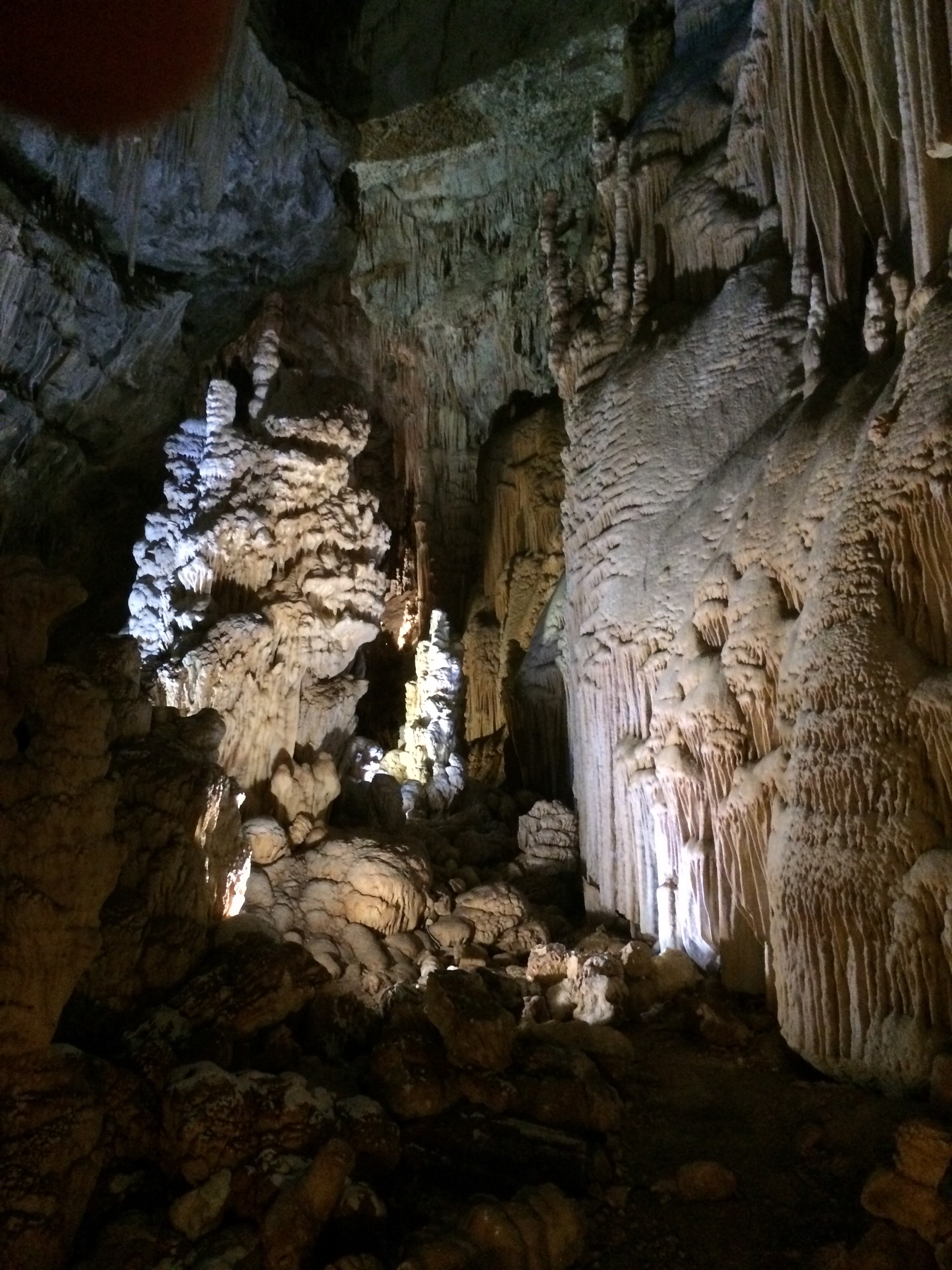
Jeita cave

Jeita cave

I spent maybe one day alone, being a proper paying tourist, to the Jeita caves. They were an underground marvel of stalagmites and stalactites, and parts of it I visited on a boat on the underground river. I wanted to take a bus back but wasn’t sure if there was one, so I asked the only bus parked in the parking lot if he was going to Beirut. He didn’t speak English, but the woman beside him spoke a few words of French and I understood that I could go with them. When I got on the bus, there were a few sleeping children and eventually the bus filled with women coming out of the caves. It was a family trip, a bus full of mothers, daughters, cousins and grandmas, and some of them bellydanced in the isles the entire 1 hour journey back to Beirut while one of the younger girls played a drum. I was fed bananas and chocolate and coffee and chips and I really didnt want to get off after they invited me to finish their family trip with them. But, all good things must come to an end, and I wasn’t ready to leave Lebanon either, but I took my flight to Jordan with a pang of sadness for all the hospitality I knew would have to wait for next time.

Transylvania to Transnistria

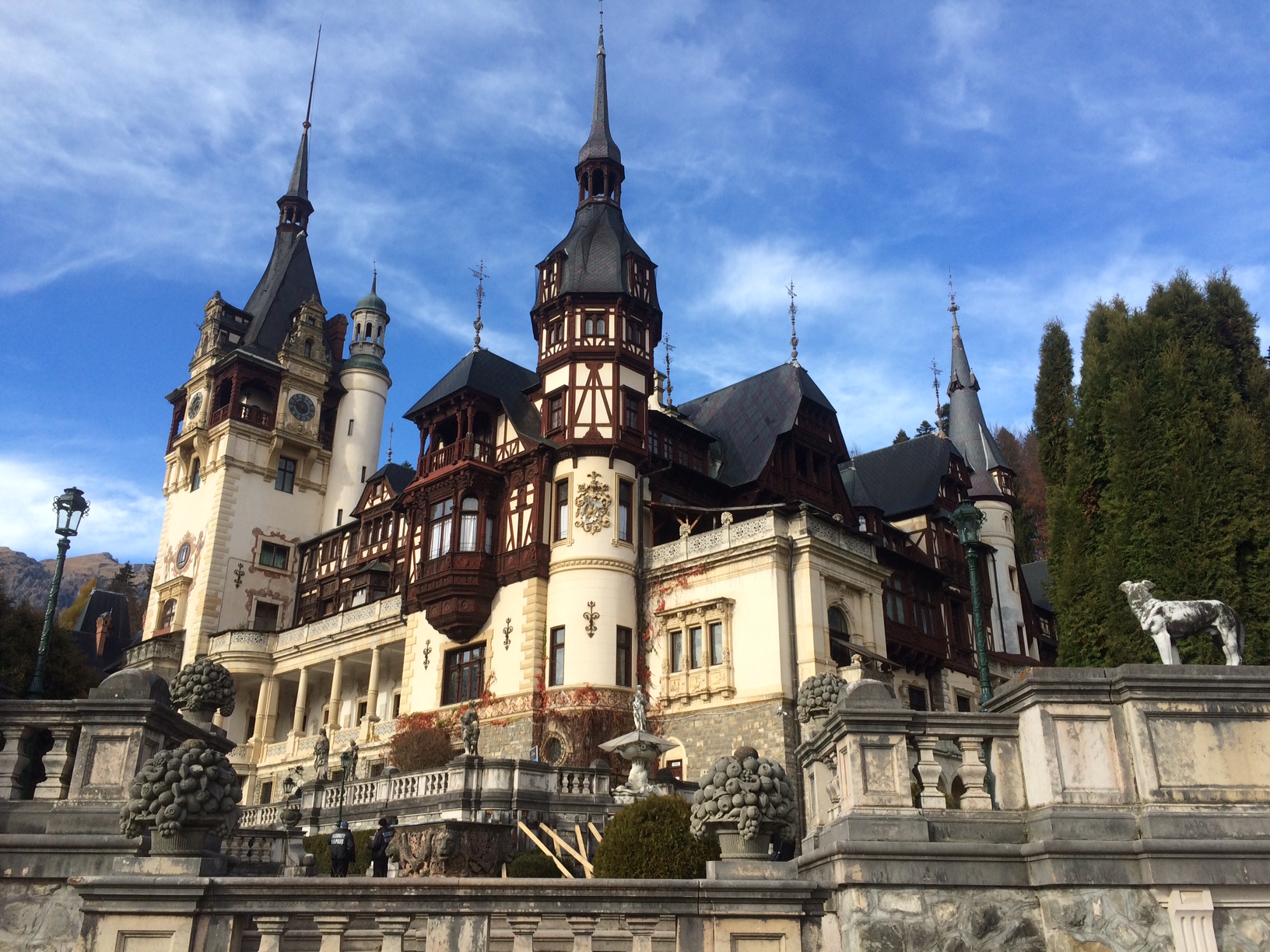
Peles Castle

Peles Castle

The little city of Ruse, Bulgaria lies on the Danube, just before it empties into the Black Sea, sitting across from Romania. I had two weeks left in the Balkans, but I felt like I had left all the familiar things and traveled far away to another world after crossing the Danube. Romania is such a different place, with more Greek and Italian influence than Slavic or Russian, and a language that sounds something like Portugese. Being back in the EU was a more obvious reality in Bucharest, a mega city packed with more people and public transport than I had seen anywhere else. The stuffy metro was a baking underground puzzle, and I no longer felt I could walk anywhere without wandering into a train or bus first. Every western fast-food chain mass-production clothing store was on offer, but the city was also filled with museums and attractions to keep a tourist busy for days.

I felt a little intimidated there, but only really gave the city a chance for a couple days, since I decided to rather spend my time  in some small mountain towns and nearby Transylvania and Moldova. Romania is actually a country of countries, the former kingdoms of Wallachia, Moldavia and Transylvania. The first King of Romania built his castle in the hills of Sinaia; Peles castle and nearby Pelesoir castle looked like something out of a fairytale. The Sinaia monastery was also a magical place, covered with colourful frescoes and highlighted in gold.

Brasov, Transylvania

Brasov, Transylvania

Brasov in Transylvania is a must-see for any visit to Transylvania. Its cobblestoned streets, pastel houses and medieval remnants could charm any European, not to mention the Malay couchsurfer who I explored it with. We also went to Bran castle, which started out as a Medieval fortress and somehow became the imagined home of Bran Stoker’s Dracula. The inspiration for the character is said to come from Vlad the Impaler, the blood-thirsty 15th century ruler of Wallachia.

Bran castle, aka Dracula's castle

Bran castle, aka Dracula’s castle

I didn’t visit Moldavia, but only drove through it on my way to Chisinau, the capital of Moldova. Its infamous for being known as Europe’s poorest country, but I didn’t really see more poverty there than other places, and I’d rather argue its the cheapest country and people can survive on much less money there than other parts of Europe. I guess they have to since someone managed to steal $1BILLION from the country. How is that even possible? How can an eighth of the country’s GDP disappear? No trace of the money or the people who stole it? Mindblowing.

To my delight, I then discovered another country to visit. Transnistria is a slice of land between Moldova and Ukraine, populated mostly by Moldavians and Russians, and has its own currency and border control and flag and other official sounding things. Yet its not a ‘real’ country, according to some, but visiting its capital, Tiraspol, was certainly a different place than anywhere I went in Moldova or Ukraine.

caves near Orheiul Vechi, Moldova

caves near Orheiul Vechi, Moldova

I only visited Odessa in Ukraine, the cosmopolitan, Russian-speaking port city on the Black sea. For the second time, I lucked out with a private 3 hour walking tour of the city, highlighting mostly the architecture and history of the city’s importance. The Russian poet Alexander Pushkin and other famous writeres were a reocurring theme, and also Queen Catherine and other Russian royalty who all made a home of Odessa at some point. Its a very creative and international city, so its a shame to see tourism spiraling away since political unrest has increased in the region. But by any measure, it is a safe place to visit, and one of the few places where every Russian-speaker also speaks English or two or three other European languages, so if you’re looking for a summer retreat to the beach, consider the Black Sea.

Themes of the Balkans

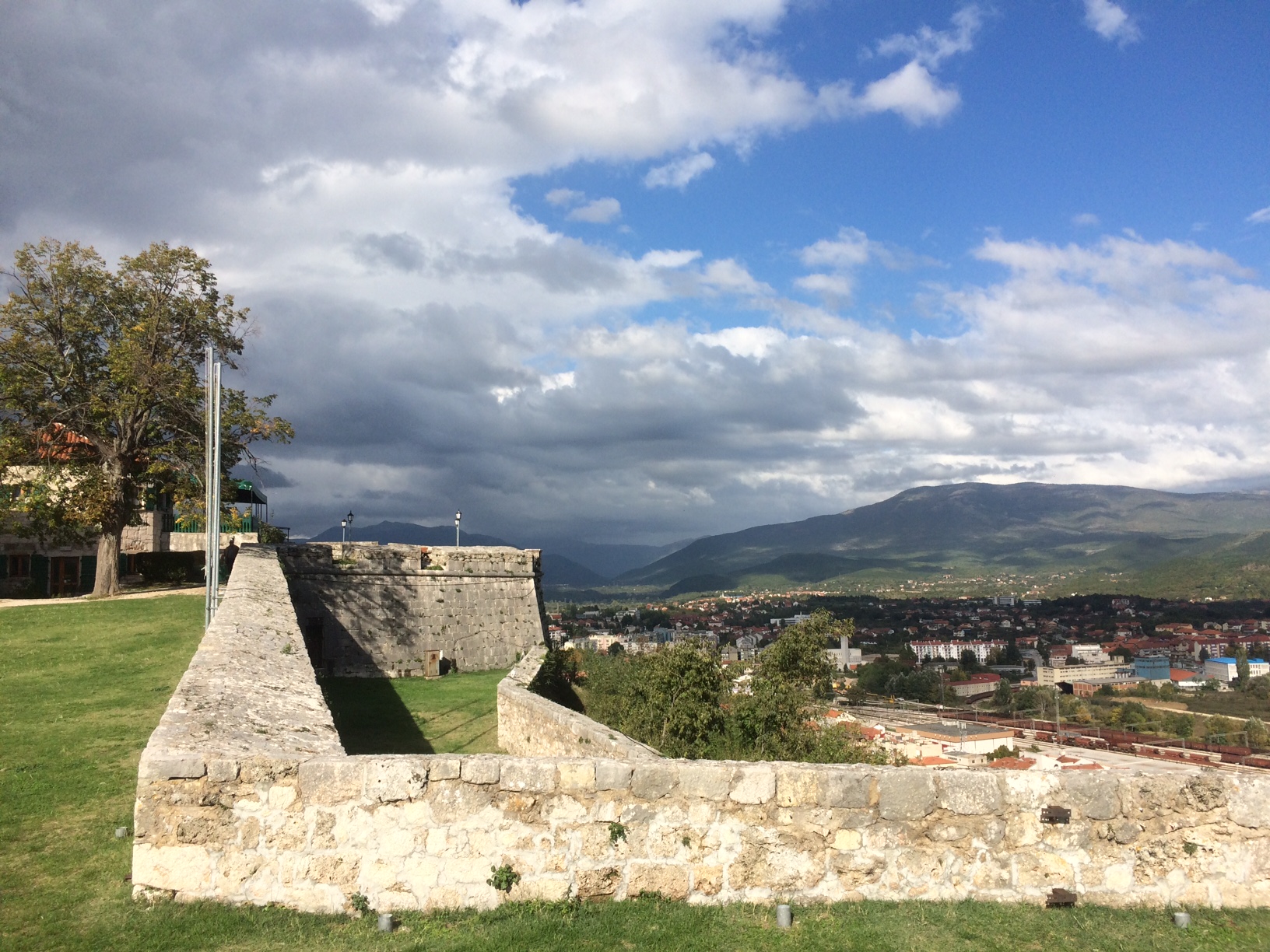
summery scene below Knin fortress

summery scene below Knin fortress

Even though every country and each city had its own charm, there are a few reoccurring themes in the Balkans.

  • Stray dogs and cats: They are everywhere, some happy, some miserable, some fed, some not, and even some that have been neutered and then re-released. Some people who have pets and don’t feel like keeping it, or move away, sometimes leave them behind, and other animals are born in the streets, leaving the cutest puppies and kittens to pull on your heart strings and make you wish you could take them all home.
  • Food and mealtime: Breakfast is pretty straight forward, usually a combination of some bread and a yogurt drink, but lunch is the meal you eat after work at 5pm and some just skip dinner altogether. Everyone has a variation of burek/banitza and cevapi, aka kebab as a fast food staple, and cheese and these huge white beans can be added to nearly any hot meal.
  • Turkish influence: all the Balkan countries were once under Ottoman rule, and they’ve still left their mark hundreds of years later. Doner is everywhere, Turkish coffee is as common as espressos, and tea served in small cups with a slice of lemon is called Turkish tea. The markets are often called Bazaars, and a lot of words in their vocabulary are Turkish.
  • Fresh produce and homemade goodies: every market sells goods that follow the seasons, with tomatoes in summer to pomegranate in the fall, chestnut roasters closer to Christmas, and once in a while some Japanese apples. Every village and even each home in the right climate will grow their own grapes, make their own wine and rakia, and others have beehives and make the most delicious honey.
  • Exchange rates: I could only use the euro in, strangely enough, Kosovo, and Montenegro, and everywhere else had their own type of denar/dinar or lei/lev/lek. But none of the rates are that similar, so sometimes you pay in the fives and tens, and sometimes in the tens of thousands.

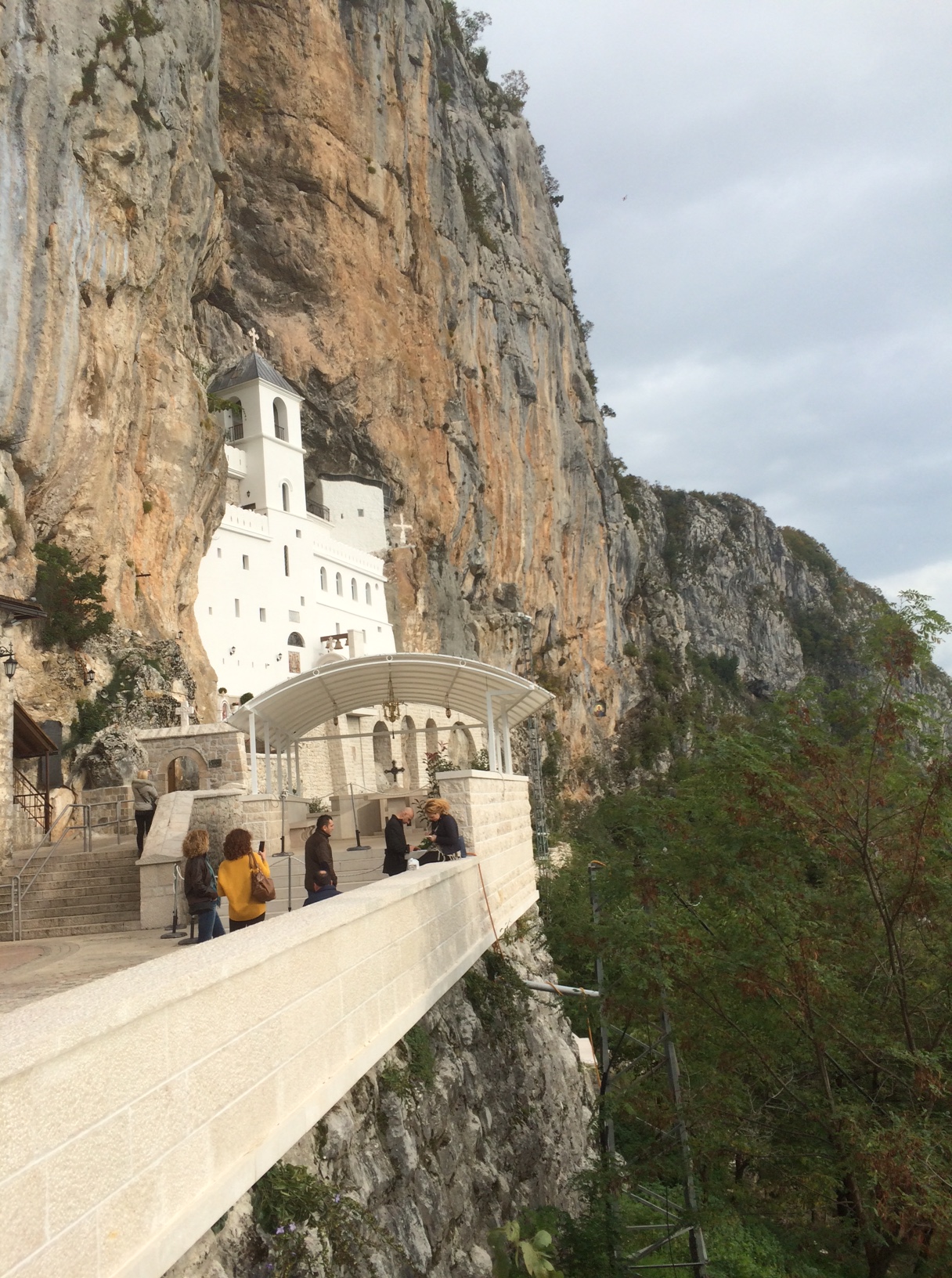
    Ostrog Monastery in the rock

    Ostrog Monastery in the rock

  • Tourist sights: My days have consisted of walking around pedestrian city centers, monasteries in or on top of rocks, and beautifully painted Orthodox churches. The frescoes never get old to stare at, and the places they put some monasteries, hundreds of years ago, makes me wonder how the heck they built them there. There are usually some mosques and fortresses as well, not a bad bonus.
  • Pollution: the cities in the Balkans are some of the most polluted cities in Europe, including Skopje, Sarajevo, Varna and Bucharest. I only really noticed it in the first two, but I definitely noticed my first breath of fresh air I took every time I reached the mountains again.

And there were a lot of mountains to pass to travel overland in the Balkans, and they were always a delight, and I still can’t decide if it was better to see them still in full bloom in October, gold and red when autumn arrived, or snow covered pines in my last week. I guess a mix of all three was the best, so I don’t regret traveling the Balkans now, even though everyone has persuaded me to come back in the spring.

A Gypsy Summer in Bulgaria

The first nights of frost had come in Skopje, and walking out in the morning onto crunchy green grass was a good reminder of coming winter. But the days were still bright and sunny, and by the time I reached Bulgaria, even the nights started to be warmer. The leaves had nearly all fallen, leaving only a few dots of gold in the now brown forest, but the season had now become a gypsy summer. It’s the time of year when all the branches are bare, the fields turn gold, and snow should start falling, but instead a warm wind brings back summer days of 20`c. People walk around in tshirts, and we share a small look of confusion when the sun starts to go down before 5 and the temperature drops 10 degrees in a matter of minutes.

Summer in Varna

Summer in Varna

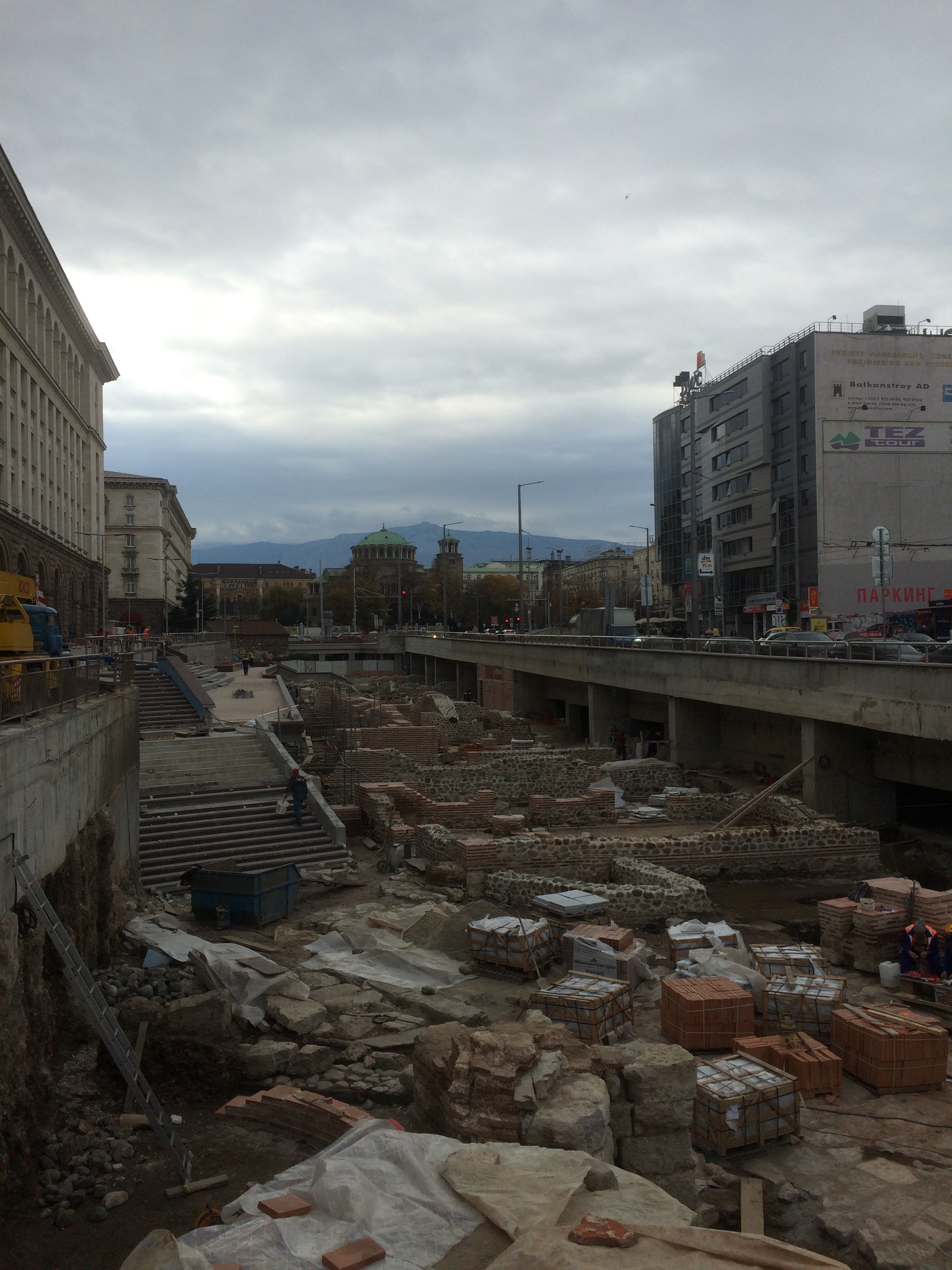
There were other unusual things that happened to make Bulgaria more memorable. My first night in Sofia was spent couchsurfing in the office of some international volunteer organization. We visited the underground bar of an art hostel where everyone was higher than a kite and even my sober sense of normality started to feel abnormal. The next day I took a free walking tour, where my guide was more excited about the new subway system than the Roman ruins they destroyed to build it. A traveler I had met first in Albania was randomly on the tour as well.

Clearing out thousands of years of history for a subway

Clearing out thousands of years of history for a subway

My next couchsurf host welcomed me to his place, fed me food and wine, gave me his keys, and over the next 2 days I probably only saw him for these 10 minutes. But he had another couchsurf guest and we hung out the whole time, exploring nearby Rila and Rila monastery, and got ourselves invited to Gabrovo by an actress we met thru other couchsurfers. It was a 2 hour drive to Gabrovo, where her theater was, and then she gave us the keys to her car and apartment for nearly 2 days while she practiced for her play’s debut. We drove to nearby Veliko Tarnovo, a relatively touristic destination, and the Bulgarian hitchhikers were very confused with the role reversal of tourists driving locals. We also visited the most impressive Soviet building ruins I’ve ever seen, the so-called spaceship or UFO monument called Buzludzha which sits on the top of a hill in the middle of nowhere, with only equally creepy windmills reaching high up into the sky nearby.

The UFO building Buzludzha

The UFO building Buzludzha

I took a food tour in Sofia, where I learned that Bulgarians are very proud of their cuisine, which is very focused on yogurt, and I was lucky not to be lactose intolerant traveling there (but unlucky to not like dill). They have a type of corner store or convenience shop called ‘squat’ shops, which are in the basement of buildings and you must squat down to a window at your feet to see inside and talk to the salesperson. There they fixed shoes, sold books, and even baked pastries. Bulgarians have an equivalent headshake to the Indian booble head, where yes kind of means no and no means yes, so I had to ignore people’s “da da da’s” while they shook their heads from left to right, forgetting body language and focusing on the word I knew meant yes.

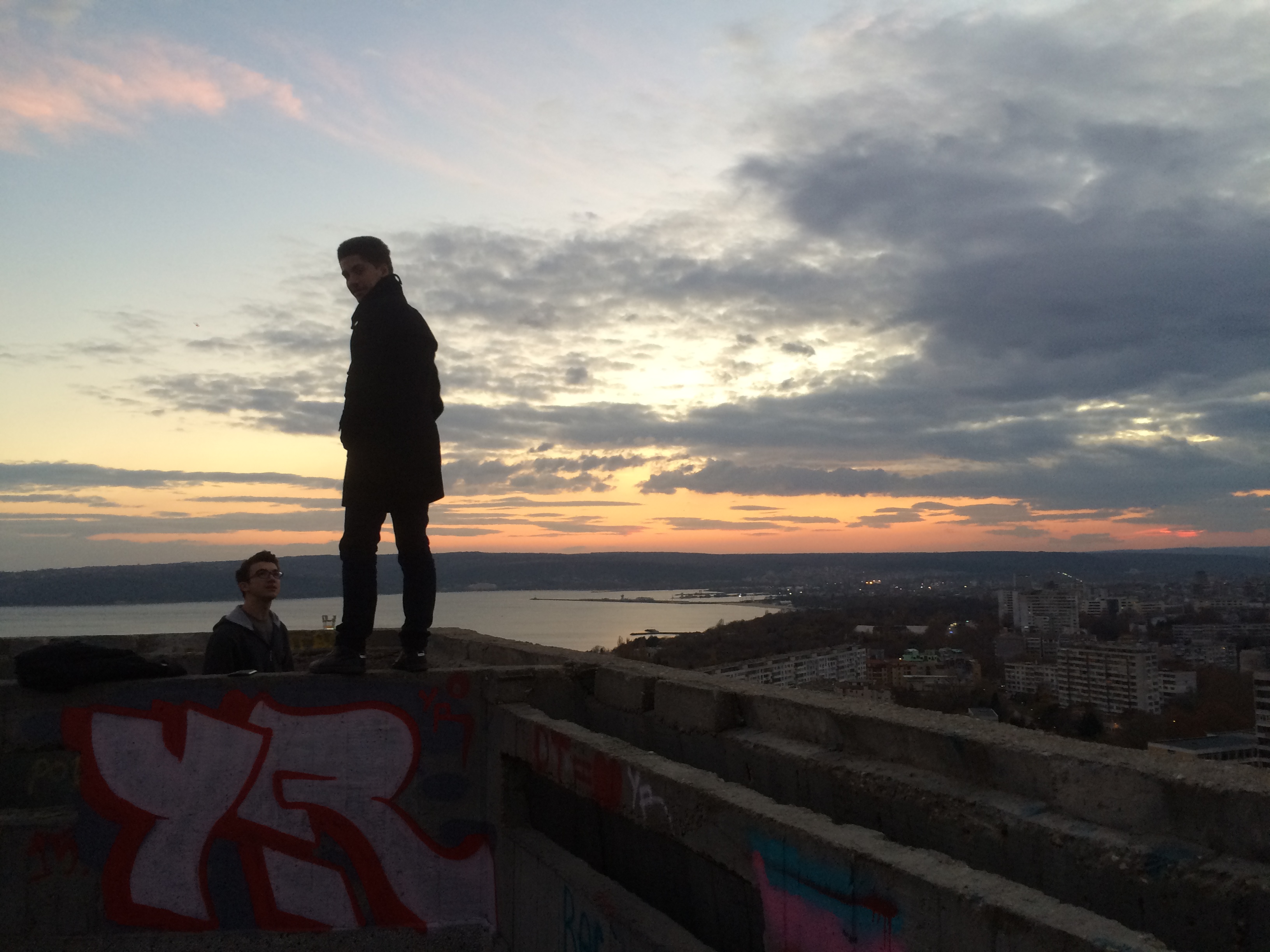
On top of the Bulgarian Soviet friendship monument

On top of the Bulgarian Soviet friendship monument

The final cherry on the top came with my last couchsurf host, Juan, who was appointed to me by the sort of couchsurf ambassador in Varna who took me to another Soviet monument in ruins, perched on the top of a hill overlooking the black sea. This one was not as impressive, but just as dark and ominous, since we could climb into it and ontop of the larger-than-life concrete soviet soldiers built into the monuments. My last night was spent eating Turkish food that Juan from Spain cooked, and after I taught him the basics of Argentinian tango… all this in a little Bulgarian city.