Highlights of Dominica


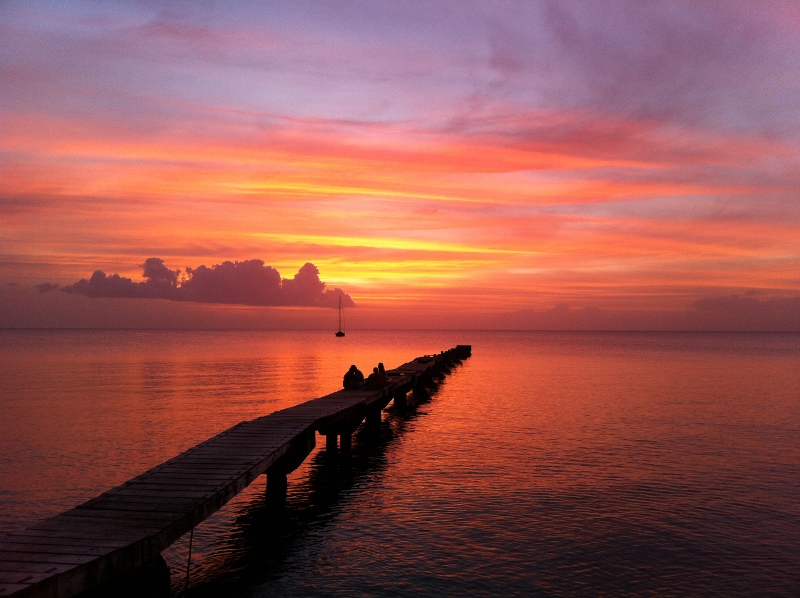
west coast sunset

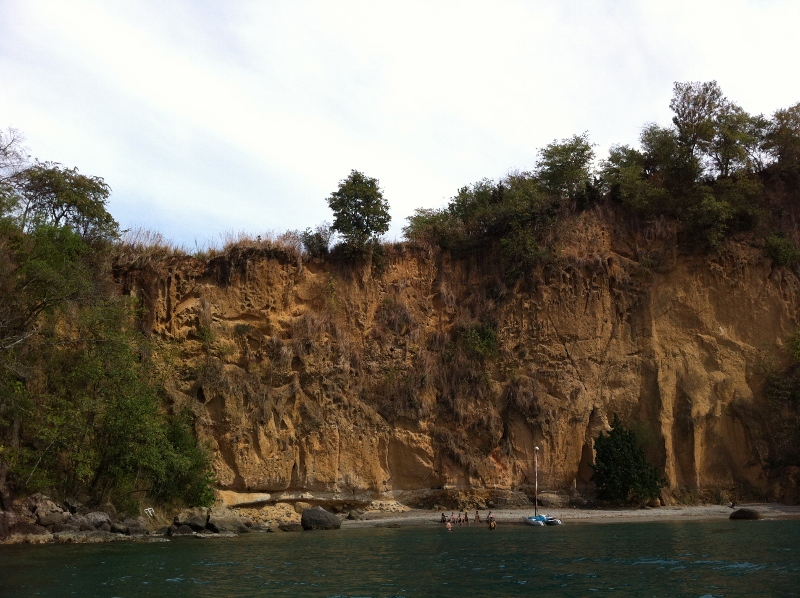
Secret Beach

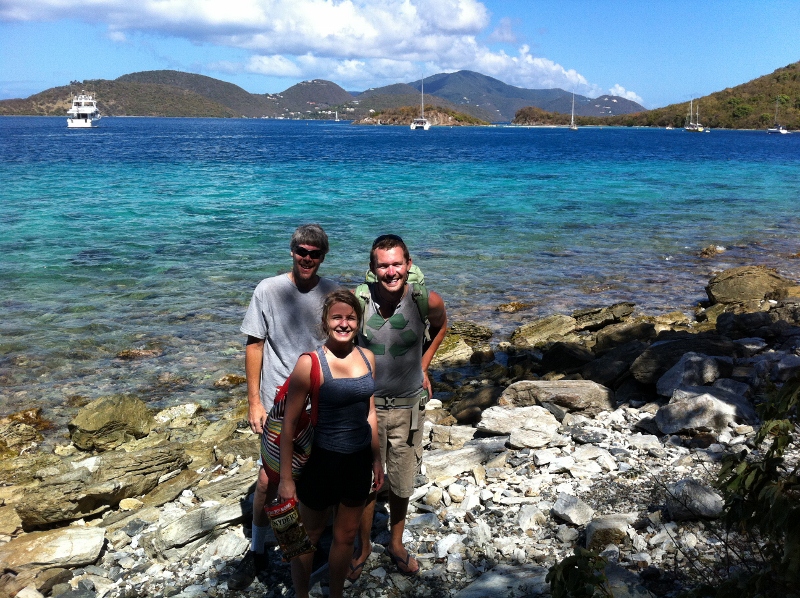
I spent a couple days traveling around with a German couple from Dresden, who met me at the Portsmouth Ferry terminal. We asked Shorty to take us to Secret Beach on his motor boat, a small, secluded, hidden beach isolated between a massive cliff and the Caribbean sea. There was a cave you could wade through, through a narrow passage with only space big enough for your head to stay above water that opens up in a big bat cave.
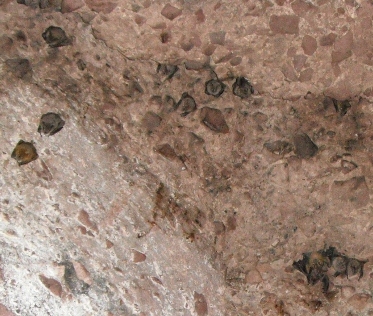
bats in the cave

We took a cruise up Indian River, a protected area where motorless boats get paddled up by slow talking rastahs. At the furthest point up the river, there was a small bar serving peanut punch, guava wine, and rivergrape wine, aka ‘fat-pork-stain wine’ (all disgusting, unfortunately). Our guide was Gregory, not Jeffrey, because “Jefferey is J and Gregory is
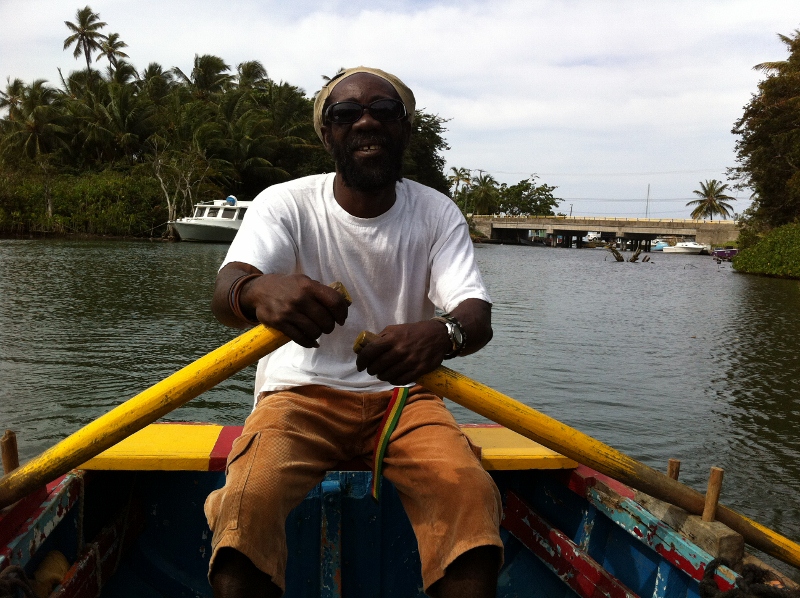
Gregory

G and they really not so much matching.” He apologized if his English would ever be “not englishable enough,” but could speak German, French, English, “I can speak anybody.” He explained the bamboo is not “originated,” the seamoss is “nice deliciously,” the mangroves were very “livable,” and the river “swimmable,” with no “dangerosity. He pointed out some fish that eat crab’s legs, and saw one crab still alive with only 2 legs left that was “well f*cked up.” We saw a hummingbird which “beat his wings 250 time before one second flow.” He took us to a “postcardic view with all the

Indian River

good vibes” where its “nice scenery, nice breeze, nice reflection, nice everything… its just nice to be nice.” We thanked him for a great tour and his entertaining narration, and he asked us to come back because “that’s how I do business, more for less, the more I work, the less it cost, sometimes I work for nothing, that’s how cheap I get.”

Me and Ordovich feasted on lobster with a couple other medical students, the sunset painting an

lobster feast

unbelieveable background. When we went horse back riding, we rode up the hill deep into a luscious forest, passing lime trees, mango trees, avocado trees, cassava trees, banana palms, pineapples, coffee bushes, cinnamon bark, breadfruit, yams, carambola, red lavender flowers, coconut palms, and lemongrass – all seen growing from a trail less than 1 km long.

We went to Macoucherie Distillery, a local rum factory that looked

Macoucherie Rum

as though it had been abandoned 50 years ago. But a handful of staff kept it running, one guy in the office who was the default tour guide since the other 3 staff were busy crushing sugar cane. They make the rum from start to finish, and only age some rum 1 year while the others aren’t even bottled, since you bring your own empty bottle to fill it straight from the cask for just a few dollars.

cassava bread in carib territory

They left me at Trafalgar Falls near Rouseau, a beautiful place of freshwater and hot geothermal water meeting between rocks at the base of a waterfall. Me and Will, another couchsurfer from Portsmouth, went hiking in Cabrits National park in the north of the island, exploring Fort Shirley and some old canons. We took a bus past Calibishie to the Atlantic side, where Carib territory begins and fair-skinned, skinny-nosed natives harvest cassava. They pull the roots from the tree, peel them, and grind them down to flour to make cassava bread.

Trafalgar falls

We spent a few nights out trying the local beer Kubuli and listening to a lot of Reggae. We met a bartender who was expecting his first son with his Chinese girlfriend. We asked him what the baby’s name would be, and he laughed and said “Im gonna throw a pan down on the floor and whatever sound it makes, Ching Ping Pong, and itll be something like that!” When leavin Dominica, I saw a guy with dreadlocks so long they actually touched the backs of his heels on each step… simple, but memorable additions to my Dominican highlights.

Guadeloupe to Dominica, chez Ordovich

I ferried from Pointe-a-Pitre with L’Express des Iles, the most organized public infrastructure for transportation I’ve seen in the Caribbean. The boats are brand new, always on time, and run often enough for it to be practical for both tourists and locals. It connects Guadeloupe, Dominica, Martinique and St. Lucia a few times a week in each direction, and a one way costs little less than a return ticket, and a one way costs the same if you’re going to the next island or the last island. It seems logical that you could scam this into cheaper travel if you plan things right, but paying 70 euros each ride always added up to too expensive – even more than flying with LIAT.

LIAT is another convenient but expensive means of travel. “Leeward Islands Air Transportation” connects all the islands from Anguilla to Barbados, and further down to Trinidad and Guyana, but isn’t exactly the most organized company. The LIAT acronym is also interpreted as “Leave Island Any Time,” or “Lost in Airport Terminal” and “Left in Any Terminal” for their notorious mishandling of luggage. The planes leave 40 minutes or early or 1 hour late, with no accurate updates given by any of the misinformed staff. Sometimes the pilot doesn’t show up, or no one is working to check you in, and I even tried to check in for one flight that a LIAT employee insisted didn’t exist (she eventually found the right flight number to print my boarding pass).

There was a strange secrecy or exclusiveness with ferry travel that I didn’t quite figure out. The two French Islands Guadaloupe and Martinique are separated by Dominica, an independent, poorer Island, just like St. Lucia further south. The French nationals traveling with EU passports were normally searched and questioned about smuggling in cigarettes but little else, while the Dominican and Lucian passengers were barely allowed to buy tickets to France without showing hotel confirmations, contact numbers of the people they were visiting, a reason why they were going, more than 25 euros per day they would be there, and an emergency contact number if anything should happen to them. It was like crossing the Mediterranean from an uncivilized Africa to the pristine palaces of Gibraltar, when in reality the islands are right beside eachother sharing similar culture, history and people.

Yet, you still felt different in Guadaloupe, as though you were in mini-France, with its paved highways and overpasses, traffic lights and round abouts, shiny little Citroen cars and scooters; the people – fair, their clothes – branded, their French – Parisian. In Dominica, the roads are unpainted and undivided, the intersections simply yield to oncoming traffic from the main road, the beat up cars magically keep on running, and the rastahs outnumber the expats, speaking creole and Patois I rarely understand.

Me and Ordovich on our gallant rides

Still, life goes on the same way, hot and slowly, day by day, but I had left the air-conditioned apartment of Francois for the coackroach/ant/mosquito friendly apartment of Ordovich. He lived in Picard, a mini-America south of Portsmouth. Hundreds of medical students attend Ross University there, and do little more than see the small confines of that village. Ordovich was different, not cursed by the solidary life of perpetual study, traveling around Dominica more than most. He took me horse back riding in some wicked cowboy boots, and told me about Secret Beach, a spit of sand reached only by boat. He hadn’t been to the neighbouring islands

(C) Ordovich Klarxonov

yet, but was planning a trip to Ireland. He was often like this, a surprising left-fielder. He liked to blare Rachmaninoff symphonies, and played the Accordion and piano in a mixed style of blues, western, classical and almost klezmer that could perfectly narrate a black and white film. He was an amazing artist, with a similar, cartoony drawing style that blended 18th century romanticism, Moulin Rouge and Pirates of the Caribbean scenes that looked like they were drawn on dirty, antique paper. He drank coffee from wine glasses and only wrote in cursive.

People that I tried to describe him to said he reminded

(C) Ordovich Klarxonov

them of John Lennon in the 1970s’, or an American lad from New Orleans that dreamed to be French in the early 1800’s. He went by the aliases Black River Bandit and White Devil, was superstitious, read cards, and had a dirty mouth that always smiled when he spoke. He wore a hat over his curly hair, held his skinny jeans up with suspenders, smoked a pipe, and went nowhere without his leather, scholarly bag. That was his only academic fashion, being a med student, and the rest of him an explosion of old and fringe societies.

Gwada, a.k.a. Guadeloupe

I booked a regrettable 7:30 am flight to Guadeloupe which had me leaving Julia’s stable at 5am. A few hours later, I had arrived in France. My Icelandic passport got me waved through immigration as if I was back in the EU, but I requested a stamp from the Police station in the arrivals hall which said “Guadeloupe,” not France. It was St. Patricks day, which apparently everyone in the Caribbean cares about despite there not being any Irish on the islands, so my host Francois had planned an exciting holiday excursion.

spices

the fish market

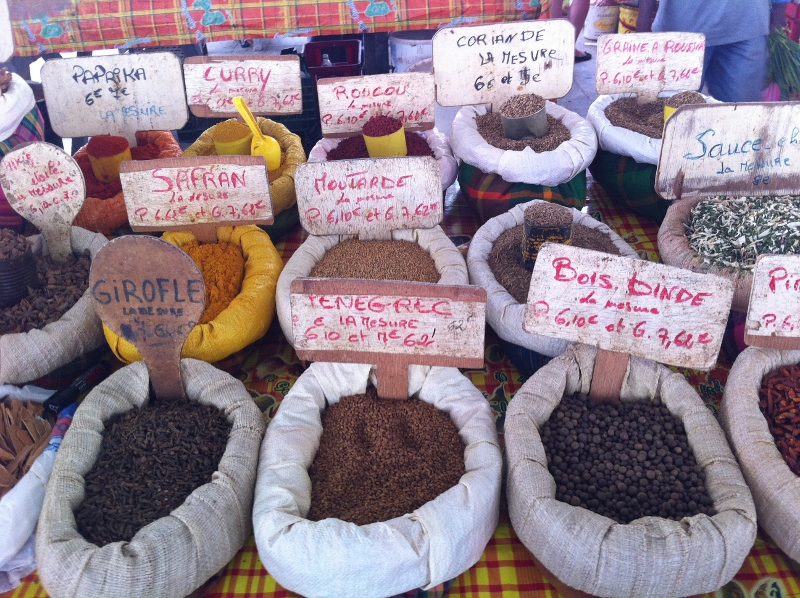
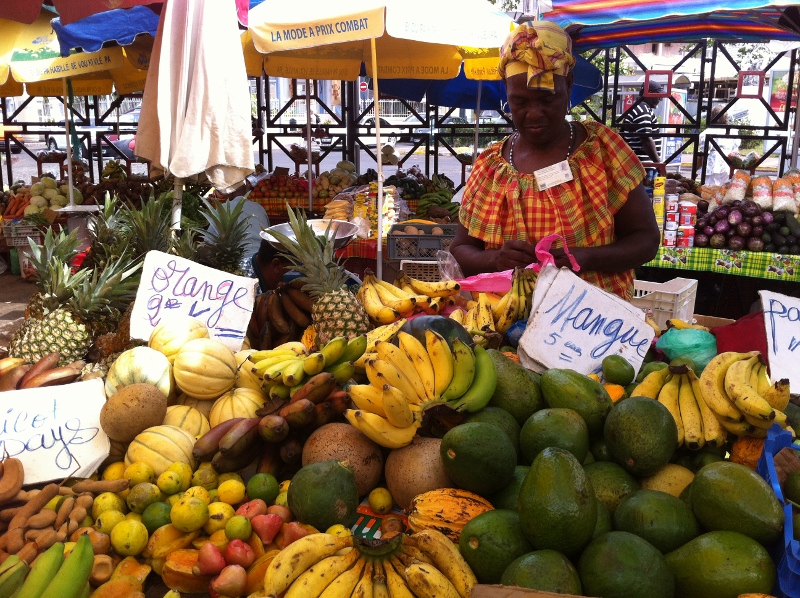
We were to tour all of Grande-terre, one of the two islands comprising Guadeloupe’s butterfly shape. We started in the capital, Pointe-a-Pitre, at a lively fish market. Nearby were stalls of fruits and vegetables, spices and hotsauces, pin-cushion dolls and home made rum. We tickled our noses through rows of smelly things, and bought some carambola, sting ray, habanero peppers and parsley.

fruits and veggies

Next we drove along the south coast, stopping in Le Gosier for a view of Ilet du Gosier, a tiny island off the coast. We carried on to the Club Med beach, where dozens of palm trees shaded the sandy beach and all the half nude frenchies lazing around. We bought tiny cups of juice for 3 euros each, and once again realized I was no longer in the cheap Caribbean but instead on a European island disguised by sandy beaches and warm weather.

Club Med beach

We arrived on the windy Atlantic side in Point des Chateaux, a narrow peninsula ending in the eastern most part of the island. Here herds of tourists took pictures of La Desirade, another nearby island, and ate hand-made coconut sorbet from a woman with a rusty churner. We finished the circumnavigation after reaching Pointe de la Vigie, the cliffy northern boundary of the island, and driving through Port Louis and Petite-Canal. Then we cut back east to La Moule, where friends’ of Francois had invited us for a bbq and some beachvolleyball.

Pointe des Chevaux

We played games in various teams, 4 on 4, 6 on 6, girls versus guys, and male only teams.  We could never keep track of the score, and played to 15 or 25, depending on what we felt like. The bbq was potluck style, everyone bringing something different to share. We grilled our stingray in peppers, parsley and beer, and cooked some other fish that ended up tasting slightly better. After filling 3 garbage bags of paper plate, plastic cups, and empty bottles, we went sandy-faced to Maho pub, a grungy, hippy-esque shack with the strangest assortment of locals.

Chute du Carbet

I saw a black, 60 year old, toothless prostitute, blonde guy in Aladdin pants and embroidered vest, a beautiful young woman in a flowy, white satin dress, and the two brothers I had met in Antigua through couchsurfing. They were supposed to be in Dominica, but had changed their minds to spend the weekend in Guadaloupe, and of all places to be at that moment, were also at Maho.

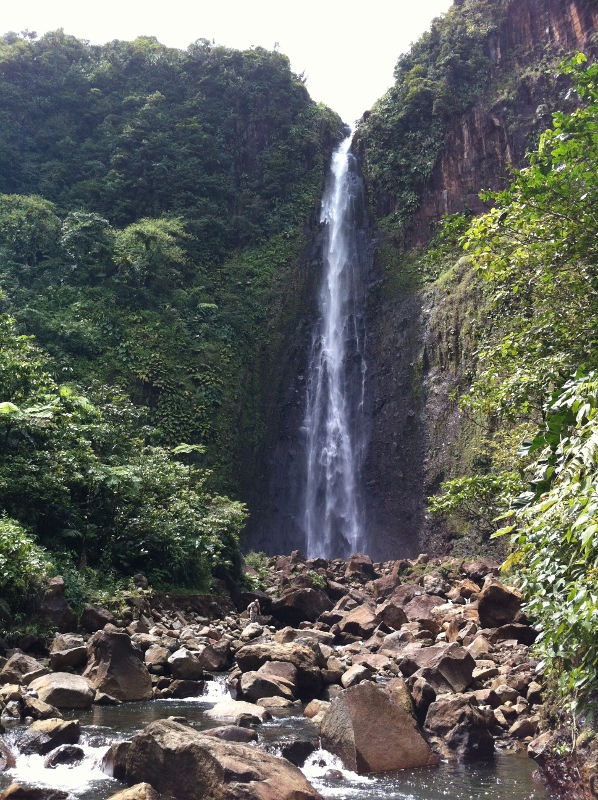
We afterpartied at the Marina, and I crashed hard after 23 waking hours in Francois’ bed,  since he’s that stubborn kind of couchsurf host who insists visiting strangers get to sleep in his bed while he surfs his own couch. The next day, we went the whole way around Basse-terre, the bigger but wilder half of Gwada’s butterfly. We stopped at one national park to see the Chutes du Carbet, hiking to the first of three waterfalls. A little further down the road, we hiked along an unmarked trail to a hot river, flowing down between large rocks and forming bathing pools of decreasing temperature. We soaked in one about 35 degrees, a perfect natural bath in the middle of the forest.

cliff jumping at Cascade Acomat

We met some friends in Bananier who had just finished surfing, and then had a picnic lunch on a dock in the city of Basse-Terre on the southwest corner of Basse-Terre. We hiked next to la Cascade Acomat, a beautiful waterfall pool that you could cliff jump into from any side at any height. We ended our day in Grande Anse, what Francois described as the most beautiful beach in Guadaloupe. We watched the sunset there, with a row of other waiting spectators, and as soon as it fell behind the horizon, stayed for the after show – a sky of pink and orange clouds in a darkening sky.

DSCF3332 (800x600)

sunset at Grande Anse

That night Francois’ friend Francois (it’s a common name) hosted a pizza party. In true French style, we paired the home made pizza’s with red wine, and finally went home early for an early, good nights rest. The next day I stole some beach time and wifi from the Hotel Fleur D’Epee, to plan my ferry down to Dominica – my next island destination back in the Caribbean.

Antigua

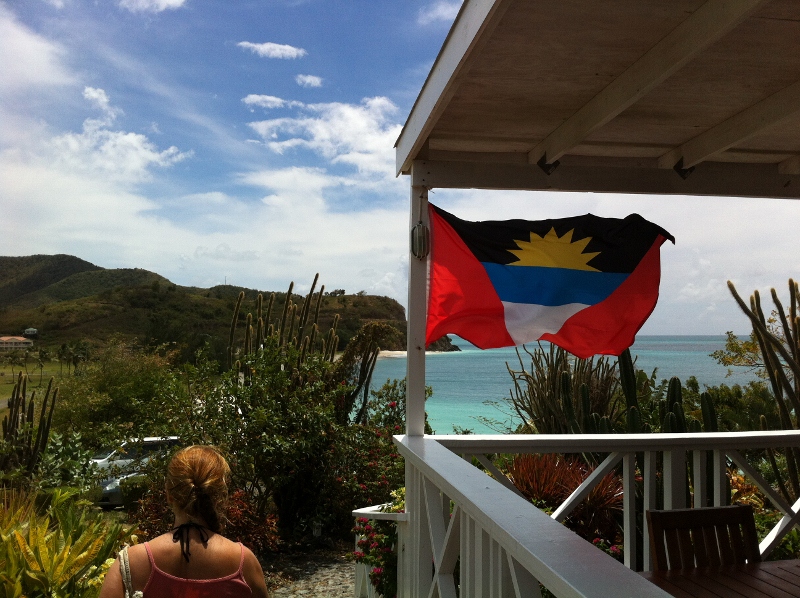
The Antiguan flag

Louise was a sour faced lady with boy cut hair and a kind heart she was too afraid to show. She was a short, frail, older white woman freckled and bronzed by the sailing and yachting she did regularly with her British Husband. She didn’t smile or laugh, a little awkward with eye contact, but her curiosity about me still poked through. She asked me questions, disinterestedly, and made few references about herself or her own life. She was uncomfortable when I sat beside her on the plane, which wouldn’t have struck me as unusual except that the plane had 50 other empty seats I could have chosen to spare her the act of friendliness. When we landed, she casually offered to drive me to my couchsurfers place, despite it being completely out of her way on the other side of the island.

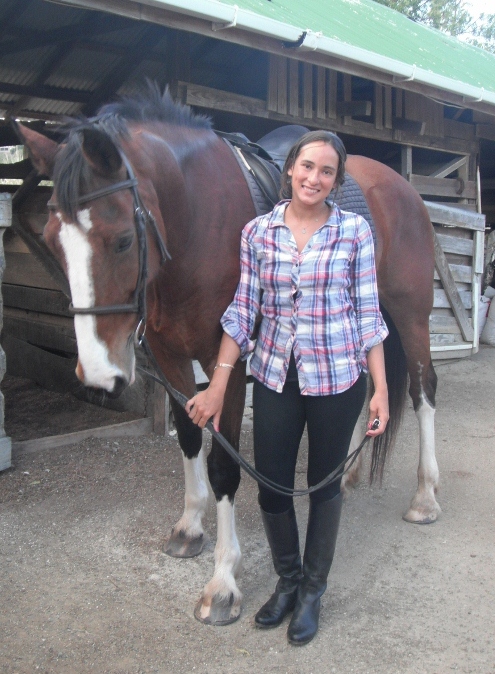
Me and Julia

She dropped me off at Springhill Riding Center, a stable I would couchsurf for the next 5 nights with a Polish woman named Julia. She was beautiful, with orange hair as wavy as birthday ribbons falling all the way to her belt. Her bright blue eyes matched the turquoise Caribbean water she often took her horses swimming in, and her big perfect smile lit up her whole face everytime she talked about something beautiful. She thought everything was beautiful – the horses, the flowers, the trees, the fruits, the beach, the sea, the harbor, the boats, the cliffs, the trails, the roads…

She seemed to be 25 at heart, but the few wrinkles in her face gave her away for older, and only

swimming with horses

her weathered hands had aged to the 38 years she really was. Her hands were rough from a life-time of horse handling. Her English was good, her German, apparently better, and Danish and Spanish lingered somewhere too. She had decided to travel the world for horses, working in Poland, Germany, Denmark and now Antigua schooling horses and training riders.

We took the horses swimming one day, and the next 4 days I was given the duty of taking one lame horse for his daily swim. By the end

Big Joy

of the week, I took him on a trail ride and he had stopped limping all together. I took another horse riding named Joy, who was so much bigger than the Icelandic horses  Ive grown accustomed to. I couldn’t even see over her back when I stood beside her, and her every step in any gait seemed like an exaggerated, slow-motion heave.

It was hard to leave the stable, but I wanted to explore more of the island. With Julia, we went out a few times to dance, meet other couchsurfers, and took the scenic drive along Old Fig tree road, where endless banana plantations and pinapple fields grow along the windy road along the coast. I went to one of her belly dance practices, where her and some other ex-pats jingled around in colourful, sequined bras and coin belts. Another dancer friend of hers invited us to their burlesque-show practice, where 5 middle-aged women sexily danced around in flirtatious Moulin Rouge attire.

We met another friend of hers named Pep, a retired astrophysicist who is also a UC Berkeley Alumni. He had plenty to talk about, full of incredible stories, and in his old age had become a

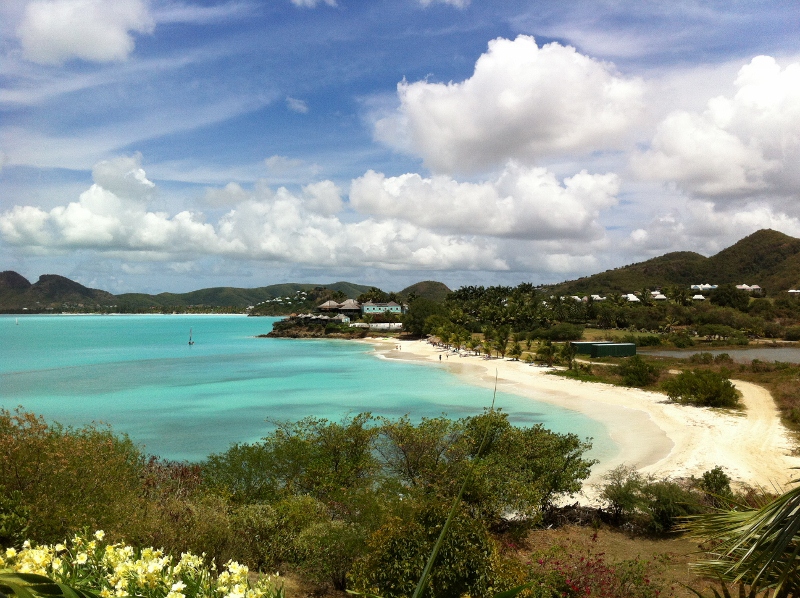
Beaches on Fig Tree Drive

single guy with an eye for younger women. He also had the heart of a 25 year old, and, I believe, was in love with Julia. He lived in a house on the hill overlooking Falmouth Harbour, and rented out his rooms to young boaters to have some lively roommates and company to mingle with. He asked me questions about my life in Berkeley, when I would go back, and I mentioned my (failed) attempt at a serious relationship there that would have otherwise still kept me in Berkeley. Then he really started to psycho-analyze me, and wanted to know why that guy didn’t knock me over the head and drag me into the cave then and there since Pep started to worry that I may now become the kind of girl who never settles down.

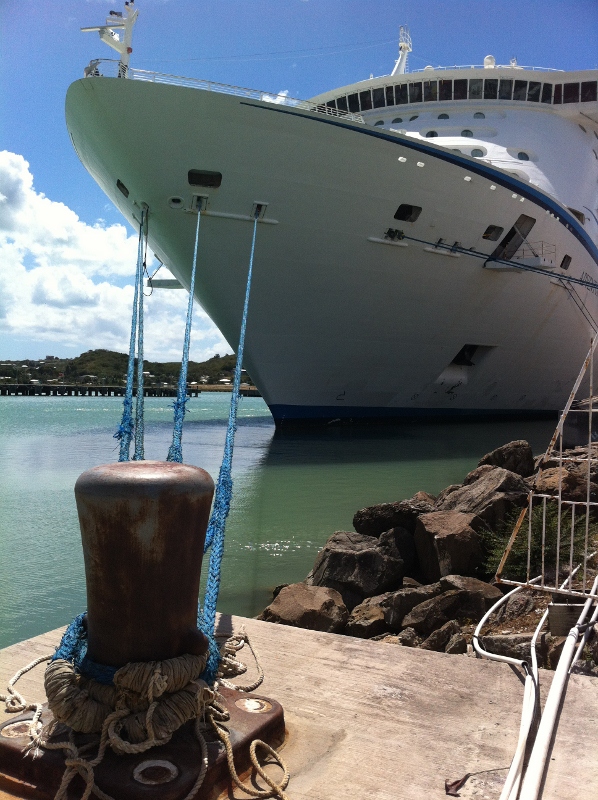
I tried and failed to make it to either Barbuda or Montserrat, since the one and only Barbuda ferry had lost its engine just 3 days earlier, and the Montserrat boat only traveled on Mondays, even though Wednesday and Thursday were advertised on their website. Instead I got to walk around St. John’s, lost in the midst of 2000 cruise ship passengers window shopping for overpriced jewelry and underpriced liquor and tobacco.

cruise ships in St. Johns

I stopped at a bakery to buy lunch and all they had was bread or buns, with ham or cheese. Still it took the baker 5 minutes to handle each customer, so I waited for a while to get served. The guy behind me in line was in pilot uniform, badged Liat, on and off the phone constantly to try and get out of flight duty. By the time I got served, he snuck up behind me and pretended to be with me, ordered the same thing I did, and paid for both our lunches. Then he got a call to say he didn’t have to fly, and offered to show me around on his afternoon off.

Simbo was Dominican, half-black, half-white, with the accent and build of an islander, but the skin and blue eyes of a westerner. He took me to the helicopter pad offering tours of Montserrat where a pilot friend of his worked. The island is a huge volcano, that blew up something fierce in 2007. I was tempted to take the $240US tour but for 45 mins of flying around a volcano and not even landing on the island to explore it seemed like a waste… especially since Pilots in uniform get to fly free and I could have just stopped at a costume shop to match Simbo. Instead he showed me Dickinson beach, where you cant walk 5 metres without being sold something – coconuts, massages, beach chairs, earrings, jet-skis, braids, or dread locks.

Nelson's Dockyard

I spent a day exploring English Harbour and Nelson Dock, where all the super yachts and privately owned sail boat mansions float around, looking shiny and unused. It also creates a huge sailor culture, of young crew from all over the world living and working on these boats for the owners who only use them a few times a year. I considered taking a stewardess job for 2000 euros for month (food and rent included), but the boat was going north and I was headed south.

St. Kitts and Nevis


Topless trees and mountains in the clouds

I arrived in St. Kitts at 10 pm and got picked up by my couchsurf host Mike in his beat up Nissan Sentra. It was missing both driver side and passenger side windows, the back bumper and the muffler, and a Phillips wrench replaced the key to turn the car on and off. Mike was all smiles, and had steaming hot Chinese take out ready for an impromptu picnic.

We drove out to Muddy Point, along a bumpy dirt road, and pulled up to a hurricane-torn apartment building surrounded my palmless tree trunks. We explored the graffiti-painted walls after having our midnight picnic under the brightest, full moon I’ve ever seen. The wind was so strong that the clouds seemed to pass overhead in fast motion, lit up as bright white mountains moving up and over the volcano peaks of St. Kitts. The moon cast our shadows on the black sand, the curling waves were as white as day, and even the coral was visible through the rough water because of its crystal clean clarity.

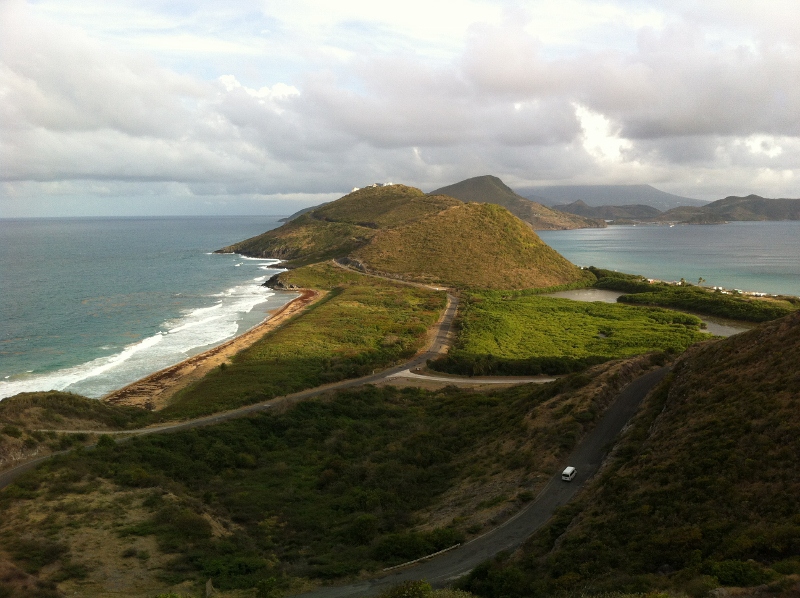
St. Kitts southern peninsula

I didn’t exactly couchsurf Mike’s place, but slept on a mattress in a tent on his living room floor. The tent was a mosquito net substitute and worked just fine, but with some minor rearrangement, we turned his living room from a campground back into a social space. We had another picnic on the southern tip of the Kittitan peninsula, sharing a whole chicken, some fresh tomatoes, and cheese bread in silence while we watched the sun go down. We then had to drive back over the mountainous road without headligths in the dark, since both the Sentra’s headlighs and highbeams strangely stopped working.

Hash House Harrier trail along the rail road

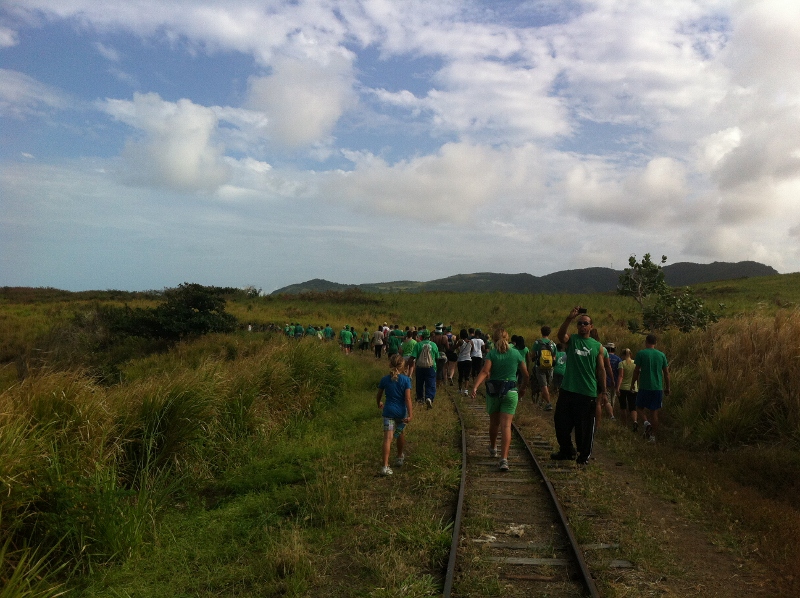
Mike took me to a Hash House Harrier event, a name I cant explain, but it refers to a group of people coming together and walking or running a newly marked trail once a month on a different part of the island. It was the St. Patty’s day Hash, so everyone wore green, and we trekked along the old rail road and through sugar cane fields down to a littered beach.

St. Kitts was the first Island I visited that felt like the real Caribbean. Im not really at liberty to say what defines the ‘real’ Caribbean, but I can try to explain it the way I perceive it. Life is slow, really slow, and simple. Locals were locals, with fewer rich expats exploiting their lifestyle, and no cultural divide between the locals and the colonial locals since St. Kitts is actually an independent country – different from the French, British, American and Deutch islands Ive been to so far. Small wooden houses in various pastel and neon colours had replaced the gated communities and concrete beach resorts, and communities lived together in walkable villages. Only one narrow road, 31 miles long, goes around the island, with a different village every 2 or 3 km. Each village was known by atleast 2 different names, and the streets and alleyways were unnamed and unmarked, with foot traffic and chicken crossings keeping the road in use.

The island looks lived in, not groomed, and tourism still hasn’t taken over all the industry in the island. You drive past countless abandoned windmills, left to ruin since slavery ended, surrounded by stone buildings and ancient churches built during colonial rule. Instead of restoring any of these places and turning them into tourist attractions or UNESCO World Heritage sites, they leave the guinea grass to take over their forgotten history, and keep on

tombstone grazing horses near Kittitian Hill

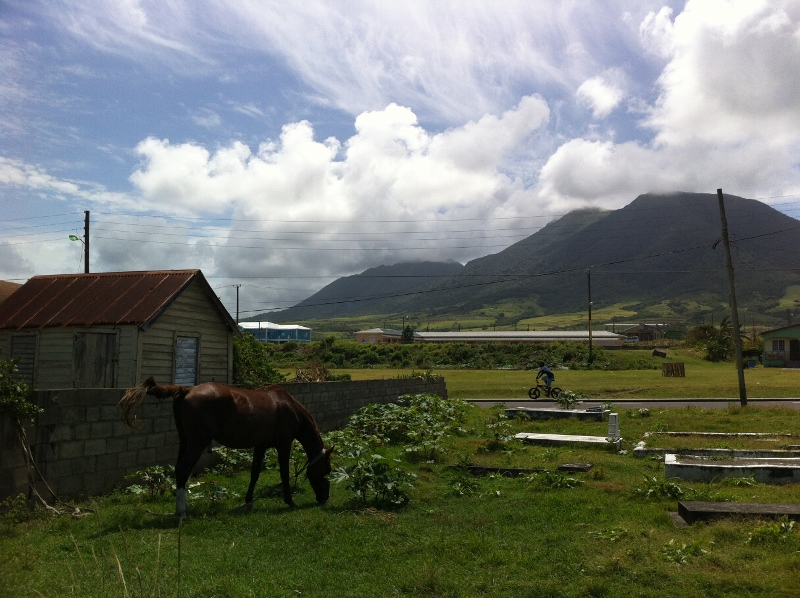
growing sugar cane in the fields around to be processed by more modern methods. The churches are doorless and the wooden window shutters are half rotten, but some churches are still used. The cemeteries are overgrown and horses are tied to tombstones to try and eat down the luscious vegetation.

I settled into this atmosphere nicely, and got accustomed to the easy going pace of things. You could make friends with just a nod hello, and bus drivers and shop owners would treat you like a visiting relative to their home instead of making you feel like a passenger or a customer.

the man with the horses

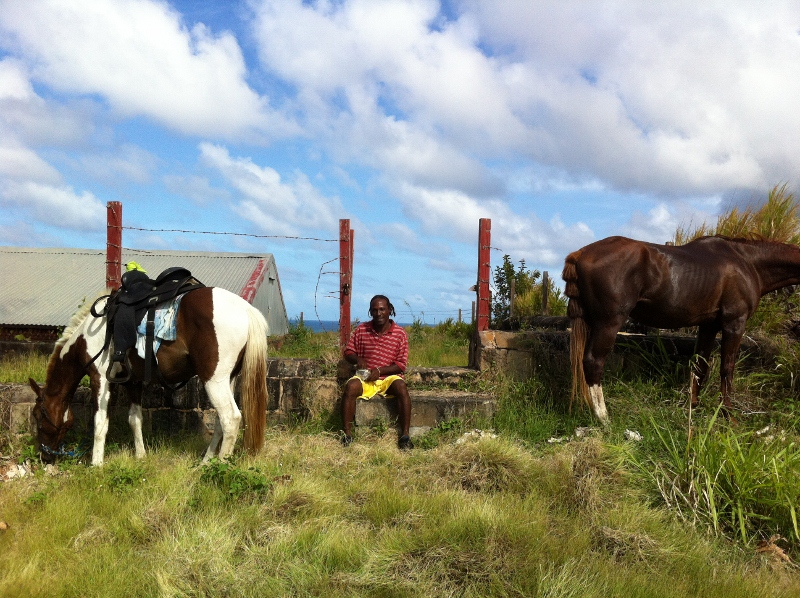
At Black Rocks,  one of the souvenir sellers became my friend after I bought a Ting (grapefruit soda) from her, and her dad was my bus driver back to town and her uncle was the taxi driver who later took me to look for a horse man. Everyone knows eachother in the villages, and you could find or run into anyone you wanted to, whenever you wanted to. My local friends said I even started picking up the local talk, after trying hard to put on my mothers Guyanese accent, and I got asked if I was an islander 4 or 5 times by other strangers. I learned that Guyanese are one of the largest minorities on the island, so that may explain why. I eventually met the man with the graveyard grazing horses and asked him to take me riding. I think he said yes because he recognized my Island talk, so together we took two stallions for a galloping sprint around the Cane fields and up Kittitian hill.

St. Kitts Island has many craters, mountain peaks, and one active volcano that if it went off, would devastate a lot of the island. They say the clouds in St. Kitts are always lower than clouds anywhere else, and its because they get trapped between the mountains and sit above the island like a roof above the low-lying coast. I visited Nevis for a day, the sister island just south of St. Kitts, which is round at its base, and pyramids straight up into one volcanic crater. There I made a friend called Whiskey, a 3 month old green vervet monkey that lived at a bar. The bartender, Lyon, saw I liked animals and tried to sell me one of 10 puppies he had adopted from a stray dog for $50EC (less than $20US).

Nevis in the clouds

I left St. Kitts airport on a late flight, and at 9pm the airport had only two staff working. A janitor mopped the floor and a luggage handler sat around with no luggage to handle. I waited ten minutes before someone arrived at the counter to check me in, and then walked up to an empty emigration hall. Me and Louise, another passenger, walked on to security and asked one of the two people working there to get us a customs officer to exit stamp our passports. Louise, an Antiguan, didn’t seemed phased at all, not even when the flight arrived 40 minutes early and took off only minutes after we rushed through security to board.

St. Croix, part I

Me and Ursula started our trip to Caribbean with a 5 am SuperShuttle to JFK airport and half expected to not make it to St. Croix that day, with the track record American Airlines has with us. We checked in a little sooner than required, luckily enough to find out our flight departure had moved 25 minutes earlier. The flight was overbooked, but we made it to Miami where our connecting flight had also been moved 30 minutes, and took turns sleeping on eachothers shoulders and laps in airport lounges and cramped airplane seats.

Chris' serenades drawing a crown on Cane Bay

There was a shiny-headed bald guy on our flight who sat across from us in the departure lounge in Miami, slightly amused by our antics, and an overly talkative Southerner who sat beside us on our flight. Chris had just finished chemo treatment, and John Boy had left Louisiana to live in Paradise with a job at the Cruzan Rum factory, where his unlimited supply of rum drove him to a life of sobriety.
On the flight over, JohnBoy dictated all the must-do’s and must-see’s of St. Croix, and kindly offered us a lift from the airport straight to Rainbow Beach, where the western end of the island would be the perfect sunset location, accompanied by live music and a barefoot bar crowd all evening. We got a text from our couchsurf host saying that her landlord was being investigated

the view from my grandmothers house

for cocaine possession so strangers were no longer welcomed into her apartment, so watched the sunset with a a new-found feeling of homelessness.
Instead, we did some impromptu and informal couchsurfing, first with Chris, then on a boat in Christiansted harbour, and then at my step grandmothers Grecian house after hitchhiking a catamaran to St. Thomas. Chris ended up being quite possibly the most interesting man in the

me and Ursula on Christiansted dock after securing our boatride to St. Thomas aboard the Kindered Spirit

world, but with a big “sketchy” factor, balanced out by his beautiful, Jack Johnson/John Mayer sounding voice. The boat we slept on was owned by Miles, who took us out on a snorkel tour to Buck Island and gave us private, open-bar access to his closed bar the day of my birthday. The catamaran was called the Kindered Spirit, and the captain resembled Brad Pitt at age 30 and the first mate was a massive Norwegian/Canadian/American named Thor who had Vikings tattooed on both his elbows.
By the time our week ended, we felt like locals walking around Christiansted, running into friends we’d made everywhere we went. We spent a couple days on St. Thomas where we hiked the National Park and hitchhiked between beaches with a guy named Adam and his dad. On St. Thomas, we had our own personal driver named Baldeo, who I called Uncle but

Hiking to Waterlemon beach on St. John

Im still unsure of his relationship to my family there. He takes care of my widowed grandmother, who is recovering from some sort of aneurysm and has to have dialysis three times a week. Only one of her daughters, Pam, who shockingly resembles my own mother, lives in St. Thomas now, and is there to help take care of their restaurant until it sells. I found out my grandfather, Freddy, had 2 families on either side of the river in Guyana when my mom was growing up. In the end, he “chose” my step-grandmother Janet and their 5 children and moved to St. Thomas where he died in 1994 after I had only met him once. He was ¾ Chinese, ¼ black, and worked as a land surveyor for the government. They also owned a jewelry store at some point, and as a parting gift, my grandmother gave me a pair of silver earrings and a 14kt gold pendant etched with a map of the virgin islands.

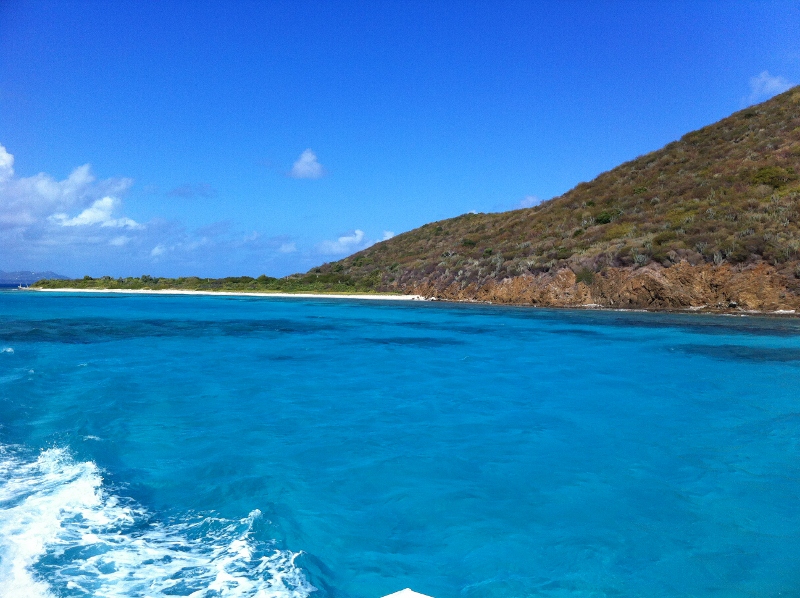
on the way to Buck Island. This picture is not a dramatization, the water is actually this blue.

The pendant helped us navigate our way back to St. Croix, but more than that, symbolized the return of kindness that my grandfathers two families lacked for many years. My mother had gone to school in the University of the Virgin Islands for a couple years as a teenager and had been refused the hospitality of staying with her grandfathers other family then. It was fascinating to talk to my step aunties and “uncle” about my grandfather I barely knew, and rediscover some history that would have otherwise died with him if it wasn’t for the unplanned decision to visit St. Thomas. My step-aunty Meg and I have now combined forces to try and trace our grandfather’s history even further back, to finally learn where in China our descendants come from. Perhaps there’s a Chinese princess somewhere in there too…

Amsterdam

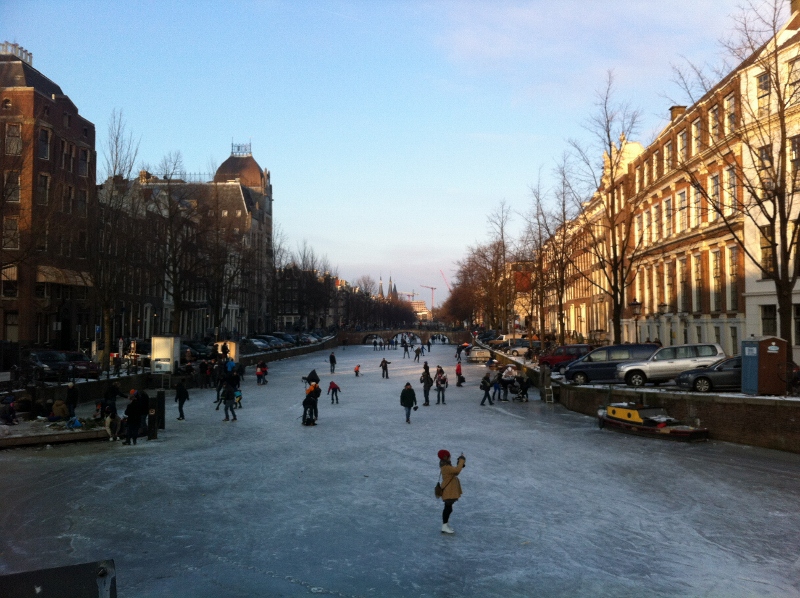
Amsterdam was totally frozen over when I arrived there from the Irelands. The canals were frozen solid, for the first time in over a decade, and people were traveling by circles around the city center instead of weaving thru the zigzagging streets. The weather was +9`C a few days before so I only packed a light rain jacket, but I had to scour the street market in De Pijp for another sweater and some long-johns to layer up against the cold.

The frozen canals

I couchsurfed with a few different hosts the week I was there. The first was a big Dutch guy with curly long blond hair, then a Persian immigrant living in an ‘anti-squat,’ and finally an Indonesian-dutch Phd student. I also spent some time with a Greek guy born and raised in the Netherlands who knew a few squat locations for great eating, drinking and ping pong. I haven’t

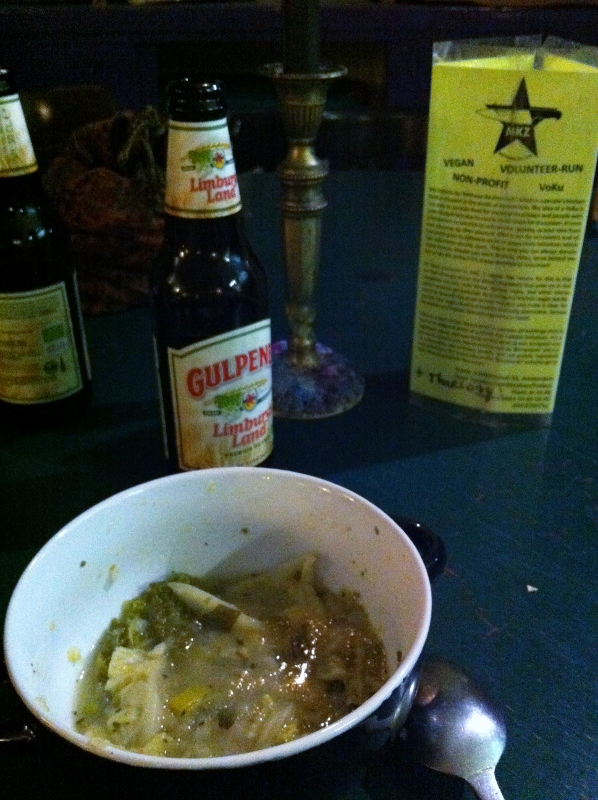
My vegan meal at MKZ

quite figured out the logistics of squats and anti-squats, but they both create really interesting, atypical spaces to commune. The Persian guy lived in an abandoned office building with 5 other roomates who each lived in an office room, while the other 30 offices just stayed eerily empty. The squated spaces were a combination or restaurants and bars, one in an old film school campus where people screen movies and train in acrobatics. People from all walks of life and different fringes of society get together for ping pong tournaments with 30 players on one table and 3 course vegan meals for 5 euros. I wasn’t any good at ping pong and didnt bring my own paddle anyway, but the vegan meal was delicious and paired well with a 1 euro organic beer.

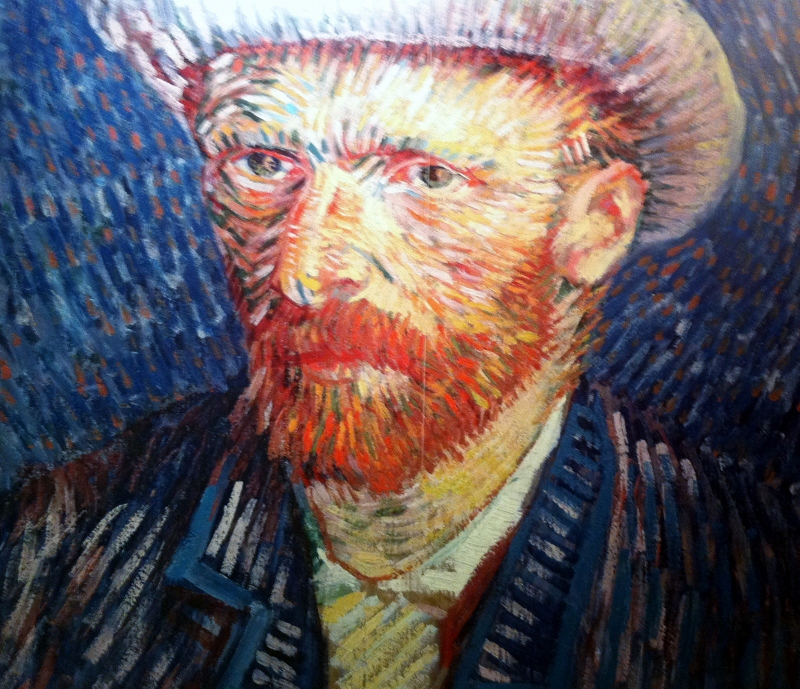
I spent my days trying to sight-see but could only bear the cold for a couple hours at a time, so broke up my walks outside with stops to the Van Gogh museum and visiting various cafes. I met

Van Gogh self portrait

a friend for lunch in the Surinamese neighbourhood and accidentally ended up eating Cuban food, and I stumbled upon the redlight district when I got lost trying to find central station.

Besides getting lost a couple times and making a few mistakes with packing (plus a few I made during the trip that I haven’t admitted to), the trip was slightly overshadowed by my upcoming phd interview so I used it as an excuse to sit still and stay inside. I couldn’t capitalize on the rare winter weather since I didnt have any iceskates, and was a little tired of the cold after a 6 week snow storm in Iceland, so I’ve decided I just have to go back to Amsterdam in the spring to really scratch under the surface of the  charming, slightly infamous city.


The Republic of Ireland


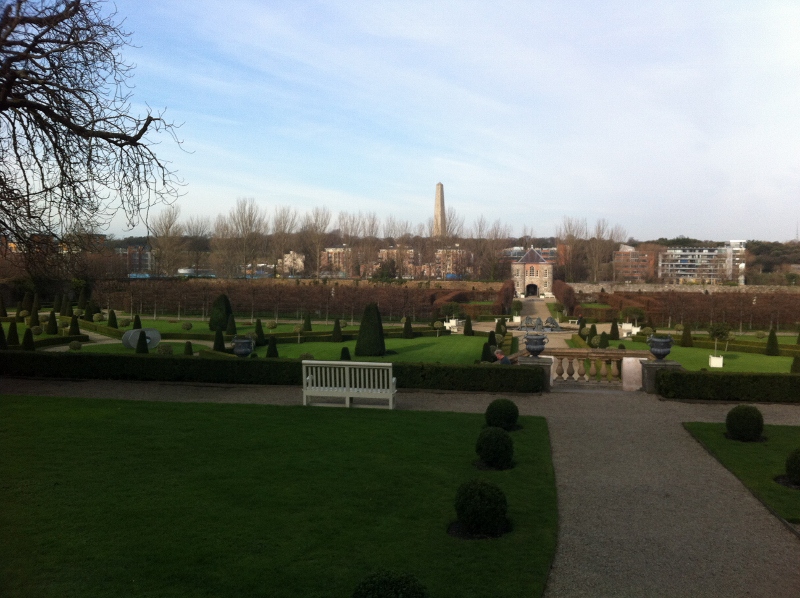
The Royal Gardens at the Irish Museum of Modern Art, with the Wellington Monument in Phoenix Park in the far background

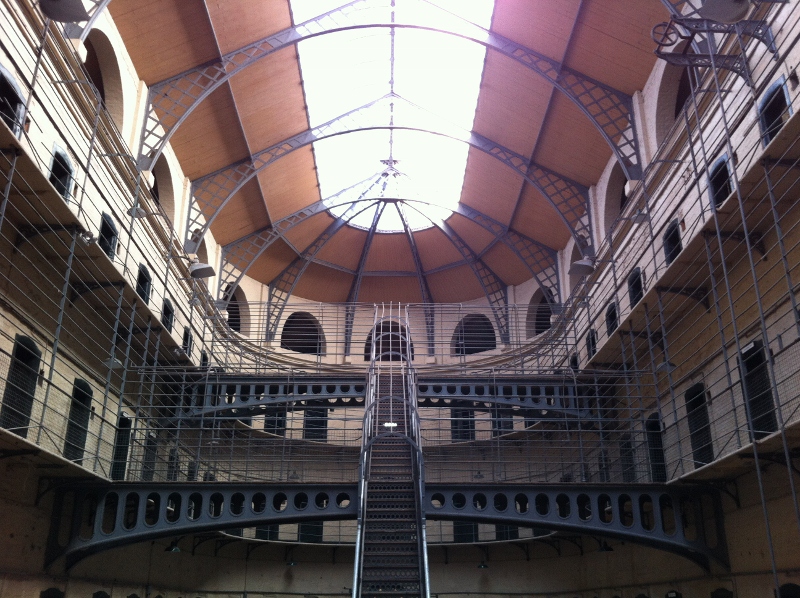
I spent a week in the ‘Irelands’, 4 days in Dublin and 3 days in Belfast, split between 3 couchsurf hosts and a handful of other local friends and couchsurfers. In Dublin, I stayed at a couchsurf house full of Irish students, and my host Griffin (what a perfect Irish name) had plenty of time to walk around with me. He worked some evenings at a Yoga studio and let me drop in on an advanced classs to partake in some well overdue detox and stretching. He showed me Phoenix park, and Kilmainham Gaol – a former prison which has played an incredibly important part in Irish history. We tried to go to the Irish Museum of Modern Art, just to discover no exhibits are open until 2013. He walked me through Trinity College campus, where I saw some of the most beautiful and oldest architecture in the whole city.

Kilmainham Gaol West Wing

We visited the famous Porterhouse, and sampled their large but weird array of beers. We had oyster stout, and some red ale that tasted like dirty gym socks. I forgot to sample the strawberry beer apparently so I´ll have to go back for that. I spent some time wandering around by myself, visiting the Guinness Store house and learning it takes 119.5 seconds to pour a perfect pint of that yummy stuff. I spent a day working on my phd proposal at the Art of Coffee cafe house, sipping on a never ending cup of tea on the edge of downtown Dublin.

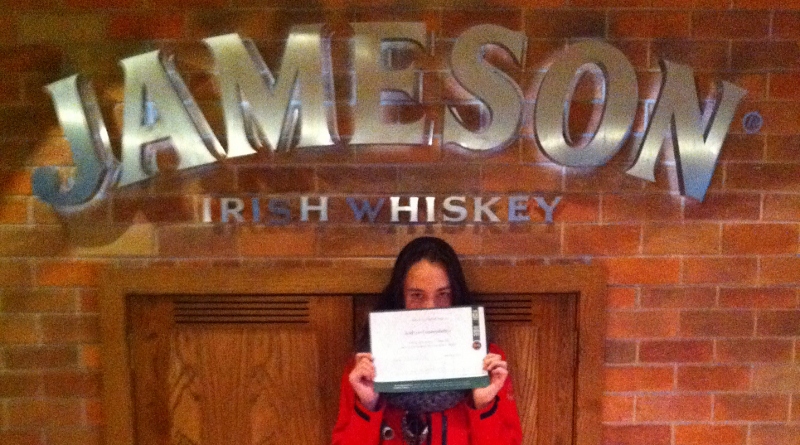
Griffin´s roomate Hugh worked at Jameson Old Distillery, so I went with my next host Gary and couchsurf friend Marcin to learn about whiskey making and tasting. We tried whiskey ginger, whiskey sprite, whiskey cranberry, and irish coffee, and learned the difference between irish, scotch and bourbon whiskeys. I even got certified as an official whiskey taster, something I never thought or expected I’d achieve so easily.


Jameson certification

I met up with another couchsurfer named Flo who is what I’d call a German Gypsy recovering from extreme nomadicism. At 30, after years of hitchhiking from North America to Patagonia, he settled into a salaried job at Google, and invited me there for lunch to talk about it. Google Europe headquarters are in Dublin, and the 3 googly towers housing 3500 employees (mostly between the ages of 25-30) are full of mac computers, free food and drink, and quirky lounges to nurture creative thinking. I got given a badge and had immediate access to everything, and ate my belly full on what Flo claimed was the best food in Dublin.

119.5 seconds later

We had a lot of laughs to share after realizing our travel philosophies were much the same, but just at different stages in our lives. He had apparently gotten his position after being selected over 2,014 other applicants, and with a facial piercing and dreadlocks, you would maybe guess its the education and character he´s developed from seeing the world that overpowered to make him top choice. He said he got the job by accident, and its impossible to leave with the pay and luxuries he benefits, but after many months there, he´s getting the travel itch bad… ironically I sympathized with him in kind of the opposite way; I’m here trying to settle into a 3 year paid phd position so I can have the comforts and steadiness of a paycheck and a home, but in the back of my head I know I’ll probably be thinking the grass was greener on my side the way I have it now.

Lotourism: a new philosophy of travel

My friend Tom who works with the London Zoo created a new word that recently got added into the English Oxford Dictionary. He’s a post-doc researcher that works closely with penguins and became a self-acclaimed “penguinologist.” If you google the term, he’s the second hit.

Likewise, I had the idea to invent a new word. I have a dialect of English my friends call Katrin-speak, but this is isn’t a word I’m pulling from my bad English vocabulary – its more like a philosophy of travel that I’ve adopted. “Lotourism.” Its a theory of tourism that isn’t captured by any other, one word. After completing my MA thesis on the discrepancies between defined and actualized ecotourism, I realized the term ecotourism is a vague, green-washed term, whose definition is undecided among academics, and sometimes unidentifiable in practice.

I liked to think I was an ecotourist, also called an alternative tourist, sustainable tourist, or an environmentally friendly tourist. But then these terms lead us to more definition inconsistencies, since “eco” and “environmental” and “sustainable” are all buzzwords overused and often misunderstood.

I like to think I travel sustainably, but not just natural resource sustainably – Im financially resourceful, with minimal luggage, staying with locals, and traveling slowly but steadily over short-haul distances.

Im not really a backpacker, since I avoid hostels and hate being defined by the stuff in a bag on my back. Im not always a tourist, since I try my best to camouflage into my surroundings and see things from a local perspective. I’m definitely a traveler, but so is the American guy sitting in business class flying to Dubai for a 2 hour business meeting before returning to London via Dakar for dinner in England’s most authentic Turkish restaurant. So I’ve realized there are different types of travelers, doing different types of travel, and when asked how I travel, my new answer is “I’m a lotourist.”

Lotourism is, in a nutshell, is kind of like ecotourism, redefined and on a budget. It is travel that is low-impact, low-cost, localized, and lonely.

1.) Low-impact: your footprint on the natural environment is minimal, which means your carbon footprint is low, your use of exhaustible or non-renewable resources is low, you create minimal or no waste, you dont contribute to the degradation of natural environments, your touristic activities and choice of transport/accomodation/or anything else travel related is based on an educated, informed decision to be as low impact as possible. Your footprint on the local culture or host is minimal, which means you learn and engage in cultural exchange so far as you do not negatively impact any local traditions or customs, you are a low-profile and low-maintenance guest, imparting little change or judgement except for what is beneficial or desired.

2.) Low-cost: you travel on a tight budget, which requires you to avoid tourist traps like all-inclusive vacations, hotels, and organized tours. You avoid shopping and buy almost nothing but necessities, spend your money on simple travel (preferably terrestrial, like trains or buses, going short distances rather than long-haul flights), and stay with locals that you know through friends, family, or travel communities like couchsurfing.

3.) Localized: you stick around in an area long enough to know it, see every corner (especially outside the city center or touristic attractions) and the surrounding suburbs or country side. You stay where you want to be, living a day in the life there. You spend your money in such a way that financial resources go directly into the pockets of locals (locally-owned businesses, local guides, surrounding farms instead of imported/mass produced foods) and you support the local economy (avoid international tour operators or foreign-owned companies in all your purchasing decisions).

4.) Lonely: last but not least, travel alone. Travel by yourself to be better immersed in your surroundings, alone with your thoughts and feelings to fully take in, process, and understand your new environment. Be vulnerable, meet local people, avoid speaking your own language, catering to the needs of a travel companion, or doing anything that you don’t feel like doing or going anywhere you don’t feel like going.Leave your Lonely Planet at home and just ask people for help as you go, talking to as many strangers as you can. Don’t stay in hostels where you’ll get swallowed up into a group of other tourists, don’t travel with a tour group or on a big bus with “rich tourists, coming your way” printed on the license plate. Travel more spontaneously, irresponsibly even, at the mercy of a local tip, with the adrenaline-rush of taking the wrong bus or the long bus, ending up on the wrong train, showing up in a place you have no clue about, learning from scratch and not a guide book. You can go for as long or short as you want, book one-way tickets, have undefined destinations, a flexible schedule, and a trip planned only one day ahead at a time.

So, for any other lotourists out there, get the word out on the new word. And, if you get it and you like it, spread the word so more lotourism can exist in this traveling world of ours.


Informal Couchsurfing

Right now Im sitting at the shores of Lake Tanganyika in Bujumbura, the capital of Burundi. The lake is so big it looks like Im looking out at the ocean, but I know Im not because there are 5 hippos wading in the freshwater grunting like asses every few minutes. Its 5:17 and the sun is about to go down, directly infront of me. Im at a place called the Touristic Beach, which is a huge restaurant/bar/patio/disco venue with seats for about 300 people, but Im only one of about 11 people, half of them staff, in this whole place. Im the only non-burundian, and alone, so it’s a perfect time to write.

the very lonely touristic beach, except for the wading hippos

Im staying here with a Burundian/Belgian couple, a pair of couchsurfers that live right by the lake. Its such an amazing luxury to be welcomed into someones house with a place to sleep, and in todays case, a hot lunch, when they’ve never even met me before. Couchsurfing truly revolutionizes travel.

Ive only had to stay in paid accommodation 2 nights so far, and my previous two hosts were informal couchsurfers. Elaine, a Tawainese American living in Kampala, offered me to stay with her when a mutual friend of ours wasn’t able to, after knowing eachother all of 15 minutes. I had her spare room, in the company of one playful mouse, who somehow found it entertaining to climb into my mosquito net, scurry up the side of it, hang upside down from the top, and then drop straight down on my shoulder, scaring the hell out of me dead asleep. Elaine lived on campus so it was perfect for attending my conference, and we went out one night for hookah and Ethiopian food before she literally gave me all the information I needed to plan my trip to Rwanda.

me and jon with a big silverback

She connected me with a couple of Belgian guys and one awesome South African guy named Jon in Kigali, where I was headed next, and after intending to only stopover a couple days, spent 3 nights in their house one night in Parc Volcan. There we managed to see the gorillas for an actually affordable price because of a friend of Jon’s, and took the best trek to the Susa group where more than 30, totally habituated gorillas surrounded us on a Dr. Seuss-esque landscape.

From Jon’s expat life I bounced to Ed’s expat life. In Bujumbura I spent half my time with an ex-schoolmate of Jon’s who introduced me to the mini-Europe community living in Bujumbura. On my first night there, we went out in a group for dinner to Belvedere, a patio restaurant on the hillside overlooking the city. None of us actually knew it at the time but we had the best seats to the lunar eclipse, so we watched the moon turn yellow, then orange, then almost deep red before totally blacking out. As eerily as it disappeared, it starting growing, fading to yellow again, until it returned to its normal white glow despite the apocalyptic feeling of it all.