Flying with the Icelandic Coast Guard

I had never flown in a helicopter before, and I’ve missed so many perfect opportunities before. I should have seen the volcano eruption last year by helicopter, but it was ridiculously expensive, and I could have seen the Hoover Dam and Grand Canyon by helicopter, but the wait was too long. Then, a few days after returning to Iceland, my friend Frikki invited me to walk his dog with him. It was 6pm, dark outside, and we played fetch in Elliðaárdalur. He was bragging to me about how he got to fly with the Icelandic Coast Guard the night before. Then he smiled casually and said, “and I’m flying again tonight. Want to come?”
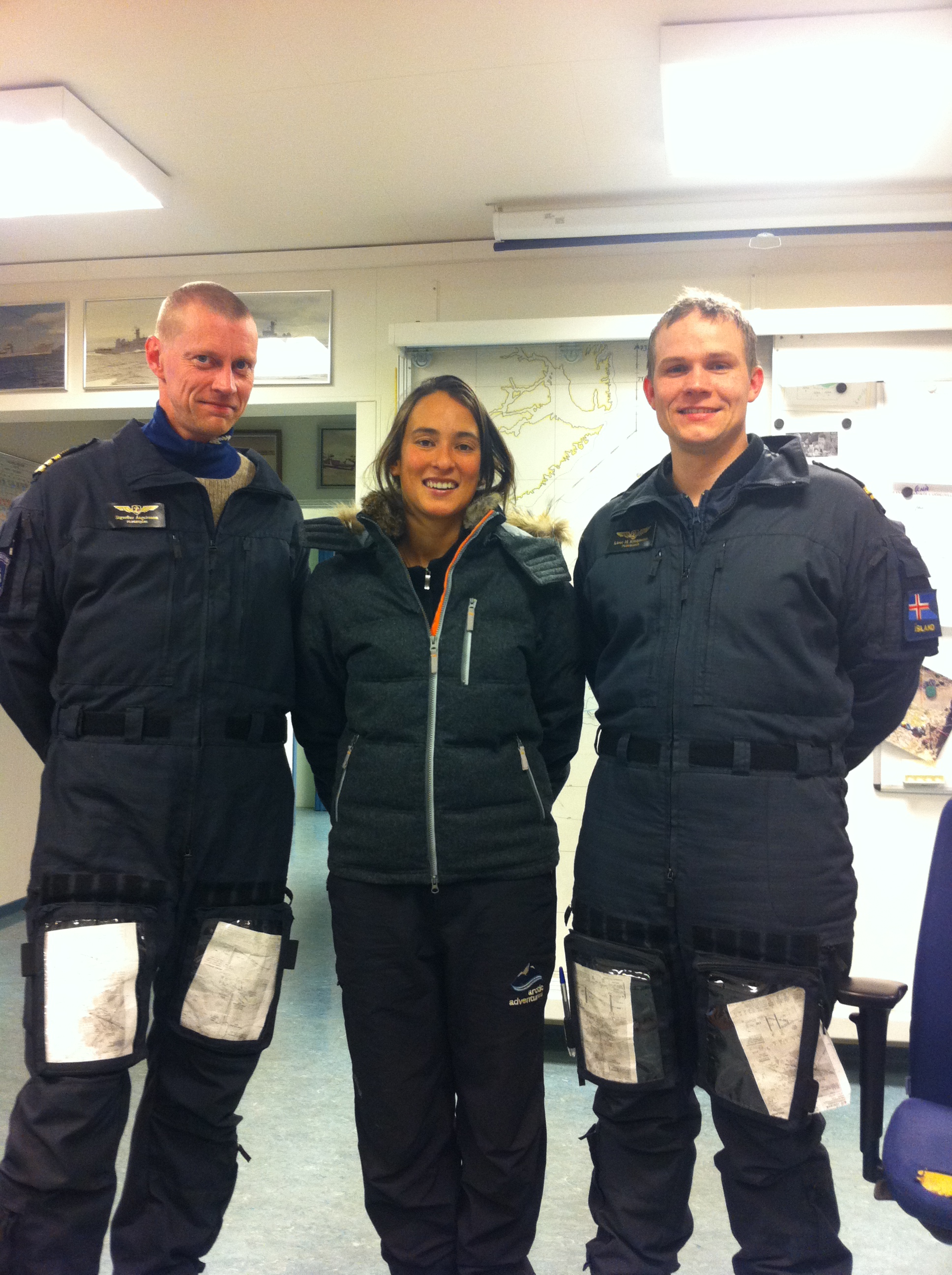
the pilots

The Icelandic Coast guard rescues farmers, tourists, seamen, and anyone else who gets into trouble when mother nature screws things up. They save injured fishermen from boats and evacuate tourists from glacier crevices – all very heroic, extreme stunts that require them to train full time. The coast guards are a group of manly men, and always fly with one doctor on board since the helicopter functions like a flying ambulance. They wear intimidating uni-suits and helmets fitted with mics, headphones, and some serious night-vision goggles, since they do almost all their training in the winter months after dark.

Frikki is a doctor, not for the coast guard (yet…), and they don’t mind flying with a couple extra people since they can practice mock-rescue situations. We were fitted with some fancy helmets too, and told to do exactly as we were instructed at all times, including the moment when we would get dropped out of the helicopter with just one cable cord as our life line.

After some debate, the pilot decided to fly us to Þórsmörk, a beautiful part of Iceland near Eyjafjallajökull only reachable by foot, horse, or helicopter.

The helicopter they fly is HUGE. Its blades are so long that you’re convinced it’ll fly even though it looks like an immovable tank. I sat in the front of the helicopter, between the two pilots, and watched them flip a bunch of switches, read check lists and make notes, over and over while the blades spun faster and faster. It was completely dark inside, and they had flaslights on their fingers. When it was time for take off, I barely noticed the helicopter lift off the ground, and hoover itself around the building and up into the sky, flying away from Reykjavik city in the most epic way I could have imagined. I put on my night goggles to see better, and everything glowed green.

The goggles are some super tech invention that the most advanced militant forces use, each pair worth more than a car. They transform a pitch black sea into glowing green waves, moving and shining like something from another world. The night sky explodes with billions of stars, and when the helicopter flies full speed, they zoom past the front window like a Star Wars galaxy scene. Lucky for us, the ground was covered in snow, and with the little light that added, our goggles could show us everything. We saw cars driving and people walking, horses running through fields, farm houses glowing with christmas lights, steam rising from geothermal hotspots, and waves break along the coastal cliffs. We saw the city glow of Selfoss as if it was as big and bright as Times Square, and even Hvollsvöllir seemed like an Oasis in the middle of nowhere.

the helicopter

While flying, I became hypnotized by the green world passing under me. The ocean looked possessed, eerily exposed when noone else can see it. The droning sound of the helicopter, almost silenced by my headphones, mixed with the background chatter of the coast guards, sounded like a lullaby pacifying my excitedness. But, my adrenaline quickly returned once we arrived in Þórsmörk; the coast guard put a rope around my body, held down only by my arms, and pushed me out of the helicopter. I dangled like a rag doll, trying to stay as stiff as a board so my cable wouldn’t slip off. On the ground, another guy caught me and held me up against the tornado winds the helicopter was creating, and untied me.

I remember looking up at the helicopter, without my goggles, and watching it like some supernatural, divine object. Without it, I’d be in the middle of nowhere, in the middle of the night, near an angry volcano, blind, and lost. But, of course, it was thinkable only because I knew it wasn’t true, and the helicopter repelled us back up into its safety in no time. Going up was scarier, since I swung back and forth between the wheels of the helicopter uncontrollably for some time before they could drag me back inside, but I was helpless to scream since noone would hear me, and I couldn’t reach my arms out since I’d slip out of my harness. It makes me wonder how they manage to drag up deranged, hysterical or panicking rescue victims…

I wish I could share a picture from my photo memory, since no camera could capture that narrow, green world I saw through my goggles. But hopefully your imagination does it justice, or else I’d suggest making friends with some doctors who know the coast guards 🙂

The Sheep round up in Eastern Iceland

I went directly from Holardalur to Fljotsdalur to chase more sheep. The round up area in the east is probably ten times bigger than the valley in Skagafirdi, and we were looking for a couple thousand sheep over a 3 day mountain ride.

Hallgrimur riding with 3 hand horses

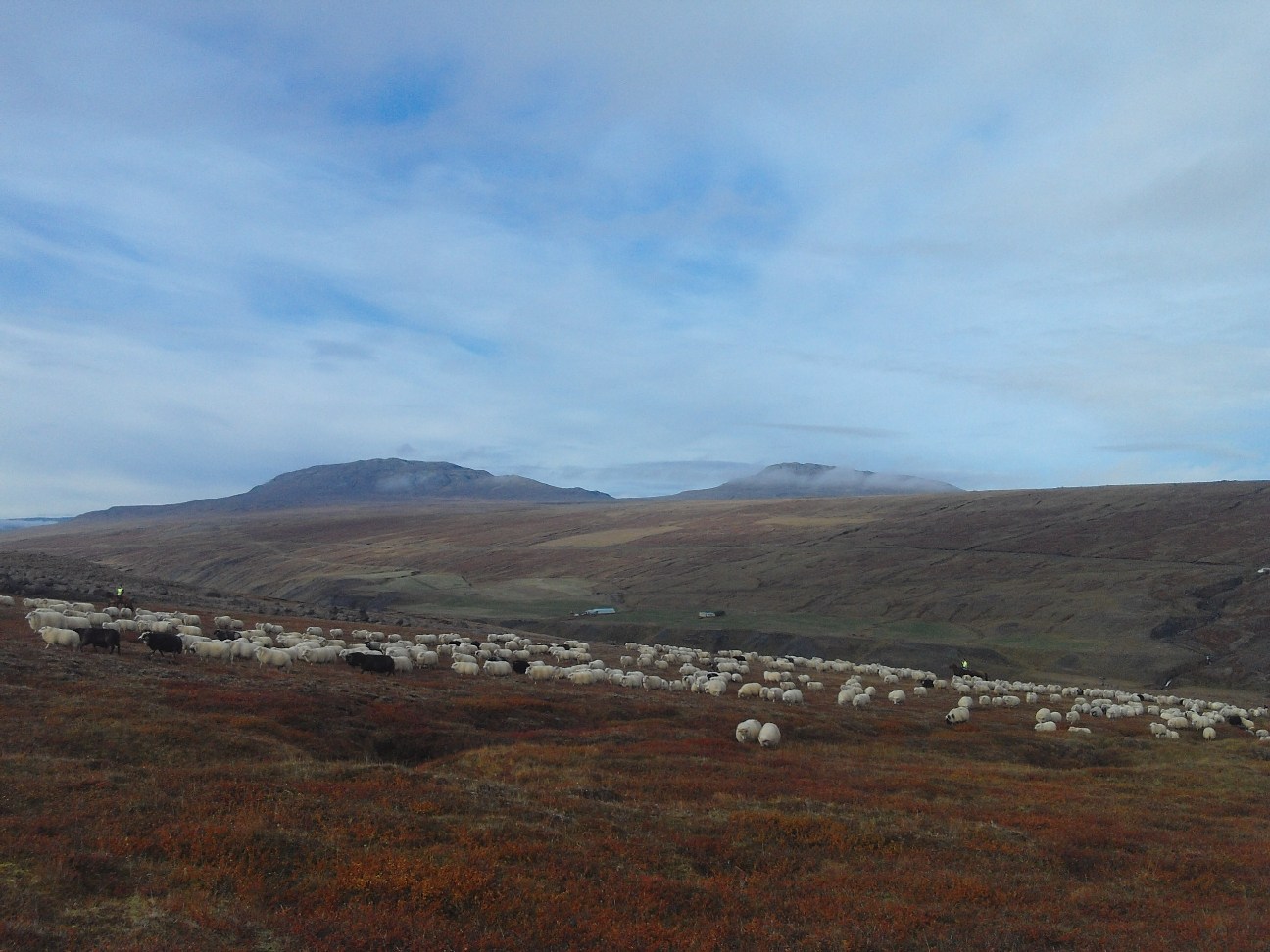
We started in Skridaklaustur, the same farm where all the horse trips start from, and rode up from the valley into the mountains. We were about ten riders, each riding one horse and holding 1 or 2 extra, and I learned very quickly its quite difficult to ride with 3 horses over the swamped ground and crossing ditches and rivers. Some other riders started from deeper in the valley and another from the other side of the mountain in Jokuldalur, and we rode all day alone looking for sheep and chasing them towards the mountain hut where we’d all meet.

After a 14 hour day, we somehow did all make it to the hut, with all our horses and the tired sheep. For dinner we had lamb soup, a welcoming meal after eating dried fish and drinking vodka all day.

On the second day, most of the sheep had crossed the river that leads us down the other side of the mountain into Jokuldalur. We had the river on the right side and a mountain on the left side of us to help funnel all the sheep together into a massive, crying herd of white fluffy mass. Some sheep that didnt get the memo stayed on the wrong side of the river, and one farmer on a 4×4 had to spend the whole day chasing 5 or 6 sheep down the harder way.

the stupid gill I had to climb

Lucky me spotted 3 sheep standing in the middle of the river gorge on a huge piece of broken-off cliff, so I took a nice long hike straight down to the bottom of the gorge, and literally crawled on my hands and feet up the loose-gravel cliff. I took with me Tyra, a 6 month old border collie puppy who probably did more harm than good. She kept fighting me over foot space on the narrow sheep track we were following down, and would stop dead in her tracks if the leash got tangled between her legs. If I took her off the leash, she would stop, stare and cry at me. I certainly couldnt carry her as I had to keep grabbing at the ground with my hands for balance. When we finally got close enough to the sheep to see them and try to yell at them, they just ran further up the cliff, and it was me who had to go fetch them. It was times like this when I wished my eye sight was a little worse, so that I wouldn’t have spotted them and noone would have known these three stubborn sheep weren’t in the right place.

One day I spotted two sheep as far as my eyes could see and started riding nearly 5 km over the flat marshy ground towards them. When I got closer, half an hour later, I realized it was 2 swans and made a mental note to self: not all white things are sheep.

At the end of the second day, the sheep arrived in Klaustursel, a famous farm in Jokuldalur that has a petting zoo complete with reindeer and foxes. We had a traditional Icelandic christmas meal – smoked lamb leg and creamy potato stew, and drank even more vodka and beer. We sorted out which sheep belonged to that valley that night and the next morning, and the rest of the sheep had to be ridden back over the mountain to Fljotsdalur where we started.

funeling the sheep to Klaustursel

The last day was less lonely, since we rode in a massive herd together – 1000 sheep, 10 riders and 20 horses, but moved quite slowly. We lost one and two sheep here and there, those too sick or old to keep up. It was always a difficult decision to make, when to stop chasing them, pass them by and just say goodbye.

riding the sheep from Jokuldalur to Fljotsdalur

My hand horse on the last day was a young, newly trained horse called Freyr that nearly managed to kill two of us on the trip. The first day he threw one of the riders off, Lilja, and she had three massive, blue/black bruises on her back and ass. After this, he galloped off and went missing for an hour until me and Hallgrimur found him in the middle of nowhere. Then, of course, Hallgrimur (the farmed from Skridaklaustur, who owns most of the horses from the horse trips) decided I should ride him the rest of the trip, since Hallgrimur has a weird way of showing his affection to me by giving me crazy horses. Freyr was always getting tangled up with the second horse I was riding or holding, and he doesnt know how to stand still but he’s very good at rearing up. He tried to rip 3 of my fingers off at one point and managed to tear a chunk of my index finger and sprain my ring finger by tangling my hand up in his reins as he reared away from me, the entire weight of his body pulling on my right hand for a good 2 seconds! Hallgrimur thought it was funny, laughed, and cleaned my bloody hand with some vodka before bandaging it up with electricity tape.

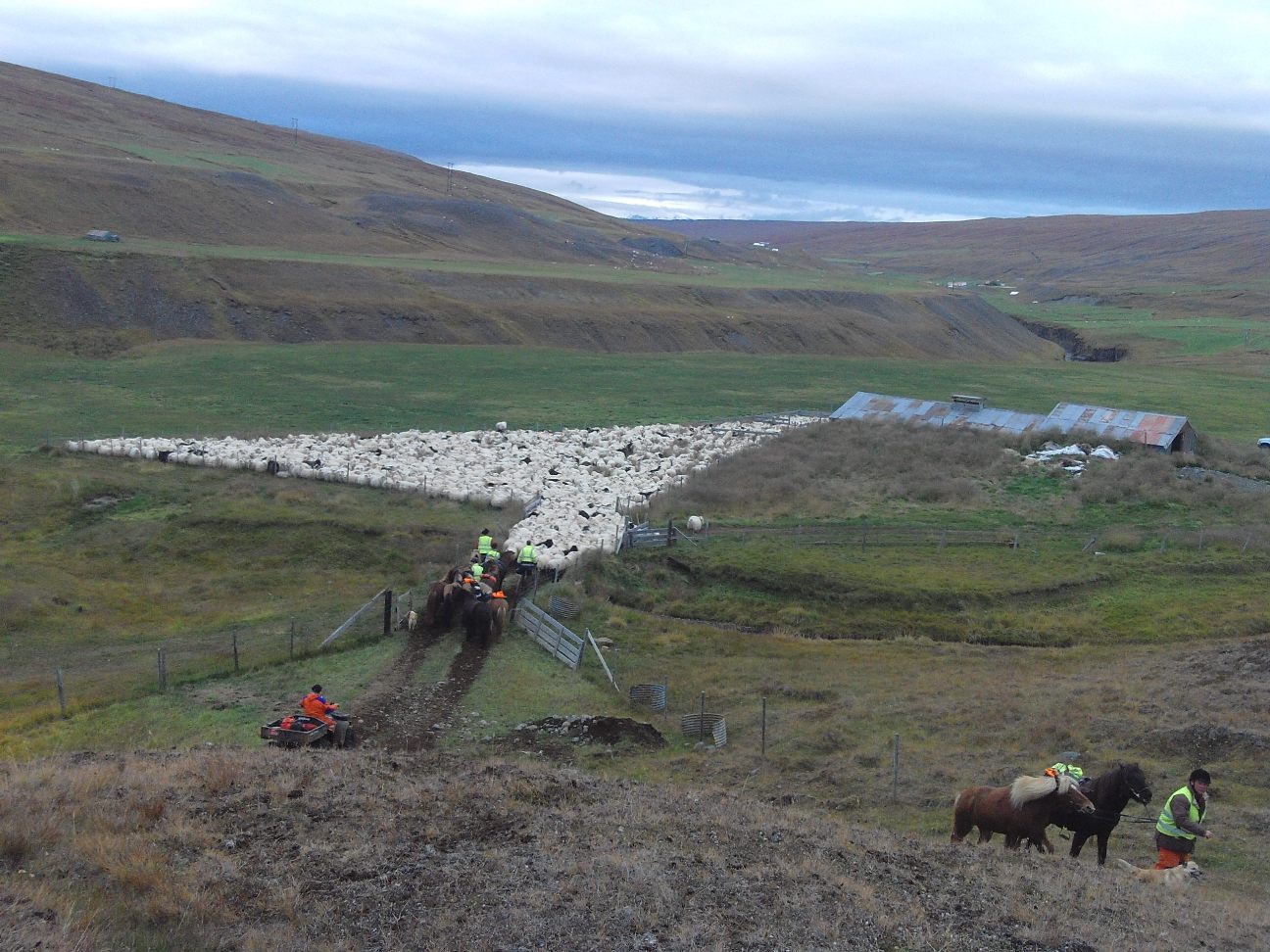
The final sorting happened on Saturday, at Skridaklaustur farm in an old stone-walled round corral. It was the busiest I have ever seen the valley, with cars and people crowded everywhere, and even when it started pouring rain, all the farmers and their kids and very extended families kept on sorting sheep.

sorting sheep in rainclothes at Skridaklaustur

The drowning “baaaah” rang in my ears days after the sorting was finished, and I’ve still got black and blue bruises on my legs from all those gnarly sheep horns. Its hard to believe that now, one week later, the smell of horse and sheep is completely gone, and even the dirt on my fingernails has completely disappeared. Its hard to convince people I really was manhandling sheep in eastern Iceland one week ago, as I sit in the sun in Munich mentally preparing for yet another Oktoberfest night, so Im glad I still have the bruises as proof.

Horseback and Hunting

Spending the summer riding horses gives you a new perspective of the landscape around you. For one thing, it passes much slower, as you have time to stare and think about the scenery unfolding. Getting into a car and flying at 90km per hour after a week of reaching maximum speeds of 30 (bouncy) kilometres per hour causes me to panic and hold onto the side of the car seat and wonder if Im moving at lightspeed. Requests for the driver to slow down just gets a chuckle from those in the car, but eventually people’s suggestions to relax are possible.

One thing I noticed is that crossing bridges is a lot easier in cars than on horseback. I was once riding a really safe gelding over a bridge while holding a hand horse, and at one point, in the middle of the bridge, they both decided they were too close to the sides of the bridge, and in attempt to stay as far away from the rail as possible, they stopped and had a push of war against eachothers sides. My leg was pinned between the two, and as one edged the other out, their shod feet started sliding out on the concrete, making sparks and stressing them more. The herd pushed from behind, also uncomfortable to be stuck halfway on the bridge, and eventually we made it over without losing anyone overboard.

One lonely old male has made a home out of Fljótsdalur, near this narrow

4x4ing through glacial streams

bridge where you get the most beautiful sight of glacier water mixing with the heavier fresh water and causing the bright blue water to line up against the brown stream. We also saw a herd of 900 reindeer when we were driving up to Vatnajökull for a glacial walk, blasting through river crossings and peering into icecaves.

At the end of August, I went reindeer hunting on horseback with 5 hunters and 14 horses. We started 15km north of Egilstaðir town, from a farm at the base of the snow-covered mountains. The beginning was a bit rocky, as 4 riders fell off their horses and we temporarily lost the herd as the 7 loose horses galloped off. I realized the hunters weren’t true horsemen (yet), and that having handhorses might reduce the chances of the herd galloping off with our food, beer, tent and sleeping bags again. We eventually got our act together and made it to Hrundalur where we tented in a rented Marmot tent that came with no ground pegs. We creatively experimented with saddles and extra horse shoes to hold fasten the tent down securely.

_MG_1447

searching for 200 reindeer, not as easy to spot as youd think

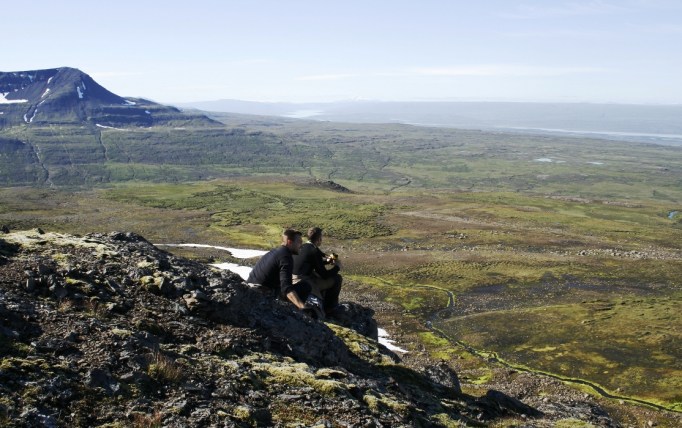
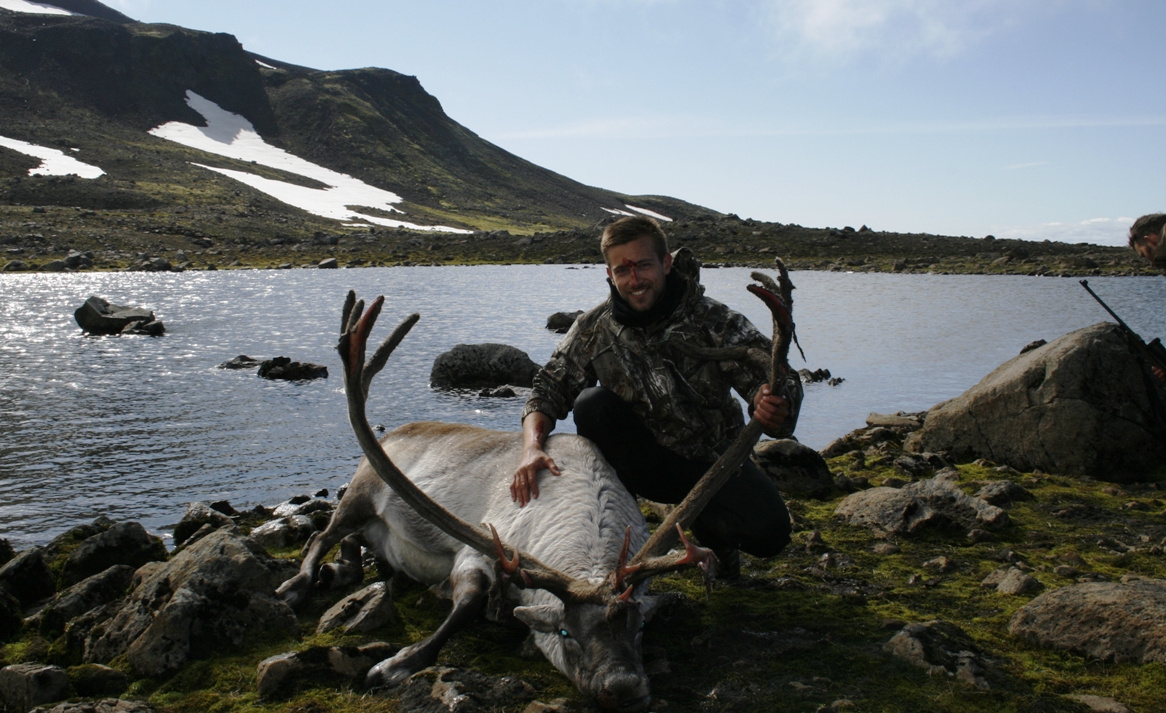
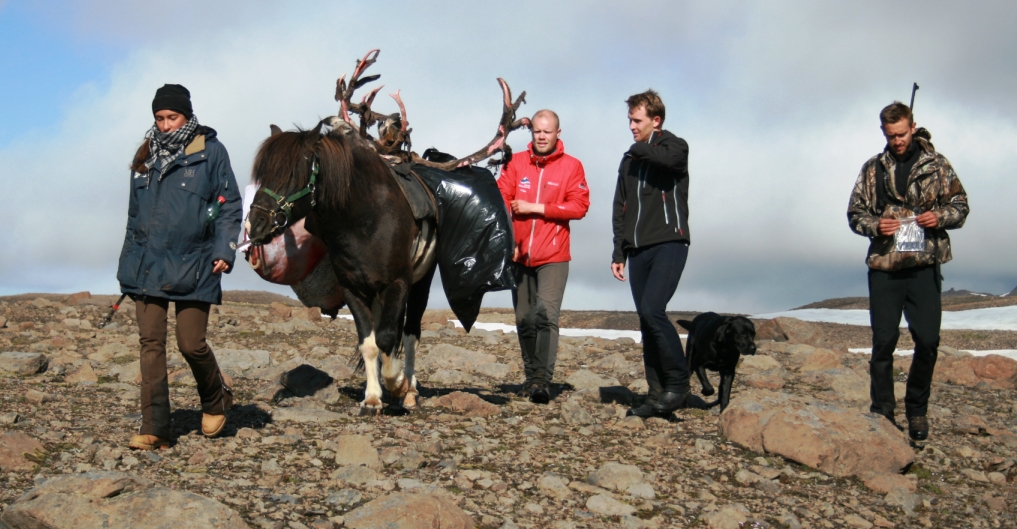
The next day we hiked hours into the mountain tops, and spotted a herd of 200 reindeer. There were 4 hunters on the trip, all doctors and good friends, but only Kalli had the hunting permit. By noon, he had shot a 90kg male, that we had to gut, chop into three pieces, and tie down on the back of one very calm, patient horse called Postskjoni. He carried the deer back down the steep slopes where we left it submerged in an icy river.

Kalli, the hunter, with his reindeer

Postskjoni carrying the deer down

There was 1 reindeer hunter guide, and me, the horse guide. I was the new Denni of the trip, in charge of all the horses and also the riders who transformed magnificently into true horsemen after 3 days of riding. Instead of Leo, Denni´s dog with the innate knowledge to herd and nip at heels regardless of getting kicked square in the head, we had Molli, a black labrador that was more interested in our wellbeing than the horses. He paced alongside us, always looking up at us riders for eye contact and assurance that we were doing ok.

IMG_1611

the hunters, our horses and the dog Molli

I remember one of the first horse trips I rode with Denni, he wore converse shoes and a cowboy hat, so I tried to put some style into my outfit and wore Timbalands and an old beige riding hat I found at a second hand store for 450kr. Jón, the former Denni, could ride with a wild goose in one hand and a bottle of schnapps in the other, but there was nothing I could do to top that except drink a little schnapps during riding pauses.

taking a break at the top of a moutain pass

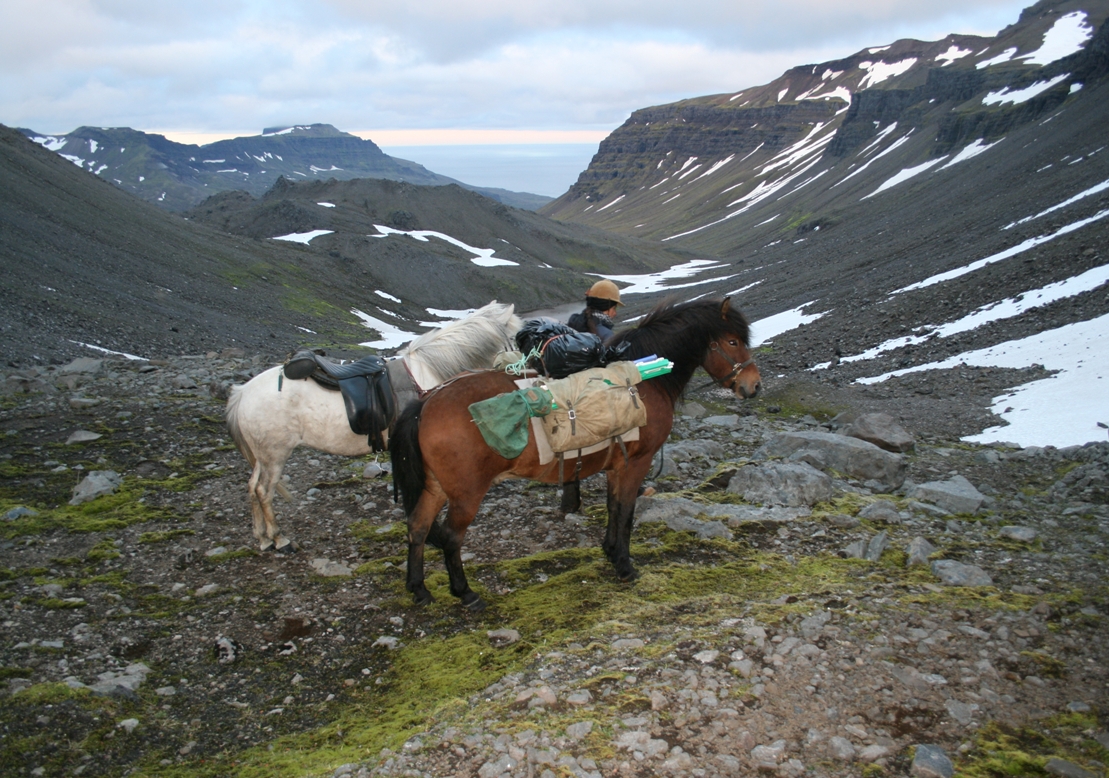
This trip was a little more difficult, with no path or tracks to follow, and the horses unsure of where they were or where to go. At least I knew all the horses by sight, no longer confused by the lookalikes or needing strips of coloured tape to tell them apart. We also didnt have to ride past other herds of horses, since we had one stallion escape twice from a fence and run along with our herd during the summer trips. On the first day of the Ishestar trips, my cell phone fell out of my pocket and a herd of 90 horses trampled it dead, but on this trip we only lost one pocket knife. We may as well have lost our phones, since we rarely had service and my battery was basically dead the entire weekend, relieving me of any contact with the outside world and only focusing on the horses and my new best friends.

IMG_1658

riding with hand horses

After completing our main hunting mission, we rode over a mountain pass, over rivers and snow, to Klyppstaðir, arriving well into the unexpected dark of night, to tent at the afterparty of a country ball in the valley where the icelandic band KK had just finished playing. We sat under the stars and watched northern lights flicker behind the silhouette of the mountains, and ate sheep heads, salted lamb, dried fish, homemade moonshine and whiskey. All 6 of us crammed into the 6 person tent that probably fits 4 more comfortably just as we started to feel a little dizzy, as the horses grazed just beyond our heads.

goose hunting on Fljotsdalsheidi

I got to choose the horses I knew and liked best from the Ishestar horse trips, and pair rider to horse like an intricate matchmaker. It was nice not to have to ride the crazies and untamed, like the case so often was one the regular tours. By the last day, the hunters had transformed into horsemen, as we all found our groove and rode triumphantly back into the valley we started, over another icy mountain pass. The next day, they skinned the reindeer, and after becoming a tight riding, tenting, hunting family unit, the boys invited me goose hunting. We drove Frikki´s Land Rover up into Fljótsdalsheiði and sat beside the pond with the most abundant, shiny goose poo that we could find and waited for nightfall. We sat very still, nibbled on chocolate, and only one flock of geese flew overhead but never landed. I fired the shotgun once anyway, without killing anything, and decided I liked goose hunting better than reindeer hunting.

Summer in Iceland

September creeps up on you like the chill of sunset sneaks under your skin after a sunny day in Iceland. All of a sudden its getting dark at 8:30 when you’ve grown accustomed to never fearing nightfall, and you start to realise how much you appreciate the warmth of the sunrays in this sub-arctic island.

OLYMPUS DIGITAL CAMERA

a glorious summer day in the countryside

Reykjavik awakens for the summer months, with a noticeable population boom from all the tourists walking downtown decked out in outdoor gear and big-lens cameras. People are out and about, drinking coffee and beers on patios, mothers walking their babies in killer heels, and the city folk flock to the countryside for hiking, bathing and summerhouse time.  There’s also a surge of concerts and festivals, the biggest two days this year being Gay Pride day and Menningarnótt (Culture Night).

the view of Reykjavik from the top of Esjan

Gay Pride in Iceland is probably the only place in the world where its more of a family event than a sexy, nudist, liberal movement. Last year’s gay pride saw Reykjavik’s current city Mayor dress up as a drag queen in the parade, and this year the parade, open-air concerts and sunny weather forced all road-traffic to be replaced by hundreds of thousands of rainbow-decorated people wandering around town.

Menningarnótt was even more vivacious, blessed by the best weather day imaginable, and organized into a 4 page spread schedule in one of the local newspapers. There was always 20 things going on at once, and there was no way to pick what to go to, since there were always two things happening simultaneously that peaked your interest, compounded by 5 other things that you had no idea what they were and your curiosity sometimes got the best of you. I had ten friends in town, 2 from London and 8 from New York, so I spent most of the day battling through a crowd with 8 obnoxious American men in tow, so my more mellow British friends had no difficulty in finding us in the crowd. I visited the Faroese embassy for some rotten food and nordic cider, saw a choir sing Psalms at Hallgrimskirkja, shopped an outdoor market that resembled more a garage sale, and listened to the informal Kaffibarinn mens choir sing acapella, pissed drunk at Austurvollir. There was always live music, and a couple main stages where the night came to a close with a bang. A sparkling Harpa and firework show sealed the deal, unimpressive by international standards, but a big enough deal to Icelanders that a parking spot within a 5 km radius of downtown could not be found as everyone came to town to see it, all 5 minutes of it.

crowd

the concert crowd at sunset on Culture Night

I went to Bræðslan, a 2 day music festival in Borgafjörður, a small sea-side village in Iceland’s easternmost fjords. Glen Hansard was the headliner, but

Glen Hansard performing at Braedslan

like a true icelandic concert, Jón Sigurðsson and some other of Icelands other most famous artists ended the concert. The final encore included everyone coming on stage and jamming together, improvising and freestyling with a

my cousin Sara, cooling off

crazy light show in the abandoned fish processing plant where the amped crowd flocked. It was July 23rd, the weekend when summer finally arrived, and people spent the days lounging in the sea and icy rivers to keep cool. We tented at the base of  a place called Elf hill, and the magic in the place was real, atleast to me.

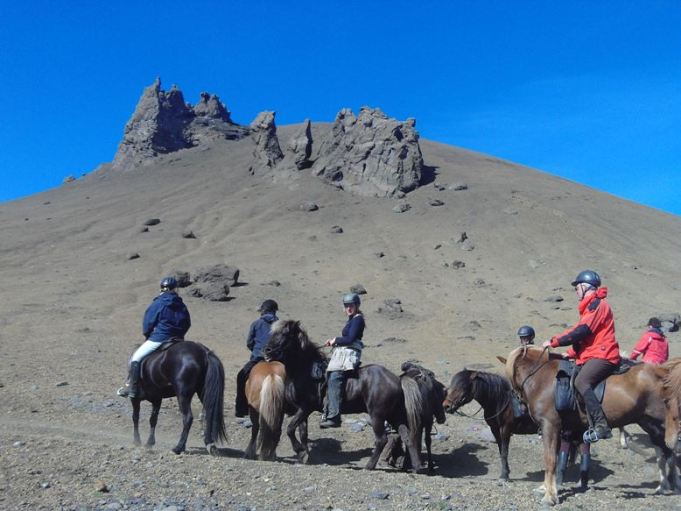
One of the riding days on the Egilstaðir riding tour takes us to Sanddalur, a remote sandy valley accessible only by foot, horse or 4×4, believed by the superstitious to be rich in elf life. Their troll-like faces are cut out in the jagged rock, blaring out from the steep, sandy slope, and while we take our lunch break there, the restlessness of the horses can only be explained by one thing – elf presence.

maxell Digital Camera

Sanddalur

Growing up in Iceland and Canada has given me a lot of privileges, but they say allergies are a bigger problem for the advantaged, since 30% of people develop allergies from having too much hygiene. I’m allergic to summer, all the pollens and freshly cut grass, even horses themselves and the sun-dried dust clouds a herd of them kicks up.  This was the coldest summer on record in 75 years for Iceland, and even the warmer east only saw summer fully bloom in late July so I survived more comfortably than expected. Still, I frequently suffered from a runny nose, snored from congested sinuses, and breathed a little raspy from asthmatic suffocation. Ironically, the hottest days were just this last week, with temperatures reaching 20 degrees even though the confused trees have started to golden. Now the rains will start to come, but with the darker skies come northern lights, a sight that makes the arrival of fall more welcoming.

Arctic Adventures

It’s amazing to think about the far-reaching effects of the tourism industry in Iceland. We’re a tiny country, 103,000sq.km and only 306,000 people, but this year, around a half a million tourists came and scoured every corner of this country, seeing more in 1 week than most Icelanders see in a lifetime of living here. You notice this on Laugavegur, Reykjavik’s main street where everyother person passes you speaking a different language, and also on highway 1, the ringroad around Iceland littered in rental cars and some serious campervans shipped over with Smyril’s car ferry from Europe.

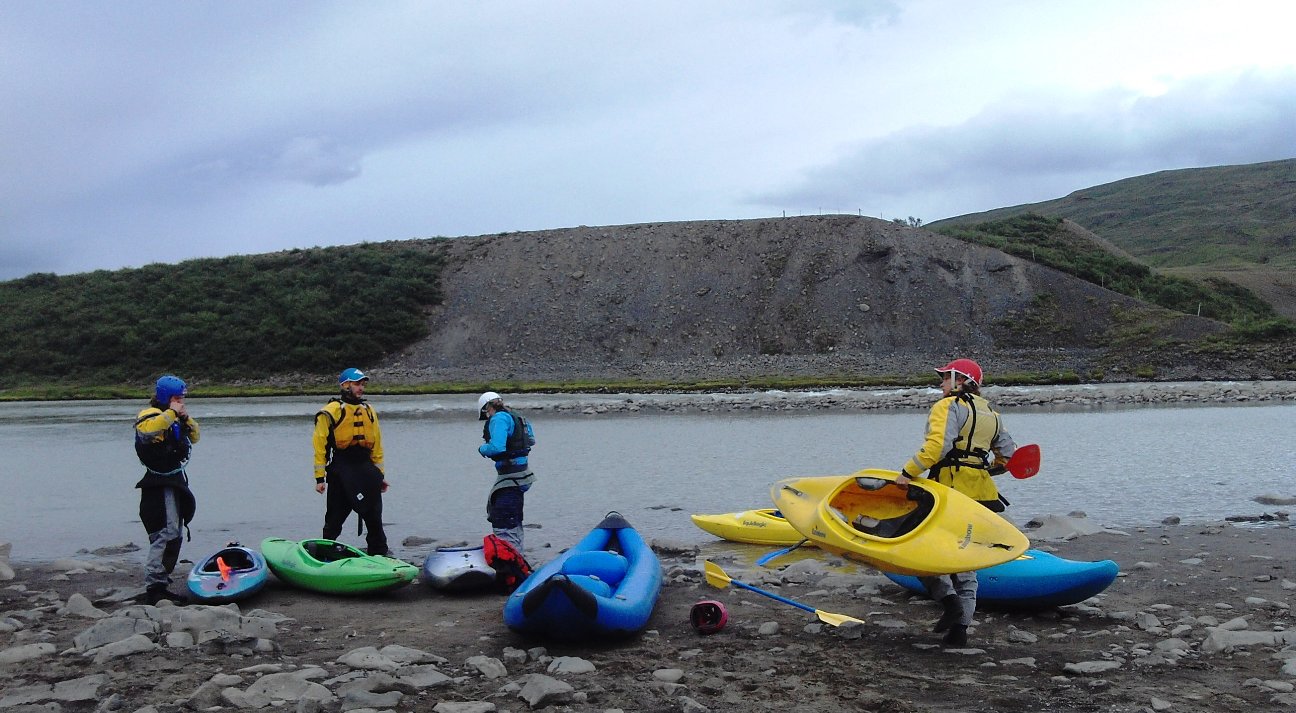
Working with Ishestar riding tours and also at the Radisson Hotel in Reykjavik, I get a sneak peek into the lives and plans of some of these tourists, fulfilling life-time dreams of traveling in Iceland, riding horses over snow-topped mountains, icecaving in glaciers, and photographing active volcanoes. There’s a tour company called Arctic Adventures that specializes in all the most extreme types of sport tourism, including snowmobiling, 4x4ing, river rafting and white water kayaking. I went with some river guides and Arctic Adventure staff from Drumboddstadir down a class 2 river, experiencing Iceland as totally adrenaline-filled tourist and enjoying the feeling of taking a vacation in Iceland.

they use old American school buses to transport kayakers and kayaks to the top of the river

I was with Frikki, a doctor who river guides in the summer but also happens to be the chairman of the Reykjavik Hunting Association, so we were on our way to the east for the reindeer hunting trip. He knew all the staff at Drumbo, and we kayaked until nightfall, pulling our kayaks and canoe out of the water well after 10pm. We stopped in one gorge to do some cliff jumping, 5m into the glacial river in our dry suits that didn’t keep us so dry but did bob us like stuffed scarecrows back to the surface immediately. That night we ate chicken masala and tapped into a bottomless keg, exchanged shoulder massages and then went into the sauna together where swimming suits are banned. I discreetly wrapped myself in a towel, but tried very hard to remain casual as 3 naked men posed like Troy all around me.

The next day we drove north to Skagafjordur, where a glacier river called Jokulsa has a west and east arm both great for kayaking and river rafting. We joined a tourist group and took 2 rafts down the class 4 east river, and drifted through the intimidating rapids with names like the Green Room, which was more of a 4+class rapid. We made it through the 3 drops and boiling currents without flipping, but watched in horror as the second boat tipped on the first waterfall and everyone got sucked under and dragged out. Paddles went flying and the safety kayaks had to rescue all the stranded souls, but eventually we were all in good enough spirit to go cliffjumping again.

kayaking is a pretty colourful riversport

We stayed at the staff house again, grilled a few hamburgers, and crashed on the couch. The staff there were from Canada, England, Nepal, France and Guatemala, creating an international hostel vibe in this remodeled barn in the middle of farm country. We were a few kilometers away from Varmahlíð, and stopped at the natural hot pot Fossalaug on our way north. We continued roadtripping our way East, driving out from Skagafirdi to Akureyri through Olafsjordur and Hofsos, stopping in at Frikki’s uncle’s farm to have the best smoked arctic char I’ve ever tasted. We were invited in for coffee and cake, and got to peek into the private life of farming. We also visited his aunt, glimpsing into her arts and crafts life out of a remodeled warehouse where she harvests down feathers from eider ducks and turns them into the clothes as soft as clouds.

To get to Iceland and go on your own Arctic Adventure, its pretty easy to find cheap flights here.


The Íshestar Egilstaðir Tours

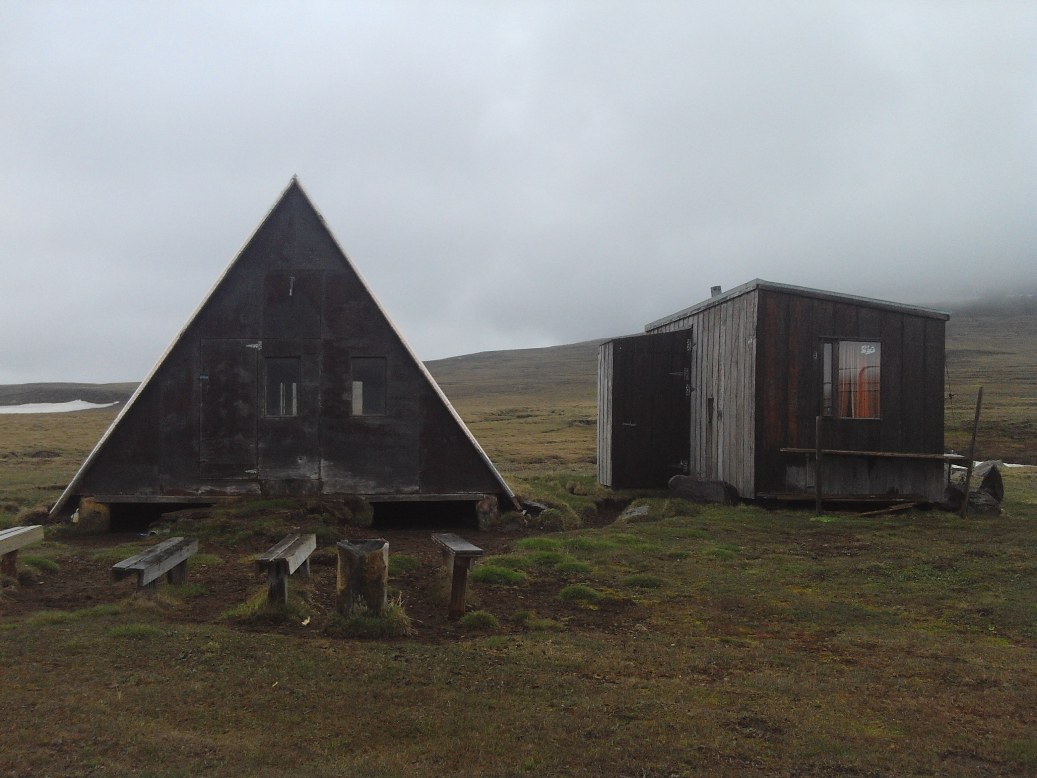
a turf hut, which used to be a sheep-house which we used for dining in and storing our saddles overnight at Fjallaskal

The horse trip season in East Iceland was only 6 weeks this summer, with 4 groups arriving for weeklong trips. I flew between Reykjavik and Egilstaðir between trips with Air Iceland, and thoroughly enjoyed the scenic flight over Þinvgallavatn, Hekla, and various different glaciers, still dusted black with Grimsvotn´s volcanic ash. The first trip started July 4th, and the highlands looked as if it was still early may. Snow still covered the ground, with grey skies, brown grass, moist earth and dismal signs of life. Not even the swan pairs you normally see in the snow-melt graced the ponds, and to believe

The first Fjallaskál we stay at, a mountain hut without electricity or running water as it looked on the first trip

reindeer and foxes could survive there was difficult. We delivered a few rolls of hay in the day prior to the trip, and the thermometer read only 3 degrees Celsius. I had heard the summer was better in the east, typically warmer and sunnier, but the temperature hovered around only 6 degrees or 9 degrees most days, though we barely had any rain or wind
The trips have 15 or 16 guests, 5 or 6 staff, and 65 – 75 horses. So 21 saddled horses and their riders follow a loose herd of 50 horses, up over mountains and across wetlands with very few roads or fences, and travel over 250km in 6 days riding anywhere between 5 – 12 hours a day. However we don’t ride straight – we stop to change horses once or twice a day, we stop for lunch and cookies and coffee, and we stop to rest the herd, let them graze or drink. Then we have to stop when people fall off, which has happened on every trip, including every staff person. Horses change between the trips as some fall ill, lame, or just too old, tired or prized to come again.

behind the herd, forming a perfect head-to-tail line up

The trip journey also changed from week to week. On the first week, snow and snowmelt prevented us from riding over the wetlands to Sauðárkofi, a primitive mountain hut near the dam. We also couldn’t drive to Vatnajökull for a glacier walk planned each tour, so we drove to the dam.
On the last day of the trip we drop back into Fljótsdalur, the valley where we

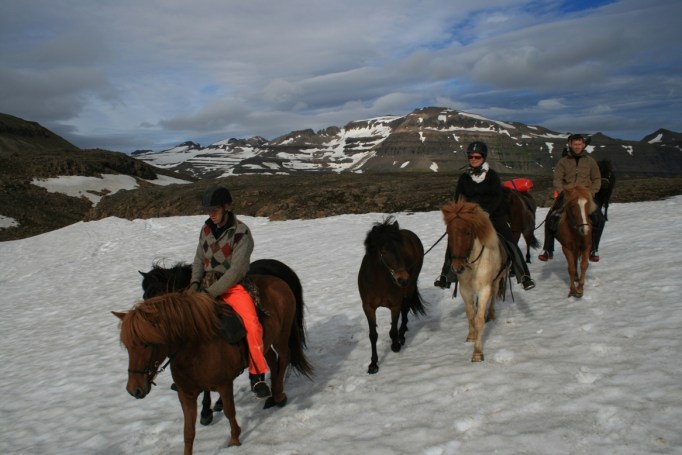
riding over some leftover snow in August

start, from Laugafell – a mountain at the end of the valley. Its up in the highland area where Snæfell is, the highest mountain outside of a glacier at 1836m, and where Vatnajökull National Park begins. This area is also home to the infamous Karahnjúkardam, the biggest hydro-electric power station of its kind in Europe and a source of contention for many environmentalists.
The trip journey also changed from week to week. On the first week, snow and snowmelt prevented us from riding over the wetlands to Sauðárkofi, a primitive mountain hut near the dam. We also couldn’t drive to Vatnajökull for a glacier walk planned each tour, so we drove to the dam and over the locks with a hair-raising drop down to what used to be a raging glacier river. However, we always try to ride the same way, and if its not weather conditions that divert us, we simply get lost. Herding 50 horses over rivers and ravines trying to find the path again is tricky, especially when Denni is always directing me to follow the track and without a track we make new ones and often reach a fork in the road that no-ones really sure which to take except Denni. Then there’s a difference between horse tracks, sheep tracks, and road tracks, so sometimes the hoof prints leave the car tracks or the paved road becomes a dirt road and its impossible to pay attention to where you’re going, what your horse is doing and where the herd is trying to go, and synchronize this all with the same end destination. We have walkie-talkies between the herd leader and herders, but trying to get it out of your pocket, hear and speak into it while riding and yelling at a herd proves difficult. Somehow, we always make it to where we’re going, with all the riders and horses, so that means its been a good day despite how many falls, turns or hours it takes.

riding at the front of the herd, towards Snæfell, along the easily visible horse tracks in a rocky desert


Austurland: East Iceland

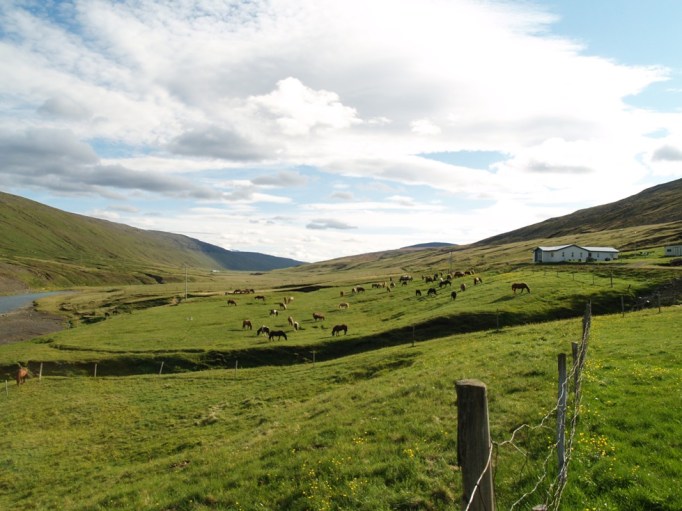
Returning to Iceland only gave me one day in civilization before flying directly to Fljótsdalur, a farm-filled valley in East Iceland where reindeer roam freely and sheep crossings are the only form of traffic control. The human population is less than a couple hundred, but there are hundreds of horses and more than a couple thousand sheep, nestled on either side of a never-ending glacier river that carved out the valley eons ago. Some farms have been abandoned, standing almost as lonely as the ones still inhabited, and unreliable cell phone service enforces the feeling of being left behind from the outside world.

Egilstaðir, the farm where I stay

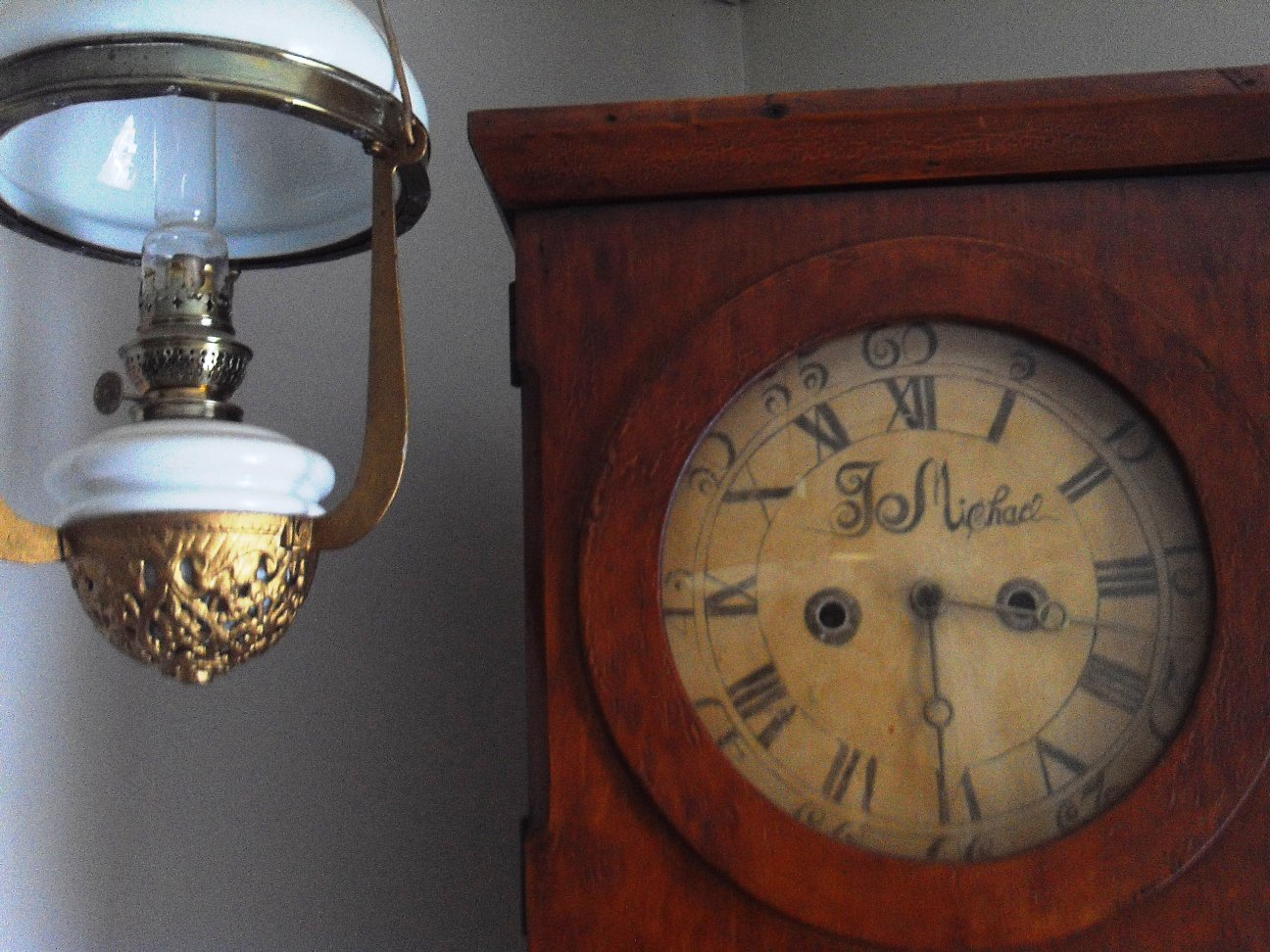
Ironically enough, the farm I’m staying on has the fastest internet I think I’ve ever used, but still my phone roams endlessly. Im staying in a house built in 1940, full of antique clocks, furniture and décor from each the last 3 decades. There’s an iron made in 1815 and a grandfather clock from the turn of the century that has a hand-written clock face. There’s a phonograph from the

hand-written clock face

1920’s, and tons of nick nacks from the 50’s, 60’s and 70’s, many of them horse-themed. The room I sleep in has a very narrow, wooden bed, a horse lamp and some new toys from my friends’ 11 year old daughter.

I only stay here the two nights per week – the night before the horse trips start, and the night after the 6 days trek has ended. Its extremely cozy, with that natural feeling of home even though I had never been here before this summer. It’s the furthest functioning farm in the valley, with a couple abandoned barns a few kilometers deeper. A border collie named Leo wanders in and out of the house, keeping the sheep away from us… or us away from the sheep, I’m not sure.

It’s commonly said the weirdest and most creative people in Iceland come from Egilstaðir and around the east, like the famous Icelandic painter Kjarval. My friend that lives here, aka the big boss of the horse trips, is leading these Ishestar highland riding tours for the first time this summer, but has been guiding horse trips all around Iceland each summer. He can miraculously catch and ride any horse, even while holding (and snapping) a 2m  whip, and sometimes rides with his dog. He must be some sort of an animal whisperer, since Leo only listens to him and the animals seem to let him do whatever Denni wants to do to them. He’s got bright blue eyes and disheveled hair that suits his film-maker identity he holds during the winter. He also has his quirks, a man of few words who knows horses really well but still forgets their particular names, having confused some for others, mistakenly caught (and ridden) the wrong horse, and then not having a clue who one or two even are. He almost accidentally bought the wrong horse, when he realized the farmer was trying to sell him the spastic brother who happens to look almost the exact same. He’s soft-spoken almost all the time, except for when yelling at his dog and the horses since they don’t always listen exactly to his whispers.

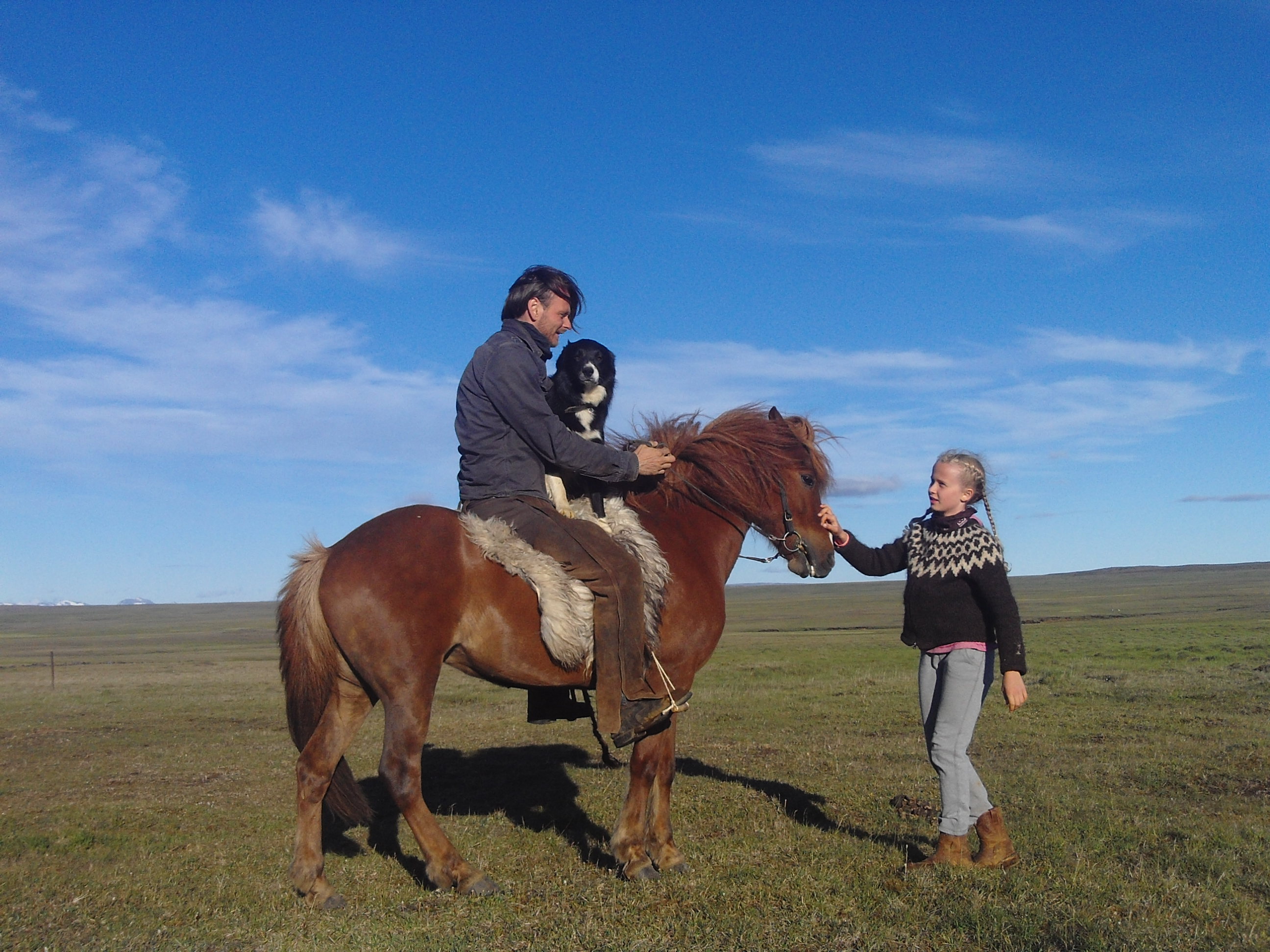
Denni, the horse and dog whisperer, his daughter Soffia, and Leo

Denni is from this area of Iceland, and happens to be related to almost everyone in the valley, so the riding tour is a bit of a family affair. Horses from ten or more farmers that are all his uncles and cousins and second and third cousins make up the herd of 70+ horses we ride with, and each farmer has his own quirky story. There´s Baldur, who has the longest sideburns I´ve ever seen, who lives on a farm full of turf houses and usually smokes a pipe. There´s another guy who´s super active on facebook and uses his manure-spreading tractor as his profile picture since its his pride and joy. There’s Jón, the former big boss of the horse trips, who always abides by the rule ´its always 5 oclock somewhere,´ which, unfortunately, eventually lead to his demise. There´s a farmer who owns a hobby farm, a kind of a petting zoo, full of the usual aves, dogs and sheep, plus some pet reindeer and arctic foxes. He speaks with a glottal, rolling “R” that makes you second guess if he’s trying to speak Danish, but its just regular Icelandic that’s slightly more difficult for me to understand. He met his wife by sending a picture of his kitchen window-view many years ago to the local midwife school advertising “this is what you could have.” One very lucky girl responded positively and now spends her time making arts and crafts out of reindeer leather on their farm, probably staring out that very same window.


My favourite things about being in Iceland

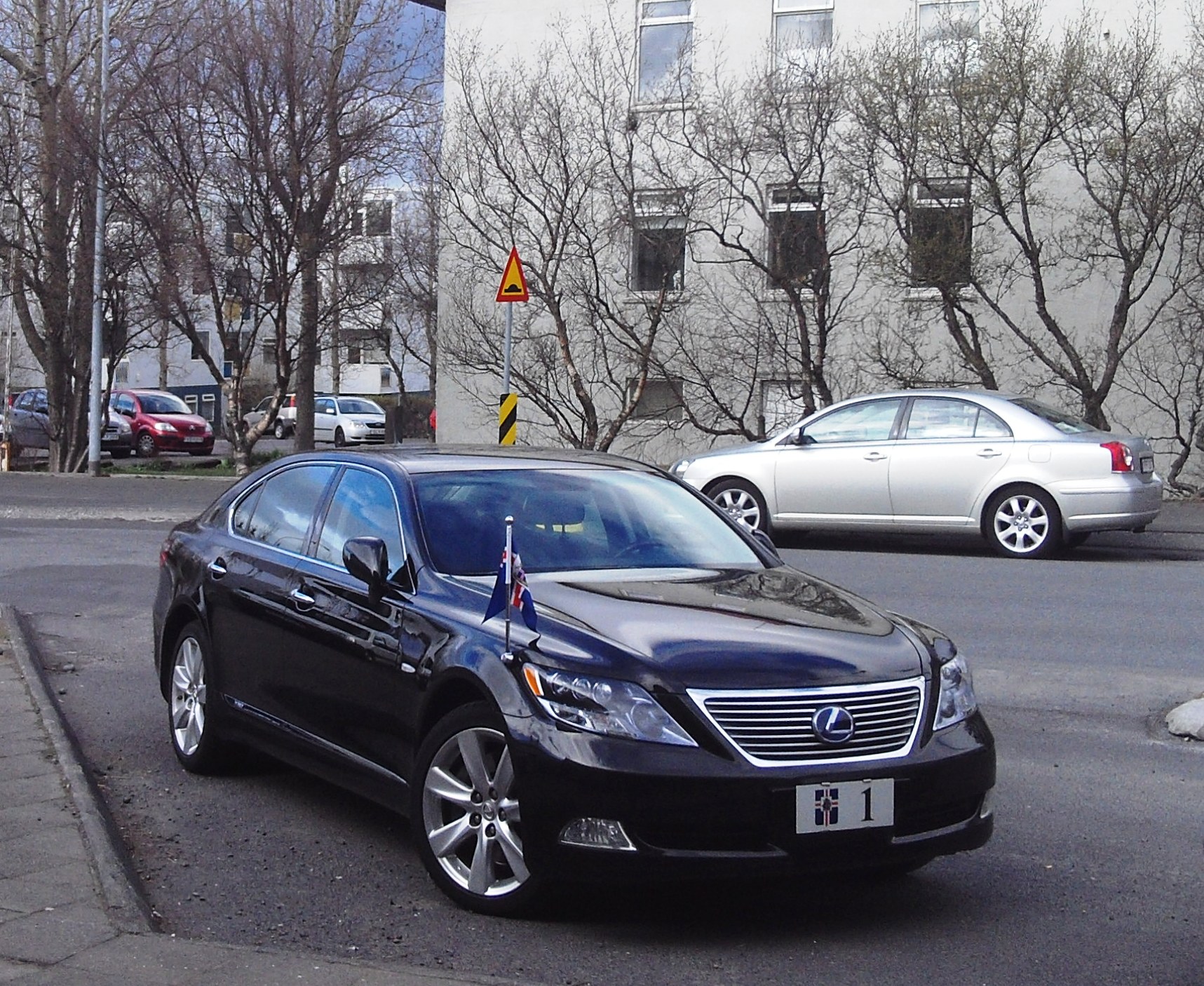
Only in Reykjavik can you run into the president twice in one week. The first time I saw him, he was attending the 85th birthday of my former elementary school, and had parked his License Plate #1 Lexus outside adorned in one tiny Icelandic flag. I don’t think many presidents attend elementary birthday schools in other countries, or roll up without any security, additional escorts, or media in sight.

the presidents car and its patriotic Icelandic flag decoration

The second time I met Olafur Ragnar we wound up having a small chit-chat about the meaning of life (thank you, Viktor Frankl) at the bottom of a mountain without anyone else around except his tired dog and grumpy wife. Between these two meetings I attended a culture day parade and saw the mayor of Reykjavik stroll past casually, just looking more like the comedian-actor personality he’s more famous for being. Only in Iceland can you see such important politicians leading regular, day to day lives, without anyone bothering them or being followed by a press frenzy.

Maybe that’s not as impressive as it sounds since Iceland is a pretty small place, and people brush shoulders with important politicians and famous celebrities all the time. But, the benefit of having so few people in a country means you run into people you know all the time, and the everyone-knows-everyone mentality makes it a very welcoming place that truly feels like home everytime you come back to it, especially from insanely large and anonymous places like New York and London.

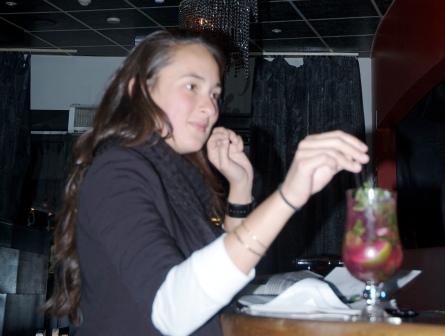
trying to stay cool, drinking a mojito

The smallness of Reykjavk is also refreshing to travel within, since it doesn’t take longer than 15 minutes to get almost anywhere in the city, and we don’t even have (or need) a rail or underground public transportation system to gobble up two or three hours of our day just commuting (I never miss the London Tube!).

The smallness also makes Iceland incredibly safe, with very little crime, but has the catch of making dating or personal privacy a little more difficult to manage. Fashion trends and businesses quickly phase in and out, and currently, its all about mojito’s, sushi, juniform and sexy stockings. And thank God hotdogs never go out of style, since the first thing I crave when I get home is always a Baejarins Beztu pylsur.

free seaswimming is on daily now at Nautholsvik

My most favourite thing about Iceland is probably Icelandic water. The swimming culture is fantastically alive, with public pools in every neighbourhood and seaswimming rising in popularity all year round. When roaming the Icelandic countryside, hotspring water baths and running streams provide natural pools and clean, drinkable water, infinitely disposable to you at no cost. I was recently at a café at JFK International Airport, and out of their 7 bottled water choices, 3 were Icelandic, and cost between $2.65-$3.50. Its such a blessing to get home, turn on my tap, and have the cleanest water pour out of the sink at colder-than-fridge temperature and saturate my thirst with the best tasting little H2O molecules I’ve ever had… for free. Any other drinks, especially alcoholic ones, make up for this benefit by being absurdly overpriced, but its nice not to have to budget for your daily water supply and constantly worry about the sanitation of the water you’re drinking like I so commonly obsess about elsewhere.

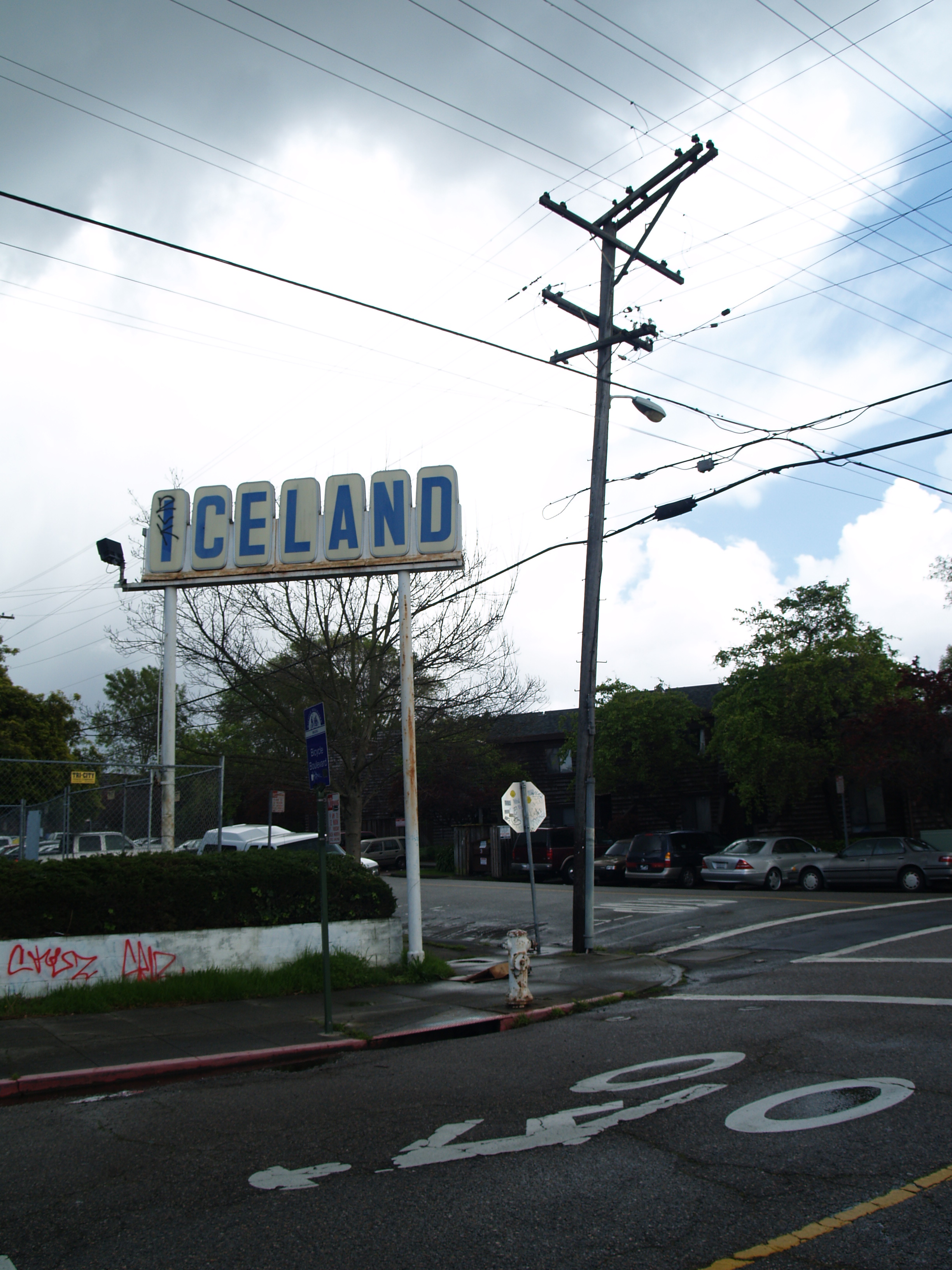
Photo Highlight: Iceland in the heart of Berkeley

a slightly confusing sign locating Iceland in the middle of Berkeley, California

this ice-skating rink closed a few years ago, but back in its good old days (circa 40's to 60's) was a popular place no-one would have predicted to become abandoned to graffiti artists