What to do in Russia

I’ve been trying to go to Russia for many years, but never made that many attempts. Once Icelandair had a sale to St. Petersburg for a little over €100 each way and I spontaneously bought a one way ticket there. Of course I found out soon after I needed to apply for a visa with an invitation letter and a return ticket, so that didn’t work out. I once had a 16 hour layover in Moscow on my way from Iceland to South Korea, but I didn’t manage to talk any of the immigration officers into letting me thru border control, even if just for a day. But I did manage to learn to read the Cyrillic alphabet, which was helpful when I finally made it.

Suzdal, one of the Golden Ring cities

Suzdal, one of the Golden Ring cities

There’s a food festival which started not so long ago called Foodiez of Moscow, and Thrainn the chef participated last year. So he’d been through the visa process and knew a lot of good chefs in Moscow and St. Petersburg. We each got an invitation letter from an Icelandic meat importer in St. Petersburg and then the visa was set. So now that I was finally going to visa, what did I want to do?

For starters, I wanted to go everywhere and see everything, but being the largest country in the world, that covers 11 time zones and isn’t exactly tourist loving (and speaks a language I don’t understand), I was a little restricted. And with only 2 weeks, I had to focus on the small area between Moscow and St. Petersburg, or, the ‘European’ part of Russia.
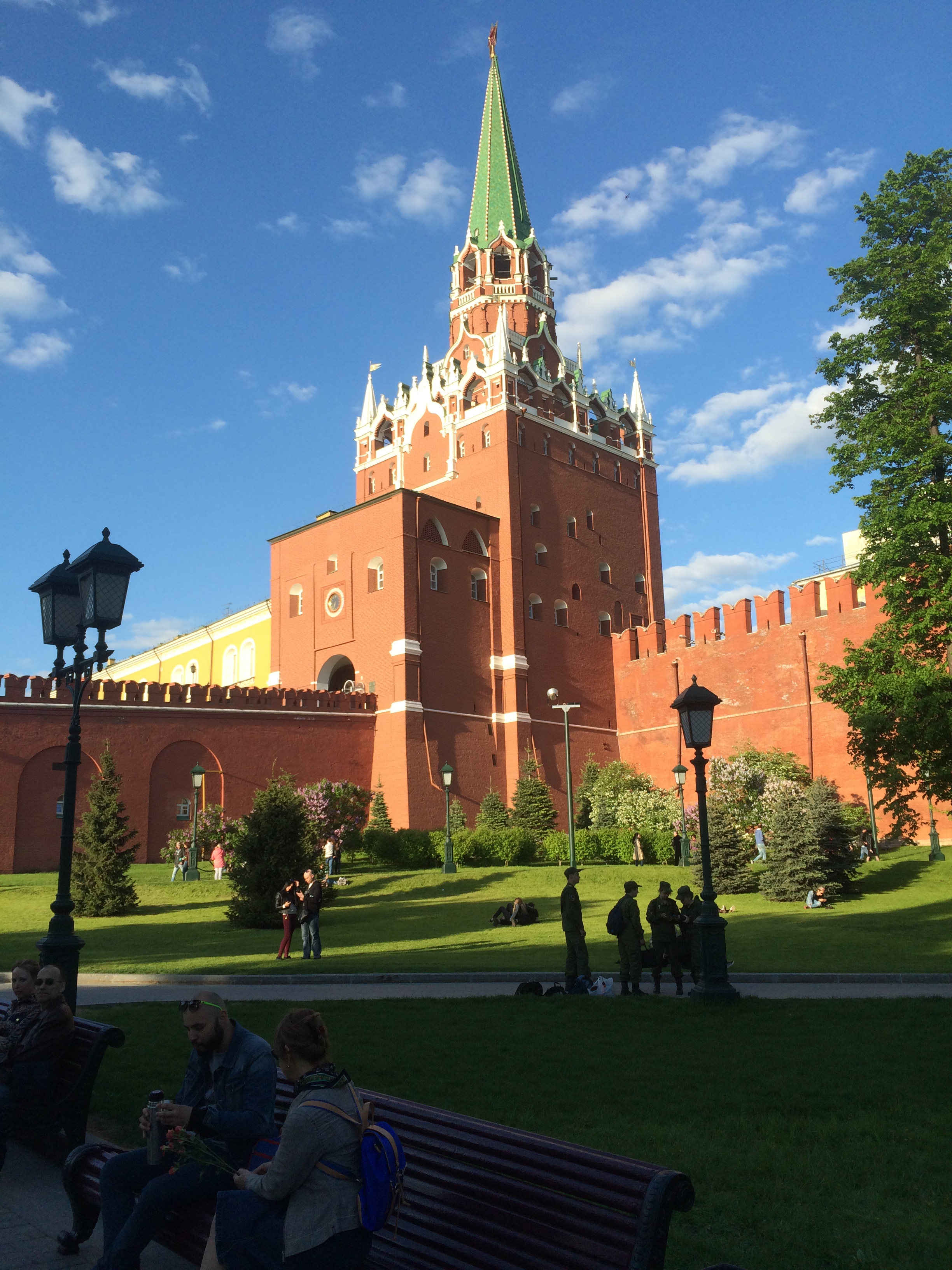
Moscow's Kremlin

Moscow’s Kremlin

Most guidebooks will tell you to do the same thing, and I don’t have much to add except the order which we did them. Moscow, you have to see the old fortress, called the Kremlin, which is full of exhibits, museums and orthodox churches, and the Red Square where you’ll find St. Basil’s Cathedral, a church that looks like its made of candycanes and came from Disneyland. The Golden Ring is a chain of cities northeast of Moscow, which we visited counter clockwise and skipped the more industrial cities. Vladimir was nice, Suzdal and Rostov were nicer, and Sergiev Posad wasn’t necessarily the nicest, but by far the busiest and most touristic.
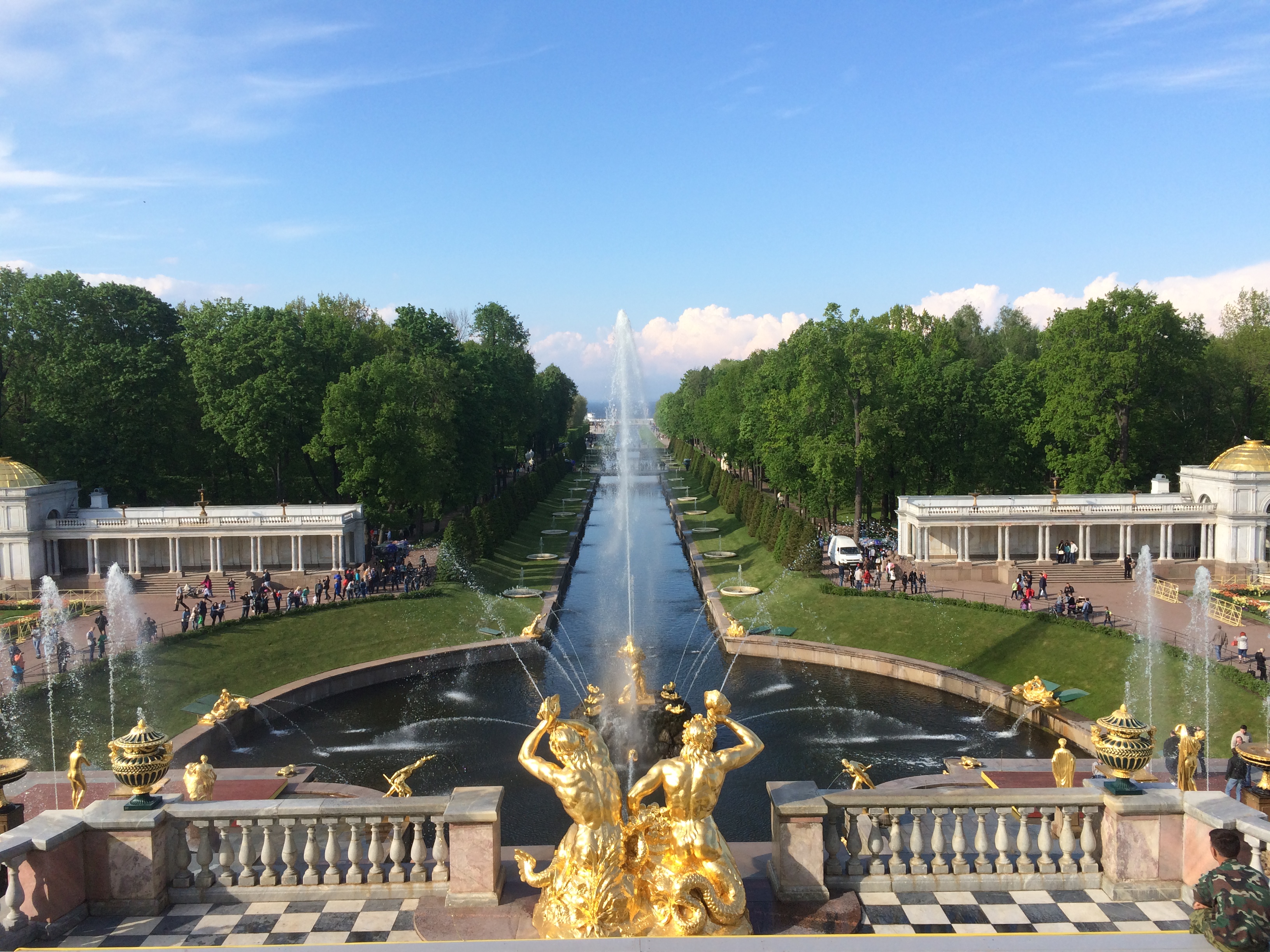
Peterhof garden

Peterhof garden

The only other travelers we shared our kremlins, parks, museums and churches with were people from Russian speaking/former Soviet countries, and a thousand Chinese tourists. The latter always traveled together in large groups, usually touring by bus and magically managing not to mix up with the other dozen or so Chinese groups wandering the same sites.

The timing couldn’t have been better, since summer had just started but many trees were still filled with colourful spring blossoms; the sun was shining and the weather hit nearly 20°c every day. Even the big cities still had tons of parks and green spaces, and rivers and water fountains, so everything seemed lush and alive. Some gardens were to die for, and even charged entrance, but it was worth every ruble to see Catherine´s Palace garden and Peterhof Palace garden.

Catherine the Great's palace

Catherine the Great’s palace

Both those palaces are day trips from St. Petersburg, and can be taken with a boat, ferry, train or bus, and it was always fun to try a little of every transport form. After renting a car for the Golden Ring and backpacking the rest of the way, we had managed to ride the speed train, the local trains, long-haul buses, ferries, trams, local buses and the subway. Stops and stations usually had Roman letters, but it was definitely helpful to be able to read Cyrillic and try to phonetically sound out the words we saw to the words we heard. We stopped half way between Moscow and St. Petersburg, lengthening our trip from only 4 hours on the fast train to 7.5 hours of half fast-train and half local train or bus, but it was worth it to visit the medieval town whose kremlin was on the beach!

so many gold-domed churches...

so many gold-domed churches…

Some other stereotypes I had to fulfill were to drink vodka, trying as many types as humanly possible (you could probably stay in Russia for a year without trying the same vodka twice). I also wanted to see a Russian ballet and some Tchaikovsky or Rachmaninoff symphonies. We watched Chopiniana in St. Petersburg, and just the Mariinsky theatre itself was worth the visit (think of something like Teatro alla Scala in Milan). We saw a Prokofiev piano concert and the opera La Sonnambula in Moscow, at different theatres and only two of over a dozen available.
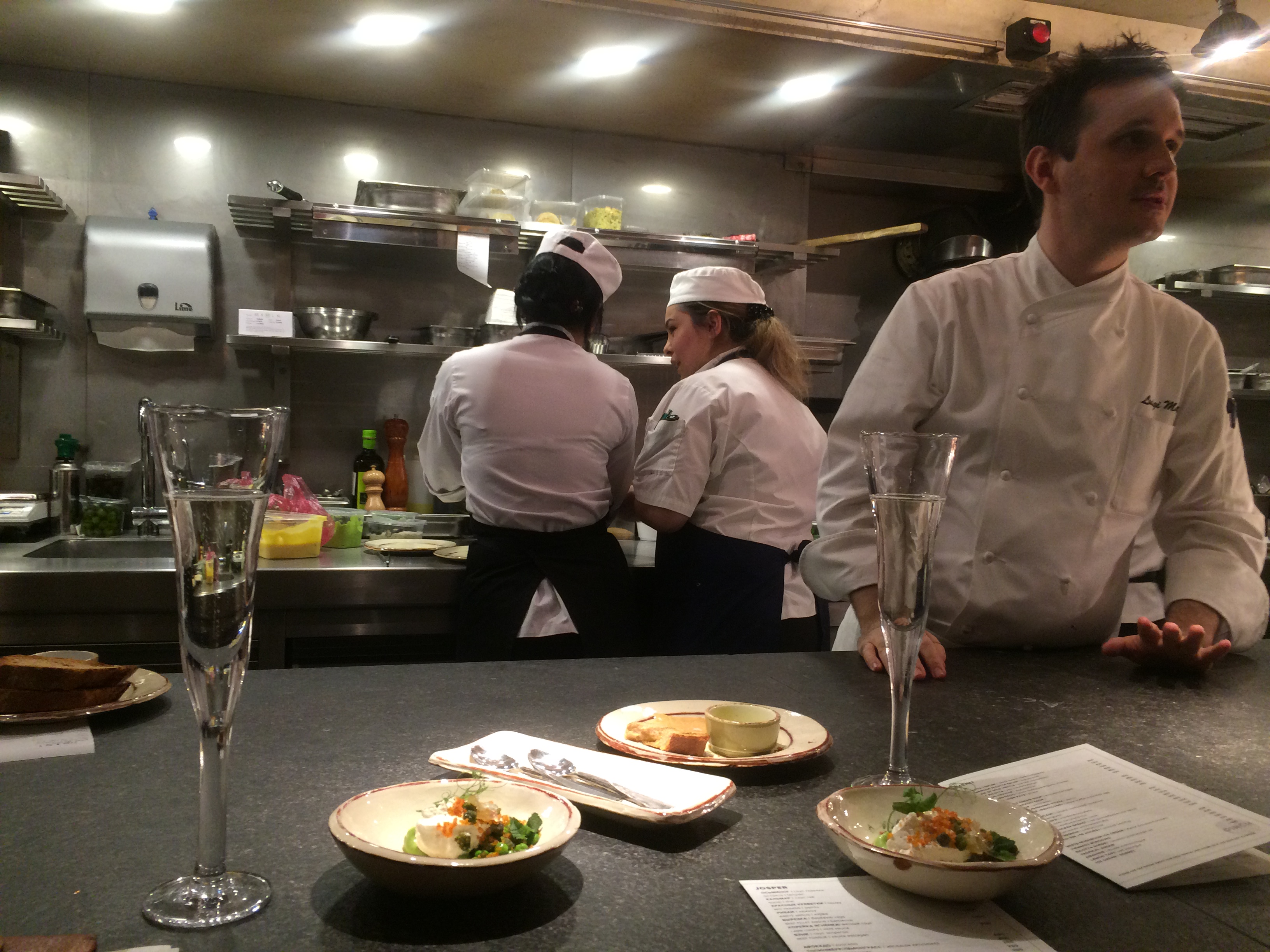
Luigi serving us on the chef's table at Pinch restaurant

Luigi serving us on the chef’s table at Pinch restaurant

If you also want to go to Russia for a foodiez trip, these are the must taste spots in Moscow, many of which turn into nightlife places on the weekends: Pinch, Twins, Uilliams, Ugolek and Severyane. If you want to try one of the top 50 restaurants in the world (#23 on the San Pellegrino list), try to get into White Rabbit, at the top of a city tower with great views of the city. In St. Petersburg, try Hamlet & Jacks or ‘Morojka for Pushkin’. With your meals, try some Russian wines, especially sparkling wine, which was much better than I expected. And for all of the above, its fun to try to sit on the ‘chefs table,’ where you are basically given settings and served on the kitchens service board.

Iceland places 5th in the Bocuse d’Or European Selection

If you’re into food and cooking and restauranteering, you’ve probably heard of the competition Bocuse d’Or. It’s namesake, Paul Bocuse, is a super famous and savvy French chef who’s had 3 Michelin stars at his restaurant just outside of Lyon for over 50 years straight. He brought French cuisine and French chefs to the forefront of fine dining and international gastronomy, and created the Bocuse d’Or competition in 1987. It’s a 2 day compeition that happens every year, first every two years on a regional level (Latin America, Asia-Pacific and Europe), then every alternating year, the ‘worlds’, some sort of a cooking Olympics (which includes the winners from each region, plus Canada, the USA, and Morocco, and 2 ‘wild card’ invited countries). In the end of each Bocuse season, you have 24 nations in Lyon every other year competing for the Bocuse d’Or.

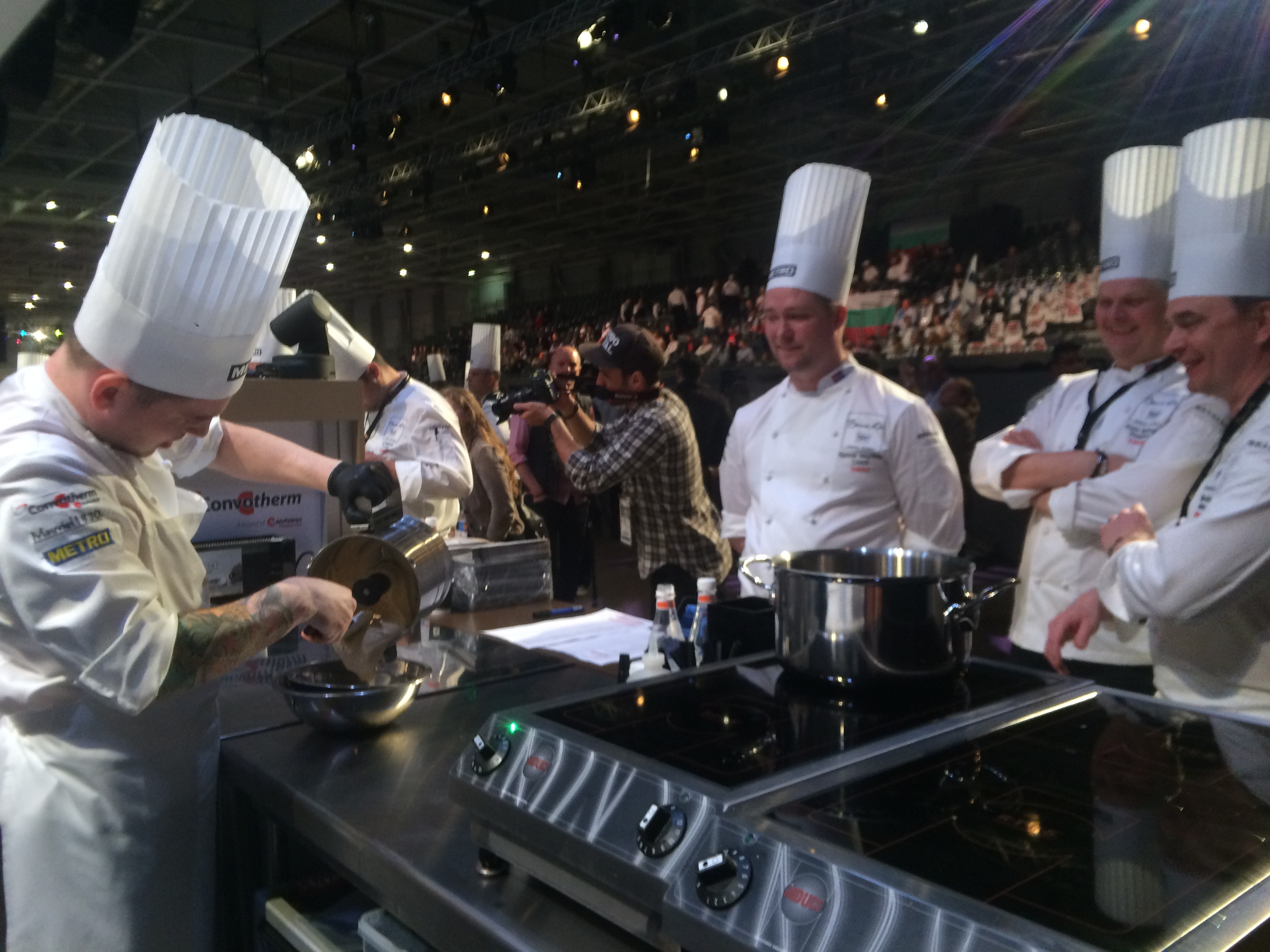
Coach Siggi Helga supporting Viktor during the competition, while the stands behing fill with screaming fans

Coach Siggi Helga and Icelandic Bocuse president Sturla supporting Viktor during the competition, while the stands behind fill with screaming fans

Iceland’s best placing was 3rd, winning the Bocuse d’argent. Silver, Bronze and Gold mark the podium winners, and there’s even one crazy Danish guy who has competed three times and won one of each… The European selection and Bocuse d’Or Lyon have started to be pretty consistent in the last 5  or 6 years – Scandinavian countries are always on the podium, and often the only ones on the podium. Norway, Sweden and Denmark have many medals under their belt, and Finland and Iceland are never far behind (Iceland has never landed lower than 9th place in either the European or Lyon competition).

Viktor and team Iceland win the best fish dish!

Viktor and team Iceland win the best fish dish!

The competition is super complicated, but can be broken down into a few words to explain it simply enough for you and me to understand. Each country sends a Chef and a commis (an assistant that acts kind of like as sous chef that has to be under 23 years old) that have 5 hours and 35 minutes to cook two gourmet courses for 24 judges. They plate 24 fish dishes, and 24 meat dishes that have first to be presented on a showy catering platter, then split up into 24 portions. The fish and meat produce are the same for each team – this year it was Sturgeon fish (and its caviar) and Hungarian Young Red deer. The rest of the meal is imagined and designed by each team for months prior to the competition. In addition to the chef and commis, the team has a Coach and a President (officially), plus a dozen other behind the scenes experts to help (designers, second assistants, promotional managers, and millions of kronurs worth of sponsors who all have a say).

Team Iceland relaxing after their grueling 5 hrs and 35 minutes

Team Iceland relaxing after their grueling 5 hrs and 35 minutes

Viktor Örn was this year´s chef to compete, one of 20 chefs and nations represented, and placed 5th in the European Selection. He also won the prize for the Best Fish Dish. Only one other chef, Siggi Laufdal, has placed higher in the pre-competition, 4th place in 2012, and also won the Best Fish dish prize. After the podium is filled with the overall winners in both dishes, there is a reward given to the highest earned points in each dish, one for meat and one for fish. There’s also a prize for the best commis, and the judges are the presidents of each competing country, plus 4 honorary judges (Paul Bocuse’s son and previous Bocuse d’Or winners or presidents of hosting countries).

this years Bocuse Europe was hosted by Hungary in Budapest

this years Bocuse Europe was hosted by Hungary in Budapest

Viktor Örn is a good friend and an unbelievable chef, having won the Icelandic chef of the year in 2013 and the Nordic Chef of the year in 2014 (he’s HOT at the moment), so stay tuned to see how he does in Lyon for the Bocuse d´Or 2017. Better yet, come and support team Iceland at the event, since it´s a one hell of a time… and our humble little country never has as many supporters as the others, even though we´re so much better than most of them 😛

Foodies in Morocco

No trip to Morocco would be complete without Moroccan food, and even though I’d been before to Morocco (mostly searching for Arabian horses and surf), returning to eat more food and learn how to cook some was a great idea. In my company was the best chef in Iceland, so adding his tastebuds and expertise to the mix made things a lot easier and more enjoyable.

the view from Dar Finn, our hotel in Fes

the view from Dar Finn, our hotel in Fes

Our trip started in Marrakesh, which is a majour tourist hub for Europeans to come and eat, take cooking classes, soak in the sun, and overshop for leather and clay at the massive souk. We did all of the above, and our favourite restaurant of the whole trip was hidden within the souk, Latitude 31°, but sadly didn´t serve any wine. A delicious dinner without wine pairing always seems to be missing the cherry on the top.

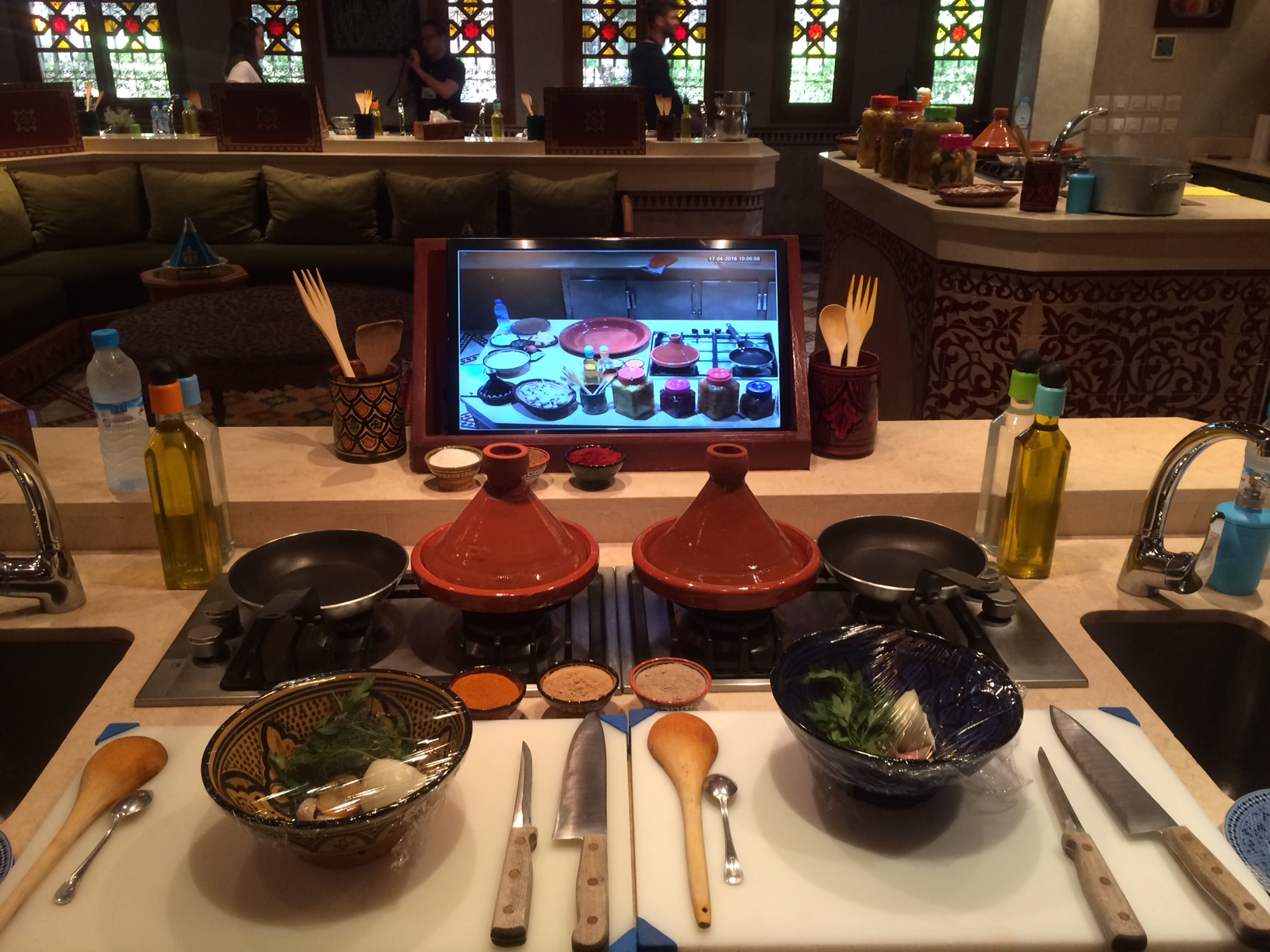
cooking class at La Maison Arabe

cooking class at La Maison Arabe


Nomad was also a great restaurant in Marrakesh, and we took a cooking class at the Maison Arabe, which is highly rated for good reasons – its a major production with live TV screens and multiple chefs and bread makers (and wooden bread oven) and teachers, AND wine pairing to eat all the food you´ve cooked yourself. Once youve had your hands covered in olive oil and nearly burnt a finger off holding the tagine, you get to relax poolside at the Maison Arabe´s country estate, a short drive out of Marrakesh. Its super expensive to stay at the Maison Arabe, but I can suggest Dar Baraka as a sort of boutique hostel alternative.

the finished product of a days cooking

the finished product of a days cooking

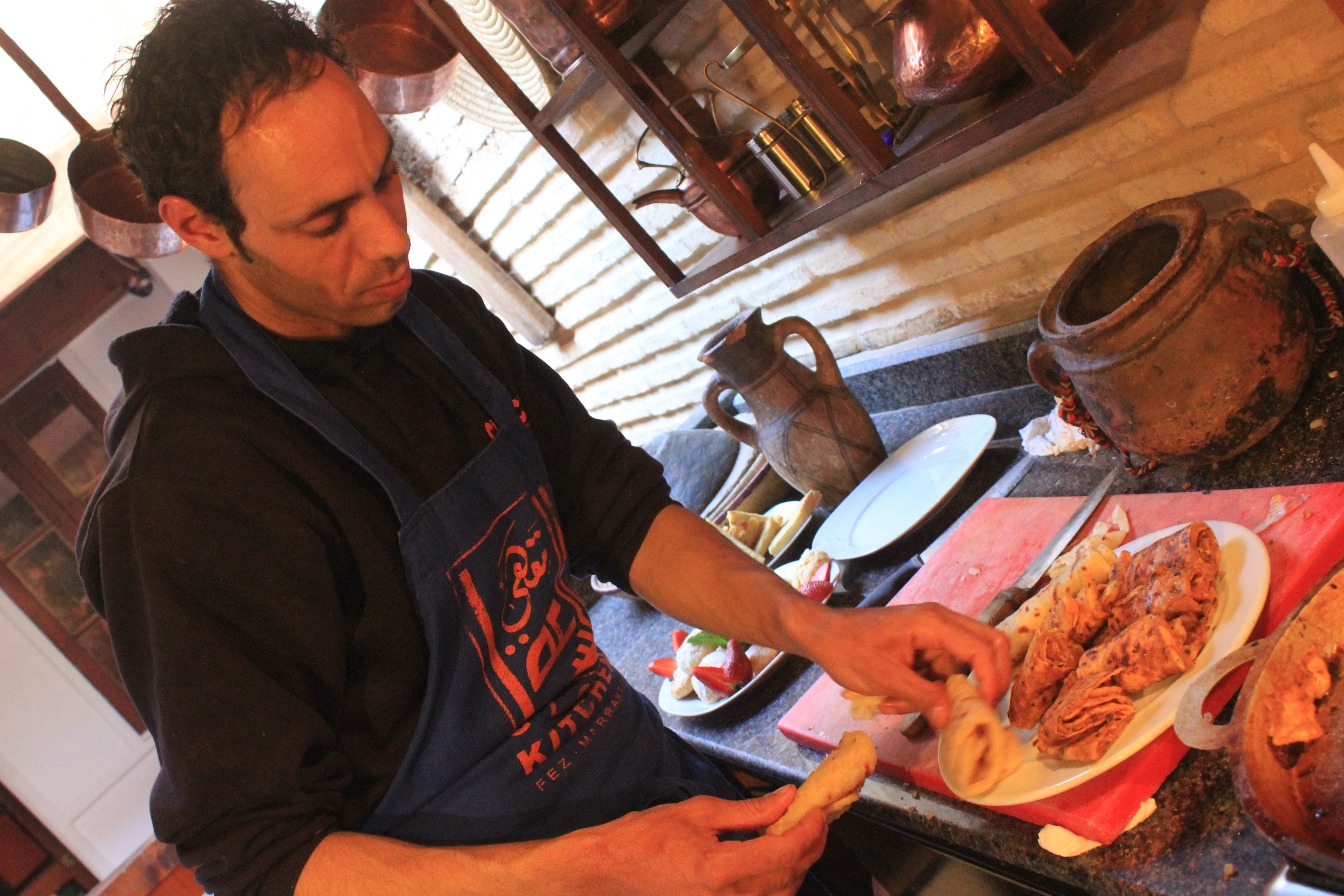
We made a circle from Marrakesh to Fez, Meknes, Rabat and Casablanca, always searching out the best restuarants and riads to stay at. In Fez we stayed at Dar Finn, boasting the most beautiful roof top breakfast patio we ate at. We signed up for a private bread making cooking class at the Clock Kitchen which was worth the 40 euros, especially since we got to keep all the 4 types of breads and pastries we made at the end of it. We decided to share it with everyone sitting in the cafe around us, and still ended up with a few coconut macaroons to keep for the road. One restaurant we regretted missing was ‘7’, a locally run place that imports an internationl chef every 2-4 months to cook a new menu with his local expertise with Moroccan products. At the moment there’s a Californian-Asian chef cooking up some mean treats.

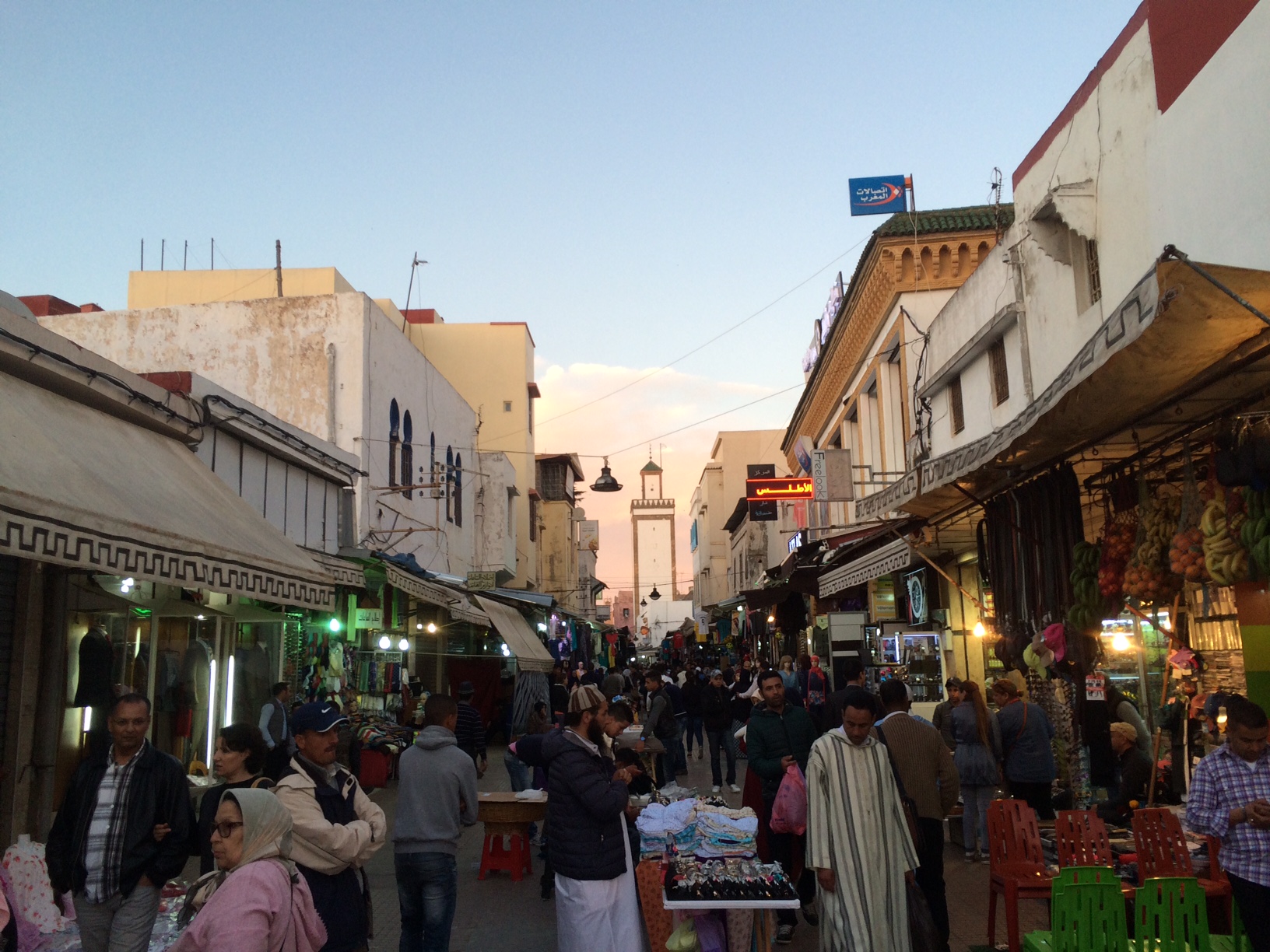
the old souk of Rabat nearing sunset

the old souk of Rabat nearing sunset

The souk in Fez was smaller, more intimate, and somehow more authentically local than Marrakesh, so we shopped for some spices and argan oil there. Later we bought a silver tea pot and a yellow dress, a little similar to the ones all the women wear with KKK pointed hoods.

the bread making teacher at Clock Kitchen

the bread making teacher at Clock Kitchen

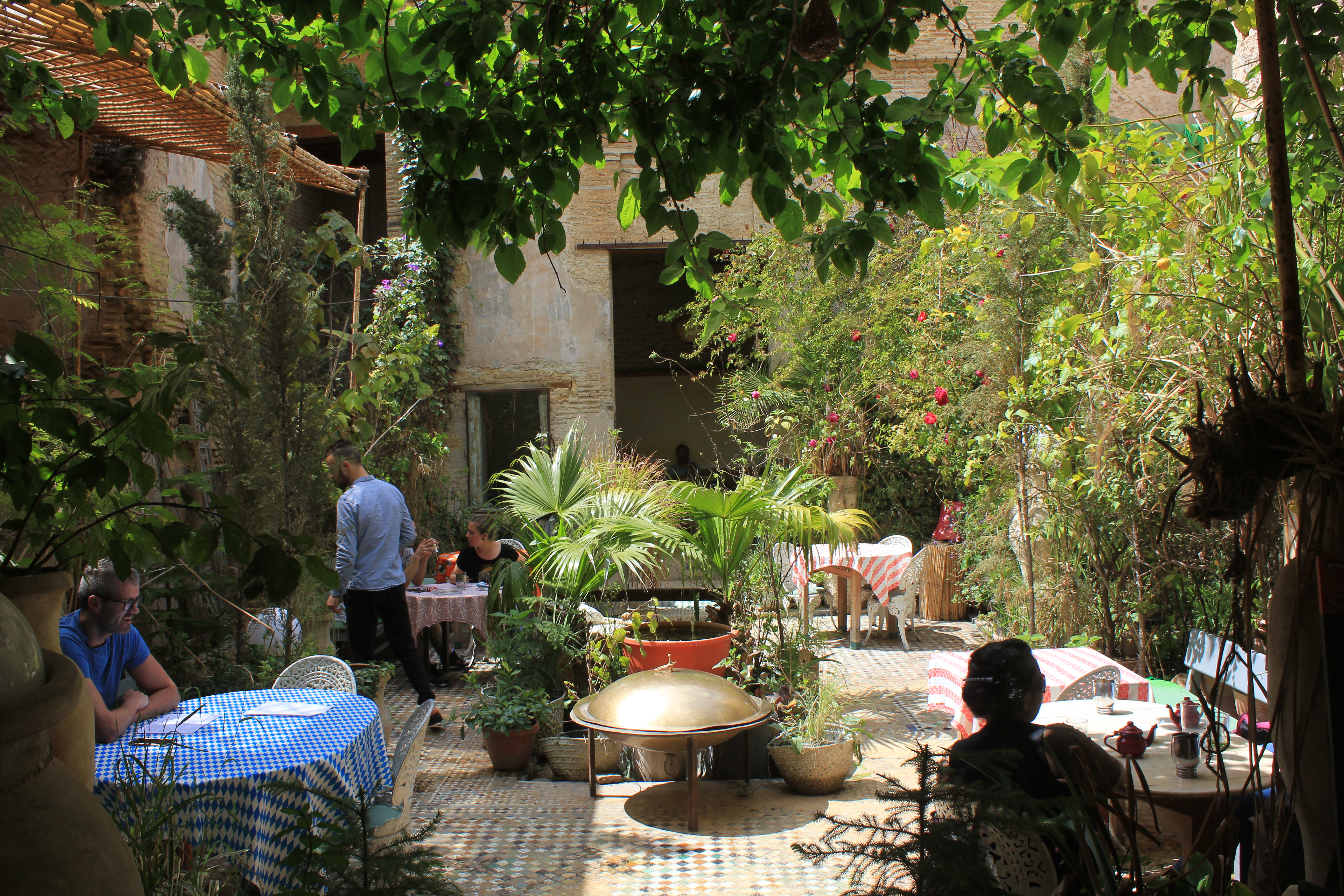
They say Fez may be the foodie capital of Morocco, others argue its Rabat or Marrakesh, but I can atleast recommend Dar Roumana as one of the best dining experiences in Morocco, located in the Fez medina. The Ruined Garden was a great lunch spot, literally placed within a ruined garden. They also taught cooking classes, but didn´t sell wine.

The Ruined Garden restaurant

The Ruined Garden restaurant

Next stop was Meknes, were the obvious hotel to stay at was Ryad Bahia – atleast according to trip advisor and lonely planet. But then we showed up and seemed to be the only guests in the 8 or 10 bedroom hotel, which wasn´t a problem, but only surprising after having all the other guesthouses and restaurants nearly fully booked. The same happened at our dinner spot – Riad Yacout had a great restaurant reputation, but we were the first and second to last table to eat there.

the colourful medina of Moulay idriss

the colourful medina of Moulay idriss

In Rabat we stayed at Riad Oudaya, and just because of our check-in timing, landed the suite with a built in fireplace while the others who checked in after us were disperesed between the 3 remaining bed rooms. The restaurant Dinarjat was fully booked, with live oud (moroccan guitar) players and dancing waitresses. The setting was a beautifully refurbished riad, complete with marble mosaics and goldfish water ponds, and they had Moroccan wines!

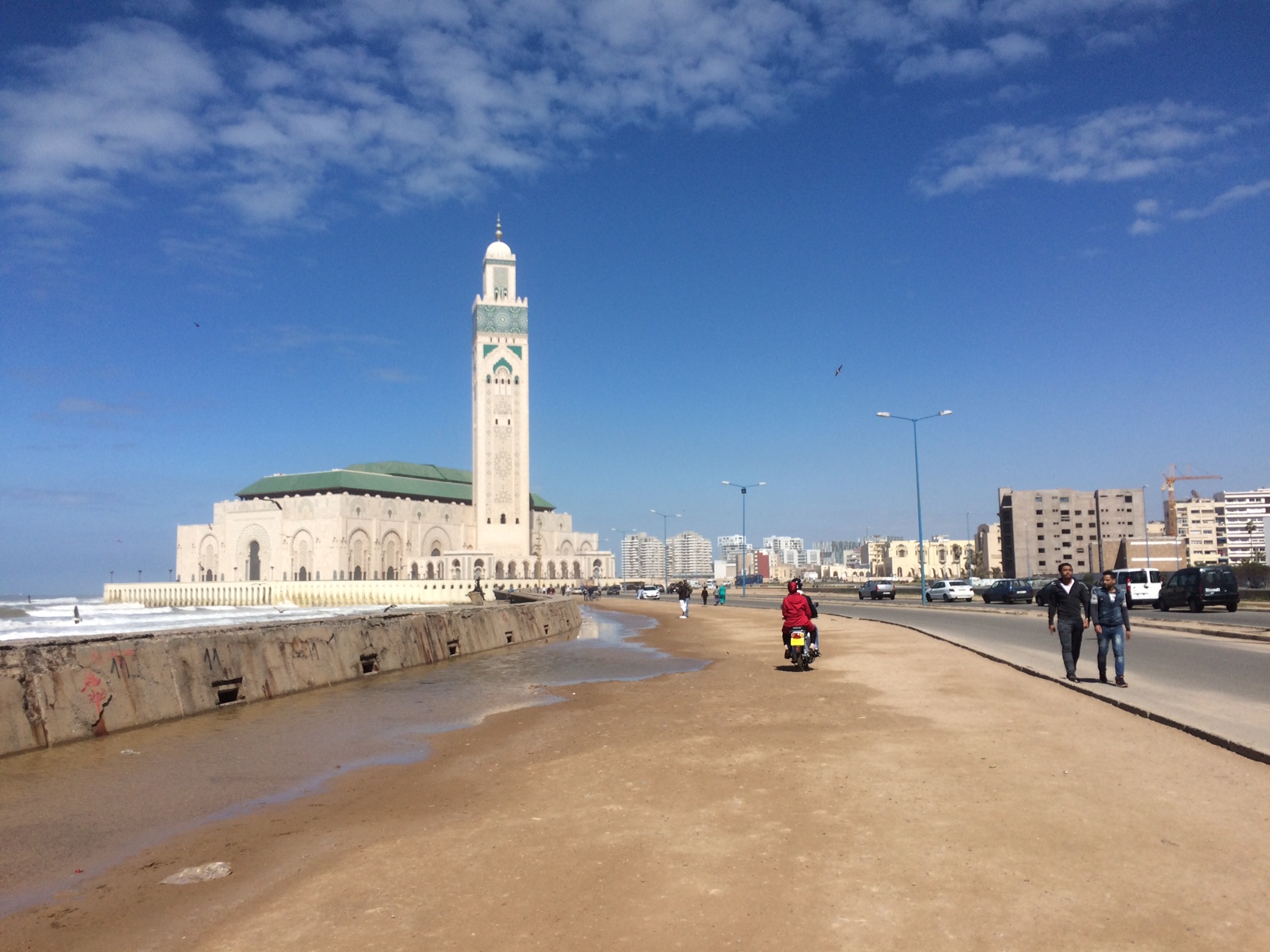
Casablanca

Casablanca

Casablanca was a transient place for us, but we had to try Cafe Sqala for lunch. It had a beautiful patio, a smorgasbord of Moroccan salads, and any type of tagine or pastilla you could dream of. For a more sophisticated meal, we also tried Le Rouget de l’isle, a french inspired restaurant outside of the medina in the backyard of an old mansion.

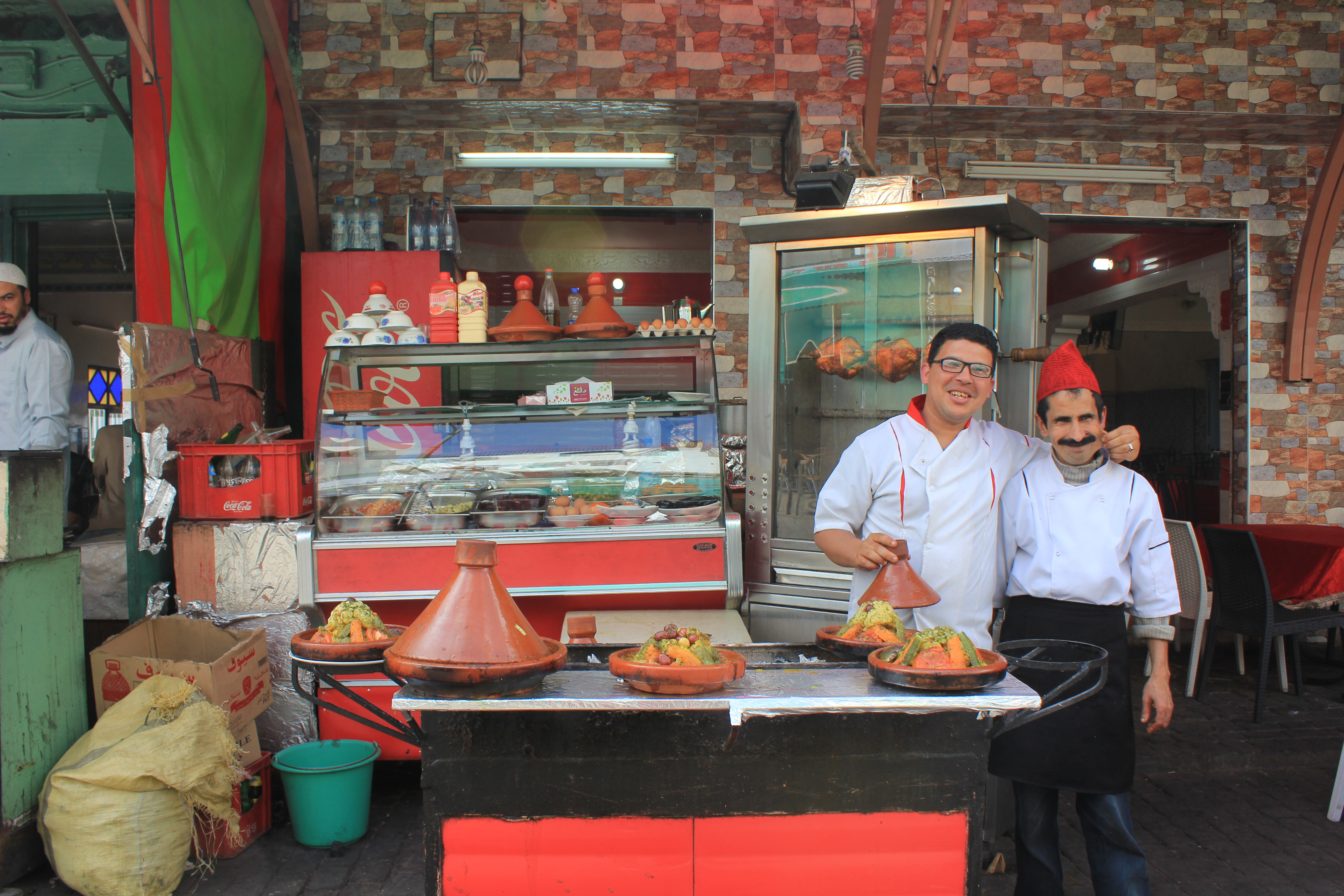
street food sellers having a ball

street food sellers having a ball

Inbetween the train trips and bus rides, we also hired a taxi for a whole day (which costs 40 euros – the price of a  15 minute taxi in Reykjavik) to visit the Roman ruins at Volubilis and the holy Muslim city of Moulay Idriss. We scampered up and down and around the little hilltop village to find the most photographic old town yet, full of cats and bread makers, and ate a delicious kebab street sandwich (arguably the second best meal of the whole trip). We shared Volubilis with a few busloads of tourists, and experimented with the selfie stick we bought in some souk to try and get our picture infront of the roman pillars and arched city gate.

Volubilis Roman ruins

Volubilis Roman ruins

I think I left Morocco 5 pounds heavier than when I arrived, but don’t regret one meal. I also learned how to bake 3 types of bread and some cookies, tagine, and 2 types of Moroccan salad, and came home with my very own tagine. I I’m slightly addicted to couscous and still can’t understand why its not as popular as rice or pasta around the world, and some Moroccan wines were really, really (surprisingly) good. Now its time to start practicing with my tagine, and figure out where to buy Moroccan rosé in Iceland.

Detour to Mauritania

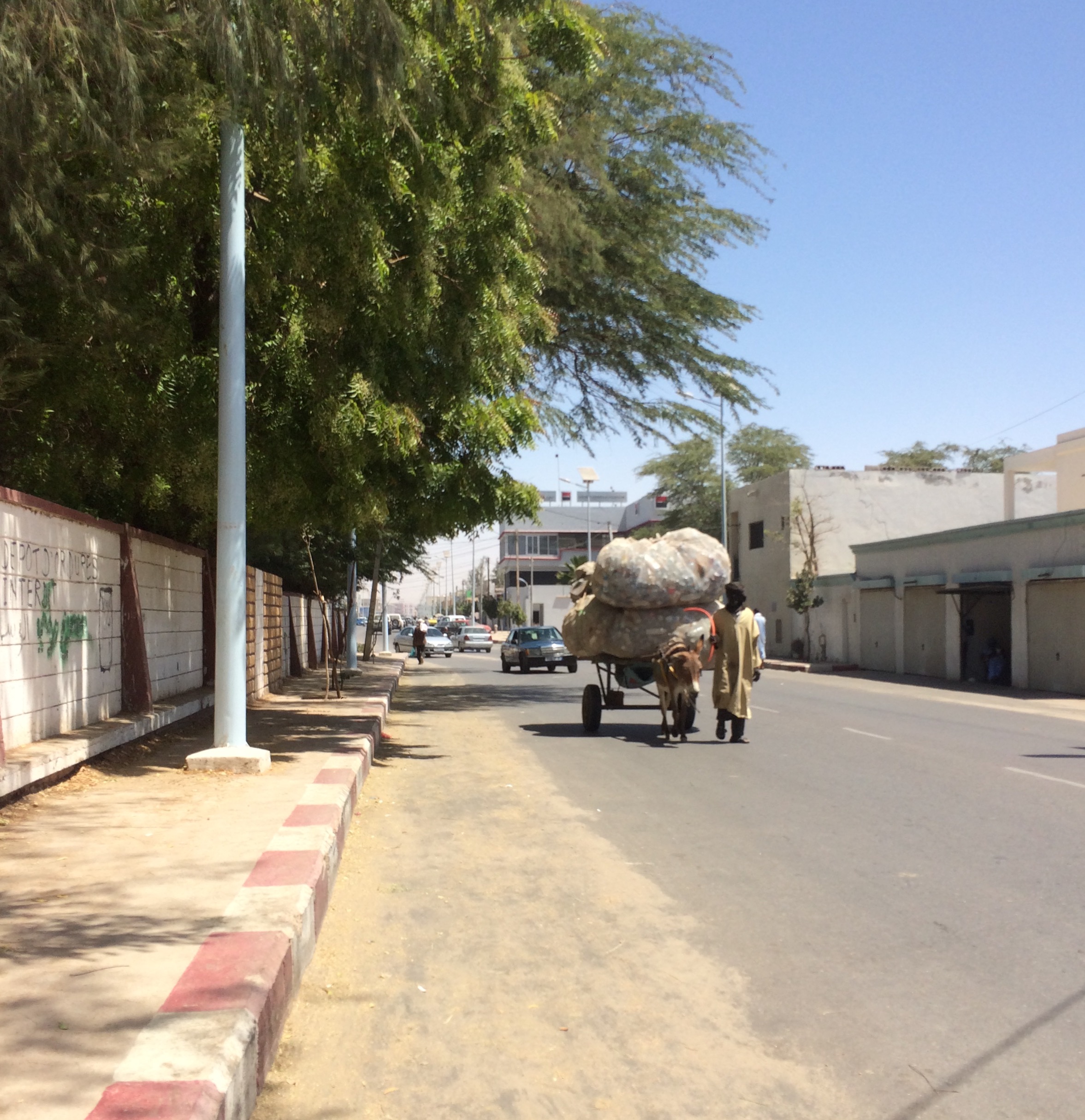
sandy streets of downtown, with overloaded donkey carriages for traffic

sandy streets of downtown, with overloaded donkey carriages for traffic

I tried to go to Mauritania in 2013 from Senegal, but that was a weird transition time when visas on arrival at land borders weren’t available. Just before that, you could show up, many by car overlanding the Sahara, and pay $20 or $30 for a visa. Shortly after that, the visa price increased to $130, and only available on arrival for flying passengers landing at Nouakchott. So we flew to Nouakchott, and waited in the line of half a dozen visa seekers for over an hour while one guy punched out visas for each of us that take 3-4 days at any embassy. I was actually surprised to see other travelers on the plane, despite the fact that every single seat on the plane was full, and I still don’t think they were ‘tourists’ per se.

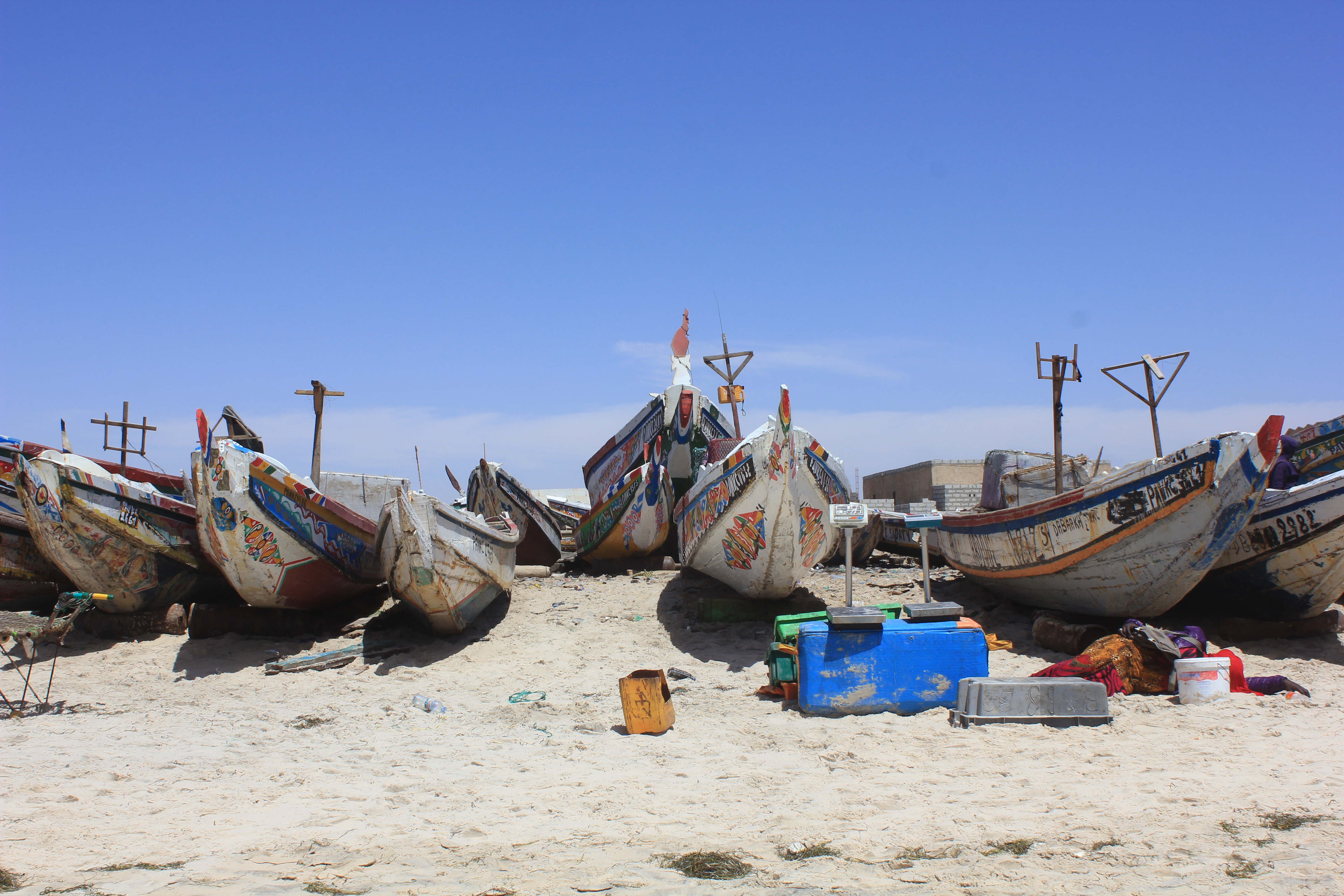
a beach full of boats

a beach full of boats

Mauritania is famous for a few specific things. It has these crazy sand storms, where walls of sand from the Sahara surge in and cover everything and everyone in dust and darkness. It only lasts for a few minutes, but if you’re caught outside, each minute is slower than you can bear as you struggle to open your eyes or mouth or nostrils to see or breathe. Mauritania is also famous for having one of, if not the longest train in the world. There’s an iron ore train that can sometimes reach 3 km in length, and travels hundreds of kilometers from Zouerate and Choum to the sea.

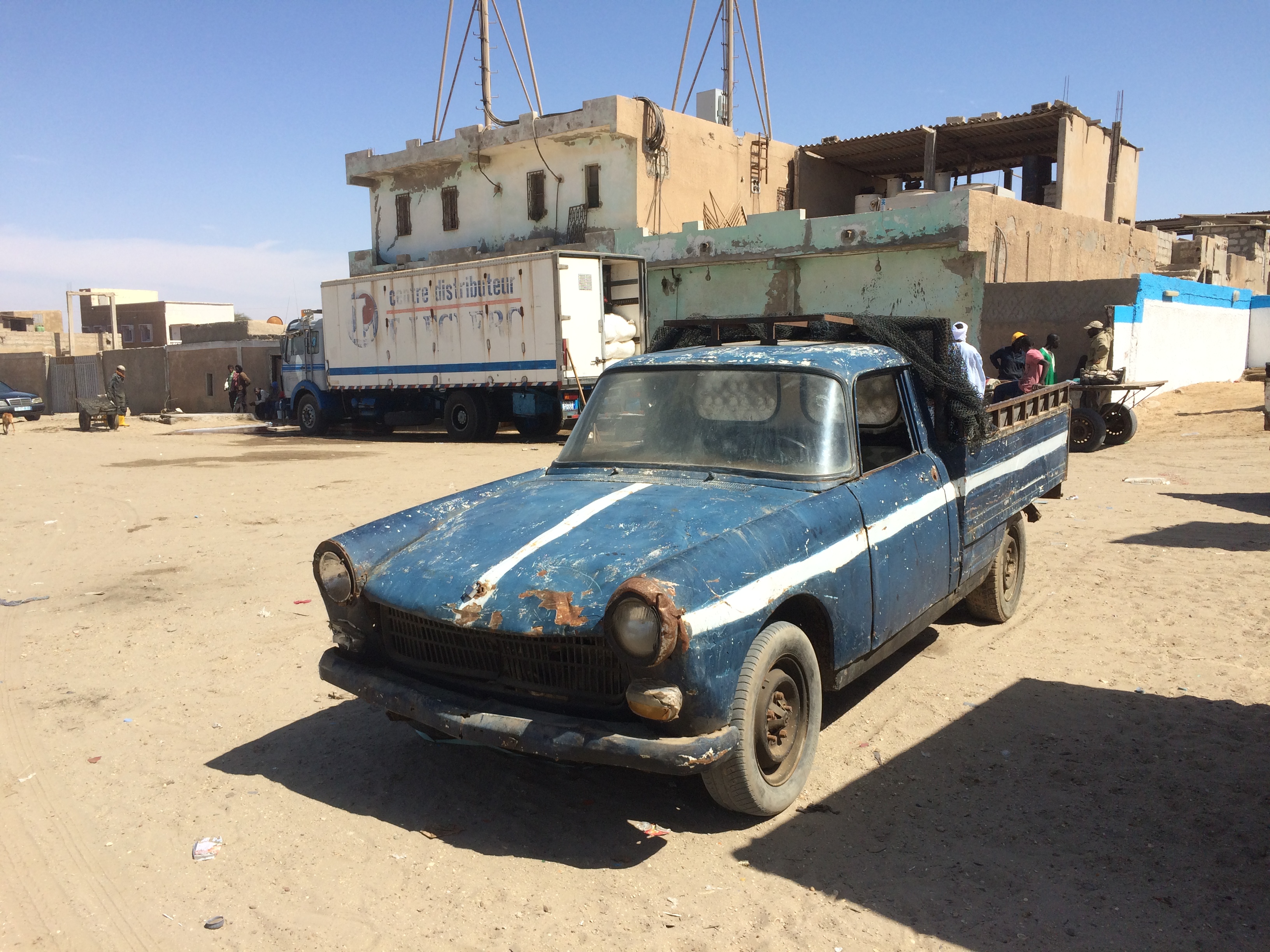
a fish transport car for Port de Peche

a fish transport car for Port de Peche

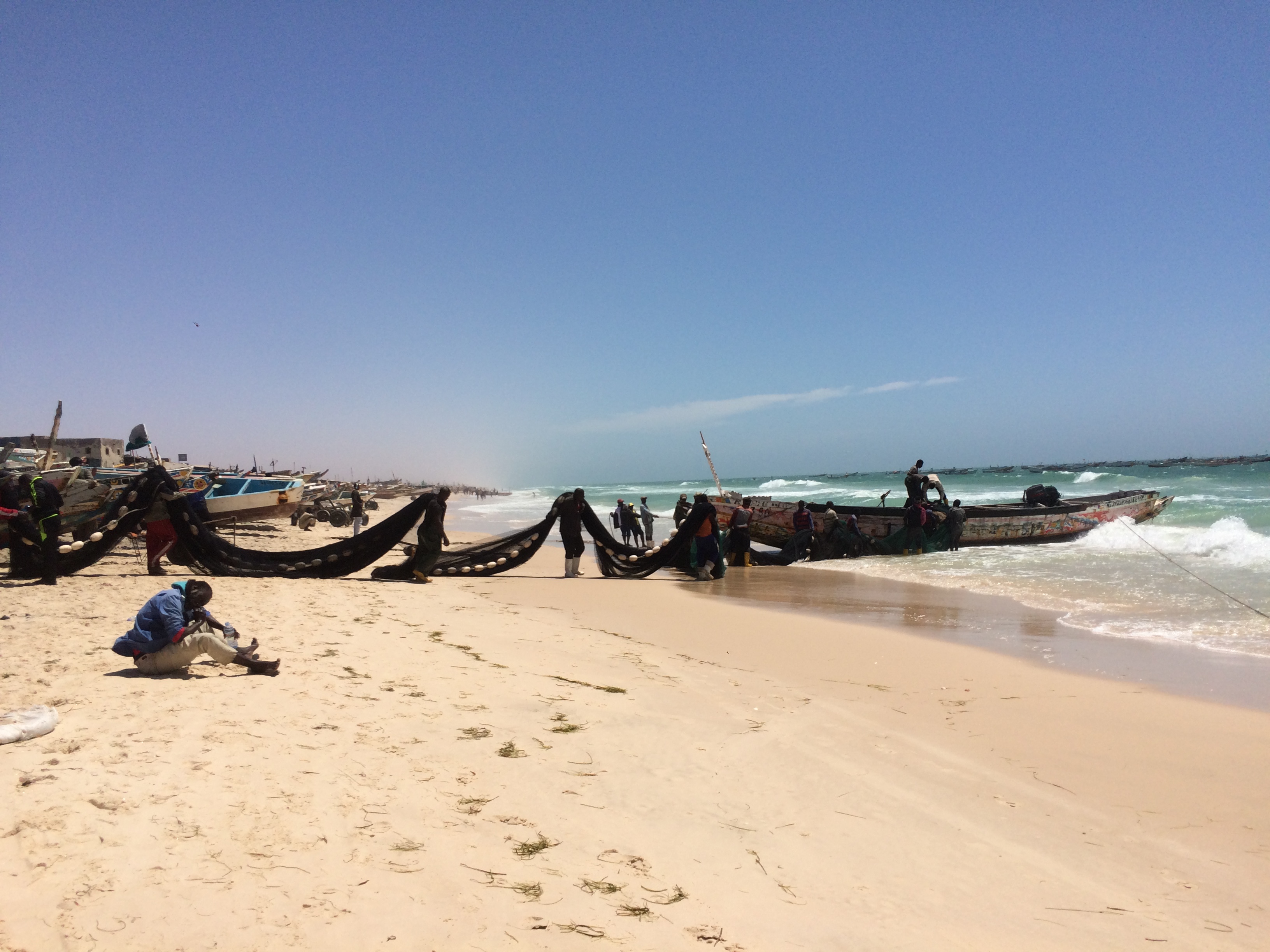
Nouakchott, Mauritania’s sleepy capital, is on the coast but seems to bridge one faster into the Sahara than the sea. Although the other famous thing about Mauritania is Nouakchott’s Fisherman port, which is ironically not much of a ‘port.’ Its a never-sending stretch of beach, with wooden fishing boats parked side by side with barely enough space between each stern to pass by. Their are big ones and small ones, all with engines much to little, and painted all colours of the rainbow. They’re pushed out to sea and dragged back in manually every single day, in a very chaotic but ritualistic way. Watching the men wearing rain gear and rubber boots never made sense as they all came in from each job emptying the insides of their pants and boots of water, and wading out to sea trying to push a 3 tonne boat must be more difficult when you’re that waterlogged.

manpower vs. net

manpower vs. net

In Nouakchott we stayed at a new hotel every night. We tried everything from ‘western’ hotel to roof-top camping, a mix of hostels and guesthouses, auberges and beds and breakfasts. My favourite was Auberge Diaguili, an unmarked house full of boutique-style rooms and where the penthouse suite costs the same as any other room. Auberge Menata was the most ‘traveler’ friendly, and we finally met some other tourists, or ‘travelers’ rather. One was a Spanish guy who had home made a didgeridoo out of plastic water bottles, sawdust and glue – incredible!

fish sorting and prepping

fish sorting and prepping

Since it was kind of a foody trip in upcoming Morocco, we began tasting a few Mauritanian dishes. There’s an interesting mix of Arabic, Senegalese and Moroccan influences, but then again I never know if the chicken came before the egg or vice versa. After visiting the fish market and seeing piles of dead, rotting fish that actually made you choke, and the younger guys running after the food transporters and ice trucks to pick up all the fish that fell to resell later, seafood didn’t entice. The Lebanese restaurant Le Menara was amazing (stick with appetizers) and Joao’s Casa Portugesa had the best, basic grilled veggies and special ‘tea’ one could ask for. Alcohol was illegal in all of Mauritania, but we had accidentally smuggled in some wine and vodka and didn’t know until after the fact, which caused some awwkard check-out moments when the garbage can had an empty bottle.

The only tourist in Tunisia

After a short visit to Saudi Arabia, I wanted to continue my journey through the African Arabic world. I’d already been to Egypt and Libya isn’t the most inviting place at the moment, so I flew to Tunisia. On a map, squashed between Algeria and Libya, it looks like a tiny place, but only relatively. Its nearly 1 and a half times bigger than Iceland, which some may argue is a small country, but all the space in Tunisia is inhabitable and inhabited. There are internal flights to the south of Tunisia, reaching Berber country, and regular ferry boats that take you to Italy or Malta from Tunis, so you’re literally suspended between Europe and the Sahara, in a little pocket of bustling Arabic life and culture.

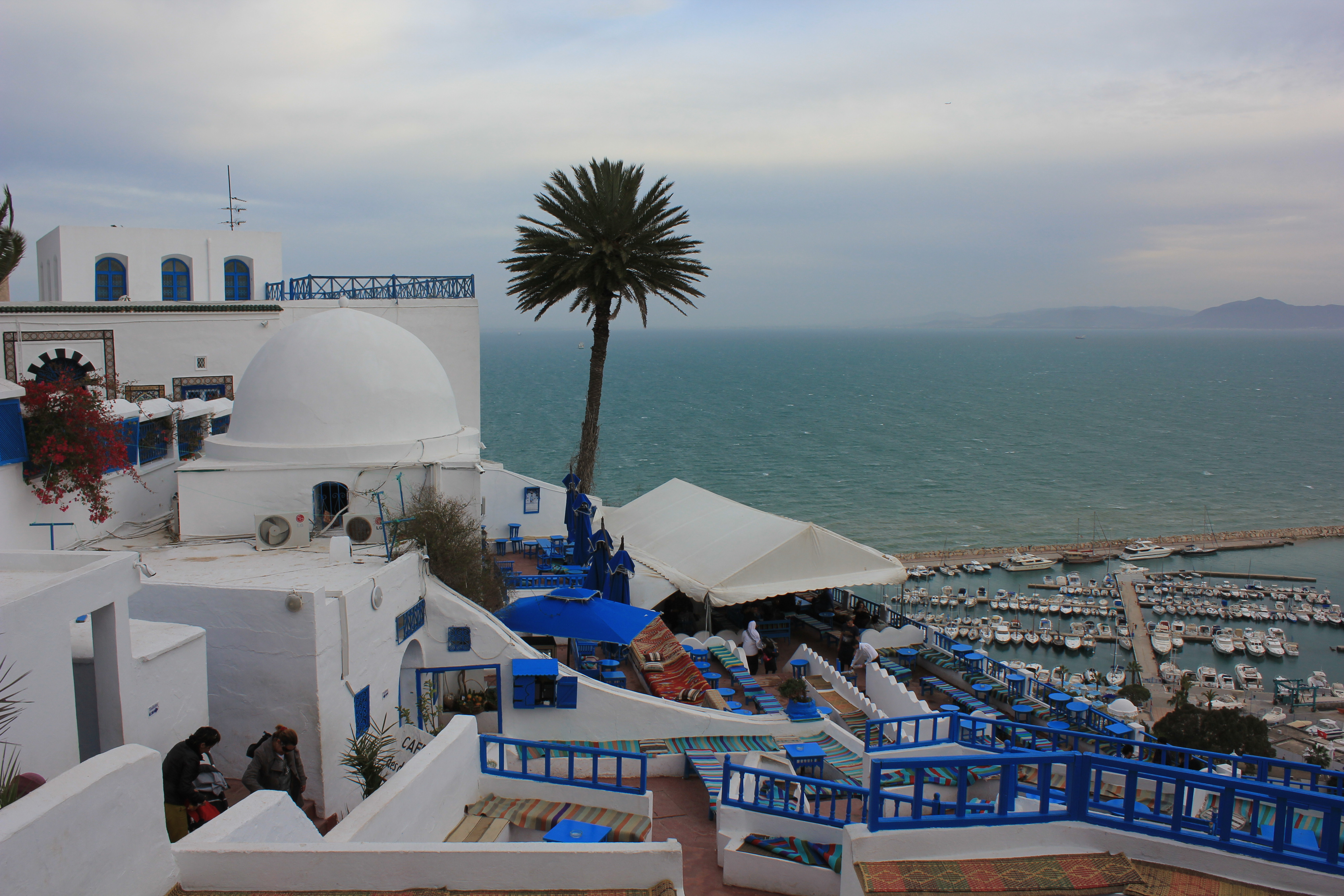
Sidi Bou Said

Sidi Bou Said

The tourism market has crashed in Tunisia, ever since the hotel shooting of tourists in Sousse last summer. It’s affected the economy and the daily lives of people, especially those in hotels, restaurants or shops, and its heartbreaking to know that one incident can have such long term repercussions on a people open and welcome to tourism. In the souk, a seller told me I was his first foreign customer since last June, and visiting the old towns of Sidi Bou Said and Hammamet and seeing only locals was a strange feeling. But I liked traveling there, and I enjoyed being the only visitor sometimes. Speaking with locals was a breeze since everyone spoke English and their Tunisian was a healthy mix of French and french-isms. The cafe culture was just like some neighbourhoods in Paris, and Sidi Bou Said could have been a village in Santorini.

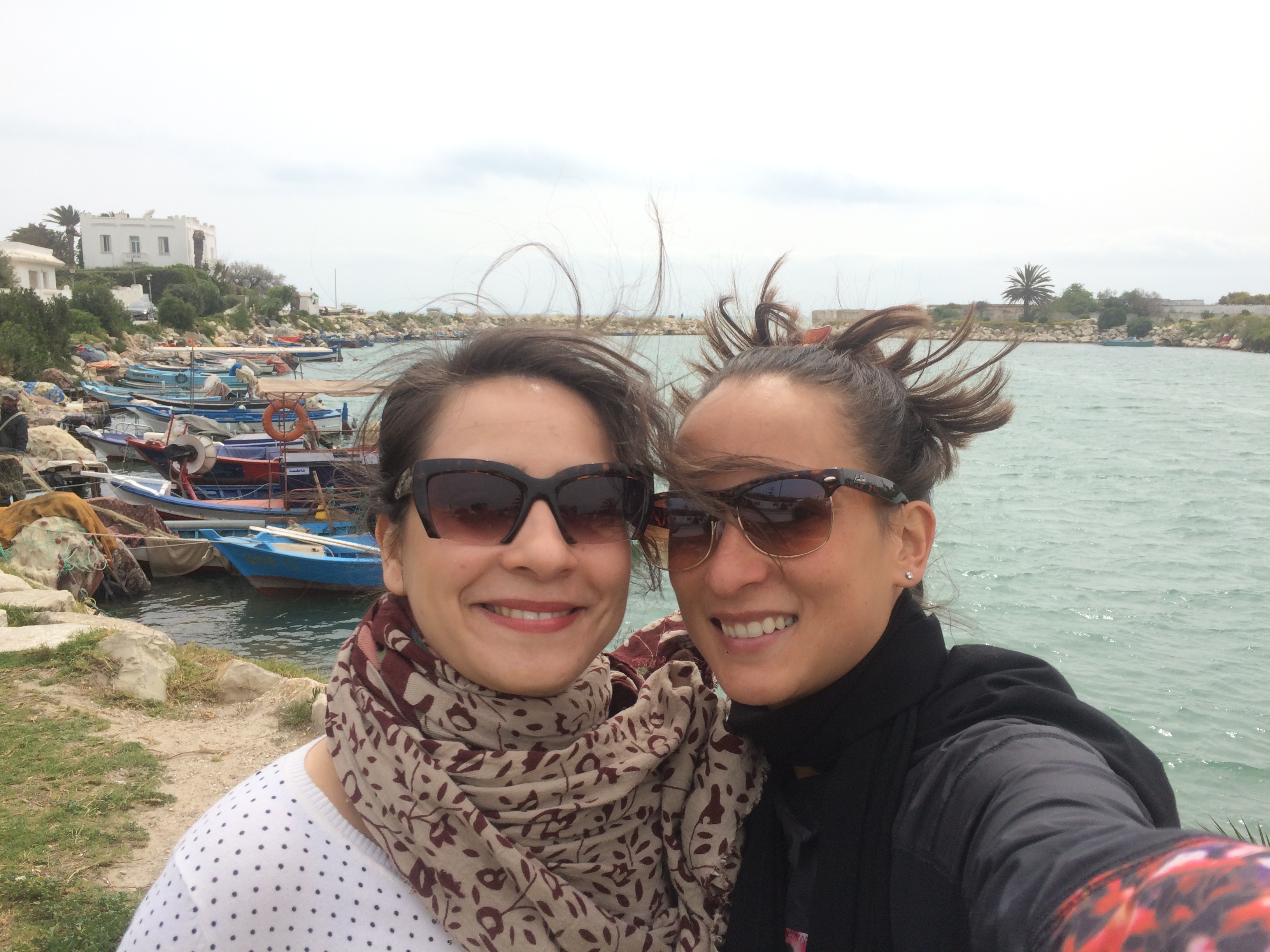
Asma and me in Carthage

Asma and me in Carthage

I stayed with a friend I made in Jordan, a Tunisian woman and her family. We shared a passion for tango dancing, and I also tried salsa dancing, but the social dance scene was a little different than I was used to. The tandas were followed by cortinas of belly dance songs where all the men and women got on the floor and started yelling, twisting their hands and shaking their hips. The salsa dance night was more zouk and kazumba, an awkwardly slow and grindy style that I couldn’t get into.

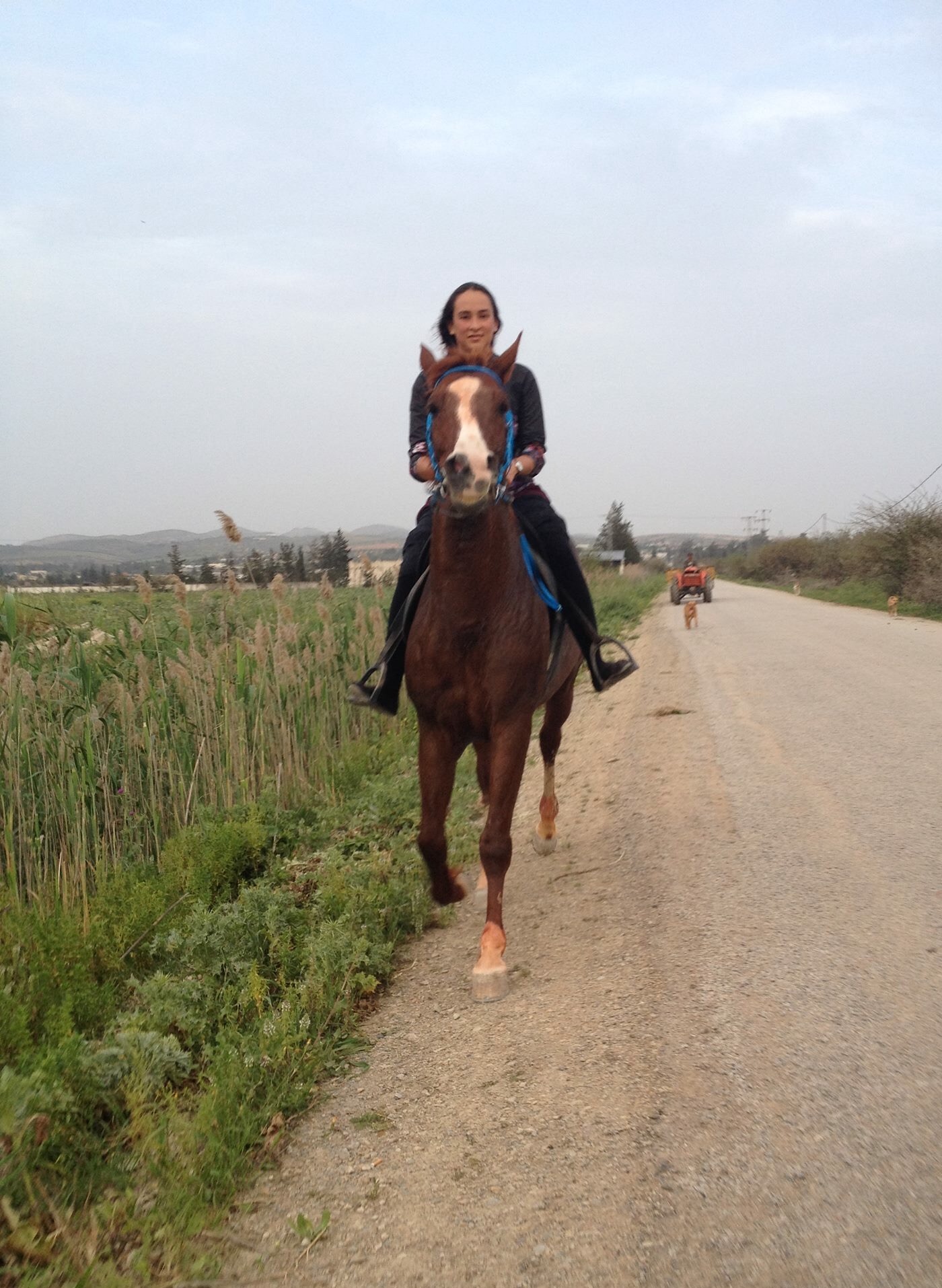
My Tunisian joy ride

My Tunisian joy ride

We found horses to goppity gopp, and not just any horses. First we rode a retired show jumping horse and an endurance racer, then got an invitation back to ride his breeding stallion, a short-track champion. He gave me chills just to look at, and after managing to jump on his back his ovner asked me ‘are you sure?’ I’ll never be sure what he meant but I managed to stay on for one hell of a ride. Riding him back to his harem of mares was the only real tricky part, but he could have carried 3 of me for a whole day and night without tiring.

Hammamet

Hammamet

Like so many other places, I left Tunisia with a longer list of things to do and see than I accomplished during my stay. So there has to be a next time, and on the top of my list is race the Arabian, and learn how to belly dance.

Forbidden Saudi Arabia

Saudi Arabia was a place I thought I’d never go. It’s probably the only country in the world that doesn’t want any tourism (except Muslim pilgrims), and a tourist visa simply doesn’t exist. The only way to visit the country is to be from Saudi or one of the gulf countries who don’t need a visa, only transit thru the country in 72 hours, marry a Saudi, have family or relatives in the country to visit, get a job sponsor and enter on a work visa, or be a Muslim and go to hajj on a pilgrimage visa.

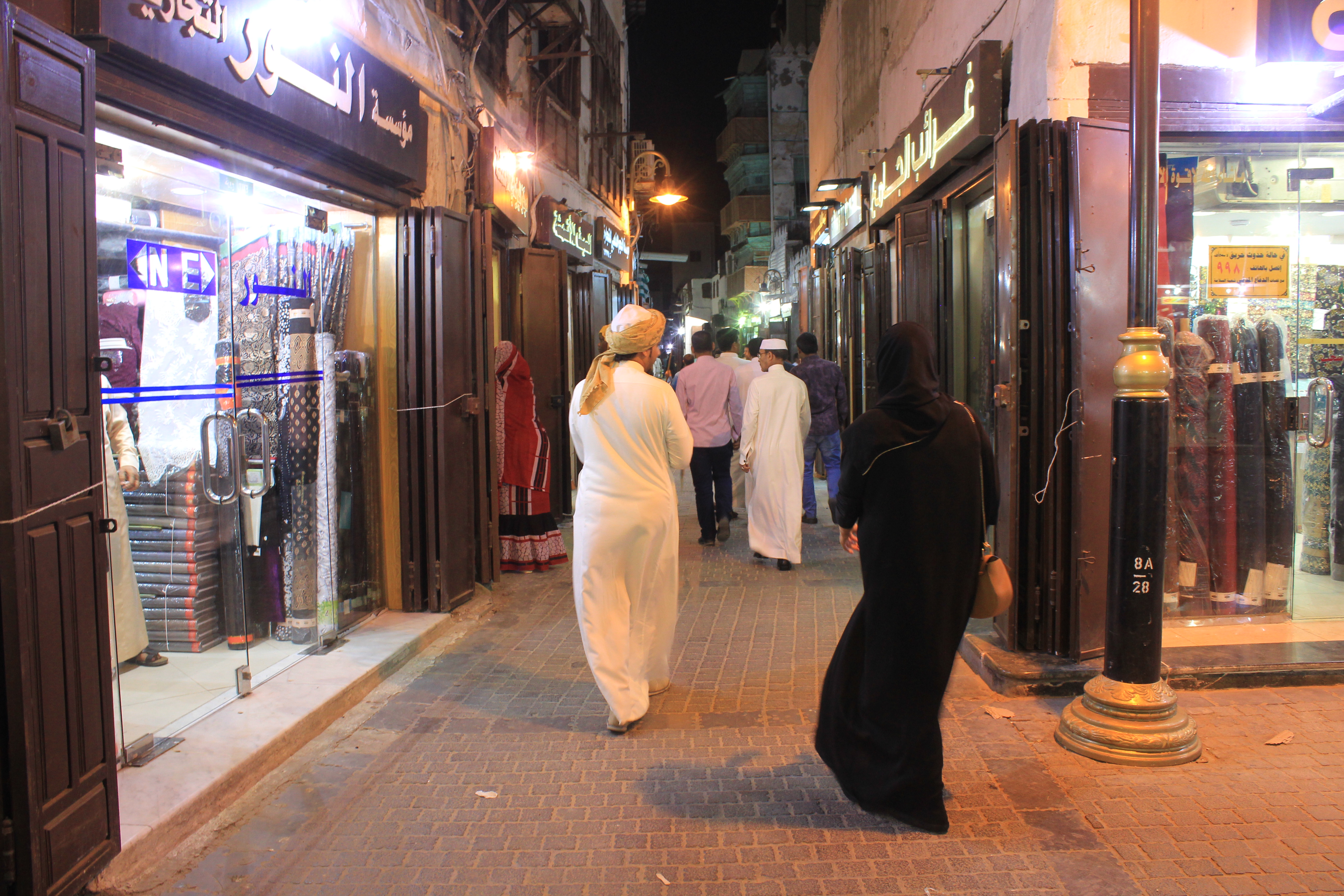
Al Balad, historic old Jeddah architecture

Al Balad, historic old Jeddah architecture

I considered the second and the last options, but thought a work or family visit visa might be more feasible. I visited a few Saudi embassies, made a few Saudi friends, and failed three times… but a miracle happened on my fourth attempt. I met the ambassador of Saudi to Ethiopia in Addis Ababa, and for some reason he wanted me to go there even more than I did, so I did exactly as he said and didn’t ask any questions. One passport photo and $50USD later, some woman named Elham approved my paperwork, pushed it through the online application system, and a visa was stamped in my passport a few hours later. I never even met her to thank her, but I didn’t want to stick around long enough for them to change their minds.

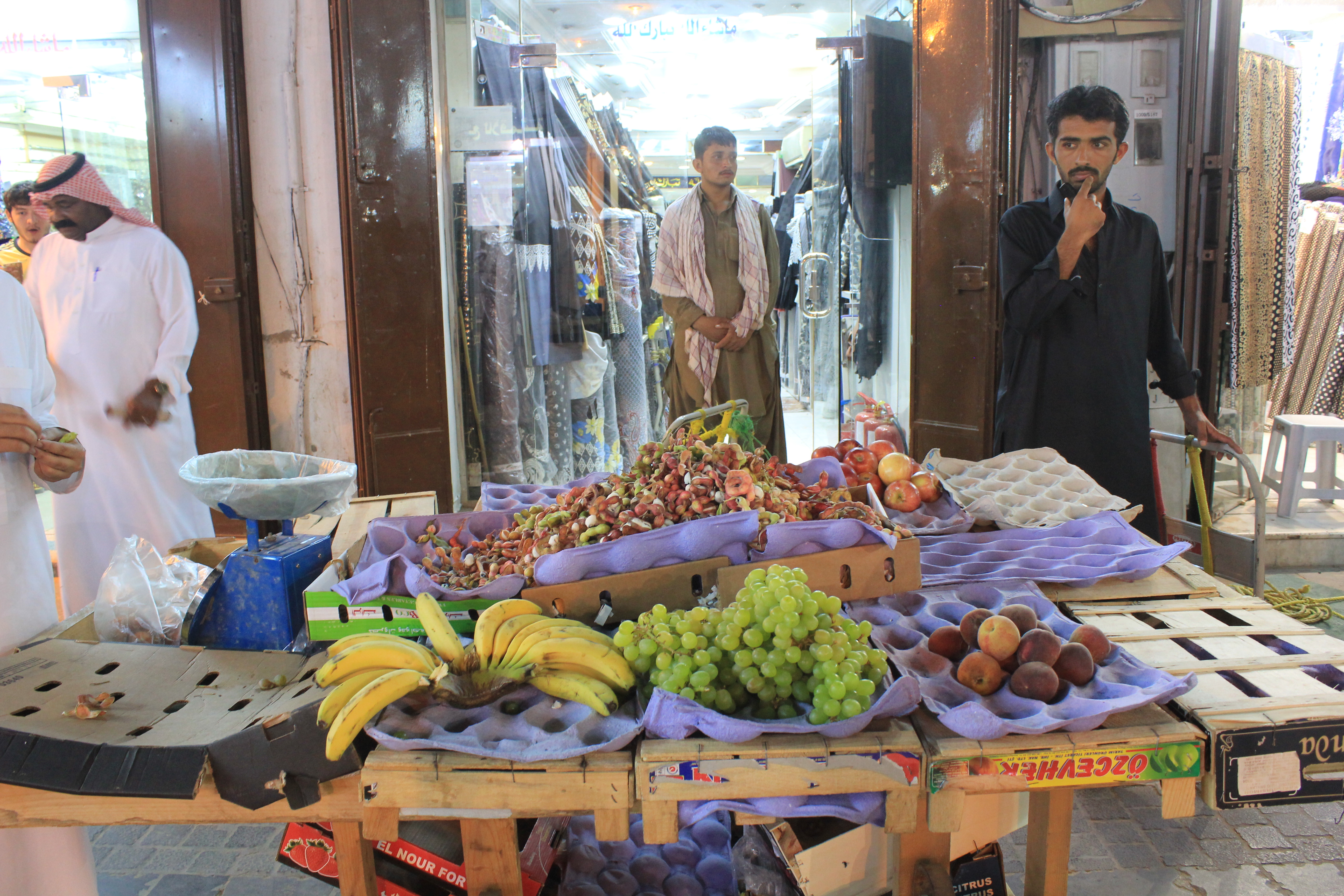
a fruit seller

a fruit seller

Actually visiting Saudi and writing about it is a bit like Israel – everything I say may be incriminating somehow. There are a handful of sensitive issues that I don’t want to offend anyone on, and I can’t really be honest about all the things I did and saw so long as my real name is attached to these blogs. Everyone there may have an opinion on female rights, the bombing of Yemen, Islam fundamentalists, and the long list of haram things: non-halal food, alcohol, drugs, uncovered women, female drivers, and even cinemas (they’re illegal!), and I certainly do too.

Nora demonstrating how to gracefully walk in an abaya (I always trip)

Nora demonstrating how to gracefully walk in an abaya (I always trip)

The long abaya cloak and hijab head scarf were a welcomed change. I didnt have to worry about what to wear or how I looked, because I could simply disappear and camouflage into a world where noone suspected I was a stranger. Apparently the strictness of covering varies around Saudi, and Jeddah is the most liberal place for women to comfortably reveal their hair or leave their heads uncovered in public. But we still couldnt go anywhere without or male driver or sit in the ‘singles’ or men only sections of any public spaces (including all cafes and restaurants).

One of our many beautiful lunch spreads

One of our many beautiful lunch spreads

I was visiting my Saudi friend Nora, and she welcomed me into her home full of maids and we were catered to like queens. Our driver was a 2 meter tall Sudanese truck of a man who took us everywhere in an airconditioned Escalade, and I don’t think I managed to pay for anything there except for one lens cap I needed to replace on my camera. We went to her family’s private beach home where we could laze in the sun without any burkinis, and every meal was served to us freshly cooked on different sets of plates each time. My bed was magically made every time I got out of it, and we enjoyed a very informative, private tour of Al Balad, the historic old Jeddah. I was glad to leave when I did, since this Saudi standard was a little too easy to get used to, and it couldn’t have come at a better time than after 5 weeks of overlanding in Africa.

Crossing into Sudan

When I was in Addis Ababa applying for a Sudanese transit visa, I wasn’t sure if I’d get one, since I wasn’t transiting to Egypt as most tourists do. A tourist visa, which costs the same and also takes only 24 hours to process, required a bit more paperwork, and since I wasn’t spending more than 2 weeks in Sudan I didn’t need the 2 month tourist visa. I said I was transiting to Tunisia, since I don’t need a visa to go there, but I still needed a letter from the Tunisian embassy in Addis explaining why I didnt have a Tunisian visa in my passport.

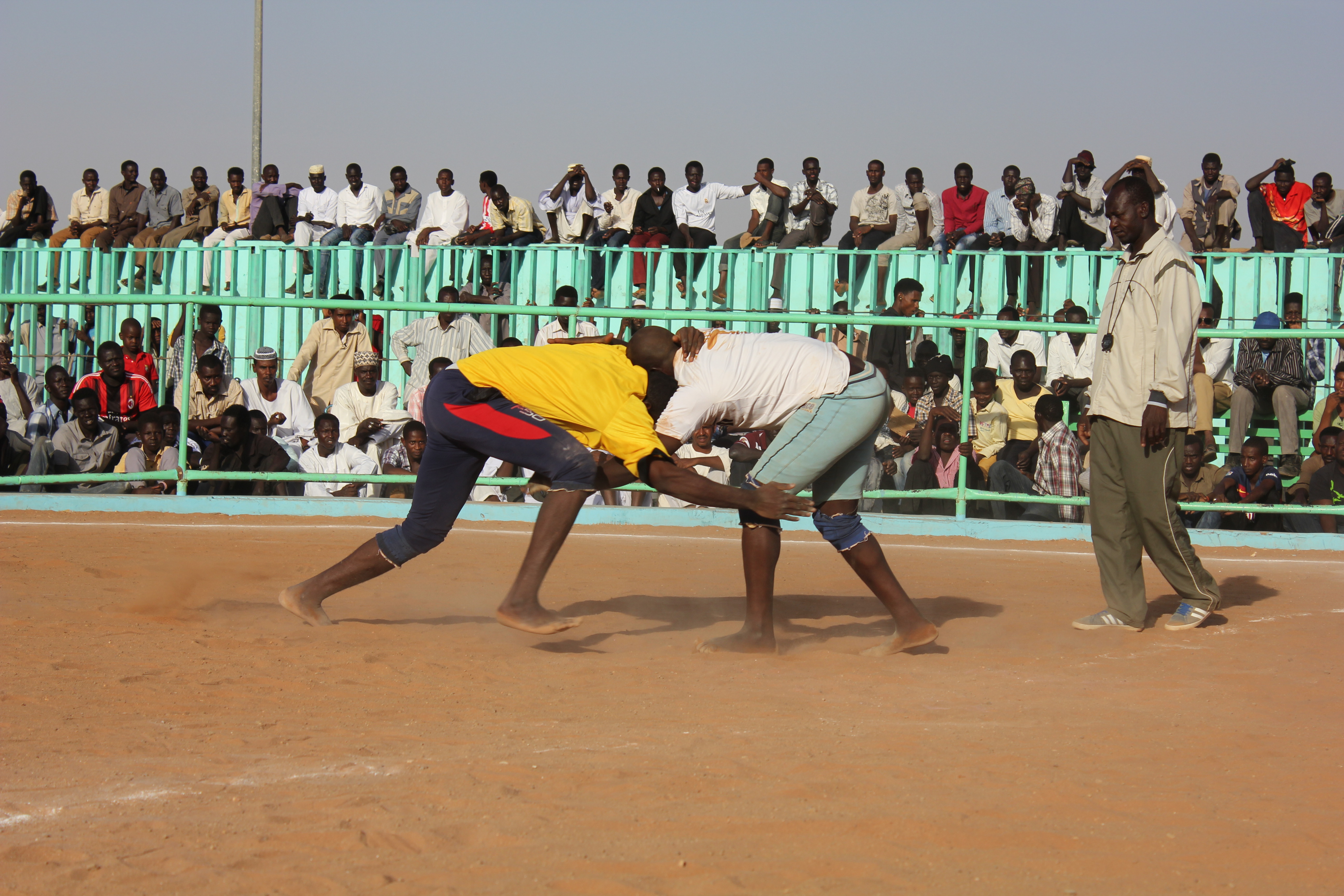
A Nuban wrestling match

A Nuban wrestling match

The rest of my travels in Ethiopia after Addis brought me slowly closer to Sudan, in every respect. I started meeting Sudanese people, eating Sudanese food, and the temperature rose gradually. On my bus nearing the border, I tried to relieve myself from the styfling heat of the back seat by opening a window, but it only felt like I had unleashed 10 hot blowdryers on my face. I regretted not having more time in Ethiopia, but looked forward to returning to a more familiar, English/Arabic speaking place that didn’t have ‘faranji’ screaming, rock-throwing kids (faranji means foreigner, and look out for village children in the Ethiopian countryside who get a kick out of throwing rocks at us!). Still the women were warm, welcoming, colorful and beautiful, and immitated some Somali and Ethiopian trends of facial tattoos and henna-dipped fingers.

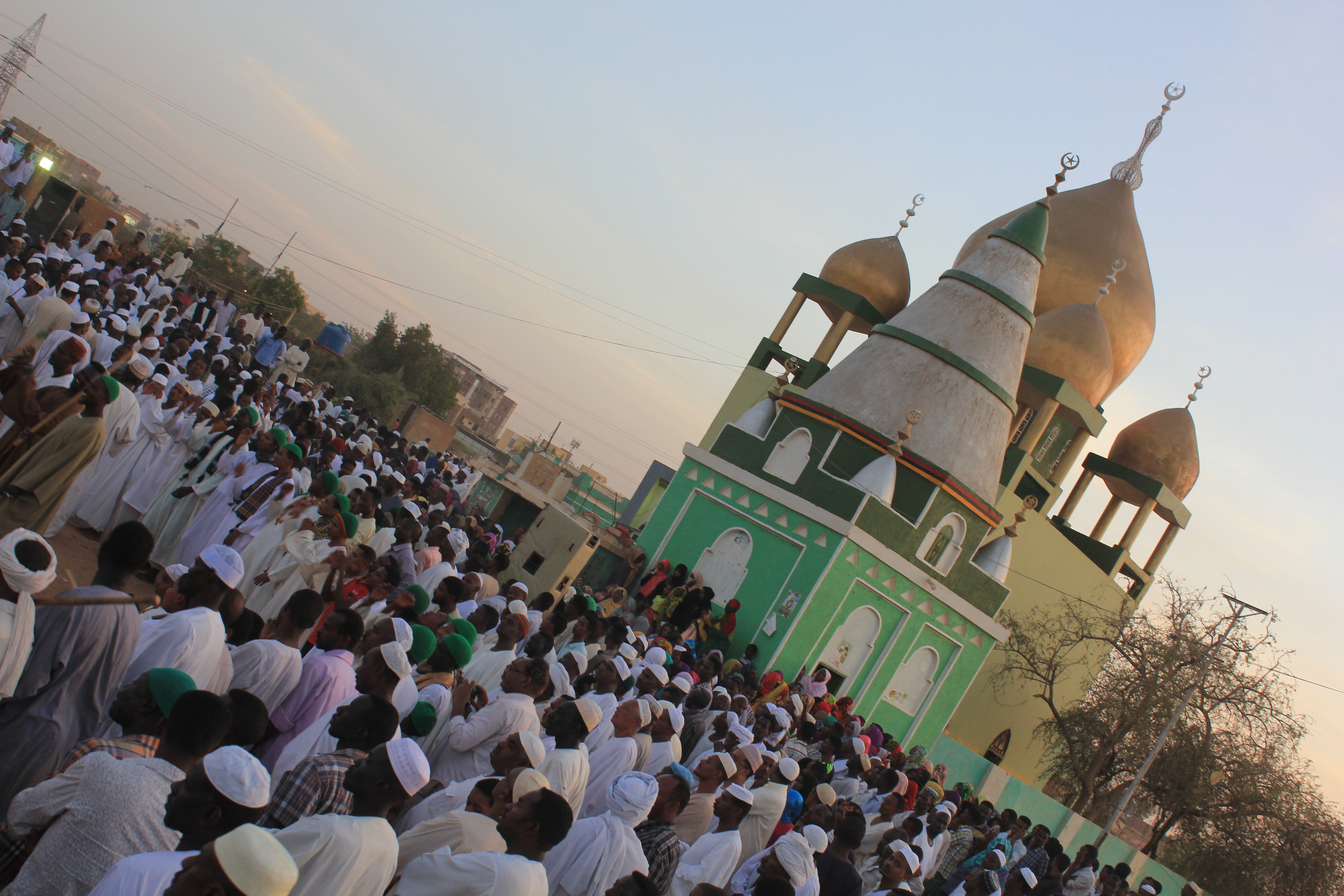
a Sufi dervish gathering at Oumdourman cemetery

a Sufi dervish gathering at Oumdourman cemetery

Crossing the land border at Metama/Galabat was a breeze, especially since I met 2 Sudanese men on the way who took it upon themselves to make me their ‘guest’ for all travel, accommodation, food and drinks, especially beers since they warned me it’d be the last cold beers I could have before entering Sudan. It only took 2 buses to reach Khartoum, where the temperature was still above 40°c after sunset. Some things hadn´t changed at all, like the dirt-matted, unreadable paper notes worth fractions of a euro – I managed to rip a 50 Sudanese pound note in half just after managing to exchange a 100 Ethiopian birr note I taped back together at the border.

selling hats

selling hats

The music changed drastically, but I heard that even the conservative Sudanese enjoy the up-beat dancy sounds of Ethiopian music, and better yet, the music videos of the shoulder flapping, torso-jerking, scandalously dressed men and women who make it. Ethiopians were obsessed with Arsenal, the football logo and players plastered on most buses and alot of clothing; in Sudan, the buses were colourfully carpeted, sometimes on the outside too, and Arabic script became the focal art work of any ads or logos. Anglicizing Arabic is always a problem, since there’s no standardized transliteration, so Al Qadarif is the same place as Gedaref, which I was lucky enough to figure out and change buses in the right location.

traditional Sudanese lunch

traditional Sudanese lunch

The roads were better, but the strange cross-traffic didn’t subside. Donkey carriages, cows, sheeps, goats, people, children, cats and rickshaws still seem to jump out onto the road exactly when you need to pass. I thought that Ethiopians had a wide range of skin colour, but the Sudanese people include faces ranging from pale, fair Arab to purply-black South Sudanese.

Couchsurfing in Khartoum was a luxury vacation in itself – I had washed sheets, on a king sized bed, in a room with air conditioning, in an apartment with constant electricity and water. For some reason, rough traveling always makes you crave a real, hot shower, but in Khartoum I would have killed for a cold shower but the water only runs warm, maybe cooling a few degrees only in the early morning hours. There was a lot of water in Khartoum, a place where 3 Niles meet, the Blue and the White Nile flowing into what looks like an Elephant trunk. Still it was dry season, and the dead animals on the side of the road could have died from a car accident or thirst, but it was impossible to tell since all that was left of them were some shriveled hides and hooves. On my little roadtrip to the Meroe pyramids, I saw more exploded tires on the side of the road than I saw cars with tires, but somehow I managed to get there and back without any accident.

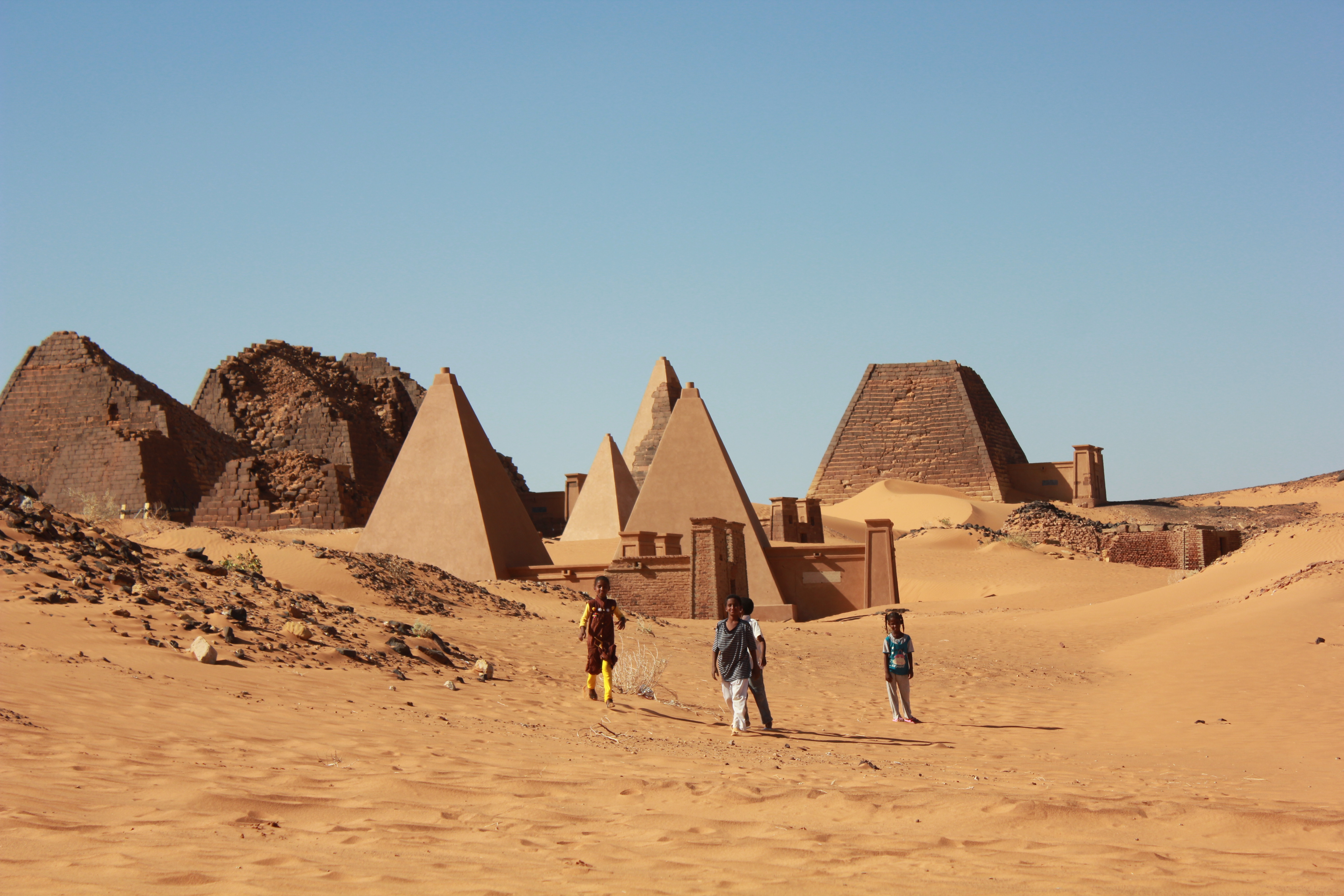
at the pyramids in Meroe Royal cemetery, aka Al Ahram near Bajrawiya

at the pyramids in Meroe Royal cemetery, aka Al Ahram near Bajrawiya

An important note to any traveler going to Sudan: Somehow I had met Sudanese people and travelers who had come from Sudan without ever realizing that Sudan is a closed economy. This means there are atm’s, but none that dispense money from international accounts. You cannot get money in (or out – it wasnt possible to exchange it except at the Ethiopian land border) so bring loads of cash. Also know that once you have USD or whatever currency, the exchange rate is more than double that of the official rate. You are also meant to register within 3 days of arriving in the country, which is another fee and passport stamp, but I didn’t do it since I had a transit visa. I managed to get out that way. I also traveled without a travel permit (which is supposedly required to any foreigner traveling outside of Khartoum) to the pyramids, but that maybe worked only because I went with public transport. From Khartoum you take a bus to Shendi and change for a bus to Atbara, or you take a bus directly to Atbara, but you jump out 30 km after Shendi at a place referred to as Bajrawiya. I didnt really see a village there, and people dont know what ‘Al Ahram’ (‘pyramids’) might be, and Meroe is also the same pronounciation of Merowe, a town 3 hours further north of Atbara (dont end up there by accident!). But you can actually see the pyramids from the road, so just ask to jump out there and then walk the half km across an open desert until you see alot of boys on camels come running at you, and then you’ll know youre in the right place!

Photo Highlights: Food and Drink in Ethiopia and Sudan

It’s hard to remember everything I’ve done or where I’ve been, but the food has been a memorable part of this trip. Eating only with your right hand and drinking coffees while being choked out by burning incense has become a daily affair, and the places and people I’ve shared these moments with are just as unforgettable.

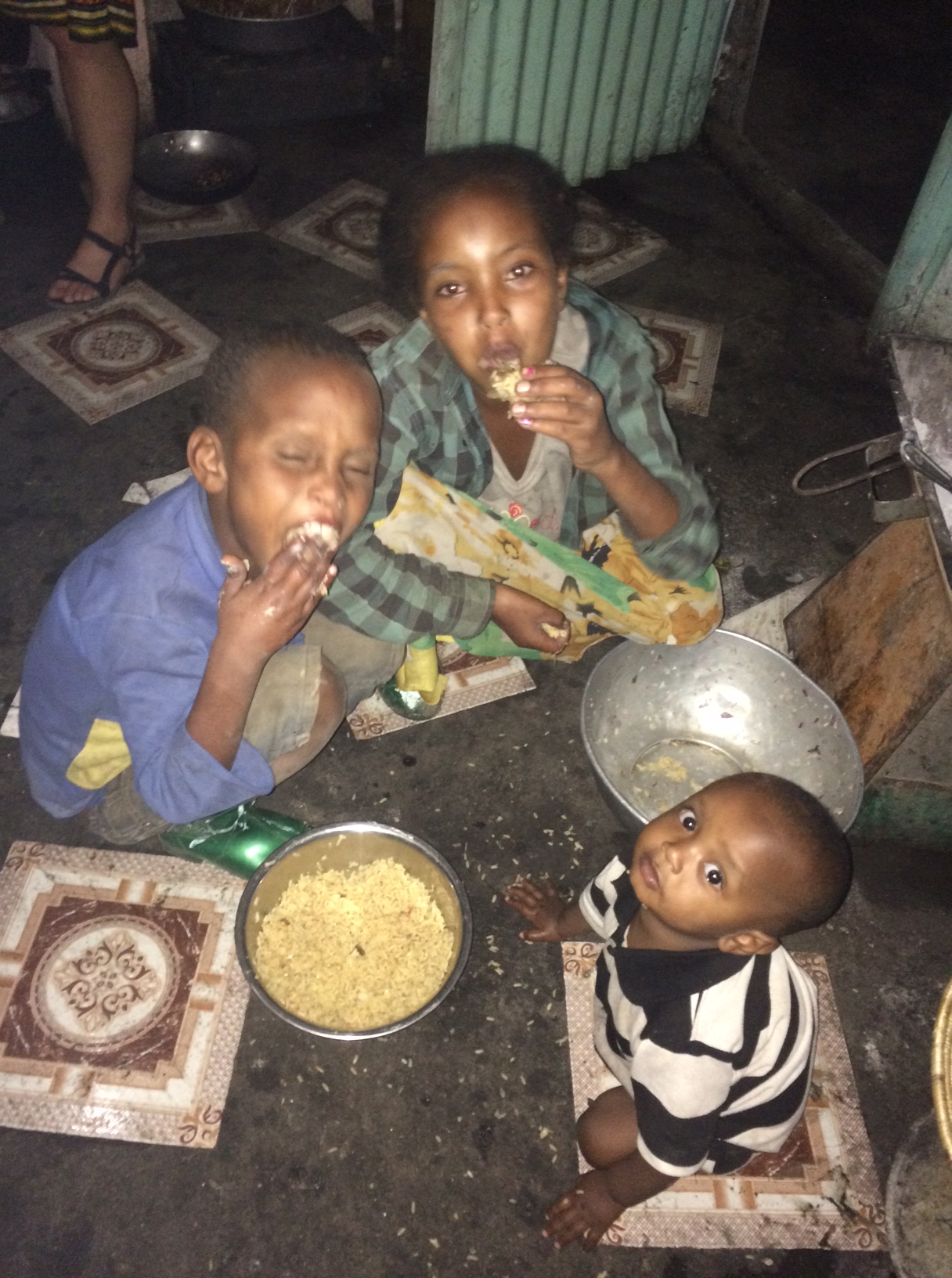
the street kids in Hirna, Ethiopia, offer to share their dinner

the street kids in Hirna offer to share their dinner

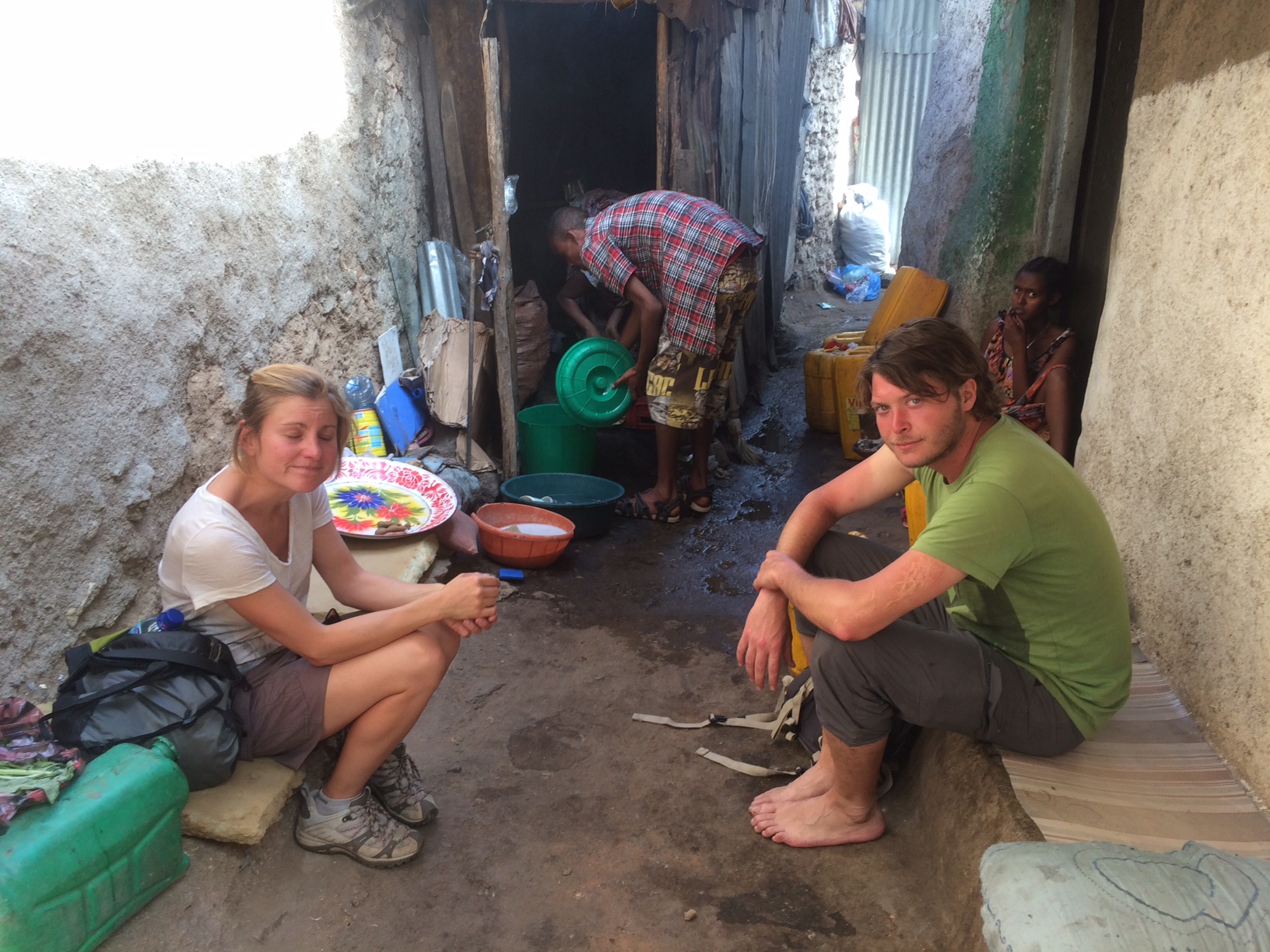
a local coffee shop in Old Harar, and two of my new travel buddies

a local coffee shop in Old Harar, and two of my new travel buddies

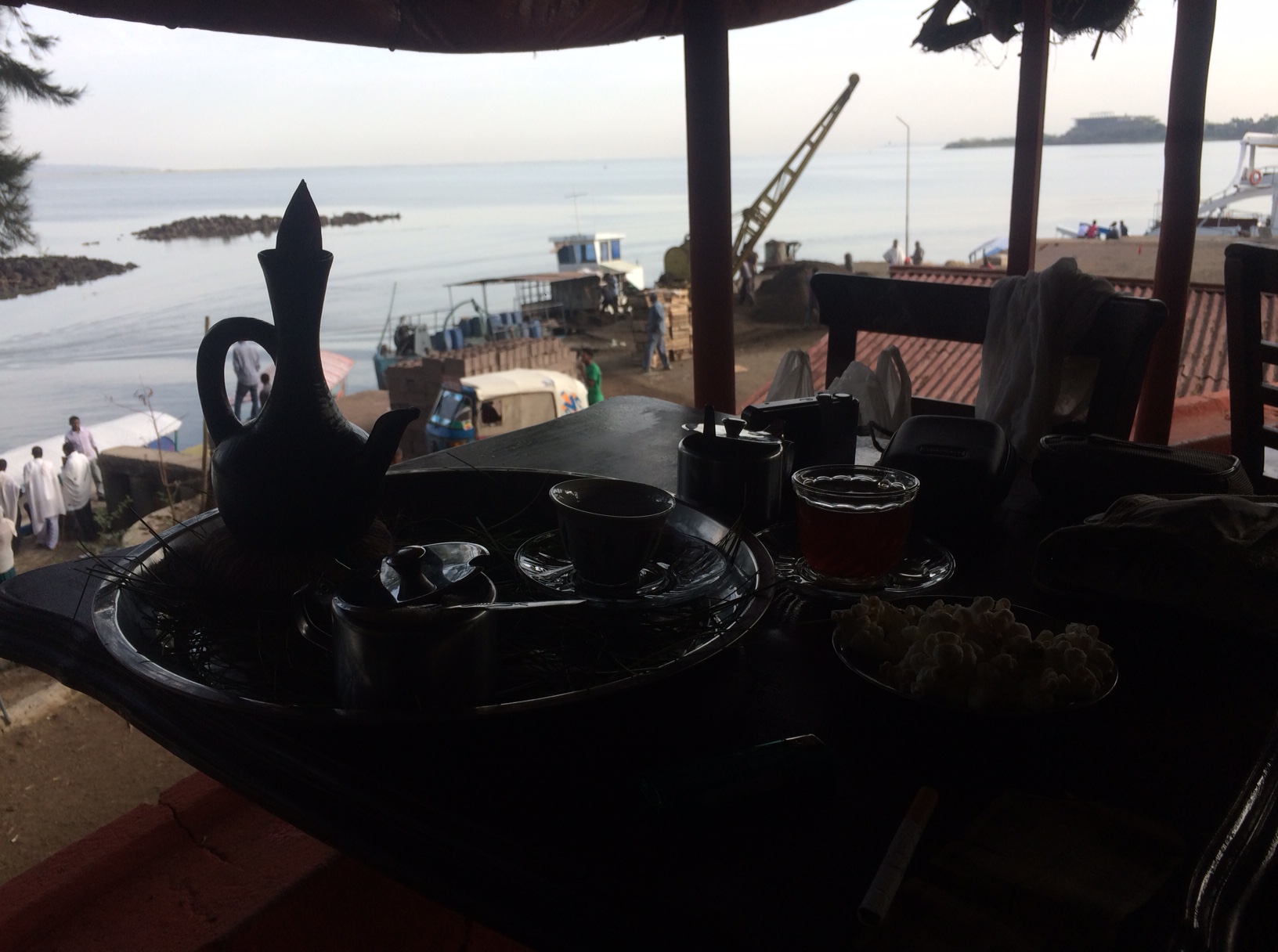
morning coffee in Bahir Dar

morning coffee in Bahir Dar

a typical injera spread

a typical injera spread

sharing some injera and shiro with our hotel cook

sharing some injera and shiro with our hotel cook

a fried fish lunch, fresh from Lake Tana

a fried fish lunch, fresh from Lake Tana

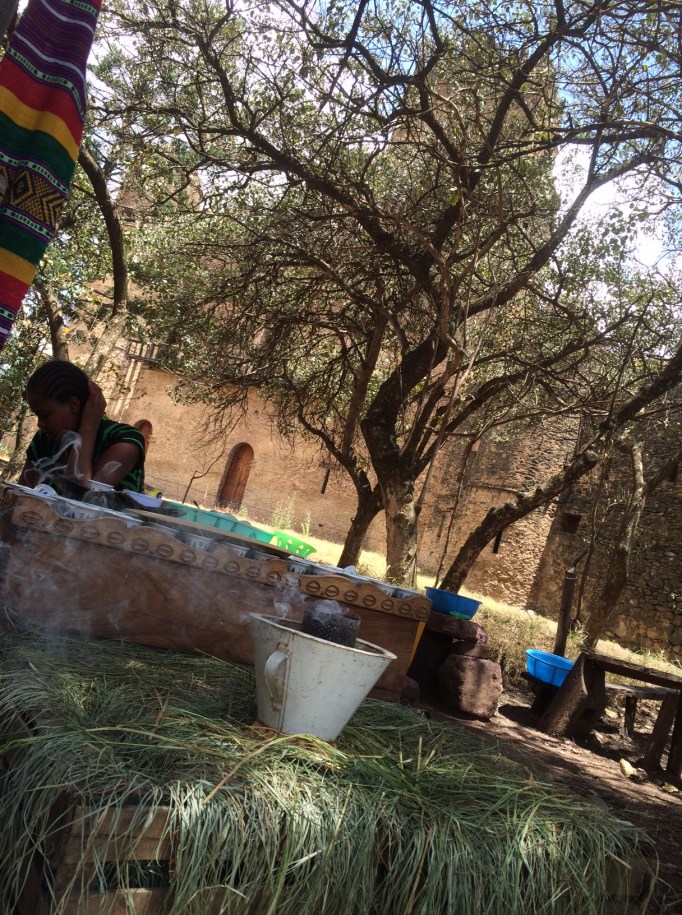
a woman prepares her incense at her open-air coffee 'shop'

a woman prepares her incense at her open-air coffee ‘shop’

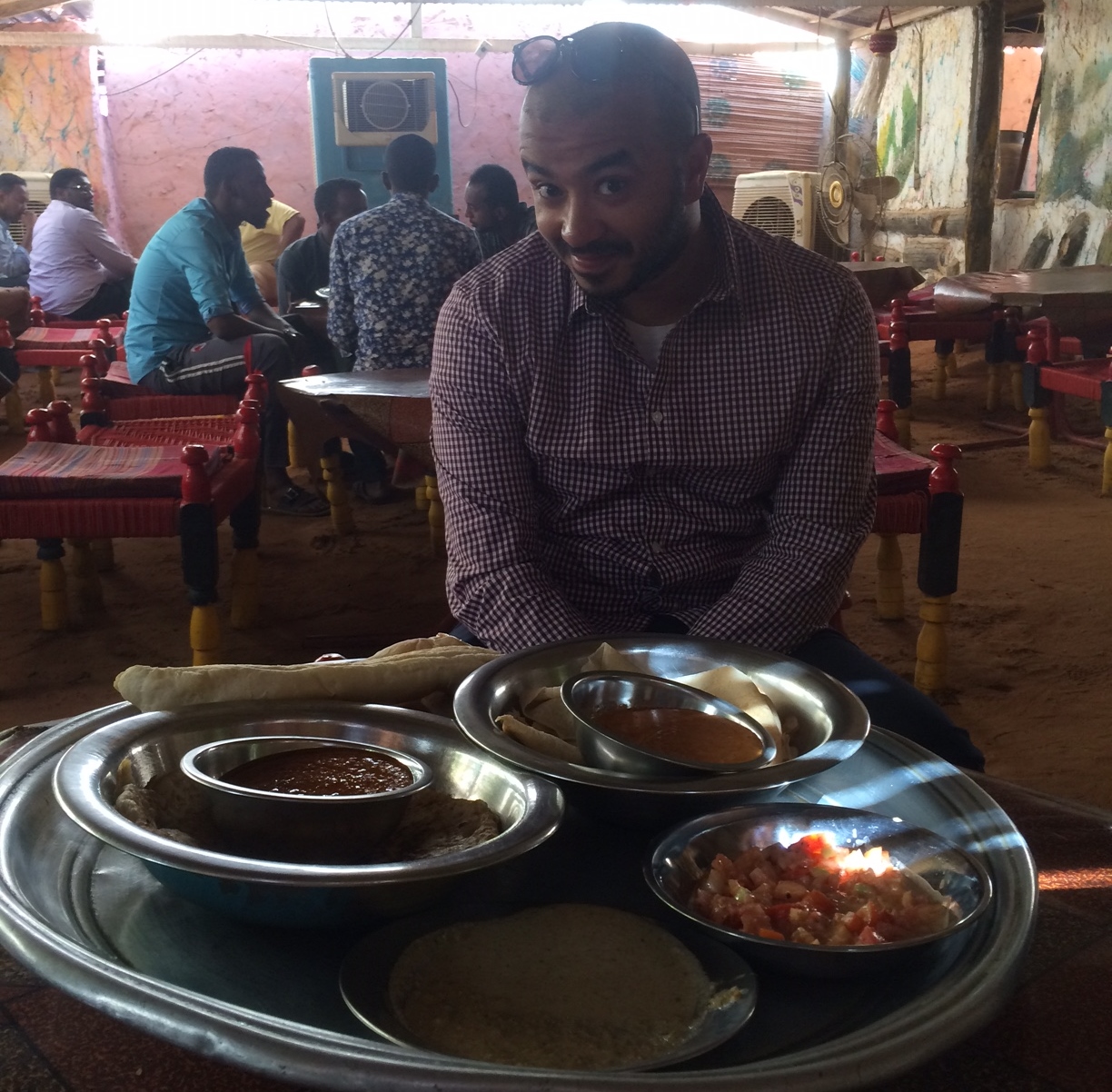
Sudanese ful, a fava bean concoction eaten with bread

Sudanese ful, a fava bean concoction eaten with bread

a coffee ceremony in Khartoum after a traditional Sudanese lunch

a coffee ceremony in Khartoum after a traditional Sudanese lunch

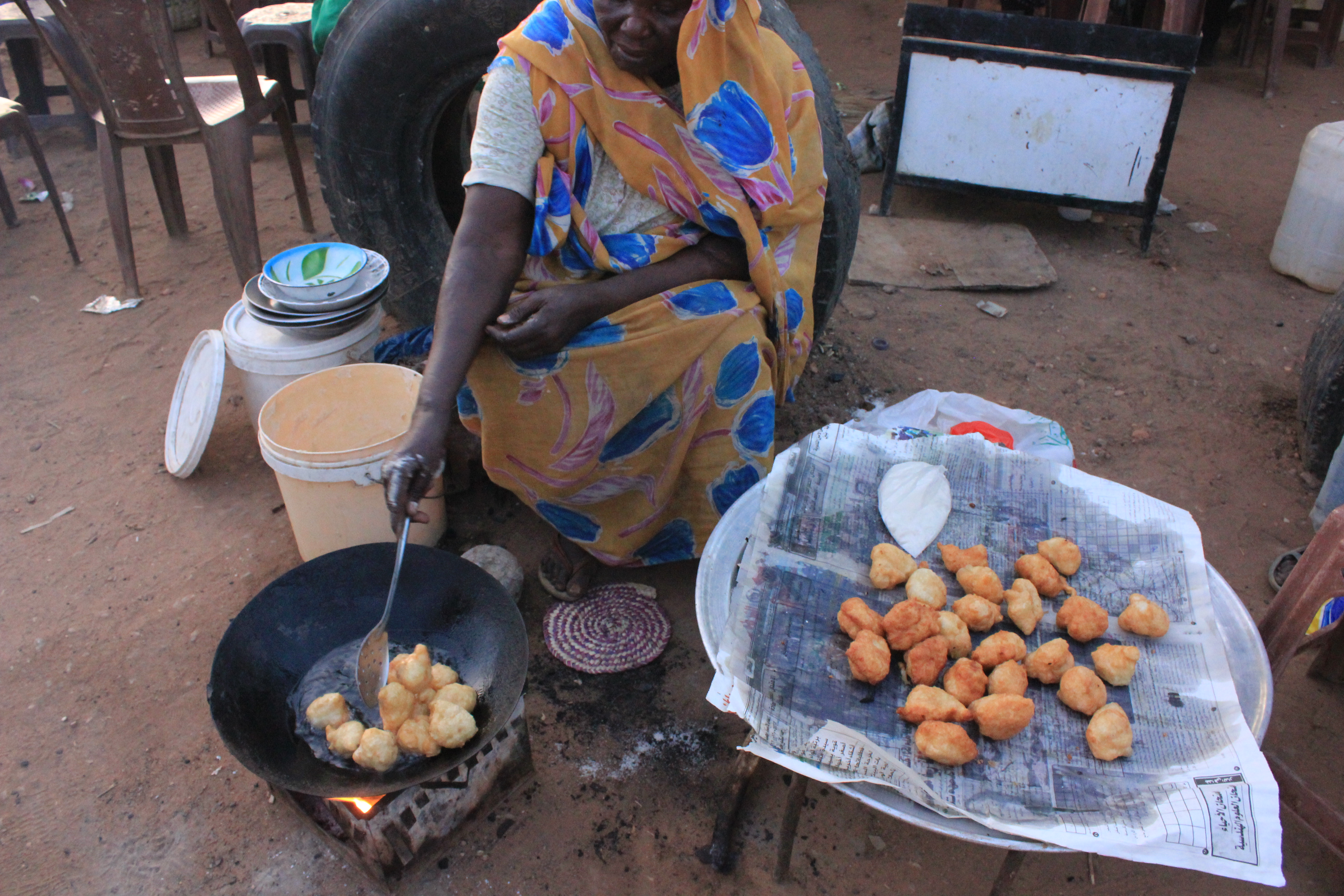
Street food in Sudan: fried and sugar coated donuts

Street food in Sudan: fried and sugar coated donuts

my couchsurf host in Khartoum prepared raspberry pancakes and french-pressed Ethiopian coffee

my couchsurf host in Khartoum prepared raspberry pancakes and french-pressed Ethiopian coffee

Ethiopia, a small detour from the Middle East

Besides being one of Africa’s largest countries, second only to Algeria I think, Ethiopia was also a complete diversion to my Arabic/Muslim themed journey. Filled with Orthodox churches and a very active Christian community, Jewish Ethiopians also consider themselves ‘Beta’ Israel. I was confronted with an unfamiliar language and an undecipherable alphabet; I felt like I had crossed a new frontier into an unknown world, yet thrilled to be in Africa again. Each corner of Ethiopia had a different Africa – the far east is filled with Somali Muslims, the south to West with big mountains and big game animal parks, the northwest bridging into Sudanese desert plains, the Egyptian influenced north, and the northeast blocking out their most familiar African brothers in Eritrea. There were highlands, lowlands, active volcanoes and lakes, making even the climate different in each area. I woke up my first morning in Ethiopia to the sound of birds singing and opened my eyes to a tree filled with purple flowers, the first time in a long time that either had happened.

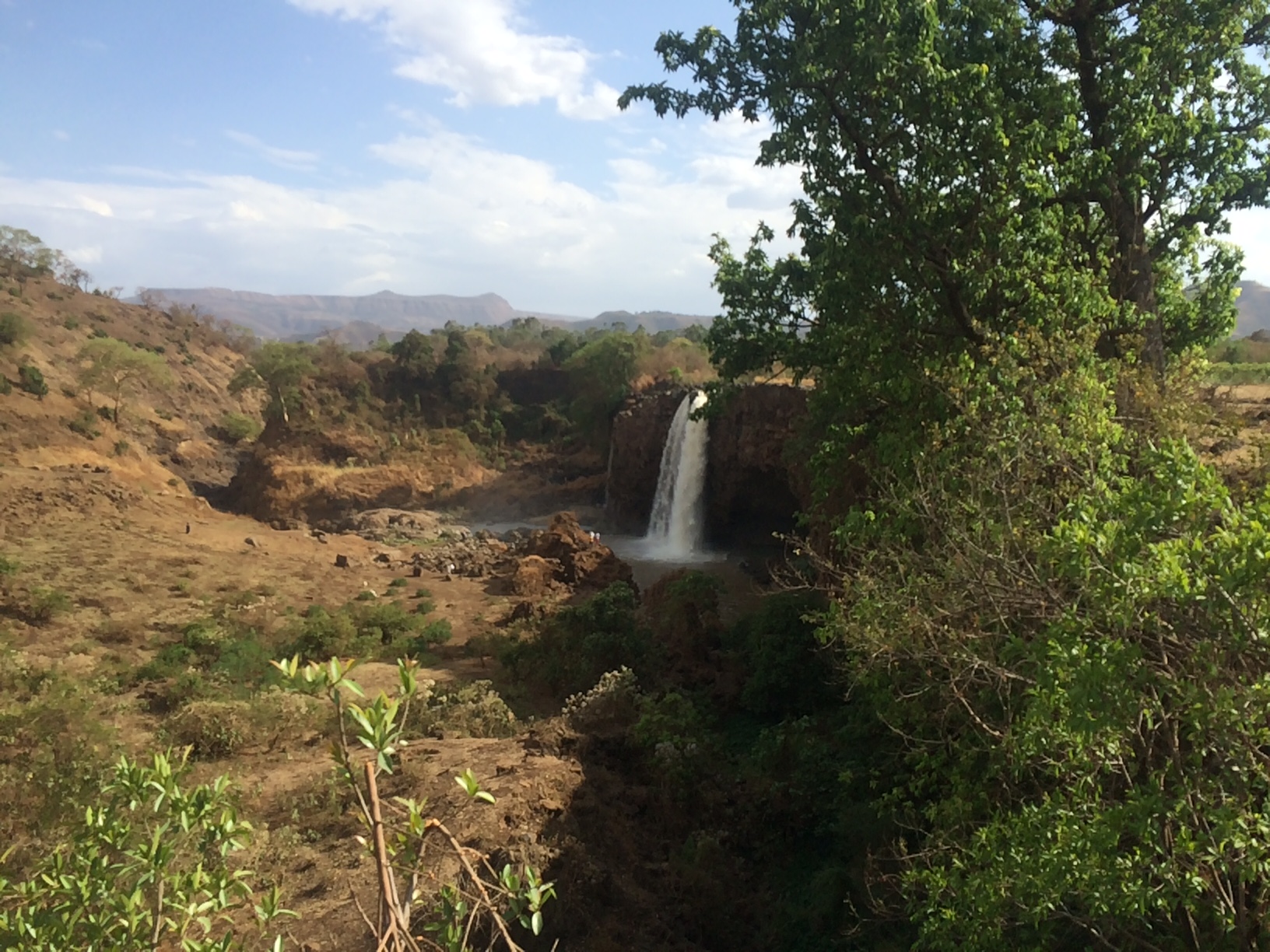
Blue Nile Falls

Blue Nile Falls

I could easily have spent 3 months just traveling in Ethiopia, and still I’m not sure I could have reached all those places. The distances between spaces are never ending, and filled with little villages in between to stop and visit, so one could make dozens of destinations out of every journey and I’m not sure where the road could end. Its possible to travel in circles or take a different route back, and public transport and hitchhiking are cheap and easy… but very slow. English was less common, Arabic useful only close to Somalia, and the Amharic language was difficult to absorb, especially in written form. I managed to finally memorize ‘thanks,’ the 6 syllable word ‘amasakanalo,’ and a few numbers, but charades got me a lot further.

a lone papyrus boat fishing on Lake Tana

a lone papyrus boat fishing on Lake Tana

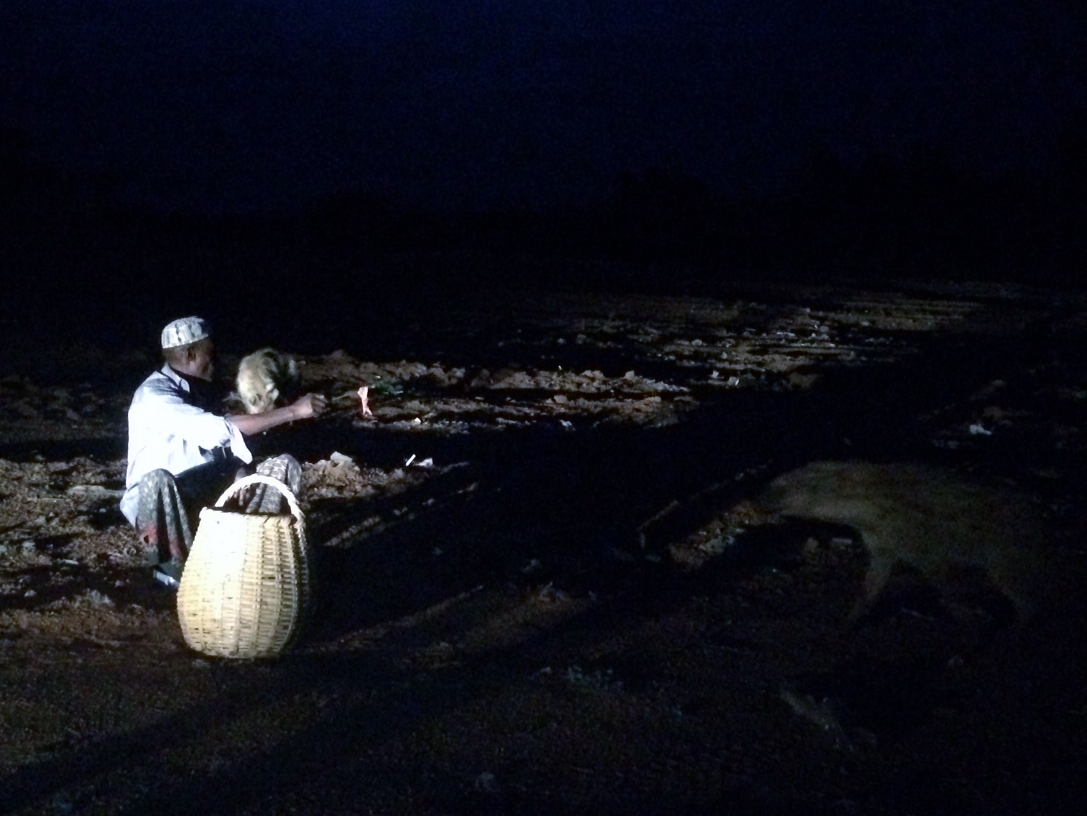
My travel route was from Wajaale, on the Somaliland border, to Jigjiga, the capital of the Somali speaking province in the east, and onto Harar, considered by some the 4th most holy city in Islam. It has a walled old town filled with windy pedestrian alleys, and strangely enough a high concentration of pubs and Harar beer consumption. The local tourist attractions include feeding wild hyenas after sunset and visiting the livestock/camel market where locals expect you to pay an entrance unless you’re really there to buy a goat or something. I met a handful of other travelers there, who always seemed to be coming from or going to the same places, and the degrees of separation between me and Ethiopian couchsurfers or even a traveler I met in Jordan was never more than one.

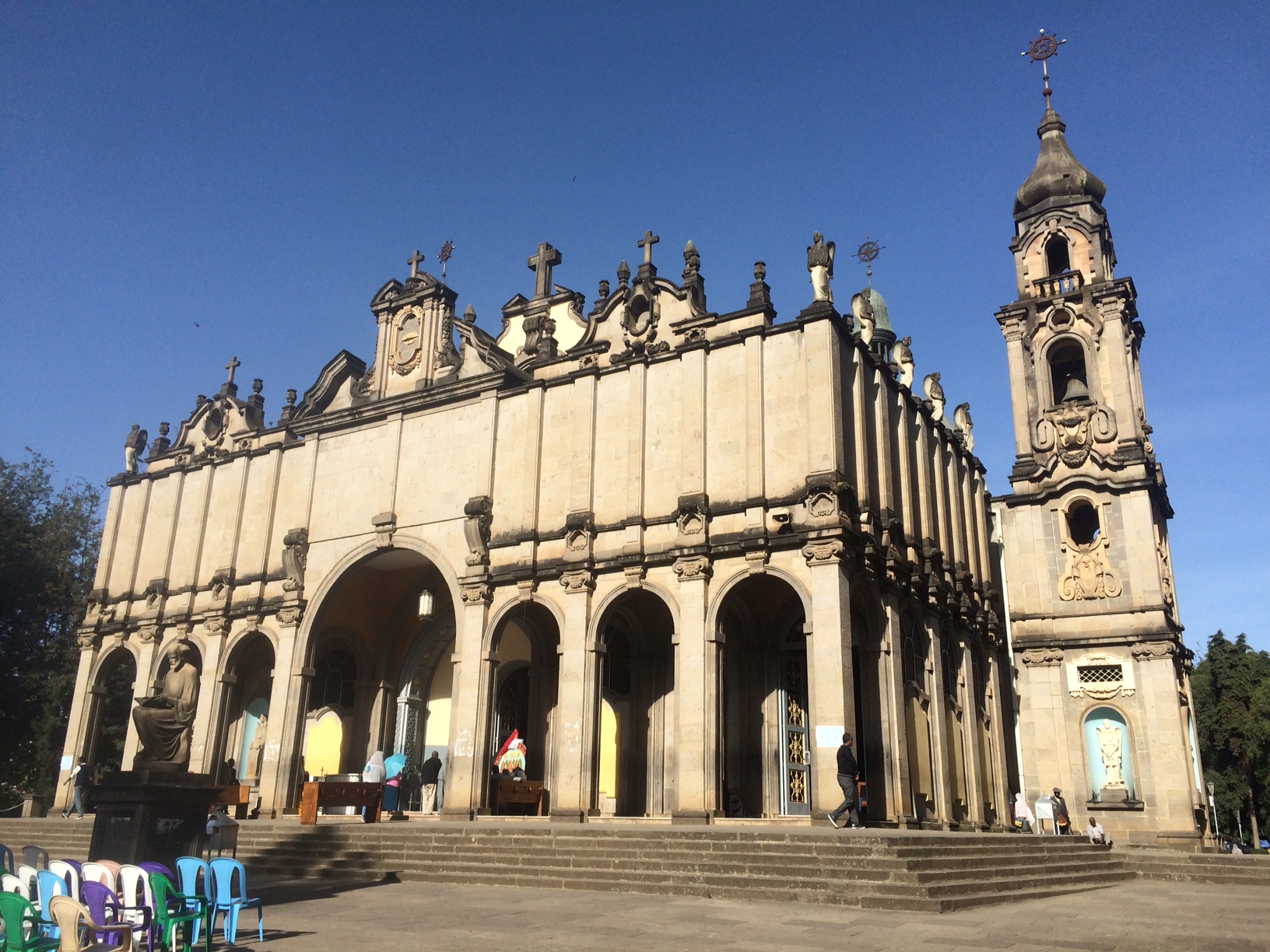
the Holy Trinity Orthodox cathedral in Addis

the Holy Trinity Orthodox cathedral in Addis

I traveled some days with a Belgian woman named Debbie, and together we left Harar and visited the little village of Hirna, where a Canadian raised Ethiopian Somali girl greeted us in perfect English. We carried onto Awash Saba and shared our hotel with another traveler from France, who hitchhiked a semi-truck with us to Adama. I carried onto Addis where I couchsurfed with a French guy from Cote d’Ivoire who liked to Salsa dance, and managed to get a visa from both the Sudanese and Saudi Arabian embassies.

hand feeding hyenas

hand feeding hyenas

To go south seemed a little unsafe and the north seemed too far away, so I went to Lake Tana in the mid-west of Ethiopia. Bahir Dar wasn’t as interesting as I’d hoped, but a boat tour on the hippo-filled lake to some island monasteries was a highlight. On the northside of the lake was the car-less, chicken-filled village of Gorgora, where a Dutch woman has opened the most serene, idyllic tourist retreat called Tim and Kim village. I ‘camped’ there by tying my hammock in some trees before carrying onto nearby Gondar. It was a lovely, hill-perched town, with a UNESCO site of six castles, and my gateway to the Sudan border. It was tempting to stay a little longer in Ethiopia, carry onto the more touristy places in Axum or Lalibella, but its also nice to save something for next time, especially since I was smart enough to get a multi-entry Ethiopian visa.